
AI and Social Good: How Women Are Using AI for Impact by Namrata Shah
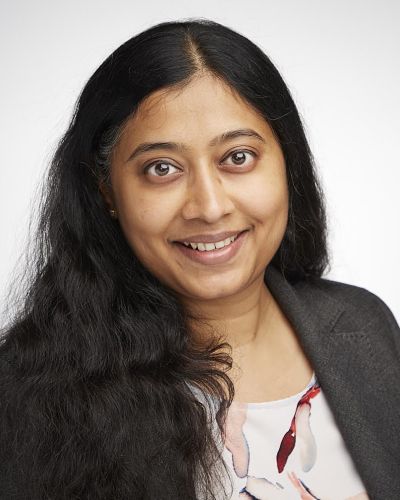
Namrata Shah
Managing Director, Global head of Engineering, Investment Technology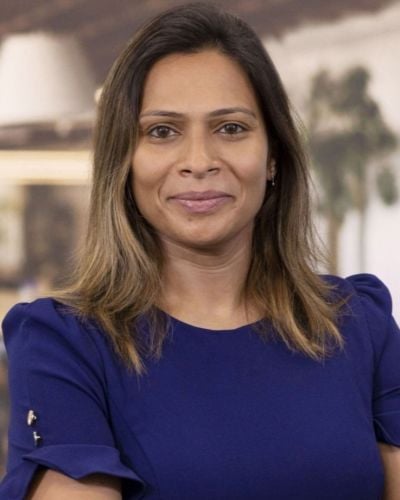
Samta Kapoor
Americas AI & Data Leader for Oil, Gas and Chemicals
Aditi Sharma
Managing Director, Data & AI at Accenture|Modern Data Architecture Lead
Bhuva Shakti
Chief Ethics & Culture Officer at Women in AI and FounderReviews
Empowering Women Through AI for Social Good
Introduction
Welcome to our insightful exploration of how women are utilizing artificial intelligence (AI) for social impact. In today's rapidly evolving landscape, AI is reshaping industries, yet the inclusion of women—especially marginalized voices—in this domain remains inadequate. In a recent panel discussion moderated by Guva Shetty, Chief Ethics and Culture Officer at Women in AI, industry leaders came together to discuss the critical importance of representation in AI technology.
Why Women's Representation in AI Matters
The conversation opened with an urgent call to action: while AI technologies advance swiftly, the structures around them do not evolve at the same pace. Aditi Sharma, MD for Data and AI at Accenture, identified significant risks in AI technologies being developed without the diverse perspectives that women bring. She highlighted a crucial aspect of AI development—data representation. Without the inclusion of women's experiences, AI could inherently carry biases, leading to detrimental outcomes.
- Empathy in AI: Diversity promotes empathy and a broader understanding, enhancing AI systems' ability to cater to every section of society.
- Increasing Accessibility: Aditi noted that AI has enabled smaller organizations and nonprofits to enhance their platforms and improve branding capabilities.
Innovating with Purpose
Namrata Shah, MD and Global Head of Engineering and Investment Technology at Nuveen, emphasized the need to ensure AI reaches underserved communities. She utilizes her platform to educate audiences on technology, ensuring that learning materials are accessible even to those with limited resources.
- Empowering Communities: Namrata’s YouTube channel serves as a resource for those in remote areas, democratizing access to technological knowledge.
- Available Resources: Platforms like AWS, GCP, and Hugging Face are recommended for those looking to innovate responsibly and inclusively.
AI and Real-World Applications
Samta Kapoor, AI and data leader for oil, gas, and chemicals, shared her journey from the early days of data analysis to the present AI-driven landscape. She recounted moments that reinforced her belief in AI’s capacity to address social issues, such as utilizing AI to combat world hunger and improve disaster responses to wildfires.
- Real-World Impact: Use of AI in navigating wildfire crises exemplifies how technology can enhance decision-making and protect communities.
- Transformative Potential: Samta underlined AI's potential to drive significant change, focusing not just on technology but on human-centric applications.
Measuring Success in AI for Social Good
Turning to metrics, Aditi stressed that success in AI applications for social impact lies in making informed, accessible decisions based on improved data insights. AI technologies must create tangible benefits for society, particularly in healthcare and education.
Action Steps for Supporting Women in AI
Namrata urged the audience to support women in tech by sharing their work and providing mentorship and resources. Simple actions, such as reposting on social media or providing cloud credits, can change lives.
Applying an Equity Lens
As the panel wrapped up, Samta emphasized the importance of using data responsibly and ensuring diverse inputs to mitigate biases. She highlighted the significance of including stakeholders throughout the design and implementation processes of AI systems.
Conclusion
The conversation emphasized that equity in AI is not automatic; it requires active participation from all of us. As we move forward, let’s commit to fostering inclusive technologies that reflect fairness and serve everyone. The work does not end here; it is a continuous journey, as highlighted by the panelists. In the evolving intersection of AI and social good, let women step forward as leaders, innovators, and change-makers.
Video Transcription
Good afternoon, everyone, and welcome to our session, AI and social good, how women are using AI for impact. Today, I'm excited to moderate this session.My name is Guva Shetty. I serve as the chief ethics and culture officer at Women in AI. I'm also the founder of Wallet Max, which is a platform focused on ethical, inclusive, and sustainable tech. I spent my career working in the intersection of investment banking, AI governance, and responsible innovation. And I can tell you this conversation today, it's not just timely. It's really urgent. We are living in a moment of massive disruption. AI is transforming every industry, finance, energy, health care, education, and it's growing at a pace that few of us can fully keep up with it. Right?
But while we see these tools are evolving very fast, the power structures around that are often not evolving in that speed. Right? So around the world, we still see too few women, especially women of color and marginalized voices involved in building, governing, and funding these technologies. That's why today's panel is so important. We are not just talking about innovation. We are talking about who gets to lead, who benefits, and how we make sure AI serves the many, not just a few. Our focus today is on how women are using AI for real world impact. We're not just going to be talking theoretical, but we're gonna talk about real tangible and measurable ways.
We're gonna talk about reimagining data equity to transforming transforming industrial systems to making many industries more inclusive. And, our speakers, they are also practitioners and pioneers in this field. So we'll also explore how they are building ethical AI, what barriers they are still facing, and what it really takes to scale innovation that serves all people. And, it's an invitation to also reimagine leadership. It's not about, processes and systems, but we also need the right level of leaders and type of leaders to build the type of future we want to be in. So let's get started. I'll probably invite our first speaker, Azidu Sharma, who's a MD for data and AI at Accenture. Welcome, Aditi.
Thank you, Bua. And, nice to be on the panel today. A brief introduction. Aditi here based out of. And, I sit with Exchanges data and AI practice focused on modern platforms, AI, advanced analytics. And now as Gen AI, agentic AI is taking momentum, so we are working on a lot of those things too. So really happy to be part of the discussion today.
Thanks. Thanks, Aditi, for joining. And very rightly, you are in the data and AI space. What I wanna start about is what risks do you see when AI is built without women or underrepresented communities at the table? And then what are some creative or unexpected ways you've seen AI used to solve either local, regional, or global problems?
So, see, this this is a very well known fact that, technologies like AI or Gen AI or even agentic now, we are talking right there as good as what we are feeding it with. So I feel, not having a right representation of women or even, right sections of society, we are anyways, feeding a gap of, a bias, feeding a gap of, not right set of data. Especially with women, it's always a situation where we we do not have right representation in all sets of society. Right? Whether it's jobs. And I'm not talking of only the forum that's today here, but there are so many underprivileged women across the world who do not even get a platform. So I think having a right representation gives a platform for us to have the right data to begin with because we cannot have inferences that's not even representing the whole society entirely. I think women having that, seat on the table is important. And then anyways, you all may have heard about human in the loop concept. Right? Yeah.
I think women definitely bring more empathy and, perspective to any discussion or any kind of team we try to conclude out of these technologies. So that makes the women far more important to be part of the, group. Yeah. And to your second question, in recent years, I feel as AI, has advanced and a lot of awareness has spread through, education, I think a lot of our, nonprofits or organizations that are not very massive or do not have a lot of, amount to pull into these things, they have been able to use these technologies to build, their own platforms easily.
The branding has improved for a lot of nonprofits, right, in terms of and how they're expanding themselves. I have also seen lot of, small organizations using AIs to build quick chatbots that was not accessible to a lot of our small organizations in past. Right? So I think there's a lot of benefit because it's giving people accessibility to, speed up certain things which were earlier not in their reach either due to budgetary situations or others. Right? So I think health care has also got better. Awareness has got better. Branding. So lot of those are the things where now it's making it very quick and easy to spin up, and lot of nonprofits or small organizations are able to materialize out of it.
Thanks, Aditi, for sharing. Yeah. We know there is less historic data, but we have to start somewhere. So it's important that right now we bring women and all communities onto the table so we can start collecting data, have empathetic voices. Right? But you also rightly mentioned using this has increased little bit accessibility for those communities who never had that opportunity before. So now we have to try to see how we can make it more ethical and inclusive. Thanks for sharing that. I'd like to talk to our next speaker, Namrata Shah, MD, global head of engineering and investment technology at Navin. Welcome, Namrata. So can you share your
Hello, everyone. Sure. I'll keep it short. I've been in this industry for about twenty four years. Out of twenty four years, almost, twenty two years, a little more than that has all been IT consulting. So I've worked with Capgemini, Accenture, PWC. And right now, I work for an asset management firm called as Nuveen. I'm based out of New York, New Jersey. And for I'm absolutely passionate about technology. I used to actually run a user group when people used to go physically inside and and talk and meet people, but the world changed. And in today's world, everybody wants to basically do things virtually, and people love to stream. So, hence, I started, you know, running a YouTube channel. So I run a YouTube channel of my own, where I actually, teach a lot of technology.
I'm an AWS, hero as well, and that gives me a good platform both from AWS and YouTube to kind of share my technical knowledge with everyone else. So nice to be here, and nice to meet all of you guys.
Thanks, Nangwita. So you mentioned YouTube, and I have a very specific technology tool question for you also. But before that, I wanna talk to you about how you make sure AI reaches communities that are often left behind in tech innovation. And then with the tools and platforms that you rely on, what are the most prominent ones to build or deploy AI for good? Not just to build and deploy AI, but we wanna take the social good aspect into it as well.
Sure. So, how I'm ensure that I am basically, AI is reaching different communities. I kind of answered your question earlier, Puwa, when I was giving my introduction. Right? So I'm not gonna limit only to AI because you cannot just know AI. You have to know the other parts of the technologies as well. And I started my mission in 2017 when I launched my channel at that time, and the mission was to take technology to different parts of the world and especially to areas where people do not have access to the fancy tools or people who cannot go online and sign up for, let's say, an AWS account or an Azure account or a Google account that easily.
Right? That access is not there.
Yeah.
So how do you do that? And that's when I decided to, basically start this channel. And after since I've started this channel, I have, basically got a lot of reviews, and people have reached out to me personally via email, etcetera, telling me that, hey. I'm located in x y z part of the world where I don't have access to something. I don't have a credit card to basically get myself an an cloud account. And how do how am I gonna learn this? So can you demo something to me? And I can I can see you and learn? So there are multiple ways of learning. Right? So that's when I started doing a lot of labs and demos, and I started posting them online step by step so that if somebody had to go back and replicate those steps in the office or in the project or while they're learning at school or college, they can do that.
And since last and, actually, the beginning of this year and last year, I basically started working with AWS, to promote, Bedrock, which is a JennyI platform.
Mhmm.
And I've created multiple tutorials as a whole playlist and multiple labs. So anybody who wants to go inside and basically, it's available free of cost. If you have an Internet connection, even if it's a low bandwidth connection, you can run the video on YouTube and learn AI, gen AI, or whatever you wanna learn, machine learning, prompt engineering, prompting, AI versus ML. I get all kinds of questions, and I try to post answers and basically share my knowledge. So I kind of feel to your point who were obligated in a way because, I I feel very strongly in giving back. So a lot of people, we just as humans, we just take, I guess. We're very big on taking. But, somewhere you have to give back. And this is my way of giving back. So, hopefully, that answered your first question.
The tools or platforms, that I do rely to build AI and, and especially deploy AI for good. Now there are two separate questions. I'm gonna answer them separately. I personally rely significantly on two platforms. One, of course, is AWS because being an AWS hero, I have direct access to AWS. So that's one thing. Also, I have access to the product and the product managers and a lot of people, so I get a lot of first hand information from them. I've also worked very closely with GCP and Azure as well in my previous lives. But if anybody wants to, let's say, use a low cost platform, especially deploy AI for good, you can, of course, use these three platforms as well as I mentioned, depends upon how much budget you have. But you can use some low cost platforms. For example, hugging face is something Mhmm.
That I have explored and used in the past, which I can recommend is one of those platforms that someone else can use. But, otherwise, I have primarily used AWS, and that's a platform that I will definitely recommend. Although, to your point, depending on your budget and if you're doing AI for good, it can be slightly expensive. So you might have to, either work out a lower cost with them or basically get yourself a sponsorship or some funding. Yes.
Yeah. No. That's true. Right? So many times when we think about scaling AI, building new advanced features, we have to also consider certain parts or communities in the world where they are talking about introducing AI locally. Right? So two disjointed variations of the same technology. And then accessibility, again, like Aditi mentioned, here also plays a part. Right? You might be able to afford AWS, GCP, or Azure kind of platforms, or maybe you go with open source to start with and then maybe try to build sponsorship or funding to get into another enterprise option. Right? So thanks for sharing that, Narmada. I'd like to invite our next speaker, Samtha Kapoor, UA America's AI and data leader for oil, gas, and chemicals. Welcome, Samtha. Could you share your background?
Thank you, Puva. Hello, everyone. Happy Tuesday. I literally woke up today thinking it was Friday and then realized it's not. So, if you're like me, the week is just starting. So great to meet everyone. I come with a background in, AI and data transformations and transformations and have worked clients across the board with different angles. And, honestly, I, started working with data when it was not cool, and I didn't want to tell my friends at home what I was working on because they were like, oh, you you wanna go to school to The States. Right? Like, what are you doing now? And I would just say, no. Just thinking about a product, and it was actually a treasury product that I was looking at and seeing how data flows, like, what happens, where the data source from.
But now I have a spot on the cool kids table because now I do AI as well. So now with that background in data transformations and the pivots to AI and, Aditi, I think you were mentioning it. To me, Gen AI, agent tech AI, everything falls under the broad AI bucket, but those are, like, the key the, you know, the key things that people talk about. So I feel very, blessed to be able to play with this technology. And as impactful as it is today, it is it is very, very helpful.
Thanks. Thanks for sharing your background, Sandra. And, also, it's very, very, you know, more like AI and data, but oil, gas, and chemicals, like, two totally different industries. So I want to learn from you to understand what's that moment when you realized AI could drive real world change, and how do you, in your personal identity or lived experience, have shaped the kind of impact you want to pursue in AI?
Yeah. So, I'll share this, Bubba. So I grew up across industries. Right? And there's, the moments that have impacted me and or the things that have really driven me to believe in the power of AI, might not necessarily be the industry per se, but it is also just seeing the impact on our society and our people. And that has sort of inspired me to take that purpose with me to whatever industry I'm serving, or working with with, you know, different different companies on. So I'll give you an example. There was a there was a conference or, like, a get together where there was someone who was visually impaired. And this person was using AI to actually understand what was in the surroundings, like, hear people's names, recognize these sentiments. Right? And being able to navigate that day to day just made me feel like the power in tech is immense. Right?
It's also I I strongly believe that all of this, yes, comes with its risks, but at the end of the day, it is literally like a knife. You either use it for good or you do harm with it. It's it's on us to do that, but the tech is very powerful and can can be used in good ways. The other key piece that I've been super passionate about and pre COVID, it was a pet project that I was running, which is truly using AI to solve for world hunger. So I grew up in India, if you couldn't tell by looking at me. Yeah. When I, and growing up, I my parents made it a point that they would take me and my younger sister, to donate food to people who were in need.
Right? And I I sort of grew up seeing that, and it was it was always very piercing to see people not get even one square meal and then to think about how I react when I am skipping meals and getting hangry and using all these terminologies when, you know, there's a lot of struggle out there.
And so if you think about it, it's sort of like an optimization problem. You have airlines that have to do CSR. You have non perishables and companies throw these parties. There's a lot of wastage. There are many rules around where you can give, give the food locally and where you cannot. And so I was trying to solve this web of how, you know, AI can really help. And, again, there, the power is immense. The things that you can do is immense. And I know, you know, we can all we can all debate how good or bad and ugly or whatnot it is, but but those were the two moments where I truly felt that AI could move the needle on making decisions and making very impactful decisions for the society.
Now to the second part of your question, I'll give you a more corporate example, because these are, you know, pet projects, things that influence the way I want to show up with purpose for my clients and my company. But real life, we moved to California, and I have a I have a daughter who's eight years old. And at that time, she was maybe around two or three. And wildfire I had never experienced wildfires. I did not know what they were not. And we moved here. I woke up to orange skies. I woke up to emails from her daycare telling us that they were shutting it down and, like, they were you know, kids could not show up because the air quality was so bad, and there were so many things that were happening. And people were people were suffering. They had to turn the power off, and there were people on medical devices that were not so it was just a gamut of things that were coming.
And I think a little later from that time, COVID hit. So, and my husband and I both worked full time, but not a lot of help. So having the kid at home was a challenge in itself, but then, like, just looking out the window and thinking about the broader impacts, like, was was mind boggling. At that time, I was actually partnering with PNU companies and working very closely with them to figure out what happens and what does not. And the true power of AI at that time was using all the data points that you have about an asset and being able to truly predict asset health and giving them the ability to make decisions on when you should be deploying your field service people to what location, to what assets.
Because, again, I am yet to work with a company that has, you know, in my experience with with anyone that has all these different resources at their disposal to do everything. So using data in AI to enhance that decision making, to make the right decisions, and, of course, with human in the loop, but at least giving them the ability to enhance, that was a huge experience.
No. Thanks for sharing. And many times when people talk about innovation and advancement, it's not about actually finding new things, but also trying to eliminate waste in terms of the food situation that you mentioned. Right? And wildfires tell me about it. So I'm in New York, New Jersey as well, and what happens in Canada affects me. And, who would have thought? Right? So we were also, couple of summers back, locked down in our houses because we didn't have wildfires in our backyard, but then it was, in a nearby country. So using AI may not be just technologically also, but trying to build tools that help us identify and prevent or take proactive measures is very crucial because that's also becoming very difficult these days. Right? So the frequency is becoming more, the severity is becoming more, and some of these, we can't even predict.
So trying to build AI and solutions related to that to solve some of these is also considered AI for social work. So thanks for sharing that, Sandra. And, Aditi, I I wanna go back to you to ask a little bit about the next step. Right? So we have spoken about little bit about why, what, how, what are the opportunities, challenges, and things of that sort. But from your point of view, what do you think success looks like when AI is used for social impact? What doesn't get measured never gets done. Right? So how do you measure that success?
Well, why it's all sometimes it's all subjective. Right? Because Yeah. As I did mention, I I feel certain things that have changed the pace of society is, accessibility, awareness. Right? If we see now how how even our day to day is so streamlined, I'll give you some very simple examples. There were days when we used to, call, you know, agencies to book, cabs for us. Now AI is so so efficient in terms of streamlining all these day in, day out jargons for us. So I think it's it's easing a lot of things from social perspective. But I feel even if we talk from how health care has advanced, right, it's not about all about health care innovation.
Lot of it is also driven by the fact that now we are able to make educative decisions based on lot of patterns and insights that AI has been able to drive. Right? Lot of things are detected early on. People are able to reach out for help at the right piece of time, which never existed. Again, lot of it has to have a flavor of data and then how AI has advanced. I'm not saying everything is driven by health care innovation alone. Right? Then you talk about, how our kids are getting educated even if you're sitting in one country, but the awareness, education, knowledge they have. Lot of ability for, people or students sitting across the globe to go through the content in a localized manner. I think lot of these things are also enabled by AI.
And then I definitely touched upon the theme of nonprofits or smaller firms or firms even originated by underprivileged people or, even women. Right? They're getting options to use some of these capabilities even if they may not have right funds. It's it's enabling our society in a way. It's not just about, building patterns or doing some, high end things, but even giving people underprivileged people a platform to do things that they were not able to afford before. So I think AI has a very widespread, you know, theme from how it has benefited our day in, day out life, health care, how we how parents are able to take very educated decisions on their kids if they are diagnosed on certain things. It's all driven by patterns how much we have advanced in terms of using data in the right sense. Right? And then, anyways, as Samta spoke about energy, lot of focus is on identifying patterns. Right?
And, some of the use cases I've seen where satellite images are advising lot of organizations how to leverage certain areas or where the groundwater, you know, the levels are going down and making educated decisions than just, blindly using resources of Earth. So see, it's it's an endless spectrum of how it has enabled our globe and, humanity in a way. Yeah.
No. Like you rightly pointed out. Right? So health care, there are more better predictions and research trials that are happening that could get us to solve some of the major diseases sooner, right, if not, faster. And then, also, like you mentioned, education. I don't know. Pandemic was so bad on so many people, but the silver lining of it is the world became one collaborative platform that everyone could learn from each other. So thanks for sharing those examples. So some of the health care and education innovation may not be in those sectors, but it could be also AI driven to advance those. So thanks for that, Aditi.
And then, Namrata, one thing I wanted to check-in with you for today. Right? So we spoke about a lot of tools, platforms where people can get started and then advance and expand and so on and so forth. But today, if you want one action that someone in the audience can take this week to support women using AI for social good, what would you recommend?
Actually, I just responded to someone's question in the chat.
Oh, really? Okay.
Yes. Actually, just as well, but no worries. I can, that's this is a perfect question, perfect segue. Actually, you know, Buba, the answer lies in the question itself. You said, how can someone support? You use use use the word support over there. Right? Yeah. So one thing that I would like to urge being a woman to every woman and all the women that are there on this call, please stand by the word support. Okay? So when I say stand by the word support is that if someone if you know another woman who is working on AI, on technology, okay, share their work. You know, share their work on social media. Give them that visibility. Truly support them. That is one way that you can do. Second thing is if you are in a position where you can share your knowledge, you can offer mentorship, you can offer collaboration, you can offer coaching, you can offer resources, Do that.
Third way that I feel that how that the audience right now, if there's one thing that you wanna do after after the session is, go and look out for those different groups whether, like, for example, Boo, are you come from women in AI? Yes. Or we have, another group called as AI for all. We have women in AI and robotics. We have AI for good, foundation as well. I mean, you can actually go outside, Google it. You can have multiple platforms
that can tell you
that there are platforms that can tell you that there are different women that are out there who are working proactively on a specific AI platform, whether it is about, you know, evangelizing AI like I do, or whether it is just be getting curiosity about AI, building curiosity about AI, getting awareness about AI, basically help them if they are in need of money.
And, and I'm not even kidding over here because some of these AI models that I work with very closely can be very, very expensive. So they might actually need some money for their research or whatever work they're doing. You can donate some small amount, especially, you know, to initiatives that are women led, non profit profits or startups. So all of us can use all of these different mechanisms, whichever one works for us. It could be as simple as, hey. You know, there's a LinkedIn post. Let me repost it, which is not gonna even cost you a penny. Yeah.
Or it
will actually going and looking at someone's work
and say, okay. How can I help you?
Do you need do you need, you know, like, cloud credits? Do you need do you need a platform? Do you need to buy certain tools to basically do your job better or to basically promote what you're doing? So the look. As I said, Bubba, the answer basically lies in your own question. The word support, as as you rightly mentioned, I believe, it needs to have a true meaning, and women truly need to be supportive of each other rather than, you know, basically say, oh, it's okay. It's fine. You know, just just brush it off or whatever, but truly support the other person. I think that would be some one different thing that all of us can do after this session. Yeah. That would be my 2¢.
No. Thanks thanks, Nongru, for sharing that. Sometimes it would be as simple as sharing resources or connecting someone. Right? May not be anything very big that will consume your time, money, or energy. And, also, like you rightly said, women supporting women is, like, the biggest support you can provide in this space. But, also, more importantly, I see lot of male allies in our chat and session today, so we also need everyone to work together because if 50% of the population is not included in the economy and in social good and tech innovation, then the systems that we are building for 100% of the population will still be incomplete.
Right? So that's very important to make note. Thanks for sharing, Namrata. And then, Samta, you mentioned that you were in data even before data was cool, but now you get to benefit from it in the AI sector because everything is about data. Right? So in terms of approaching, sourcing, cleaning data where we can promote inclusion and reduce harm, how you apply equity lens in your day to day life? I mean, the data part of it, which is so crucial to designing and deploying AI tools. Can you help us about that?
Yeah. And I'll say, Bhuva, honestly, it goes beyond data. Right? Like, these biases and everything that exists go beyond data. And in my work with the algorithmic side of the house as well and insight so, like, in the end to end spectrum, algorithmic biases and also the usage biases. Right?
Mhmm.
So there's, like, data bias that can come in when you're sourcing data, when you are not aware of the historical context of the dataset that you're storing if that you're sourcing. If you haven't really thought about what is the area that you're using this data for, it can culminate into many, many different, many, many different kind of biases that can creep in fairly quickly if one is not aware. And if you are not thinking about how is all of this being governed and what is the end story of this data? Data? And when I say end story of this data, look, you know, we lived in times where we have experienced many AI winters. There was first, there was not enough data, then there was not enough compute. Now we're at this, like, perfect sort of amalgamation of things coming together. So I think it's not about having enough data at this time. I mean, yes.
You know, for Gen AI, we can talk about how the data that is already there has been used, and now, you know, it's about behind firewalls or not and paywalls or not. However, the basic idea is to know how you are impacting the people that you're using this data for. So a few tactical things that I would strongly recommend, that we do and think about as we are sourcing data and as we are putting it into algorithms and as we are, leveraging it is thinking about the governance that you have in place. There are many open source libraries that you can use to evaluate the fairness. You can use to evaluate and make sure that you are using the mechanisms that are coming out if your dataset is biased. Please do that. It is not you know, it's it's not going to it's going to be a little bit of additional lift in terms of the time, but it is going to be so worth it.
I promise you. The other thing that I strongly encourage everyone to do and think about is when you're anonymizing data, what are you anonymizing that data for? Are you masking it in a way then you start getting creeps in your algorithmic output? Or are you truly masking it for the need of PII, right, which is private information or whatnot? The other thing is please be careful of the sample that you're using. Feel free to resample the data. Feel free to, you know, adjust the weights, like, rebate it. Do whatever you need to do to ensure that it's there. There are I'll give you a very live example. Right? So, historically, there might have been times where women and people of color probably were not were not repaying loans on time as an example just because of the employment status, whatever the historical pieces were.
But today, that is not the case. But if you look at a dataset and you don't identify these historical biases that are built here, the insights that you're going to get is actually going to eliminate a whole segment of society, which is complete opposite of what you really want to do. And this has clear impacts on your top line because you're not targeting the right segment anymore. You're not giving them the treatment they deserve. Right? So so those pieces are where we have to be very mindful of the historic context, the sourcing, the governance, the fairness techniques that can be used. Do adversarial training. Do adversarial testing. Make sure that your models are tested in a way that they that the biases can be identified upfront. And when you're using it, when when we say human in the loop, don't take that lightly because that is where rubber hits the road.
That is where you as a human being can say, this doesn't make sense. I think there's something missing. Go back to your data scientist. Go back to your data engineers. Go back to your team and say, let's look at it differently. And if you're a data scientist and a data engineer, use these techniques upfront so that you don't have to have the usage come back. And the people who you're going to impact, have them in the room right from the design phase. That is a game changer.
No. Thanks, for sharing that, Samta. So two things come to my mind. One is governance is not just set of, people sitting in a boardroom trying to define. It's supposed to be top down, bottom up from a design phase within the engineering, within data, within algorithm, bias techniques, and all that stuff. Right? But one thing also I want to share is I know, historically, we may have missing data or gaps in data or misrepresented data. There is also this concept of synthetic data, but there are so many challenges but also opportunities with that. But you need to know how to use it in the right way, and that's not an engineer's job. It's the whole company's and the top management's job. Because if they don't develop, their systems that serve the type of customers, then they are developing something for someone who's not serving for their customer base. Right?
So very rightly said. Thanks for sharing that. And, also, everyone, like, Aditi, Manrata, and Santas. So one thing we also spoke about today, which was a common theme, is it's not about just the data and AI and the technology. It could be an innovation in any sector. It also has to be accessible to everyone else in other parts of the world, not just us, sitting here. Right? And more importantly, the model itself needs to be going through lot of risk assessment audits and bias evaluations beyond just data and technique. So thanks so much for sharing. I think we are coming close, but maybe I can take a thirty second comment from each one of you as a last thought before we close out the session. So I'll start with you, Aditi. So thirty second, what's your last thought for the session today?
I think we covered a lot of, very good, context. But as I think the summary is, we may have the best of technologies, but if if a lot of things are not used in the right context, it can lead to a very different interpretation. That's that's what I have felt. Right? And then we, sometime I both spoke about human in the loop, but then that human also has a responsibility and accountability to do the right thing. We should never forget that because just embedding humans and humans not coming with the right mindset, it's never gonna lead to a right result. So I think these are the two key themes that definitely have to go hand in hand.
Yeah. No. Rightly said, keeping human in the group also means that unconscious bias doesn't creep into the system from the human in the group. Right? Rightly said. And, Namrata, what's your thirty second last minute thought for all of us?
Well, being in this industry for so many years, one thing that I've noticed about especially about women is, we hesitate. We tend to ask for permissions. So if I'm gonna tell all the women on this call, just two words, be bold, be inspiring, don't get afraid of AI or anything of that. So any other technology in this world, Don't let anyone tell you that you cannot do something. Okay? Everything is possible. And support each other, and that's pretty much it. I mean but being bold is the most important thing. And, you will you will find a way. And this is something my mentor told me a while ago. Was to be like water. So water finds its own way. So you find your own way but you just have to be bold. If you give up then you're not going to get anywhere. Okay? So just be bold.
Don't let anything stop you and, yeah, just support each other and you'll find your way out of this whole AI situation. And AI is not that difficult. It's not that bad. Yes. It has to be ethical. Things have to be there. But it's just like anything else. When calculator was discovered or when a computer was discovered, when a tube light was discovered, it was the very same thing. Everybody laughed. Everybody felt, you know, what is this? It's it doesn't make any sense. Is this gonna take away my job? And in fact, I was asked this question. So let me also answer that. I was asked this question a couple of days back. What will be my job if AI is going to code? So I said, you will be an AI human integrator. I'll let that sink in. Okay.
So that's the job of the future is that it's not that everything is gonna die away. There will be people, there will be humans, there'll be human in the loop. But, eventually, there will be a, a stage where AI and humans will have to coexist really, very well. So that's that's what I'm gonna say. But thank you. Yeah. No.
Thank you everyone. Thanks, Nambuta. And I yeah. Being bold means taking that first step. Right? It may not be successful. It may not be perfect, but getting started and progressing and correcting and, going through some failures before you hit that success is important, but being bold to take that first step is more important to get started. And, Samta, from your point of view, thirty seconds of your last minute thought for all of us.
Yeah. So I'll add to what Aditi and Namrata said. One is don't give up. Be bold, but don't give up because it's easy to take that step, but then very easy to also back up, but don't do that. Nothing is easy, but it can happen. The other thing I would say is the use the responsible use of data and AI is in your hands. There is no CEO that should need to dictate that. You can make a change today in the way this tech is shaped and how this impacts society, and please do it. Even if it impacts one person correctly, we've all done our jobs in my opinion.
Yeah. No. Rightly said. If we don't put ourselves into this shaping today, then someone else is gonna shape it for us. And, again, we'll be in the future that doesn't include us. Right? So I think we are about time. And as women in this space, I just wanna share that equity is not automatic. Right? It's something we should be part of, design for, fight for, and model both in our teams and decisions every day. That's how we can build a technology that reflects fairness, not for us, but for everyone. Thanks so much, Aditi, Namrata, and Samantha for joining us today, and thanks, everyone.
No comments so far – be the first to share your thoughts!