
Breaking Barriers: Women Leading Innovation in AI, Automation & Cloud

Sruti Sivaraman
Head of Engineering Automation
Swetha Marruru
Senior General Manager
Mollie Breen
CEO & Co-Founder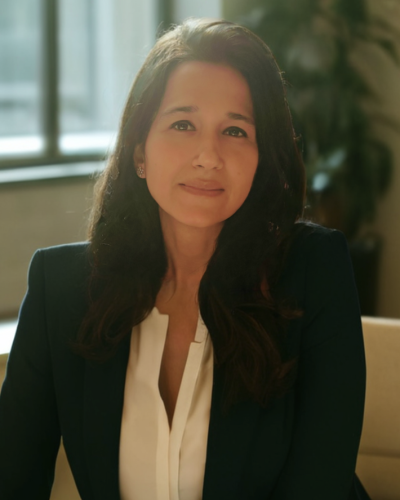
Vidhi Chugh
Founder & CEOReviews
Breaking Barriers: Women Leading Innovation in AI, Automation, and Cloud
Welcome to an insightful discussion on the critical role of women in technology, specifically in the fields of AI, automation, and cloud. In this session, our esteemed panelists shared their journeys, insights, and the importance of fostering inclusivity in the tech space. Let's dive into the key takeaways and reflections from our discussion.
Introduction of the Panel
We were introduced to our dynamic panelists:
- Shweta: A senior general manager at Schneider Electric with over 18 years of experience in project management, cybersecurity, and integration. She is a mentor for women in tech and advocates for an inclusive environment.
- Shruti: With 15 years of experience in enterprise IT, she focuses on building innovative technology infrastructure. Soon to lead engineering automation at Nokia, she is committed to empowering diverse talent in tech.
The Importance of Women's Representation in AI
Shweta emphasized the need for more women in AI and cloud technology, stating:
- Diversity brings various perspectives to the tech designing process, preventing biases in AI developments.
- Research, including a McKinsey report, supports that companies with diverse teams are more financially successful.
- Inclusivity in design leads to technology that better serves a wider population.
Barriers Preventing Women’s Progress
When discussing barriers that women face, Shweta highlighted the following solutions:
- Continuous Learning: Essential for confidence and competency in rapidly evolving tech fields.
- Strategic Networking: Building connections can open doors to mentorship and opportunities.
- Support Systems: A robust support network at home and work helps women focus on their professional growth.
Shaping the Future of Enterprise IT with AI
Shruti discussed how AI and automation are transforming enterprise IT and cybersecurity:
- The shift from static to dynamic AI models enables more proactive and efficient solutions.
- Hyperautomation combines AI with other technologies to automate entire workflows, enhancing productivity.
- Agentic AI models can predict, react, and learn, becoming critical tools in troubleshooting and security.
Uplifting Women in Tech: Personal Stories and Experiences
Shweta shared moving personal anecdotes highlighting the significance of mentorship and the ripple effect of empowering women:
- A powerful narrative about her mother’s determination to educate her daughters, despite societal barriers.
- The importance of becoming change agents to create a more equitable world for future generations.
Strategies for Building Inclusive Tech Teams
Shruti articulated her approach to fostering high-performing, diverse teams:
- Representation matters; being present in decision-making rooms is crucial.
- Create a culture of psychological safety that encourages team members to voice their ideas without fear.
- Commit to mentorship, recognizing the value of guiding others while advancing in one’s own career.
Final Thoughts: Navigating Challenges and Building Confidence
In our rapid-fire segment, the panelists shared succinct advice:
- Advice for Women Entering Tech: Continuous learning and owning your space.
- Key Leadership Trait: Empathy, which builds trust and unlocks team potential.
- Emerging Tech Trend: Responsible AI focused on ethics and inclusivity.
- Value of Networking: It's not optional; it's a growth strategy.
As we conclude, it is clear that women play a vital role in shaping the future of technology. By continuing to break barriers, uplift one another, and advocate for inclusivity, we can make significant strides in AI, automation, and beyond.
Thank you for joining us in this enlightening discussion! Remember, every small step toward inclusivity counts.
Video Transcription
Alright. So I think we are live and folks have joined us. We'll quickly start with brief introduction about what, all you're gonna discuss in this next forty minutes.And, I am hoping more people are gonna join in the meanwhile. So let's get started. I'm very excited for what's coming ahead. I'll go ahead and introduce myself first, and then I'm gonna have a round of introduction with the folks who have joined us. Hi. I'm Vidhi Chowk. I'm the founder and CEO of the one percent AI cloud. It's the place where we build personal brand and AI thought leadership with focus on, influence, brand, and visibility. I'm an AI executive, board member, and a global AI speaker. Talking about being a speaker, some of you might have also seen me in some of the sessions that I've delivered with the Women Tech Network previously.
But today is not about me. Today, the tables have turned, and I'm joined with a lovely panel on the topic which is very close to my heart, which is breaking barriers about women leading innovation in AI automation and cloud. So I'm so excited to open up this discussion. And today, I have joining with me starting with Shweta. Shweta is a dynamic leader with over eighteen years of experience in portfolio management, program and project management, cybersecurity, integrations, alliances, and acquisitions. And, oh my god, the list is so huge. So there's so much in this portfolio. As the senior general manager at Schneider Electric, she oversees a vast portfolio of 100 plus projects annually that spans across IT infrastructure, network, security, cloud, you name it.
Her strategic vision and commitment to excellence have garnered her significant recognition. She's a staunch advocate and a mentor for women in technology as we all are gonna see today. So she's dedicated to breaking barriers and fostering an inclusive environment, which is must for all the women leading technology today. So as a panel member at the global women in tech conference, she brings her vast expacy, vast vast expertise, and dedication to empowering women in technology. Welcome, Shraddha.
Thank you so much, Vidhi, for the wonderful introduction.
Thank you for joining us. And our next panelist is a dynamic force in the world of enterprise IT. She's a woman who's been leading innovation at the intersection of AI, automation, and cloud for over fifteen years. She brings with her a wealth of experience in building secure, scalable, and intelligent technology infrastructure for some of the most demanding sectors, including financial services. And I would say that this is one of the most critical sectors as well. So from transforming cybersecurity architectures to pioneering AI driven automation, her work has consistently empowered, like, organizations to move faster, safer, and smarter. So that's the trial we need to succeed in AI today. Are you able to move fast? Are you able to build safer?
And then are you able to use technology smartly? So she has led cross functional global teams, driven multimillion euro efficiencies through automation, and champion customer first, security first design across cloud native and hybrid platforms. So security first design is, I think, something I I I also discussed in, governance when you do, governance, first system design. So that's why I think, I totally resonate with building structures, which are security first. So she's also a passionate advocate for inclusive leadership, cultivating the next wave of diverse talent in tech. She's soon stepping into an exciting role as the head of engineering automation at Nokia and is pushing the boundaries of what's possible in technology, innovation, and transformation.
Please join me in welcoming the inspiring innovator, strategic thinker, and an unstoppable leader in digital transformation, Shruti's environment. Welcome, Shruti.
Thank you for the elaborate, description, Shruti. Thank you so much. And, good afternoon. Good morning to all the distinguished guests here. Looking forward to have a very informative discussion with all of you.
Likewise. And I see that already folks have started joining us. So now that we are done with introductions, it's right time for us to just start into the discussion today. And, I'm gonna have a there's a little bit of format that I've decided for discussion, and, I'm gonna open up some questions for both Shraddha and Shruti. I would like you to share your opinions on that. You know, what your experience has been, your insights. You have a massive experience of the of the last fifteen, twenty years into the industry. And then towards the end, we're gonna have some exciting stuff, which is more like a rapid fire questions, mainly because I think that that's going to bring an element of spontaneity.
So I'm gonna start with some open questions, and, you know, starting with you, Shweta. What I want to understand from you is that as a seasoned leader in the tech industry, what do you think? Why is it crucial to have more women in AI automation and cloud? And, specifically, I would like you to touch upon what kind of barriers do you believe, are stopping the progress that women can make in these fields?
Thank you, Vidi. I'm truly delighted to be here with all of you today to speak on this very important topic. I believe it is absolutely critical, to have women in these fields, right, AI, cloud, and automation. As we are building technologies that touch every part of our lives, it's very important to have all the perspectives at the table. So let's think about AI. Right? So now AI is embedded in everything, from health care services to hiring to the way we work and the way we live. So it is definitely important. And when these teams that are, designing these, innovations, if there is no diversity in it, then, we risk building technologies and solutions which have inherent biases. And, they might disadvantage a whole group of population itself.
So involving women will help us to avoid biases and to build technology, which is, for a wider population, more inclusive. So it's definitely very important. And, it is backed by research. Right, so Harvard Business Review, says that more diverse companies, also generate more, innovation revenue and can capture, different new markets. And, I have also recently, read a McKinsey report, which says that, diverse companies have more likelihood of, higher out outperforming financially. So this likelihood has jumped from 15% in 2015 to now around 39% in 2023. Another great example of inclusive thinking, in action is Apple. They have not only, marketed to women, but they have designed keeping the men in mind by featuring them as, creators, leaders, and building technology and products which are more intuitive and, lifestyle friendly. They have made technology feel, so personal and empowering.
The result of it is that we see a lot of increased, brand loyalty among women, increased adoption, and, bigger customer base. So having women in this field is not just about fairness, but it is also about being more innovative, more effective, and more responsible. Right? So now moving to the next part of your question on, barriers. We all know there are biases, there are stereotypes which have shaped the tech industry for long. While it's a long battle that we all have been fighting and it's a continuous journey, we have come a long way. Beyond these, I feel there are three important key areas that can help women to progress in these fields. Right? The first one I can think of is, investing in, continuous learning as these technology fields are rapidly evolving. It's important for everyone to keep current.
And, when women invest in these skills, they become more confident and competent as well. It will help them to take on new challenges. Right? The difficult, bigger challenges. And the next very important thing I feel is the strategic, networking, which can open doors for you, to maybe mentoring or, sponsoring or opportunities, which are otherwise not visible to women. The third is third very important one is to build a very strong robust support system both at home and at work so that when we are at work, we can fully focus on work rather than worrying about, you know, what's happening at home. And, similarly, when you're at work, it's very important to have a good network of mentors who can guide you and, trustworthy colleagues who you can go to and, help seek for help when you are in difficult situations. So, yes, it is barriers are real, So are the solutions. So it's all it's up to all of us to keep pushing at the solutions.
I totally agree with you, Shweta, on this. And, you know, there are so many points that I want to touch specifically on bias, but there's a story that I want to share, which I'll do it to towards the end of the discussion. Stories, I think, is how we remember the you know, what needs change and, you know, that stays in our mind forever. And relating stories, which are real life stories, which have touched some of our lived experiences. When we take back to technology, we know how to design those solutions. So I'm gonna reserve that towards the end of the discussion partially also because I want everyone to stay with us toward till the end of this discussion. But for now, thank you so much for your response. It was really insightful. And then I'm gonna come to you, Shruti, now. Look.
My what my what I want to really understand from you is, Shruti, like, you are someone who has led digital transformation across critical infrastructure, and now you're heading engineering automation. So how do you, coming from that lens, see AI automation and cloud shaping the next era of enterprise IT and cybersecurity?
Okay. So we all know that AI has been rapidly evolving. And, today as we stand in 2025, and when I reflect back on my journey, there is one note that I can see that stands out from my entire journey. It says that we are standing at the edge of a new frontier, a frontier that is shaped by three major technologies. That is AI, automation, and cloud. So today, let's dive a little bit deeper and understand how AI and automation have helped transform my journey, and this will also help transform the rest today. So, looking at AI, a few years ago, we were all concentrating on building static models that were generating text like LLMs. We were all curious to know whether we could build our own LLMs and what kind of LLMs are we working on, so and so forth.
So but coming across today, we are working on dynamic models, models that are called as agentic AI models. And these agentic AI models, when they are powered with orchestration frameworks like lang chain or lang graph, we see that they can connect different tools and databases together to build a whole new ecosystem. Now this ecosystem cannot just predict, but it can also react. So they are called react models. Reason being it can plan. It can act. It they they can learn. So they are self evolving models. Now these self evolving models, also help us make judgments and predictions so that we can be more, reactive in our approaches, especially when it comes to troubleshooting infrastructure related issues. And when we look at enterprise IT or cybersecurity, these aid agentic AI systems come in with multiple use cases.
For example, where we have anomaly detection in OT networks or cyber threats, cyber risks. We can also look at predictive analysis for different functions within cyber engineering using agentic AI. But when agentic AI is combined with automation, that's where the magic begins. So automation so far was all about identifying the repetitive tasks and figuring out a solution for that repetitive task, which I feel no longer exists because today, we're all talking about hyperautomation where we have AI, robotic process automation, and low code, low code platforms coming together again to automate the entire function or workflow.
So when we have this combination of AI as well as hyperautomation, that's where we are able to build a complete ecosystem that can automate a complete function right from scratch. For example, we could automate secure code deployments. We could automate, compliance enforcement. We could also automate have use cases where we automate event management and incident management right from scratch. So these are the solutions, which I feel are the use cases, when combined together with AI and automation make a huge difference. So when I look at it, in my opinion, we are not just transforming infrastructure. We are transforming the way we work, the way we think, and the way we lead.
So that's the opportunity that we have in front of us, and it's up to all of us on how we leverage and harness this opportunity.
Thank you so much, Shruti, for throwing light on that. The reason being, I'll give you one anecdote by having a conversation with one of the executive leaders. I feel so I gave a talk on cybersecurity and the low fear in that. Imagine five years ago when I was talking and they were this typical and and I think it must, you must resonate with that as, like, we have traditional indicators and markers of identifying the previous incidents. Right? So it's more of a reactive approach we used to have back then. And then we talk about AI, which can identify patterns. Right? And then it all of a sudden takes the cognitive load from a human expert and an operator, and then becomes more proactive in terms of giving them a leading indicator now that we see this as a pattern and this can, you know, play around or maybe be a threat or, you know, cybersecurity, and you need to raise up the second cybersecurity level in the in the organization.
Infrastructure is such a critical mass into the organization. Right? So now from AI, we are talking about agents and agentic care. Right? And the and what you mentioned is so, right, that agentic care and then we talk about automation, and that's where the magic unfolds. I totally believe with that. And I'm sure the people who are watching us also agree with that. And I can see already somebody saying that they're a cybersecurity consultant, and they are gonna ask you questions around how you can leverage security in the AI agents industry. So Yes. How do you see? Like, should we take that question now? Because we are I
can answer I can answer this right away. So there are as I mentioned, there are multiple use cases that we could leverage AI for when it comes to cybersecurity. And in and each and every function within cybersecurity, you can leverage agent API. A few use cases that I can think of right now is, about firewall compliance. We were able to build a model that was able to analyze each and every zone that we have defined within our organization, which is specific just for our organization, and it also compliance to the it also complies to the, policy documents security policy documents for our organization.
Now it was able to with in combination with all of this information, it was able to analyze each and every firewall rule, and it could tell us what would be the effect if I add a particular firewall rule or remove it. So before I make a change to the infrastructure, I know what is the impact that it is going to cause. So that's, one way how I look at it, and I know most of the cybersecurity consultants across the globe are looking at different use cases. But, I would trust me, the moment you start building the model and the model, as I said, it is self evolving and self learning, that's when you realize that the capabilities of this model are huge.
Amazing. So, when you mentioned that they can already see the impact that it's gonna make, are you talking about scenario analysis? Is that same, or is it like a different terminology for that?
So in it's not a specifically said scenario, but I could say, in infrastructure, we have different domains, different teams managing the network, different teams managing the endpoint. And it becomes very difficult for all of us to collaborate together and, you know, we have a change management system that we have to go through before we make a change. But it is not foolproof. But a model can analyze your complete network diagram, your WAN map, and could tell you a complete impact on what are the applications that will be affected if you remove a particular rule. So even before you make a change, you would know what are the applications that are impacted and what's gonna be outage. So what is gonna be the business loss or the or, you know, what, what's gonna be the revenue impact of that particular change?
Amazing. So the change that you make, how it's gonna impact everything downstream to it, you get a view of that beforehand you're making the change. Right? So that's very indicative of, you know, empowering you with all the knowledge and insights you need to know whether I should, you know, make or no make and a go or no go decision kind of thing. Right? Exactly. Amazing. Another thing that you mentioned should be about the, change management. So I see a somewhat related question here. I think we can take that now, which I'm gonna read it out as well and let me know, you know, if you want to take that or maybe I'm sure that you can also pitch in, that the change is happening. And, you know, we see that there are companies who have limited AI preparedness, which I you know, they're rightly saying as a low data literacy as well. And data literacy, AI literacy, they go hand in hand. Right? So AI adoption is a challenge throughout the industry.
And how do we see, about upscaling and the internal log to be more literate about that and automated solutions as well, not just AI? And maybe things about allocating increased budgets can help help us. So anything that you want to just share on that, your Sure.
Thank you so much for ask for bringing up this question, and I think your question is crystal clear. To answer this, I had the similar scenario maybe two years ago. I was not a developer. I was not a coder, and I was all of these AI and automation jargons were new to me. So what I did was, we had cross functional collaboration. So as you mentioned, preparedness and readiness for AI adoption is a challenge that most of the organizations are facing. So what we did was we once we reached out to the date, we collaborated with different business units within the organization, told us what the use case that we want and what is the output we would like to predict out of this model. And once they built the model, we realized that we do not have enough data to support.
So how we went about this is, we started training the model with the existing data. And as I mentioned, the models these lang models that are using lang chain and lang graph are self evolving. So they learn by itself. So every time you give in you upload documents, you give in network diagrams or, band maps, and you introduce anything new, it learns and it evolves. Every information that we got when in terms of application or infrastructure, we started uploading that to the model, and the model was able to resonate. So I think it's, it's important for us to start building these models and start utilizing them. And once we feel that they are good enough to go into production, we can start and push forward.
But, you know, I think this should not be a store shopper for any of us. We should still start moving on.
Maybe I can add, to it, Twiti. I think they were also asking about how we can adapt to this change. Right? AI is evolving, and, all the organizations are trying to also evolve parallelly. So I can see that in my experience, especially in the company that I work with at Schneider, so there is a huge campaign for people to upscale themselves. Right? So organizations are also providing platforms. Like, for example, in Schneider, we have Coursera. So through which there are various AI trainings that are available to the employees, and organizations are also encouraging employees to go ahead, upscale themselves. Right? So only when the talent in the company upskills, that's when, the company also can adapt more and more AI. Right?
And, the other thing that I also see is, we work on, say, you know, network infrastructure, cloud security. All the tools, all the enterprise tools that I see today, everything is coming up with AI features enabled in it. Right? So maybe a few years back, there was a SOC team, a security operations, center, right, which had lots of people to cater to all kinds of, security operations globally. But now because there are tools which have AI embedded in them, so they will also not only identify where the issue is, they'll also tell you maybe this could be the action that can fix this particular incident that it is saying. So tools are also becoming more and more intelligent, and that is how, we I can say that even with reduced workforce, right, maybe, long back, if we needed 100 people to do that for a big size of company today, those 100 people, we can, try to, use them for much bigger portfolio, not just a smaller one which needed lot of manual work before.
But now because of the advent of AI, there are so many features in the enterprise tools that, it can automate lot of manual work, which was otherwise manual work.
Absolutely. I agree with that. And with, I wanna move to the next round of questions, but I see, Pallavi asking suggest some essential training on AI? I'll try to take this question, and then will both of you also you know, please chime in. Pallavi, when you ask this question, immediately, one thing clicked to me. So when, I was delivering a session on prompt engineering, and we were discussing about, you know, how we are supposed to give enough context to the model for it to understand, absorb, internalize, and then maybe get back to us with the solution. So sometimes there's a lot of context that goes into this, for me to be able to answer this question is in terms of is it about, you know, the how to enter into AI or we are already at a certain level and then I just want to alleviate that knowledge? Maybe, like, I have a foundations of AI sorted and then I want to move to deep learning, NLP, computer vision, or within NLP, I want to move ahead and, you know, understand the architectures. So many things are here. Maybe I think your question is just a follow-up on the previous one, which is on AI adoption.
And if that is the case, then, there's one, particular road map that I've developed with LinkedIn Learning, which is available for free, which is on AI adoption. Maybe if you want, you can refer that. If you don't have a LinkedIn Learning premium, so you can just, you know, reach out to me separately on LinkedIn, and I can give you some voucher code which you can use that. I hope that is useful. If there is anything specific or in particular you want understanding on the particular training or knowledge, please either reach out to any of us, separately, and we would be able to help. We would need some bit more context. At least I would need that. And, with that, I think I am done.
So, Shruti and Swaddha, if you want to just share any of your, you know, go to essential training or something that you find is very useful, please feel free to do, road share.
Sure. Maybe, after the session is over, we could share a few links Okay. On go to sessions and training. But let me tell you, with these, one of the best, influencers, technologists that I've seen. I've gone through her videos and sessions. So she is active across multiple social media platforms. So she's one of the best person to reach out to.
Okay. So I think I'm flushing already if you're seeing that. I that's that's the kind of power and energy that I get from talking to, you know, female leaders and the leaders in general where you are, like, rooting for each and all success. So thank you so much for that. And with that, I also want to be very cognizant of the time we have, and there's so much more to unpack for all of us. So So I'm gonna go to the round number two, which is a question again coming to you, Shweta, in terms of any recommendation that you want to give to all of us to foster a more equitable world. You know, there is no better world that I could find, you know, that we all should be putting our attention to here.
Attention is all we need, and we need that attention to putting a, effort to make the world more equitable. People keep giving lot of recommendations. But today, I just want to hear something, you know, from you, which is more actionable and something that we all can take back away from this session.
Sure, Vidi. So it's a powerful question. There is no straightforward answer or a formula that I can give. But maybe, I can tell you a a story, a real story, which is very close to my heart. So way back in 1960. Right? So a girl, Shambhala, born in a rural small, village, in Telangana, India into agricultural family. So family was, relatively well-to-do, but they did not, believe in educating a girl child. But that girl was very brilliant, and she was determined. She went on to study in a government school in that small village because her parents would not buy her new books. She would, take books from the older students, previous year students, and she would study.
She would every day before going to the class, she would complete her assigned household chores each morning. When she was around 11 year old, she was in seventh grade. Those days, in seventh grade, we, there was board examinations, like a common exam for all the schools. So she went, sat for her exam. They gave her the question paper, and she was, just, you know, staring at the question paper. The principal who came for the investigation, saw that girl and asked her, what happened? Why are you not writing? Then the girl said, I know all the answers to the questions in this paper, but I don't have a pen to write. Then that principal gave her a pen. She wrote all her exams, and, she went on to become the district topper. The district collector also announced a monetary reward to encourage her, further education.
In spite of that achievement, she was not allowed to study further. That young girl took a quiet but a very powerful resolution that if she ever has daughters, she will ensure that they can study as much as they want. Years later, she fulfilled her resolution. She supported her daughters to study as much as they want and, give every opportunity that she could to them. One of her daughters, also studied at premier Indian Institute of Technology, IIT, in India as well as ISP. And, that daughter is right now here in front of you sharing her story. Yes. This is the story of my mother, and, her resolution has changed my life. And through me, it continues to change the lives of people around me and who I mentor. So my recommendation is this.
If you have ever faced any bias, discrimination, or exclusion, let that fuel your resolution. I urge you to take a personal commitment that you don't let this happen happen to anybody around you, be it at work or at home, that they don't have to face similar barriers. Be the one to open the doors, share that pen, and believe, in someone's potential. So when we all become, change agents in our own spheres, I'm sure we will move more and more closer to more equitable world, level playing field for every one of us.
You know what, Shweta? I'm typically a very fast speaker. I speak very fast. I'm never at loss of words. So what if I say that I'm at loss of words now? Not sure moving. It it's not even a clue to your lived experience coming from your family and the way you have shaped shaped that narrative. And then it's, I think, about how you perceive that and, you know, the narrative you pass. You choose to pass on. Choose is a word I use here. What you choose to make out of that situation is what makes a lot of difference. And, if each one of us can be that change agent for for anybody. So what I do is, like, you know, look to your left and right and see whoever you can make, for whoever you can make the world a little better place to live in.
And if everyone kind of thinks like that, it's like, nothing can stop us actually. Right? Because it's not about Meredith. It's about the opportunities. It's about opening that door. Some people don't even know that exist.
Yes. Yes.
It's such a wonderful, anecdote that you've shared from your personal life, and we are we all are honored to be a part of that, life experience of you and your mom. This there is a story that I could have shared as well. Like, I have a lived experience too, but there are two stories that I owe now to all the people who are watching us, and both are gonna come to us. And only if we have time left Because the big conversation is going I don't think that we would have time, you know, towards the end of the discussion. So I'm gonna go now. And the question for you, Shruti, is that again, so as a woman leader, tell me what strategies have you taken that have helped you break those barriers and then, you know, go ahead and build more inclusive, culture and, you know, you've led such high performing tech teams.
So what is the success recipe? What goes as an ingredient into building such kind of tech teams?
Okay. So to answer your question, Vidi, as a woman leader, breaking barriers has not been easy, but it has been worth it. I must tell you that, I've learned through my experience that representation matters. Very early on in in my career, I realized that, it's important that in rooms where decisions are made, your voices are heard. And to do so, you need to build a very high perform and also to build a very high performing team, it's important that we have certain, qualities within us as leaders. So I committed to ensure that, I build a diverse team, not just on paper, but a team that can act inclusively, and they feel inclusive as well. So while we look at promotions, it's important that we promote people based on, their caliber or potential and not just on pedigree.
It's also important, that we create a psychological, safety safe environment within our team so that they can all, voice their opinions and come up with different ideas and solutions and not care about what would be the after effect of the proposal that they just pitched. So apart from this, I've also, focused a lot on mentorship. I am somebody who very strongly believes that at every part of your career, every stage of your career, it's important that you have somebody to mentor you. Try starting from the level one to being a VP, or above for the going further above, you will need to have a mentor who can guide you through, look at what if what you've achieved and what's your path ahead. So, apart from that, I also believed in lifting people while I grow. So, while I climb up the ladder, I've ensured that, I also tried and mentored a lot of people across my organizations and outside my organization so that, they can climb up the ladder as well.
That's So leading so in short, leading boldly and mentorship have been the two key strategies that I Yeah. And you
have a question coming up your way, which is how did you find your mentor?
Okay. So there are different ways. I have mentors within my organization. Most of the organizations have, mentorship programs running within. But apart from that, I've also reached out to mentors, through LinkedIn. I figured out people who, whose profile I found, was resonating to my career path or aligned with my career path, reached out to them with a very short message saying, hey. Your profile looks very impressive, and I would one day want to have the same, skill sets, that you possess. Is there could you spare some time in mentoring me? So I have received responses from people. Most of the leaders are open to mentorship, within your organization and outside. So I think that's a very good, way to go ahead and find your mentor.
Great. And I'll just add one more thing. So what I've seen also is that as I am growing up ranks, right, I realized that mentorship is a two way journey. The people I mentor, they end up teaching me as well a lot because when I meet people who are ten years younger to me and they come to come in my life and they ask me certain questions, it ends up opening up some of my blind spots as well, something that I might not have been aware of.
Right? And then I see two way mentorship. It's also about when I reach out to somebody as a mentor. And like you mentioned, I I've always done that. Right? I've always been open up about I don't know these things, and I know a guiding light or somebody who is, you know, maybe two steps ahead of me and can show that light to me. Right? How how to navigate that journey. When I do that, right, I I I always assume that there is no, blanket rule. Like, you can randomly reach to people who are just ahead of you. So the the personality match also needs to sometimes happen. Like, I'm a different personality. And then if I go ahead and look for mentorship from somebody who has not had a similar journey like mine, am I am I looking to be that person? Right? Sometimes when you look at a mentor, you feel like, maybe you want to take up that shoes. You want to take up that path.
So, whenever I write a note for mentorship, and I think I am a person who looks more into words, the kind of words you put in your inspiration or the the thing that you're looking forward or you're seeking from that mentor. Right? The words you choose make a lot of difference. When I write, I specifically write about, you know, what aspect of their career I've resonated with or their personal professional life. I also write about social professional thing. It's not just like I'm looking for learning more of career bites from you. And then I typically write that at this stage of career, I have x y z things. I've done that, but I felt like I'm running short of this kind of skill, which is more more typically, it's a soft skill. Right?
Tech skill is something we all have been, learning from our office environment. Right? So it's a soft skill, critical thinking, you know, influencing without authority. How do you step up? How do you, get visibility? For women, it's about, you know, being able to speak up in rooms where you might feel, like an imposter and you feel like, what if what what if I get judged? What if I don't get listened? What if nobody listens to me? I'm being me being paid attention to. What if I'm not asking the right question? That what ifs are so much running in our minds. Right? So I used to write all of those things, whatever, were running on top of my mind and with which specific area I wanted to kind of need change in my life.
Right? And whenever I've done that if I simply write, I'm, you know, with each I'm looking for mentorship. Would you be open to kind of open up some slots for me? Hardly would you get a response. But if you'll try something like that, I have reached out to who's who in the industry and have never received a note. I just trust you.
That's so great.
These folks, were super, not I shouldn't say super powerful, but, like, super busy, actually. And I never used to expect even ten minutes from them. And you wouldn't believe the the moment I used to call them. It used to be, like, most of the time, the folks went to US and I was in India, and I used to think that, you know, the time overlap is not there. So if even if I'll used to give I used to give them a call, it used to be a ten minute long conversation. I'll give you I'll give you a quick call. I'll tell you what state of credit I'm in or what I'm going through, and you can just give me quick bites, and I'll cut it off because it's either early morning for them or late night for them.
Right? And you wouldn't believe that ten minute conversation went over for how many hours? Three hours. And you can't expect that from person who is so senior because every time I was saying I need to I think I should cut disconnect the call because it's too late at your office or something, and they were saying that it's never transactional. It's never transactional. It's always about you also getting a lot of insights from somebody who whom you are talking to. Right? You end up learning a lot. So I think mentorship is something which can open up our, approach towards career, towards how to lead and maintain a balance. Balance is, you know, something that we all struggle with. How to live a purposeful life. So I think I've given a long stance on mentorship.
So that that is from
my side. And then now I think we are which
is While we're talking about mentorship, Adi, there is one insight that I really wanted to share. So this came from one of my mentors who was a senior women leader. Okay. When I went to her and I was discussing about okay. So this is so far my career journey. I want to move here. Tell me what gaps, you know, what negatives should I try to, you know, overcome? What should I bridge? So then she told me, there is another way of looking at it. Find out your strengths. Right? And, rather than trying to focus on where you are lacking, where is the gap, what are your negatives, try to focus on your strengths. What first, identify what are your strengths and try to leverage those strengths to move ahead, right, to and also to build your confidence.
So that is something which, really, you know, touched me and resonated so well with me that, it changed the way that now I look at things. I just thought of sharing with all of you so that it can help others as well.
Absolutely. Like, I always say that, you know, one of these execs that I'm talking about, they told me that after after having this whole long conversation, they made the end of the converse the end of at the end of the conversation, the conclusion was that as a mentor, they don't actually do anything drastically different for you.
Right? They just make you see yourself little better. Yes. We are not able to understand much better by ourselves. They just listen to us being our sounding board. You know? I kept talking for three hours or something. And then at the end of the conversation, they showed me just a lens through which I needed to just look at myself. And that's just be the person who is, you know, vouching for herself. Right? You know? Just giving a pat on my back and saying that I'm doing good how far I've come and, you know, like you're saying, focusing on the challenges. And then being gentle to ourselves for the things that might not have worked because we are not perfect.
I think I, as a woman, feel like that, and I I'm I mean, I might I might be speaking on overgeneralizing on behalf of others as well, but I try to be, you know, a picture perfect as well a lot of times. We are aiming towards perfection, which is, you know, sometimes we sabotage ourselves a lot, which is, you know, the place where the mentors come and they give us a little different lens. And then all all of a sudden somebody who just believes in you, that feels you that makes you feel more empowered, and then you are just about to, you know, climb mountains because of that. Alright. So that is great. Should we continue with taking the questions? Because I want to be very cognizant of time also, or do you have another round as well? So, I think I can park the rapid fire. I had to do something, but I can take one, question from Tanu, which is, like, what advice would you give to women looking to change or shift domains?
I can take it first, Diti.
Okay.
So from my, learnings in my career as well as, from experience working with other incredible people on my team, what I feel is it's not always your background or your past work experience that matters. It's all also about, the curiosity, the willingness to learn, the resilience that matters. Right? The attitude, towards, your attitude towards moving to a new role, that matters or not. So I have seen, people, from different backgrounds, different, even on technology fields, different domains, different roles, have seamlessly moved into a project manager role, on my team. And, they are delivering projects on, say, cloud acceleration, cybersecurity. So while I say they are seamlessly doing it, it doesn't come very easily. They are putting a lot of effort into it. They are upskilling themselves. So what I would say is identify your, existing, strengths, whether it is, say, communication skills or, say, stakeholder management, or problem solving, and then build on top of it.
Then understand what else you need to go to the role that you are aspiring or whichever domain you want to move. So build on top of your existing transferable skills that you think can be beneficial to you in the new role as well.
That's a wonderful advice. Wonderful.
To add on to that as well, Vidi. Thank you. A quick advice from my end. This is how I changed and shifted domains. So whenever I wanted to change to a particular domain, I identified the buzzwords in that industry because, I I was not I may or may not be familiar with those technologies. So I did not really find the time and, energy to sit together and for us together and study those technologies in and out. But what I did is identify those buzzwords, started following technologists and, influencers on different platforms who speak on these, passwords. Once we understand the capabilities and features of the technology, and then we start we start getting more and more involved, and we start investing further time. That's how we start. That's how I started. And that's how, I've also asked most of my mentees to go ahead and start learning on different domains.
So this this, small trick does really work, especially, in today's era where we are so focused and, glued to our phones. So I think this is how we start. Once we start, then it's important that you also find a mentor in that particular domain and then start guiding your complete career towards that.
That's well said, Shruti, because, I totally believe that the world of education has been democratized to such an extent that information is almost always available on Internet. Yes. Yes. Given the kind of digitization that has happened over the years, it's more so available. The only problem with that is that there's, you know, difficult to differentiate between the noise and the signal. But like you aptly pointed that, you know, the people who have authority in that field try to follow them. You know, they are not after trends or something. They're not chasing any hype. They're gonna give you the truth behind that technology change, and then you can just follow their advice to the level when you develop that understanding good enough, and then you're able to run your own flywheel.
Right? So that's amazing advice out there. Alright. Any more questions? Anybody, please feel free to chime in, ask your questions. I think the questions and the insights that are coming from the responses from the panel is more valuable for me to take on. Otherwise, I'm gonna have a quick rapid fire. And I see 38 people are still with us, so I don't want to kind of lose on to that as well. Alright. So as I keep getting the questions, Shruti and Shruti, there is, going to be the second one for us in which I'm gonna ask you some questions, which is going to be fast for me. You know that I speak very very fast.
And then I just want that one line, quick response, a byte byte form response from you, and it's going to be, like, in a turn by a round robin fashion. So I'm gonna start now with the question number one, which is, what would be that one piece of advice you would give to women who are entering AI automation or cloud careers?
I would say continuous learning because these technologies are rapidly evolving. Your ability to adapt will set you apart. Amazing. Shruti? I would say, you know, it's important that we own our seat
at the table. So representation matters. It's important that whenever your organization is making key decisions or being a part of, training programs within your organization, these domains is what's going to kick start, and going to allow you to enter these domains very soon.
Amazing. What leadership trait that has helped you succeed? Empathy. So it helped me to build, trust and also unlock the full potential of my team.
Right.
So apart from empathy, from my end, it would be resilience, maybe because it's important that you stay connected and stay focused on what you want to achieve.
One one emerging tech trend that you're most excited about. You're looking forward to it.
Okay. And
responsible AI. So as AI is becoming more and more powerful, I'm really excited to see how we would, design, to make it more ethical, inclusive, transparent. Yeah.
Right. Should be. For me, it would be by default agent API, and I I forgot to push in the combination of both of them.
Great. What's that one thing that you wish you knew earlier in your tech career?
That, networking is not optional. It is a growth strategy.
Right. So what I think I should have known earlier is confidence matters as much as competence does. So competence and confidence go hand in hand. They are equally important.
Amazing. These are power bites you guys are giving. Right? Okay. So in what word, what does inclusion mean to you in the workplace?
On the moment. Sorry. I missed that. Empowerment. Empowerment. Nice. Shruti.
To me, inclusion means respect, respect from my team members and respect from my leaders above.
Amazing. Amazing. So that's it. I think the rapid fire is done. I'll take more questions if you have. We are also approaching time. Right? So, Shruti and Shruti, so
do you have a Yes.
From here?
Yeah. Please. You're approaching time. I know I am due for two stories, but I'm not sure, like, whether the time allows or not. So you can ping me in the chat box if you want to hear it now or separately borrow one from me on LinkedIn chat or wherever you want to tell me. Great insights. Amazing. Thank you, everyone.
So it looks like you have requests, from somebody to speak up the story now. Maybe you could accommodate one quick story.
Oh, some did somebody write? I I think it didn't take okay.
They they they did they did it right now.
Okay. Good. So I think I just start, sharing my story, couple couple of stories actually. And then, you know, I don't know whether people will drop off in between, but I'm I'm hoping that the story is so engaging enough that they don't. Okay. So the one then we were talking about representation matters. Right? So I'll give you an example of what happened. I want to particularly say it because when we are not often able to relate what ethics and responsibility are inclusivity means when we take the solution back into technology. So there is this, person who posted on LinkedIn. They were she she's a lady. She went to a pharmacist on airport, and she was having a cough problem or something. Was asking for strep cells or maybe some kind of cough syrup.
At the pharmacy, there's typically very small stores and outlet where you go and ask for it. She was waiting at the counter for checking out and making the payment so that she can make a move. And during that time, there was another person who came who was standing in the line and was constantly troubling the people around just to help him, find, nail print remover. Okay. So first of all, this itself is funny for me. Like, your person is looking for nail print removal and then there's other person standing and there's this whole chaos there. But the whole situation becomes important for all of us to know is that this person who is requesting for finding a nail print removal because that person wants to buy it, is not able to find it.
They go and ask the staff assistant even they are not able to find it, and then both of them together go to the cashier where this, lady is in question who is actually posting this whole thing. She was standing there. And now the cashier instead of, you know, cashing out this lady and maybe giving the receipt to this lady, also joins these two people to help them find an air condition mover. Then the fourth person passerby also joins them. And now within the small shop of pharmacy at the airport, these people, are struggling. And this lady says that, see, I'm getting late. What do you need? Let me know. And, this they said there's an able to move it and without taking more than a second or so. So she knew she'd moved around.
It's a small shop, and she knew this is kind of nail print removal. She gave them immediately her, bill also got checked out. Now what do you see from this? The other four people had not even seen what a nail print removal looks like. They were actually looking by label and label category going through the aisle trying to figure out because it's taking them so much time. Right? So that's the kind of message we want that had there been even one single female assistant there in the shop, would have helped resolve the situation much faster because you don't know you've not lived that life. You've not been in those shoes. Right? You don't have that that kind of lens, which is needed. Even in AI, it's not just in the pharmacy shop or anywhere else. Right?
Even in AI, we need that kind of lens because when you're designing a solution, you don't know what you're missing out unless you have diversity. So that's typically happened with one of the tech form as well who were making a recruitment solution where female CDs and resumes were not part of the training data. So that's the kind of message and the story that I want all of us to take away with us. With that, I have another story, but I don't think we have time. Okay? So but 35 people are still there. So do you think the session will, end on it soon? Because I'm seeing some notification on my screen. But I think the other story might be a little longer and it can hold on, and then all of you can, you know, reach out to me separately for that.
But thanks a lot for everybody to, you know, be a part of this lovely conversation. Thanks a lot, Shadi and Shida, for, you know, sharing your insights, your career journey, and everybody asking those wonderful questions. I believe that, you know, it discussion would be just a monologue when you're just talking about things that you have experienced throughout your career unless the you get the right audience who ask those kind of amazing question that makes it, you know, bidirectional things.
So thank you so much again. And, I think I'll see you around then, everyone. I think there is a common place where you can find me and Shruti and Shruti too.
Thank you. Thank you, everyone, for having us.
Thank you, everyone. Bye.
Have a good
day. Bye.
No comments so far – be the first to share your thoughts!