
From Non-Linear Careers to Confident Leadership: The Myth of Feeling Ready
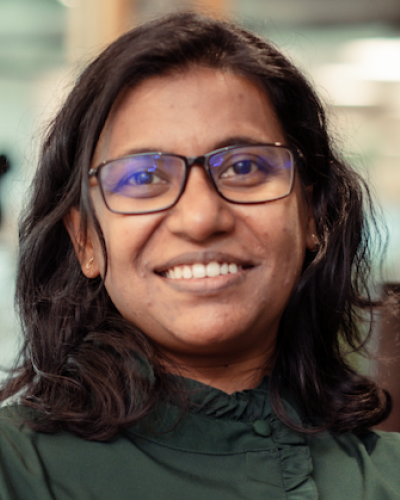
Merry Mathew
India Lead, Sales EffectivenessReviews
Unlocking Your Potential: The Path from Uncertainty to Confidence
Welcome, everyone! I’m Mary Matthew, and today we are diving deep into a topic that resonates with many of us – the journey from uncertainty to confidence in our careers. With over two decades of experience in marketing operations, leadership, and training within the cybersecurity industry, I've witnessed firsthand that capable individuals often hesitate due to psychological barriers. Let's explore how we can overcome these hurdles together.
The Psychology of Hesitation
Many capable people delay taking crucial steps in their careers, especially women. Why does this happen? It boils down to a simple yet profound understanding of our brain's design. Our brains are wired for safety, not growth. They prefer the familiar and predictable. Growth, however, demands stepping into the unknown, which introduces discomfort.
- Understanding Discomfort vs. Incapability: Many capable individuals confuse their emotional discomfort with a lack of ability. This perception can stifle potential.
- The "Confidence Myth": Contrary to popular belief, confidence does not precede action. Instead, it often stems from the action itself.
Embracing Nonlinear Career Paths
As I reflect on my career, it's clear that each significant growth moment occurred before I felt ready. My path has never been linear. It encompasses marketing, operations, and leadership roles across diverse industries, culminating in my current position in cybersecurity.
Initially, I viewed my myriad experiences as fragmentation, but they have become my strengths, fostering adaptability and modern leadership capabilities. In fact, I've learned that:
- Nonlinear careers are a source of adaptability.
- Leadership is about creating clarity and fostering a learning environment.
Mindset Shifts for Growth
Transformational opportunities often present themselves when we least expect them, typically arriving right before we feel ready. Here’s how to prepare for that leap:
- Stop Asking, "Am I Ready?" Instead, ask, "Am I capable of figuring this out?" This shift reframes uncertainty into opportunity.
- Separate Discomfort from Incapability: Pause and evaluate whether your hesitation stems from real unpreparedness or emotional discomfort.
- Focus on Evidence, Not Emotion: Reflect on past experiences where you’ve successfully adapted. Use that evidence to propel yourself forward.
- Take Micro Brave Actions: Confidence builds through exposure. Start small by speaking up in meetings or volunteering for visible projects.
- Embrace Fear as Growth: Recognize that fear isn't a stop signal; it’s often a sign that you are about to expand your horizons.
Conclusion: The Journey Forward
If I had waited to feel completely ready before making significant career decisions, I would still be stagnant. Instead, I embraced a mindset of continual learning and growth. As we venture into the rapidly evolving job market, the ability to adapt becomes paramount.
So, if you're standing at the crossroads of a leadership role, a career transition, or any transformative opportunity, remember that growth often comes before readiness. You are not alone in these feelings. Together, let's redefine our approach to uncertainty and cultivate pathways to success.
Thank you for joining me today. I welcome any questions and look forward to continuing the conversation on LinkedIn. Let's empower each other to unleash our fullest potential!
Video Transcription
Hello, and welcome, everyone. I am Mary Matthew, a sales and leadership enablement professional with twenty years across marketing operations, people leadership, business partnering, training, and enablement. Hey. Hi, Gabriela.Today, I work in the cybersecurity industry, sales teams and leaders grow through learning, communication, and capability development. I'm also very passionate about mentoring, coaching, and public speaking, especially around career growth, confidence, and leadership. Quick disclaimer before we begin. Yes. I used AI to help generate the visuals in this whole presentation. The images may be artificial, but I guarantee the stories are real. So this is still very much a human presentation. With that, let's move on. Here is what I want to take all of all of us today. First, I want to explore the psychology behind why capable people hesitate because this is far more common than most of us realize. Hi, Kehinde.
Then I wanna talk about something I care deeply about. Why nonlinear carriers are not weaknesses to to explain away to people, but often the very thing that builds adaptability and modern leadership. We will also unpack what I call the confidence myth, the idea that confidence must come before action, when in reality, it usually comes after action. And finally, I want to leave you with practical mindset shifts and small actions that can help you stop waiting for the perfect feeling of readiness before even taking the next step. And, hopefully, by the end of this session, you will start looking at your own career journey and maybe even your uncertainty a little differently. That is my objective. Moving on. If someone had shown me my future resume fifteen years ago, I probably would have laughed away.
Marketing, operations, people management, Asia Pacific wide leadership role, business partnering, training and enablement, cybersecurity, mentoring, coaching, public speaking, it does not look linear. And for a long time, I thought that was a problem because we are taught that successful carriers are supposed to make sense, isn't it? Step by step, role by role, everything connected neatly. Mine did not feel like that at all. But over time yes. I completely agree. Yeah. Same is the case. So but over time, I realized something important. No. Every major growth moment in my life happened before I felt ready for it. Every single one. And that made me start asking a bigger question. Why do so many capable people wait to feel ready before they take the next step, especially women? Because the people waiting are often already capable. Actually, I'm getting curious now.
In the chat, can you type one thing you have delayed doing because you didn't feel fully ready? Can you? Maybe it is applying for a role, speaking publicly, changing careers, posting online, starting something new. Just one word or one sentence. Yes. I see. Tejund has put in management role. How about others? Speaking publicly. Completely get you. Starting a business. See, what does this tell you? We are not alone. Right? Like, we are not alone. And psychologically, this makes complete sense. Yeah. Pruthu says sales and marketing. The brain, our brain, is designed for safety, not growth. Our brains prefer familiarity, certainty, and predictability. Growth usually requires the opposite of that. Growth ask us to become visible, enter unfamiliar environments, risk failure, perform before certainty exists. And the brain in interprets that as danger. When I say danger, not physical danger, social danger. What if I fail? What if I embarrass myself?
What if people realize I don't know enough? And then the brain creates a very intelligent sounding delay. I need one more course to complete. I need another certification. I need more preparation. I will apply next year. But often, the issue is not capability. It is discomfort, and those two are not the same thing. One of my biggest lessons about this came during my time at NetApp. At that point, I was leading a team. Things were running smoothly and honestly. Life was comfortable. I had even groomed my successor. Everything was stable, predictable, safe. And for many people, that would sound ideal, but for me, comfort started feeling risky. Because every time I become too comfortable, something inside me disperse, Mary, it's time. And around that time, an Asia Pacific level role opened up. Now, logically, staying where I was made more sense. I knew the role. I knew the I knew the environment. I was good at it.
And the Asia Pacific role on the other side was bigger, more visible, more uncertain. And, no, I was just not ready. I did not feel fully ready at all. But the thought of influencing beyond my immediate team pulled me forward more strongly than comfort held me back, and that became one of the biggest mindset shifts in my career. Sometimes staying safe is actually the bigger risk. Then came, an even bigger pivot, moving into learning and enablement at Salesforce. Now this move made very little sense on paper. I didn't have formal enablement experience. I was not a product expert. I didn't have the perfect background for the role. And, honestly, I almost talked myself out of applying, but I applied anyways. And after the interview process, the hiring director told me something I still remember word for word. He said, Mary, you have a little of everything. And then he added, and the hard work you put into the process, the case study really stood out.
That sentence changed how I viewed my career because for years, I had looked at my nonlinear background and saw a problem. I saw fragmentation, a little bit of this, a little bit of that. But suddenly, I saw adaptability, communication, operations thinking, people leadership, business understanding, learning agility. And then came the hard part. Getting the job was one thing. Learning the role was another. Yes, Sarah. Thank you for sharing that, that you have a little of everything. So and I struggled, you know, after getting the job, and I asked for help constantly. I failed at things initially. I had moments where I questioned myself, but slowly, I got the hang of it. And that experience taught me something important. Readiness does not come before growth. Readiness comes through growth. Now I want to be clear here. I am not glorifying burnout or struggle for the sake of struggle.
Because sometimes when we talk about growth, especially across generations, there is this question. Why make life harder than it needs to be? And, honestly, that's a fair question. But we're also living through one of the fastest periods of technological change we have ever seen. AI is changing industries in months. Skills are becoming outdated faster than ever. Roles are evolving constantly, which means adaptability is no longer optional. The ability to learn, pivot yes. You said it, adaptability, and and becoming a beginner again. That is becoming one of the most important professional skills of our time. And nonlinear careers build exactly that. And then came my current chapter working in cybersecurity enablement. Now this was another moment where I felt completely outside my comfort zone because I'm often standing in rooms with professionals who have fifteen years, twenty years, sometimes twenty five years of cybersecurity sales experience. Let me be very honest. I am not the most technically knowledgeable person in those rooms, not even close. And initially, that intimidated me.
I kept thinking, how do I lead workshops for people who know more than I do? But over time, I realized something very important about leadership. Leadership is not always about being the smartest person in the room. Sometimes leadership is about creating clarity, facilitating learning, asking better questions, connecting ideas, helping people think differently. And ironically, my nonlinear background helped me do that better because moving across functions had taught me how to adapt quickly, communicate clearly, connect with different kinds of people, learn publicly without ego. That is when I truly understood this. Modern leadership is less about knowing everything and more about learning continuously. I I'm curious. In one word only, put in the chat, what is the emotion you feel right before taking a big leap? In one word, what is the emotion you feel right before taking a big leap? Fear fear fear excitement. Thank you for sharing. I did not see confidence there. Right?
We often think confidence works like this. Right? Confidence leads to action. By the way, we are not alone. All of us feel the fear. All of us feel the lack of confidence, right, when we are taking a big step. So real growth usually works like this. Action leading to evidence, evidence leading to confidence. That changes everything because if confidence comes after action, then waiting for confidence before action becomes a trap. And I see this constantly in my mentoring conversations. Many men ask, I think I can do this. I'm going to apply. You know? They say, should I apply? And many women ask, what course can I do before I apply? See the difference? That difference matters because one approach treats growth as experimentation and the other treats growth as permission.
And if we keep waiting until we feel fully ready, many opportunities pass us by. Many capable people are not waiting for skill. They're waiting for certainty. But certainty is emotional, not factual. And emotional certainty almost never arrives before growth level opportunities. Now this slide is very personal for me because when I look back at the biggest decisions of my career, I don't think I was ever 100% ready for any of them. My Asia Pacific role, probably 70% ready. Moving into enablement, maybe 60% ready. Stepping into cybersecurity workshops with highly experienced sellers in the room, definitely not 100%. And yet, those decisions changed my career, changed my life, which made me realize something. Maybe readiness is not supposed to feel complete. Maybe growth opportunities are designed to arrive before certainty arrives.
Because if we waited to feel fully ready for every important step, most of us would stay exactly where we are. And, honestly, when I say 70% ready, I don't mean careless. I prepared. I worked hard. I asked for help. I learned constantly. But there was always a gap between what I already knew and what the next version of me wanted to become. And I had to walk into that gap before I felt comfortable. That is the part we don't talk about enough. Sometimes the next level of your life requires you to move before your confidence catches up. So what can we do? This is the part this is the part I want to talk most about. Number one, stop asking, am I ready? This question creates fear immediately.
Instead, ask, am I capable of figuring this out? Because leadership is not about already knowing everything. It's about adaptability inside uncertainty. Number two, separate discomfort from incapability. The next time your brain says I'm not ready, pause and ask, am I really unprepared or am I emotionally uncomfortable? Those are two very different things. And many many carriers stay smaller than necessary because people confuse discomfort with inability. Number three, use evidence not emotion. Feelings change daily. Evidence matters more. Ask yourself, have I adapted before? Have I learned difficult things before? Have I solved unfamiliar problems before? Then you already have evidence of capability. Take micro brave actions. Confidence is built through exposure, not overthinking. Speak once in the meeting. Apply before you feel fully ready. Volunteer for one visible project. Share one idea publicly. Small, visible actions slowly retrain the brain. Five, stop treating fear as a stop signal. Fear is we we typed. I saw so many typing fear there. Right?
It's not a warning signal. Sometimes fear is simply the feeling of expansion. Your identity is expanding. Your visibility is expanding. Your world expanding. And that discomfort is not proof you should stop. It may actually be proof that you are growing. If I had waited to feel fully ready before every major pivot in my life, I would still be waiting. And maybe some of you are standing at one of those moments right now, a leadership role, a career transition, a visible opportunity, a reinvention. And maybe because the truth is most of these transformative opportunities arrive slightly before you feel ready. That is why they transform you. In the age of AI, the people who thrive may not be the people who know the most. They may be the people who adapt the fastest.
Thank you very much. I know we have just one minute for questions, and I had to rush towards the end. I hope this was this was hopeful. Any comments from any of you? Thank you, Sarah. When we take a role, we don't feel ready. What is one mantra or mindset shift to use to stay grounded in that first week? The beginner mindset, Selim. Beginner mindset, Start the willingness to start all over again. Right? So that is one thing that I would stay by. Thank you, Madhuri. Thank you, Stacy. Thank you, Anastasia. Thank you, Ritu. Thank you, Sibal. Yes. Yes. Yes. So if we have, you know, time, you know, please reach out to me on LinkedIn. We can continue this conversation over there as well. Yeah. So that is being growled. Gabriel is asking how do you avoid overwhelm in pursuit of becoming more adaptable?
And that is our common mindset shifts, right, that we can't do it all. Getting help, asking for help. Beautiful thing about asking for help is you always get help. Okay? And there is this proverb. If you wanna go fast yes. Thank you. Thank you. Thank you, Selin. If you wanna go fast, go alone. If you wanna go far, take a team with you. So get all the help possible. That is how you don't overwhelm yourself. Thank you so much. Bye, everyone. Hoping to continue the conversation over LinkedIn. Just you can send a message, and let's get connected and continue. Thank you, Selim.


No comments so far – be the first to share your thoughts!