Empowering Your Future: Journeys of Young Women Product Managers
Sadhana Gupta30:292024
Recruiters kept telling a five-year developer she wasn't equipped for product
Five years as a software developer at Amazon Music and Audible, and recruiters still told Snigdha Gupta she was not equipped for product roles. Her fix was to treat herself as the product and employers as her customers. With Sadhana Gupta, a Senior Product Manager at Walmart who moved from Hong Kong fintech, she tackles what every career switcher asks: what closes the gap between wanting the job and getting it?
Learn how two women pivoted into product, found mentors and chose certifications that count
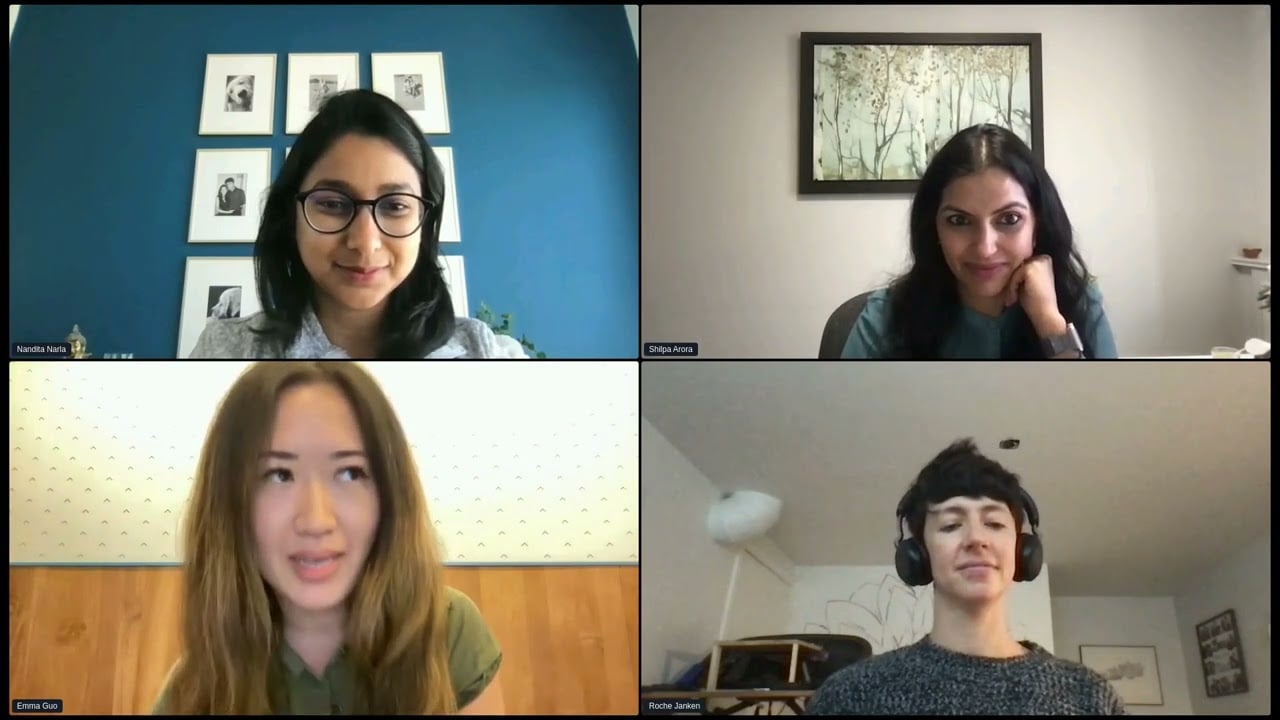
In this fireside chat moderated by Vanessa Manz, Sadhana Gupta (Senior Product Manager at Walmart) and Snigdha Gupta (incoming PM intern at Autodesk) describe how they moved into product management from business analysis and software development through Carnegie Mellon's MSPM program. They argue that a successful pivot rests on an honest gap analysis, persistent long-term mentorship, strategically chosen certifications and the confidence to stand out as a woman in a male-skewed field.
“If I, if, if I consider people who want to hire me as my customers, and if I am the product, how will I tackle the situation? And I put on my PM hat to tackle this.”
“And that was a mentor chooses, you don't choose the mentor, a mentor chooses you.”
What you will learn
Audit your strengths and skill gaps objectively and build a personal roadmap before attempting a career pivot.
Decide what you need from a mentor and approach people a few steps ahead of you on a similar path.
Build mentor relationships for the long term instead of sending mass LinkedIn requests for quick favors.
Choose certifications strategically to close specific gaps and to differentiate yourself on your team.
Practice habits such as consistency with intensity and being bold but humble to thrive as a woman in product.
Key takeaways from the speaker
Who should consider product management and why?
How might one take steps to land a job in product management?
What support is helpful in making this dream a reality?
Details
Level
Beginner
Format
Fireside chat
Technical depth
Non-technical
For
Career changer, Early career, Student
Length
30:29
Published
April 2024
Questions this talk answers
How can a software developer convince employers she can be a product manager?
Snigdha Gupta treated hiring managers as customers and herself as the product, mapped her skill gaps into a roadmap and chose the MSPM program to position herself as someone who bridges engineering and product.
What makes moving into product management in the US hard for someone from abroad?
Sadhana Gupta describes the fear of starting over and of a year without income while studying, plus very different norms for interviewing, contracts and negotiation.
How do you find a mentor?
Put yourself out there, know what you need from a mentor, and seek people who made a similar transition successfully. Treat it as a long-term relationship, stay consistent and do any homework the mentor gives you.
Are certifications worth pursuing for a product career?
Both speakers say yes, as long as you pick them strategically to close a real skill gap or to bring something new to your team. The moderator adds that the right certification depends on your own gap assessment.
What do women need to thrive in product management in male-skewed teams?
Snigdha Gupta recommends consistency with intensity, being bold but humble, faking it till you make it and being fearless. Sadhana Gupta adds that giving back to young women entering the industry makes everyone stronger.
About this talk
The MS in Product Management program at Carnegie Mellon is designed to train, empower, and support students in realizing their dream of becoming a product manager. In this fireside chat, a recent graduate and current student will share their journeys in moving from other roles into product management. We will be joined by the program's career center lead and director to facilitate. The students will discuss why product management appeals to them, how they made the career pivot, and support necessary to help them along the way.
Well, thank you everyone for joining us today to talk about careers in product management. I'm Vanessa Manns. I'm an Associate Director of Product Management and Technology Careers at Carnegie Mellon's Tepper School of Business. I'm also the dedicated career coach for the students in our Masters of Product Management program, which you can learn more about by visiting our booth in the Expo. Also, we're going to be talking about career changes, and I also recently made a career change to being a career coach at Tepper after almost 25 years of leadership in marketing and product management across many different industries, including consumer products, chemicals, financial services, and software. I'm going to hand it off to Sadhana and Snigi to introduce themselves. But before I do that, I want to just ask them to
tell us a little bit about what they did before coming to Tepper, why did they join Tepper and the MSPM program? And then what are they doing or planning to do after they graduate? So why don't I hand it off to Snigda, since you're at the top of my screen? Snigda: Okay, sure. Hi, everyone. I'm Snigda. And for the past five years, I've worked as a software developer. And I worked with companies like Amazon Music, Audible. But somewhere, I kept feeling that I can do so much more. And I wanted to work with diverse teams, ideate, build products for customers. So I jumped ships to become a product manager, focused on converting good softwares to great products.
This led me to the MSPM program, which specifically focuses on building product managers with strategic and creates and helps me learn how to create value for both the customer as well as the business. And to some, well, I'm interning now as a tech PM at Autodesk this summer. I'll be in San Francisco. So anyone who's here from San Francisco, do hit me up. And I'd like to talk even more about product with you. Thank you.
Snigda: I can go next. Thanks, Snigda. Hi, everyone. I'm the other Gupta on the call today. My name is Sadhana. I went and studied at the MSPM program, what Snigda is completing at the moment last year. So I'm, in fact, an alumni. Before joining MSPM, I was literally on the other side of the world in Hong Kong. I was working as a product manager there for a FinTech company. I started my life there, went to undergraduation, and I realized that I love interacting with customer problems, trying to understand what their bottlenecks are. In fact, I started out as a business analyst, but then I dwelled really into understanding why our clients and customers are behaving the way they are. A motivation for me to join the MSPM program was to get a better understanding of why leadership and why our
enterprise clients make certain decisions the way they do in a product-based company. We have a lot of new technology getting thrown around today, and there's so much innovation happening on every level possible. So it's very important to understand what are some of the strategic moves that align really well with those new innovations and how exactly can companies make them move and really cross that chasm, right? So MSPM taught me a lot, all the way from leadership skills to design, technical capabilities. And now I'm a senior PM at Walmart. I'm in the head office in Bentonville, Arkansas.
So if you're ever around, absolutely would love to interact with you all. But yeah, very excited to get to know everyone and to help answer any questions. So we're going to get started with a question that I have for you, but I want to remind everybody in the audience, we'd love to jump in with some of your questions as well. So please drop them in the chat and we'll try to pull them into our conversation as we go along. But for the first question, so from your introductions, you know, I think everyone heard you both had very different paths into product management. One was, Sadna, yours was through business. Nikda, yours was through tech. Would you share each of you with our audience, what are some of the challenges that each of you faced when transitioning into a product management career
in the US and how did you overcome them? I can take this one to start off with. So as we all know, innovation is really at the core of this country, right? I mean, we have the great Silicon Valley, Snigda is going to go there soon. And we have so many new technological hubs coming out, New York, Austin, Austin, Dallas, Seattle. It's where everything is based and obviously Bentonville, where I am.
But for me, one of the biggest challenges was kind of just having that fear in the back of my head that I have to start all over again. When I took a break to go to the MSPM program, it was a very thoughtful and strategic move because I knew that I have to advance my career. And because the prestige with the Carnegie Mellon name, the professors, the faculty, the alumni is so strong, I knew that it's the right move. But at the back of my head, I always have had that fear that, you know what, one year of education is great, but that also means unemployment.
Although, you know, that fear never became reality because of the many resources I was provided with at Carnegie Mellon. I absolutely loved being a product manager, but I wanted to do a lot more. And I definitely got a lot more just through that transition by Carnegie Mellon and the MSPM program. Although it was definitely challenging to kind of see a change in cultural values within companies and even outside of companies, see a different game plan. Just, you know, simple things like interviewing is very different from the way it was done back in Asia and the way it's done in the US.
And also even signing contracts, negotiating, the whole process is very different. That ended up happening afterwards. But starting off, it was just the fear that everything is very different. And I kind of have to start all over again. But it was great. It was an amazing experience for me. I had helped throughout the way and the many, many resources, which I'm sure we'll talk about more. They were always by our side, everyone at CMU. So we didn't really have any issues throughout the process. So I'm glad that that was the transition I had and not through any other potential way.
Yeah, I think Sadhana's experience is so much relatable because it was something similar for me as well. But my challenges were a little different. For me, I wasn't a product manager before. I was a software dev. I only knew tech. My undergrad, my masters, I also did a masters in computer science. And I was so bucketed as a software developer that to break into a new career became really hard for me.
I was always approached from recruiters saying, you know, we'd like you to take this software job. And I was like, I don't want to do software now. I want to do product. Can I, can I do that? And they're like, you're not really equipped. You don't really have the experience to do it. And even though I have, I had the passion, I had the vision, it was hard to convince the business market, especially in this challenging market to tell them that, you know, I can, I'm a great product manager.
So I took a step back at that point. And I was like, let me see what I can do to fix this issue. If I, if, if I consider people who want to hire me as my customers, and if I am the product, how will I tackle the situation? And I put on my PM hat to tackle this. And what, what I figured was, I need a roadmap. I need to first figure out what are the gaps? What do I need to learn? So what skills, if I want to equip myself, what product management is, what are its challenges, the dark side, the bright side? How do I reach there? What are the different options do I have? And actually look into those options. And in that option list and roadmap, MSPM became one of the biggest winners there,
where I could see that it is allowing me to learn everything in one year, and then position myself as a differentiator in the market that, okay, I know tech, now I know product management, and here's, I can bridge the divide between engineering and product, which is exactly what I did. And it helped me really upskill myself and position myself in a, in a, in a way within leaders, where I could say that, okay, now I can bring credibility and gain your trust as a product manager, because I've learned all these new things, which I didn't know before. So some of the things that Sadhana said, it's definitely, those are some of the like negotiation, communication skills, leadership skills, leadership skills. You tend to not focus on those things when you're a developer,
but on the business side, those are very key essential skills that you would have to learn them. And you could only do that through practicing, through use cases and case studies, which I got to learn here. So I think looking at your challenges in an objective way really helps to figure out the solutions towards it and then really figuring out what options do I have and how can I go from there.
So I think a theme that I heard from both of you is being objective about your strengths and your gaps and making a plan to overcome those gaps and, and, you know, learn what you need to learn in order to achieve your, your next career goal. So that's really an internal process, right? The next question that I have for you is more about the external part of finding a role and, and developing yourself.
And I know both of you have worked really hard to develop relationships with other people who have been key in your success in finding your next step. Can each of you tell us about the role that mentorship has played in your journey and share it, you know, your top advice for those in our audience who are similarly looking for a mentor to help them take that next step.
Yeah. Okay. I think I'd like to start with this one phrase that I learned during my mentorship search, during my mentor search. And that was a mentor chooses, you don't choose the mentor, a mentor chooses you. And I, once I understood what this means, it, it really helped me find a mentor. So you could think of mentorship as, um, as, as a, as a whole group of things, like your, you, you, you don't necessarily need to find someone who is a leader and ask them to be your mentor. Your peers can be your mentor, someone that you are mentoring, you know, probably you've already become an alum and you, you want to learn your leadership skills. You could mentor that.
So I continued doing that. It was a process for me earlier. I did not really know how to, uh, find, find a mentor, how to approach them, but through networking, through, you know, hidden trials, I figured, okay, I need to focus what I need from a mentor. So if I need them to build connections for me, I need to first focus on people who are good at networking. But if I need someone who can instill confidence in me, I need someone who is good at leadership and who understands what their mentee needs. And, uh, I think the first step is of, uh, definitely that you have to put yourself out there and, you know, interact and talk with a lot of people to really see who can help you. Once I start
doing that, I, I found out that it makes sense for me, uh, to approach people who have had similar journeys like me, but are ahead in that process. So someone who did a transition from software to product is my go-to person and would actually know what I can do, uh, cause they've already done it and they've done it successfully. And that kind of really helped me find a mentor. In fact, uh, uh, I do have a mentor right now and she works at Walmart. So, uh, it was, and then she had the same career trajectory like I did. So she's been super helpful for me in that manner and, um, really focus on, uh, mentoring, even if you need a mentor. So I do that. I, I still, uh, speak to a lot of people
from my previous college, from even people who want to join CMU. Um, and that helps me really figure out what I need in a mentor and how I can actually recognize a leader from whom I can learn a lot. So it's, it's super important for you to accelerate in your career and really learn from your mistakes sooner than you do them. So yeah, that, that would be my answer.
I think I, I echo everything Snigta has said, um, finding a mentor is, I guess my take on it is that, yes, um, it's an extremely important step when you are transitioning into a new role, moving to a new com, uh, company, moving to a new country. Um, if you're crazy enough like me, you leave everything behind and cross all the oceans and come to the U S. Um, you know, that requires a lot of courage.
It requires a lot of motivation and skill, um, as does any change that you're making. Right. Uh, but the one caveat to that is that finding a mentor is not easy. Um, it requires extreme persistence. It requires being shameless. Sometimes it requires you to give up your guard and be able to look at certain things in a way that you never have. Um, like I said, my background in product management started long before I joined the MSPM program. Although I realized very quickly that I needed a mentor in order to understand what the industry and the tech industry looks like on the other side of the world. Um, Hong Kong is known for financial technology, but not for, um, any other sort of innovation. Um, it's a great place to be. I learned a lot there, although the scenario that was
being built in the U S for tech companies is very different. So it was very essential for me to get a mentor. And I had certain views on product management that did not necessarily, um, transfer to the way product management is built and worked upon in the U S. Um, there are a lot of different ideologies and technology that go around and sometimes you have to give up your guard, um, and try to be a sponge and just understand exactly the way it's done in other industries and other countries. Um, different areas of the company's growth might differ the way they build a product. So it's really just all about giving up on your existing beliefs or at least letting go of them for a little while so that you
can be a sponge and learn something more that you probably never thought of. Right. Um, I remember when, when I was in the MSPM program, I was obsessed with health tech. Um, I wanted to do everything around healthcare because, um, it's a challenge that, you know, the country that I come from India, it's a challenge India faces. It's a challenge Hong Kong faced a lot with a, with a great aging population and health tech is something that the U S invests in a lot. Um, so I remember like, like Snigta focused on those who were transitioning from software development to, um, becoming product managers.
My take on, uh, mentorship was to interact with, um, leaders and not necessarily product managers, really anyone who can give us a good and give me a good understanding of the industry. So that was my goal. And I think like Snigta said, extremely important for you to know what you want out of the mentorship, but also be open to change, uh, be open to your mentorship, not being the way you exactly expected it to be.
Um, because, um, and it's not just one LinkedIn message and a call might I add to that. Um, I know, you know, in, in desperate times, we tend to send at least like 200 messages on LinkedIn to people just asking like, you know, help me review my resume. Um, let me, let me understand what, where I'm going wrong. Um, it's not only inefficient for the person applying for the job, but it's also inefficient for the person who might, who's willing to give you the mentorship.
Um, we're willing to help as much as we can, but unfortunately it's impossible to answer all sorts of questions. So it's really about starting early, building a long-term relationship, um, where you genuinely have hope in it. Don't think of it as a waste of time. If you don't get a referral in the first meeting, or don't think of it as a waste of time. If you do not get a resume review and you have no idea what the next step is in the first meeting, because that might not always happen, right? Um, it's long-term relationship building. You have to be consistent. If they give you homework, do it. My mentor used to give me homework. Like I, I, I remember there was Carnegie Mellon homework,
and then there was mentorship homework, right? So all of that is super important. And the more you engage with them, the more they feel important as well. And I think that's something that, uh, we should always consider, but yeah, sorry, that was a long answer. Um, I hope that helps. I think that was great advice. So just to summarize, I heard you both say, stay connected, you know, don't give up, be persistent. It's a relationship you're building, not a one-off, you know, contact, um, give back by mentoring others. So don't think you're not in the position of mentoring. There are always going to be people who have less experience that could benefit from your support. Um, I heard you both talk about letting down your guard, be vulnerable and open to, you know,
seeing new perspectives and hearing new things. Cause that's really the benefit of mentorship. Um, and then Snika, you talked about being selective. What do you need from a mentor and be selective about who you, who you, um, you know, kind of build that relationship with. And then finally, both of you talked about mentors really being able to help you see what's possible. Um, and you know, see past any limitations that you either have, or you perceive that you have. Um, so we did get a question from the audience. Um, so, um, wanted to, we have Snigda also in the audience. He's asking about, um, the role that certifications and more learning, um, play in your ability to, you know, I would say, Sadhana, uh, advance your career in product management and Snigda, what,
what do you see the role of those things in transitioning to product management? Uh, just a quick answer that I'd like to give any sort of learning certifications or not. Um, I'm a hundred percent believer in them. Even if it is, um, learning how to make coffee, um, it's fine. I have a certificate of being a barista, just by the way. Um, to me as human beings, we have a way of perceiving new knowledge and any, being a product manager, specifically, you have to be a sponge. You have to always be on guard and you always have to know what's going on around you. This is not just within your engineering and design teams or like scope creep, for example, but it's also about what's going on around the world. Um, if you are to change
your product today, you should know exactly why and what value is going to add to your overall roadmap, right? Um, so certifications, yes, a 100% believer in them. I think continuous learning and advocating for yourself is extremely important, especially for women. Um, there's a large gap in, um, the socioeconomic region at the moment. I'm sure everyone is aware of it. Um, so the one way that we can put ourselves out there and feel that sense of belonging is to upskill ourselves whenever we need to, that does not mean that you need to over push yourself and over commit to things when you already are, um, confident of pulling something through, right? So, um, I mean, if you ask me academically, specifically, uh, Snigda, then certifications have definitely helped me as a product manager. Um, I took a few certifications
from just, you know, online universities and stuff. Obviously I got my diploma and, um, master's education from CMU. That was a big push in my career. But other than that, I was, um, you know, getting side certifications on new items like AI for product managers. Um, I am a certified CSPO advocate, so I've completed all three levels of it. So that's a little bit about agile learning and product management. Um, I also have certifications in non, like a few technical items, like just data science, Python, Figma, um, you know, being an intermediate user. So, um, short answer. Yes.
Yeah. I, I'd like to also add to that. Everything like what Sadhana said definitely makes sense because certifications, if you see, they are meant for you to be in the position of continuous learning and continuous improvement. And that's what certifications aid you with. So yes, you should focus on certifications, but then you should also be very strategic about what certifications you choose, why you choose it. So to give you an example, when I was trying to transition from my software to product journey, I had no idea what product management was. And what I did was, you know, speak to a lot of PMs and they said, you know what, go, go and learn the basics first. And in order to do that, I took a certification. I'm like, okay, let me see and get a taste of,
of this, you know, cup of tea that can, can I really think like a product manager? What are the key things a product manager has to do or write or ideate on? And those certifications helped me materialize or figure out that, yes, my outcome of doing these certifications is I understand what's happening. I can add so much more to it. Now, at least I'm a beginner in this area and let's figure out what I need to do next, which is where my MSPM kicked in. So if you're picking up a certificate, definitely do it for the learning aspect. Do it for keeping yourself as a differentiator. So if you're in a team right now and all of you are, let's say, software devs or product managers,
if one of you has done something different and, you know, picked a certification, which let's say you, you actually learn what, what AI is or large LLMs are, which are right now, the buzzwords or generative AI is, and you know how to use them, or probably like Sadhana said, you know, like Figma or certain tools, you can really push yourself in, in those teams and say, hey, I know this tool, we should use it. This is how it's going to help our team. And you could deliver, deliver the results in your own team faster than someone else. So always focus on using these certifications as your tools, as your weapons of aid in, in positioning yourself as, as a differentiator.
Yeah, I think you both make a really good point about certifications being, you know, kind of like that additional proof point, you know, maybe you haven't done this thing in your job yet, but the fact that you pursued a certification for it is a little bit stronger of a proof point on your resume when someone's looking at it, who requires that skill that you took the initiative to become an expert or an immediate user, intermediate user of this skill or this software. So, you know, for those asking about what are good certifications in the chat, I think the answer is, it depends, you know, do an assessment of what your skill gaps are, and then pursue certifications that help you close those gaps so that you're ready for that next role. So we have about five, four minutes left. I think we have
time for one more question. So guys, I'm going to go right to it. This is a conference that's focused on women in tech and their allies. So I need to ask each of you, what do you both think is needed for aspiring women product managers to thrive in, in a role and in industries that are skewed, um, heavily away from, you know, away from having a majority of women. So there's a very gendered, um, skew. And so what do you, what do you think is needed for women to thrive?
I can, um, I can start with that one. I'd say there are basically three things that I would want anyone to, uh, take away from this, uh, session. The first is implement consistency with intensity. Um, while this can be true for all genders, I feel women can be really determined when they, when they decide something. And this, the, the fact that women can focus on being consistent with intensity, uh, it, it can really take you far in, in the leadership industry. Uh, the second one would be, be bold, but be humble. Um, we are often as, as women, I feel like being bold kind of is a target on your back. Uh, but then I think what I've learned over the years is if you, if you're bold and humble,
it really softens the, the target on your back and people then see for who you are and then start looking up to you. So be someone that, uh, you know, people around you can look up to you and be like, okay, this, this woman is killing it. I, I want to be like her. And, uh, the last one, um, some people may agree. Some people may disagree with this, but I would say fake it till you make it.
And it comes from a personal experience a few years ago. Um, you know, I, I, I, I, every one of us, I think at some point of time comes across imposter syndrome. And that was me a few years ago. And it really took a blow on my confidence. Um, but I decided that I am confident. I would do affirmations every day. I would tell myself that I got it. And I basically kind of faked it till I made it. And that, that really helps you cure your imposter syndrome. It's, it's the best cure.
I feel, um, it's, it's very easy as women to get intimidated when you're in a room and you're the only woman and there are other genders, you know, trying to make their point, but not really hear you out. Uh, but if you stay true to yourself and believe in yourself and be like, no, I got this because I have the potential and I can do it. Uh, it is, it is your stage and, and no one can take that from you. So definitely, uh, you know, be bold and be consistent and, um, be confident in whatever you, you're doing and aiming to do. And with, with that last piece, I'd also want to say, be fearless.
Uh, a lot of times we tend to think a lot, like Sadhana mentioned, you know, taking a, taking a whole year break to study that's starting all over. That's, that's quite scary and we're all human. So it's definitely possible for you to, uh, be scared, but once you start being fearless, it truly helps. So I'd say those are some of the ways for you to stand out. And that's, that's, those are the key things that I'd want everyone to take away from the session.
Sadhana, any words of wisdom to add? Um, just one thing for me, I won't take more than 10 seconds, but, um, I think the best way for us to get stronger is by giving back. Um, if you see any young girl who's looking to enter the industry, talk to them, help them out and, um, be that bigger person because we're women, we always have to be the bigger person, but that does not mean we have to compromise.
I love it. Thank you guys so much for sharing your brightness with the audience today and with me. And just to the audience, Brad, um, I've been our executive director of the MSPM program at CMU, posted some links in the chat. You can also scan the QR code on snake, snake does, um, slide, um, and learn more about the MSPM program and also connect with all of us on LinkedIn. We're happy to have conversations with you about, um, our experiences and the support, um, that CMU gives its students seeking product management careers. Thanks everyone.
Yeah. Thank you.
Transcribed automatically; names checked against the speaker record. Select a time to jump there.
Article based on this talk
What it takes to pivot into product management, from two women who did it
A former developer and a former fintech PM share how a gap roadmap, patient mentorship and smart certifications carried them into product roles.
In short
Sadhana Gupta, now a Senior Product Manager at Walmart, and Snigdha Gupta, an incoming product management intern at Autodesk, both moved into product management through Carnegie Mellon's MS in Product Management (MSPM) program, one from business and fintech in Hong Kong and one from five years of software development. In a fireside chat moderated by career coach Vanessa Manz, they explain that a successful pivot starts with an honest look at your gaps, grows through long-term mentorship and targeted learning, and lasts when you show up with confidence in rooms where women are few.
Key takeaways
Who should consider product management, and why?
How can you take practical steps to land a job in product management?
What support helps make that goal a reality?
The fear of starting over
Sadhana Gupta began her career as a business analyst and became a product manager at a fintech company in Hong Kong before moving to the United States. She describes leaving a working career to study for a year as a deliberate, strategic step, yet one that came with a persistent worry: "But at the back of my head, I always have had that fear that, you know what, one year of education is great, but that also means unemployment." (5:23)
That fear did not come true, she says, thanks to the support she received at Carnegie Mellon. The harder adjustment was cultural. Hiring in the US followed a different game plan from the one she knew: "Just, you know, simple things like interviewing is very different from the way it was done back in Asia and the way it's done in the US." (6:04) Signing contracts and negotiating offers also worked differently, which made guidance from the program and from mentors especially valuable.
Treating your own career as a product
Snigdha Gupta's obstacle was the opposite. After an undergraduate degree and a master's in computer science, and years as a developer at companies like Amazon Music and Audible, she was firmly labelled a software engineer. Recruiters kept offering her developer roles and told her she lacked the experience for product work, even though she had the passion and vision for it.
So she applied product thinking to herself: "If I, if, if I consider people who want to hire me as my customers, and if I am the product, how will I tackle the situation? And I put on my PM hat to tackle this." (8:23) She mapped the skills she lacked, the realities of the role and her options for getting there. The MSPM program came out on top because it let her add negotiation, communication and leadership skills to her technical base and present herself as someone who can bridge engineering and product. Vanessa Manz summarised the theme: be objective about your strengths and gaps, then make a plan to close them.
Mentorship is a relationship, not a request
On mentorship, Snigdha Gupta opened with a phrase that reshaped her search: "And that was a mentor chooses, you don't choose the mentor, a mentor chooses you." (11:19) She learned to be specific about what she needed, whether that was someone well connected or someone who could build her confidence, and to approach people who had already made the same software-to-product move. Her current mentor, who works at Walmart, followed the same trajectory. She also stresses that peers count as mentors, and that mentoring others is part of the process.
Sadhana Gupta sought out leaders outside product management who could help her understand a US tech industry that worked differently from the one she knew. She warns against the shortcut many job seekers take: "Um, I know, you know, in, in desperate times, we tend to send at least like 200 messages on LinkedIn to people just asking like, you know, help me review my resume." (17:25) Mass messages like these waste time on both sides. Instead, she urges starting early, staying consistent and taking the relationship seriously: "If they give you homework, do it. My mentor used to give me homework." (17:55)
Certifications as proof and differentiation
An audience question asked whether certifications matter. Sadhana Gupta is a full believer in continuous learning, describing her CSPO certification, a course on AI for product managers, and certificates in data science, Python and Figma, along with a barista certificate. She ties continuous learning and self-advocacy directly to women's sense of belonging, while cautioning against overcommitting.
Snigdha Gupta agreed, with a caveat: "So yes, you should focus on certifications, but then you should also be very strategic about what certifications you choose, why you choose it." (22:40) Her first product certification was a low-risk way to test whether she could think like a PM before committing to a degree. Inside a team, she adds, knowing a new tool or AI concept lets you deliver faster and stand out. Vanessa Manz added that a certification is a stronger proof point on a resume than claiming an untested skill, and that the right one depends on your own gap assessment.
Thriving as a woman in product
Asked what women need to thrive in a gender-skewed field, Snigdha Gupta offered three principles. "The first is implement consistency with intensity." (26:27) The second is to be bold but humble, which she has found softens the target that boldness can put on a woman's back. The third, drawn from her own struggle with imposter syndrome, is to fake it till you make it through daily affirmations, and she closed by urging viewers to be fearless.
Sadhana Gupta added one last point: "Um, just one thing for me, I won't take more than 10 seconds, but, um, I think the best way for us to get stronger is by giving back." (29:21) Help the young women entering the industry, she says, and be the bigger person without compromising.
Watch the talk
Empowering Your Future: Journeys of Young Women Product Managers, Sadhana Gupta, 30 minutes: https://www.womentech.net/video/empowering-your-future
About the speaker
Sadhana Gupta is a Sr. Product Manager at Walmart and a 2023 graduate of Carnegie Mellon's MS in Product Management program. She was joined by Snigdha Gupta, a 2024 student and incoming PM intern at Autodesk, Vanessa Manz, Career Center Coach and MSPM lead, and Brad Eiben, MSPM Executive Director and instructor.
Questions this talk answers
How can a software developer convince employers she can be a product manager?
What makes moving into product management in the US hard for someone from abroad?
How do you find a mentor?
Are certifications worth pursuing for a product career?
What do women need to thrive in product management in male-skewed teams?
Drafted with AI from the talk transcript. Editor review pending.
Frameworks and ideas mentioned
CSPO (Certified Scrum Product Owner)
Agile
Resources mentioned
Carnegie Mellon Tepper School of Business MS in Product Management (MSPM) program
CSPO certification
AI for product managers certification
Cite this talk
Sadhana Gupta. "Empowering Your Future: Journeys of Young Women Product Managers." WomenTech Network, 2024. https://www.womentech.net/en-at/video/empowering-your-future