The Life You’re Capable Of (And Why You’re Not Living It Yet)
 Colleen Pimentel
Key Account Executive, Google
A $10 million deal lost to a seven-year-old's rule: stay unseen
Feeling like a fraud can persist despite the evidence, and it does not always fade with seniority. Speakers trace where that fear is learned, separate it from low confidence and from identity lag during role changes, and share tools such as slow breathing, a personal SWOT analysis, improv exercises that quiet the inner judge and daily self-celebration. Engineers moving into leadership, career changers without traditional credentials and senior leaders facing new demands will find methods to try right away.
152 talks 135 speakers 59 hours 2020 to 2026
Search the whole library
Colleen Pimentel
Key Account Executive, Google
A $10 million deal lost to a seven-year-old's rule: stay unseen
 Patricia Gestoso
Inclusion and AI Strategist | Coach |Director of Scientific Support, Gestoso Consulting
Satisfied women in tech report more confidence struggles, not fewer
 Sheila Vida
Principal Customer Solutions Engineer, Cisco Duo
The traits women get criticized for are strengths in customer-facing tech
 Tania Medina Bryant
Chief Cybersecurity & Tech Regulation Counsel, Marsh McLennan
She scored in the lower 30th percentile twice and still got into law school
 Julia Atalla
Founder & CEO, Executive Coach, Brightworthy
Working harder won't fix a leadership identity that no longer fits
 Rita Munarwi
Director TPM, Microsoft
Her automation program shipped early, then collapsed when it scaled
Colleen Pimentel argues they are running patterns from the past that were built for survival, not growth, and those patterns follow them into their careers.
The Life You’re Capable Of (And Why You’re Not Living It Yet), Colleen PimentelNo. Through the Dunning-Kruger effect people feel very confident with little competence, and confidence only starts to track competence once they see the gap between what they believe they know and what they actually know.
The Confidence Paradox: Leadership, Culture, and Career Advancement for Women in Tech, Patricia GestosoIt requires expert understanding of complex systems, including how the product integrates with other vendors, and acting as a bridge between internal teams and customers with different personalities and motivations.
Tech, Talk and Triumph: How Women Excel in Technical Customer-Facing Roles, Sheila VidaStop and question who wrote the blueprint, and separate what you want from what you think you should want. Pay attention to the quiet curiosities that keep resurfacing instead of the noise of external expectation.
Relentless Pursuit: Leveraging Curiosity for a Life of Impact, Tania Medina BryantIt is the quiet sense of misfit when who you have been no longer fits who the role now requires you to be. Atalla stresses it is about fit, not belonging or depletion.
Leading through the Identity Shift: When your role evolves faster than you do, Julia AtallaRita Munarwi argues that the stories we grow up with crystallize into principles that guide us long after childhood. For her, three tales map onto two anchors: leading from within and empowering beyond.
Whimsy to Wisdom: From Classic Tales to Executive Legacy, Rita MunarwiIt is the secret fear of being found out or unmasked as incompetent or unable to repeat past successes, and that others will judge you the way you judge yourself. It reflects a perceived gap between who we think we are and who we think we need to be.
Personal Experiences That Shape Imposter Syndrome, Bo English-WiczlingRecognize it, name it (Syovutha calls hers Wendy), externalize it and talk back. Naming it gave her distance, so the critic became noise that can be muted.
Wendy Hold my Keyboard Smashing Self-Doubt as a Woman in Tech, Caroline Syovutha Ronke MajekodunmiDirector of Product, Promevo2 talks
 Sue ParkerFounder of ELiTe, Data Leader & Coach, Empowered Leaders in Tech2 talks
 Jenny ConesSenior Talent Attraction Advisor, SonicWall2 talksColleen PimentelKey Account Executive, Google1 talkPatricia GestosoInclusion and AI Strategist | Coach |Director of Scientific Support, Gestoso Consulting1 talkSheila VidaPrincipal Customer Solutions Engineer, Cisco Duo1 talkTania Medina BryantChief Cybersecurity & Tech Regulation Counsel, Marsh McLennan1 talkJulia AtallaFounder & CEO, Executive Coach, Brightworthy1 talkRita MunarwiDirector TPM, Microsoft1 talk
 Bo English-WiczlingSenior Director, Database Product Management, Oracle1 talk
 Caroline SyovuthaRegional Head of IT, PDM Services Limited1 talk
 Dr. Shirley BlenkinsopLeadership Coach, SABC Consulting and Coaching Services1 talk
“Because the patterns of survival are not the same as the patterns of growth.” Colleen Pimentel, The Life You’re Capable Of (And Why You’re Not Living It Yet)
“But when we actually talk about confidence for women in tech, it's more about blame.” Patricia Gestoso, The Confidence Paradox: Leadership, Culture, and Career Advancement for Women in Tech
“The first one is a clear problem statement is truly half the win.” Sheila Vida, Tech, Talk and Triumph: How Women Excel in Technical Customer-Facing Roles
Bo English-Wiczling
Senior Director, Database Product Management, Oracle
Imposter syndrome is not self-doubt, and you don't have to live with it forever
Caroline Syovutha
Regional Head of IT, PDM Services Limited
She ignored the advice to lead, and a male colleague took the promotion
Dr. Shirley Blenkinsop
Leadership Coach, SABC Consulting and Coaching Services
Her coaching clients use only 10 to 30% of their potential, on average
 Keyuri Anand
CPO, Samaritan Apps
Moving into AI product management is a retool, not a restart
 Sangame Krishnamani
Director, Software Engineering, Capital One
Her manager gave her six months to try leading, and a way back
 Michelle Vendelin
Director Innovation Services and Coaching, CableLabs
Her investors ran out mid-pitch the day the dot-com bubble burst
 Radiana Miteva
Happiness Coach, R•M
Your brain chooses survival over happiness, but happiness can be relearned
 Reshmika Dhandapani
Sr Product Management Analyst, Motorola Solutions Inc.
A QA engineer's request to shadow meetings started her product career
 Vijaya Raghunathan +1
Head of Enterprise Risk / Audit Technology, Truist Financial Services
When work asks you to tone it down, change the workplace, not yourself
 Michelle Bozeman
Founder, CEO, Former AWS Exec., TBW Enterprises
The authenticity tax: why self-monitoring drains women leaders' best thinking
 Kay Malcolm
Vice President, Product Management, Oracle
Ask a room of women in tech to name women leading AI and the chat goes quiet
 Deepika Gajaria
VP of GTM and Strategy, Securin
From radio frequency lab to cyber go-to-market leader, with no five-year plan
 Trang Watson
Chief of Staff, HiveMQ Inc
A war refugee who said yes to everything learned to tell a CEO no
 Jamie Martin
Life and Leadership Coach, Jamie Martin Coaching
Most fear of feedback comes from an automatic place you never chose
 Zoe Roth
Internet of Things Research Associate, S&P Global Market Intelligence
You don't need a tech degree, or tech jargon, to belong in IoT
 RaChelle Streetman
Global Talent Development Executive / Head of Rackspace University, Rackspace
A college dropout and a Harvard contender turn out to be the same woman
 Martyna Shallenberg
Director, Software Engineering, Myriad Genetics
Nobody expects you to hit the ground running, except you
 Kate Maxwell
Chief Technology Officer, Worldwide Defense & Intelligence, Microsoft
Your best ideas die when you judge yourself instead of the idea
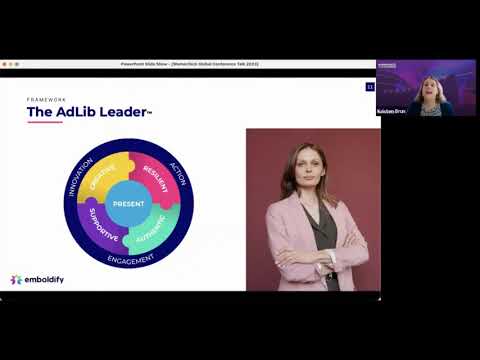
 Kristen Brun
Founder and Executive Coach, Emboldify
Your inner critic goes quiet when you improvise, and leaders can use that
 Amy Yip
Somatic Life Transformation & Mental Fitness Coach, Amy Yip Coaching
Every excuse you use for not celebrating yourself is a lie
Ronke Majekodunmi
Director of Product, Promevo
Her biggest career fear came true, and she survived it
 Erin Buonomo
Director of Design, IBM Sustainability Software, IBM
Passion is the result of a well-designed career, not its starting point
 Erin Brockovich
Consumer Advocate and Environmental Activist, Brockovich Research and Consulting
A dyslexic kid told she was different grew up to expose a toxic cover-up
 Jana Polednikova
Analytics Manager, Global Savings Group
Told she wasn't made for physics, she became good at two things