Women in tech theme

Visibility and recognition

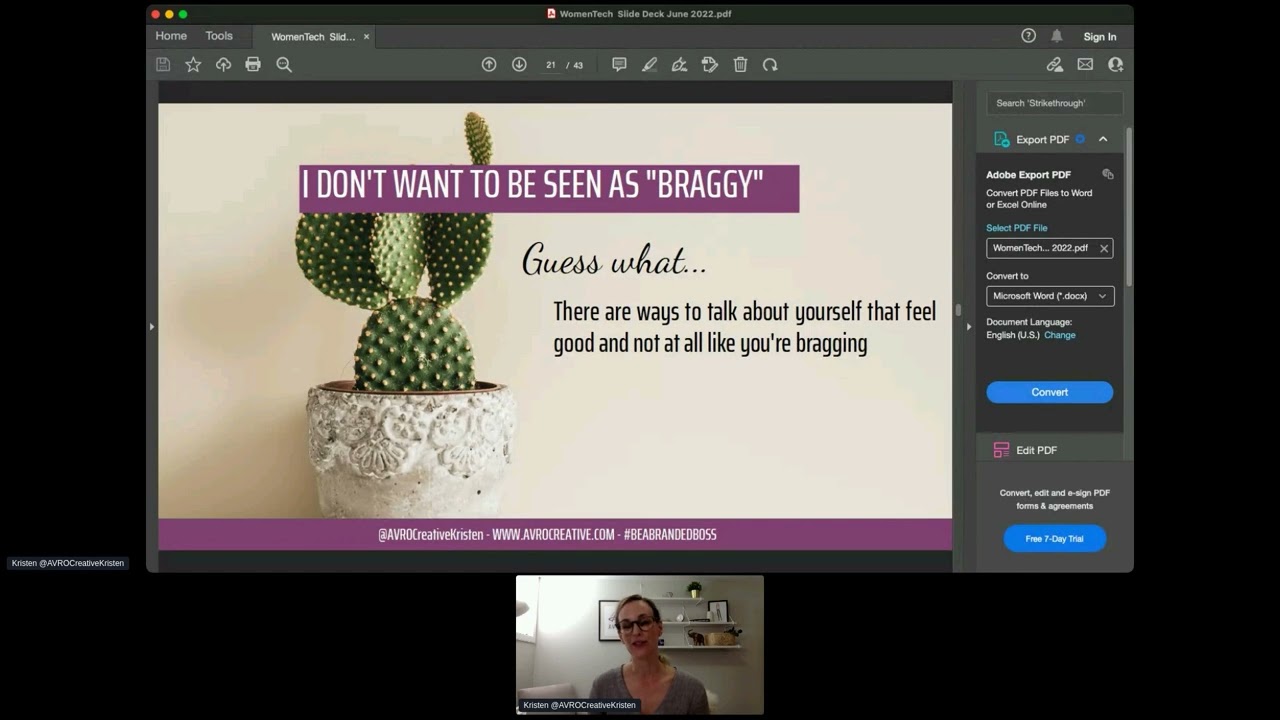
Good work rarely announces itself, and many women in tech find that fixed outages and aligned stakeholders often go unseen. The angles include why women hesitate to claim credit, how to describe results through stories and plain advocacy language, how introverts can build a personal brand and immigrants can self-advocate, and why behind-the-scenes translation and trust-building work should count as leadership. Engineers, program managers and aspiring leaders will find practical ways to get their impact noticed.

131 talks 118 speakers 53 hours 2020 to 2026

Search the whole library

Key takeaways

  • Holding back in moments of visibility, negotiation or leadership presence is often a permission problem rather than a confidence problem, shaped by inner hesitation and outside structures.
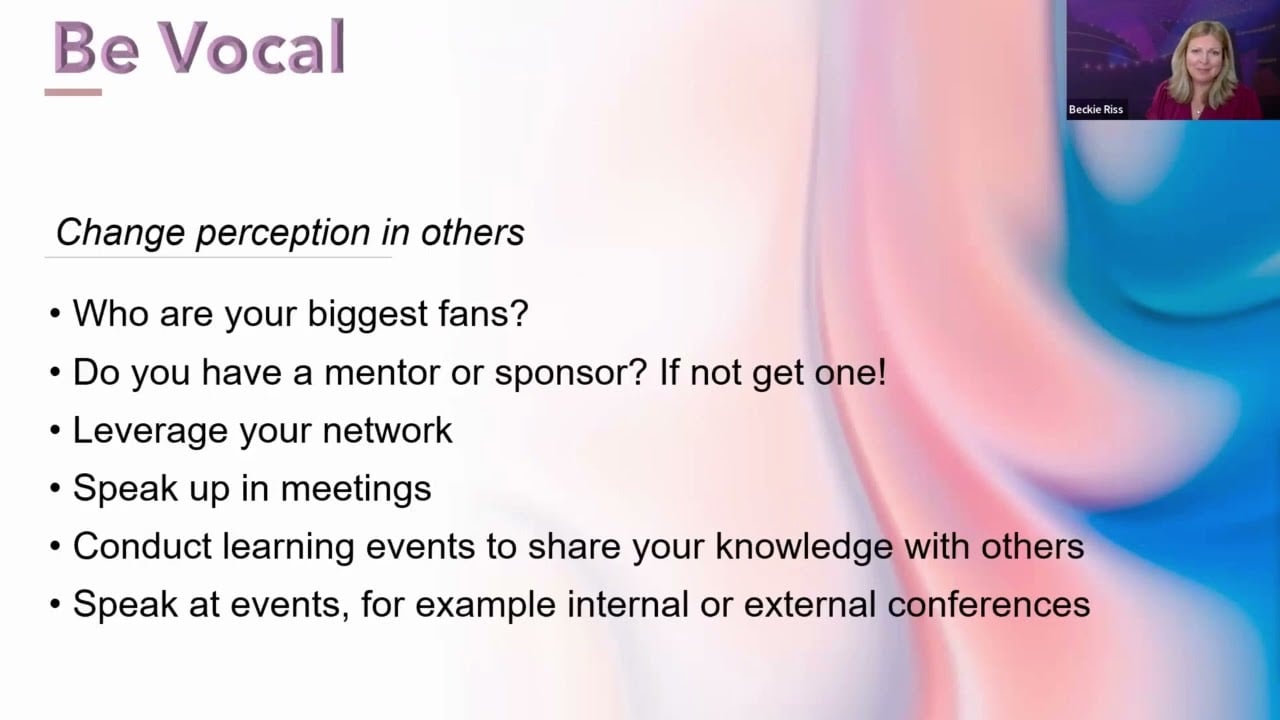
  • Swap hedging, over-explaining and passive phrases like "I assisted with" for statements that own your results, such as "Here's what I've done" and "Here's what I recommend."
  • Translating ambiguity, aligning stakeholders and rebuilding trust often decide whether an AI system gets adopted, so this largely invisible work deserves recognition as technical leadership.
  • Work does not speak for itself, people do, so frame technical achievements as stories using the STAR framework (Story, Technique, Authentic Resonance) or "what, so what, now what."
  • Record accomplishments and influence wins as they happen, even with a simple post-it habit, so your resume, LinkedIn profile and case for a bigger role stay ready.
  • Small, steady habits build a technical reputation: ask a question in every meeting, answer questions in group forums and post on LinkedIn, where few users post at all.

Start with these talks

Questions these talks answer

What is the permission gap?

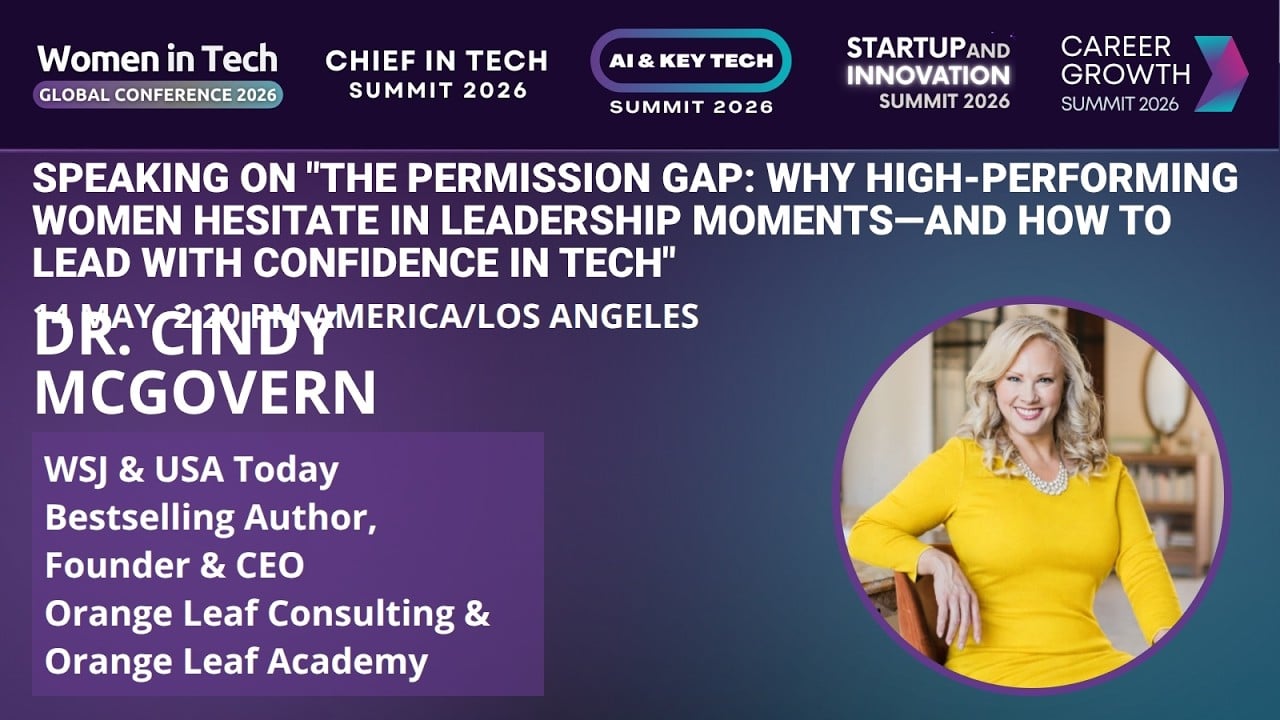
McGovern describes it as the divide between where high-performing women are and what they actually want, created by internal hesitation combined with external structures. She stresses it is a permission problem, not a confidence problem.

The Permission Gap: Why High-Performing Women Hesitate in Leadership Moments—and How to Lead with Confidence in Tech, Dr. Cindy McGovern

What is the difference between a mentor and a sponsor?

Mentors give guidance, while sponsors create opportunities and advocate for you in rooms you are not in.

From Rejection to Director: 18 “no’s” later, courage and allies turned my career roadblocks into a breakthrough, Suchi Das

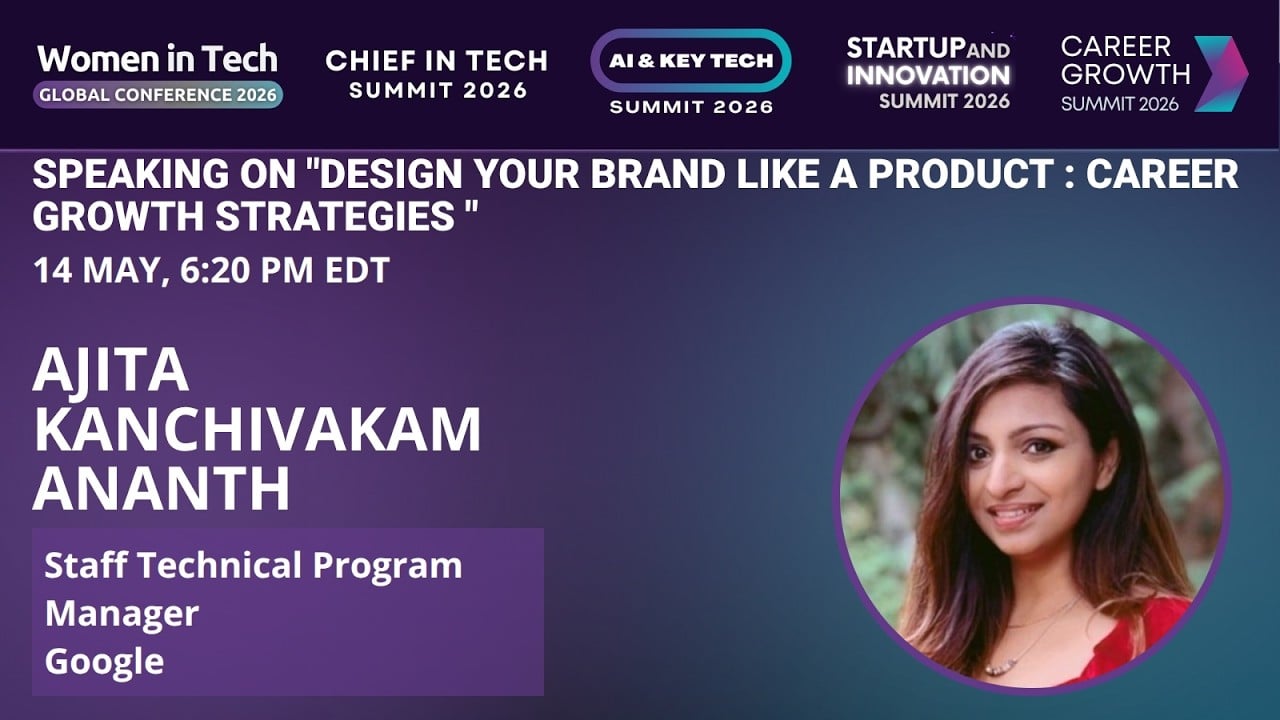
If a personal brand is not about LinkedIn, what is it?

It is the experience people have when they work with you: your communication and decision-making style, reliability under pressure, leadership energy and consistency over time.

Design Your Brand Like a Product : Career Growth Strategies, Ajita Kanchivakam Ananth

What is a personal brand?

It is what people say about you when you are not in the room, built from your craft, your values, your authenticity and how you show up every day.

You might think you don't need a personal brand — the problem is you already have one, Katja Alissa Mueller

Why do high-performing women get passed over for promotion?

Great work has become the baseline rather than the differentiator, so promotions go to people who understand how promotions work: building trust, gaining champions, operating at the next level and asking.

Why High-Performing Women Don’t Get Promoted and How to Position Yourself for the Next Level, Shalini Sunkara

Why do technology projects fail even when the metrics look green?

Because people stop being aligned: trust erodes, communication breaks down and stakeholders disengage emotionally long before they disengage operationally. Most of these warning signs never appear in a dashboard.

The Relationship Advantage: A Keystone Relationship Strategy to Build Trust, Influence, and Impact for Women in Tech, Dr. Kimberly Strickland

Why do AI systems that work technically still fail?

Because capability does not automatically create adoption. Users judge AI by whether it helps them, reduces friction and earns their trust, and systems built on assumptions about efficiency rather than lived reality create friction.

The AI Work Women Do That No One Sees, Alexis Macías

Why isn't hard work alone enough to get promoted?

Results don't speak for themselves and often require a translator. You have to frame them for your manager and other leaders in the way they think about value and the business.

Managing Up Without Losing Yourself, Alysia Eve

Speakers

  • Alysia EveVP of GTM, Array2 talks
  • Dr. Cindy McGovernWSJ & USA Today Bestselling Author, Founder & CEO, Orange Leaf Consulting & Orange Leaf Academy1 talk
  • Suchi DasDirector, Technical Program Management, Salesforce1 talk
  • Ajita Kanchivakam AnanthStaff Technical Program Manager, Google1 talk
  • Katja Alissa MuellerHead of Brand Design, Pliant1 talk
  • Shalini SunkaraEngineering Project Leader, Lutron Electronics1 talk
  • Dr. Kimberly StricklandDirector, PMO, SAS Institute Inc1 talk
  • Alexis MacíasAI Architect/ Senior Managing Data Scientist, IBM1 talk
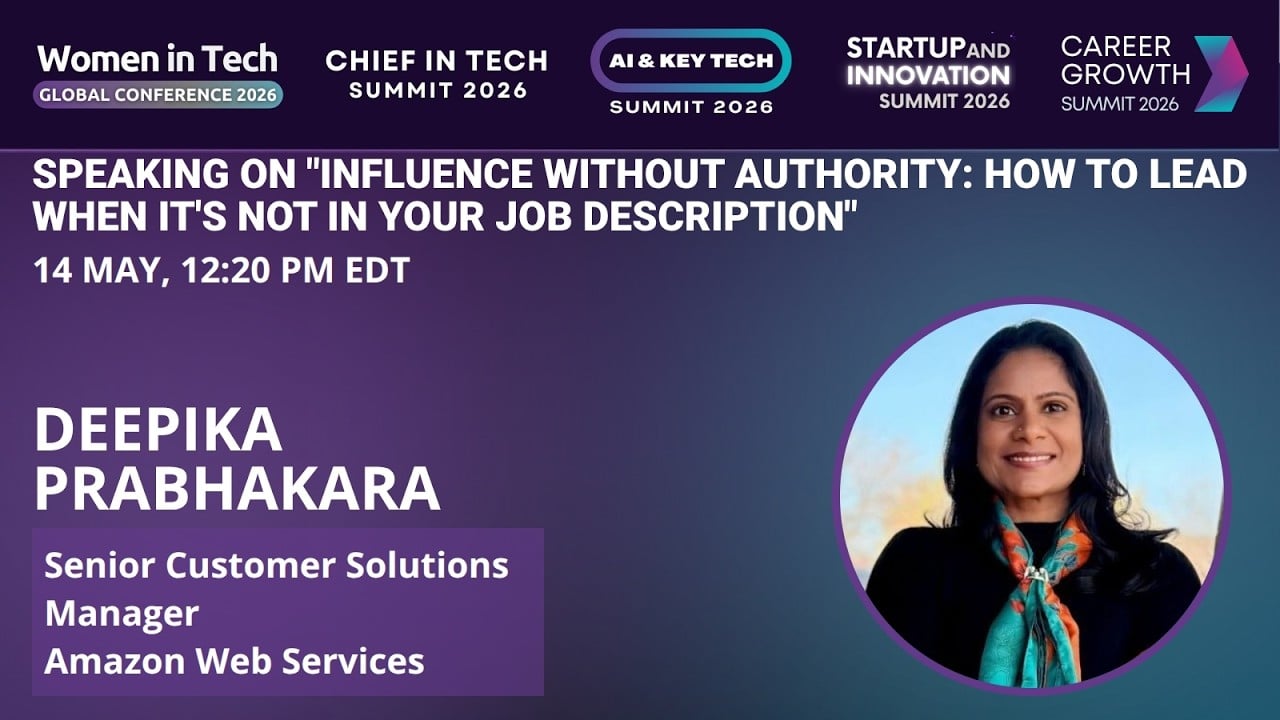
  • Deepika PrabhakaraSenior Customer Solutions Manager, Amazon Web Services1 talk
  • Dorian StewartAuthor, Speaker & Career Readiness Strategist, Dorian Inspires, LLC1 talk
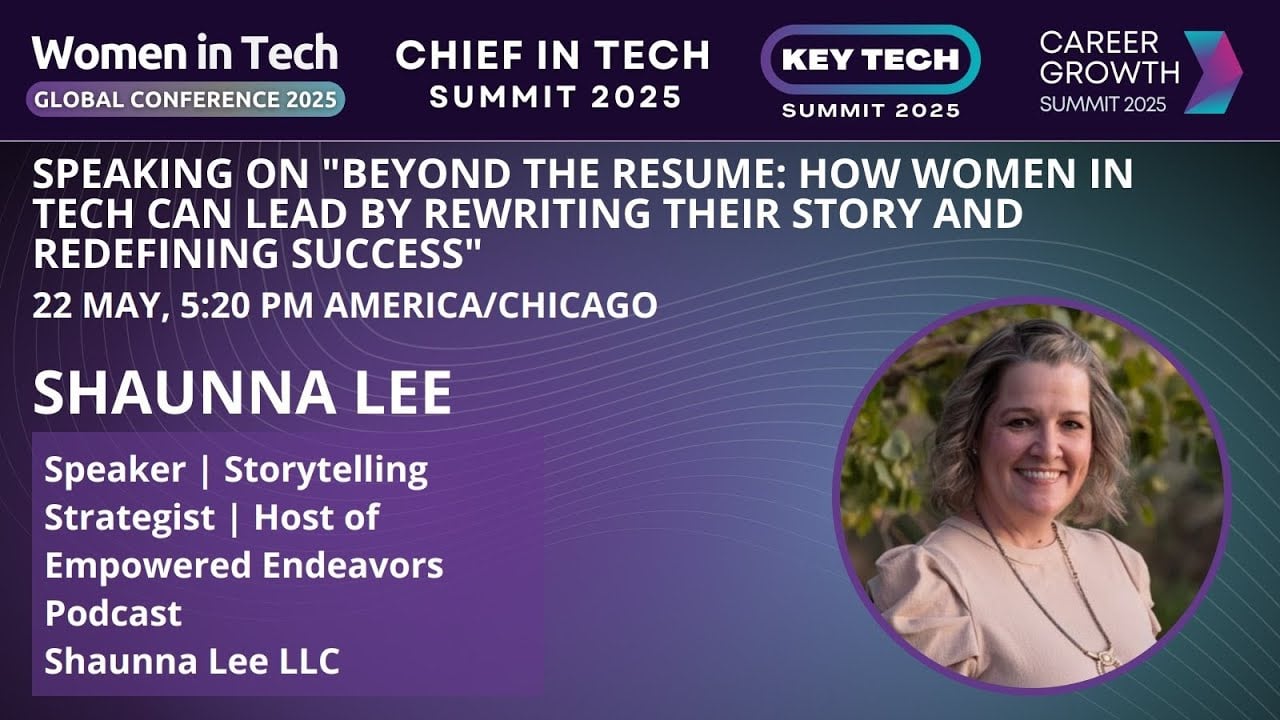
  • Shaunna LeeSpeaker | Storytelling Strategist | Host of Empowered Endeavors Podcast, Shaunna Lee LLC1 talk
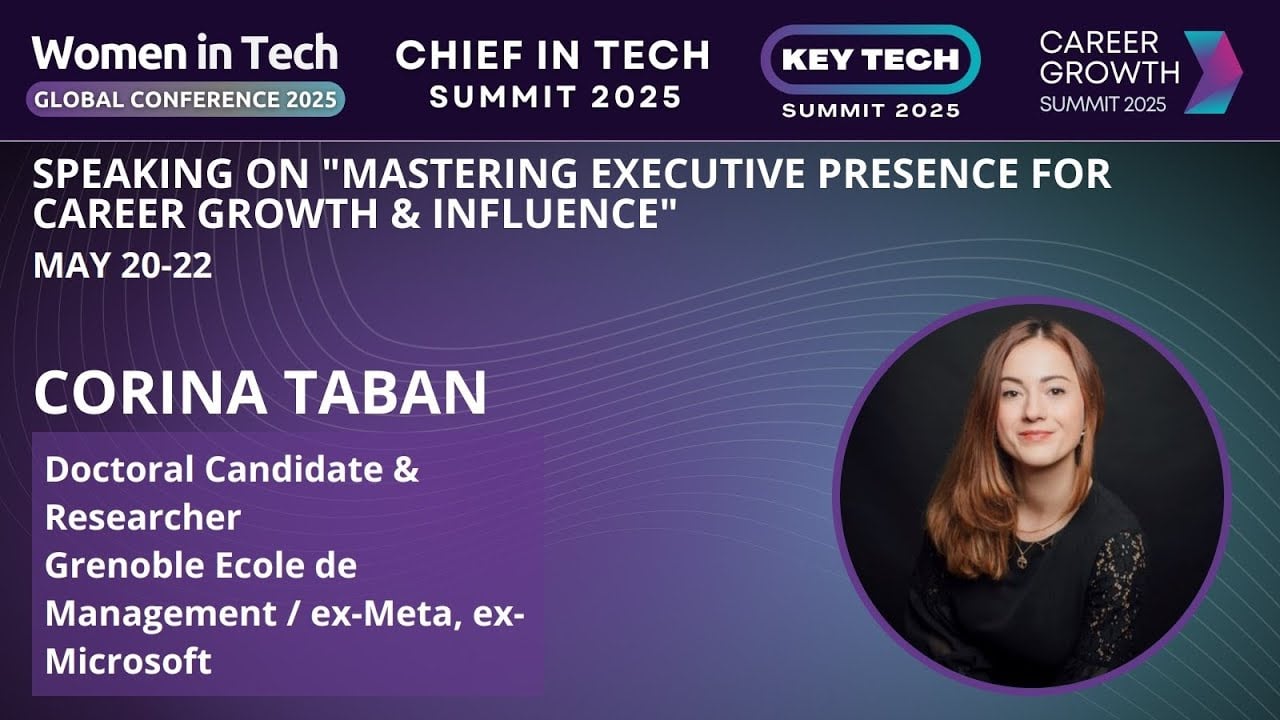
  • Corina TabanDoctoral Candidate & Researcher, Grenoble Ecole de Management / ex-Meta, ex-Microsoft1 talk

In their words

“High performance does not guarantee visibility. And it certainly doesn't guarantee advancement.” Dr. Cindy McGovern, The Permission Gap: Why High-Performing Women Hesitate in Leadership Moments—and How to Lead with Confidence in Tech
“Mentors gave me guidance, but sponsors created opportunities.” Suchi Das, From Rejection to Director: 18 “no’s” later, courage and allies turned my career roadblocks into a breakthrough
“The personal brand is the experience people have when they work with you.” Ajita Kanchivakam Ananth, Design Your Brand Like a Product : Career Growth Strategies

Other themes