Customer Success – Superior customer experience and revenue growth engine
Prachi Shah19:282023
Sales can keep adding SaaS revenue while churn quietly flattens the top line
Many software companies still run a relay of sales, implementation, support and renewal, and hear from customers only when a ticket or escalation arrives, by which time a churn decision may already be made. Prachi Shah, Global Vice President of Customer Success at Syncron, has built customer success teams from scratch and shows what changes when the customer sits at the center. How should an organization set up that function to protect and grow revenue?
Get a six-step plan to launch customer success and measure customer health
Prachi Shah, Global Vice President of Customer Success at Syncron, argues that the traditional sales, services, support and renewal relay leaves companies blind to churn. She explains how a proactive, customer-centered success function protects and grows revenue, and gives six practical steps for introducing one, from defining its objective to tracking health scores and choosing tools.
“So you are being the customer's best advisor.”
“I would say the customer success is customer outcome as well as customer experience.”
What you will learn
Spot the blind spots of a reactive sales-to-support model that only engages customers on escalations.
Plan a sales-to-customer-success handover that captures stakeholders, success KPIs and 30, 60 and 90 day quick wins.
Measure customer health with the DEAR framework (deployment, engagement, adoption, ROI) to flag churn risk early.
Apply six steps to introduce a customer success function, from defining its objective to evaluating CS operations tools.
Decide which skill mix your customer success team needs, from product experts to trusted advisors.
Key takeaways from the speaker
Importance of customer success in an organization
• Best practices to introduce customer success in an organization
• Customer success to enhance customer experience
• Data driven insight to assess customer health & experience
• Customer success to boost company’s revenue
Details
Level
Intermediate
Format
Talk
Technical depth
Non-technical
For
Mid-career, People manager, Executive
Length
19:28
Published
May 2023
Questions this talk answers
What is wrong with the traditional sales, services, support and renewal model?
It is vendor-driven and reactive, so companies engage customers only on escalations or tickets and never know whether they are happy until a customer refuses to renew.
How does customer success help an organization grow revenue?
Customer advocacy creates reference cases for new logos, health visibility reveals early churn risks for retention, and engaged customers surface upsell and cross-sell opportunities.
What does a customer success manager actually do?
A CSM understands the customer's business outcomes and KPIs, drives product adoption, shares best practices, maps the engagement journey, mitigates risks and tracks how the customer feels.
How should an organization start a customer success function?
Define the function's objective and success measures, set a framework and cross-functional collaboration, identify roles and talent, track health scores, act on customer voice and consider a CS operations tool.
Why is customer success a good profession for women?
Prachi Shah says it rewards empathy, offers a seat at the table through direct revenue impact, and in her view is not overcrowded by gender stereotypes.
About this talk
Customer Success is an integral part of customer engagement value chain today. Most IT solution and services providers have embarked on customer success led transformation journey to improvise customer experience. In this session you will learn,
- What is customer success?
- Why customer success is important for your organization?
- How to leverage customer success to enhance customer experience & outcome
- How organizations are leveraging customer success led engagement to grow their top line?
The mobile plan example of proactive success (63 s)
Why customer success is a seat at the table (75 s)
To the session this morning about customer success, why it is so important for organizations and how it helps the organizations to drive the revenue growth. Before we start the session, just a short introduction about myself. My name is Prachi. I'm working as a global vice president for customer success at Syncron. I have been in the industry for more than two decades working in different functions like customer success, services organization, pre-sales, as well as consulting. I have been practicing building customer success organizations in my previous company as well as at Syncron as well. So I do have an experience of building the customer success from scratch. And this is what I look forward to share with all of you. What's been my experience and the key learnings and the takeaways from this entire journey. If you have any questions
during the entire presentation, feel free to just ping me during the session or also after the session. There are my LinkedIn credentials and you can just reach out to me whenever you have some questions. So what I wanted to talk about today is why customer success is so important for organizations. What is a customer success-driven engagement approach to start with? Why the customer success is so important for organizations? How it can help organizations to grow the top line? What are the best practices and last but not the list? How this is the best profession for the women in the women in the customer success? To start with, I would say, before we even talk about what is customer success-driven engagement approach, let's first understand how the industries are. A lot of companies, they still work like my previous organization. This was the best
This was the best model. And even currently, this is the way the team works. So there is a deal closure. There is a sales phase. Once you close the deal, there is a services engagement. So the services team will step in and they will do the implementation. Once the services is complete, it's handed over to the support organization. The support organization will interact with the customers using the support portal, depending on whatever the the services are. And then at the end of the end of the end of the end of the end of the end of the cycle, there is a contract renewal and the customer will just renew the contract.
Now, I've seen a lot of companies working in this model, even a couple of MNCs, they work in this particular way. And they do have good profit margins. But what are the challenges So if you look at the challenges, there are a couple of challenges I would like to highlight is, first of all, this is pretty much a vendor driven model, where the sales team are selling the software to the customer, they make their commission, and the company's revenue grows. But what is in it for customers? There's a very little reactive approach, engaging with the customer. So So you engage with the customers only when there is an escalation or when there is a support ticket.
And how this entire process, you will never know if the customer is happy, or unhappy. And what are the early signs of the customer churn, you know, one day, when you go for a renewal, the customer might say that, okay, I do not want to renew this contract, and the customer might churn. So this, you may be adding more, the sales organization could be adding more sales, SaaS revenue. But at the end of the day, the top line may not grow, because you do have certain churns. So that's why the customer success engagement, customer success driven engagement approach is very critical.
And what is that? And why is that important? Because in this way, your customer is the center. The customer is at the heart of any interaction or any customer journey that you're having. First of all, it's very proactive. So we reach out to the customer and ask the customers, how things are working for you. Proactively, imagine someone reaches out to you. So for example, take an example of your mobile phone, okay, and the usage, you might be, you might have purchased a particular package.
And the customer success manager reaches out to you and review that, okay, you are not using the data as you should have been using. Do you want to downgrade your package? Or maybe do you know your contract allows you certain features? You're not using it. Do you know how to use that? So this is more like advising the customer on how to make the best out of their contract with the company. So this is now we are talking in favor of the customer.
So you are being the customer's best advisor. At the same time, this will also help the organization to understand what is the customer sentiment? Are they happy? Unhappy? Are they using the product? Unhappy? Unhappy? Unhappy? Unhappy? Unhappy? Unhappy? And what exactly is the success for customers? So you might sell a software to the customer with a promise, but towards the renewal cycle, if the customer does not see the value out of the software, they will say, okay, I want to cancel the contract.
So you're actually trying to understand what is the customer. So you're actually trying to understand what is the customer trying to achieve using the software. Now, why is this so important? And how does it actually helps the organizations? So there are different aspects to this. First of all, it will definitely help the organizations with upsell, cross-sell, or even new logos. And how?
And how? This is because all is driven by customer advocacy. So whenever the organizations go into new logo sales process, the first thing the customer would ask is, can I have your references? How have you implemented with other customers? Can you showcase that to me? So if you have customer reference cases, this will be very helpful for the organization to bring even new logos on board. Definitely revenue retention will be a highlight here because you will be able to identify what are the early churn risk indicators and take an action plan accordingly.
And the companies can actually help with the revenue. And the companies can actually help with the revenue. I mean, if the customer is using the software well, you can actually upsell. You can identify what are the more upsell opportunities or if it is cross-sell opportunities available, the CSMs can identify that as well. So that automatically leads into the revenue growth as well as the revenue retention.
And that's definitely driven by the customer health because you do have a visibility into what the customer is doing. And like everyone says, you know, engaged customers are the best way to get insight into what's happening into their business. Is there a competitor reaching out to the customer? What's happening on their business? How is their annual revenue report was, you know, so those kinds of information will help the organization to identify any blind spots that may be there in their revenue retention.
So, and based on this, I mean, I wouldn't say customer success manager is a new profession. It's been there for a couple of years now. I think, as most of you know, Salesforce is the one who started with the customer success function altogether. And because of these challenges, this function has become very critical when it comes to the new SaaS model.
And how does it help? So what is the role of a CSM typically? That's more or less like what I described earlier. So first of all, the CSM would need to understand what are the business KPIs? What is it that customer success KPI is? How do they measure their success? And this is not something that the CSM has to start from scratch. Ideally, during the sales process, the sales and the pre-sales team, they would have collected that information, right?
They would have asked those questions to the customer. So we need to have a proper sales to CS handover and where you share who the key stakeholders on the customer side are. What were their success KPIs? What are those important areas that the customer really want to focus on? What are the quick wins, right? Like, what can I do in next one, 30, 60, 90 days that will help me win customers' trust?
And this model would work even if you have a services engagement ongoing. So in my experience, even if there is a services team engaged, the sales to CS handover should still happen. And in that case, you can also make it actually sales to CS and access handover, right? The services organization handover. Because this will help the CSM to build the relationship with the customer while the services team is busy on implementing the solutions and delivering the software to the customer.
So, I cannot emphasize more, but extremely important to understand what are the customer's business outcomes, what are they looking for? And also highlighting that to them that, you know, these are the business outcomes that you have achieved through our software periodically. That becomes extremely important. Second aspect is help the customer with the product adoption and usage. I mean, you know, every quarter sit down with the customer.
It could be quarter, it could be monthly, half yearly. It depends on the type of the customer, like how long the customer has been engaged with the organization. What's the scale and the size of the customer? Are there upsell opportunities or cross-seller expansion opportunities? So actually to sit down with the customer, understand how they are using the adopt, using the software.
Are there any business user they are having facing challenges to use the software? Because I think all of us know change management is extremely important. You may roll out the new software, but the team, the business users may not even want to use it. So it's very important to also connect with those business users and understand, are they using the functions in the right way?
And at the same time, sharing the industry best practices. Because in my experience, any customer who is new to the organization, the first thing they ask is, how has this been implemented for other customers? You know, what are their best practices? What are the do's and don'ts? So ideally, you should have like a checklist and just share that with the customer in the beginning of their journey.
Detailing the engagement plan is important. So create a customer journey map, like explaining to the customer what can you expect from this engagement through this entire life cycle. So I'm here as a CSM, not just interested in the renewal, but I'm interested in making you successful. And this is how you can engage with me. And this is how the journey will look like at any point in time.
If you see the risk, then define the mitigation strategy. And last but not the least, I think understanding the customer experience is extremely important. Maybe the software is good being adopted, but the support ticket resolution is taking very long and customer is getting frustrated with that. Or maybe there are product feature requests, which is critical, but they didn't receive any response for that, or it could be anything else.
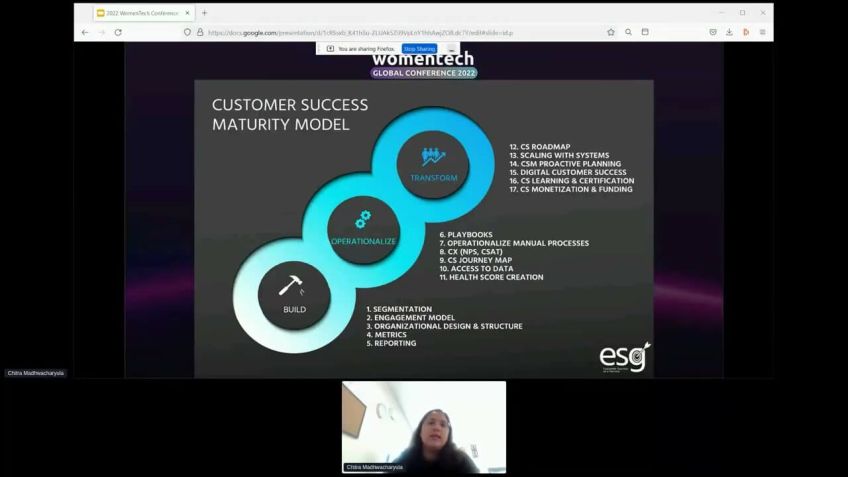
So it's extremely important to understand how the customer is feeling. So it's a balance of both. I would say the customer success is customer outcome as well as customer experience. Now, how do you, if you are a new organization, how do you start on that journey? So I would say there are six ideal steps into that as an organization who wants to introduce the customer success function.
The first thing first should be done is to actually define what is the objective of the customer success function. Like, what is it that you want the CS to achieve? Like, I have seen functions where companies where CS does carry a revenue target. There are companies where the CS is only being a customer's trusted advisor. So what is the ultimate objective of the organization, not just for the customer success function, but organization?
What do they want to do? How is the collaboration works? And of course, in line with that, what is the priority for the CS team? How do you measure success? Like every few weeks, you should have like a checkpoint to measure that whatever goals and priorities we have defined. Are we on track with that? Define the framework and the best practices.
I would say this is extremely important. If you are building the team ground up, then understand how to define what are the best practices that the team can start to use. And how does a cross-functional collaboration look like? Because customer success is not just a one function's job. It's an organizational objective, and every function has a role to play into that.
And that leads into the third point, which is identifying the roles and the talents. If you already have a team, understand where the strength is. What skillset do you require? Do you require more in-depth product or technical knowledge? Or if you're building up the team, then identify in line with your organizations, your customer success or objective. Do you need someone who acts like a CSM with a good strike balance between commercial and customer advisory role?
Or do you need someone who is more in-depth product expert? So that's also important. And track and measure customer value, health score, I think this is the job of CSM. Whatever your revenue targets are, as a CSM, the organization should know how the customer is feeling. What are the health scores? You can actually look at the DEAR framework, which is very famous and widely used, which translates into deployment, engagement, adoption, and ROI.
So you can measure different health scores for this four boxes and identify what is the risk of churn. Customer voice is extremely important. It's like I said, it's a good balance between outcome and experience. So understanding what the customer is thinking, where are they happy, unhappy, doing those regular NPS survey. But it's not just doing the survey, right?
You also have to get back to the customer saying that we hear you, this is the action plan, and get back to the customer with periodic updates. That's where you actually identify the value of the CS function. And last but not the least, do consider rolling out some operations tool. There are a lot of tools in the market.
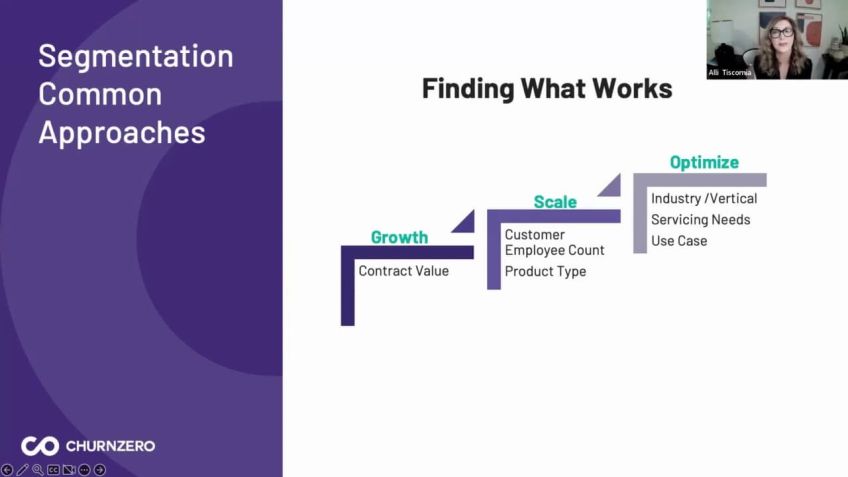
There is Gainsight, Totango, churn zero. Just look, just evaluate that, because as a CS leader, you will require a lot of different health scores reports, which is like health score reports, churn indicators, which CSM is assigned to which account. You will have to do the account segmentation to make sure you have the right customer journey map for high value customers.
You want to have more engaged customer journey versus low value customer. You may want to digitize some operations. So do look into the CS operations platform that will help you maximize your time investment into CSM time investment into the day to day life. So, again, just with respect to the time, I can share the deck as well later on.
Okay, so I have two minutes to go. And I would say, do consider this skill set if you're building up your team ground up, or if you're evaluating your team skill set. There are always different views from different organizations that would say whether you want to have a CS practice, which is more in depth product knowledge, of what may consider people coming from services organization.
Or you may want to have a CSM team who is just maintaining a trusted advisor status. And you may consider having then customer success architects who are supporting your, your field CSM team. So those are the different skill set I would say you should look at. And last but not the list, I would say I want to end the slide and this presentation saying, I think this is the best profession for everyone for a couple of reasons, because as a CSM, I think you really need to show the empathy and think that just comes naturally to all of us right to understand.
What is the person's problem, what is the customer thinking, showing bit empathy to that problem, sometimes that's what the customers are looking for, you know, like listening your shoulder to lean on, and you are there to listen to the customers. So there is a lot you can make impact through revenue. So if you're looking for a seat at the table, I think you can definitely make a positive impact on to the customer on to your organization's top line.
Because, like, for example, at Synchron, we have 70% of the revenue coming from our install base. So you know, with the renewal, you're actually making a huge impact on the net retention rate. And I think this is still even though the CS function has been in the market for a very long time, but I don't think that's been overcrowded by gender stereotypes.
I mean, I still see a lot of different diversity in this role in my organization in my previous organization. And I think this is a fantastic opportunity for women to step up and make an impact being at the center, bringing all cross functional collaboration, making also impact to the customer success, and as well as the revenue growth for the organization.
So with that, I want to thank you all for attending this session. I really appreciate your time and wherever you are based in the world. But if you're waking up very early this morning, then thank you very much. Please feel free to reach out to me on LinkedIn if you want to have more conversation. I'm always happy to help and support for this topic.
All right. Thank you. Bye.
Transcribed automatically; names checked against the speaker record. Select a time to jump there.
Article based on this talk
Why proactive customer success protects and grows SaaS revenue
Prachi Shah of Syncron explains why the sales-to-support relay hides churn, and how to build a customer success function that fixes it.
In short
A company can keep closing new deals and still see its top line stall, because customers it never really listened to quietly decide not to renew. Prachi Shah, Global Vice President of Customer Success at Syncron, argues that a proactive, customer-centered success function closes that gap. She lays out what customer success managers do and six steps any organization can follow to introduce the function.
Key takeaways
Importance of customer success in an organization
Best practices to introduce customer success in an organization
Customer success to enhance customer experience
Data-driven insight to assess customer health and experience
Customer success to boost the company's revenue
The relay that hides churn
Shah opens with a model she says many companies still use, including several multinationals with healthy margins. Sales closes the deal, a services team implements the software, support takes over through a ticket portal, and at the end of the cycle the contract comes up for renewal. It works for the vendor: sales earns commission and revenue grows. Her question is simple: "But what is in it for customers?" (2:57)
The trouble, she explains, is that engagement is reactive. Teams talk to customers only when there is an escalation or a support ticket, so nobody knows whether the customer is happy or what the early signs of churn look like. When renewal arrives, the customer may simply walk away. Sales can keep adding new SaaS revenue while churn stops the top line from growing.
Putting the customer at the center
The alternative is a customer success driven engagement approach. "The customer is at the heart of any interaction or any customer journey that you're having." (4:28) Shah illustrates it with a mobile phone plan: imagine someone proactively telling you that you are not using your data allowance and could downgrade, or that your contract includes features you have never tried. That advice favors the customer. "So you are being the customer's best advisor." (5:32)
The same conversations give the company insight into sentiment, usage and what success actually means for the customer. Shah connects this directly to revenue. Advocacy supports new logo sales, because prospects always ask for references: "So if you have customer reference cases, this will be very helpful for the organization to bring even new logos on board." (6:25) Visibility into customer health surfaces early churn indicators for retention, and well-adopted software opens upsell and cross-sell opportunities. Engaged customers also reveal blind spots, such as a competitor approaching them. She notes, as the speaker cited, that Salesforce started the customer success function.
What a customer success manager does
Shah describes the CSM role as starting from the customer's business KPIs. That information should not be rebuilt from scratch: sales and pre-sales should hand over key stakeholders, success KPIs, priority areas and quick wins for the first 30, 60 and 90 days. She recommends the handover happen even while a services team is implementing, so the CSM can build the relationship in parallel.
From there the CSM reviews adoption and usage on a cadence that fits the customer, checks whether business users are struggling with change, and shares industry best practices, ideally as a checklist at the start of the journey. A customer journey map sets expectations: "So I'm here as a CSM, not just interested in the renewal, but I'm interested in making you successful." (11:30) Where risks appear, the CSM defines mitigation. Finally, the CSM watches the experience itself, such as slow ticket resolution or unanswered feature requests. "I would say the customer success is customer outcome as well as customer experience." (12:20)
Six steps to introduce customer success
For organizations starting out, Shah offers six steps:
Define the objective. Decide whether CS carries a revenue target or acts purely as a trusted advisor, set priorities and check progress every few weeks.
Define the framework and best practices, including how cross-functional collaboration works. "Because customer success is not just a one function's job. It's an organizational objective, and every function has a role to play into that." (13:33)
Identify roles and talent, deciding whether you need deep product knowledge or CSMs who balance commercial and advisory work.
Track customer value and health scores. She points to the DEAR framework, which she describes as widely used: deployment, engagement, adoption and ROI, each scored to reveal churn risk.
Listen to the customer's voice through regular NPS surveys, and close the loop: "You also have to get back to the customer saying that we hear you, this is the action plan, and get back to the customer with periodic updates." (15:20)
Consider a CS operations tool such as Gainsight, Totango or ChurnZero for health reports, churn indicators, account assignment, segmentation and digitized journeys for lower-value accounts.
The right team, and why it suits women
Shah suggests leaders decide on a skill mix: CSMs with in-depth product knowledge, perhaps drawn from services, or field CSMs who hold trusted advisor status supported by customer success architects.
She closes by calling customer success a strong profession for women. It rewards empathy and listening, and it carries real commercial weight. As the speaker cited, 70% of Syncron's revenue comes from its installed base, so renewals shape net retention. "So if you're looking for a seat at the table, I think you can definitely make a positive impact on to the customer on to your organization's top line." (17:30) In her experience the role is diverse and not overcrowded by gender stereotypes.
Watch the talk
Customer Success – Superior customer experience and revenue growth engine, Prachi Shah, about 19 minutes: https://www.womentech.net/video/customer-success-superior-customer-experience-and-revenue-growth-engine
About the speaker
Prachi Shah is Global Vice President, Customer Success at Syncron, where she builds and leads customer success teams across geographies and drives renewal, expansion, adoption and NPS results. She brings more than 20 years of IT sales, customer success, consulting and delivery experience across Europe, Asia Pacific and the Middle East, leading large digital transformation programs in telecom, social media and banking and finance.
Questions this talk answers
What is wrong with the traditional sales, services, support and renewal model?
How does customer success help an organization grow revenue?
What does a customer success manager actually do?
How should an organization start a customer success function?
Why is customer success a good profession for women?
Drafted with AI from the talk transcript. Editor review pending.