In short
Meetings go wrong, Becca Savino argues, because the people in the room do not agree on which stage of getting work done they are in. Using Patrick Lencioni's Six Types of Working Genius, she gives teams a shared language for the six activities every project needs. Her point is that naming a meeting's "altitude" before it starts stops people pulling it off course.
Key takeaways
- How to make meetings an effective use of your time
The real reason meetings feel awful
Savino opens with a premise many viewers will find hard to believe: meetings can be good. "Meetings should actually be an incredibly effective and useful use of your time and, dare I say it, fun." (0:00)
She does not blame a lack of agendas. The deeper problem, she says, is orientation: "Well, oftentimes people really don't know where they're at in the process of getting anything done." (0:59) Without that shared picture, even a well-planned meeting drifts, because each participant is quietly trying to do a different kind of work.
A model for how anything gets done
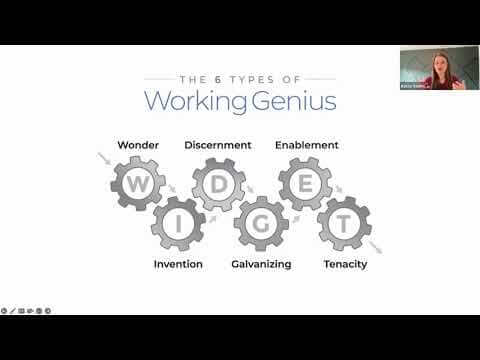
To fix this, Savino turns to the Six Types of Working Genius, which she describes as the newest model from Patrick Lencioni and The Table Group. The model splits the process of getting anything done into six activities of work. Each person finds two of them energizing (their geniuses) and two draining (their frustrations).
She says the model does a few things very well. It creates a common language for where a team stands, whether the work is a large software implementation or aligning the changes in a code deployment. It also shows where each person naturally pulls a conversation, and where a missing genius needs to be covered. She describes the six activities as gears: "So if one of them is missing, if you imagine them trying to spin, they're obviously going to get stuck, or just not be able to complete the full thing if one of those is missing." (2:59)
From wonder to tenacity: the six geniuses
Savino walks through the six in order:
- Wonder: people who like to speculate and question, asking whether there is a better way. They spot the need for change.
- Invention: people who love "a blank slate and a problem to solve" (3:48) and create new solutions without boundaries.
- Discernment: people with an instinct for whether a solution will work. They may not explain why, but their gut is usually right, and they poke holes in ideas until they are refined.
- Galvanizing: people who rally the troops and build momentum around a new idea.
- Enablement: "the hands and feet of getting things done" (5:19), who are happy to help on someone else's terms.
- Tenacity: the finishers. "So people with the genius of tenacity are your checklist people." (5:41)
She notes that tenacity closes the loop by going back to the original questions the wonderers asked, to check that the problem was actually solved.
Altitudes and turbulence
Savino's favorite way to show the model is as altitudes. Wonder sits at about 30,000 feet, like an airplane in the sky, and each later genius sits lower until tenacity works at ground level. That picture explains why meetings get bumpy: "And so if you think about, okay, if I'm in a meeting and I think that it is a tactical, let's get stuff done meeting, but somebody else in there thinks that it's an invention meeting, then it's going to cause a lot of turbulence when you're trying to check things off a list and get things done." (7:05)
The frustration is not a personality clash. It comes from two people trying to work at different heights in the same hour.
The boss who kept inventing
Savino brings this to life with a story from a former job. She and her boss held a weekly project run-through to make sure every project was on track. He was an inventor. She is a galvanizer and enabler who wanted to tick items off and have everything ready for him. Every week he would start inventing and pull the meeting out of execution, and she would end up scrambling to redo the work.
Once she learned the model, she asked him directly whether it was an enablement and tenacity meeting or an invention meeting. He agreed it was about execution. From then on, she had a simple way to redirect him: "Then I was able to, every time that he tried to pull it to invention, say, hey, you know that I love your invention, but that's not what we're doing right now." (8:36) Because they shared the language, he heard it as a matter of timing, not as being told to sit down.
Name the meeting before it starts
Savino's practical takeaway is to say up front what kind of meeting it is, for example a wonder and invention meeting, so everyone knows the altitude. When someone drifts, anyone can point back to the agreed purpose and the turbulence eases. Her suggested next step is for viewers to take the assessment at workinggenius.com, for themselves and for their teams.
Watch the talk
"Stop Having Crappy Meetings - You're Killing the Team" by Becca Savino, about 10 minutes: https://www.womentech.net/video/stop-having-crappy-meetings-youre-killing-team
About the speaker
Becca Savino is an Organizational Health Consultant who despises waste and is obsessed with maximizing. By waste she means talents, energy, time and resources, and she loves arming people with tools to combat waste in the workplace.
Questions this talk answers
- Why do so many meetings feel unproductive?
- What is the Six Types of Working Genius model?
- What causes turbulence in a meeting?
- How can you stop someone from derailing a meeting?
- What should a team do next to apply the model?
Drafted with AI from the talk transcript. Editor review pending.