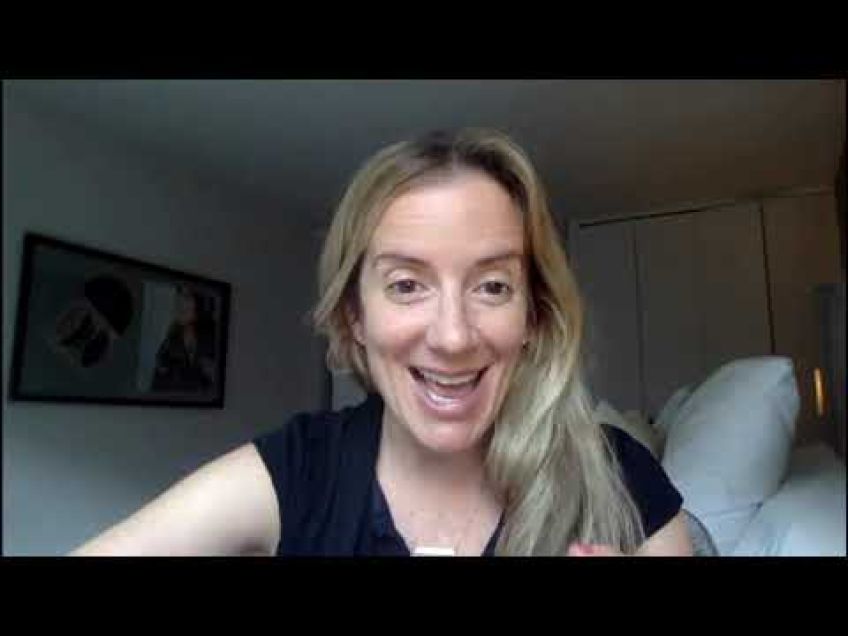
Become the Go-to Expert in Your Field – The Why, What and How of Scaling Your Thought Leadership
Daria Vodopianova20:592020
If clients can't tell experts apart, they choose on price
Search for a business coach and thousands of people with the same title appear, so buyers freeze and fall back on price. For coaches, consultants and speakers, that means competing against peers instead of working with them. Daria Vodopianova, co-founder of The Thought Leadership Academy and a two-time TEDx speaker, shows what thought leaders do differently and asks which single word you could own for the next three years.
Learn the four habits of thought leaders and five steps to start building your expert status
Daria Vodopianova, co-founder of The Thought Leadership Academy, argues that coaches, consultants and speakers who fail to stand out end up competing with each other on price. She sets out four habits that set thought leaders apart and five practical steps, from choosing one word to be obsessed with to learning to enroll people into your vision.
“It's co-elevation. It's not competition.”
“So a thought leader does not just repeat what other people are saying.”
What you will learn
Explain why undifferentiated coaches, consultants and speakers end up competing on price
Structure your expertise into a step-by-step framework others can follow
Choose one word or idea you can be known for over at least three years
Package the same core idea into formats from a 10-minute talk to a one-year program
Plan your time around thinking, selling and delivering your message
Why should coaches and speakers care about thought leadership?
Without a clear expert position, potential clients face thousands of people with the same title, get stuck in analysis paralysis and start choosing on price. Thought leadership lets you charge premium prices and collaborate with peers instead of competing.
What do thought leaders do differently?
They structure their thinking into frameworks, innovate by adding something new to the conversation, develop communication and selling skills, and spend time every day on visionary thinking.
What does it mean to become monomaniac?
It means picking one word or idea you want to be known for and talking about it in every talk, podcast, book and conversation for at least three years.
How should you split your working time as a rising thought leader?
Daria suggests about 30% of the time thinking and developing frameworks, 30% enrolling people into your vision and 30% delivering your message.
How can one idea serve different audiences?
Stretch the same idea into formats from 10 minutes to one year, and create levels from beginner to advanced so people can tap in where they are.
About this talk
Would you like to impact a larger network with your message and expertise?
Are you wondering how to get more opportunities and dream-clients instead of competing over pricing?
Do you wish to be the “go-to” person in your industry, invited to speak at conferences, podcasts and panels?
Then this session is for you! Learn the step-by-step process you need to apply in order to scale your thought leadership. Get ready for a transformational experience!
Why identical titles push you into price wars (71 s)
Turn your expertise into a framework (72 s)
Become monomaniac: own one word for three years (84 s)
All right, we have 20 minutes to go. So it's a quite short session, and I will try to really sum up the most important. So just really short about me, I run the Thought Leadership Academy, my partner. And what I do is I take people who have a knowledge from making a living with coaching into becoming the expert and becoming a thought leader. And the reason why I'm doing this because I really think that we all have something to share, we all have a message to share.
So it's so important that you have a message that you can share with your audience in any way that you can, any way that you want. And why I do this is because I had this language center for many years ago and training center, and I didn't know how to scale and thought leadership was really the way for me to find a new way to make a business and not having to always worry about, you know, having a big office or having big over spending. It's more about how can I live from my knowledge?
How can I live from my message? And how can I impact more people? So let me know if that resonates. Just say yes, it sounds good for you. And I'm a speaker full-time. I speak at TEDx. I speak at European Innovation Academy, REMAX, Annual Convention, Women in Tech. I love speaking. I'm very excited to share this message with you today.
So let's just jump right in. We are going to talk about why you should care about thought leadership, what this is really about, and how you can take the first steps. And why, I'm going to keep it very, very short. The why is basically, if you are speaking today, if you're a facilitator, if you're a coach, if you're a trainer, if you are doing some type of engagement with an audience where you are sharing your message, what's really important to understand is that there's so many other people doing the same.
Today, more than ever, we have solopreneurs, we have freelancers, we have speakers, facilitators, coach, just Google on, if you Google business coach, or if you Google coach or speaker, you will be overwhelmed with things that comes up online. So if you don't start to learn how to become a thought leader, how to develop your expertise, how to be known as the person in your field, what happens?
Well, what happens is that you will have to compete about pricing. Imagine yourself, if you're going online and you have someone searching, even on LinkedIn, for a business coach, what they will find is that they will find thousands of people doing business coaching, or they'll find thousands of people doing life coaching, or thousands of people doing the same thing, because they all have the same title.
And why is that the problem? Because when you don't have something that people understand that, okay, I understand what you're doing, and your potential client is not understanding that, what happens is that they get into analysis paralysis, they don't know who to choose. So they don't know how to choose the person they're going to work with, or who they're going to hire for speaking engagement or something else, because there's just too much information, our brain cannot take that in.
And secondly, if they don't know how to choose, they start to compete over pricing. And pricing is really never the good idea to really talk about. So there is a question of, how can I give value, really work with people who value myself, really work with people who are, you know, understanding what my message is, what my voice is.
So I don't have to compete over pricing. So I don't have to compete with other people in my industry. Instead, I become a collaborator. Instead, I can charge premium prices. Instead, I can really stand out and get more opportunities. Because if you are not standing out as the expert, the go-to person, you're in a very competitive industry.
And we don't want to compete with our peers. We want to work together. So here's why we really have to work on thought leadership development. So you become an expert in a very specific space where you are the one, the go-to person. And then you don't have to compete over all this pricing. And you get much more opportunities.
You get much more, you know, premium pricing and collaborations with peers. Because they know what you stand for. So let me know if you understand what that means. And why don't we do that already? Why is it that so many people struggle still to stand out? So many people struggle to be the speaker on the stage. They struggle to have, you know, pricing being really in their field.
Why do they struggle? Because we never learned to do this. When we study in school, when we study in university, no matter what you have studied and in the school that you've gone to, we never learned how to do this. We never learned how to become the expert in the field. And therefore, we are all in the industry today where the coaching industry is one of the fastest growing industries in the world.
There's so many solopreneurs, so many freelancers, and we are, no one knows how to do this. So this is my mission. This is really what I care about because I think we need to learn how to stand out. We need to learn how to be the expert because we can grow together. It's co-elevation. It's not competition. We are working together on being the experts and finding a way to innovate.
All right? So this is the why. So I want you to think, and it's a very short session today. Usually I have 45 minutes. But I want you to think, how can you find your why for why you should care about this? Because when you're going to work on your thought leadership, you want to always come back and say, okay, this is why I am doing this.
This is why it matters to me. To me, this matters because I really want to impact more people. And I don't want to compete over pricing. And I want to compete with my peers. I want to have this as a real innovation, real collaboration. This is super important to me. So this is why I am doing it.
I want you to find your own why. Wow. So many people joining today. 137 people. Very, very grateful for having all you with me here today. All right. I'm going to jump right into the four things a thought leader does differently. So the why was really for you to understand that it's not the question anymore. We have to learn to do this to make sure that the business structure that we develop, the business environment we develop is becoming better for everybody.
It's really about that. Now, what does a thought leader do differently from someone who is not a thought leader? Let's talk about this. I'm going to give you four things that you can do. And you can think about those four things and say, am I already doing this? Am I already taking action in these parts in my own life?
No matter if you're a speaker, a facilitator, maybe you're a manager or mid-level or senior manager, maybe you are a coach or consultant, no matter what you are, think about, am I doing those four things? So if you want to become a thought leader, those are the four things to think about, to do differently in your everyday life.
Number one, are you ready for it? Number one, structure your thoughts and frameworks into a clear step-by-step process. So here's the thing. Someone who is a consultant, someone who's a coach, someone who's a speaker, someone who is even working with a team, if they have a knowledge in their mind, they have all these skills and all this expertise, but they might not understand the step-by-step process that took them to become the expert.
So if they don't understand that, how can they then teach someone else? And the thought leader is someone who thinks and teaches other people how they can do the same thing. So the first thing we want to do if we want to do things differently is that we want to develop a framework and we want to develop a step-by-step process so other people can follow the path that we are doing.
This is really important because if you learn how to really structure your thought process and say, oh, this is what I'm doing, this is how I'm creating this success path, then you can give that success path to someone as a coaching package, as a keynote, as a book, as a training in-house or out-house. You can do so much with that knowledge.
You can liberate it from your brain and give it to other people. That's the first thing you want to do. You want to make sure that you learn how to create frameworks and step-by-step processes. The second thing you want to do is that you want to innovate. So a thought leader is someone who is not just thinking like everybody else.
A thought leader is someone who's really thinking, okay, how can I create new conversations around this topic? So if you're a business coach or if you're a consultant or if you're a speaker, you want to bring something to the table. And of course, you don't have to reinvent the wheel. You already have, you know, shoulders that you can stand on, the giant shoulders that you can stand on.
However, you want to make sure that you add something to the conversation. So a thought leader does not just repeat what other people are saying. Because they create their framework, because they understand how they're thinking, they're starting to say, oh, this is how we can innovate in the industry. This is very important. So they are thinking, how can I add something?
Where do I agree? Where do I not agree in this conversation? And how can I add something to this conversation? So they're starting to really reflect about that. Number three is when the thought leader has thought about innovation and created frameworks, they're starting to also develop skills to share their framework. They develop skills to share their framework, to develop their skills to share their, you know, innovation.
It's not only for themselves. They are going to share it with other people. And how do they do that? They develop skills of communication. Speaking. If you're going to be a thought leader, you have to develop communication skills for speaking. Writing. We are writing so much online. Emails, newsletters, posts, publications, books, all these things that we are writing.
You need to develop the copywriting skills. You want to develop selling skills. Because if you want to make sure that you have the time to work on this full time, you want to make sure that you actually have the time. You're not working on the side with something else. You can focus your full energy on developing your thought leadership.
So you want to be able to sell your knowledge in the way that you can invite people into what you're doing. And the last thing is you want to practice your visionary thinking every day. So if you think about some people, if you can think about visionaries, there are even Anna and the team who create the Women Tech Network, they're visionaries.
They had this idea of how can I do something different? Alan Musk or, you know, Michelle Obama, there's Oprah, anyone that you can think about. There's so many visionaries out there. And of course, they are not spending the whole day just doing administration on, you know, taking out trash, like garbage, or they're not just, you know, looking into what is the best fly to this and that.
They're having a team or they may be outsourcing. They're spending most of their times in their visionary thinking. They're thinking, how can I think better? How can I create more support for what I'm doing, my framework, my methods? How can I create a structure? How can I share my knowledge? They're developing their communication skills. They're developing ways of delivering their message.
They're spending in every day, they spend at least 30% of their time working with their knowledge. So this is very important that you think about for yourself. If you're a consultant or speaker or keynoter, or somehow you want to develop your thought leadership, are you a visionary in your life? Are you administrator? Are you working for yourself and, you know, in the part where you're mostly spending time on your website or are you out sharing your message?
Are you thinking, how can I develop my framework? How can I become a better communicator? How can I find an audience? All those questions will involve you having a bigger impact. So just to kind of re-go back a bit, a couple of seconds and think about those four things that I mentioned. A thought leader, what do they do differently?
Number one, they structure their thoughts into frameworks. Number two, they innovate. Number three, they develop communication skills. There's sales or copywriting, or it might be even speaking on stage. And number four, every single day. So I want you to write out right now, which one do you want to work more on? If you think about yourself, like, oh, actually, I have to work more on this part.
Is it framework? Is it innovation? Is it communication skills? Or is it visionary thinking? Just write out that word so we also know what the accountability that comes with you also having to think about it right now. Communication skills. Alina is saying communication, visionary, amazing innovation, visionary thinking, structured communication. Communication. Okay. All. Wow. Wonderful. So very different.
Lots of people saying communication skills. So communication skills is something that you can really train yourself in. All these things, it's not impossible for you. It's just that you have to take that decision and say, I want to do this. I want to really work on this. Okay. Good. Let's go to the next part. I know I'm going very fast.
We have seven more minutes. And I have a very important part I want to talk to you about. How to get started. So I'm going to give you five steps that you can do right now to develop your thinking. So this is something we spoke about more in how you can do things differently in your day. But I also want to do a more step-by-step process for you right now.
So five things that you can have in mind when you want to develop your thought leadership. Number one, I want you to become monomaniac. So what I mean by that is that I want you to think, talk, sell, enroll people into one single thing that you want to be known for. So for me, it's thought leadership. I'm obsessed with thought leadership.
I speak about that day and night, three, three, like every morning and every night, every talk I do, every podcast I do, every conversation I have is about how can you raise your thought leadership. So it's about you finding that word. Think about it right now. What is that word that you can be obsessed about for three years, at least three years?
Because sometimes people tell me, well, I'm not really sure, but I want you to think right now, three years, you only have one word you can talk about and you need to speak about it in every book you write, every conversation you have, every Facebook group you run, every talk you do, every podcast you do. What is that one word that can sum up your idea?
Limitless. Can you think about, is it mindset that you're thinking about? Is it something that is more about what is that word that can be helping? Yes. Amazing mindset. So it can be mindset. It can be LinkedIn. It can be business development for women in tech. What is that word? Productivity. Amazing. So that is your word. It's your obsession.
Put it on your wall. Put it with a post-it and think about it every day. Think about that word because that's going to be your guiding word for the upcoming three years. Okay? So that's the first thing. Number two, you need to learn to think. We all know how to think, but I want you to remember one thing.
In the day, you should spend at least 30% of your time thinking and developing your processes. So in your schedule, you want to develop time to think more. I think it means that how can you spend 30% of the time thinking in your schedule, 30% of your time selling, you're enrolling people into your vision. This is a way for me to enroll you into vision because I believe in this and I want you to believe in this as well.
And 30% of the time, I want you to think in delivery. So this is also a bit of delivery in the same time. So every day, I want you to think 30% of the time you're selling people into your vision. 30% of the time you're developing in your cave frameworks and thought processes. And 30% of the time you are delivering your message.
Even if it's a Facebook live, no matter what you're doing, you want to go live, you want to share that message. So this is for you. Number two, learn to think at least 30% of your time in a day. Look into your structure and see how much time are you really spending on thinking. Okay, number three, learn to share your one idea in 10 minutes or one year.
So I share this in 10 minutes with me today. I have a one-year coaching program where I share this in the one-year program. I have this in 90 days. I have it in three weeks. I have it in six weeks. I have the same monomaniac word I told you about that you're going to put on your wall.
And I talk about it over and over again because that word, that word, I can stretch it. I can stretch that idea. So people start to see that I can do it in 10 seconds. I can, no, not 10 seconds, maybe, but 10 minutes. I can do that in 20 minutes. I can do it in so many different ways.
So people can tap into my knowledge and they can take as much as they want. They don't have to take it all. They all have to learn one year. But if they want to learn for one hour or if they want to read a book about it or if they want to do a course about it, if they want to do a group coaching about it, they have access to my knowledge and they can then really extend.
And go as much as they want. So this is a really powerful way for you to think. Learn to share your idea in 10 minutes to one year at least. It's the same idea that you stretch. Okay. Number four, learn to adapt your ideas to your audience. It's never about you. It's always about them. So think who you're speaking to.
That idea of extending your thoughts into 10 minutes to one year. You also have to know, are they experienced? Are they beginners? How can you really make sure that you're speaking in that level that they are capable of receiving? So it's about you also being very aware of how can I create different levels from beginner to advanced for my audience?
So they can always tap into that. They can always say like, okay, I'm the beginner. I start here. Or I'm a very advanced level. I can go here. And then that way they can really learn with you no matter how to experience the art. And that is going to stretch you as well. Because when you work with very advanced people, like we have some VIP level group coaching.
I mean, they are advanced. I have to touch myself to become, you know, at that level so I can actually serve them. So it's really good for you who's going to see how much you can stretch your capacity as well. Okay. Number five, we have two minutes to go. We are going to get to the end of this.
Learn to enroll people into your vision. You need to learn the skills of sales. You need to learn the skills of marketing, public speaking. You need to learn the skills of communication. I already mentioned that before. I want to insist on that. It's not only about having a knowledge. How can you enroll people into your vision? How can you get people to say, oh my God, I want to be part of this.
This is a super important skill that you want to develop. Okay. I'm going to run it up in one second. Learn to become monomaniac. Learn to think. Learn to tell you one idea in 10 minutes to one year. Learn to adapt your ideas. And learn to enroll people into your vision. Boom. We are done. Let me know what you thought about this.
Let me know what you're taking away. This is my LinkedIn. Add me. Dariavi.com. And please share Dariavi.com. So my name. And just so wonderful. Nice presentation. Good to see you all. Add me on LinkedIn. I'm good. I would love to speak with you more. Ask me any question about this topic. This is all about you. Go out and share your message.
We need to hear your voice. We need to hear what you have to say. You need to hear what you have to share with this world. Don't limit yourself. Just get started. And my LinkedIn profile is Daria Vodopiano. Just add me. Let me know that you came from this session. And I'll give you some time to also answer any questions that you have today.
If you want, just add me. And I will answer questions about thought leadership in a chat with you in private messages. Okay. Wonderful. Thank you, everybody. Thank you. Have a wonderful day. Enjoy the other sessions. Have fun. If someone's asking, if you're not good at selling your skills, learn the skills of selling. It's sales is something that you can learn.
It's all possible. Wonderful. Thank you very much. Thank you. Have a wonderful day. Enjoy the other sessions. Add me on LinkedIn. And we can continue the conversation. DariaVodopiano.com or DariaV.com. You are going to get directly to my profile. And just let me know that you were in the session. So I also know where you come from. And thank you so much.
What wonderful comments. Okay. I think it's going to log out. And I'm going to stop this right now. Bye-bye.
Transcribed automatically; names checked against the speaker record. Select a time to jump there.
Article based on this talk
How coaches and experts stop competing on price by becoming thought leaders
Daria Vodopianova explains the four habits that set thought leaders apart and five steps to start building expert status.
In short
When buyers cannot tell experts apart, they choose on price. Daria Vodopianova, co-founder of The Thought Leadership Academy, argues that coaches, consultants, speakers and managers can escape that trap by becoming the go-to person for one clear idea. She shares four habits that distinguish thought leaders and five steps anyone can start on right away.
Key takeaways
Explain why undifferentiated coaches, consultants and speakers end up competing on price
Structure your expertise into a step-by-step framework others can follow
Choose one word or idea you can be known for over at least three years
Package the same core idea into formats from a 10-minute talk to a one-year program
Plan your time around thinking, selling and delivering your message
Why competing on price is a trap
Daria opens with a scenario familiar to any solopreneur. Search Google or LinkedIn for a business coach and you will find thousands of people with the same title. Faced with that much information, potential clients slip into analysis paralysis. They cannot decide who to hire for coaching or a speaking engagement, so they default to comparing prices.
She is blunt about where that leads: "And pricing is really never the good idea to really talk about." (2:59)
The alternative is to become an expert in a specific space, so that clients understand what you stand for and peers see you as a collaborator rather than a rival. As she puts it: "And we don't want to compete with our peers. We want to work together." (3:46) Standing out, in her view, brings premium pricing, more opportunities and more collaborations.
Why so few people stand out
If thought leadership pays off, why do so many people still struggle to get on stage or charge what they are worth? Daria's answer is that nobody teaches it, not in school and not at university. "We never learned how to become the expert in the field." (4:29)
As the speaker cited, coaching is one of the fastest growing industries in the world, full of freelancers and solopreneurs who have never been shown how to position themselves. That gap is the mission behind her academy, and she frames it as a shared effort rather than a race: "It's co-elevation. It's not competition." (4:50) She also asks viewers to name their own reason for caring, because that "why" is what they will return to when the work gets hard.
Four things thought leaders do differently
Daria then lays out four habits, inviting viewers to check whether they already practise each one.
First, structure your thoughts into frameworks and step-by-step processes. Experts often hold knowledge they cannot explain, which means they cannot teach it. Once the success path is mapped, it can become a coaching package, a keynote, a book or an in-house training. "You can liberate it from your brain and give it to other people." (8:10)
Second, innovate. You do not need to reinvent the wheel, but you need to add to the conversation by asking where you agree and where you do not. "So a thought leader does not just repeat what other people are saying." (8:52)
Third, develop the skills to share your ideas: speaking, writing and copywriting for emails, newsletters, posts and books, and selling, so you can work on your thought leadership full time rather than on the side.
Fourth, practise visionary thinking every day. Pointing to figures such as Elon Musk, Michelle Obama, Oprah and the team behind the WomenTech Network, Daria notes that visionaries delegate administration and, as she describes it, spend at least 30% of their time working with their knowledge. When she asked the audience which habit they most needed to build, communication skills came up most often, which she says is something anyone can train.
Five steps to get started
With minutes to spare, Daria turns to five concrete steps.
The first is to become "monomaniac": pick one word you will think, talk, sell and enroll people into for at least three years, and put it on a post-it on your wall. Her own word is obvious: "I'm obsessed with thought leadership." (13:32) Audience members offered words such as mindset, productivity and business development for women in tech.
The second is to learn to think, scheduling roughly 30% of your time for thinking and building frameworks, 30% for enrolling people into your vision and 30% for delivering your message, even if that is a Facebook Live.
The third is to share your one idea in anything from 10 minutes to one year. Daria delivers the same message as a short talk, a three or six week program, a 90-day program and a one-year coaching program, so people can take as much of her knowledge as they want.
The fourth is to adapt your ideas to your audience, building levels from beginner to advanced. "It's never about you. It's always about them." (17:16) Serving advanced clients, she adds, also stretches your own capacity.
Enrolling people into your vision
The final step is to learn to enroll people, which means building skills in sales, marketing, public speaking and communication. Expertise alone is not enough: "It's not only about having a knowledge." (18:32) The goal is for people to hear your idea and want to be part of it. Responding to a viewer who said they were not good at selling, she insists that selling is a skill like any other and can be learned.
She closes with encouragement to stop limiting yourself and start sharing: "We need to hear your voice. We need to hear what you have to say." (19:31)
Watch the talk
Become the Go-to Expert in Your Field – The Why, What and How of Scaling Your Thought Leadership, by Daria Vodopianova (about 21 minutes): https://www.womentech.net/video/daria-vodopianova-become-go-expert-in-your-field-why-what-and-how-scaling-your-thought
About the speaker
Daria Vodopianova is co-founder of The Thought Leadership Academy, a two-time TEDx speaker and a best-selling author. Her mission is to support rising thought leaders and ambitious coaches to create a sustainable business around their knowledge.
Questions this talk answers
Why should coaches and speakers care about thought leadership?
What do thought leaders do differently?
What does it mean to become monomaniac?
How should you split your working time as a rising thought leader?
How can one idea serve different audiences?
Drafted with AI from the talk transcript. Editor review pending.
Frameworks and ideas mentioned
Four things a thought leader does differently
Five steps to develop thought leadership
Monomaniac one-word focus
30% thinking, selling and delivering time split
Resources mentioned
Daria Vodopianova's LinkedIn profile
Cite this talk
Daria Vodopianova. "Become the Go-to Expert in Your Field – The Why, What and How of Scaling Your Thought Leadership." WomenTech Network, 2020. https://www.womentech.net/video/daria-vodopianova-become-go-expert-in-your-field-why-what-and-how-scaling-your-thought