Applying FEAT in AI for social good by Usha Jagannathan
Take the break before burnout, not after it
After years of saying yes to every extra project, a lockdown scuba hobby and a set of changes at work led one tech professional to a year away: 10 months, seven countries and more than 250 dives. Anastasia Giannullis, now a senior program manager at AWS, treats a career break like a project with goals, a budget and a return plan. What should you decide before you step away, and how do you make the comeback stick?
Get the questions she used to plan her break, fund it and return to a better-fitting role
In short
Anastasia Giannullis, who introduces herself as a senior program manager at Amazon Web Services, describes leaving her job to spend 10 months traveling and scuba diving, then returning to tech. She shares the questions she used to decide on a break and on coming back, and argues that people must make themselves the top priority on their own roadmap.
“If you don't prioritize you in your roadmap of life, your stakeholders and peers won't prioritize you either.”
“There's no better time to take a break than a natural transition point.”
What you will learn
- Decide whether you need a break by separating your wants from your needs and naming what is draining you.
- Set goals, a rough length and a savings-based budget for the break before you leave.
- Document what you liked, disliked, were good at and needed to work on, so you return with data.
- Refresh rusty skills through self-paced online classes before re-entering corporate work.
- Use contract roles, former colleagues and talent agencies as practical routes back into tech.
Details
- Level
- All levels
- Format
- Keynote
- Technical depth
- Non-technical
- For
- Returner, Mid-career
- Length
- 21:41
- Published
- June 2022
Questions this talk answers
When is the right time to take a career break?
She argues the best time is a natural transition point, such as a role change, and ideally before burnout so you start the break with energy rather than from a negative place.
How can you prepare to return before you even leave?
She took notes on what she liked and disliked in her work, what she was good at and what she needed to improve, because she did not know what she would remember after a year away.
How do you get corporate ready again after months away?
She signed up for online classes in coding, Excel, cloud development and communication, took them at her own pace, and set goals she revisited almost daily.
Is contract work a good way back into tech?
Yes, in her view: it gets a foot in the door, can turn into a full-time role, pays well and gives clear deliverables while you rebuild your skills.
How did she find her next opportunity?
She contacted people she had worked with, acquaintances and talent agencies, then chose a role that matched her notes on what she wanted and would not negotiate on.
Topics
Highlights
- The questions to ask before taking a break (87 s)
- Why contract work is a smart way back (78 s)
- Put yourself as P0 on your roadmap (56 s)
Speaker 1: Hi, everyone, and welcome back. We're back live on the main stage. Have you ever wanted to take a break from your day job? Never felt it's right time? If you have taken a break, are you feeling stressed about the idea of returning to work? In our next talk, hear about our next keynote speaker's own experience with the decision to take a break and the lessons she learned after returning. You will learn how to identify when the time is right to take a break or return to work, how to prepare for the transition, how to set yourself up for no regress.
I'm super excited to welcome on this stage Anastasia Giannullis. Hi, Anastasia, and welcome. Anastasia Giannullis: Hi, everyone. Thanks for joining the session today. I'm Anastasia Giannullis, and I'm a senior program manager at Amazon Web Services in the Developer Tools organization. The topic of the session can apply to anyone at any time, and as I tell you about my journey, think about the factors in your day-to-day that may lead you to answer this question for yourself.
We're all on our own unique and personal and professional paths. I won't assume to know yours, but hopefully you'll find parallels to how I made my choice to take a break and return to tech, and that will help you through that decision-making process for yourself. Anastasia Giannullis: That's a fantastic intro, and the slides are here, and the stage is all yours.
Anastasia Giannullis: So first, I want to acknowledge that we've all collectively been through a lot these past few years. We're all in need of a break. So take a deep breath, exhale. You've taken a step in the right direction. Thinking about what you need and seeking tools to help you acquire what you need is progress, and it will help you work through your life changes.
Anastasia Giannullis: So why did I want and need a break? And keep in mind, wants and needs are two very different things. I've been working full-time since I was in high school, sometimes working two jobs while going to school, because one, I wasn't fulfilled in what I was doing. Two, I was going through a lot of motions of what I thought I should be doing, you know, being in high school, going through college, you know, am I choosing the right right school, the right job, you know, those kinds of questions that everybody has to deal with.
And lastly, I always felt like I should be doing more, more for my family, more for my bank account, more for my future plans that I never really gave myself time to do. I did it all for everything but myself and my own happiness. And I was in a rhythm and I was completely unaware of the hole I was digging myself in. When we get in a continuous perpetual motion, it's hard to stop unless you have the tools to do so. So keep that in mind as you go through your sessions this week.
In January 2021, there were changes happening at my work where I was presented with choices. I could stay where I was and continue doing what I was doing, which I loved. I could change roles or move to another org and do something completely different. There were lots of options. Luckily, I was at Amazon at the time and we have many different jobs in different areas. So we're encouraged to move freely throughout the company, even transitioning into things to test them out. So I was very lucky in that situation. A few months earlier, during the pandemic, when it was more at its height, I started scuba diving during one of the lockdowns and I fell in love with that activity and was trying to figure out how to do it more in my day to day, even before this choice
kind of came to me. A wise co-worker said something to me that changed my life and listened to your support group because they often have great advice for you. She said, "You keep talking about wanting to take a sabbatical and travel and scuba dive. Why not choose that?" I hadn't even considered it. It wasn't even part of my reality at that point. I was just work, work, work, work, work, often putting it in front of everything else. So this was kind of an epiphany for me. It was a natural transition moment I almost missed out on. I could close out my projects with my current role, take time to focus on my passions, maybe read a book or two, sleep in, which I hadn't done in years, or anything I thought of on
any given day. If I chose to invest my time in me, I would finally do something I was talking about for years, which was traveling a lot. In your situation, this could equate to spending time with family, going back to school to start or finish a degree, reading all those bookmarked items on your phone that you would keep saving but never get to, going to therapy, getting the personal trainer and nutritionist you always talked about, or reconnecting with loved ones. We all have things we put off for, you know, reasons. But when those reasons hold us back, we have to solve how to make our futures brighter.
You have to work through those barriers and find your path to green, or you'll never know what could have been. Your path to green is there. It may be a tough road as all paths to greens are, but it's all possible. So as I thought through my decision to step away, here was the framework I used. Why did I need a break? I really wanted to dig into this. I was in a rut. I was, I wasn't growing. I lost some of my creativity in the day-to-day routines and my mind and body were paying the price. I was burned out to some degree. Why did I want to break? I needed to stop talking and start doing. I realized I was making excuses, that somehow my happiness was out of my control. But in actuality, I resigned myself to the
self-created pitfall by not taking ownership of all my decisions, all the ones I made, and their consequences. I chose to work late. I chose to take on extra projects. I said yes when I should have said no. The list went on and on. What did I want to accomplish on this break? This may be a debatable point, but I personally think we all need goals. We need to know what we're working towards. For me, it was help getting healthy, growing, feeling fulfilled, having peace of mind. And then how long should it be? As long as I felt fulfilled was my, was my criteria, that I was growing, learning, being social, and focusing on my health. I would stay on this break as long as I could. Which brings us to,
could I even afford that? And for how long? I had some savings, but not as much as I should have had. I calculated my plan and then adjusted what I needed as I made changes. I knew I could do my wish list for about a year at least. Was I sure it was the right time? There's no better time to take a break than a natural transition point. Like changes of any roles, changes of mindset, a change of lifestyle, like expanding your family. It's better to take a break before burnout though.
It gives you more energy during the break and leaves you with a positive headspace to decide when to return. You don't want to be at a negative point before you can start growing. You want to be at at least a neutral or greater to continue growing. You need that energy. Would I be able to return? So the way I prepared for this was I took notes of what I liked, what I didn't like for my work history, what I was good at, what I needed to work on. I did that because I didn't know what I would remember after a year away from it. I was hoping I would forget all my worries and forget all the things that really stressed me out from before. And then I would come fresh, you know, like a new worker.
But I also needed to come into returning or the mindset of returning with more data to make sure it was really successful in that return. So I needed to remove the stressors. I decided that after all the lockdowns, the hours sitting at my desk, gaining weight from too many calories and not enough physical activity, the time I spent inside away from nature and fresh air that I needed to a jolt to change. I needed less screen time. I needed to focus on me, not social media. I needed people in my life who are mutually supportive. I needed to focus on my health. I needed to rest more and eat healthier. I wanted to learn something new and try something that scared me to get over
mental and physical blockers to make me feel capable of anything. I may want to try therapy, work through my own mental blockers to success. There were so many things I could work on from my health perspective. I needed to sort my finances. I needed to downsize my lifestyle and stop filling closets and drawers with things that wouldn't last or only trends. Just because space is empty doesn't mean you need to fill it now. Knowing the space is there and available can be comforting.
I needed to stop making excuses for why I couldn't and shouldn't and start thinking about how I could make it happen and how I could work through what seemed completely impossible. When my inner voice said no, I would respond with, but what if you had to? How would you make that happen? Forcing myself to think beyond the point I could naturally envision for myself. We're often the biggest blockers to our own happiness. If you work on getting past your anxiety and your survival instincts to push yourself into something unknown or the survival instincts that keep you from pushing yourself into something unknown and remind yourself that it's all possible, you'll realize that life is just a puzzle to work through and you may surprise yourself with the outcomes. The decision I ended up making was to travel for a
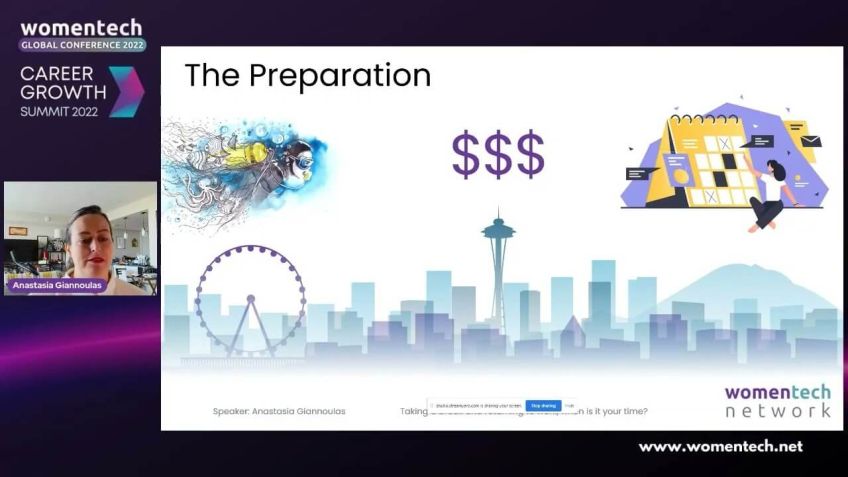
year, scuba dive as much as possible, bring along only the essentials and do it for as long as possible. I said that because maybe my timeline would need adjusting and realizing it will probably end at some point. I wanted to make sure I had no regrets. So where did I begin? Sometimes the hardest part is just choosing a starting point for the rest of your life and getting on with it. I packed all my things, shipped them home because at that point I was living in the UK and my home was in Seattle. I put them in storage and hit the road. I went to my parents' house for a short time to rest, prepare for my trip abroad, leverage my support network, save some money and become a scuba dive master, which sounds really
ridiculous because this is a very unique path. I doubt anybody else has had the same path, but I hope you consider it because it was amazing. As part of my decision to take a break, I needed to work on some factors in my life that I had let slip. I began dive master course in Seattle that put me in the water five days a week. I learned how to teach students. I was physically active every day by lifting scuba tanks and gear, which sounds way harder than it actually is, but it is, you know, a workout. I was swimming during diving classes as a support staff. I removed all the things that stressed me out in my break or prior to my break. I wasn't able to be on the phone during these activities. I couldn't look
at social media. I had to constantly focus to keep hydrated, stretched and prepared for the next class. I had to expand my knowledge of scuba diving because students would ask me all sorts of questions and I wouldn't know the answers and I needed to make sure I had an answer for the next time. This kept my mind focused on what I needed to get healthy first and foremost and stop my previous routine from being reintroduced. It completely brought my mind into a completely different space that enabled me to forget about the things that really stressed me out. So I was so wrapped up in my work, I forgot that there was this whole world out there for me to enjoy and just in addition to my
job. So where did this take me? I ended up spending 10 months traveling the world, visiting seven countries, and completing over 250 dives. I met countless amazing travelers who were all working through their own barriers, breaks, and transitions of some kind. Those conversations were amazing. I started out in Honduras where I spent three months scuba diving and learning to be an instructor. I then flew to the other side of the world and swam with manta rays, whale sharks, dolphins, octopus, squid, and many other marine life creatures. I saw the tomb of the kings and queens in Egypt. I visited the Acropolis in Athens. I walked the Thames in London. I watched sunrises in the Maldives and began learning to sail in Seattle. I pushed myself to the limits physically. I worked on myself mentally and will
continue to do so. And through all the physical activity of diving over such a long period, I got healthy. I was active, you know, eating a healthy caloric intake, resting when I needed, and stretching and meditating almost daily. I was living a completely different lifestyle that I had ever had and loved every minute of it. But something was still missing, which sounds crazy when you're in this amazing environment.
There was still a pull to my former life and I couldn't shake it. There were elements I missed and others I was happy to be rid of, but there was unfinished business for sure. And my travel funds were running lower than planned because fun and traveling around the world is expensive. So I had to take that into consideration.
So what made me want to return to work again? So in thinking about this, you know, what was the pull? Why was I feeling like I needed to go back? You know, what was really driving that gut feeling, that voice inside? I started planning the return, thinking that maybe it would be now, but maybe it would be in the future.
But let me just take a moment to like think it through and see where that thought process took me. These are the questions I asked myself as I was considering returning. Had I achieved what I wanted? I looked back on my notes. Was I healthier? Did I learn? Did I grow? Am I still fulfilled? The answer was, yes, I learned. Yes, I grew. You know, I was healthier, but I didn't feel completely fulfilled.
I was a person who needed activities. I was a person who needed to achieve. I was a person who needed to accomplish things. And I'm still that person. And I knew that that was something that I needed in my day to day. Was I prepared mentally and physically? I knew it, I knew it would be tough to return to such a complex workspace like tech. It was far from the kind of schedule that I was living at that time. But I knew with the right preparation, I could handle it.
And now I was much healthier physically to where I thought I could maintain what I built for myself. Did I need a skills refresher? I was very rusty when I considered coming back. I realized that after months away, I lost my lingo. I couldn't remember what was the ribbon in Excel, even where to find tools I previously used. I sounded like a surfer. I still kind of do.
I needed some work to get to corporate ready again. I signed up for classes online for basic skills like coding, Excel, cloud development, and even some communication classes to kind of, you know, rework the skills that I previously had, but then also approach them in a different way, with maybe some more learning that I didn't have from before.
I took them at my own pace and prepared for what I knew was about to happen. Should I consider a different role or industry? I considered the option for types of roles that would keep my work-life balance and was manageable for me. I didn't want to get into the professional motion again. I set some goals for myself and made sure that I revisited them almost every day before I rejoined and in the months after.
I considered maybe taking a part-time or contract role. I'd previously done contract work and I loved it. I met some amazing people. I learned so much. And the nice thing about that is that you can move around and kind of try out different things. I started working contract roles on this return in hopes that they would transition into a full-time position and with some of the same companies. This is a great way to get the foot in the door and with some companies and they will turn you into a full-time employee if it works out. Don't let anyone make you feel bad about contract work or temporary work. It's good money. You learn a lot and you get clear deliverables that help you manage your time as you transition back
and revamp your skills. Did I know what I wanted for my next job? I decided to focus on program management instead of product management for a while but focus on my next role in a space that I never worked in. I needed a change and a new set of projects to ensure I didn't fall back into the same old same old. How do I find my next opportunity? I leveraged my network, reached out to people I worked with before, people I was acquaintances with even, and then also reached out to talent agencies to see if there were any contract positions available that met my criteria. There will always be jobs.
There will always be jobs. The key is to find the right role for you. Look back on your notes and see what you liked, what you didn't like. What I knew for sure was I missed innovating on a daily basis. Problem solving was exciting for me. In order for me to change my lifestyle, I needed more. I still believed and was invested in the vision of my future and I wanted to continue that. It was clear what I needed to do next. I kept that in mind and I re-entered corporate life. The results of my decision.
After a couple contract roles, I decided to join AWS. It met my criteria for the next role. It was challenging in a space I never worked in before and a program role. The team was innovating on a product which wasn't launched yet, which is always exciting. Leadership was supportive of my peculiarities. I joined the developer tool org because they were willing to create a role for a candidate, me, they believed in, that had skills that didn't align to a traditional role. I talked openly with them about what I was looking for in my next role and what I wasn't willing to negotiate. Luckily, we found a match within the org and the decision was made. I was encouraged to continue my professional development and work towards my promotion that I didn't quite meet the bar for before break,
but I had a very clear path to in my new role. It was challenging in a good way. Cloud always scared me for whatever reason. I took the challenge on and it's made all the difference and I was able to relocate. Changing my environment could help me get out of bad habits and routines. Sometimes a fresh start is all you need to be successful the next time around. And looking back. So I have six points for looking back. Hindsight's great. Save money, spend wisely. It's a choice. This goes day to day whether you're considering a break or not. Prepare every day for your next break. I'm already preparing to take another break. I don't know when it's going to be, when it's going to feel right, but I'm saving for it,
I'm planning for it and I know what I want to do. Only you can decide when it's right for you. Don't let anybody push you into taking a break, but be mindful of your inner voice and understand that you're your best judge in this point. You know when you need a moment. Take the moment when you have it and when you need it. Continue to learn and grow with whatever you choose. I say this to everybody, never stop learning. There's so much to learn and understand and empathize with.
Leverage your network and support for support and inspiration. That's what they're there for. Use it. And have no regrets. Own your decisions. Move forward and consider your future in everything that you do. So in summary, understand the reasons why you need a break. Set yourself up for a return. Have goals for your time off. Throughout the break, ask yourself if it still makes sense constantly.
Reset your goals and adjust your timelines as needed. Set yourself up for a successful return. You know, polish your skills. Work on your resume and narrative. Breaks are okay. Use them for your benefit. And you have to prioritize just like every project. If you don't prioritize you in your roadmap of life, your stakeholders and peers won't prioritize you either. So take the first step and put yourself as your P0 on your roadmap. Your top priority. Take a break and do what you need.
Thanks everyone for joining. Feel free to connect with me on LinkedIn. If you're interested in seeing my pictures from my travels, I'm Anna Goes Diving on Instagram and I will be in the booth for an hour from, let's see, 10 until 11 to answer questions. Fantastic presentation. Thank you so much, Anastasia. Thank you for sharing your experience, for taking us on the journey of yours. I will check out your Instagram because I'm curious. So Anna Goes Dumbing, everyone. Let's give a massive round of applause to Anastasia. And let's, yeah, something that I want to highlight. That's something that resonated with me so much and I believe so true. If you are not going to prioritize yourself, no one else will. Because if you don't make time for what is important for you,
for taking the break you deserve, the things that you want to do, need to do, have to do, then no one else will ask you, hey, do you need a break? By the way, right? It's the same as any type of project. It's prioritize. Yeah, absolutely. And as you mentioned, so everyone, Anastasia is also going to be in the booth right after the session. So make sure to stop by, say hi, talk more. Also about a different open role at Amazon Web Services. And maybe your next dream job is there. You never know. Thank you so much, Anastasia. Thanks, everyone. It was a pleasure.
Thank you, Anastasia. And see you at the booth. See you there.
Transcribed automatically; names checked against the speaker record. Select a time to jump there.
Resources mentioned
- Anna Goes Diving (speaker's Instagram account)
Cite this talk
WomenTech Network. "Applying FEAT in AI for social good by Usha Jagannathan." WomenTech Network, 2022. https://www.womentech.net/video/applying-feat-in-ai-social-good-usha-jagannathan-0
Related talks
Browse the libraryTaking a break and returning, when is it your time by Anastasia Giannoulas
Ten months, 250 dives and a harder question: when do you go back to work
Applying FEAT in AI for social good
 Usha Jagannathan
Principal Engineer, McKinsey & Company
A year of scuba diving ended in a tech role created just for her
Taking a break and returning, when is it your time? by Anastasia Giannoulas
A co-worker's question turned a burnt-out year into 250 dives

Designing Work That Works: Work-Life Integration in a Portfolio Career World
 Julia Stefani
Founder and Principal, SWolta Ventures
Women in tech aren't losing ambition, they're reading a badly designed room

The Nonlinear Path: Why pausing can be the smartest move of your career
 Charlene Schubert
Senior Product Manager
A year off as Head of Product, then a PayPal job in about two months

Redefining Success
 Ariel Naftali
CEO & Founder, Executive Coach, Perform With Purpose
Burnout can come from being good at the wrong work