Cybersecurity blindspots when adopting emerging technologies by Anu Kukar
18:442022
Most emerging tech pilots weigh cost and customers, but forget security
Hospital equipment running emerging technology has been hacked with patients dying, and a 3D mask has opened doors to sensitive areas, yet 90% of organizations are pushing ahead with digital or cloud transformation, as the speaker cites. Presenting from Sydney, Anu Kukar turns travel photos from Thailand, Dubai and Los Angeles into a security checklist. What should every team verify before an AI, IoT or cloud pilot becomes part of the business?
Get five security checks and a bonus data test to apply before adopting AI, IoT or cloud
Anu Kukar argues that organizations adopting AI, machine learning, IoT and cloud as part of digital transformation face security blind spots that many proofs of concept ignore. Using travel photos from Sydney, Thailand, Dubai and Los Angeles, she offers five practical checks (multiple lenses, governance, security by design, third-party verification and shared cloud responsibility) plus a bonus test for understanding the data behind the technology.
“It's very common for proof of concept just to think about the costs and the customer outcomes. I want you to ask the question in the organization, have we considered the security lens like we see in this photo in Thailand?”
“When your organization is designing your processes, designing how the AI machine learning is going to be used, make sure that your security requirements are built in right from the beginning.”
What you will learn
Apply cost, risk, employee, financial and security lenses to every emerging technology proof of concept.
Bring AI and machine learning initiatives inside your governance structure so risks are identified, managed and monitored.
Build security requirements into processes and AI designs from the start instead of paying to retrofit them.
Verify how third-party providers use emerging technology and whether their security controls hold up.
Map who owns identity and access management, onboarding, offboarding and backup across multiple cloud vendors.
Details
Level
Beginner
Format
Talk
Technical depth
Introductory technical
For
Mid-career, People manager, Executive
Length
18:44
Published
June 2022
Questions this talk answers
What security lens is most often missing from emerging technology proofs of concept?
Proofs of concept commonly focus on costs and customer outcomes; Anu Kukar urges teams to add risk, employee, financial and, above all, security lenses.
Why should AI and machine learning not be run in isolation?
Keeping them inside the governance structure lets the organization identify, manage, monitor and oversee risks and fulfil its regulatory obligations.
What does security by design mean for emerging technology?
Security requirements are built into processes and into how AI and machine learning will be used from the beginning, which saves money and protects the organization.
How should organizations handle third-party vendors that use emerging technology?
Instead of judging from the outside, they should go in and verify that vendors have the right security controls for how they use emerging technology.
What should teams ask about the data behind emerging technology?
Where the data is stored, who has access, how it is used, transferred and modified within machine learning, and how new data is created, rather than treating it as a black box.
Security by design, lessons from LA rooftops (67 s)
Treat your data like food ingredients (69 s)
Speaker 1: Welcome all from wherever in the world that you've dialed in. I'm from Sydney, Australia. So coming to you live from here, and I'm going to give you five key things that you can take away and use in your organization to try and identify the security hotspots and avoid some of the disasters that we've seen around the world. So let me start by, we'll start doing some traveling and we're going to start with my hometown, Sydney, Australia. And the reason I like starting with here is think about how many organizations are doing some kind of transformation at the moment.
The latest global CEO surveys show 90% of organizations are doing some kind of digital or cloud transformation. One thing all of those transformations have in common is they're using some kind of emerging technology. Now, what do I mean by an emerging technology? It could be artificial intelligence, machine learning, internet of things, etc. And with that use of those new technologies, there are new security risks and threats that we need to think about. And that is exactly the five things I'm going to give you today that you can take away and help protect your organization.
So if you're with me, let's start. So here's a fun little question to think about. When you look at the amazing Sydney Harbour Bridge in Australia, did you know that there is actually an emerging technology technology on that right now? There is in fact 106 IoT sensors on it and it tells the authorities and people overseeing it various data points. Those data points allow them to understand the level of risks, whether it's safety, physical, security, because all those data points are providing real-time information.
And so what they're able to do is they're able to constantly 24/7 monitor the safety and security elements of this critical infrastructure and landmark of Australia. So rather than looking at it, if you look at it, does it look safe to you? Well, it looks pretty safe, but how do I know? And this is where emerging technology is playing such a key role that it can, rather than just sort of looking at it and going, looks okay, rather than just telling me, I want you to show me.
And emerging technology is showing through data how things are safe or not safe. I want you to think back over the last five years, the number of failures from using emerging technology. People really see the benefit and so they're adopting it. But there have been a number of failures. We've looked at a 3D mask has been able to get entry into private and sensitive areas. We've had hospital equipment that was using emerging tech hacked in and it led to patients dying. There has been chat bots that have been perhaps not using the most appropriate language and they've been causing some reputational damage. So the point I want you to really think about is organizations are transforming and in transformation, they're using emerging technology because they provide lots of benefits.
However, there have been a lot of failures. And so today we're going to go through five ways that you can actually help prevent and protect your organization from the security risks that needs to be considered with emerging technology. So we'll do a bit of traveling. So from Sydney, we've actually traveled to a place in Asia. So for those of you listening, I'll just give you a moment to think about where do you think we might be in the world? Feel free to drop it in the chat box. And I should say there might be a prize for the winner, but we'll see. We are in fact in Thailand. This is one of the heritage places in Thailand. And a few years ago when I was there, when you look at that window, have a close look and
look at how many lenses can you see? So when I was there, I found it really difficult. And while you're thinking about how many lenses, the reason I'm asking you to think about the lenses and sharing this story, the number one tip with emerging technology is, emerging technology is generally adopted by organizations using a proof of concept. It's done in a trial in isolation. And so it's very important that doing that proof of concept that you apply multiple lenses. So the right answer is in Thailand, if you go to this heritage spot, there is seven lenses. And I want you to take away the first point is when you are trying or thinking about doing a proof of concept, you need to have multiple lenses, a cost
lens, a risk lens, an employee lens, a financial lens, and most importantly, a security lens. It's very common for proof of concept just to think about the costs and the customer outcomes. I want you to ask the question in the organization, have we considered the security lens like we see in this photo in Thailand? All right, we'll move on. From Thailand, we've now traveled to Middle East. Have a think if you can guess where we are. We are in fact, in Dubai, we're by the beach. And when you look at this photo, it, it actually looks like a real set of stairs. But in fact, it's actually a flat photo that gives that 3D effect. And the reason I like this is because the two dolls of the opposite ends
actually is the second key element of the security risk that you need to think about with emerging technology. A lot of proof of concepts and use of emerging technology can be done in isolation, like the two dolls sitting apart. And what's really important is to make sure that these two dolls are together. Similarly, the way that security in emerging technology and emerging technology is being implemented. So take artificial intelligence. If you're adopting AI or machine learning, have you made sure that it's not in isolation, it is together as part of your governance structure.
And the reason that's important is so that you can identify the risks, you can manage them, you can monitor them, and you can oversee them fulfilling your regulatory obligations. So again, second tip, don't allow emerging technology in your organization to be like the two dolls in the photo. You want them all to be playing together. And we'll continue traveling. We've now traveled over to North America. We are in fact in US, LA. And this is the other example that I really like is, if you look closely at the photos, you will see the buildings. If you notice very carefully the buildings, what do you see?
It is in fact flat rooftops on every building. And if you look to the right hand side, you'll see the airport there. And during bushfire seasons, what was happening was helicopters were flying and going out to the other side where they were rescuing people, taking care of the bushfires. The distance that the helicopters have to travel was one costing money in terms of petrol, but more importantly, it was costing time, which meant loss of lives and loss of land and property.
So what they did was the emergency services and the local council, they collaborated. They came up with how do we actually work better together to solve this problem? And so the emergency services were able to work with the local council. And part of the mandate is that any new building being built or tall enough needs to have a flat top so that there is a helipad so that helicopters can land. And what that did was it reduced the petrol and the money in terms of flying back and forth because the distance was shorter. But most importantly, they were saving more lives. They could quickly go out to the bushfire areas, come back, drop people there and quickly fly back.
That saving the time that it would have taken to fly all the back to the airport. And the reason I share that is the third takeaway that I want you to do today is it's security by design. The way the emergency services work with the local council and integrated it in to get a better solution. When your organization is designing your processes, designing how the AI machine learning is going to be used, make sure that your security requirements are built in right from the beginning.
It can save lives. It can save money. And most importantly, it will protect your organization. And rather than you spending money later on, having to incorporate new requirements. So very important. Third one, security by design as you're designing and the use of the emerging technology. All right. We'll keep traveling. We're now back in Asia. We are in fact back in Thailand.
And I want you to look at this photo very carefully. What do you think that is? I'm just showing you the outside. Have a think. What do you think this is? My guess when I was there many years ago, I said, it looks like a church. And we were asked, would you bet money on it? How confident are you?
And I looked at it and I said, we're pretty confident. And this is what's inside. It is actually a Buddhist temple inside. And the reason I share this is with emerging technology, your organization is often going to use third party providers. All your third party providers today are using emerging technology themselves. And what I want you to do is I want you to understand in your organization, do you just look at the outside and go, yes, we're using emerging technology and we've got the right controls and the right security elements or as what I'm suggesting, do you go in and verify? Do you check and make sure that the way emerging technology is being used by your third party providers and vendors, that they've got the right security controls?
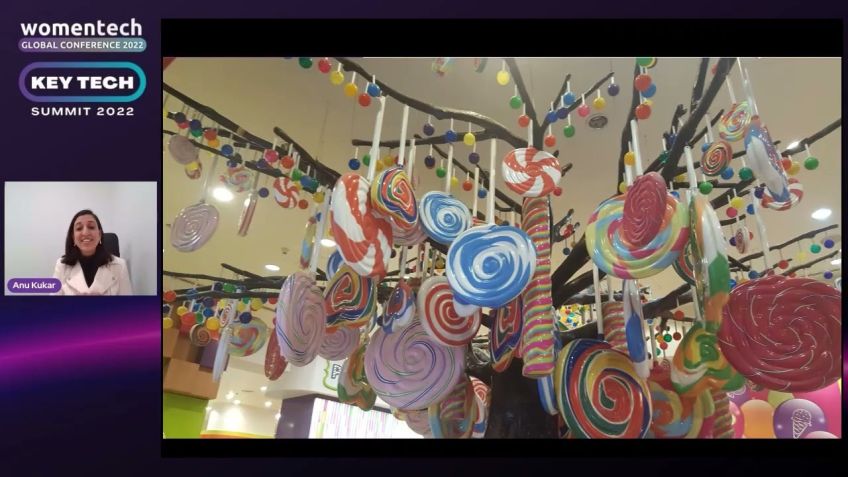
So again, the fourth takeaway, third parties using emerging technology. Are you just looking at the outside or are you verifying and getting some comfort by checking, by going inside what appears like a church? And we travel further to the Middle East. And we are in fact at the biggest candy store in the world, I'm told it is in Dubai. And the fifth takeaway I want you to think about is with emerging technology, especially when you've got cloud involved as well, moving and transitioning to applications and systems to the cloud, you might find the organization like this candy tree, lots of different vendors and cloud providers. And so one of the key security risks I want you to think about is, given the concept of shared responsibility, who is actually responsible for what? If you've got
multiple cloud providers like this multiple candy, do you know exactly who is managing and responsible for the identity access management onboarding and offboarding? Who's responsible for backup? All the different elements around security becomes a really important element when you have got cloud and emerging technology because you've got multi vendors. So my tip to you is ask and find out.
Now, they're my five takeaways. But as a wrap up, I want to give you a bonus one to take away. And given it's a late evening here in Sydney, it's dinner time, probably close to dessert. I want to give you a food example. This is some of my favorite food, a nice Indian entree, gold guppas. We've got a nice Mediterranean dinner and a French dessert.
If you can only take one takeaway from this presentation today, I want you to take this bonus tip, think about when you eat this amazing food. What do you normally do? We normally find out what kind of ingredients are they? Where has it been cooked? How long ago has it been cooked? Has the right hygiene been applied? We expect safety standards when we go into a restaurant and eat. We want to know, how long ago has it been sourced economically and environmentally well. Is it sustainable?
I want you to take the same mindset with emerging technology. With our food, we've got ingredients. With emerging technology, it's data. You want to understand where is the data stored? Who's got access to the data? How is it being used and manipulated within machine learnings? Don't leave it as a black box. Find out how it's being transferred. Who's accessing it? How's it being modified? Understand how new data is created.
Very, very important with emerging technology because it's all driven and based on data. Similar to the way we eat food, which is based on ingredients. And with that, I'm going to say thank you so much. Five key takeaways for you, with a bonus one, around security hotspots that you need to look out for when you're using emerging technology.
And given emerging technologies used in all the transformation and cloud and digital transformation that's going on, you're only going to find more and more organizations are either starting or have already adopted emerging technology. If you found this useful and you would like more tips like this, feel free to connect with me on LinkedIn. I share regular tips and news stories online. Thank you so much.
If there is any questions, feel free to send through any comments or in the chat. All right. There's lots of questions. Let me try and go through and answer a few here. Hey, there's so many interesting comments. Love this session. Thanks for sharing. Great session. Interesting session. Okay. Hello. Which question did you like particularly? I'm just, I'm just catching up. Okay. Fantastic. Okay. Thanks for sharing. Yeah. Amazing. I see that people really loved your session. Interesting ways of the depicting the entire topic. Great session. Thank you.
Thank you so much. How did it feel to be at the virtual conference today with so many amazing people? I'm reading through all the comments and I can't find a question. Just really, I think everyone loved the travel and I love the fact that there were people from UK. There were people from areas that I was talking about. Really, really nice comments. And Anna, thank you again for putting this amazing, amazing session on. And for anyone, if you do have a question and you haven't asked it here, feel free to reach out to me on LinkedIn and more than happy to answer any questions.
Yeah, absolutely. More comments are coming. And I think it would be great if, you know, drop your LinkedIn and if people have some follow up questions or they want to ask you something or just to thank you and connect or follow you on LinkedIn, that would be really great. I think. What do you think? Yeah, absolutely. Sounds really good. Fantastic. So thank you so much for being with us today and stay for the rest of the conference. I'm sure there are many people in the chat and would love to connect with you and talk one on one perhaps. So yeah, more comments are coming. So we have hundreds of things.
No, that's great. I'm glad you all enjoyed it. And it's such an important topic. So thank you for giving it the prominent space and time to share. Anna, that's really a thanks to you. Absolutely. Thank you for joining us today. Thank you for preparing your session. Thank you so much. Bye bye. All right. Take care. See you.
Transcribed automatically; names checked against the speaker record. Select a time to jump there.
Article based on this talk
Where do security risks hide when organizations adopt AI, IoT and cloud?
Anu Kukar uses travel photos from four cities to map five security blind spots in emerging technology, plus a bonus test for the data underneath.
In short
Emerging technologies such as AI, machine learning and the Internet of Things now sit inside almost every digital or cloud transformation, and each brings security risks that pilots and vendor choices often overlook. Anu Kukar, presenting from Sydney, Australia, offers five practical checks: apply multiple lenses to proofs of concept, keep emerging technology inside governance, design security in from the start, verify third parties, and clarify shared responsibility across cloud vendors. Her bonus tip is to treat data the way a careful diner treats ingredients.
Key takeaways
Apply cost, risk, employee, financial and security lenses to every emerging technology proof of concept.
Bring AI and machine learning initiatives inside your governance structure so risks are identified, managed and monitored.
Build security requirements into processes and AI designs from the start instead of paying to retrofit them.
Verify how third-party providers use emerging technology and whether their security controls hold up.
Map who owns identity and access management, onboarding, offboarding and backup across multiple cloud vendors.
Why emerging technology changes the risk picture
Kukar opens with scale. As the speaker cited, the latest global CEO surveys show 90% of organizations are doing some kind of digital or cloud transformation, and all of them lean on emerging technology. Her first example is the Sydney Harbour Bridge, which she says carries 106 IoT sensors feeding real-time data on safety and security. The point is a shift from assurance by appearance to assurance by evidence: "And this is where emerging technology is playing such a key role that it can, rather than just sort of looking at it and going, looks okay, rather than just telling me, I want you to show me." (2:04)
The same technology has also failed in public. Kukar lists a 3D mask used to gain entry to sensitive areas, hacked hospital equipment that led to patient deaths, and chatbots whose language caused reputational damage. Those failures frame the rest of the talk.
Look through more than one lens, and do not work in isolation
The first check comes from a heritage site in Thailand, where a window reveals seven lenses. Emerging technology usually enters an organization through a trial run in isolation, and Kukar warns that those trials tend to be judged narrowly: "It's very common for proof of concept just to think about the costs and the customer outcomes. I want you to ask the question in the organization, have we considered the security lens like we see in this photo in Thailand?" (5:24)
Her second check, illustrated by two dolls at opposite ends of a 3D illusion in Dubai, is about isolation of a different kind. AI and machine learning initiatives should sit within the governance structure so the organization can identify, manage, monitor and oversee risks and meet its regulatory obligations. "So again, second tip, don't allow emerging technology in your organization to be like the two dolls in the photo. You want them all to be playing together." (7:04)
Build security in from the beginning
In Los Angeles, Kukar points to flat rooftops across the skyline. She explains that helicopters fighting bushfires were losing time and fuel flying back to the airport, so emergency services and the local council agreed that tall new buildings should have flat tops that can serve as helipads. Shorter flights saved money and, more importantly, lives. Her lesson is security by design: "When your organization is designing your processes, designing how the AI machine learning is going to be used, make sure that your security requirements are built in right from the beginning." (9:21) Doing it early, she adds, avoids spending later to incorporate new requirements.
Verify vendors and clarify who owns what
Back in Thailand, a building that looked like a church from outside turned out to be a Buddhist temple. Kukar uses it to challenge how organizations assess third parties, which increasingly run emerging technology themselves. Looking at the outside is not enough: "Do you check and make sure that the way emerging technology is being used by your third party providers and vendors, that they've got the right security controls?" (10:51)
The fifth check comes from what she was told is the world's biggest candy store, in Dubai. A candy tree with many varieties stands in for an estate with many cloud providers. Under shared responsibility, it is easy to lose track of who manages identity and access, onboarding and offboarding, or backup. Her advice is direct: "So my tip to you is ask and find out." (12:53)
The bonus tip: know your ingredients
Kukar closes with a food analogy. Diners expect to know the ingredients, where a dish was cooked, whether hygiene standards were met and whether it was sourced sustainably. She asks for the same curiosity about data: "With our food, we've got ingredients. With emerging technology, it's data." (14:21) That means knowing where data is stored, who can access it, how it is used, transferred and modified inside machine learning, and how new data is created. "Don't leave it as a black box." (14:21)
Watch the talk
Cybersecurity blindspots when adopting emerging technologies by Anu Kukar, about 19 minutes: https://www.womentech.net/video/cybersecurity-blindspots-when-adopting-emerging-technologies-anu-kukar-0
About the speaker
Anu Kukar presented this session from Sydney, Australia, where she focuses on the security risks organizations face as they adopt emerging technology. She shares regular security tips and news stories on LinkedIn.
Questions this talk answers
What security lens is most often missing from emerging technology proofs of concept?
Why should AI and machine learning not be run in isolation?
What does security by design mean for emerging technology?
How should organizations handle third-party vendors that use emerging technology?
What should teams ask about the data behind emerging technology?
Drafted with AI from the talk transcript. Editor review pending.
Frameworks and ideas mentioned
Security by design
Shared responsibility model
Proof of concept
Resources mentioned
Anu Kukar on LinkedIn
Cite this talk
WomenTech Network. "Cybersecurity blindspots when adopting emerging technologies by Anu Kukar." WomenTech Network, 2022. https://www.womentech.net/video/cybersecurity-blindspots-when-adopting-emerging-technologies-anu-kukar-0