
The Floor We Stand On by Clare Wilkinson
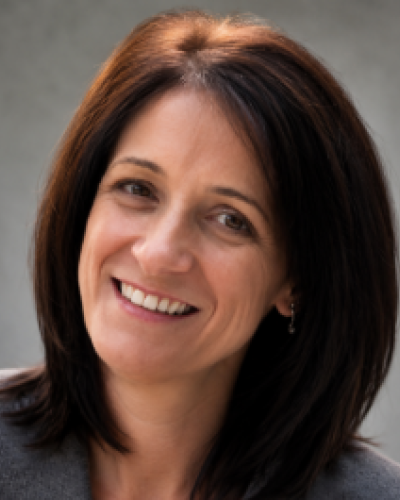
Clare Wilkinson
Vice President, Engineering Application ExperienceReviews
Building Floors for Future Generations: A Journey of Leadership and Sponsorship
In a world that often overlooks the immense contributions of women, it's essential to pause and recognize those who have paved the way for us. Today, I want to share a personal narrative that speaks to the importance of mentorship, sponsorship, and genuine leadership, inspired by the remarkable women in my life, particularly my mother.
The Foundation of My Journey
Born in the 1930s, my mother defied societal expectations at every turn. Despite a world that largely ignored women's ambitions, she pursued education with fervor, earning degrees from King's College London and Hughes Hall, Cambridge, and mastering nine languages. My parents instilled the values of education and equality in my upbringing as non-negotiable principles.
- Mother's Achievements: Despite the challenges, she held a full-time teaching career while raising seven children.
- Inspiring Female Community: My mother built a network of supportive women, nurturing each other's families and careers without formal frameworks.
Today, as a mother of two daughters and a VP of Engineering at Anaplan, I reflect on how those early experiences shaped my career path. My journey doesn’t just belong to me; it carries the essence of all the women who inspired me along the way.
Navigating the Tech Landscape
Joining Anaplan a decade ago, I witnessed the company's growth from a small startup to a publicly-traded technology leader, and recently, through an acquisition by Tomah Bravo. Each step taught me invaluable lessons about leadership.
- Leading a Global Team: Today, I lead a talented group of engineers creating cutting-edge software applications on the Anaplan platform.
- Commitment to Equality: Our leadership team actively pursues pay equity and fosters a culture of flexibility, promoting women's growth in the tech industry.
One particular initiative I'm passionate about is Anaplan's Graduate Development Academy, where we selected exceptional emerging female talent, indicating a promising shift in equity within the tech industry.
Understanding the True Essence of Leadership
My career path has not been linear. Transitioning between roles allowed me to experience the critical importance of listening and creating environments where teams can thrive. The most significant lessons came from moments of vulnerability, including my battle with breast cancer. Facing that challenge taught me the true meaning of support and unconditional care in the workplace.
Mentorship vs. Sponsorship
While mentorship is vital, it’s crucial to understand the difference between mentorship and sponsorship:
- Mentorship: Guidance from someone who offers advice and support.
- Sponsorship: Advocating for someone in crucial conversations, helping them seize opportunities that may not otherwise be accessible.
Throughout my journey, I was fortunate to have mentors who provided guidance and sponsors who championed my growth, especially during challenging times. Their support not only shaped my career but has profoundly influenced how I lead today.
Creating an Inclusive Future
Reflecting on my mother's legacy of building networks, I am committed to fostering an environment where every voice is heard, and every individual's potential is recognized. I encourage leaders to:
- Be intentional about mentorship—make it a priority.
- Actively sponsor those who show promise, especially women in the workplace.
- Create spaces that empower individuals to thrive without needing to seek perfect solutions.
Conclusion: What Floor Are You Building?
As we consider the legacies we are leaving behind, it’s essential to ask: what floor are you building for the next generation? Every act of support, every belief invested in another’s potential contributes to a lasting impact.
Let us commit to being part of the stories that uplift and inspire future leaders. Just like my mother, who quietly organized and nurtured her community, each of us has the power to build foundations for others. Let's pull up chairs for those who are waiting for their opportunity to shine.
Join me in recognizing the importance of leadership as an act of care and advocacy, ensuring that we invest in the potential of those around us.
Video Transcription
So I want first to start not with my career, but the people who made it possible, the woman who made it possible.My mom was born in the nineteen thirties. In a world where women's ambition was not really just discouraged, it was largely invisible, and yet my mom quietly defied all that. She studied at King's College London, then at Hughes Hall Cambridge. She earned three degrees and spoke nine languages fluently. I was really fortunate to be raised by parents who believe that education and equality for girls was simply nonnegotiable. Not a nice to have, not a conversation to be had, nonnegotiable. My dad was a headmaster, a hands on father at a time where that just wasn't the norm.
Equality wasn't something that my parents talked about. It was just the way they lived. Now I come from a big family. My mom had seven children, and she held down a full time career as a teacher. Now just think about what that means. Statutory maternity leave wasn't even introduced in The UK until 1975. So my mom left a teaching job before my oldest brothers were were born, and she didn't return until my younger sister was two years old. And when she did go back, she took her daughter with her. So my little sister sat in the back of the classroom while my mom taught. I like to think of that as, an early bring your daughter to work day. Mom had a really remarkable circle of female friends.
They formed an informal child man minding network. Whoever was at home that day fed the children, looked after them, kept things running. On school holidays, my parents being teachers, our house was packed to the rafters. It was loud, chaotic, and full of love. I think what I didn't understand then, but I do now, is that these women were building something for each other without a policy, without a framework, without anyone telling them to do. They were sponsoring one another's lives. So today, I'm gonna talk about the women who came before us, who set the floor that we stand on. And today, I wanna talk about what do we do with that gift. So that's where I came from, and here's where I've landed. I'm Claire, mom to two daughters, wife, and VP of engineering. I joined Anaplan about ten years ago.
It was a much smaller company, the kind of place where everyone knew everyone, and you could feel that energy of something being built from the ground up. In the decades since, I've lived through a lot of change. I've watched the company go through IPO and more recently navigated being acquired by Tomah Bravo, a private equity firm. I think that each of those moments has bought its own pressures, its own uncertainties, and definitely its own lessons in what leadership actually requires of you. So as Ellie says, today, I lead a goal I lead a global team of engineers. They build software that allows us to create first class applications on the Anaplan platform.
And we're doing this at a moment of genuine transformation, fully embracing what AI makes possible. But the work that I wanna talk a bit today about today and something that I'm very invested in is Anaplan's inaugural graduate development academy based in Manchester, New York. So we received over a thousand applications. From those, we have to select 12 people. Of the 12 we selected, six are women, 50%, not by design, not by quota, not by any form of favoritism, just exceptional emerging female talent. They're putting their hands up, and they're showing us what they're made of. In this industry, which has spent decades ringing its hands about the pipeline problem, I'll take that as a very encouraging sign.
So the dev academy, it doesn't exist in a vacuum. It sits within a culture that I'm proud and excited to be part of. Our leadership team are not people who pay lip service to equality. They mean it, and they act on it. Anaplan offers flexible working for every employee, not as a perk, not as a favor, but a baseline expectation. We have a 100% commitment to pay equity reviews and a clear focus on closing the gender pay gap. Beyond the numbers, we're investing on internal programs designed to grow our female employees and really make sure that our talent has every opportunity to rise. Now none of this is perfect. No organization is, but it is serious and it is sustained.
And when I stand up here talking about building floors for others, I'm grateful to the work that someone at Anaplan is actively trying to do the same. So when I look at the Dev Academy and why that matters so much to me, I don't have to look very far. I was given a foundation. And now I've spent my career thinking about what it means to do the same for others, to open doors, to make space, to say, you belong in this room. So that's really what today is about. Not just my story, but the story that runs from my mom's informal child minding minding circle of the nineteen seventies to the graduate program we're building today. It's all the same instinct. Look after each other and bring people with you.
So my path into engineering wasn't really a straight line, and I guess that's true of many of you. I started out as a contractor working for private banks in London. It was fast. It was demanding, and I really loved it. Then my first child was born, and like probably many women at that point, I made a decision that was part practical and part instinct. I moved back home, back north to Leeds, but I found my next chapter at a company called The Datum who are based in York. Cut a long story short, The Datum was acquired by Cognos. Cognos was acquired by IBM, and it was through that first acquisition that something shifted in me. I moved from being a software engineer to managing a team. Now nobody handed me a leadership manual.
I just found myself responsible responsible for people, and I had to figure out really quickly what kind of leader I wanted to be. That experience really shaped everything that came after, including joining Anaplan as the head of level three support. This was at a time where the company was going through an explosion of new customers. It was fun. It was relentless, and it's exactly the kind of challenge that I thrive on. What made it exceptional, though, was the people. Partnering partnering with some incredibly focused and talented female leaders, We built a global support team over the next couple of years that is excelling today. That chapter taught me very early on what's possible when you put the right people together and you trust them. From that part in my career, something unexpected happened.
I was given an opportunity to step out of my engineering comfort zone and move into the product organization. Now this was one of the best career decisions I ever made. Not because it was easy, but it because it forced me to see the world differently. I learned so much about what our customers actually need, what they are trying to solve for, and that customer lens has shaped how I lead engineering ever since. So moving on from product a couple of later couple of years later, I returned to my engineering roots. This time, managing teams across a spectrum of engineering and the plant. And it was in that role that I lived through IPO and navigated acquisition by Tom at Bravo and began building the graduate scheme.
But the moment I really want to talk about today is one that really tested me, and it happened a few years ago. I was diagnosed with breast cancer. That's the sentence that I even find hard to say out loud today. I needed a complex nine hour operation. And in the weeks that followed, alongside everything else that I was navigating, the fear, the treatment, the physical reality of it. I had a thought that as a suspect, I'm not alone having had. What does this mean about for my career? Would I be seen differently? Would I come to would I come back to a find, the world had moved on without me that I had been quietly filed under no longer quite reliable? So in a world that still equates femininity with fragility, would this mark me as someone to be managed around rather than invested in? I was scared. You know?
It was a scary time. But what happened instead was that my peers and the leaders at Anaplan quietly, consistently showed up for me, not with a fanfare, not with performative gestures, just I've got you. Come back when you're ready. You have a place here. And I did come back, and I was promoted into the VP role I hold today. Now I'm telling you this not because I want sympathy, but because this is the most concrete example I can give to you of what genuine support means in the workplace. It looks like people who believe in you when you can't believe in yourself. It looks like leaders who see your potential even when it when you're at your most vulnerable.
It looks like the difference between an organization that tolerates people and one that invests in them. So my mom built an informal network of women who looked after each of us children so that everyone else could keep going. Decades later, I had colleagues who did the same thing for my career, different contact, same instinct, look after each other, bring people with you. When I first moved into management, I had a very, very particular idea of what it looked like. It looked like having the answers. It looked like being the most capable person in the room. It looked like certainty. I spent the years since then on learning all of that. My earliest lesson came when I joined our plan. The pace was relentless. The team needed to scale fast.
And what I discovered very quickly was that the leaders who thrived in that environment weren't the ones who tried to control everything. They were the ones who created clarity, built trust, and then got out of the way. I was fortunate to work alongside some exceptional female leaders in that period. We built something together that I am genuinely proud of. That chapter taught me what's possible when you trust the people around you. What I know now is that leadership is far less about what you know and far far more about the kind of environment you create. Can the people around you do their best work? Do they feel safe to say, I don't know. I got that wrong, or I need help. Are you building a team or just managing a collection of of individuals? Later in my Anaplan journey, I stepped entirely out of the engineering world and moved into product.
And this turned out to be one of the most important leadership decisions I've ever made. Not because I was good at it immediately, but because it forced me to lead from a place of genuine curiosity rather than expertise. I had to listen more than I spoke. I had to ask better questions, and I came back to engineering a different leader, one who understood our customers in a way I simply hadn't before. Leading a global team of engineering in a period of AI driven transformation has made this more urgent. The pace of exchange is extraordinary. Nobody has a complete map. If I try to lead from a position of having all the answers, I would fail. And more importantly, I'd fail the people I'm responsible for.
The only honest approach is to lead with curiosity, with transparency, and with a genuine belief that the people around you will surprise you if you let them. I've also learned that leadership is tested most sharply, not when things are going well, but when they're difficult going for an IPO, navigating acquisition, returning to work after serious illness when, for me, the most important leadership act was simply showing up and refusing to be diminished.
There's a line that I come back to often. You don't lead people by standing in front of them. You lead them by standing beside them. My mom, she didn't think of herself as a leader. She was a teacher, a mother. She ran a household of nine people, held a career, held down a career, and quietly organized a community of women around shared need. She modeled something I've never forgotten, that leadership is fundamentally an act of care. You see what people need, you create the conditions for them to thrive, and you do it without needing the title to justify it. So let's move on to mentorship. Let me ask you something.
Think of a person who's genuinely changed the trajectory of your career, Someone who saw in you something before maybe you even saw it in yourself. Someone who gave you their time, their honesty, their belief. That's a mentor. Mentorship is one of those words get that gets used so often. Sometimes it can feel a little hollow. We talk about mentorship programs, frameworks, best best practices. Now I believe they've all got their place. But the most powerful mentorship I've experienced, given or received, has never looked like that formal structure. It's looked like a conversation that went longer than anyone planned. A piece of feedback that was hard to hear but true. Acquire, I think you're ready for this at exactly the right moment. Some of my formative mentorship came from those female leaders I worked alongside in the early Anaplan years.
We were building something fast under pressure, and we learned from each other in real time. There was no hierarchy. It was lateral, honest, and rooted in a shared belief that we could figure this out together. That experience has shaped how I think about mentorship today. It doesn't only flow downwards. Some of the most valuable people, some some of the most valuable guidance you'll ever receive will be from your peers who were there in the thick of it with you. Throughout my career, I've been really fortunate to have people who were honest with me, who didn't let me stay comfortable when comfortable was the wrong place to be, and crucially, who was still there when things got hard. The colleagues who showed up for me during my illness weren't weren't following their playbook. They just cared.
And that care was one of the most important forms of mentorship I've ever received. Now I try to do the same. If there's one thing I'd ask you I'd ask of you today for everyone in this room is be intentional about mentorship. It doesn't happen by accident. Make the time. Have the honest conversations. Tell people what you see in them. But mentorship, as powerful as it is, it has a limit, and that's where sponsorship comes in. Because mentors talk to you, sponsors talk about you in rooms that you're not in. And I think that's a really, really important dis distinction. It's a distinction that matters. A mentor can give you all the guidance in the world. They can help you develop, challenge your thinking, build your confidence. But at some point, your career will be shaped by a conversation that you are not part of.
Someone will be deciding who gets that opportunity, who gets the investment, who gets the promotion. And the question is, is there someone in that room who says your name? I've had two moments in my career where I felt that most clearly. The first one was when that person in Anaplan gave me the opportunity to move me into product, pulling me into a world I didn't know and asked for, and I'm pretty sure I wouldn't have put my hand up for it. But someone looked at me and thought, she needs this. She's ready for it even if she doesn't know it yet. That is sponsorship. It doesn't wait for for you to be confident. It's in it invests in your potential before you fully claimed it for yourself. The second moment was when I was recovering from my surgery, uncertain where for my career had any future at all.
There were people at Anaplan having conversations that I wasn't aware of, not managing me out, not quietly redistributing my responsibilities, holding my place, advocating for me. And when I returned, they backed me for promotion. I didn't ask them to do that. I didn't even know it was happening, but that is sponsorship. It's active. It's deliberate, and it requires a sponsor to spend some of their own political capital on your behalf. Think of that from the other direction. Who are you sponsoring right now? Not mentoring, sponsoring. Whose name are you saying in rooms that they're not in? Whose potential are you putting your credibility behind? Who is waiting for someone to notice them? Who advocate for them? Open a door for them. Could that be you? I think this is really urgent right now, especially for those of us who've worked hard to reach these positions of influence because influence is only useful if you use it.
A seat at the table means nothing if you don't pull up a chair for someone behind you. My mom's generation of women built informal networks because no one was gonna build formal ones for them. They sponsored each of us lives without having a word for it. We have that word. We have those platforms. We have those positions. Now we have to use them. So I wanna end where I began with my mom, born in the thirties. She wasn't supposed to go to university. She wasn't supposed to have a career. She certainly wasn't supposed to do both while raising seven children, running a household, and quietly holding together a network of women who needed each other. She never gave a speech about leadership. She never sat sat on a panel about mentorship. She just lived it every day without ever thinking of it in those times.
She died not knowing the full scale of what she built in me, but I know, and I carry into every room I walk in, every team I lead, every young graduate I welcome into their first real job. She set the floor I stand on. The question I want to leave you with today is what floor are you building? Because somewhere out there in your team, in your organization, in your industry, there is a woman who will one stand one day stand in front of an audience like this one and tell a story about the moment someone believed in her. Please make sure that you're part of that story.

No comments so far – be the first to share your thoughts!