Emotional Intelligence: The Core Competency to Company Success
Lauren Sweeney19:102023
Technical skill rarely gets people fired; emotional intelligence does
A touring singer with a smaller vocal range than her rivals kept landing center stage, then watched PhD holders on her 200-person executive team sabotage their own success. Natalina Nasserdeen, founder and CEO of Rise Up For You, stepping in for vice president Lauren Sweeney, says the missing piece is emotional intelligence. But what does EQ actually include beyond managing your feelings?
Learn the competencies under Goleman's four EQ building blocks and spot where your team gets stuck
Natalina Nasserdeen, founder and CEO of Rise Up For You, standing in for scheduled speaker Lauren Sweeney, argues that emotional and social intelligence, not technical skill, is what separates people and organizations that succeed. She walks through Daniel Goleman's four building blocks of emotional intelligence and the competencies under self-awareness and self-management, using her own stories as a performer and a young executive.
“So I always got that main stage spot, but I was never, ever the best singer.”
“83% of professionals, no matter how many skills they have, no matter how many degrees they have, do not feel enough. This to me is the greatest tragedy.”
What you will learn
Name the four building blocks of emotional intelligence: self-awareness, self-management, social awareness and relationship management.
Describe emotions precisely instead of using basic labels like "mad".
Test your self-assessment against how others see you, for example with an anonymous survey.
Distinguish optimism from toxic positivity when facing challenges.
Recognize when a team's empathy or listening problems trace back to self-awareness and self-regulation gaps.
Key takeaways from the speaker
Building Self-Awareness and Accurate Self-Assessment
The Three Stages of Empathy
Team Communication Management and Styles
Details
Level
Beginner
Format
Talk
Technical depth
Non-technical
For
All career stages
Length
19:10
Published
May 2023
Questions this talk answers
Why do equally qualified people progress at different speeds?
The speaker argues the common denominator is social and emotional intelligence, which she says accounts for most of individual and organizational success.
What is emotional intelligence beyond managing your emotions?
It spans four building blocks popularized by Daniel Goleman: self-awareness, self-management, social awareness and relationship management, with 18 competencies underneath, including empathy, coaching, influence and teamwork.
What does accurate self-assessment mean in practice?
It means the way you see yourself matches the way others see you. The speaker learned through an anonymous survey that 75% of her 200 team members found her intimidating.
Do wellbeing programs replace emotional intelligence training?
The speaker argues they do not: emotional intelligence is the tool that teaches people to manage stress and regulate emotion, and culture should rest on those skills rather than be cosmetic.
What is the difference between optimism and toxic positivity?
Optimism means recognizing challenges honestly while still finding a solution when things are difficult, rather than denying the difficulty.
About this talk
Do you know what Emotional Intelligence is, really? Today EQ is thrown around like another buzz word gaining an increasingly shallow definition and understanding. The biggest challenge we see is that most people don't really know what EQ is and how it can support their team, culture, and organizational development.
The most successful companies and individuals are the ones that adapt their culture and communication around the key elements of Emotional Intelligence (EI). Many experts contend that EI is more important than the Intelligence Quotient (IQ) and actually accounts for 80% of professional success. According to Daniel Goleman, the preeminent expert of EI, Emotional Intelligence is categorized into four quadrants, and it helps build and maintain healthy personal and professional thoughts, actions, and relationships. Workplaces and companies across the nation have now identified EI as a defining factor in company culture, productivity, and increased results. Today, companies around the world are incorporating the idea of Emotional Intelligence into their professional perspective and strategic outlook. According to David L. Van Rooy Ph.D, the Senior Director of Global Leader Development for Walmart, and author of Trajectory: 7 Career Strategies to Take You From Where You Are to Where You Want to Be, “A correlation between EI and improved performance, and the validity of EI has held constant across the different performance domains, from the workplace to academic.”
In this session, we will break down the 18 competencies of EQ and how it relates to every HR people challenge you may face with you and your team.
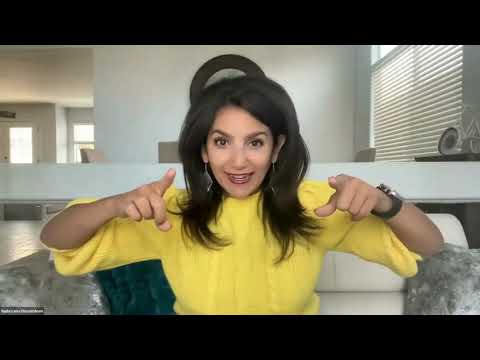
Speaker 1: Hello, hello, everyone. Welcome to the conference. My name is Nathalena Nassar-Dean. Super excited to be here with you today. I'm coming all the way from Las Vegas. As you can see, it's beautiful, sunny, and it's already warm. So super, super excited to be here. If you don't mind just typing in the chat, if possible, I'm not sure if the chat is enabled. Tell us where you're coming from, what state, what country, tell us who you are and where you're coming from if you're able to type in the chat. And if you're not, then I'll clearly see that you won't be able to. Yeah, I think you should be able to. All right, cool. Very cool. So I see Netherlands. I see Ireland, Germany. Beautiful. Who else do we have here? Chicago. Fantastic. Well, it's such an honor to be here.
Again, my name is Nathalena Nassar-Dean. I'm the CEO and I'm the founder of Rise Up For You. But I didn't always start that way. So actually, my first career ever was as a performer. And I used to tour internationally around the world as a singer and a dancer. So I've been to Ireland. I've been to Germany. I've been to Spain. I've been to all these beautiful countries that you're putting in the chat. And I used to sing. Now, the interesting thing is, is that every time I stepped into a room, right, to rehearse for a show or to audition for a show, I always got the center stage spot. Now, if you know anything about performing, you know that center stage is the place that you want to be because that's what we call the
spotlight. Okay. But here's the thing. I was never, ever the best singer. So I always got that main stage spot, but I was never, ever the best singer. So I used to ask myself, why am I getting the number one spot on stage in the show? But there's four or five people that can sing me out of the water that have better technique than I have? They have a three and a half octave range. I have a two and a half octave range. They have parents that are celebrity singers, and I sing in my garage. And yet I got that center stage spot. Now, fast forward eight years, and I become an executive of an education corporation.
Okay. I am now 27 years old, and I have 200 team members under my leadership. And believe it or not, I see the exact same challenge happening in the corporate place. So individuals that had PhDs, master's degrees, all the certificates they needed, they had all the technical skill, were getting in the way of them taking the spotlight. Meaning they were hindering their success. They were self-sabotaging. They were getting in their own way of their potential, even though they had all the skills. So it was preventing them from ever taking their spotlight or their center of the stage in their professional career. People struggling with imposter syndrome, perfectionist mindset. Can anybody resonate with this? So I started to ask myself, okay, as an executive, I have all these team members
that are highly qualified. Okay. They have all the degrees that they need, but yet they're still not using their potential and they're getting in their own way of their success, their leadership, and their communication. So I started to ask myself, what makes some people more successful than others? If I have two individuals that are sitting in front of me and they have the exact same resume, the same degrees, the same technical skills, how come one's going to move further faster? If I have two organizations in front of me and they have the exact same service and the exact same product, how come this organization is moving further faster and is making more money? What is the common denominator? And with all of our research and
all of our studies and with me today as a business owner, we see that around the world, all individuals and organizations just want to be seen. They want to be heard and they want to be relevant. And 80% of an organization and an individual success is highly dependent on your social and emotional intelligence. So tell me in the chat, what's emotional intelligence mean to you? Now, the funny thing is that many of you have heard of emotional intelligence, right? And I can even bet that the majority of you would say, yeah, emotional intelligence is when you understand your emotions and you're able to manage them.
And then also you can see the emotions and other people, right? But tell me in the chat, being self-aware, great job, Carlotta. What does emotional intelligence mean to you? Now, I am super excited to talk about this topic today because emotional intelligence unfortunately has become one of those buzzwords, right? One of those words that we see all over social media, like build your emotional intelligence. You got to have emotional intelligence. But unfortunately, most of the narrative out there is inaccurate and you probably have a very minimal idea of what it really means to be emotionally and socially intelligent. But what if I told you that every single challenge that we have as human beings in our personal life and in our professional life comes down to emotional intelligence, that's diversity, equity and inclusion, that's empathy, active
listening, that's coaching your team, that's leading, that's being able to have motivation, that self-confidence, that all of those things are in fact emotional and social intelligence. So it's more than just managing your emotions, it's actually creating the most impactful change you can within yourself and within your organization. So I'm going to share my screen and we're going to dive into this.
And I'm so excited because I'm going to share with you today the 18 pillars that fall under emotional intelligence that most individuals do not know about. Now, one month ago, I did a keynote for 400 educators in America, 400 that were at the top of the top, meaning that they were administrators, they were principals. And when I asked how many of them knew the 18 pillars that fall under emotional intelligence, not one person raised their hand. So lucky you. Today, you get to learn the 18 pillars that could be the game-changing skill for you and your success, not only professionally, but for your entire life. So let's go ahead and jump in.
Okay. Can you give me a thumbs up in the chat that you can see my screen clearly before I jump in? So you should be able to see my screen and then you should see me in the corner in my yellow sweater still. So just give me a thumbs up in the chat that, yep, you are clear and you can see me.
And once I get it, thank you, Carlotta. Awesome. Thank you, Jessica. Fabulous. Thank you so much. Did you see that little singing there? I just, I threw a little bit in for you. Okay. So before we jump in, allow me to reintroduce myself. My name is Natalina Nasserdeen. I'm the CEO and I'm the owner of Rise Up For You.
I know you were expecting Lauren Sweeney. She's our vice president, but we are on triple duty today, meaning that we have multiple trainings and keynotes and stuff happening. And so I'm jumping in for her today and I'm coming from Las Vegas, Nevada, Las Vegas. So again, I'm the owner of Rise Up For You. We work with organizations and individuals around the world to enhance your potential and your leadership through all the skills that we really don't spend time on. So that is emotional and social intelligence, self-confidence, public speaking, your professional presence and being able to stand up in front of a room. All those things that we typically ignore that, as I mentioned earlier, are the cream of the crop for your success. Okay. So we do transformational training and coaching. We were founded in 2016 by me.
We are proudly a woman owned business and we have global reach in over 50 countries. Okay. And we work with individuals from around multiple industries. We've worked with Google, LA Fitness, LexisNexis, Hewlett and Packard, some of them, which I'm sure you know. And again, we get the opportunity to be thought leaders around the world in Canada, Dubai, England, UK, Europe, everywhere. We are super grateful for the reach that we have. So again, we work with individuals and organizations through training and coaching to help them develop the most important skills, what I like to call the power skills, which are all the human skills that we typically don't develop, which are actually the most important for your success. Okay. So let's talk today about the most important skill. That's going to be the game
changer for you and your team. If you're a leader and you run in a company and that is emotional and social intelligence. Now I mentioned earlier, research shows that 80% of your success is determined by building and mastering emotional and social intelligence. In fact, when we work with companies around the world and they have to fire somebody, you know what they tell us, they typically have to let somebody go, not because they don't have the technical skill, but because their emotional intelligence and their communication and their motivation and their ability to interact is just not working. Now, just type in the chat. How many of us have team members or individuals that we could see this with, right? Maybe they're brilliant in their industry, but they just cannot hold a conversation or maybe they're brilliant in
their industry, but they really have a hard time showing empathy or active listening or developing their, their team or their clients, right? How many of us have yet? Oh, right. Absolutely. Okay. So let's dive into a little bit more about what this looks like. So as I mentioned, have you ever been in that situation? Somebody has everything they need to succeed and yet they're still not doing a great job, right? That's that emotional intelligence that gets in the way. So what is it really? Let's break this down. Okay. So yes, on a very simple level, which most of you know, because you typed in the chat, it's our ability to recognize our emotions, right? Our feelings and to be able to recognize them in others, to be able to manage our emotions and to be able to influence others. Okay. Now that
influence that phrase, that's a big one. Okay. Because that plays into everything. It was made popular by a guy named Daniel Goleman. So if you go on the internet today and you type in emotional intelligence, he's going to pop up. He was on Oprah, Ted talks. Okay. Now again, there's four pillars to emotional intelligence, right? Or I should say four building blocks of emotional intelligence.
The first two have to do with yourself, that self-awareness, self-management. Okay. So I'm aware of myself and I can manage myself. And the next two foundational blocks are social awareness and relationship management. So social awareness is I understand how to be in a room, how to read a room, how to show empathy, how to switch my body posture, according to the people in the room.
And then relationship management is all things leadership. But what most people don't know is this special part right here that I'm going to share with you, which is the 18 pillars that fall under these four foundational blocks. So let's jump in. Okay. And as I mentioned, 75% of careers are completely demolished because their emotional and social intelligence is not up to par. Okay. They don't elicit trust. They don't know how to have motivation. They struggle with self-confidence.
So let's jump into these competencies. Foundation number one, self-awareness, three competencies under here. Now I can talk about this for 10 hours straight, but I'm not because we don't have that time today. That's emotional awareness. So you are aware of your emotions beyond the basic seven, right? So instead of saying, I'm mad, being able to say, I feel frustrated because I felt unseen, unheard, and neglected in the meeting. Do you see how much more clear that is?
Competency number two is accurate self-assessment. So the way that I see myself is the way that you see me, right? So when I was an executive and I was 27, I had 200 team members under me, as I mentioned, I thought I was the most amazing leader ever. Well, guess what? Nobody would come and talk to me.
So I used to think, how come no one's coming into my office to get coaching and mentoring and have a conversation with me? And then one day somebody said, well, you're kind of intimidating. And I said, nope, that's not true. And then another person said, well, you're kind of intimidating. They said, no, I don't think I am. Well, I wanted to grow as a leader and as an executive. So I decided to do an anonymous survey. Out of 200 people, 75% said I was intimidating, not relatable, and I looked mad all the time. I know, tough. It was rough. How many of you have had that situation where you've been told multiple times that you're intimidating, right? So I realized that what I was feeling and how
I felt was not the way I was being seen. And lastly, self-confidence. My team has asked thousands of people around the world what their number one challenge is. 83% of professionals globally said self-confidence. Can you believe that? Self-confidence. 83% of professionals, no matter how many skills they have, no matter how many degrees they have, do not feel enough. This to me is the greatest tragedy.
This to me is the pandemic that we all have to work through. Now imagine if you're struggling with self-confidence, how in the world are you going to be able to lead your team? How in the world are you going to be able to build professional and personal success when up here, all you think is that you're not enough? This is just the first foundational block of emotional intelligence and look how impactful and how much there is to learn already. Now we go into the foundation building block number two, self-management. This is emotional self-control, stress management. So when companies around the world talk about we need well-being programs and we need more wellness, no, what you need is emotional intelligence because this is the tool that teaches you how to manage your stress, how to regulate your
emotion so that you can have more well-being, right? I always say it's not about building cosmetic culture. It's about building a culture that is rooted in the tools and the skills that you need. Transparency, all things integrity, the ability to adapt, achievement, meaning that you have a high sense of standard of excellence for yourself. Internal motivation, meaning that when you wake up in the morning, you get out of bed and you are ready to be your best for you, not because of a paycheck, not for anybody else, not because you need validation, because you owe it to yourself to be your best.
That's internal motivation. And the last is optimism. So being able to see challenges and recognizing the challenges, not toxic positivity, but being able to find a solution even when it's difficult. That in itself is the first component of emotional intelligence, the first two foundational blocks that just have to do with you. And I will tell you that these nine pillars go a long way. And if we can't master these, well, then how the heck are we going to get to the foundation number three of social awareness? All things. Sorry to interrupt. Yes. But only two minutes left.
I know that. Thank you. I have the clock on. Thank you. Thank you so much. I appreciate it. We're very good at time management here because that's part of emotional intelligence. That's great. That's great. Thank you so much. So social awareness is all things empathy, organizational and diversity, equity, inclusion, and being able to show up and add value. Okay. So when you ask yourself, how come my team or my leaders, they're not active listeners, they're not empathetic. They can't understand. Well, that's because something up here in these first two pillars isn't connected, right? There's programming, there's beliefs, there's emotional regulation that's getting in the way of how they're going to show up. And lastly, it's leadership. The last pillar, developing other people, coaching, being relatable, your ability to influence conflict management and teamwork. But again, if the
beliefs up here aren't working and you're not able to manage your emotions, how are you going to influence? How are you going to motivate? How are you going to coach other people and build the life that you deserve to have? So benefits of EQ, as I've mentioned, better leadership, customer service, improved communication. And I'm just talking on a professional front, not to mention helps you build confidence, growth mindset, stress management, motivation, public speaking, professional presence, communication, active listening, empathy, coaching, and leadership. Look at all that, that it does for you. So I know that our time is out today. But if you were to ask me today, what's the number one skill that I should build, I would say emotional and social intelligence. And because I only
get to spend a little bit of time with you, I have a free gift for you here, okay? This is 10 videos and 60 pages of a workbook that you can download totally for free, okay? You just have to scan that code or go to that link. And in this course, there's two courses that we're giving you. You get all of the videos on emotional intelligence, confidence, building success, and professional etiquette. And you get a whole other course on building a strong company culture for all you leaders out there. It's been such a pleasure to be here with you today. Please connect with me on LinkedIn. If you haven't already, we have amazing content that we're always pushing out, but it's been super awesome. My name is Natalina
and again, I'm with Rise Up For You. And my puppy is joining us to end the talk today. Thank you, everyone. Have a fabulous day and enjoy the rest of the event.
Transcribed automatically; names checked against the speaker record. Select a time to jump there.
Article based on this talk
Why emotional intelligence, not technical skill, decides who succeeds at work
Rise Up For You founder Natalina Nasserdeen breaks down the competencies behind Goleman's four building blocks of emotional intelligence.
In short
When two people have the same degrees and the same technical skills, the one who moves further faster is usually the one with stronger emotional and social intelligence. That is the argument Natalina Nasserdeen, founder and CEO of Rise Up For You, makes in this session, which she delivered in place of the scheduled speaker, vice president Lauren Sweeney. She walks through Daniel Goleman's four building blocks of emotional intelligence and the competencies most professionals have never been taught.
Key takeaways
Building self-awareness and accurate self-assessment
The three stages of empathy
Team communication management and styles
The singer who was never the best
Nasserdeen opens with her first career as an internationally touring singer and dancer. In every rehearsal and audition she was placed center stage, even though several performers had a wider vocal range, better technique and, in some cases, celebrity parents. "So I always got that main stage spot, but I was never, ever the best singer." (1:42)
Eight years later, at 27, she was an executive at an education corporation with 200 team members. She saw the same pattern in reverse: people with PhDs, master's degrees and every certificate they needed were holding themselves back through imposter feelings, perfectionism and self-sabotage. That led her to the question at the heart of the talk: if two people have identical resumes, or two organizations sell identical products, what makes one go further? Her answer, which she supports with her company's research as she described it, is that most individual and organizational success depends on social and emotional intelligence.
More than a buzzword
Nasserdeen warns that emotional intelligence has become a social media slogan with a shallow definition. Most people describe it as understanding and managing your own emotions and reading other people's. She argues it is much broader: diversity, equity and inclusion, empathy, active listening, coaching, leadership, motivation and self-confidence all sit inside it.
She also reports what client companies tell her about letting people go. "In fact, when we work with companies around the world and they have to fire somebody, you know what they tell us, they typically have to let somebody go, not because they don't have the technical skill, but because their emotional intelligence and their communication and their motivation and their ability to interact is just not working." (9:20)
Goleman's four building blocks
Drawing on Daniel Goleman, who popularized the concept, Nasserdeen lays out four building blocks. The first two concern yourself: self-awareness and self-management. The second two concern others: social awareness, which includes reading a room and showing empathy, and relationship management, which she describes as "all things leadership." Underneath them sit 18 competencies that, she says, very few people know. At a recent keynote for 400 school administrators and principals, not one raised a hand when asked if they knew them.
Self-awareness: seeing yourself as others do
The first block has three competencies. Emotional awareness means naming feelings precisely rather than with basic labels. "So instead of saying, I'm mad, being able to say, I feel frustrated because I felt unseen, unheard, and neglected in the meeting. Do you see how much more clear that is?" (12:22)
Accurate self-assessment means the way you see yourself matches how others see you. Nasserdeen tells how, as a young executive, she believed she was an excellent leader but noticed nobody came to her office for coaching. After hearing twice that she was intimidating, she ran an anonymous survey. "Out of 200 people, 75% said I was intimidating, not relatable, and I looked mad all the time." (13:09)
The third competency is self-confidence. Her team has asked thousands of professionals about their biggest challenge, and she reports that 83% named self-confidence. "83% of professionals, no matter how many skills they have, no matter how many degrees they have, do not feel enough. This to me is the greatest tragedy." (13:51)
Self-management: the case against cosmetic culture
The second block covers emotional self-control and stress management, transparency and integrity, adaptability, achievement (a high personal standard of excellence), internal motivation and optimism. Nasserdeen challenges companies that respond to stress with wellbeing programs alone, arguing that emotional intelligence is what actually teaches people to regulate emotion. "I always say it's not about building cosmetic culture. It's about building a culture that is rooted in the tools and the skills that you need." (15:12)
She separates optimism from forced cheerfulness: it means seeing challenges clearly, "not toxic positivity, but being able to find a solution even when it's difficult." (15:52)
Social awareness, leadership and the payoff
With time running short, Nasserdeen covers the last two blocks briefly. Social awareness includes empathy, organizational awareness, diversity, equity and inclusion, and adding value. Relationship management includes developing others, coaching, influence, conflict management and teamwork. Her key point for leaders: when a team struggles with listening or empathy, the root cause often lies in the first two blocks, in beliefs and emotional regulation. She closes by listing the benefits, from better leadership and customer service to confidence, a growth mindset and stress management, and names emotional and social intelligence as the single skill she would advise anyone to build first.
Watch the talk
Emotional Intelligence: The Core Competency to Company Success, delivered by Natalina Nasserdeen for Lauren Sweeney (Rise Up For You), about 19 minutes: https://www.womentech.net/video/emotional-intelligence-core-competency-company-success
About the speaker
The session was scheduled for Lauren Sweeney, Vice President of Business Development at Rise Up For You, a global educational and motivational company that enhances company culture and personal development by teaching soft skills. It was delivered by the company's founder and CEO, Natalina Nasserdeen, who introduced herself in the talk as a former international performer and education executive.
Questions this talk answers
Why do equally qualified people progress at different speeds?
What is emotional intelligence beyond managing your emotions?
What does accurate self-assessment mean in practice?
Do wellbeing programs replace emotional intelligence training?
What is the difference between optimism and toxic positivity?
Drafted with AI from the talk transcript. Editor review pending.
Frameworks and ideas mentioned
Daniel Goleman's four domains of emotional intelligence
18 competencies of emotional intelligence
Resources mentioned
Rise Up For You free courses: 10 videos and a 60-page workbook on emotional intelligence, confidence and company culture (via QR code shown on slide)
Rise Up For You on LinkedIn
Cite this talk
Lauren Sweeney. "Emotional Intelligence: The Core Competency to Company Success." WomenTech Network, 2023. https://www.womentech.net/video/emotional-intelligence-core-competency-company-success