Remote work is here to stay - are your ready for its effects on your company's social life?
Johanna Baare19:102020
Video calls keep remote teams efficient, and that is exactly the problem
Every video call skips the walk from reception, the small talk and the offered coffee, and those lost moments quietly erode how colleagues read and trust each other. Johanna Baare, who ran new-ways-of-working projects for large German corporates and served as COO of the community platform Panion, argues that a company's social life will not survive remote work by accident. So what must teams and leaders build on purpose?
Get concrete rituals and leadership habits that rebuild informal connection in remote teams
Johanna Baare, a strategy transformation and business design expert and Panion's COO, argues that remote work will outlast COVID-19 as a hybrid model and that companies must deliberately protect their social life. She explains why digital tools create transactional contact rather than personal connection, and shares team rituals and leadership habits that rebuild informal interaction at a distance.
“These tools allow for like a quick transactional exchange of information to get the job done. But this efficiency of getting straight to the point actually prevents us from forming a connection.”
“Now, I believe that post-COVID, the new normal is going to be a hybrid model. Neither are we going to work from home 100%, nor are we all going back to the office.”
What you will learn
Distinguish transactional contact through digital tools from genuine personal connection between colleagues.
Add social rituals such as apples and onions or recurring tea-time calls to regular team routines.
Use pairing schemes and shared-interest matching to connect people across the whole company, not just within teams.
Plan short, frequent informal one-on-ones that show appreciation and care for remote team members.
Integrate as a remote new hire by asking colleagues for short coffee chats.
Details
Level
All levels
Format
Talk
Technical depth
Non-technical
For
People manager, Executive
Length
19:10
Published
July 2020
Questions this talk answers
Will remote work last after the COVID-19 crisis?
Johanna believes remote work is here to stay and that the new normal will be a hybrid model, with people neither fully at home nor fully back in the office but able to work from anywhere.
Why don't video calls and messaging build relationships between colleagues?
They allow a quick transactional exchange of information, and that efficiency removes the small talk and informal moments, such as walking a guest to the meeting room, that form personal connection.
What rituals can remote teams use to keep their social life alive?
Teams can open meetings with apples and onions (one positive and one negative thing), hold recurring 20-minute tea-time hangouts, and run virtual coffee breaks, happy hours, birthday celebrations or water cooler Slack channels.
What should leaders do differently when their teams work remotely?
Leaders need to be more intentional, adding short informal one-on-ones, communicating proactively in both directions, and leading by example with transparency and vulnerability to build trust.
How can a new hire integrate into a company online?
Ask colleagues for a 10 to 15 minute coffee chat to ask questions, get to know them and present yourself, recreating the informal lunches and coffees you would have in the office.
About this talk
Covid-19 is making some drastic, lasting changes to our economy AND our behaviors. This period of uncertainty has led to new habits and regulations that have an impact on how we work, socialize, and interact professionally – and will continue to do so even after this crisis is over. 25-30% of the workforce is estimated to work from home multiple days per week by the end of 2021 (Source: Global Workplace Analytics). But what are the social implications of working remotely? How does it affect our work-life integration and what effect does it have on our company and team cultures? How can we, as leaders, ensure the social well-being of our employees? Let's talk about the importance of social integration at the workplace and ways to improve the social well-being of our workforce - not only in times of social distancing.
The phone call that could have broken a working relationship (90 s)
Apples, onions and tea time: rituals for remote teams (68 s)
All right, let's get started. My name is Johanna and I'm a strategy transformation and business design enthusiast. I have been working as a senior manager at the Business Innovation Consulting Group, running big strategy transformation and new ways of working projects for big corporates in Germany. And a lot of these included new ways of working and home office policies, so remote working.
And also, I'm the former COO of Panion, a social networking app that connects people based on common interests. And Panion pivoted during the COVID-19 crisis to become a community building platform, helping companies to socially engage with their remote workforce. Now, I have worked from home for over 12 weeks now. And I would like to know who is here today and how long have you been working from home? And where you're connecting from? Please share in the chat. Let's see who's here.
Let us know. Hey, hey, Anouk. Nice to see you. Where are you connecting from? And have you been working from home lately? Oh, yeah. Just moved back to the office. I'm sure that feels pretty good. From Munich, Hannah. That's nice. Anouk from the Netherlands. 12 weeks in the home office as well. Wow. Yeah, that's long. Three months in New Zealand. Since the 10th of March. Wow, Danela, that's a long, long time. Well, I can see that most of us have been working from home for a long time now. And I am sure that you share a lot of my experiences and how much that actually takes a toll on our social lives as well.
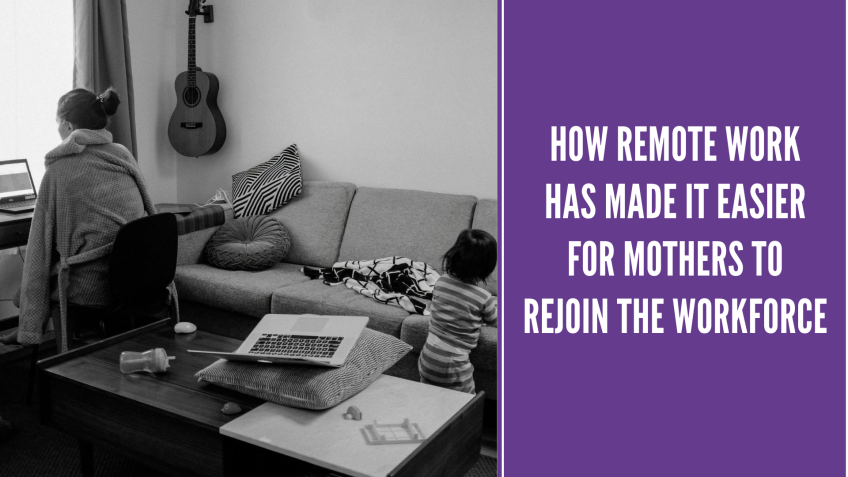
So, this pandemic changes the way we work. Today, I want to focus on its effects on knowledge workers, like you and the tech community. Even before COVID-19, remote work was already a rising trend. It has been more than doubling since 2005, with 4.7 million workers in the US working from home. And a Gartner survey from March 17th, so right after a lot of us started working from home, says that 88% of organizations worldwide actually have encouraged or required their employees to work from home. And nearly all of these organizations, so 97% have cancelled work-related travel. During COVID-19, we all worked from home. It was unplanned, yet surprisingly often successful. And we're not working remotely. So, I think there's a big difference whether you have to work from home or can actually work remotely, meaning anywhere. As we can see here in the
pictures, working from home can bring quite some difficulties with this. Now, a lot of countries are opening up again. And the question is, what is going to happen with this remote work experience? I think, personally, that remote work is here to stay. I think this new experience that remote work is actually possible and the benefits of its flexibility will change the way we work forever. One-fourth of Fortune 500 CEOs estimate that 90% of the employees will work remotely indefinitely. And the Global Workspace Analytics estimates that 25% to 30% of the workforce will work from home multiple days per week by the end of 2021. Now, I believe that post-COVID, the new normal is going to be a hybrid model. Neither are we going to work from home 100%, nor are we all going back to the office. I think we will be able to
work from anywhere. Oh, actually, we would want that. And I think that's what employees will demand as well. But, of course, working from home is not always without struggle. We've seen the pictures before, we all have our stories. And I would like to ask you, please, again, share in the chat, what is your biggest struggle when working remotely?
Jonna says, yes, she intends to keep it this way, working from home. Just as I said, I think a lot of people now have realized. Britannia has actually been starting a new job and the learning process, I can absolutely see how that is very difficult. If you don't have that one-on-one interaction with your new colleagues, at least not as much as you would have it in the office. Any other experiences that you would like to share? Difficulties that you have working remotely? Anyone? Yes, absolutely, Olga.
Home is not really a work environment, right? And often we don't have an office space at home. And there is so much else going on. And yes, people might not be as available as we would like them to be doing the same office hours. Absolutely. Anouk, finding motivation. Yep, I feel you, girl. Keeping a work-life balance. Absolutely. I see you have absolutely the same, made the same experiences as I did. And the state of remote work report actually states a lot of these things that you're talking about. With 20% of remote workers saying that collaboration and communication is a big issue.
But another 20% also says that loneliness at home and working from home is a big struggle for them. Now, I think connection isn't equal to connection. Just because we only message an email or phone or video call away from our almost 24/7 available colleagues, well, I agree, not all of them are 24/7 available. That doesn't mean we actually easily connected to them on a personal level. These tools allow for like a quick transactional exchange of information to get the job done. But this efficiency of getting straight to the point actually prevents us from forming a connection. Let's take a video call, for example. You're not picking up your guests at the reception anymore. You have no small talk while walking them to the meeting room. You're not offering them a beverage anymore. All this prevents us from
building social human connection. And not only our social species that from an anthropological point of view needs social interaction. Coming back to the work context, having a personal relationship also facilitates work, leading to higher motivation and productivity. I would like to share with you an anecdote that I believe showcases the importance of these social connections at the workplace. Early on in my career, I had a critical meeting with one of my clients in Germany. And it was this atmosphere was quite tense. I was sitting in the meeting room in Germany, and I had to get a hold of my boss because he was supposed to join the meeting via telephone, but he wouldn't pick up. So I called our office and asked them to wanted to ask them to get the boss on the phone. But my colleague Joaquin picked up and I
guess I hadn't been to the office in a while because he immediately started asking me, oh, how have you been? How's Germany? How's this and that? And I was a bit nervous and I really just needed to get my boss on the phone and not speak in Spanish in a German speaking environment. So I was like, probably a little bit rude and just told Joaquin, hey, get me the boss on the phone. I need him now. So the following Friday, I went back to the office in Madrid and Joaquin greeted me with high eyes, princess. Are you feeling better now? Now Joaquin and I are quite close and he knows me very well. And because he knows me very well, he also interpreted this situation as, hey, Johanna is probably just really stressed and he didn't make
a big fuss out of it. But I think that hadn't he known me well enough to understand that this was just a really stressful situation for me, he could have easily misinterpreted this whole situation, taking it personal and that it could have potentially had a long term negative impact of our on our future collaboration. Maintaining and supporting informal interactions and good relationships between employees is always important, but much more difficult in remote work environment. Now, how can we support our company's social life when we don't see each other as frequently as we did before in the office?
And there is quite some creative solutions, how to deal with being away from the office and colleagues, like for example, this website, and I don't know if you can hear this right now. But they created a website where you can actually hear the sound of your colleagues. Now, I am sure that we all agree that we all agree that it's not only and for some maybe even least the sound effects of working with our colleagues. The truth is often the informal conversations that is other ones that lead to like new productivity and ideas. But where is that water cooler chit chat? Where are these like coffee corner conversations when we only meeting for work Zoom meetings?
With this restraint on our company's social life, culture and collaboration and ultimately motivational productivity do suffer. But there are some things that we can do. There is a Gartner survey that reveals that 32% of organizations have introduced new tools for virtual meetings. Now, as we have concluded before, having a tool for connection doesn't equal having a personal connection. So we need to make social interaction a part of our regular check-ins.
We need to add social banter to our formal teamwork meetings and stand-ups, for example. For example, by playing apples and onions, meaning that every meeting everyone shares an apple, something positive, and an onion, something negative that has happened there that work week or that work day. At Panion we also implemented regular fika, merienda, ashrani, so tea time basically. Our colleagues come from all over the world.
Just a simple like recurring hangout invite where for 20 minutes everyone who had the time would join, bring their own tea or coffee and we would talk about literally everything. We would share recipes, we would talk about our homework, home workout routines, or also like why the people that we were in quarantine would annoy us that day maybe. These can be virtual coffee breaks or happy hours or birthday celebrations or whatever other rituals you would normally have in the office. And the good thing is that now all employees are equally involved through a screen remotely and there's no that not anymore that difference with some of them maybe being remotely and others being at the office. And that can also be a great advantage. From designing offices that support new ways of working know that with each additional meter
between employees the potential for them to actually interact declines drastically. Now we have to find new ways to connect with our colleagues but we can do so with anyone in the company now no matter what location they normally sit at. At Buffer for example all new hires get matched with a different teammate every week so they call that pair calls and they get to know different people from all over the organization whether they would work with them directly or not. At Buffer they also did a personality test at one of their office days where everyone would learn more about themselves and about their fellow teammates. Now I don't think you have to go that far to have everyone do a personality test. Panion for example helps employees to find like-minded people
through common interests. The connection that you before made because you saw a picture on someone's work desk and saw oh they also have a family they also have kids or because their coffee mug displayed like their favorite sports team and it happens to also be your favorite sports team. These connections are now recreated online and build new possibly unlikely connections.
Gartner's survey also found that 40% of organizations have set up additional virtual check-ins for employees with their managers. I think that's pretty good already but we all need to be more intentional as leaders these days. We need to create additional informal one-on-one communication opportunities better two shorter ones than one long one to quickly catch up and on recent development see what's going on and to show appreciation and care because this situation is difficult for all of us. We need this bi-directional proactive communication and transparency to understand what our remote workers actually need but also to share our own experiences.
Leading by example also means to be transparent and vulnerable to share your best practices but also be open where you are struggling and thereby create a culture of transparency vulnerability and trust. Trust is a key element when it comes to working remotely. Leading by example is a key element is a key element of what you need to do in the world.
This is a key element of what you need to do in the world. Anouk has a question. Sorry, I'm just seeing this now. How to integrate via an online environment when finding a new job or when you were just hired? Absolutely. I can totally feel, Anouk, that that is difficult and that is an especially challenging situation because normally you would go, let's say, for lunch with your colleagues, grab a coffee with them and thereby also pick up on these little informal cultural things within the company.
If they try to do the same thing online, ask colleagues to have a coffee chat, to just give you 10, 15 minutes and ask your questions, get to know them, present yourself as well. And I think that could help you to recreate these situations online. Katharina says they never really stopped, I guess, chatting about personal stuff in online meetings because we're a small, tightly knitted team. That is amazing.
But I'm sure that not everyone has these great culture around sharing personal stuff already. You have lunch together once a week, Antonia. That's awesome. Yeah, that's great. That's exactly what I'm talking about. Exactly. Just coming together and trying to share your experience working remotely. Coffee catch-up says Rebecca. A WhatsApp group. That's also a great idea. Exactly. You can have WhatsApp group.
You can have Slack channels, water cooler Slack channels where you can share personal things. A short call even every day, Jonathan says. Wow, that's a lot. That's awesome. Sharing recipe pictures of what you've cooked for your family. That's amazing. That's cool. That's such a nice idea. You have mob coding hours on Fridays. Interesting. And team events online.
Well, that is interesting, Hannah. I would like to hear more about that because team events online can also be quite tiring and drowning if they take on too long. And a virtual coffee kitchen. I would like to understand what tools you can use for that virtual coffee kitchen. So the session is almost over. Antonia has more questions about the mob coding hours as well.
I think there's a lot more to be shared. I would like to thank you so much for joining today and ask you to let's get connected on LinkedIn. I would love to hear more about your experiences. I would love to learn what you're doing to socially connect with your colleagues. And yeah, let's keep in touch. Thank you so much.
Transcribed automatically; names checked against the speaker record. Select a time to jump there.
Article based on this talk
Why remote teams need social connection built on purpose
Johanna Baare explains why digital tools alone cannot carry a company's social life, and what teams and leaders can do instead.
In short
Johanna Baare argues that remote work is here to stay, most likely as a hybrid model, and that companies cannot rely on digital tools alone to keep their social life alive. Drawing on her strategy consulting work and her time as COO of Panion, she shows how informal connection breaks down at a distance and offers practical rituals and leadership habits to rebuild it deliberately.
Key takeaways
Distinguish transactional contact through digital tools from genuine personal connection between colleagues.
Add social rituals such as apples and onions or recurring tea-time calls to regular team routines.
Use pairing schemes and shared-interest matching to connect people across the whole company, not just within teams.
Plan short, frequent informal one-on-ones that show appreciation and care for remote team members.
Integrate as a remote new hire by asking colleagues for short coffee chats.
Remote work is not going back in the box
Speaking in mid-2020, after more than 12 weeks of working from home herself, Baare opens by asking attendees where they are and how long they have been remote. Many answer with similar stretches, from the Netherlands to New Zealand. She then places that experience in context: remote work was already rising before the pandemic, and, as the speaker cited, a Gartner survey from 17 March found that 88% of organizations worldwide had encouraged or required employees to work from home, while 97% had cancelled work-related travel.
She draws a useful distinction between having to work from home and being able to work remotely, meaning anywhere. The pandemic forced the first; she expects employees to demand the second. Citing Global Workplace Analytics' estimate that 25% to 30% of the workforce would work from home multiple days per week by the end of 2021, she makes her prediction plainly: "Now, I believe that post-COVID, the new normal is going to be a hybrid model. Neither are we going to work from home 100%, nor are we all going back to the office." (3:06)
Why connection isn't equal to connection
When Baare asks the audience for their biggest remote struggle, the answers are familiar: starting a new job without in-person contact, finding motivation, keeping a work-life balance, and colleagues who are not available when needed. As the speaker cited, the State of Remote Work report found that 20% of remote workers named collaboration and communication as a big issue, and another 20% named loneliness.
Her central argument is that constant reachability is not the same as closeness. "These tools allow for like a quick transactional exchange of information to get the job done. But this efficiency of getting straight to the point actually prevents us from forming a connection." (5:56) On a video call, nobody picks a guest up at reception, makes small talk on the way to the meeting room or offers a drink. Those small moments matter, she says, because personal relationships also make work easier and lead to higher motivation and productivity.
A misunderstanding that never happened
To show what is at stake, Baare tells a story from early in her career. During a tense client meeting in Germany she called her Madrid office to reach her boss, and her colleague Joaquin, who had not seen her in a while, started asking how she was. Under pressure, she cut him off rudely. Because they knew each other well, Joaquin read the moment as stress rather than an insult and greeted her warmly the following Friday. Without that relationship, she notes, the exchange could have damaged their collaboration for a long time.
The lesson she draws is direct: "Maintaining and supporting informal interactions and good relationships between employees is always important, but much more difficult in remote work environment." (8:31)
Rebuilding the water cooler
Baare acknowledges creative experiments, such as a website that plays the sound of colleagues working, but points out that sound is rarely what people miss. "But where is that water cooler chit chat? Where are these like coffee corner conversations when we only meeting for work Zoom meetings?" (9:16)
As the speaker cited, Gartner found that 32% of organizations had introduced new tools for virtual meetings, but a tool for connection does not equal a personal connection. Her answer: "So we need to make social interaction a part of our regular check-ins." (10:08) She suggests opening meetings with apples and onions, where each person shares one positive and one negative thing from their day or week. At Panion, the international team held a recurring 20-minute tea time where anyone free would join and talk about anything, from recipes to home workouts.
She also sees an upside. Everyone now joins through a screen on equal terms, and distance no longer limits who can meet whom. She points to Buffer, where new hires are matched with a different teammate every week in pair calls, and to Panion's approach of connecting colleagues through shared interests, recreating the conversations that once started with a family photo on a desk or a team logo on a mug.
Leading with intention
As the speaker cited, Gartner found that 40% of organizations had set up additional virtual check-ins between employees and managers. Baare welcomes this but asks for more: "I think that's pretty good already but we all need to be more intentional as leaders these days." (13:24) She recommends two shorter informal one-on-ones over one long one, proactive communication in both directions, and leaders who share both their best practices and their struggles. "Trust is a key element when it comes to working remotely." (14:09) Part of this section is lost in the recording.
In the Q&A, an attendee asks how to integrate when starting a new job online. Baare advises recreating the office lunch and coffee: "If they try to do the same thing online, ask colleagues to have a coffee chat, to just give you 10, 15 minutes and ask your questions, get to know them, present yourself as well." (16:42) Attendees add their own ideas, including weekly team lunches, WhatsApp groups, water cooler Slack channels, mob coding hours on Fridays and a virtual coffee kitchen.
Watch the talk
"Remote work is here to stay - are your ready for its effects on your company's social life?" by Johanna Baare, about 19 minutes: https://www.womentech.net/video/johanna-baare-remote-work-here-stay-are-your-ready-its-effects-your-companys-social-life
About the speaker
Johanna Baare is a Strategy Transformation and Business Design Expert who combines strategy consulting for DAX30 corporates with business design in a startup. She joined Panion as Chief Operations Officer to optimize its internal processes for future scalability, and has supported the growth of a scale-up from 5 to 100 employees.
Questions this talk answers
Will remote work last after the COVID-19 crisis?
Why don't video calls and messaging build relationships between colleagues?
What rituals can remote teams use to keep their social life alive?
What should leaders do differently when their teams work remotely?
How can a new hire integrate into a company online?
Drafted with AI from the talk transcript. Editor review pending.
Frameworks and ideas mentioned
Apples and onions
Fika (virtual tea time)
Pair calls
Cite this talk
Johanna Baare. "Remote work is here to stay - are your ready for its effects on your company's social life?." WomenTech Network, 2020. https://www.womentech.net/video/johanna-baare-remote-work-here-stay-are-your-ready-its-effects-your-companys-social-life