Life in the “Second Closet” – Diversity Challenges in Classified Environments by Tenay Barker
22:512022
After 21 years in the closet, a classified job brought pressure to hide again
Phones, Apple Watches and AirPods stay outside the heavy metal door of a SCIF. Inside, one newly out software engineer finds a sea of straight white men and is the only person on the floor flying pride flags. Tenay Barker, a Microsoft site reliability engineer who spent three years in defense contracting, asks what that isolation costs an industry already struggling to keep its hard-won cleared engineers, and what would change it.
Discover why cleared engineers leave defense and the culture changes that could keep them
Tenay Barker, a site reliability engineer at Microsoft who previously worked for a defense contractor, describes how classified workplaces (SCIFs) pushed them, as a newly out lesbian, toward a "second closet". They argue that low visibility, slow clearances and a culture that treats engineers as product producers drive cleared talent away, and they call for demographic data, real DE&I training on the classified side and reverse mentorship between senior leaders and early-career engineers from underrepresented groups.
“It was that I'd be tempted to go back into the closet.”
“There is a culture of employees being seen as things that produce product, not seen as humans with a certain skill set.”
What you will learn
Understand what SCIFs and cleared areas are and why their isolation makes underrepresented engineers feel invisible.
Recognize how long clearance timelines, lack of transparency and workplace culture drive turnover among cleared engineers.
Spot manager responses that signal DE&I work is unwelcome and how they push people to work under the radar.
Plan a reverse mentorship program that pairs senior leaders with early-career LGBTQ+ and minority engineers.
Advocate for demographic data collection and meaningful DE&I training inside classified environments.
Details
Level
All levels
Format
Talk
Technical depth
Non-technical
For
People manager, Executive, Early career
Length
22:51
Published
July 2022
Questions this talk answers
What is the "second closet" in classified environments?
It is the pressure an out LGBTQ+ engineer feels to hide their identity again once inside isolated, secured areas like SCIFs. Tenay Barker describes it as entering a space they thought they had left when they came out.
Why is it so hard for defense contractors to retain cleared engineers?
The speaker points to lengthy hiring and clearance timelines, lack of transparency, insufficient tools, lack of career flexibility and, finally, workplace culture. Many new engineers they met left or planned to leave within two years.
How long does it take to get a security clearance?
As the speaker cited from the Defense Counterintelligence and Security Agency, a secret clearance takes around 65 days and top secret around 119 days. Adding a polygraph can stretch the process to about two years.
What can organizations do to make cleared areas more inclusive?
Investigate demographics and retention in cleared areas to build a blueprint for improvement, give DE&I training real emphasis on the classified side, and push reverse mentorship between senior leaders and early-career engineers from underrepresented groups.
Why does reverse mentorship help in these environments?
Barker sees it as one of the best ways to build a culture of compassion and empathy, so leaders see people as people rather than engineers as product producers. It works only if participants bring an open mind and open heart.
Will your DE&I work interfere with your job? (65 s)
Reverse mentorship builds empathy in cleared spaces (75 s)
Speaker 1: Hello, everyone. Good afternoon to wherever you're calling from. My name is Tenay Barker, or Tenay as my nickname is. My pronouns are they, them, theirs. I'm a site reliability engineer for Microsoft. What exactly that is, since a lot of people don't really know, is I make sure that the Office 365 apps are up and running for our government customers here at Microsoft through the Microsoft Office 365.
Speaker 1: So, it's kind of relatively new, and it's kind of being worked on at the moment, and so I've had a really good experience working here as an SRE. My background is in software engineering, and I previously came from a defense contracting company before coming here to Microsoft. So, I welcome you all. Thank you so much for Women Tech Global for allowing me this platform to speak today, this being my first ever professional speaking event. So, I'm a little nervous, but I'm very, very excited to be here.
Speaker 1: To be speaking to y'all today. And I thank you every single one of y'all for attending and hope to help give my message and share my story with all of y'all today. So, sending positive vibes and positive energy to every one of y'all. Speaker 1: The defense and aerospace industry has been a long-standing part of the tech world that has helped protect the United States citizens and their data. As the need for more security is demanded, and especially with cyber technology being used as a stakehold and throughout the world, the need for technology to be secure, compliant, and trusted is at high demand for talent. And not just any talent, cleared talent. With this specialized area of technical engineers, there are processes and policies put in place that make the hiring
Speaker 1: pool very, very, very small. And not only is there a long, very cumbersome process to obtain clear intelligence. Speaker 1: There are processes and policies put in place that make the hiring Speaker 1: Very, very small. And not only is there a long, very cumbersome process to obtain clear intelligence, Speaker 1: engineers, but retention tends to be the biggest problem that faces this industry. There can be some contributing factors, but along with trying to Speaker 1: to obtain clear engineers and retention. And retention. And I've seen a lot in my time working in the defense industry, Speaker 1: There is a high demand for talent and not just any talent, cleared talent. With this specialized area of technical engineers, there are processes and policies put in place that make the hiring
Speaker 1: pool very, very small. And not only is there a long, very cumbersome process to obtain clear engineers, but retention tends to be the biggest problem that faces this industry. Speaker 1: There can be some contributing factors, but along with trying to obtain clear engineers and retention. And I've seen a lot in my time working in the defense industry, Speaker 1: since I've been here working in this industry for the past three years. But from my point of view, as a non-binary masculine lesbian, Speaker 1: I can say that I believe that a major point of pain is a lack of diversity, equity and inclusion that is very much lacking in this industry.
Speaker 1: And it's not just these types of companies, but in classified areas specifically. Areas where not a lot of people talk about because, well, not a lot of people know that they exist. Speaker 1: So I'm going to talk a lot about SCIFs and cleared areas. If you're not familiar with the classified environment, Speaker 1: what a SCIF and cleared area is, is a specialized area located within a company that is on a secured network. It's using classified information.
Speaker 1: It's basically where a lot of work is done, whether it be with different parts of the government or intelligence agencies or whatever. Speaker 1: So it's very secure in the sense of that, you know, you cannot take your phone. You cannot take any type of Bluetooth activated device. Speaker 1: You cannot take anything and transfer data, no Apple watches, no Fitbits, no AirPods, nothing of that matter.
Speaker 1: Even pacemakers sometimes can get flagged and you have to get like a special request form. So that is what a security area is like. Speaker 1: So you basically have to scrub yourself of any of that devices before even entering your office. Speaker 1: It's literally a big metal heavy door. And it's quite intimidating to be honest. It looks scary.
Speaker 1: But that's what a secured area is. And that's what I worked in. And I continue to actually work in here at Microsoft as well. Speaker 1: So now, surprise, you know about what a SCIF and cleared area is, but don't worry, I'm not going to have to wipe your memory just because I told you after this talk.
Speaker 1: But why do these spaces even matter? Why am I even talking about this? Speaker 1: Because these are very small secluded spaces, obviously, and they're not as visible. So why am I even here? Speaker 1: Well, hopefully this story that I'm sharing with you all today can paint a better picture about why I'm even talking to you all.
Speaker 1: So when I came out, it's obvious to any person that I am a lesbian and I am gay. Speaker 1: I was deep in the closet for the first 21 years of my life, over by the handy downs and the button up shirts that I'd wear more than once. Speaker 1: Everyone was sitting outside waiting for me to come out, opening the door, letting me through, and I decided not I'm going to stay right here right next to this fuzzy coat.
Speaker 1: But I finally decided to take that leap of faith, to become the person that I always knew that I was destined to be, to be my happy little lesbian self. Speaker 1: So I finally opened that metaphorical door and walked through it. Speaker 1: Everyone around me, all my friends and family were so accepting and collectively said, finally.
Speaker 1: Now I know it's very comedic and yes, through that time I was very upset, not very upset, but I was jokingly upset with everyone for letting me flail around my sexuality like a fish. Speaker 1: Because it came right and I finally realized that tonight you're a lesbian. Speaker 1: I truly became the person that I was always meant to be.
Speaker 1: So I'm out and open as a lesbian living my life authentically as it can be life is great life is gay. Speaker 1: I'm gaining the confidence I desperately need to finish my college degree. Speaker 1: I had a job already lined up being one of the working as a software engineer for one of the biggest defense contractors in the United States.
Speaker 1: I was prepared to face more of my imposter syndrome to learn and grow and start my career and take in all of this experience. Speaker 1: But there is one thing I wasn't prepared for. Speaker 1: It was that I'd be tempted to go back into the closet. Speaker 1: Can you imagine struggling with that coming to terms with your sexuality for the first half of your life, basically for the decades of your life.
Speaker 1: To take that giant leap to be the person that you've always meant to be. Speaker 1: And always felt that you were destined to be, but to only feel pressured to retreat back into a space that you had thought that you left a space that had held you back. Speaker 1: This was my experience working in the defense and aerospace industry going into a skip every day isolated from the world to only feel that I was entering a space that I thought I left when I came out.
Speaker 1: It was very defeating. Speaker 1: It was very scary and it was very lonely. Speaker 1: And I'm not going to say that I only felt negative emotions and feelings out of this experience, but it made me value the growth that I'd gone through to realize what I valued in a workplace to be authentically myself.
Speaker 1: I thought it'd be okay knowing my company had ERGs and what seemed to be support for its employees of all backgrounds. Speaker 1: But there was a very much of a different environment that was that was through that heavy metal door and I'll explain that environment in a little bit. Speaker 1: Now here's some statistics that I am going to share with you all today.
Speaker 1: So currently there's around 462,452 software engineers in the United States. Speaker 1: This is a 2020 stat from zipa.com seven to 8% of those engineers identify as LGBT Q. Speaker 1: And that's also from zipa.com. Speaker 1: And then we look at our military as well. Speaker 1: And our military is wrong. Speaker 1: Oh, that's wrong side.
Speaker 1: 41% of our military identify as members of minority groups, and that's coming from the defense government website. Speaker 1: So you can see the visibility of someone who works as a minority in the defense and aerospace industry is very, very, very small. Speaker 1: And then you look at people that hold security clearances, which is 2.4 million people holding security clearances.
Speaker 1: This is a national privilege that not everyone is granted. Speaker 1: 180,000 people are currently in the process and pending investigation of a security clearance. Speaker 1: Not all 180,000 will be getting those security clearances because again, this is a national privilege. Speaker 1: So the visibility of underrepresented groups is super low because you take into all of these factors of being a minority, being an engineer, working in defense and aerospace, holding a security clearance.
Speaker 1: All these factors make it very low and very, very low to see someone that looks like you. Speaker 1: If you consider yourself a minority. Speaker 1: And data hasn't even really been collected right now. Speaker 1: Data is just now being collected by the Department of Defense. Speaker 1: The military is also having strives for change.
Speaker 1: The military and the Department of Defense are striving to help change the imbalance and lack of minorities in leadership and help attract more diverse talent. Speaker 1: So the question that I have is why shouldn't tech companies that are supporting in these industries also reflect that? Speaker 1: Why are the companies that you know are helping directly support military and the Department of Defense and intelligence agencies?
Speaker 1: Not also having the same drive and passion to put more diverse engineers behind these parts of the government that are basically making sure that our world, our nation is safe. Speaker 1: So with security clearances, I said before that it's a very long and very cumbersome process to obtain a security clearance, and this is kind of what I mean.
Speaker 1: Depending on what type of security clearance you're going to get is going to be how long it's going to take. Speaker 1: So there's two types of clearances. Speaker 1: You can obtain a secret clearance and a top secret clearance. Speaker 1: A secret clearance right now is going around 65 days for processing, according to the Defense Counterintelligence and Security Agency.
Speaker 1: For that 65 days of them collecting information about you and going through it and making sure that you are, you know, compliant to actually hold a hold government information. Speaker 1: For a top secret clearance it's around 119 days and that again is just for the clearance itself. Speaker 1: You add a polygraph to that that's going to extend that time way beyond what you see.
Speaker 1: Sometimes people are needing you need a polygraph as well as your secret clearance or top secret clearance to work in certain areas to work in certain environments to work for certain companies. Speaker 1: And so a polygraph can make that 119 days turn into two years and you spend your time waiting for your polygraph test to waiting to get that taken care of and then have to go through the adjudication process, which again takes a long time.
Speaker 1: So you're sitting waiting for two years, not knowing if you're going to even get the access to actually work in these environments. Speaker 1: Just to kind of put that in perspective. Speaker 1: And so when I first joined my previous company. Speaker 1: I was put in a group called aces and what aces was awaiting clearance employee support.
Speaker 1: And that is a bunch of engineers who are in the same boat as me waiting for their security clearance to come through. Speaker 1: You can't work on anything that is on the program that you're assigned to you don't even know what your program even does. Speaker 1: You can't basically like you're not even able to code unless it's unclassified work and that's few and far in between that that comes into play.
Speaker 1: A lot of the time it was engineer sitting in a cubicle basically waiting for the security clearance, whether it be doing their own trainings teaching themselves or if they're lucky working on unclassified stuff. Speaker 1: And you're sitting there for two years doing that at this company. Speaker 1: I didn't understand it and it was very heartbreaking heartbreaking to walk into my first day of work.
Speaker 1: So eager to start making an inspiring change in coding and developing products to be sat at a desk without even a computer. Speaker 1: That was my experience and it was very disheartening knowing that that was going to that I was meant to basically teach myself. Speaker 1: For the next two years, and then whenever you get into your program you can you don't even know what your skills you're what you're going to be doing.
Speaker 1: It's a lot of lack of transparency. No one under no one knowing what they're supposed to be doing. Speaker 1: And so, being that these companies also pair with the military. So if you do come from the military, it makes it a lot easier to go through this process because you already obtained your security clearance. All of this background investigation stuff is done.
Speaker 1: It makes it very easy for them. But at the same time, if you think about how again what I talked about with visibility, if you see that the military also is paired with these companies, as well as the tech industry already being male dominated as it is today. Speaker 1: Whenever I went through that heavy metal door, I was met with a sea of straight white male.
Speaker 1: Again, not a lot of visibility for people like me. I didn't see anyone who looked anything like me anything close to me. Speaker 1: When I decided when I finally got into my position and I got my clearance and I went through those skiff doors for my first day and got my desk. Speaker 1: I purposely flew pride flags at my desk for people to know that, yes, I, yes, I identify this way. I'm proud to identify this way.
Speaker 1: And to make sure that other people knew that I was a safe space. I was the only person on my floor that had pride flags at my desk. Speaker 1: I didn't see pride flags anywhere else, not with another person, not at another desk. I didn't, I didn't see anything. I was the only person and they were loud and proud, just like me.
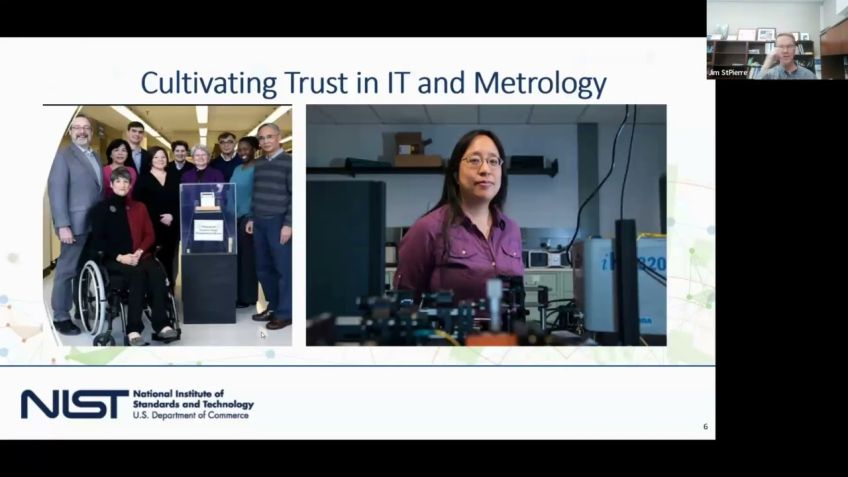
Speaker 1: So the DOD has put initiatives placed to, to address the concern for diversity and provide, provide reform to address issues. Speaker 1: So I believe that the same emphasis on improving culture needs to be pushed to the contractors of all type. Speaker 1: This is an actual memorial that is from the Department of, I believe the Department of Defense to advocate to make inclusion more impactful in the military.
Speaker 1: So I need, I think that this same type of initiative needs to be put in defense contractors and defense companies that work with, with military, with the Department of Defense and Department and intelligence agencies. Speaker 1: So I would like to recommend that a investigation be done on the demographics surrounding cleared areas and look at the retention of engineers in these areas as well.
Speaker 1: Based on the data that is collected, we can create a blueprint to help identify problems and make improvements on when it comes to changing the demographics and how we can make these spaces more inclusive. Speaker 1: And how we can start attracting talent for these types of spaces and areas and programs. Speaker 1: In my time working the defense contracting, there was a high turnover rate for engineers and that, that engineers that came in and got out very quickly.
Speaker 1: And I really understand why people were leaving so quickly until I actually got into the secured space. Speaker 1: Right now indeed.com shows that there are 49,884 engineering jobs as a security clearance and that number is only going to grow. Speaker 1: It's only going to grow if we don't hold on to the engineers that are currently in their positions right now.
Speaker 1: And again, there's going to be a reasons why they're not being reason reasons why that engineers are leaving right now. Speaker 1: It's because of retention retention was always a problem within my previous company, it was always what someone talked about. Speaker 1: I would meet many engineers that were new to the company that left or planned to leave within the first two years.
Speaker 1: I would talk to my coworkers and some of them even plan to leave shortly after I had left. Speaker 1: There were several reasons for this. Speaker 1: Everyone that I talked to had different reasons, but the bottom line is that these talented engineers were leaving the defense and aerospace industry, leaving many jobs open. Speaker 1: But at the time it takes to obtain a clearance, like I mentioned before, it makes it even more difficult to fulfill these jobs.
Speaker 1: So whenever you if you do have a security clearance and you're able to get a job with a defense contractor, you get major sign on bonuses because again, not a lot of people hold these security clearances and they are so hard to get. Speaker 1: And that's why retention is hard to when retention comes is very hard when it comes to the defense and aerospace industry.
Speaker 1: And there's been many reasons identified on why it's so difficult to retain technical talent in the defense industry. Speaker 1: Some being the lengthy hiring timelines, like I mentioned, lack of transparency, insufficient access to adequate tools, lack of career flexibility, and finally workplace culture. Speaker 1: That was something that I noticed after I left my previous company and I started working for Microsoft.
Speaker 1: The workplace culture was vastly different. Speaker 1: I sometimes you in my previous company, you could see it in the different departments. Speaker 1: But when it comes when you were as an engineer, it was basically the same within the defense industry. Speaker 1: There is a culture of employees being seen as things that produce product, not seen as humans with a certain skill set.
Speaker 1: And that could be from the military defense aspect. Speaker 1: It could be a lot of contributing factors. Speaker 1: But that was basically what it was. Speaker 1: That's kind of like how I felt that I was only there as a coding, a coding monkey, a producing monkey. Speaker 1: And this, and this bring me to another story that I have whenever I was working at my previous company.
Speaker 1: I had transitioned to a new team and a new, a new, a new team within my company. Speaker 1: And I was going to be a software engineer for that team. Speaker 1: And I remember interviewing with the manager, talking to the manager about what they needed and what I could provide. Speaker 1: And so I was talking to the manager and they had my resume and they were reading through my resume, looking at all of my skills that I brought.
Speaker 1: And in my resume, I purposely leave all of my DE and I work. Speaker 1: I previously moved from Dallas, Texas to Seattle, Washington. Speaker 1: And in Dallas, I served on two nonprofit boards, as well as also being the VP of my company's ERG for LGBTQ+. Speaker 1: I held all these titles and did a lot of work for the LGBTQ+ community in Dallas, Fort Worth area and was proud of it.
Speaker 1: And so I have that bright, bright and bold on my resume, like the pride flag. Speaker 1: And I remember my manager reading this and I explaining to them that this is something that's really important to me, that I love DE&I work. Speaker 1: I love to make my space more inclusive. Speaker 1: And the answer that I was met with was, is this DE&I work going to interfere with your actual work?
Speaker 1: And I was shocked. Speaker 1: I felt that none of the work that I was doing to make the world a better place was going to be supported and or wanted. Speaker 1: And I felt scared to do anything that had to deal with DE&I. Speaker 1: I felt that I was having to do stuff under the radar, behind my manager's back, so I didn't get yelled at or get fired.
Speaker 1: And that made me very scared and I didn't feel supported. Speaker 1: And I was met by multiple managers that told me when I opened up to them about my imposter syndrome, about me feeling that I was never going to be adequate as an engineer, that I was never going to suffice or build myself into a better engineer.
Speaker 1: And I was met with, well, maybe you should stop doing your nonprofit work and go learn how to code again. Speaker 1: So with the combination of low retention rate for younger employees, as well as the visibility of these minorities and established workplace culture in these cleared areas, it can be intimidating to think that there will ever be a time where aerospace and defense can be able to be a leader in this industry.
Speaker 1: I do believe that aerospace and defense can be on par and be the driver of DE&I initiatives. Speaker 1: The intimidation factor comes with that DE&I training doesn't help educate employees on unconscious biases, microaggressions, and how not to create ethical problems. Speaker 1: They do make you go through that, but again, it's not an emphasis.
Speaker 1: It's not to pay attention. It's just to get it done. Speaker 1: Personally, I find the best way to foster this type of environment, especially as with senior leaders and managers, and that is through reverse mentorship. Speaker 1: I find that reverse mentorship is probably one of the best ways to help create more of a culture of compassion and empathy in these environments.
Speaker 1: So we should try to push more on reverse mentorship or reverse allyship with senior leaders and managers with younger, early career employees as well. Employees that are from these minorities and backgrounds and people of color and LGBTQ to help drive a culture of empathy and compassion so that we see people as people and not engineers as just product producers.
Speaker 1: That way that this will have more impact as well is only if people that do this reverse mentorship can have an open mind and open heart. Speaker 1: You know, you don't have to completely agree, but you do have to have a have to be open understanding and learning always. Speaker 1: In an ideal world, everyone should be able to feel empowered and embrace for being their true authentic selves to feel welcome in a space that values people that are different.
Speaker 1: When we work together to change the current workplace culture, we can help fight the problem of keeping engineers working in the defense and aerospace industry, especially those engineers that go through the demanding work of obtaining a security clearance, a national privilege that not a lot of people hold. Speaker 1: For the future of defense and aerospace in these clear spaces, there needs to be a drive to create the cultural inclusivity and support for LGBTQ+ engineers by providing DEI training on classified side as well as the emphasis on it to pay attention and to learn.
Speaker 1: Government and defense contracting companies cannot just say that it's diverse, equitable and inclusive without looking at what goes behind these sealed doors literally. Speaker 1: We need to foster an environment of diverse mentorship for senior leaders that work in these skips with newer engineers and especially those identified within the community. Speaker 1: We need to adapt an open and willing to grow mindset that will help pave the way for holding retention for these newer and smarter ambitious engineers.
Speaker 1: To break out of the mold of that developers are only there to work and deliver products. Speaker 1: Developers are humans first and foremost. Speaker 1: We should change this workplace culture to value that authenticity that someone brings to a team contract or any organization. Speaker 1: Always maintaining individuality is something that I have learned and have abided by ever since it's been told to me.
Speaker 1: Is it to help me to inspire, to help everyone to feel that they are valued for the person that they are and represent. Speaker 1: For the future of tech, for the future of defense, when we come together and celebrate the differences we can all, we all bring. Speaker 1: We can all make the world a kind, safe and more secure environment for all engineers.
Speaker 1: Thank you. Speaker 1: And feel free to also connect with me. Speaker 1: And thanks for being you guys. Speaker 1: I really appreciate it. Speaker 1: Thank you, everyone. Speaker 1: Thank you. Speaker 1: I really appreciate all of you sending all positive vibes and energy to all of y'all today. Speaker 1: But yeah, feel free to link in with me, connect with me.
Speaker 1: If you have any questions, comments, concerns, or if you ever need my help, I'm here for you. Speaker 1: I'm a new hype person, first and foremost, and I'd be happy to help in any way that I can. Speaker 1: So thank you all. Speaker 1: Thank you. Speaker 1: Appreciate it.
Transcribed automatically; names checked against the speaker record. Select a time to jump there.
Article based on this talk
Why classified workplaces push LGBTQ+ engineers back into the closet, and what keeps them
Tenay Barker argues that defense and aerospace cannot fix cleared-talent retention without changing the culture behind the SCIF door.
In short
Tenay Barker, a site reliability engineer at Microsoft who previously spent three years at a defense contractor, argues that classified workplaces create a "second closet" for LGBTQ+ engineers. Low visibility, a slow and opaque clearance process and a culture that treats engineers as product producers combine to drive scarce cleared talent out of defense and aerospace. Their remedy: collect real demographic data, give DE&I training genuine weight on the classified side, and build reverse mentorship between senior leaders and early-career engineers from underrepresented groups.
Key takeaways
Understand what SCIFs and cleared areas are and why their isolation makes underrepresented engineers feel invisible.
Recognize how long clearance timelines, lack of transparency and workplace culture drive turnover among cleared engineers.
Spot manager responses that signal DE&I work is unwelcome and how they push people to work under the radar.
Plan a reverse mentorship program that pairs senior leaders with early-career LGBTQ+ and minority engineers.
Advocate for demographic data collection and meaningful DE&I training inside classified environments.
The second closet behind the SCIF door
Barker opens by explaining a world few people see. A SCIF, or cleared area, is a secured space inside a company that runs on a classified network. Phones, Bluetooth devices, Apple Watches, Fitbits and AirPods all stay outside; even pacemakers can be flagged. "It's literally a big metal heavy door." (3:06)
That setting matters because of what Barker had just been through. Deep in the closet for the first 21 years of their life, they finally came out to friends and family who answered, collectively, "finally." With new confidence, they finished their degree and started as a software engineer at one of the largest defense contractors in the United States, ready to face imposter syndrome and grow. What they were not ready for was a different pressure: "It was that I'd be tempted to go back into the closet." (5:19)
Even though the company had ERGs and appeared supportive, Barker found that life behind the metal door was very different. They describe the experience as defeating, scary and lonely, while noting it also taught them what they value in a workplace: being able to be authentically themself.
Why visibility is so low
Barker layers statistics to show how rare it is to see someone like you in this field. As the speaker cited from Zippia, there were around 462,452 software engineers in the United States in 2020, with 7 to 8% identifying as LGBTQ. About 2.4 million people hold security clearances, which Barker calls a national privilege, and around 180,000 are pending investigation. Stack being a minority, an engineer, in defense and aerospace, and cleared, and the pool shrinks dramatically. The Department of Defense, they note, is only now beginning to collect this data.
The lived version was stark. "Whenever I went through that heavy metal door, I was met with a sea of straight white male." (11:59) Barker responded by deliberately flying pride flags at their desk, so others would know they were proud and a safe space. "I was the only person on my floor that had pride flags at my desk." (12:50)
A clearance process that tests patience
The path into these rooms is long. As the speaker cited from the Defense Counterintelligence and Security Agency, a secret clearance takes around 65 days and top secret around 119 days. Add a polygraph and adjudication, and the wait can stretch to two years, with no guarantee of access at the end.
At their previous employer, Barker joined ACES, a group for engineers awaiting clearance. On day one they sat at a desk without a computer, expected to teach themself while not knowing what their program even did. "It's a lot of lack of transparency." (11:41) Engineers coming from the military arrive already cleared, which, combined with an already male-dominated tech industry, reinforces the sameness of the room.
Retention and a culture that treats engineers as output
As the speaker cited from Indeed, there were 49,884 engineering jobs requiring a security clearance, a number Barker expects to grow. Yet many engineers they met left or planned to leave within two years. The reasons Barker lists include lengthy hiring timelines, lack of transparency, insufficient tools, lack of career flexibility and, finally, workplace culture. Moving to Microsoft made the contrast clear: "There is a culture of employees being seen as things that produce product, not seen as humans with a certain skill set." (16:16)
One story captures the cost. Interviewing for an internal transfer, Barker explained that their two nonprofit board roles and their role as VP of the company's LGBTQ+ ERG mattered deeply. "And the answer that I was met with was, is this DE&I work going to interfere with your actual work?" (17:49) Barker felt they had to do inclusion work under the radar. When they later opened up to managers about imposter syndrome, they were told to stop the nonprofit work and go learn how to code again.
Reverse mentorship and the way forward
Barker believes aerospace and defense can become drivers of DE&I, but only if training on unconscious bias and microaggressions is taken seriously rather than ticked off. Their central recommendation is reverse mentorship. "I find that reverse mentorship is probably one of the best ways to help create more of a culture of compassion and empathy in these environments." (19:27) It works, they add, only when participants bring an open mind and open heart.
They also call for an investigation into the demographics and retention of cleared areas, so the data can become a blueprint for change, and for the Department of Defense's inclusion push to extend to its contractors. "Government and defense contracting companies cannot just say that it's diverse, equitable and inclusive without looking at what goes behind these sealed doors literally." (21:09) The closing message is simple: "Developers are humans first and foremost." (21:35)
Watch the talk
Life in the "Second Closet": Diversity Challenges in Classified Environments, by Tenay Barker (23 minutes): https://www.womentech.net/video/life-in-second-closet-diversity-challenges-in-classified-environments-tenay-barker-0
About the speaker
Tenay Barker is a site reliability engineer at Microsoft, keeping Office 365 apps running for government customers, with a background in software engineering at a defense contractor. They have served on two nonprofit boards and as VP of an LGBTQ+ employee resource group in the Dallas, Fort Worth area.
Questions this talk answers
What is the "second closet" in classified environments?
Why is it so hard for defense contractors to retain cleared engineers?
How long does it take to get a security clearance?
What can organizations do to make cleared areas more inclusive?
Why does reverse mentorship help in these environments?
Drafted with AI from the talk transcript. Editor review pending.
Frameworks and ideas mentioned
Reverse mentorship
Cite this talk
WomenTech Network. "Life in the “Second Closet” – Diversity Challenges in Classified Environments by Tenay Barker." WomenTech Network, 2022. https://www.womentech.net/video/life-in-second-closet-diversity-challenges-in-classified-environments-tenay-barker-0