
From Automation to Agentic AI: What Leaders Need to Rethink Now
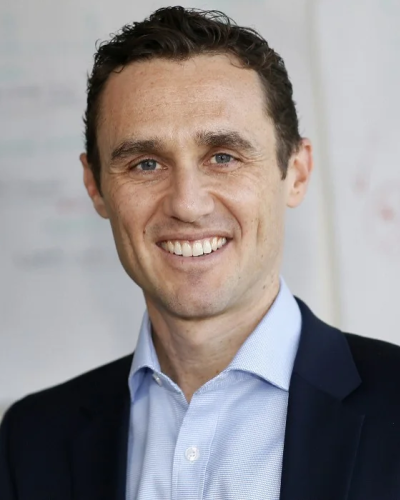
Cameron Wall
EY Global Consulting AI and Data Competency Leader
Korusha Pillay
DirectorReviews
Embracing Uncertainty: Why Leaders Must Act Now
In today’s rapidly changing world, the call for effective leadership has never been more critical. Karisha Kalei, an expert in AI and data practices, emphasizes the vital need for leaders to embrace uncertainty and take decisive actions. This article will explore her insights on leadership in the age of agentic AI, and why adaptability is essential for success.
Meet Karisha Kalei
Karisha grew up in South Africa, where she began her career as an automation engineer at a petrochemical plant named Sasol. This experience taught her that constraints drive innovation, a lesson she carries with her to this day. Her shift from engineering to consulting marked the beginning of her journey, highlighting the importance of recognizing one's worth and adapting to new challenges.
The Driving Forces Behind Leading in Uncertainty
Karisha believes there are three key reasons why leaders need to act now in the face of uncertainty:
- The Future of Work is Evolving Quickly: Research from Gartner predicts that by 2028, 15% of decisions will be made autonomously, and 30% of roles will change significantly.
- Leadership is about Resilience, Not Certainty: Waiting for certainty creates stagnation. Effective leaders harness available data, make informed decisions, and take measured risks.
- Adaptability is the New Competitive Advantage: The ability to learn and adapt will distinguish successful individuals and organizations in the future.
1. The Rapid Change in the Future of Work
Karisha emphasizes that the pace of change in the workplace is accelerating. The demand for leaders to adapt is intensifying, and failure to do so could lead to irrelevance. Citing Gartner’s research, she points out the staggering predictions regarding job roles and technology integration:
- 15% of decisions will be made autonomously by 2028.
- 33% of technology tools will incorporate agentic AI.
- 30% of skills and job roles will change significantly.
2. Leadership Beyond Certainty
Effective leadership has always required resilience and sound judgment. Karisha argues that waiting for certainty before acting is a mistake. Drawing from her experience in a challenging public sector project, she illustrates how taking incremental risks can yield valuable results:
- By building flexible "Lego-like" systems, organizations can adapt to changing circumstances without being constrained by old processes.
- Making decisions based on available information empowers leaders to act, even amidst uncertainty.
3. The Power of Adaptability
As the World Economic Forum predicts, a significant portion of jobs and skills will evolve in the next decade. Karisha points out that those who thrive in this new landscape will not be those who can predict the future best but those who can learn and adapt quickly. Embracing AI not just as a tool, but as a means to enhance human work, can free individuals from mundane tasks and foster creativity:
- AI can handle repetitive and routine responsibilities.
- This allows humans more time for innovative thinking and relationship building.
Conclusion: Take Action Now
As Karisha elegantly summarizes, leadership is about stepping into the unknown and embracing change. The ability to act decisively, be adaptable, and thrive amidst uncertainty sets successful leaders apart in today’s dynamic environment. The time to act is now—organizations and their leaders must embrace change, invest in adaptability, and harness the potential of AI to secure a prosperous future.
Thank you for joining us in exploring these compelling insights from Karisha Kalei. Let us all strive to become change-makers in our respective spheres as we navigate the future of work together.
Video Transcription
And welcome, Karusha, and thanks for, jumping into this, joining us with this fireside chat.We're going to discuss your strong belief around why the leaders need to, step into uncertainty and act now or otherwise face irrelevance. So those are fighting words. But before we do, I thought it would be great for the audience just to hear about your background, your path. You you grew up in South Africa, but do you want to talk us through that and how those choices, how that education led you down the path to where you are now today in London?
Yes. I'd love to. Thanks for having me here. So hi, everyone. I'm Corisha Kalei. I'm one of the leads in our AI and data practice here in And I wanna tell you a little bit about myself as Cam said. So I grew up in South Africa and started an electronic engineering degree. So my first job was not in consulting, and it most definitely was not in AI. It was actually as an automation engineer at a petrochemical plant called Sasol, where my job was to design and implement really complex systems with the main purpose to produce fuel. And I had a really strong understanding that if I did something wrong in one area, that will have ripple effects through the entire system. So for those of you who don't know, SASL was a company in South Africa that was born out of necessity.
So what happened is we didn't have our own oil reserves similar to the current geopolitical climate we have right now. I mean, petrol prices. And at the same time, we had sanctions imposed on the country due to apartheid. So the engineers at Salsall decided to scale up this process called the Fischer Trope process, which was to produce oil or fuel from coal. And that's a lesson that has stuck with me throughout my career, which is when we are faced with constraint, it really drives innovation, but it's only when people are able to rethink what's possible. And like most of you in the room, the part that I was on, which was engineering, wasn't quite my part. So I decided to take the leap and to move from engineering into consulting. And, honestly, I thought I was starting from zero.
I thought that none of the skills that I had built up so far accounted for anything. And in that switch, I was really lucky to have offers from from BCG, and from Deloitte. Provided me with the first offer, and that's the reason I took it. I didn't actually compare who, you know, or negotiate salaries. I didn't see who was the better offer. And right now when I look back, I honestly have no regrets because is a great place to work. However, I do realize that I underestimated my value. I thought I was starting from scratch, whereas, actually, my skills were compounding. My skills of being able to do process efficiencies system
Oh, sorry to interrupt. But just on that point, when when did you actually figure out that you didn't have that, like, you accepted the first offer, but when did you figure out that you didn't have to accept the first offer? And how how how did that make you feel?
Years later, years and years later, when I was busy interviewing as part of the interview panel, and there would be individuals who have accepted our offer. And then on the day, there's a certain individual who was really excited for her to join. And on the day, she just didn't show up. And when we contacted her, she said no. Her current company gave her a counteroffer and, you know, it was in line with what she wanted, and they've given her a development part. And that's when I realized, because by that time, I had such great leadership at who have re who had re championed my career and showed me what I was worth, I then realized, actually, I could have negotiated. I could have chosen a different offer. My path was just a very different one.
Yeah. It's an interesting start to your career. And you figured out that engineering perhaps wasn't for you, and you moved into AI. Yeah. Could it we'll jump into so I sort of planted the seed with the audience that that you really feel and strongly feel that leaders need to dive into this uncertainty in this agentic era, or otherwise, I'll pretty rapidly face irrelevance. But maybe for those who aren't quite sure, what is this agentic what is agentic AI? Like, what does it mean for organizations? So maybe let's start there, and then we can explore your the the the the few points that you've got around around this.
Yep. Of course. One of the things the greatest piece I feel leaders are getting wrong right now is seeing AI as a technology play. And, honestly, it's not a technology play. I have to think of it like electricity or like the Internet. It's gonna be interweaved through the backbone of everything we do in the future. And when we look at agentic AI, it's not just this general chat that you have on your phone and you're asking it a question and it answers back. Agentic for me is the definition of the word, which means it has agency. How do we have these tools that are working together with us that either have the agency to complete a task or complete a task with the right human touch points depending on what's needed?
And as we build the safety and scale in these tools, we'd allow them the agency to actually complete a lot of the tasks that we have single handedly.
And you've got sort of three main points. I know because we've spoken about it quite a bit Yeah. Around why you feel leaders need to change and change quickly and face this, uncertainty or face into it. Number one is you you feel the future of work is changing faster than than we can keep up. Two is that the, leadership has has never been about certainty. It's a it's more about resilience, judgement, courage, really. And point three that you've got is, adaptability is becoming the defining competitive advantage for individuals, teams, and organizations. Let's explore those three. So maybe we start at the first one. So, and relate back to your point about that that leaders need to, step into this uncertainty and act, or otherwise face relevance.
But so the future of work is changing faster than we keep up. Let's explore that one. Why why I think we we sort of see it through the news papers or, you know, the media, etcetera. But but what are the proof points in your life that that make you feel that is true?
Yes. So there's many things. I think us as humans, we want certainty. We want to know what our job's gonna look like in five years. What's our career path? What do our teams look like? How does AI fit into all of this? And honestly, I don't think anyone really has that answer. But the thing that we do know is that the scale of change is coming. If you look at recent research, Gartner predicts that by 2028, 15% of all decisions that are made will be made autonomously. In a similar report, Gartner also predicts that about 33% of all our technology tools that we use today, think SAP, think Oracle, Salesforce, will all have a GenTIC AI integrated, which means they'll have both agents and people working on these systems. And then if you count to that, similar research shows that 30% of all, like, all skills, all roles, all jobs are going to be changing.
And also that 30% of all POCs this year, so it's not that far away, will be abandoned. And they'll be abandoned because of cost pressures, because of no controls, because of access to data. And for me, this shows that leaders really need to act now. The reason is the environment is changing. Our world of work is changing. Those who succeed are those who are gonna be keeping up with external change. And yet, we have current processes and constructs that we are trying to change, but organizations are like deer in headlights right now. They're unable to keep up this change, and that's because we're sticking to our old processes and governance, which is restricting what we're able to do. So that that's kinda how I would say that the future of work is changing, but we really need to act now and enable this.
I I think that's right. I think, our problem as humans is that we think linearly. We don't think exponentially. And, like, for those who know the answer to this question, you know, you you probably know it, but not intuitively. But there was a thing that said, if you could fold you know, when you fold a piece of paper, it doubles in thickness. Oh, yeah. And if you if you know, how many folds would it take in order to reach from Earth to the moon? And the answer's 42. No, Douglas, I think it's fair. But but but, you know, when you when you hear that, you you kinda think surely not. But it it's because our you know, it that's not an intuitive answer. It's not a logical answer. It's it's mathematically correct as far as I'm aware.
But, the point is, you know, our brains don't think in that exponential manner. And I think we're that's where we always get done. That's where wealth is built, you know, through compound interest. That's where, you know, big changes are done over time and people don't sort of predict it. You know, it's Moore's Law. There's new there's a new, Moore's Law in AI, which is the amount of time that agents can process for. So when ChatGPT, you know, first released what, three, four years ago, the amount of time, you know, then was sort of seconds. You know, now it's it's getting close to fifteen hours. Soon, it'll be, you know, a couple of weeks where an agent can be off and doing a task, without sort of, well, pausing or or or, you know, needing supervision over that time, depending on what you're getting it to do.
But I think, you know, it it's that whole compounding nature of this technology. And we always you you said it to me, I think, a couple of days ago where you were talking about, you know, even if the technology is compounding, even if it wasn't though, there's still advantages right now for organizations to adopt what currently exists, which I I think was a was a great point.
But your second point is, you know, that leadership. So you you you're sort of taking this away from the technology for a second and focusing more on the leadership aspect and saying that it leadership has never been about certainty. It's about resilience and judgment. But do you wanna talk us through that one?
Yeah. If you look out into the market, you see so many leaders waiting for certainty in order to act. And I do believe it's really important that leaders we realize that leadership has never been about certainty. When we look at our great leaders, they're the ones who are very resilient, who make really good decisions. If leadership was that easy and if it was based on just certainty, then we'd probably not need the role and, you know, we could probably just outsource such agents, and that's not the case. So we need leaders to all of you, whether you're leading yourself, your teams, or your organizations to start looking at the data that you have and making decisions. And, yes, of course, it's gonna have some risk. There's gonna be things that you get wrong and right, but you have to act now.
And when I look at it, I think of, the really good project that I have. I'm currently working in the public sector. And as, you know, there's a high tensions in our geopolitical climate. There's lots of wars raging on, lots of people who need help. And one of the projects that I'm leading is a digital transformation project where the main aim of the project is to increase the number of people that access The UK can have that can go support other nations, other countries, and ourselves. And this is a technology program at heart, but, of course, it has the people at center. And this project, for fourteen years, was deemed impossible. And the reason it was deemed impossible because whenever someone said they would build it, it was either too expensive or it would take too long. And by that time, we don't know what the current climate would be. So we stepped in and we stepped in together with the client leadership.
And what we did was we made decisions based on the information we currently had. And that those decisions were instead of going bull bang, let's build this out. It was let's build out some building blocks. Like leg I like to call it Lego. So we build out Lego blocks three weeks at a time, which the client can then put together in a way that doesn't matter what's happening out in the world. It doesn't matter if policy changes. You have those building blocks so that you can enable more people to be deployed to the frontline. But at the same time, as things change, you can remove and move your building blocks to get there. And if the need comes where this project or this technology is not needed anymore, you can stop there because you're delivering value incrementally.
So it's taking risk, but taking risk in really small amounts with information that you have currently.
Yeah. Nice example. Let's move then on to the the sort of third and final point in your thesis around why we need to act now. If you talk about adaptability becoming the defining competitive advantage, not only for individuals, but for organizations as well and teams. Can you explain what you mean by that? What in your definition is is adaptability?
Yes. So the future I can the World Economic Forum future of work report states that 39% of all jobs by 2030 or all skills at least will be different. And that is a very telling point. What that is trying to tell us is those who will achieve and succeed in the future aren't those who are gonna predict the future the best. It's those who are gonna learn and adapt to what's needed in the future. And I know this seems like a lot of doom and gloom, and it sounds really, really intimidating. Change is hard. Yeah. Change is really, really hard, but I also think it's incredibly hopeful because what it a lot of people see AI as taking over the job landscape landscape. Sorry.
But I think AI is about transforming work, making work more human. And if you think about that, like, what it actually means is if we allow these systems to do the mundane, do the repetitive, do the stuff that drains our energy, what does it give us back time? It gives us back time, time to think, time to innovate, time to build relationships with ourselves, our teams, society, and that's really, really empowering. So that ability of adaptability, being able to learn, being able to switch fast, We need to get comfortable with being uncomfortable. And for those of you on call who I know are juggling really impossible expectations of being your best self at work and being your best self at home, Maybe we need to look at AI not as a way to do the work we do faster, but a way to make the work we do more human.
It's a it's a great point and a hopeful point, inspirational point. I think I I agree with you. I think there'll be more jobs and less. The tide might go out for a period of time, and we're seeing that with programming, in in particular. But I think you'll see, the tide come back in with, more jobs, especially around programming and things like that where we're seeing it sort of wash away for a minute. So, yeah, I do think that the tsunami of work and advancing as a civilization is coming. We're just seeing the sort of little bit of the jobs come out, and we'll start we'll see that come back in with a vengeance is is my strong belief. But I think that's a really hopeful note to well, not the tsunami one, but the the fact that we can replace the boring, the mundane, the, you know, the soul draining sort of activities that we the repetitive stuff, the, you know, with, AI and and leave us to do that creative, you know, the human element side of of of work.
And I think you've painted a a a a rich picture around why we need to act fast as as leaders. And to some degree, we're all we're all leading. Right? It just depends, you know, to what magnitude. But I think, you know, I think with the the key element out of your argument is that we we can't predict it. We we need to act, be adaptable, step into it, lean into it, and and go with the change and be change makers, and be a part of this. So I think that's a great hopeful note and, maybe one to finish on, given that we're sort of at the at time. But thank you very much, Carisha. Thanks for your time. And thanks everybody for listening in. And, yeah.
No comments so far – be the first to share your thoughts!