
How NOT to Get Hired: The Career Mistakes Smart Women Still Make and How to Fix Them
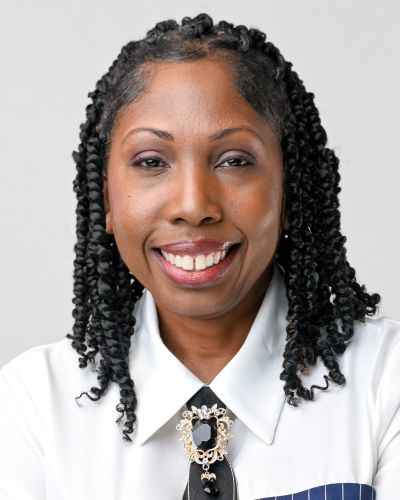
Dorian Stewart
Author, Speaker & Career Readiness StrategistReviews
How Not to Get Hired: Career Mistakes Smart Women Make in Tech
In today’s competitive job market, many highly qualified women find themselves overlooked for positions they are more than capable of filling. The question arises: why does this happen? As Dorian Stewart, a seasoned career strategist with over 23 years of experience as a hiring manager, emphasizes, it often has little to do with qualifications and everything to do with presentation and interview strategies. In this article, we will explore common mistakes women make during interviews and how they can rectify them.
The Importance of Your Interview Approach
Your resume and qualifications are just the beginning; how you present yourself during the interview can significantly impact your chances of getting hired. Here are six common pitfalls and fixes that can help you stand out:
- Playing Small Instead of Positioning Yourself as Strong
Many women underestimate their value during interviews. When asked to describe themselves, they often use phrases like "I assisted with" or "I was a part of," which can signal to hiring managers that they are merely followers. Instead, focus on owning your impact:
- Use assertive language: Say "I led" or "I coordinated" to demonstrate your leadership abilities.
- Highlight specific results: "I improved efficiency by 20% through my project coordination."
It’s easy to get caught up in the details when explaining your experiences. However, this can come off as uncertainty to hiring managers. To combat this, aim to keep your answers concise:
- Lead with your results—focus on the outcome of your actions.
- Save detailed explanations for follow-up questions.
Your resume, LinkedIn profile, and interview messaging should align seamlessly. Discrepancies can confuse hiring managers, dampening their confidence in your candidacy. To ensure alignment:
- Make sure your resume and LinkedIn highlight the same leadership and relevant skills.
- Prepare specific project examples that link to your desired role.
First impressions are crucial. How you conduct yourself in the waiting room, with receptionists, and during the interview can influence hiring managers. To leave a strong impression:
- Practice good posture and confident body language.
- Be courteous and professional with everyone you encounter.
Mistakes happen—acknowledge and correct them. Rather than letting a slip-up derail you, take ownership of it:
- Apologize briefly and clarify your point.
- Maintain your composure to show confidence and self-awareness.
Hiring managers are often already aware of your qualifications based on your resume; they are looking for the value you can bring to their team. Instead of proving you’re qualified:
- Focus on how you can add value to their company.
- Demonstrate your unique skills and perspectives that set you apart.
Key Takeaways for Success
As you prepare for your next interview, remember the three pillars of effective presentation:
- Is my message clear?
- Is my value visible?
- Is my presence aligned?
Embrace your strengths and the qualifications you’ve worked hard to obtain. Don't shrink in the face of challenges; instead, own your expertise and present it confidently. Interviews are opportunities to showcase your skills, and with the right approach, you can change the narrative in the tech industry.
Ultimately, it’s about demonstrating your leadership and ensuring that those qualities shine through. As you navigate your career path, remember: every interview is a chance to articulate your value. Best of luck in your journey to success!
Video Transcription
Good afternoon. I am it is now 12:20. Hello. I am so glad that you are here.And I as you can see on the screen, it does say how not to get hired, the career mistakes smart women make and still make, and how to fix them. No. The title is not a typo. It is not a, mistake, but it is something that I am very passionate about and wanted to talk to, women today, especially women in tech, as we do certain things that are great and we feel are great for our careers. But when it comes into the interview, we tend to create situations where we are not hired or we are actually passed over for the positions that we actually are qualified for. So, brief intro. My name is Dorian Stewart, and I am an author of 19 books. I am a speaker.
I am a career strategist, and I have worked I have over twenty three years of experience working as a hiring manager and as a systems manager for a large, many large, health care organizations. And someone's gonna say, well, what does health care have to do with tech? I was a systems manager, and so I was responsible for many of the implementations for electronic medical records. Think of Epic or, Meditech are which are some of the technologies that are currently being used in the health care system, and maybe some of you here today are currently working in the health care system and also doing tech. So let's talk about what we see. So I'm going to start with my confession. I have rejected some very, very smart people. I've rejected some very smart women, women who may have degrees.
They, have the experience, who, on paper, these women on paper, should have been the obvious choice, but, unfortunately, they did not get hired. Why? Not because they weren't qualified, but in actuality, because they didn't know certain things coming into the interview. Now, again, I am sure many of us have seen the regretted rejection email and wondered why. And so I'm going to kind of peel back and share with you some of the things that I have seen in my twenty three years of experience as to why we as women, I'm saying we, do not get the actual job that we have spent time getting our degrees, our certifications, the experience, and putting all of this together and still not getting the actual leadership or roles that we actually are qualified for.
And, yes, it is going to feel a little uncomfortable, but like you in here, you are brilliant. You are prepared. You are ambitious, and still you end up being overlooked. And, again, not because you're not enough, not because you are not well educated, but you just unfortunately do not understand the game or the rules per se as to what hiring managers and HR is looking for that gets you into the space that actually gets you those acceptance letters.
And so we're gonna talk about that. Okay? It is basically not your value or interpreted. It's just some of the things that you are just not saying or doing in your interview that actually gets you not hired. So we're gonna talk about a few of those problems today. And one of them, what we don't realize is that our resume is just scanned. Okay? We we sat in many of these sessions today and talked about AI. And, yes, your resume is getting scanned, and your LinkedIn is getting judged. For those who are thinking, social media has nothing to do with my job. I am sorry to tell you, it does. And so LinkedIn, you are being judged on your LinkedIn, and whether or not you come with the presence, your presence, how you sit, how you present yourself is all being evaluated.
I hate to tell you, we sit here and we say, we listen and we don't judge. We listen and we judge because we have nothing else to go by. And so we are looking at all of the things because we're looking to see, are we getting someone who's going to bring all of the things that we're looking for? Not just what is the bare minimum in the job description, but looking at the whole picture. And so, yes, we're told as women, get the degree, get the certification, work hard, be a team player, and there's nothing wrong with being a team player, and you'll succeed. But there are certain things that we don't tell you, And so what we wanna know is what's really costing us from getting, what's costing you from getting the opportunities even after doing that. One of the things that is very unspoken is is that decisions are sometimes made in a couple of seconds.
It is how you present yourself even before you actually get in front of the hiring manager. Okay? And so we don't necessarily tell you, well, the reason why you didn't get the job is because of x, y, and z. We just send out the automatic rejection letter, and then you get silenced without getting to know anything more about why. And then we, as women, we begin to go through that, was I not good enough? Do I need to get more certifications? Do I need and is required for me to get more degrees even though I've met the minimum requirements? And then we begin to shrink who we are and change who we think we are.
And so we need to talk about what are some of the problems in there. And so problem number one is playing small instead of positioning yourself as strong. Many women are taught you don't exaggerate, and then we tend to underestimate our value and everything that we bring to the position. All of the things that we've done through college or volunteering or even throughout our organizations, we tend to understate that, and we miss out on the opportunities that we, have. And so we sorry. There we go. I do apologize for that. So we start out in our interview, and we say, tell me about ourselves. And we begin to say, I assisted with. And hiring manager's here, supporting role, I helped with. And hiring manager's also here, not a leader. You say, I was a part of, and hiring managers say, not a decision maker.
And so we tend to understate who we are and what we bring to the projects that we've completed, the roles that we've done, and hiring managers do not hear leadership. They do not hear this is a great candidate that's a go start or a a go getter. They hear follower, and slides are not visible. Not sure. It's not you should be able to see the slides. Okay. Well, I'm gonna have to keep going. And if anyone wants the slides after, we can try and see how we can, okay. Thank you. And so, we hear those things. And what are some of the things that we are looking for as leaders? We want you to own your impact. We want you to say exactly what you've done. I've led coordinations across teams to deliver a project that improve x and y.
I've led showing that you have leadership across teams that also shows, yes, I am a team player, but I am also able to work within various parts of the project, the results of delivering the project that leads from x to y. And when we fail to do that, it just doesn't come off the way that it should, and so we need to own our impact. So that is how we fix problem number one of understating ourselves and not coming out as a strong leader. Okay? Alright. Problem number two is overexplaining. That's a tough one for many women. When you are in an interview, let's start with you're probably going to the hiring manager first I'm sorry, the HR manager first, and then to the actual hiring manager who's making the decision. And so when they begin to ask you questions, especially on that first level interview, they're looking for keywords.
If you begin to do long answers and go through every single detail and go through every single step without them asking, it sounds like uncertainty, it sounds like lack of focus, and it also sounds like you're trying too hard. Now, yes, we do want the job, and we want them to know that we are ambitious and that we are coming with energy and integrity. However, over overexplaining does not help us with our role, especially when it comes to that first level interview. Hiring managers I'm sorry. HR managers don't always know the full scope, and so they're looking for keywords and key phrases that gets you to get to the door of the actual manager that you probably will report to on a day to day basis. So what are some of the things that you want to say is you want to give clarity over complexity. Lead with results and not a long story. And so, therefore, if they ask you about the detail, then you go into detail.
But sometimes we tend to go on and on and on, and it becomes a problem. You wanna be able to share your outcomes. You wanna be able to share your impact so that you can get to the next level. If they say, well, can you give me some detail? Can you explain this a little further? Then you can do that, but you wanna make sure that you are not overexplaining yourself because those are things that hinders you from actually getting the job. Okay? Number three, misaligned personal branding. Ugh. Yeah. So I'm gonna be very honest with you. Sometimes your resume says one thing, your LinkedIn says another, and your interview says something totally different.
So your resume says that I am a leader or a systems manager or a systems director. However, your LinkedIn has a lot of other things attached. You make blankets. You are, doing a lot of other roles that does not have anything to do with your resume and the position that you are applying for. And then when you come into the interview, it's almost like you're selling us your blankets and that you are also a systems engineer, and it becomes confusion. And so we do not see that you have the clarity. And so as a personal brand of yourself, you are not coming to this interview saying that this is the role that I want, and this is the role that I am going to do when I get here. We're gonna be concerned as to whether or not you're gonna spend your time selling blankets. How do you keep everything the same across platforms?
Great question, and I'll also save some time for the end. But if your resume says that you are a systems engineer or, I'm gonna pull from some of the people that are here, that you're a systems engineer or you're strategic technology executive, your LinkedIn needs to either show articles of that, roles and projects that you've completed.
All of those things need to reflect what your resume is saying. Okay? And then when you come to the interview, you need to also be ready to talk about some of those projects that you've placed into your LinkedIn and in your resume so that they all show an alignment across the board. Okay? And so the fix is alignment. Your resume is your proof. Your LinkedIn are your stories. So we're talking about certain projects that you said you've done, or if you've spoken or you speak in in certain, for your job, and you're doing something a little bit beyond the actual role that you're hired for or currently in, let's say I trained a couple of new employees, you wanna make sure that you share some of those things that shows that, yes, you are a team player, but you are also you are qualified for the next step in your career, whatever that may be.
And if there is something that you wanna share, like I said, an article that you may have written or project that you have been successful in, then you want to put those on your LinkedIn, and then you begin to share those things. Even organizations that are aligned with the jobs that you want, those are what you put on your LinkedIn. So, therefore, if you know you volunteer for a women in tech, young young women in tech's organization, those are things that you wanna put on your LinkedIn that also allows for people to see that you're also a well rounded person, and then also making sure that if you're missing something, you can do that.
I will say that one of my very first roles in in actual, leadership was actually, sharing something that I volunteered in, but making sure that it aligned with the role that I was applying for. I have to keep going. And so, again, like I said, your resume is your story. LinkedIn is, your resume is your proof. Your LinkedIn is your story, and your interview is your voice. Problem number four, ignoring first impressions. Okay. Hiring managers, we judge a book by its cover. We listen and we do judge because guess what? We have nothing else to go off of. And so you need to make sure that your first impression, and that first impression includes the receptionist or anyone else in the waiting room, anyone else that you may be encountering with because your first impression is very important. You wanna make sure that you practice your presence. Can I lead a person? Can this person lead? Because that's what we're looking for.
Can they represent the team or company, and can I trust them in a room when I'm not in it? Okay? And so, therefore, you wanna be strong, but you wanna make sure that you your presence, that the way you interview, that the way you interact with other people can also get you into rooms, and they can trust you beyond just while the manager is in the room. Okay? Number five, not knowing how to recover. Listen. We are all we are women. We are human. We make mistakes even in our interviews. We do, and we need to own it. If you recognize that you are making a mistake, you've got to know how to recover. You've got to know how to say, you know, let me revisit that last question. I wanna clarify it better. So if you know you've made a mistake or you know you didn't answer it the way you should, own it, and then let them know you wanna clarify that better.
You wanna own your mistakes and then make sure that you fix it. It's just a simple one sentence, and then those changes are great. We are not as hiring managers, we're not looking for perfection. It'll be great if we can get it, but we're not looking for perfection because no one is perfect. What we're looking for is for humans who are relatable, who can add value to our team and company, and also avoid the chaos within our team and company. So when you can own your mistake, it shows that you are self aware, that you still you have confidence, and you take ownership for your mistakes, and you are looking to make those corrections. Okay? And so those leaderships are what we are looking for. Alright. So let me go back. Again. This my PowerPoint is doing the best doing the most. So let me at least say this. When you do or you fix yours, you wanna make sure that you do not panic.
As much as it would be something like, oh my goodness, take a pause, correct correct it, and then also make sure that you make your your corrections as soon as possible. Like I am doing now, I'm taking a breath and then owning my my issues with my tech problems. And so I want to also share with you before we wrap up is that, also, stop trying to prove that you're qualified. We would prefer that you show us that you're valuable. When we bring you into an interview, you're already 60% there. We pretty much know that you're qualified. What we wanna see is what value that you're going to bring to the company or the team and that we're not hiring you by mistake. We wanna make sure that what's on your resume, what's based on your degree or your certification actually matches what we see in front of us. So avoid being passive.
Make sure you're coming and making sure that you come with clarity, and make sure that you practice. Don't be afraid and think I'm just gonna wing it. Don't do that. Okay? Some people may be able to be great at it. Don't do it. It doesn't work for for most people. We wanna make sure that we are showing our talent. And the last thing that I wanna share as we're closing up is that there's a practical framework. Is my message clear? Is my value visible? And is my presence aligned? Okay? And in closing, ladies, we tend to shrink. Do not shrink. Do not overprove, and do not question your worth. Show that you have strength, show that you have alignment and clarity, and show the confidence that you have taken so much time to obtain your degree and go into that interviewing interview, owning it, showing your strength, even accepting your mistakes, and moving into there with alignment and clarity.
I wanna wish you all the best as you move into your career, as you move up in leadership because I know that you can do it. You just have to take what you have inside and bring that out into your interview. I am looking forward to hearing how great you're doing and how much clarity and how much you're going to change this tech industry because we need it. Okay? Thank you so much, and I hope that this has been helpful.




No comments so far – be the first to share your thoughts!