
You have not because you ask not - A recruiter's guide to salary negotiations by Jenny Cones
Reviews
The Gender Pay Gap: Overcoming Negotiation Barriers for Women
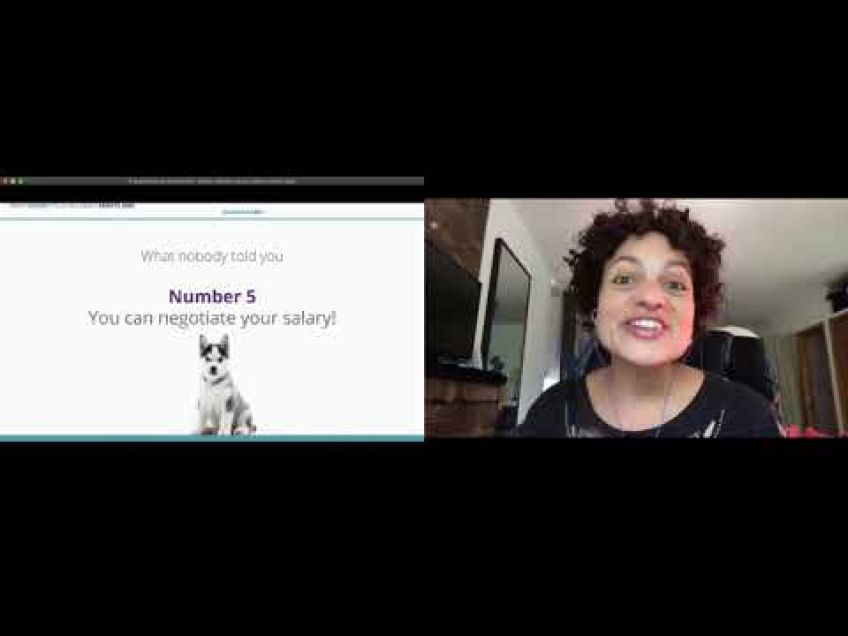
The disparity in salary negotiations between men and women is alarming. A recent statistic reveals that only 7% of female MBA graduates negotiate their salary, while over 57% of their male counterparts do. This starts a discussion on why women earn only 82 cents for every dollar earned by men and what can be done to bridge this gap.
Understanding the Impact of Negotiation
- When women earn less on average, their annual raises represent a smaller percentage of a lesser base salary.
- Many women in tech are the primary earners in their families or are single mothers, which complicates financial stability.
- Even recent statistics reveal that women negotiate about 20% less often than men, and when they do, they ask for less.
This raises an important question: why aren’t women negotiating for what they deserve? As someone who has reviewed numerous salary negotiations, I've witnessed firsthand how women often sell themselves short.
Real-World Experiences in Salary Negotiation
- The Male Contractor: A male contractor insisted on a salary higher than the proposed amount, leading to a successful negotiation that could increase his paycheck.
- The Female Manager: A female candidate focused on her perceived inadequacies, resulting in her acceptance of a lower salary than what she deserved.
- The State Worker Transitioning into Tech: Another female candidate was offered a fair salary but did not negotiate for further benefits, which could have improved her compensation package.
These examples highlight the stark differences in how men and women approach salary negotiations.
Breaking the Cycle: Good Girl Syndrome
The concept of Good Girl Syndrome plays a significant role in this disparity. This term refers to the societal expectations placed on women that encourage them to be:
- Compassionate
- Warm
- Cheerful
- Loyal
While these traits are admirable, they can lead women to accept lower offers and focus on being agreeable rather than advocating for themselves.
Strategies to Improve Salary Negotiation
Fortunately, there are actionable steps women can take to enhance their negotiation skills. Here’s a guide to help you prepare:
- Remove Personal Emotion: Treat negotiations as a business deal rather than a personal interaction.
- Build Your Business Case: Document accomplishments, successful projects, and quantitative contributions to the company.
- Practice Negotiation Techniques: Role-play scenarios with a friend or mentor to build confidence.
- Start Strong: Begin any negotiation by expressing enthusiasm for the role and the company.
- Ask for Flexibility: Inquire about possible adjustments in salary, title, or other benefits. Remember the phrase, “Is this the best you can do?”
The Importance of Practice
Negotiation is a skill that improves with practice. Whether it’s getting a better deal while buying a car or negotiating a raise, every small opportunity builds your confidence.
Conclusion
Women must be equipped with the tools and mindset necessary to negotiate effectively, advocating for themselves in every situation. Remember, the first step towards closing the wage gap is being brave enough to ask for what you deserve. Embark on this journey by practicing negotiation techniques and challenging societal norms.
Ultimately, the power to change the narrative lies within each of us. Embrace the opportunity to negotiate for your worth, for your salary, and for your future.
Video Transcription
You know, I was getting ready for work one day, and on the the the the news, I hear this statistic that says that only 7% of female MBA graduates negotiate their salary, well over 57% of their male colleagues do.And, you know, I was startled when I heard that. I went, oh, oh my gosh, you know what? On average, we know that women earn less money than men, 82¢ for every dollar. And then I started thinking about, you know, okay. We're making less. That means that when we get our annual raises, that 5% raise that you get is less than your male colleagues because they have a bigger piece of the pie to get 5% with. You know, we expect maybe we get 15% when we change jobs, but we're paid lower so that increases less. So really it's terribly hard to catch up with our male colleagues.
Additionally, you know I don't know about the rest of the world but here in The United States often times women in tech are likely to be the breadwinner of a family or you know about half of us are single mothers so not only are we working really hard, but we're not putting money away for investments.
Shoes or diapers or, you know, taking care of the kiddos. And so it's important that we figure out how to advocate, how to ask, and how to grow our compensation. Now you might say, oh my gosh, Jenny. You know what? That statistic is pretty old. I'm I'm really thinking that that you know things have changed not true even in the past two years, women still negotiate about 20% less often than men when they do ask they ask for less than a man will when they negotiate and, you know, unfortunately, they, may get rejected or or get get a less satisfactory outcome out of that negotiation.
You know, especially for earlier and career women, oftentimes they expect lower salaries getting into the market, and so they start themselves out at a disadvantage. So this is a lot of data, but let's really talk about some real world examples. Right? You know, after I heard that statistic, I'm the kind of person where things rattle around in my head. And so I'm like, I wonder if that can't be true. And so it just so happened that I had a day where I had to extend three offers to negotiate. Now the first offer was to a man who'd been working as a contractor. So he'd been getting paid an hourly rate wage, and he was making a lot more gross revenue than he would at our company.
And so on our very first interview, I said, listen. Love your background, but here, you know, you are going to make a 120 k. That's the top salary that we can offer. You get benefits. You get restricted stocks, all the whole thing. But if you cannot work for a 100 and 20 k, don't don't don't even interview. So he's like, oh, yeah. Cool, Jenny. That works for me. So he goes through the interview process. I extend the offer at $1.20 k, and he says, oh my gosh. You know what? I want 125. I was furious, but it's my job so I went back to the hiring manager and I said, hey, he wants 125 the hiring manager thought went back and forth and everything like that he decided to give him an extra 2 k to come on board. And I thought, wow. You know, talk about pushing the limits, but it paid off for him for a small extent.
So I didn't have too much time to mull it over because soon after, I had to deliver another offer. Now this is a woman who'd been leaving a managerial role in a different industry, and she was coming into an individual contributor role. Her interviews went well, and so when I went to, and and her original compensation expectation were at the very tip top of our range. So when I met with the hiring manager to talk about, hey. What should we do? You know, what where are we at in comp? The the offer that the hiring manager wanted to make was quite a bit lower than the top of our range. And quite frankly, I was disappointed with where the offer came out. I voiced my concerns, but the manager says, okay.
We'll just talk to her and see what she says. So I get on the phone and I make the call, and I tell her about the offer. And immediately, she starts talking about, well, you know, I really don't have all of these skills, and I can make cuts in my budget. And, she started focusing on all of the gaps that she had, not all of the assets that she brings to the table, not the fact that she's been a manager, not the fact that she's done all these amazing things. So, unfortunately, she took the offer that I didn't feel was fair, but I had to make. Now, I was really sad about that, and I felt bad for her personally. I felt even worse when she thanked me for sent me a really nice thank you note saying, you know, thank you for being so kind and so supportive and understanding.
I would have loved it had she actually had decided to focus on what she brings to the table. So, you know it it. You may say well, Jenny. Why why couldn't you offer what what you wanted to how did that work? Why did you let her accept the offer? You know I don't always get to dictate sometimes I present people with choices and see what they do. Additionally, I talked to the manager and said, hey, by the way, you know, she may be a powerhouse and we've had a plan to get her raised up after she'd expected the offer. So the third situation, I'm thinking, okay, You know, men won the one, the other one was sad. I we had another lady who'd been working for a state institution. She was coming into a tech company, and so we were able to really she'd been drastically underpaid. We're able to really right size her compensation.
And the manager said before I talked to her, hey. If we need to, I can flex an extra five k. You know, but this offer is very fair. Let's try to do this. So I gave her a call, and I'm thinking, okay. You know what? This lady has really fantastic skill set. I'm sure that I'll extend the offer, and she'll say, is that all you can do? Unfortunately, she didn't. And so instead, she said. Well, you know Jenny the really most important thing to me is can I pick up my kids? Can I drop them off from school? And so you know it's hard because it's my fiduciary responsibility. This was a publicly traded company. I was a shareholder just like every other employee. I couldn't ethically give her that five k, but I really wish that she had asked for it.
So, you know, I'm thinking about it, and I'm thinking, wonder why we just accept what's handed to us. And I called my mama. You know, I'm a Texas girl. Right? That's what we do. We we always call our mamas. And when I called my mama, the first thing that she said is, hey, Jenny. Have you been being a good girl? And I'm like, and I also know that my mother ends every single call with me about, okay, now be a good girl, Jenny. You know, and that brings us to what I call good girl syndrome, or it's actually labeled, I didn't make this up. So, you know, they're very subtle, subliminal messages that oftentimes we get in The US and probably globally as well that that kinda help us understand that a good girl is compassionate and warm and cheerful and soft spoken and loyal.
We have a definition of what we expect. You know the hard part about good girl syndrome and about those expectations is is that good girls are seen as pushovers and in the corporate environment and personally people take advantage of that, You know, good girls work so hard to please that oftentimes they hurt themselves, sometimes with not being transparent with colleagues, sometimes with self auditing, right, I'm the one that will be very careful about what I say and I may not deliver those hard truths if I'm in good girl syndrome.
You know, good girls always try to live up to everyone's expectations. They're really reluctant to say no. And, unfortunately, good girls are exhausted. Right? So if you think, oh, Jenny's just making this up, or I promise I'm not imagining it. You know, a study from Stanford reported that the most desirable adjectives for women are reportedly compassion, warmth, cheerfulness, loyalty, all good girl syndromes. On the other hand, when they were asked to to to list desirable adjectives for men, things like independent, assertive, dominant, decisive, you know, are are words that we are given. So, you know, it looks like women are desirable when they're soft and men are are more desirable when they're strong. So how does all this figure back into the salary conversation?
You know, after I talked to my mama, I decided to reach out to one of my dear friends, and really find out what her perspective was. So I asked her, hey, you know what, tell me, do you see women negotiate less than men? She got really quiet, and she said, you know, this happened to me. She said, when I took my current job, I know that they offered me about 30 ks below what the market is. And she had twins that were going into college. Right? And and I said, oh my gosh. Why would you do that? And she said, I was scared. And so this woman who's a lioness when it comes to meeting with executives and advocating for others and putting together really smart deals and she's a great communicator.
She was afraid to advocate for herself that good girl came out my own daughter. My very own daughter came back from a Fulbright Scholar program in Europe and she had two offers that she was looking at one paid $10,000 more the other paid less, but she really liked the manager HR wasn't involved in this one, So I said, baby, before you take that offer, I really want you to see if there's any flexibility and compensation.
And she broke down in tears. My own daughter, when she's heard me talk about this for ages, you know, she was worried that she would appear greedy, that she would be ungrateful. You know, she was so terrified of, jeopardizing that relationship that it seemed completely overwhelming. So what do we do when we're afraid? Let's talk about the negotiation table, whether it's a review, whether it's salary, and and let's reframe it a little bit. First of all, it's a business deal. Right? We need to take fear out of the equation and we need to realize that we're building a business case. So if you're dealing with the recruiter, remember that they're not your friend, but you can turn them into an advocate.
And you do this by maximizing your likability with them as well as through the interview and offer process. So you look at ways to highlight things you like about the companies ways you can impact the organization ways that you have commonalities with the the interviewers way that you align with the company mission. What this is called is affinity bias and it's why bro culture why guys kind of resonate with each other and they feel great. You're actually building affinity bit, bias, which will help you in the offer. Also, you know, we know that there's a little bit of intersectionality. So strong women are not always appreciated by building this likability. You are actually making it easier to negotiate. The other part of it is is you're also building a business case.
So you're talking about here's the value I bring to the table and why I'm really great for the job at every single interview. You know, I've had men come to me for interviews with spreadsheets to show me all of their accomplishments and the way that they adjusted revenue in the company, all the money that they've made. I've also had men bring spreadsheets to me, in the negotiation deal so that I could understand exactly what their current package is. I have never not once in my career had a woman come to me with a a spreadsheet, you know, to show me that. So we really need to think about the business case, how we're building it, and the data we're bringing to the table. You know, so get as much data as you can. You know, talk about I ran a $10,000,000 project. I saved 20%, all of that.
And, you know, as you move through the interview process, you're gonna get to the offer. Now, you know, oftentimes, there may be a gap. Right? And here's how you're going to approach the gap. And I walked my daughter through this very conversation. You're gonna start with, here's the good thing. I love the company. I love the team. I would love to work for you. Here's the gap, but I have an offer for $10,000 more. Then the ask, you know, can is there any flexibility? Can you adjust? Remember when you're negotiating that there's more than one thing on the table. So if you put two or three things, out there, you're more likely to get a one on one. So you might ask for, you know, is there adjusting in the title? Can we adjust the bonus? Could we do a sign on?
Could I get a six month review? Because I know I'm going to knock the ball out of the park. So how about a six month review? Can you adjust any stock options, you know, our issues? One little word of caution is is that, you do have to be careful that you don't push too hard. You know, there are times when there's so many requests, the demands are so serious, there's not that collaboration where we go, oh, this feels like a mercenary, not a teammate. I've never it's rare where a woman ever does that, but just remember, you ask until you feel you gotta know, and then you want to be careful with that. So why aren't we doing this? Right? Here's the problem, is in the negotiation process, we know it's a business deal, but it feels so personal. This is where imposter syndrome comes in. Or as my mama would say, you know, she was always the one that said, well, who do you think you are?
And don't go beyond getting above your raising. You know, don't get too big for your britches. Now, I'm I'm country, so your mom's might not have said that. But that's the challenge is is that we feel really uncomfortable. So one of my dear friends was going from a manager to a director role, and she was given a 12% raise. I I said, okay. Good. The problem was is that was 30 k less than the job same job paid prior to her. You know getting the offer so she called me and she was crushed. She felt like they weren't valuing her. It was very personal to her. We had to take a step back and say hey this is business and let's focus on the job and she and her manager put together.
A whole list of reasons of why that she you know why the job was worth more than they were offering she was able to get a 20 ks raise, but it took a lot of time and a lot of patience and a lot of confidence that she was doing the right thing. Same with my daughter I've made her we kinda crafted out her her gap, her bridges and everything like that, and I made her promise the only words that she would say is, is this the best that you can do? That's all she had to say. Now she cried. We got on the call. She, asked that. She said, is that the best I can do? The manager was like, oh, no. Let me see what I can do. And she got 5 k more, but more importantly, she learned that it's okay to have those hard conversations and that she could advocate for herself. So, you know, we don't get to do this really often. Right? So please take every chance you can to negotiate. It's for your fiduciary responsibility as a woman.
You know, when you go to, buy a car, when you go to check into a hotel, if you see a package that's damaged and you go, hey, can I get a discount? You know, that's so important. Practice negotiating every time you can find an opportunity to, even if it's with requirements for a client or with a project. One last story really quickly. One of my mentees was changing jobs and she told me, no, this new company just doesn't have the same kind of retirement plan as the old one and I said, okay. Well, you know you you've gotta call them. You've gotta talk to them. You know, II went through the whole bridges thing she practiced it. She called me back and she said, okay, I did it, she said. You know and and I didn't realize she said.
I had a lump in my throat and I was really scared but II negotiated the the the the package as well. She got a 70 ks increase of what she was previously making now if she had told me that ahead of time that she was already way ahead. I'm not sure I would've had her go after the retirement plan as well, but guess what she advocated for herself and she got something that was incredibly fair and it doesn't happen for everyone but you can do these things and it's important that you personally try to make sure that you're making up for the wage gap.
So, you know, here's the key takeaways. Write down think of questions like that. Is there any flexibility in the title, in the salary, in the bonus? Is that the best you can do? Five words, six words, they pay off. Could we consider? Could we adjust? Soft questions like that will make a huge difference. And there's lots of resources out there. So, you know, the good news is is that lots of places to learn to negotiate, but it starts by bill being willing to want to negotiate and being brave enough to do so. Alright.



No comments so far – be the first to share your thoughts!