Leadership Advice: 5 Steps to Follow for Lifelong Success by Anwen Robinson
Romana Sustar17:592022
A female boss told her the job needed a man, so she resigned
She left school at 16 with no qualifications and traced other people's engineering drawings by hand, unpaid for the expertise she was quietly building. Years later, a female managing director told her the sales director role she was best qualified for had to go to a man. Anwen Robinson, now SVP and general manager at Infor, explains what she learned at each crossroads. What turns setbacks like these into a lasting leadership career?
Get five practical lessons for handling self-doubt, setbacks and promotions across a long career
In a fireside conversation hosted by Romana Sustar, Infor SVP and general manager Anwen Robinson traces her path from leaving school at 16 to running global software businesses. She argues that lifelong learning, focusing on what you can control, taming self-doubt, knowing your worth and building a strong network and complementary team are what sustain a long leadership career.
“And there's another lesson here is to value yourself.”
“I'm going to do it. If I fail, I'm going to be kind to myself and I will learn the lesson from that.”
What you will learn
Break an overwhelming situation into what you can control, what is already past and what has not happened yet.
Recognise when an employer undervalues you and treat it as a crossroads rather than something to accept.
Quiet the self-doubting voice by weighing pros and cons and asking what the worst outcome could be.
Prepare for a bigger role by building a support network, taking relevant courses and hiring complementary skills.
Lead with a clear, well-communicated strategy so people can align behind you.
Key takeaways from the speaker
Education for all
Responsibility
Leadership advice
Goals to succeed
Details
Level
All levels
Format
Fireside chat
Technical depth
Non-technical
For
All career stages
Length
17:59
Published
July 2022
Questions this talk answers
How did Anwen Robinson get into engineering after leaving school at 16 with no qualifications?
She studied mechanical engineering by day release for three years while working as a tracer, and the local university interviewed her in her lunch hour and offered her a place on the spot.
What can you do when life feels overwhelming?
Make a plan: list the pros and cons, focus on the things within your control, draw a line under past mistakes and stop worrying about things that have not happened yet.
How should you respond when you are passed over because of your gender?
Value yourself. When her managing director said the sales director had to be a man, Robinson resigned, and that opened up new opportunities.
How can you manage imposter syndrome when offered a bigger role?
Look at the pros and cons, learn from past experience and ask what the worst outcome could be, then commit to being kind to yourself and learning if you fail.
What should a new managing director put in place first?
A support network, relevant training for what you do not yet know, and a team with complementary skills rather than copies of yourself.
About this talk
It's 2022. The use of technology in the past two years reached its peak. Despite the pandemic, we learned how to connect digitally - the geographical distance lost its meaning. In a digital world, 10000 miles don't present a flight journey, but just a quick zoom link connection or similar. The world of opportunities got bigger for everyone. In my conversation with Anwen Robinson, SVP and GM at Infor, we are going to share how to make an impact and seize the opportunities as a female leader. How can I succeed in a sector (long-term) and what is my obligation towards all other women entering the industry? Anwen has a lifelong experience in the sector and her top 5 pieces of advice are exactly what we need to hear to succeed!
How to control the little voice in your head (88 s)
Making a plan at your lowest point (54 s)
Speaker 1: My name is Romanas Sustar. I work as a field marketing manager for INFOR and I have huge pleasure to introduce you to Anwen. Anwen is our senior vice president and general marketing managing director at INFOR. And before we lose any more moments, Anwen, who are you? Where do you come from? Tell us your story, share your wisdom. Thank you very much.
Okay. Thanks, Romana, for the introduction. And so thanks very much for giving me the opportunity to share a little bit of my journey. And I wouldn't say it's been a conventional journey over the years. I actually grew up in the South Wales Valley, in the UK, in the South Wales Valley from a very working class background. And I must admit that when I was in school, I was very much into the arts. I was very much somebody that needed to know, you know, why do I need to learn that? You know, explain to me why that's going to be important to me.
And if I didn't get an answer, then I tended to sort of switch off, which consequently meant that from an education point of view, I actually left school at 16. Very much an arts background, needed to get a job. I found a job with a council, a local council dealing with public services. And it was in the architects department of the heating and ventilating division of this particular council. And I was on the board as a tracer.
So basically taking the designs that somebody else had actually come up with and the calculations and transferring that onto the drawing board. Now, this is pre-CAD times. I'll warn you all, I'm very old, so my journey is quite long as well. So pre-sort of use of technology to actually capture these things, drawing by hand as a tracer.
And I quickly got to realize that actually, if I needed to get on because I started to understand exactly what the role was doing, I actually needed qualifications and I didn't have any. So I could do the work, but not get paid for it or get the recognition for the work I was doing. So all of a sudden education became far more meaningful for me. So, so I signed up for a day release to start off.
And I basically, I sort of scraped through maths when I was in school and I can actually remember the lesson where asking the question, when am I, when is Pythagoras theorem ever going to be of use to me? And, and I was just told, just learn it, you know, just learn it by rote. And I, that certainly didn't, didn't apply to the way I learned things, but, but when I went back to, to sort of college, the only course that was relevant to the work that I was doing, which was in an engineering department on the drawing board was actually mechanical engineering.
And, um, I can also remember the, the, the teacher that I had then, he was the type of person that will stay with me. You remember your best teacher. And if you ask the questions, why, uh, why do I need to know that? Give me an example. He wouldn't just tell you why he would actually show you and give many examples.
And he just brought it alive. And to me that that's the way I knew that I would learn from going on. And I excelled when I was at college because it meant something to me. And I applied myself, uh, to this and over the course of three years from a day release, I actually, um, uh, gained a qualification in engineering.
And I can remember going to, to work when I, when I had the results and I was told actually it's equivalent to a levels. So during the lunch hour, I contacted the, the local university and actually said, well, I've gained this qualification. I'm told it's equivalent to a levels. This was an ordinary national certificate in mechanical engineering.
And, um, does that, you know, can I do something with this? So they interviewed me during my lunch hour. And by the time I went home to my parents that evening, I was actually signed up to go to university. They offered me a place on the spot and this was to, to study mechanical engineering. Um, I opted for the five year course because I wanted to have, uh, time in industry.
I didn't just want the theory. I wanted the practical aspects of this as well. So I actually signed up to do, uh, uh, uh, an honest degree in, uh, mechanical engineering and it was myself and, uh, 70 lads on the course, which was wonderful. I had a wonderful five years in actual fact, great, great time, which also involves sort of stints in industry where I worked, um, at the Royal Mint in Llan Tresent.
Uh, sort of in the welding department and scraping bearings for machines, but also learning about different processes, learn, learning about the, you know, the actual practical application and also sort of involved with, with manufacturing as well. So I successfully gained a degree in, uh, honors degree in engineering and then sort of, what am I now going to do with this?
And I actually felt that I now had something to give back. And so I signed up for a post-grad certificate in education and actually, uh, to become a lecturer. So the first job, uh, that I actually, uh, uh, entered into from an education perspective, however, was, uh, was in a secondary school. Now, bear in new mind, I left school at 16 with no real qualifications at all.
And the, the, the role that I had in secondary school was to teach maths and, uh, computer science. This new, new subject was called computer science. And this was a sort of bird burgeoning time, uh, during that time in actual fact. And I, I'd spent sort of eight and a half years and, uh, finished off the sort of head of department for, for computer science.
But this also do all of that time, there were many things that happened in my life, uh, in fact, and one of them, this was probably a dark time and lots of lessons to be learned, uh, at this point. Um, I actually, my marriage had broken up. I had to move home. I then needed to earn more money so I could get a mortgage.
Um, so I changed jobs left behind all of my network, et cetera, to start a new job. And I actually was at a very, very low period in my life. All right. Now, Romana, you know, I'm a champion for, uh, people wellbeing and mental wellbeing in particular. And the reason why is because I've been there, all right.
And I think I can empathize when you see people that are on the outside, very positive, but actually you never know what's happening on the inside. So I think this is something that we should talk more about, but back to the story. Um, at that time, this was sort of one of my first lessons in actual fact that I had, I was at a very low ebb and there were so many things that were wrong in my life and it became overwhelming.
And I realized in actual fact, the only way that I was going to solve this out was by having a plan. So I sat down and I analyzed, okay, so what are the good things? What are the pros? What are the cons? What are the good things? What are the bad things? What are the things that are within my control?
I can actually do something about, all right. What are the things that I'm worrying about that actually I've already gone? You've made those mistakes. So draw a line, you know, be kind to yourself, draw a line, forget about that. And actual fact, the things that you're worrying about in the future haven't even happened yet. So forget about them.
Focus on the here and the now. And that's how I sort of got my life back, back together again, came up with a plan, understood exactly what I needed to do. And one of the things was I needed to leave teaching. I'd reached that point that I was very, very unhappy in actual fact. So I went back to engineering and actually left teaching and joined my first software company.
And this was a company. They were developing a new software product that was aimed at the consulting engineering marketplace. So they were looking for somebody with that background, somebody with a background in computing, this new sort of topic that was there. And of course, I'd been head of department and somebody who could sell. And it's like, well, anybody can sell.
I'm sure anybody could sell. So I landed this particular job. And this was my first sort of entry into the software, my software career. And I actually stayed there for eight and a half years. So I helped them develop the product. I helped them launch the product to the market. I made the very first sale of this product.
And over that period of eight and a half years, it actually became the leading solution for project costing and billing for engineering companies in the UK. So it was a huge success. And that company grew to the point that they were then looking for a sales and marketing director. So I actually put myself forward. So are you keeping up with me at this point, Ramam?
And so this was the point that I would probably say I hit my first glass ceiling. I know this is something that you were keen for me to talk about. And this is a strange one, especially for the ladies on the call, because the managing director at that time was a female managing director. Now, I'm going back into sort of the late, late 70s now.
And she actually stated to me, which would be illegal in these days, that being a female managing director, even though I was the best person for the job, she needed to have a male sales director. And the assumption was that I wouldn't do anything about that. So this, you know, this was a company that was very close to where I actually lived.
So, you know, from a convenience factor, all of these things. And she made the assumption that I wouldn't actually leave. And that, again, was where I stopped. And there's another lesson here is to value yourself. All right. And I knew that I was good enough for that particular job. And I knew that this was a sort of a crossroads in my career that I needed to actually do something about it.
So I actually resigned. And that actually opened up new opportunities for me. I went to work for a company called Cognos. Obviously, they've now been acquired. Spent some years there, gaining international experience. From there, I went to work for a company called Hyperion. Again, these should be names that are familiar. Both of those organizations deal with data, analytics.
So, you know, focusing on outcomes, very, very important in today's age is to, you know, understand exactly the insights that having access to core data provides for you. So it was a great grounding that I actually had there. And I spent a few years there, gained a lot of international experience. And then a company advertised what they were looking for somebody to – this was around the time of the dot-com era.
And this was a company based in Bristol called Aggresso. Aggresso Limited. And this was a relatively small company at the time. It was only about 23 full-time resources that were there. Turned over roughly about $2.5 million at that point in time. So I joined as a salesperson. And over the years, right, this is a company that grew.
They were in – it was a Norwegian-based company. And again, project cost and billing, going back to my previous role. So I felt very, very comfortable actually selling these solutions. And they were actually acquired by a larger organization, Unit 4 Business Software. Now, this might be a name that you are familiar with. So Unit 4 came in, acquired Aggresso Limited.
And I was now part of a global organization, headquartered in Netherlands for a global organization. And this is a company that grew through acquisition. So, again, I was actually with this organization for 18 and a half years. Started off in a sales role, moved up to became sales manager. When they acquired other organizations, I became the overall sales and marketing director over these organizations.
And then I got to a point where the current managing director of the UK actually, for personal reasons, needed to step down. So he announced that he would be leaving in 12 months. And I was actually asked to put my hat in the ring to become the managing director. And it's not something that I had sort of considered at the time.
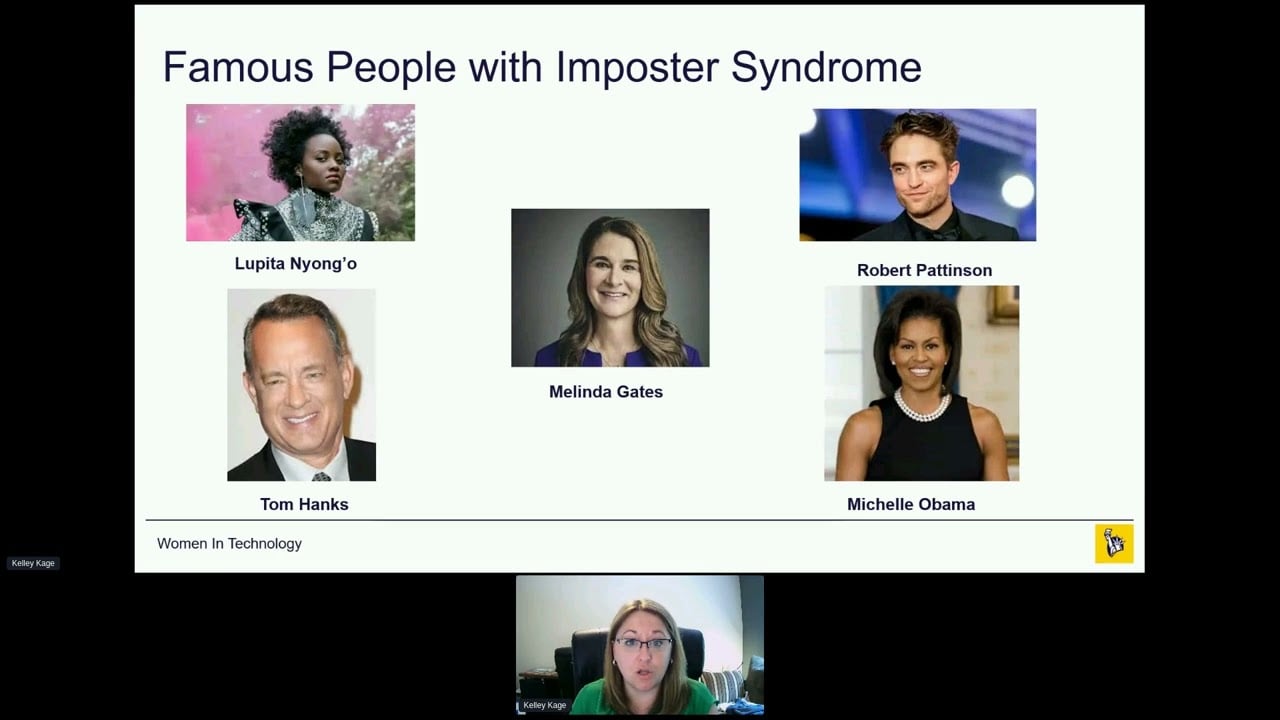
But, again, when I evaluated it, and this might be something that a number of people are familiar with, especially the ladies on the call. Do you have a little voice in your head sometimes, ladies? And indeed, gents, let's not be sexist about this, that says, oh, I'm not sure. Am I good enough? Do I know enough? And you actually talk yourself out of doing something even before you've actually started it.
All right, because that little, little voice in your head. So, again, over the years, I've learned to control that little voice in my head. All right, to be, and the way I do it is by looking at the pros, looking at the cons, learning from my experience of where I've come from, doing that sort of analysis. And then actually thinking, what's the worst that could possibly happen?
All right, if you, you know, a public speaking engagement, am I going to, you know, fail for worry? So what? I've learned from that experience, all right? So lesson there, the imposter syndrome, sometimes they talk about this. There are coping strategies to enable you to actually overcome that. And this is how I actually do that is by saying, do you know what?
I'm going to do it. If I fail, I'm going to be kind to myself and I will learn the lesson from that. And the next time I'll actually do it better. All right. Because as we all know, you know, the best innovations come from failure, the best sort of, you know, successes. How many failures came before that success was realized?
So a key lesson to be learned there. We only have three minutes left. I went through a very sort of comprehensive selection process. They involve sort of external organization to do the assessment because they needed to be sure I was up for the job. Three minutes to go. You're telling me about my time, yeah? Brilliant. Thank you.
There's crack on. Anyway, so I became managing director. But what I actually made sure was that, A, I had the support network. I've never done this beforehand. Make sure I have the support network. I also, because I didn't know what I didn't know, I made sure I signed up for relevant courses. Because it's quite scary when you realize the responsibilities of, you know, when you take a form of directorship as well.
So I made sure that I had the skills behind it, but this strong network. And the next thing that I needed to do was to replace myself. It was the sales and marketing director. So I needed to build a team around me. All right. And I made sure that I wasn't replacing myself. I knew what my skills were.
But I looked for teams of complementary skill sets. People who could do what I couldn't do. And that then drove the success of that organization even further. Faster and further. All right. So after 18 and a half years, private equity came in. Lots of changes took place. So I decided, okay, now's the time for me to leave.
I then joined another global organization, Technology One, based out of Australia, in fact. And that was to lead a turnaround. So, again, you build a culture. You understand all of the issues there. You talk to people. You communicate. You have a clear, clear strategy. Because if you haven't got a clear strategy, how can people get behind you in a line?
All right. So that's absolutely another lesson there. Make sure you have clarity and you communicate, communicate, communicate. So I turned that company around within three years. And that then brings me to where I am today at Info. So I've been on with Info now for just over 12 months, in actual fact. And I'm hoping I'm bringing all of the lessons that I've learned previously to bear.
But Romana, you're probably the person that should be able to answer that. Hopefully, we're building a culture. We've got clarity of the strategy. We're collaborating. We're aligning. And I must admit, my role in all of this now is to make sure that everybody else is successful. All right. Role of a leader. Make sure, you know, I want to make myself obsolete so the company drives forward together.
So that's it. Hopefully, that was useful. Thank you so much for being here. We were over 70. I will try to connect with you. I hope I caught a few of your emails. But number one, stay curious. Be a lifelong learner. Number two, forget the past. Forget the future. Focus on now and what you can change. Number three, control the voice in your head.
Learn from mistakes. Dare to try new things. Number four, be brave. Know your worth. Don't settle for less. Number five, build a strong network. Learn from great mentors. And then bonus, she got two. It's have a clear strategy and know your destination. And the last one, stay humble. Be authentic. So I'm learning from Anwen. I post beautiful things on LinkedIn.
Thank you so much for being here and enjoy your day. Bye. Thank you.
Transcribed automatically; names checked against the speaker record. Select a time to jump there.
Article based on this talk
How do you turn setbacks into a lifelong leadership career?
Infor's Anwen Robinson traces her path from school leaver to managing director and the five lessons she took from it.
In short
Anwen Robinson, SVP and general manager at Infor, argues that a long leadership career is built less on a perfect plan than on how you respond at each crossroads. In a conversation hosted by Romana Sustar, she explains how leaving school at 16, a painful personal low, a blatant glass ceiling and her own self-doubt each taught her a lesson she still leads by: keep learning, focus on what you can control, know your worth, tame the voice in your head and build a strong network around you.
Key takeaways
Education for all
Responsibility
Leadership advice
Goals to succeed
From tracer to engineer: when learning finally made sense
Robinson describes growing up in the South Wales Valleys in a working-class family, drawn to the arts and impatient with lessons nobody could explain. Without a reason to learn, she switched off and left school at 16. Her first job was as a tracer in a council's heating and ventilating division, copying other people's designs onto the drawing board by hand, in the days before CAD.
The turning point came when she understood the work well enough to do it, yet could not be paid or recognised for it without qualifications. "So all of a sudden education became far more meaningful for me." (2:04) She studied mechanical engineering by day release, inspired by a teacher who answered every "why" with real examples. Three years later, with a qualification equivalent to A levels, she phoned the local university in her lunch hour and was offered a place on the spot. She chose a five-year honours degree with time in industry, including work at the Royal Mint, and was one of very few women on a course of 70 men. She then trained as a teacher and spent eight and a half years teaching maths and the new subject of computer science, ending as head of department.
A low point, and the power of a plan
Robinson speaks openly about a dark period: her marriage broke up, she had to move home, change jobs and leave her network behind. She says this is why she champions mental wellbeing today, because people who look positive on the outside may be struggling inside.
Her way out was structured thinking. "And I realized in actual fact, the only way that I was going to solve this out was by having a plan." (7:04) She listed the pros and cons, separated what was within her control from mistakes already made and worries that had not happened yet, and urged viewers to be kind to themselves. "Focus on the here and the now." (7:37) That plan told her to leave teaching, and she joined her first software company, helping build, launch and make the first sale of a product that, as she described it, became the leading project costing and billing solution for engineering companies in the UK.
The glass ceiling and knowing your worth
When that company sought a sales and marketing director, Robinson put herself forward. The female managing director told her that, despite her being the best person for the job, the company needed a male sales director, assuming Robinson would stay because the job was close to home. Robinson describes this as her first glass ceiling and a crossroads. "And there's another lesson here is to value yourself." (9:52)
She resigned, and the move opened doors: international roles at the data and analytics companies Cognos and Hyperion, then Agresso, a small Bristol company she says had about 23 staff when she joined. After its acquisition by Unit4 Business Software she spent 18 and a half years with the group, rising from salesperson to sales manager and then to sales and marketing director across acquired businesses.
Controlling the little voice in your head
When the UK managing director announced he would step down, Robinson was asked to apply, something she had not considered. She asks the audience whether they also hear a voice saying they are not good enough, and notes that people often talk themselves out of opportunities before they start. Her method is to weigh pros and cons, draw on past experience and ask what the worst outcome could be. "I'm going to do it. If I fail, I'm going to be kind to myself and I will learn the lesson from that." (14:00) She reminds viewers that many failures usually come before a success.
Support, complementary teams and clear strategy
After a rigorous external assessment, she became managing director, and she was deliberate about what came next. She built a support network, signed up for courses because she "didn't know what I didn't know", and replaced herself as sales and marketing director by hiring for skills she lacked. "People who could do what I couldn't do." (15:25) She credits that team with driving the organisation further and faster.
When private equity arrived, she moved to TechnologyOne to lead a turnaround, which she says she completed within three years by building culture, listening to people and communicating a clear strategy. "Because if you haven't got a clear strategy, how can people get behind you in a line?" (15:46) Now at Infor, she sees her job as enabling others. "And I must admit, my role in all of this now is to make sure that everybody else is successful." (16:31)
Romana Sustar closes by summarising five lessons: stay curious and be a lifelong learner; forget the past and future and focus on what you can change now; control the voice in your head and dare to try new things; be brave and know your worth; and build a strong network with great mentors. Two bonus lessons follow: have a clear strategy, and stay humble and authentic.
Watch the talk
Leadership Advice: 5 Steps to Follow for Lifelong Success by Anwen Robinson, with Romana Sustar and Anwen Robinson, 18 minutes: https://www.womentech.net/video/leadership-advice-5-steps-follow-lifelong-success-anwen-robinson-romana-sustar-anwen-robinson
About the speaker
Romana Sustar, Marketing Manager, Journalist and Tutor at Infor, has lived and worked in 10 countries, speaks 7 languages and is an active member of Women at Infor. Anwen Robinson, SVP and GM for UK and Ireland at Infor, is an engineer and former lecturer who advocates for STEM education for girls and young women and previously ran two other global software companies.
Questions this talk answers
How did Anwen Robinson get into engineering after leaving school at 16 with no qualifications?
What can you do when life feels overwhelming?
How should you respond when you are passed over because of your gender?
How can you manage imposter syndrome when offered a bigger role?
What should a new managing director put in place first?
Drafted with AI from the talk transcript. Editor review pending.
Cite this talk
Romana Sustar. "Leadership Advice: 5 Steps to Follow for Lifelong Success by Anwen Robinson." WomenTech Network, 2022. https://www.womentech.net/video/leadership-advice-5-steps-follow-lifelong-success-anwen-robinson-romana-sustar-anwen-robinson