
A Seat in the C-Suite

Kimberly Bailey
VP of IT & CIO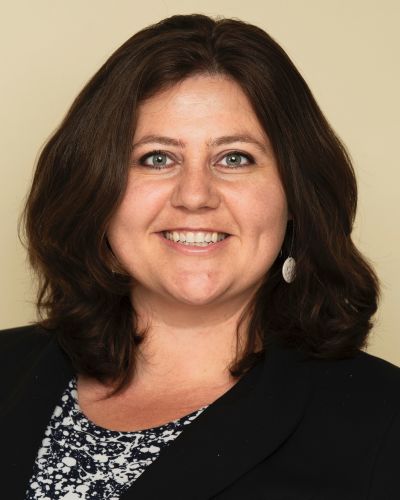
Kate Kollerer
Chief Operations and Technology Officer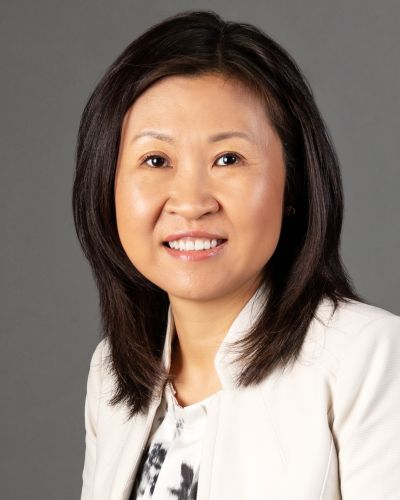
Emily Xu
Chief Digital & Information Officer
Vidya Shankaran
Field CTOReviews
Women Leading in the C-Suite: Insights from Industry Experts
Welcome to a transformative conversation featuring inspirational women who are making strides in leadership roles. This enlightening discussion took place with key figures like Kimberly Bailey, Vidya Shankaran, Kate Kollerer, and Emily Shue, all of whom shared their invaluable insights on navigating the complexities of leadership in today's world.
Understanding Leadership Dynamics
Bridging the Gap Between Strategy and Execution
Kate Kollerer, Chief Operations and Technology Officer at Face Reality Skin Care, sheds light on a common disconnect in organizations. She emphasizes that true leadership involves:
- Effective Communication: Bridging the gap requires clarity in conveying strategies; it's not just about setting direction but ensuring that everyone understands the "why."
- Empowering Teams: Encouraging team contributions often leads to innovative solutions that exceed initial expectations.
Digital Transformation and Leadership
Emily Shue, Chief Digital and Information Officer at Republic National Distribution Company, explains that successful digital transformation begins with a clear vision:
- Lead with Purpose: Start transformations by communicating business outcomes rather than just focusing on technology.
- Transparent Communication: Keeping team members updated on progress, including setbacks, fosters trust and adaptability.
AI and the Future of Leadership
Managing AI's Impact on Organizational Strategy
Vidya Shankaran, Field CTO at Commvault, discusses how AI currently influences organizational leadership:
- Exposing Weaknesses: AI not only accelerates decision-making but also reveals those leaders who struggle to adapt and lead.
- Human Element in AI: Organizations need to prioritize the human impact of AI rather than just adopting it for its own sake.
Important Leadership Skills for the Future
As the digital landscape evolves, key leadership skills will include:
- Empathy: Understanding the human side of technology is crucial.
- Agility: Leaders must adapt to rapid changes in technology and market needs.
- Effective Communication: Clear and empathetic communication will be vital in maintaining team morale and direction.
Facing Challenges as Women Leaders
Overcoming Barriers in Leadership
The panelists shared their experiences of the challenges women face in leadership roles:
- Imposter Syndrome: Women often feel the need to prove their competency repeatedly.
- Building Confidence: Learning to say "yes" to challenges regardless of fear can open unexpected opportunities.
Cultivating Authentic Leadership
Maintaining authenticity while meeting executive expectations is crucial. Key points discussed include:
- Support Networks: Engaging with communities of women leaders enhances confidence and reinforces authenticity.
- Continuous Learning: Leaders must commit to ongoing education and skills development to stay relevant.
Closing Thoughts
The panel highlighted that achieving a seat at the table isn't merely about having a title—it's a mindset focused on communication, connection, and continual growth. As the conversation wraps up, remember that the future of leadership lies in shaping a collaborative environment where everyone can thrive.
For further insights and discussions, connect with us on LinkedIn and explore more about advancing your leadership journey. Thank you for joining this engaging conversation!
Video Transcription
Alright. Well, welcome. Welcome. Welcome to a seat in the C Suite.My name is Kimberly Bailey, and I am the vice president of information technology and chief information officer here at Le Moyne Owen College, the fifth oldest HBCU in the nation located in Memphis, Tennessee. And I will allow my esteemed, guest to introduce themselves briefly. We'll start with you, Vijaya.
Hi, everyone. I'm Vidya Shankaran, field CTO at Commvault. I've been with, Commvault for about ten years and around the IT block for twenty. It's an honor and privilege to be here and look forward to an interactive session with the rest of you.
Thank you. Kate?
Hi. I'm Kate Kollerer. I'm the chief operations and technology officer at Face Reality Skin Care. I've been with Face Reality for, a little over five years now, and I oversee both our traditional operations, so supply chain, project management, as well as our technology. So our digital and I t organizations.
Okay. And Emily.
Hi, everybody. My name is Emily Shue. I'm the chief digital and information officer at Republic National Distribution Company. We are, the largest, alcohol beverage distribution. I'm actually in transition. We'll start a new position in June in a similar role. So in my career, I'm pretty much leading all the digital transformation as well as, you know, technology under my belt. So really glad to be here. Looking forward to have a great discussion with everybody. Yes.
Well, thank you, ladies. I appreciate, you all joining today. So let's get started. I want to uniquely just ask you some individual questions about your experience from the c suite. So we'll start with you, Kate. You sit at the intersection of operations and technology at the executive level. Where do you see the biggest disconnect between strategy and execution, and how do you close that gap?
Yeah. That's a really good question. You know, I think, my entire career, I've been moving between the business side and the technology side and back again. So it's really kind of positioned me in a unique place to be able to speak both languages. And the number one thing I see, between where strategy, and execution fall flat is when there isn't that right communication and context upfront. So, you know, the strategy fails in its transition in its translation, not in its intent. When I think about what my responsibility is, it's to make sure that I'm not just setting direction, but that everyone who's doing the work has a really firm understanding of what we're trying to solve, what constraints, are top of mind, and what could success feel and look like.
I think that if you get those things right and you have the right teams, working with you, they will come up with the right solutions, often much better things than you could have ever have come up on your own. But, really, I think the c suite is accountable for not just setting the right strategy, but making sure that everyone understands what the problems are, you know, why it matters, and what that success looks like. So, I worry less about the how and more about the why, and then I trust my teams to be the ones really delivering that how with excellence.
Oh, I love that. Worrying about the how and not the why. I think that's probably something that I do every day in this role. So great. That's great. It's great to be aligned with some amazing, individuals doing this work. So, Emily, you lead digital transformation, strategy at scale. What does leadership look like when you're driving the that trans transformation across a large complex organization that may not all be moving at the same pace?
Yeah. I think I always say, to my team, like, you know, leadership actually start with, you have, like, two mode. Right? At the very beginning, the leadership start with leading at the front. Similar like what Kate mentioned. Right? So when you're starting a transformation, you really need to start with why. You need to set up a vision to say, why are we doing what we're doing? Make sure everybody is really understanding, you know, the the driver behind it. Right? So a lot of times when we're in technology, we tend to start a lot with technology versus the business outcomes. So I always start with the business outcome and the voice experience to say, hey.
You know, what's the technologies enabling these kind of outcomes as well as the better experience? Mhmm. Then when you start in line of vision, when you start to drive in momentum, I knew the leadership transition a little bit more into the into the background in the sense of communication. So you always want to communicate progress, telling people, you know, what you know, the good and bad. Right? Because transformation is never easy. It's never gonna be like a straight shooter. There's always, like, zigzag lanes to get there. So there will be like setbacks. Right? But the transparent communication, what we learned going forward. And then when the thing's going really well, you've got to lead from the background, let the team shine. I think that's really almost like a model player for you and, you know, similar to case point. Right?
So it's like, you don't really necessarily need to get into the details of that, you know, nitty gritty details, but really just making sure you manage your pulse, make sure everybody removing the roadblock for the team. So I would say in summary, it's like you gotta lead both from the foreground and the background at the same time.
Absolutely. So, Vijaya, as a field CTO, you have visibility across industries and executive teams. What are you seeing from organizations that are truly getting leadership right during this AI moment?
That's a fantastic question. And I know AI is on everybody's lips, ever since, that particular technology stack has been making innovations and leaps and bounds. Mhmm. So I think that's a very fantastic point that you just made, in terms of the intersection. Because as a field CTO, I do sit at the intersection of customer reality and internal executive strategy. So sometimes I actually say that I'm more of a two way turn style because that cross functional visibility is actually a super power. Because to one of the points that Kate also mentioned early on, to be able to translate into business outcomes, I think that is a a massive, differentiator in itself. Right? Mhmm.
And across the industry too, your pointed question on where leaders are, you know, go are doing it the right thing or where or what they are thinking is the right way to adopt and adapt to the AI, realm of things. I think this is a very unique, pivotal point in the industry at large. Because AI is not technically replacing leaders, but on the contrary, it's exposing the ones who are not really leading. Right? Some of the software elements, the human elements of of being bias free, how ethical are you, how empathetic is your approach towards managing the humans behind the technology stack, I think that is a key of, I would say, almost like holding up a mirror, so to speak. And watching for that trust deficit is where AI actually brings and precipitates it to the surface. Right? Where are leaders going wrong? Who is, the leader likely to make sure, they are accountable for when AI gets it wrong?
So any leader who's able to answer that question, you know they are meant for greatness. Mhmm.
Oh, I love that. I love that. AI is exposing who is and who really isn't leading. That that's deep. I have to give that to you. So I have a question, and I would love for any of you, you know, to kinda jump in. It's around leadership and advancement. What did you have to unlearn to get into the c suite?
Anybody? I I can start. For me, it's really understanding once you're getting or on the path to get into the c suite, you somehow have to let behind your functional domain a little bit. Right? So when you get in the c suite, realize your first team is your peers. Your executive team is your first point is your business versus, like, you know, the function view. So that was the hardest part for me. It's really speaking from a enterprise level versus speaking from a technology only perspective.
Gotcha. So, Kate, at what point did technical excellence stop being enough?
Oh, that's a good question. Honestly, you know, and I think Emily hit on this too. I think approaching, the business side first rather than the technology solution. Like I have worked in organizations where we've had the absolute best technology that was not leveraged correctly. And I've worked in other organizations where, you know, we had okay enough technology, but we made the most of it, and we actually got a lot more value out of it. And so, you know, from my perspective, I really think of my role as kind of an operator. How do I find the best solution for the biggest problems we have and move as quickly to be an enabler to my business partners rather than, you know, like, oh, we don't have the tool for that. Really kind of being the, you know, reason we can't move faster. So for me, you know, it's not necessarily what is the absolute best technical solution. Mhmm.
It what is the, fastest way we can move forward with the needs we have today knowing that technology will evolve faster than we can move anyway. And two years down the line, we will likely be in a very different place both from what our business needs are and what technological solutions there are.
Gosh. I love that. I love that. So, Vijaya, how did you move from being in the room to influencing decisions?
That's a fantastic question. And being in the room, was definitely, something that I would say, through the technology competence that I brought to the table. Right? And this was something that, required a lot of hard work in eye trading and making sure that I continue to stay relevant in those conversations. Mhmm. But the second part of it, staying in the room or grow moving up the ranks is also in equal parts coming in from mentorship and sponsorship. You know, I've had some fantastic mentors throughout my career and sponsored who sponsors who actually amplified my presence even in spaces that I wasn't there. So I think they both had an equal, I would say, participation and equal weightage in my success over the, past, few years. And over time, I think a lot of the mentorship, yes, it does help the sponsors do need to see a tangible value that you bring to the table.
And that is where making sure that you're able to get the right stakeholders in your success journey makes a lot of difference.
I love that. That is great advice. So I hope the audience is taking notes because because they are really giving us some great takeaways. So this is for anyone. What leadership lessons did you learn the hard way?
I can go first.
Okay.
I think, over time, I've been trying to work actively on it. The the most important thing has been to be ready to to believe that I'm truly ready Mhmm. Before I take on a project or before I sign up myself self and my team for it. Mhmm. And I think, that has definitely changed significantly over time, but I wouldn't say it's entirely gone. I'm keeping it real and honest here because, that is so ingrained in us. I I I tend to believe that you strive for perfection. You want the the perfect combination of all the situations. The stars need to be aligned before you can say yes to something. Mhmm. But what I've noticed is it's as as women, I think, especially, we really excel at flying by the seat of our pants.
So take on that project and, whatever that excites you, whatever you feel truly passionate about, and figure it out on the go. You have a strong team, I'm sure, that's ready to back you, that believes in your leadership, and just go for it because I think there's no glory in waiting for something to turn up.
I always say, just say yes. Just say yes, and you'll figure it out. So, Emily, how do you lead when the times are just uncertain or you're just uncertain about what the answer is? How do you still lead in an atmosphere around that?
I think a lot of times, you know, especially, you know, at the, the higher up you go, really, there's no, like, similar, like, you know, what you're saying. Right? There's no perfect answer. Right? It's not that obvious. So really by, you know, having a couple of, you know, I'll say like, times having the confidence of yourself, like, you will figure it out, right? Because you're in you're invited and the, you know, in the in the table for a reason and, you know, start from there. Like, having come with you, I don't know that today, but, you know, in my career I changed like multiple functions. Right? I started with digital. I started on marketing and then I do technology. There's a common thread in terms of like less of functional expertise, but more of like, hey.
Having a framework or figure out, you know, leveraging network, leveraging people, asking the right questions, sometimes it's probably the most important than having the answer all the time.
I love that. Right. So, I'll I'll toss this one to Kate. What barriers do you still think exist that we as women in these roles don't talk about enough?
Oh, so oh man, that's a really, really good question. I think Vidya actually really hit on it is, I think women have to, have done it successfully in order to again. And I don't see that with as many men. I think men are like, hey, I've done something different and I can that means that I can probably translate it to this. And so what I see more and more and something that I even see in myself, is just having the confidence to say, you know what? I have figured out every other version of this.
I can figure this one out too versus relying on if I haven't done it before, I may not be the right person for it. So, you know, very much like what Emily said, just say yes. Take take on the challenge. Right. Honestly, we, I think we are more equipped than we give ourselves credit for. Mhmm. And we are often surrounded by people who are less equipped and give themselves more credit. So, if anything, I do challenge, all of us and myself included to have a little bit more confidence walking into that room.
Exactly. So, Vijay, have you had to advocate for yourself in an uncomfortable way?
That is a recurring theme, Kim. What I would say is, you know, back to what Keith just mentioned, that confidence is definitely key because I've had to prove my value every single time. And I do not necessarily see that being a challenge for our male counterparts, but having to establish and reestablish, rinse, repeat on a regular basis while you're even at the table has definitely forced us to redesign the table itself right now because I'm done. Technically, I'm done having to prove my value over and over again. So there is proof in the pudding, so to speak. But at the same time, now I'm gonna take the bull by its horns and really redesign the table where I can bring in my spokespersons to the same table because they can help amplify my value more.
I love that. So there's often pressure for women in leadership to constantly prove competence in ways that others may not. So what has changed about that narrative in your executive level? Like, how do you maintain authenticity while navigating executive expectations? And I'd love for any of you to answer that. How do you remain yourself?
Yeah. I can start. I think for me, you know, related, like, even the previous question about confidence is actually over time you start building network. Right? So this is where, you know, I think events like this, but also, like, especially women in leadership. So, I mean, a couple of, like, women's group at the at the c, a c level, you know, doesn't have to be, like, technology, but, you know, in different I also found actually, you know, at the at the cross functional c level Yeah. Executive women, you know, community is actually super helpful. What I'm trying to say is, like, you know, having that level of connectivity and, you know, it kind of like almost like, you know, when they support each other, they kind of like almost reflecting your strengths. Right? It's a reinforcement, you know, so you'll be more authentic. You'll be more, over time, like, develop that your persona to say, I'm confident in my own skin. Right.
You know? We have a group of, you know, friends that were supporting each other. I think that's it has been super helpful for me.
I love that. So I would love for one of you to share what executive presence actually means to you.
I can I can start with that one? Okay. You know for me I think, and this is something I learned kind of as my career progressed. When I was earlier on in my career when I'm kind of thinking at the individual contributor level, at the manager level, even probably at the early director level, I always wanted to be the first to speak. I really wanted to prove my value at that table. And, you know, the further I've grown my career, the more I've started to realize that my role isn't to give the answer. It's to create a safe space for the team to voice their opinions and then ask the right questions to help guide them. And, you know, one, one of my mentors taught me early on, this trick, which is if you're soliciting feedback in a room, you always start with the person who is the lowest title.
Mhmm. And you kind of you manage that conversation in a way that that creates a safe space for them to voice their opinion. Right? Because if you think about it, if you were sitting next to your boss and your boss is is asked the question, he gives an answer or she gives an answer, you are likely to not offer a counter proposal. Right? But if it's your opportunity to speak first, that kind of, empowers you to put out an opinion first. And so, you know, from my perspective, we're really here to help guide, those teams and coming up to the right, conclusion, even if you may suspect you already know the answer. Because in reality, either, that is the right answer, but in which case, you need to get your team along and necessarily telling them that doesn't get them there. Or two, you actually may not be correct. And in listening intently, you may hear that there's a substantially better solution than the one that was originally in your head.
Wow. I I love that. That that's great. Vijay, what is one misconception people have about leadership at this level?
So the misconception is that they have all the answers. They don't.
Right.
That's the ground reality of it. And the the only I would say, there's a lot of responsibility riding on the shoulders for sure. But, that does not necessarily translate to having all the answers. They are depending on the teams to help furnish the most viable, feasible, practical option that the business is looking to solve for. So, at that point in time, in fact, my very first, executive level meeting discussion was so candid. It it did not feel executive level discussion at all because it was literally everyone being their vulnerable best because they exposed the card saying that they did not have answers, which is, I think, is a fantastic way to start to be honest because Mhmm. There's a sense of ego that also comes in that you are expected to know certain things.
But the moment you relinquish that ego, you're in a much better starting point than most others because at least you're in a trajectory towards solving for the actual business problem without allowing for business and ego, sorry, ego to get in the way of things. So in my view, that was an eye opening, revelation. I wanna say several years ago. But over time, I've maintained the same thing. If I do not know something, I'm happy to admit I do not know something, but I'm admitting it because I want to be educated on it. Because there's no shame in admitting I don't know something, but there's shame in not making an effort to know what that other alternate solution could be.
I love that. I love that. So let's dive into a a few AI questions. And, again, this is a free for all. How is AI changing? What it means to be a leader today?
I can start. I think probably two things. Right? We mentioned a little bit earlier. Yeah. I really push everybody, definitely move a lot faster. So having agility and then to the point that, you know, Kate made earlier. Right? You know, there's not a perfect technology because, you know, if you sit around and wait, you know, the the things already changed, you know, in in now it used to be, like, a year, but now it's, like, in a few weeks' time. So I think number one is really agility. Number two is just be adaptive. You know, be open minded to the point of about being a learner more than having the learner mindset. Was this a known answer? Because I guarantee you whatever the answer happened yesterday, you know, was true, you know, with AI, it's not true, you know, a few weeks down the road.
That's my thoughts.
I love that. So what leadership skills will matter more over the next three to five years now with the introduction or the acceleration of a AI? I guess, Vijay or Kate. What do you think?
I would like to actually quote Daniella Amode. She's the president and cofounder of Anthropic. And she her hiring strategy has been to look out for great communicators. Mhmm. People with high EQ, critical thinkers, and most importantly, empathetic humans. Right? Mhmm. So these four make for a very heavy combination when it comes to leadership skills as well. To Emily's point, it does, AI does lend itself to a whole world of agility. PACE of business making decisions are accelerated. But what about the human element? And I think that's where Daniella, makes a very good case for the fact that we need to look out for these softer human elements, when we are looking for leadership positions as well.
I love that. So, Kate, what operational decisions will you never fully hand over to AI?
Honestly, all of them. I think from a decision perspective. Right? You know, and I'll be honest. We're very early in our AI journey. Mhmm. So we are still very much kind of figuring out, you know, where does it play a helpful part? Where does it maybe act as a distractor or potentially even, a demotivator? You know, we've had a lot of success using AI as a thought partner, so helping us think through things quicker, think through things from a different perspective. You know, for anyone who hasn't tried it yet, I highly recommend, kind of role playing. So setting up a persona and having, the AI kind of take on that persona and just help you really validate your thinking, you know, way above kind of what just normal task automation is.
But, you know, I keep thinking about the fact that I think AI can either accelerate good judgment or it can scale confusion really, really quickly. Yes. And us as leaders kind of are responsible for the clarity that's going to decide which of those two routes we're gonna take. Right? Because you can now produce substantially more poor quality work with AI than ever before. And so making sure that we're measuring that output correctly, so it's less, less output and more value. So, honestly, I don't think that I would export the judgment, to AI, but I certainly am really excited to see how AI can help all of us get to a better decision place.
Yes. I love that. So, Emily, what part of digital transformation is still 100% human?
It's the vision.
Right? Like, why are we doing what we are doing? Right? Mhmm. So I think that's that's a part I think I totally agree with Kate. You can't outsource your decision making process to AI. Right? They can be assist. They can help you, you know, play different scenarios even, but the the the human judgment, you know, we call them human in the loop. Right? Everybody's talking about human in the loop. It's, definitely, a critical part of the success.
Gotcha. So, Vijay, what's the biggest mistake you think executives are making right now when it comes to AI strategy?
I think the biggest mistake is, they are looking not to really answer the human impact of AI. Mhmm. But rather than, instead they are looking at adoption of AI because another organization, their competitors perhaps, have already, you know, foraged some three, four steps into, that direction.
Mhmm.
So I think the bigger question that needs to be answered, and it keeps coming back over and over again, is who does it impact? What exactly are we trying to do? Right.
And I
think, Kate and Emily, both of them highlighted the the use of or rather, I would say, the magnification of the process element that can definitely ease out by using AI, but that does not remove the human in the loop, part of the equation at all. So, in my view, I think, organizations are still struggling to answer that question. They are trying to fast track it. The guardrails are just about coming about. To be honest, I'm in a cyber resilience organization. I consult for several different, companies, customers across the world that are looking for a more brilliant outcome from a business perspective. So the bigger question that we have been trying to train them into thinking is, hey. This is fine that you're starting to rely on AI to help drive your business decisions or accelerate your business decisions. Mhmm.
But what happens if that system were not available to you? Right? So you're now becoming, I would say, artificially dependent on artificial intelligence. So what happens when that crutch goes away? Mhmm. So thinking about the long term strategy from a business and human perspective is somehow it it still feels very reactive, almost like a knee jerk reaction at this point in time. Yeah. I would say just slow down, take a step back. Let's not react to industry news and all the Twitter headlines Right. As much as possible because there are lives at stake. It's not just the business, but human lives at stake because of this.
Right. So, Emily, how how do leaders balance innovation and responsible governance right now?
I think, you know, a lot of these, conversation we have around AI. Right? You know, for, so for this just doesn't aspect, it should not change. Right? So the the video's point about being slowed down. Right? Cybersecurity from a compliance standpoint, we really need to understand, you know, what these models are doing, what you know, in terms of a potential cyber risk. Right? So without understanding that, you know, not only you have the, you know, liability, but also you expose a lot of risk. I think what AI is really good at, we just had this conversation. Right? Because a lot of things to point earlier, a lot of the the the board and the the the the CEO is looking for AI as a productivity game. Right?
Mhmm.
But conversation need to be changed to instead of thinking about, you know, reducing the workforce to do the same work, can you can we change the narrative to say, hey, we just add, you know, a 100 digital worker. What can we do with that power of, you know, resources? Can we reimagine our processes? Can we even get a business model? It changed the narrative dramatically. And that's a lot of conversation that's not happening in the boardrooms today, Did that make sense?
Gotcha. So I wanna start opening up for audience questions, but I'll start with this question first. And this is for any of you, and you can and I'll answer it if you'd like. How do you position yourself for leadership when no one is explicitly inviting you into it? Wanna start, Kate?
Sure. I think my biggest advice is to say yes to whatever opportunity is before you even if it doesn't necessarily make sense. Meaning, even if it's not a linear move in a career progression as you kind of envision it.
Mhmm.
There will be a lot of opportunities for you to demonstrate your leadership potential without being, actively invited to do so by how you choose to show up and the relationships that you build in those. And when I think back, kind of at my career, you know, over twenty plus years now, most of my, career advancements happened after kind of an unexpected turn where I raised my hand for something that needed to be done even if I didn't necessarily have the right expertise to go do it.
But Right. You know, someone needed to step up, and I was like, sure. Why don't I go learn how a CRM platform works? Sure. Why don't I go learn how event management, works? Like, sure. Why don't we turn our, you know, annual, you know, 15,000 person attendee event into a global, virtual one when the pandemic hit. Like, I don't quite know how to do that, but let's go figure it out. And I think each time that I kinda raise my hand for something, even if it didn't necessarily get me to that next step in the clearest path, It opened a whole lot of doors, some of which I never expected.
Gotcha.
So my advice would be just say yes to random fun opportunities because Yeah. Never know where your next career is gonna take you.
I know. That that's amazing. Anyone else wanna jump in there? Or will
you I do.
Go
ahead. I do. In fact, Kate, I would say that we have had very similar trajectories because I've done exactly the same thing, put my hand out for all the ones that had that truly caught my interest and my eye and passion. Because over time, my career has not been linear either. So I started out as an application developer, and for some random reason, I just dove headlong into advertising four years on the trot. And that experience, that exposure is still so valuable in my current role because allowing me to translate the business requirements, mapping them to a technology stack of why we are doing what we are doing question gets automatically answered. And to be able to bubble up that up to the board level conversations is exactly, I would say, has been the culmination of all these random expose exposures that I've had and enjoyed and learned from over time.
And that's that's my been my key takeaway as well. Stay curious. Ask questions, the most uncomfortable ones as well, because your learning those micro learnings do intend to add up over time. And I love what you said there, Kate. Thank you.
I love that. So we do have a question from the audience, from Lanice Jones. Thank you for your question. What safeguards are there to prevent overreliance on automation?
Okay. I can take that because that's pretty much well in my swim lane. So, Anish, what you're asking is a very, very pertinent question that organizations are looking to solve for today. At this point in time, the the overreliance on automation is, I would say, dangerously high. And therefore, having tabletop exercises, that account for, hey. If I were to remove this part of my automation from the equation, how does my organization react or respond? How how does business as usual conduct over time? And having that meaningful tabletop excise where every time you iterate on that tabletop excise with a changing parameter of the equation helps build the necessary muscle memory within your teams. At this point in time, in fact, I would say that many organizations have already started doing it.
They they intentionally make sure that some of the key stakeholders are inaccessible. So how does your response plan, behave in such a situation? What if automation fails on you or you stop trusting that automation framework? What your ability to respond to a crisis of that nature look like? So these are things that are best tested for when the times are peaceful versus trying to figuring it out when it's actually, you know, war and crisis mode.
Exactly. So our final question, and I want everyone to have an opportunity before we wrap up. Each of you operate at the highest level of leadership, and I just love that this panel has brought us together. What's one thing you do differently today that help you earn and keep your seat at the table? We'll start with Emily.
I would say really starting paying attention to your cross functional peers first. Mhmm. Understanding how this is run, you know, across the board, have a, you know, very holistic view versus, going too deep into your domain at the very early on.
Okay. Deidra?
Could you repeat that question for me one more time, please? Yes. What's
one thing you do differently today that help you earn and keep your seat at the table?
That's a great question. And, Matt so on the personal front, I continue to learn. Every day is a learning endeavor for me. I'm learning about new things at all times from a technology side. That allows me to stay relevant. And on the other side, the influence part is equally important for me. I continue to invest in people. I'm making sure that I am mentoring my, next in line, my teams who are cross functional. They're not even as part of my direct team per se. Cross functional mentorship is also another way of amplifying my realm of influence. So when when the name keeps coming up time and again Mhmm. The placeholder in my seat is secured. So that's pretty much how I would think of it.
I love that. And, Kate, what would you do differently today that is what you earn it?
Yeah. I think, you know, I used to feel like it was my responsibility to know everyone's job better than they do. Mhmm. And I thought that was what a good leader looks like. And, the further you grow in your career and the broader the scope that you're overseeing, the more you realize that's not the case, and it's physically impossible. Right?
Mhmm.
And so I think the biggest takeaway for me is how do you build the right teams, whether that's, hiring the right people or nurturing, and investing in the right people to upskill them. And it's really about looking very honestly at your organization and saying, where are we headed? And do we have the right skill set within the current team? And where are the gaps? And once you've identified those gaps, coming up with the best way to rectify those. Right? Whether that's, my preferred choice is always to invest in existing team members. If someone has the interest and the context, it's very, it's much easier to teach the technical skills than it is to find someone who genuinely cares. But sometimes it's a brand new area, and one where we can find the right team members externally, bring them in, and accelerate our team.
So really kind of moving from thinking, can I know the answer to can my organization get to the right answer?
Exactly. I love that. So in closing, the c suite isn't just a title. It's a mindset, a responsibility, and increasingly a space where women are not simply participating, but actively shaping what leadership looks like next. I wanna thank each of you. You have been incredible panelists. I'm glad that this brought us together. I would love to continue to connect on LinkedIn, and I'm asking our listeners to reach out and connect, with us as well. It has been a fantastic conversation, and I hope everyone has a takeaway that they can use in helping advance their leadership into the c suite. Thank you all.
Thank you, guys. You too. Bye.
No comments so far – be the first to share your thoughts!