
Shaping Careers with Purpose: Inspirational Stories of Growth in Tech and Engineering

Silvia Semenza
Global Executive People Experience Director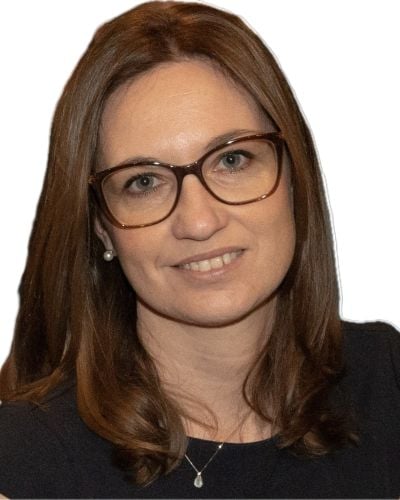
Marzia Basso
Head of International I&M Project DevelopmentReviews
Empowering Women in Tech: Navigating Careers with Purpose
Good morning and good afternoon everyone! Today, we delve into the vital role that women play in technology and engineering, and how organizations can empower this talent to thrive. As a proud member of RINA, I am excited to share valuable insights from the recent Women in Tech Global Conference.
The Role of Women in Tech
Women in tech is crucial for recognizing, supporting, and amplifying female talent in technology and engineering. This recognition ensures that competency, ambition, and potential are not just words, but the driving force behind innovation that shapes our future. At **RINA**, we operate globally across various sectors including:
- Energy
- Mobility
- Marine
- Space
- Digital
- Sustainability
Inclusion and Growth at RINA
At RINA, we understand that inclusion, equity, and belonging are essential to achieving our strategic goals. We must move beyond traditional career trajectories; making career choices is about consciously shaping our paths. In fast-paced environments like technology and engineering, growth should not be a blind pursuit, but one rooted in purpose.
We define meaningful growth through:
- Passion: What individuals genuinely care about.
- Competence: What they excel in.
- Contribution: Where their skills are needed both organizationally and societally.
Creating Career Opportunities
To combat visibility challenges hindering equity, RINA has developed a global career ecosystem. This includes:
- A clear career architecture
- A structured career conversation process
- A transparent internal job posting system
These initiatives are designed to enable informed and fair choices for individuals navigating their careers.
Challenging the Norm
It's crucial to recognize that growth means different things to different people, particularly women in technology. Often equated only with leadership roles, we at RINA believe that expertise is a form of growth. We invest in career paths that promote technical excellence and support continuous learning at every career stage.
For those aspiring to leadership, RINA offers global journeys designed to help individuals navigate complexity and lead diverse teams. Recognizing the unique paths of ambitious women creates an environment for growth driven by purpose.
The Importance of Trust
Trust within an organization is cultivated through consistent communication and actionable feedback. At RINA, our mission is not just a statement; it is our guiding compass that fosters a culture of trust. When people can see a direct link between intention and action, it nurtures an atmosphere ripe for sustainable and inclusive careers.
Personal Journey: Building Confidence and Expertise
As Marcia Basso beautifully shared during the conference, her career journey began with asking herself, “Are you sure you can do this?” Her story resonates with many of us who navigate male-dominated fields, reminding us that confidence is built over time through dedication, learning, and seizing opportunities.
Overcoming Challenges
Marcia's early career at RINA illustrated **growth as a conscious choice.** Embracing fear and excitement, she transitioned from a management internship to becoming a safety engineer for high-speed trains—showcasing her ability to adapt and learn. As she reflected:
“When my work became predictable, I asked for more challenges because comfort can be a trap.”
The Balancing Act of Work and Life
After becoming a mother, Marcia discovered that ambition evolves rather than disappears. Maternity can be perceived as a setback in many industries, but she emphasized that it should be an opportunity to reshape priorities and reestablish focus. She shared:
“Professional fulfillment is not just a nice-to-have; it's essential for well-being.”
Leadership Through Collaboration
Progressing through RINA’s ranks, Marcia cultivated a collaborative culture, emphasizing that effective leadership means asking, “What do you need to succeed?” This approach encourages ownership and empowers teams to thrive, highlighting that leadership is about lifting others as much as oneself.
Conclusion: Embracing Opportunity
As we navigate non-linear
Video Transcription
Good morning and good afternoon, everyone. And thank you for having us, I have to say, here today together with Marcia.It's a real pleasure to participate for the first time for me, in the Women in Tech Global Conference, representing Rina as a member of this community. Women in tech plays a crucial role in recognizing, supporting, and amplifying female talent in technology and engineering, ensuring that competence, ambition, and potential are visible, where innovation defines the future. RENA is a global group operating in engineering, inspection, testing, and certification services. We support industries and institutions across energy, mobility, marine, space, digital, and sustainability driven innovation. We operate across Europe, The Middle East, Africa, Asia Pacific, and The Americas, working every day at the intersection of technology and innovation, helping organizations transform complexity into progress. This perspective perspective deeply shapes how we think about people, careers, and inclusions. At RHNA, how a purpose clearly states why we exist.
We contribute to collective progress towards an unimaginable future. For us, inclusion, equity and belonging are not aspirations. They are strategic enablers of that future. And careers are one of the most powerful ways through which purpose, strategy and diversity, equity and inclusion commitments become concrete. Today, career, in my opinion, are no longer something we climb. They are something we consciously shape. In fast moving environments like technology and engineering, growth without purpose can easily become movement without direction. At RHNA, we define meaningful growth based on three dimensions: what people are passionate about, what they are good at, and where the organization and society truly need that contribution. This is fully aligned with our vision, a world shaped by accelerated technological evolution, where complexity becomes an opportunity to enable progress.
Supporting people in navigating complexity without excluding differences, identities, or life choices is a core part of our diversity and inclusion strategy. Our approach to career is grounded in our mission, helping clients solve high complexity and high risk challenges by integrated competencies and technology into scalable solutions. Because our mission is about integration, career at RENA cannot be unclear. They must be structured, transparent system that makes skills, options, and transition visible over time. Lack of visibility is one of the main barriers to equity. Without clarity, access to opportunity is uneven. That's why we have built a global career ecosystem based on a nearly check-in on people's availability for internal mobility, international careers, or expert versus managerial path. A clear career architecture, a global competency portfolio, structured career conversation process, and transparent internal job posting process across all our geographies. These tools are not designed to standardize careers.
They are designed to enable conscious, informed, and fair choices. This strongly resonates with the mission of women in tech, making female talent in technology visible, credible, and assessable. Another key insight from our experience is this: growth does not mean the same things for everyone. This is especially true for women in technology, whose aspirations have too often been interpreted through narrow or biases lenses. In tech, growth is still frequently equated only with leadership roles. At RHNA, we challenge this assumption. Expertise is growth. Technical excellence is a strategic asset for us. That's why we invest in expert career path with equal visibility and recognition, continuous learning at all career stages, mentoring across generations, cultures and geographies. For those who aspire to leadership, we offer global leadership journeys, focus on navigating complexity and leading inclusive diverse teams.
Different ambitious, different path, and one shared principle: growth with purpose and dignity. People experience is never beat by HR alone. It's shaped every day through the quality of conversation like this, for example, feedback that turns into action and leadership behavior that create consistency and trust. People, vision, and mission are not abstract statements for us. They are a shared compass. When people see coherence between what we say and what we do, trust grows. And trust is the true accelerator of sustainable, inclusive careers. There is a strong connection between the journey of women in tech and the path we are pursuing at RHNA. Women in tech empowers female talent to assess visibility, opportunity, and growth, ensuring that innovation reflect the plurality of voices and perspective. At RENA, we contribute into collective progress means shaping a future where technological evolution enables and does not exclude.
Shaping careers with purpose means enabling people to see opportunity clearly, choose consciously, and belong without having to conform. In a world of nonlinear careers and growth complexity, purpose become the anchor for individuals, organization, and communities. This is how growth becomes more than professional success. It becomes a driver of collective progress. I'll be happy to answer any question at the end of of this this session, of course. But if there is enough time, you can also feel free to refer to my colleagues who who are taking part in the RHNA virtual work. And now to move into a more concrete perspective, I'm pleased to hand over to Marcia Basso, head of international I and M project development, who will share with us her professional experience at Rina and her personal perspective on professional growth. So thank you very much for your attention.
Thank you, Sylvia, and, thank you all. It's, good morning and good afternoon. It's a pleasure also for me to be here today and to have the opportunity to share with this community my experience. So let's start with a question. I've been asked more than once during my career. Are you sure you can do this? And sometime, I'm also asking to myself if I'm sure that I can do something. And if we are here today, if you are here today also, you probably know that type of question. You show up when you are the only woman at the table. You're the youngest in the meeting for simple. You are doing something new.
My story, the story that I would like to share is is not about having the perfect confidence, but it's about building confidence day by day to learning, working hard, asking for growth, and embracing the life changes. So let's start. In 2009, I graduated in management engineer after an internship period at RENA for Merida, Polonia, and I was really proud, of course, but I was also aware of how much I still didn't know. During my internship period, I build a tool to manage the requirement for public transport system, And it sounds simple noun. But at that time, it was my first real experience to turning a massive problem in a clear structure. And this is what I love about engineering, bringing safety, bringing order, that period, I didn't have a clear career plan.
I didn't have any career plan, frankly speaking, but I had the learning plan, finding a smart company with smart people and have a chance to ask a question and work to learn. And I was lucky because in that period, Rina was searching for a safety engineer for signaling system to be installed on high speed train. If you work in a real sector, probably you know what it means. But at that time, I have no idea what the job was. I think it was an opportunity that sounded me both exciting and scaring, and this is how you usually recognize the right step to do. And during my interview, I remember the hiring manager looked at my background and asked me something I will never forget. He told you study humanities and management engineer. In order to do these activities, you need to understand the complex electrical circuit. Are you at least familiar with electrical drawings? And it wasn't aggressive. It was realistic.
But at that moment, I understood that I was being measured not only on my skill, but my expectation. And I simply answer it. Have just building a requirement management tool I didn't know how to do on the day one, but I learned and I delivered. And I'm sure that I can still learn more. And I get the job. So at first, I work at the side by side with a colleague who helped me to navigate the work. He explained me how to deal with electrical drawings, how to ask a question to customer, how to set up a safety process here, write a technical report, and so on. And slowly, day by day, the unknown become familiar. Step by step, I become independent.
Until I was the person the client called first and until I become also reference point for my colleague. And in that year, I understand understood something really important. Growth is a choice, and, I would like to stay me better. When my work start become too easy to feel predictable, I asked it to my manager to put me on something harder because comfort can be a trap. And it was not so easy at the beginning because the client wanted to work with me, but we made a plan together. I would train other colleagues to take over my task and so the team would be stronger and I could move forward. And I shared with my colleague my experience. I created checklist. I explained the why behind the process and not only how to apply them.
And that was my first real experience as leadership, creating space for other, not just for myself. It worked. The team had gained capability, and the client was happy. Then in 2,014, I become a mother, and I discovered something new. Ambition does not disappear. It evolves. Today, many industry, maternity less still treated like risk to manager. We should be available, we should travel, we should slow down. What I would like to say here is being a mother didn't reduce my professional value, didn't reduce your professional value, have our professional value. It changed my perspective, and it made me stronger. Being a mother made me more focused. It improved my ability to set priority, my ability to negotiate. And I also understood something. I understood that professional fulfillment for me isn't nice to have, but it's a part of well-being.
And in 2014, at the end of 2014, I returned that job. And when I returned to the job to work, my manager and I agree again together the way to proceed, and we agree on a practical solution. For a period, I wouldn't travel. And that was not a limitation, but was a strategy to keep delivering with high level while my family found a new balance. And this is very was very important for me because I understood that for me, for my manager, and for my company, inclusion was not only a slogan, was a fact. And over the time, the change changes, my availability changed, and opportunities expanded again. And so after a few year in 2017, an internal organization opened me a new door, and I stepped into it as project manager.
So new type of job, new type of activities. That role was more aligned with my technical background and give me an opportunity to work on a different type of skill, aligning people, scope, risk, opportunities. And sometime, I was the only woman in the meeting, the only woman in the projects, but I learned to find my voice also in that occasion. I understood that learning and then learning that asking question the right moment is part of the leadership. Later on, I was appointed as head of an operational unit with a real simple and clear mission, help our business to grow. At the beginning, we were just three people, me and two engineers, so the team was not big. But we worked again together in collaboration.
We set up priorities, method, and the culture where the learning was part of the job. And as the team grow, my role become less having the answer, but more asking to them, what do you need to succeed? And I think this question is really, really important for all of us. And after two years, the business had matured. We reorganized again in order to accelerate our international growth. And also my scope changed a little bit in the scope of my unit. And so I start to lead an international team that has to work with the profit and loss activities from budgeting to perform a result. So connecting numbers to strategy, numbers to the season where we invest as business, which are the activity we should prioritize, and so on in order to have a sustainable growth.
And this is something important because it's a signal of what we can do in order to work together in international context. Currently, my my team, there are women across Italy, India, and Middle East. So it's not only an organizational detail, but it's a signal of what is possible. And so I would invite to all of you to trust on yourself at first and to step forward before you feel you're perfect. And when their life changes, when you become a mother, you move country, you have to do something new, please, I invite you not to limit your ambition to fit someone else's expectation, but be proactive. Let's redesign the parts, asking them for what you need, building a support system, and making room for excellence. And if someone asks you, are you sure you can do it? Or if you you are asking to yourself, am I sure I can do it?
Please let your answer yes. I can do it.
No comments so far – be the first to share your thoughts!