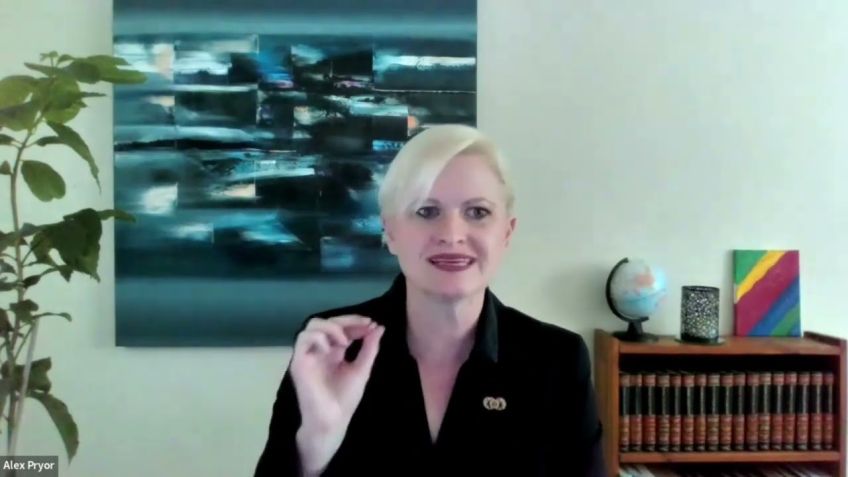
Navigating a Successful Career Transition from Web2 to Web3
Manon Rahamatoulla16:112023
In Web3 a month can feel like a year, so waiting to feel ready costs you
Only 13% of Web3 startups have a female founder, and women hold just 27% of jobs at the top ones, according to a Boston Consulting Group study cited in the talk. Manon Rahamatoulla moved from CGI into NFT marketing at iExec without knowing how to code. In a field where a month can feel like a year, what does a woman from Web2 need to make the jump?
Get a practical roadmap for moving from Web2 into Web3, even without coding skills
Manon Rahamatoulla, NFT Marketing Manager at iExec, sets out the steps that helped her move from a Web2 consulting career into Web3 without a coding background. She argues that women can close the Web3 gender gap by learning the space, reusing their existing skills, building a portfolio and community ties, and applying for roles before they feel fully ready.
“Like, for example, like a month in Web 3 is sometime equal to a year in Web 2.”
“Like, for example, if you're a newcomer, don't be shy to ask for help. Don't be shy to ask for advice.”
What you will learn
Identify which part of Web3 (development, design, marketing, community building or project management) best fits your strengths.
Map your Web2 experience in areas such as finance or marketing onto the needs of Web3 projects.
Build a Web3 portfolio through hackathons, online workshops and no-code tools, even without a coding background.
Use Discord, Twitter, meetups and industry events to build relationships and find mentors in the Web3 community.
Apply for Web3 roles without waiting to meet 100% of the requirements.
Key takeaways from the speaker
Career Transition from Web2 to Web3
Details
Level
Beginner
Format
Talk
Technical depth
Non-technical
For
Career changer, Early career, Mid-career
Length
16:11
Published
May 2023
Questions this talk answers
How well are women represented in Web3?
Citing a Boston Consulting Group study, Manon says only 13% of Web3 startups have a female founder and women make up 27% of employees at top Web3 startups, mostly in non-technical roles like HR and marketing.
Do I need to know how to code to move into Web3?
No. Manon made the move without coding skills and points to a growing number of no-code Web3 tools with easy interfaces, as well as roles in marketing, design, community and project management.
How can I gain Web3 experience before landing a job?
Build a portfolio by collaborating on hackathons, joining online workshops and working on Web3 projects, which also helps counter imposter syndrome.
Where do I find people and information in Web3?
Follow industry leaders, join communities on Discord and Twitter, attend meetups and conferences, and ask questions, since people in Web3 are welcoming to newcomers.
When am I ready to apply for a Web3 role?
Once you have a foundation of knowledge, experience and understanding, apply even if you don't meet every requirement, because the space changes too fast for anyone to know everything.
About this talk
Join us for an engaging and informative discussion on how women can succeed in the fast-paced world of Web3. We'll explore the exciting opportunities that this new technology presents, as well as some of the challenges that women may face as they transition from Web2.
We'll share practical tips and strategies for building a strong personal brand, finding supportive networks, and developing the skills needed to thrive in this exciting new field. Whether you're just starting out or looking to take your career to the next level, this talk is for you!"
Speaker 1: Hello, everyone. I see people joining the session. Welcome. Great to see you. We are once again here with Manon Rahamatoulla. She is the NFT marketing manager of iExec. Earlier, she gave her exciting session on Web3, and now in this meet and greet, she's going to continue the conversation with a little bit more information on the website.
We have more information about the transition from Web2 to Web3. So, Manon, whenever you're ready, feel free to take it away, share your slides, and for the viewers, make sure to be active in chat, ask questions, and leave comments. Speaker 1: Hi, everyone. Today, we're going to talk about navigating a successful career transition between Web2 and Web3. So, first, we're going to talk a bit about statistics. So, the Web3 statistics for the women workforce are kind of even worse than in tech. So, a recent Speaker 1: Boston Consulting Group study show that only 13% of Web3 started into the female funder. And there's only 3% of the company that have a team that is the Web2 company that have a team that is exclusively female. And among all employees at the top Web3 started, we only have 27% women. And most of the time, they are considered in non-
Speaker 1: Some technical roles such as HR and marketing. So, like, for example, in my case, I'm in marketing. So, like, I kind of confirmed the stats. Speaker 1: But yeah, that this finding really shine a light on a critical under-representation of the women in Web3. So, to give you a bit of information about where I'm working. So, I'm working at Speaker 1: I'm working at AIXEC as an NFT marketing manager. And AIXEC is a decentralized marketplace for computing power, Speaker 1: Dataset, and that's where people are able to build and monetize apps while preserving ownership and privacy. It has been founded in 2016 by two PhDs. So, Gilles Fidac from the UNRIA and Hai Wuhi from the Speaker 1: Chinese Academy of Science. And in April 2017, they did an ICO and they raised
Speaker 1: 10,000 Bitcoin in less than three hours. We are now located in Iran, in France, and we have about 40 employees and we're still growing. Speaker 1: So, there's a lot of, like, there's more and more people using AIXEC to build things. So, we have, for example, Speaker 1: We have the AIXEC. That is a marketplace for companies to benefit from the expertise of data scientists to train AI model. And they use Speaker 1: AIXEC infrastructure in order to have the data remain completely confidential. We also have that is a file deposit Speaker 1: transfer service that allows you to prove your intellectual property in court. And they use the Speaker 1: site chain AIXEC to allow certification and incurring of proof of deposit. And we also have a file transfer that is a
Speaker 1: We transfer look like. And they use AIXEC to ensure that the confidential data is shared. Speaker 1: So, now we're going to talk of how to transition from Web 2 to Web 3. So, there is, like, some really, really, really important thing when you want to do the transition. So, first, I'd say, um, Speaker 1: You can learn because there is like new technologies and like there's new technology and platform that are emerging. Um, you can start by reading article blogs, white papers, watching video. There's like so much content available on the internet.
Speaker 1: And you can start by reading articles, blogs, white papers, watching video. There's like so much content available on the internet. Speaker 1: To help you like, give a bit like of information and insights about the space and have a good understanding of the concept and the technology that are involved in Web 3. Speaker 1: Another point that is really important to me is to understand. Because like, there's so many aspects in Web 3. And you have to find the one that interests you the most.
Speaker 1: So, it will be something that you will like enjoy doing. Like, for example, uh, you may be interested more in development or more in design and marketing in community building project management. So, um, you really need to identify your strength. Speaker 1: And know, like what you, what you like doing to educate, like your learning and current path. Another important thing is to learn.
Speaker 1: Leverage your current experience. Because even if it's wet in Web 2. It's still like really, really relevant to Web 3. Speaker 1: And there is something that are really similar. So that's really important for you to leverage your current experience. Speaker 1: To like, for example, your experience in finance and marketing and consider that your skill can also be applied to the Web 3.
Speaker 1: Space. And because there is so many like Web 2. Job that can be adapted to the needs of the Web 3 project. Speaker 1: Another thing that is really needed is also to follow industry leaders. So, um, when you first come into Web 3. Speaker 1: That's a thing that in my case, I kind of found difficult. It was to know, like, who were the industry leaders and who I needed to follow.
Speaker 1: But once you dive like deeper and deeper and deeper and deeper, you, you learn like who share relevant information. Speaker 1: We need to follow to like stay up to date with the last trend. We share the most like important information. So you like discover all of that when you dive deeper. Speaker 1: But that's really important because it's a technology that is changing every day. And we often say that in the Web 3, the time doesn't go the same than in Web 2.
Speaker 1: Like, for example, like a month in Web 3 is sometime equal to a year in Web 2. So that's why it's really important for industry leaders to have you stay up to date to all the new things that are coming up. Speaker 1: Another thing is to experiment with new technology, because as I said, like the Web 3 is a rapidly it will be fulfilled and we have like new technology, new apps that are coming like to be all the time.
Speaker 1: And that's really interesting to experiment with that and to like learn all that works and like it helps you stay out of the curve. Speaker 1: And one point with that, that I found really interesting, like for my case, I'm, I don't like very comfortable technical background. Like I was in the tech industry, but I wasn't like, I don't know how to code and all that.
Speaker 1: And there is more and more tools coming in the Web 3 that are built on no codes. And that is really interesting for people that like don't know how to code. Because that's easy interfaces. And you can. Speaker 1: You can just like build it without like having some really, really deep knowledge, let's say. Speaker 1: So after that, another point that is to me, one of the most important is to build a portfolio and to gain experience. And for that, you have so many things out there to actually gain that experience.
Speaker 1: So for example, you can collaborate with others, create web three related like product through Akaton. Speaker 1: There is also a lot of workshop online workshop that helps you understand the basics of web three, build things on web three. And there's like so many projects that you can do to build your portfolio and gain experience.
Speaker 1: And I think that point is even more important for us women because we tend to have more than men, the imposter syndrome. And for example, we say that we women, we apply for a job. Most of the time, if we fill out like 100% of the requirements. Speaker 1: So that's, that's. That's a thing to build a portfolio. That's a thing that's can help us gain confidence and like to tackle that imposter syndrome.
Speaker 1: Another important thing is to build relationship because that's really what we're free is about. It's right now. Speaker 1: It's really about communities. And when you enter the space, you really need to build relationship, be open, like look for opportunities to connect with other. It can be through meetups, online communities, through projects. Speaker 1: And you can go on discord and like follow them on Twitter. And the thing here is in web three, like people are really welcoming.
Speaker 1: And they're really like, they really want to help. Like, for example, if you're a newcomer, don't be shy to ask for help. Don't be shy to ask for advice. And people will be like really glad to welcome you there and give you advice. And. Speaker 1: If you with all that. And that's very important because you can gain so much time by building relationship because people can actually know where to find the word event information, where to like what for me, like what workshop you can do to gain.
Speaker 1: To gain experience to build a portfolio. They can also like, like introduce you to their friends or their community. So that's a really important aspect of transitioning. Speaker 1: And you should try to connect also with people that are already, that are already working in the space. Speaker 1: And also at an industry event, conferences, meet new people and ask questions because people really like when we ask them questions about what they're doing and make them discover more about the, like their education in the States.
Speaker 1: What they, what they, what they represent for us. So yeah, don't forget that. Speaker 1: The thing is to be adaptable because the, so what you learn. Speaker 1: So you have to, you have to be adaptable and like stay up to date with the new things and be like really flexible and willing to learn new skills, try out new technologies.
Speaker 1: And that's only been positioned like for success because you will, it will allow you to be more creative and like embrace the change. Speaker 1: So the point that I haven't mentioned here, but also important is to be, like I said, like open-minded and explore like new ideas. Speaker 1: Because that's really like, that's a really new space and there's so much things to build here.
Speaker 1: And we, we really need like new people coming with new ideas with a different point of view. Speaker 1: And, and that's what brings like more diversity and more like that, what makes the web free space better. Speaker 1: And the last point I'd say will be to stick for mentor. Speaker 1: So you can connect with women working in the web free space that can provide for guidance, advice and encouragement.
Speaker 1: And like participate, like you did here, like participate in women focused techniques, such a network. Speaker 1: And yeah. Speaker 1: After all that, I think you'll be able to apply for job of freelance opportunities. Speaker 1: Once you build like solid foundation of knowledge, experience, understanding. Speaker 1: And one last like piece of advice that I say is don't wait to be like 400% perfect.
Speaker 1: Because like more than what two, what three is like new and always evolving. Speaker 1: So you won't be able to know everything. Speaker 1: Like about everything. Speaker 1: So if you're someone like that is a bit under like overachiever that needs to like forget about that. Speaker 1: And just apply, even though if you don't have like 100% of the requirements, if you feel that it's a job that is for you, that you like, just take a chance and you'll see.
Speaker 1: Yeah. Speaker 1: To me, that's the thing that you need to, to assure like a successful transition from web two to web three. Speaker 1: And yeah. Speaker 1: In conclusion, I'd say like, it's a really rewarding process and you like by learning about the new technology and platform, like building skills, networking, staying up to date and all that you can like really be part of web free.
Speaker 1: And also like be more represented in the retreat because like 27% it's not that much. Speaker 1: So yeah, that's a, that's a good thing. Speaker 1: And also if you want to join web free as a developer, you can check out our developer rewards program. Speaker 1: I take six. Speaker 1: So we have about 1 million in funding.
Speaker 1: So that's quick. Speaker 1: And you can also check out or open position if you're based in France. Speaker 1: So we have new ones almost every week and we're really growing rapidly. Speaker 1: So you, I'm sure you can find one that, that you love and yeah, you can just check out the open position.
Speaker 1: There's some also available that are linked in our booth. Speaker 1: So if you want to check them out and yeah, I thank you all for listening. Speaker 1: Let me know if you have any question regarding like current transition, web free or whatever. Speaker 1: Thank you.
Transcribed automatically; names checked against the speaker record. Select a time to jump there.
Article based on this talk
How women can move from Web2 into Web3, even without coding skills
NFT marketer Manon Rahamatoulla shares the steps that helped her move from IT consulting into a fast-moving Web3 company.
In short
Women are even less represented in Web3 than in tech overall, but Manon Rahamatoulla argues the way in is open to people with Web2 experience, including those who cannot code. Her approach: learn the space, find the niche that suits you, reuse the skills you already have, build a portfolio and a network, and apply before you feel perfect.
Key takeaways
Identify which part of Web3 (development, design, marketing, community building or project management) best fits your strengths.
Map your Web2 experience in areas such as finance or marketing onto the needs of Web3 projects.
Build a Web3 portfolio through hackathons, online workshops and no-code tools, even without a coding background.
Use Discord, Twitter, meetups and industry events to build relationships and find mentors in the Web3 community.
Apply for Web3 roles without waiting to meet 100% of the requirements.
A gender gap even wider than tech's
Manon opens with numbers. As she cited from a Boston Consulting Group study, only 13% of Web3 startups have a female founder, only 3% of companies have an all-female team, and women make up 27% of employees at the top Web3 startups. Most of those women, she notes, work in non-technical roles such as HR and marketing, and she points out that her own marketing role fits the pattern.
She then introduces iExec, where she works as NFT Marketing Manager. She describes it as a decentralized marketplace for computing power and datasets, where people can build and monetize apps while preserving ownership and privacy. The company was founded in 2016 by two PhDs and, she says, raised 10,000 Bitcoin in under three hours in its April 2017 ICO. She also gives examples of services built on it, from a marketplace where companies work with data scientists to train AI models on confidential data to a file deposit service that helps prove intellectual property.
Learn first, then find your corner of Web3
The first steps are about understanding. Manon recommends reading articles, blogs and white papers and watching videos, because "There's like so much content available on the internet." (4:21) Then comes choosing a focus, since Web3 covers so much: development, design, marketing, community building, project management. The goal is to identify your strengths and what you enjoy.
She is clear that Web2 experience is not wasted. Skills in finance or marketing, for example, carry over, and many Web2 jobs can be adapted to the needs of Web3 projects.
She also urges newcomers to follow industry leaders, something she found hard at first because she did not know who to follow. The reason is speed: "Like, for example, like a month in Web 3 is sometime equal to a year in Web 2." (6:56) Experimenting with new apps keeps you ahead, and she highlights a point that mattered in her own path: "And there is more and more tools coming in the Web 3 that are built on no codes." (7:45)
Build a portfolio to answer imposter syndrome
Manon calls building a portfolio and gaining experience one of the most important steps. Hackathons, online workshops and personal projects all give people something concrete to show. She ties this directly to confidence: "And I think that point is even more important for us women because we tend to have more than men, the imposter syndrome." (9:06) A portfolio, she says, helps women gain confidence and tackle that feeling.
Web3 runs on community
Relationships are central because, in her words, Web3 right now is "really about communities." She recommends meetups, online communities, Discord and Twitter, and stresses how open the space is to newcomers: "Like, for example, if you're a newcomer, don't be shy to ask for help. Don't be shy to ask for advice." (10:29)
Those connections save time. People can point you to events, workshops worth doing and their own communities. She also encourages attending conferences and asking people about their work, because people enjoy being asked.
Stay adaptable, bring new ideas and find a mentor
Because the field shifts constantly, Manon asks newcomers to stay flexible, willing to learn new skills and open-minded. Fresh perspectives are exactly what the space needs: "And we, we really need like new people coming with new ideas with a different point of view." (12:55) She recommends connecting with women already working in Web3 for guidance and encouragement, and joining women-focused tech networks.
Don't wait to be perfect
Her final piece of advice speaks to overachievers. Since Web3 is new and always changing, nobody can know everything, so waiting for perfect readiness makes little sense: "And one last like piece of advice that I say is don't wait to be like 400% perfect." (13:23) Once you have a foundation of knowledge, experience and understanding, she says, apply for jobs or freelance work, even without meeting every requirement.
She closes by calling the transition a rewarding process and noting that 27% is not much, before pointing developers to iExec's developer rewards program and open positions in France.
Watch the talk
Navigating a Successful Career Transition from Web2 to Web3, Manon Rahamatoulla, 16 minutes: https://www.womentech.net/video/navigating-successful-career-transition-web2-web3-manon-rahamatoulla
About the speaker
Manon Rahamatoulla is NFT Marketing Manager at iExec, a Web3 marketplace for computing resources and applications, and previously worked for several years at CGI, one of the largest IT and business consulting services firms. She holds a Bachelor's degree in Business Administration and a Master's degree in Competitive Intelligence, and is deeply committed to promoting diversity and inclusivity in the tech industry.
Questions this talk answers
How well are women represented in Web3?
Do I need to know how to code to move into Web3?
How can I gain Web3 experience before landing a job?
Where do I find people and information in Web3?
When am I ready to apply for a Web3 role?
Drafted with AI from the talk transcript. Editor review pending.
Resources mentioned
iExec developer rewards program
Discord
Twitter
Cite this talk
Manon Rahamatoulla. "Navigating a Successful Career Transition from Web2 to Web3." WomenTech Network, 2023. https://www.womentech.net/video/navigating-successful-career-transition-web2-web3-manon-rahamatoulla