Fake it till you make it may be the advice feeding your imposter syndrome
When her boss at Cisco invited her into a newly formed security unit, Vijaya Kaza knew nothing about security and had little confidence, yet she said yes and calls it one of the best decisions of her career. She argues that familiar career clichés, repeated by well-meaning mentors, can quietly hold people back. So what should replace them when the next opportunity arrives?
Get six practical alternatives to common career clichés you can test on your next opportunity
Vijaya Kaza challenges six popular pieces of career advice, from "fake it till you make it" to the five-year plan, and offers alternatives drawn from her own career at Cisco and beyond. She argues that confidence comes from courageous action, that uniqueness is a strength, that not all feedback should be acted on, and that careers are best built one deliberate step at a time.
“Confidence comes from taking courageous actions, not by faking.”
“So remember, whatever makes you unique, it's a feature, not a bug. So don't try to fix it.”
What you will learn
Build confidence by saying yes to growth opportunities before your inner voice talks you out of them.
Separate real gender bias from setbacks that happen to everyone, so one disappointment does not define your next move.
Reframe what makes you different as a strength that helps you stand out and be remembered.
Filter feedback with three tests: does the giver know your full context, does it fit your values, and does it serve your career goals.
Plan your next career step by naming specific skill gaps and choosing an assignment that closes them.
Details
Level
All levels
Format
Talk
Technical depth
Non-technical
For
All career stages
Length
21:29
Published
July 2020
Questions this talk answers
How can I build confidence without faking it?
Take courageous actions: say yes to opportunities that help you grow before self-doubt creeps in. Confidence follows as you see what you can do.
Should I act on every piece of feedback I receive?
Welcome all feedback, but you may set aside feedback from someone who lacks your full context, feedback that is not authentic to your values, or feedback that does not fit your current career goals.
Do I need a five-year career plan?
No. Take one step at a time, honestly assess your skill and experience gaps, and choose your next assignment to close them.
Should I try to blend in when I am different from others in the room?
No. Standing out because of your name, accent or appearance can make you memorable, so treat your uniqueness as a feature, not a bug.
How can I stop being so harsh on myself?
Break a general criticism into specific, tangible components and work on those, rather than condemning yourself as a whole.
Saying yes to security with zero confidence (75 s)
Standing out versus sticking out (78 s)
Three times not to act on feedback (89 s)
Speaker 1: And as we're getting Bihaya on stage here. Welcome. Welcome. I'm very excited about her. So we're going to pivot to some of the work that she is doing. We are very lucky to have her today. She's the chief security officer of Airbnb. So very big company, a lot of things that probably go on with security concerns and handling definitely a lot of data and a lot of innovation.
Speaker 2: In that space is it has definitely disrupted a lot of traditional digital transactions in that hotel space and they're doing some creative things. So I am going to hand it over to her and let you share your screen and I will make sure your audio is all good. Speaker 1: Okay. Good afternoon, everyone. I'm very glad to be here with all of you. What a great conference. First of all, thank you so much for the organizers with so many awesome talks in our session today.
Speaker 2: We will be going beyond myths and cliches. Well, what does it mean exactly? In spite of having a lot of advice all around us, when it comes to our careers, we are still searching for answers, aren't we? That may be because a lot of advice tends to be very cliche, generic and not very actionable and sometimes even plain wrong. Today, I will share my take on six such Speaker 2: Clichees and myths and provide an alternate viewpoint based on my experiences and stories. Mind you, some of my views may surprise you or they may actually go against some common wisdom that you heard until now. I'm not saying this is exactly what you should follow. I'm merely sharing a different perspective and I encourage all of you to experiment with these and come to your own conclusions on what works best for you based on what works best for you.
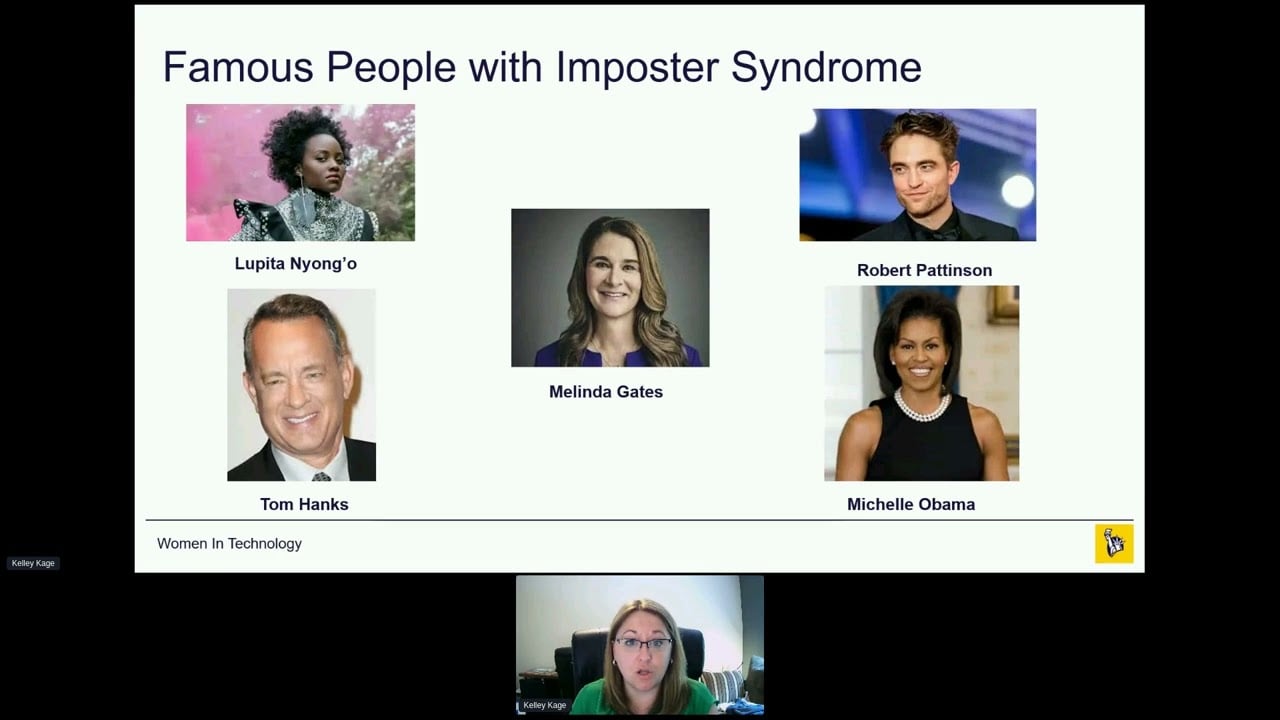
Speaker 2: So let's get going. Number one, let's start with the most popular cliche of all times. Anyone not heard this advice about confidence? Fake it till you make it. I think this is not only one of the biggest cliches of all times, but a potentially dangerous one. And the reason I say that is we see many Speaker 2: Many successful people say that they have imposter syndrome and that's coming from ears of mental conditioning from hearing bad advice like this. So if you fake anything, of course, you're going to feel like imposter. Plus, we're not really fooling anyone by faking. So do not fake it till you make it. So you may be wondering how do I build my confidence then? To get to this answer, we should double click on
Speaker 2: On two topics that are so essential and so foundational, no matter what we do in our lives. Courage and confidence. We often mix up courage and confidence. Let me start by defining these terms. Confidence is a feeling of self assurance arising from one's appreciation of one's own abilities. Now it's a pretty straightforward definition, but the keywords to remember there are one's appreciation of one's own abilities.
Speaker 2: That means it's not coming from someone else telling you that you're good at something, but you have to get it from inside of you and no external amount of validation will do it for you. Courage, on the other hand, is your mental strength to face fear or difficulties. So we need courage to face our fears and do something. And the act of doing something is what will give you that appreciation for your abilities.
Speaker 2: And thereby giving confidence. So courage leads to confidence. So courage leads to confidence. You don't need confidence to be courageous. Confidence is the end result of taking courageous actions. I can tell you from my own experience that that's exactly how it works. Early on in my career, I joined Cisco to work in the routing space. One day, my boss called me into his office and said, "Hey, Vijay, I was asked to lead this newly formed business unit that focuses on security. Would you like to come join. After I thought about it for a minute, I said yes, and went and joined security. I didn't realize this at the time, but as I reflect on it now, I can tell you that was me being courageous
and saying yes, because I clearly did not have the confidence back then that I had what it took to be successful in that field. Security was back then pretty new, and I knew nothing about it. Plus, I was also pretty nervous about giving up what was working fine for me and jumping to something new. I'm so glad I faced all those fears and jumped in with two feet because I not only survived, but I really thrived, and it turned out to be one of the best decisions of my career.
And after that, as I kept saying yes to more and more opportunities like this, my confidence increased along with that as well. So here's how you can make this actionable for yourself. Let's say you have an opportunity tomorrow to give a talk, to work on a new project, do something that you've always been wanting to do for a while. As long as you feel like that will help you grow, say yes before your inner voice starts creeping in and tells you, hey, you really don't have the time to do it, or you don't have any skills to do it, or whatever it is that inner voice tells you. And as you do more and more of these, you will start believing in yourself and your confidence
will follow. Now, that's a much more practical way to think about confidence, isn't it? And it doesn't make you uncomfortable in your own skin because there is no faking involved. So if you only remember one thing from this entire talk today, that is this. Confidence comes from taking courageous actions, not by faking. This is so important that let me repeat it for you. Confidence comes from taking courageous actions, not by faking. Let's move on. Number two, I attended a women's seminar once, long time ago. It was really, really good seminar. The speaker and the facilitator was really entertaining and engaging. She talked about many things that we women do wrong. The way we end our sentences in an uptone, the way we walk, the way we stand, the way we sit without taking up much physical space.
And a lot of that advice was really, really good. And she had a ton of tips for what we could do different. While all of that advice is great and something that we should follow, there is one negative side effect to all of this that we should be aware of. The more we keep thinking about our gender, the more central it becomes part of our identity. Over a period of time, due to all the gender-centric narrative, what happens is we start seeing everything from that angle and let it impact us much more than it should. So for example, if you don't get an opportunity, our first reaction may be, maybe because I'm a woman, I didn't get that opportunity. Now what I'm saying is really,
really important here. I am not saying that there aren't gender inequalities and gender biases in workplace. They are very, very real. And I'm not blind to that at all. In fact, when I reflect on my own career, not one, but two instances come to mind. After delivering some really high value results for the company, I'm talking major accomplishments like turning around underperforming business units and launching new products from ground up and creating new product categories, I still didn't get the promotion or the role that I deserved. And it went to some other men that were my peers.
But there were also several other instances where I got the role of the promotion and my peers who were men, and arguably with much more experience than me at the time, they started reporting to me and I became their boss. My point is that sometimes things go your way and sometimes they don't, regardless of whether you're a man or a woman. In my case, when things didn't go my way, if I told myself that I didn't get that because I'm a woman, even though that may be true, it would have impacted me much more deeply and kept me away from doing other great things which led to successes later on in other areas.
As they say, life is 10% what happens to us and 90% how we react to it. So based on these experiences, I strongly believe in this. In the short term, there will be bumps along the way. But in the long run, our skills, talent and capabilities are what will prevail regardless of our gender. So for our own sanity, well-being and long-term success, we are better off not over-rotating on the gender narrative and better off focusing our energy on what we bring to the table first and foremost as human beings.
We are so much more than our gender. Let us not be defined by it. Number three, beyond gender, there are many other attributes that make us unique. Maybe we have a different name, different kind of accent. We look different, we dress different, whatever it is that makes you different. And we're often told that it's better not to stick out, so try to blend in. And it's natural to want to see more people like ourselves around us, isn't it? It makes us comfortable and there is strength in numbers. But don't think of whatever makes you unique as a disadvantage. And please stay away from any advice and chatter that supports that type of thinking. Throughout my career, when I looked around, I've always found myself as someone that is,
that looked or sounded different from most of the other people in the room. It happens all the time, even until today. Initially, that used to bother me a lot. But in reality, I realized that my uniqueness has helped me stand out in the long run. In fact, I vividly remember the first time that I noticed that. It was pretty early in my career. I was in a large meeting with many leaders at this company. I was sitting at the back of the room, and it was a large meeting of some sort, business review with our newly appointed senior vice president. And there were lots of discussion and questions going on. When I raised my hand and asked a question, everyone turned around and looked at me like, who is this person asking this
question? Even though that made me feel a little awkward and weird at the time, later on, many of those same people remembered my name and what I said, probably because I wasn't, I was really looking and sounding different from many others in the room. And it was easy to stand out and be remembered. So rather than worry about sticking out, be glad that our uniqueness lets us stand up. It's a slight reframing of the wording, isn't it? Standing out versus sticking out. But that small change and small reframing can be really, really powerful for you. So remember, whatever makes you unique, it's a feature, not a bug. So don't try to fix it. Rather, have your unique strengths work for you in your favor. Number four, feedback, a very important topic. You're often told that feedback is really
something that you should accept unconditionally. Now that's sound advice, but it is a little bit incomplete. All feedback should be welcome, but not all feedback should be acted upon. There may be circumstances in which, you know, you may get some feedback and it's probably better that you don't act on it. There are three examples that I can give you in particular. First is, you know, if you're getting feedback from somebody that recently met you, hasn't seen you operating in your full context, in that case, if the feedback doesn't make sense to you, go read it with two or three other people that know you really, really well and actually understand to see if that makes sense. And second is, there are times when the feedback itself may be valid, but it may not be authentic to who you are and it doesn't
align with your own values and principles. If that is the case, please feel free to ignore that. And lastly, the feedback may be valid, but it may not align with your career goals at the time. For example, this recently happened with somebody in my organization. Based on their skills and expertise, it seemed like this individual could go really broad and take on lead roles on the team. But during the course of the conversation, we realized that this person's interests were really different and they wanted to go deeper in specific areas instead. So if you are in a situation like that, rather than acting on the feedback, it's okay to have the conversation candidly with the manager or whoever is giving you the feedback and set the right expectation. So feedback is truly like any other gift. I'm sure you don't use
all the gifts that you get, but tuck away some of them without using. Feedback is also very, very similar. Some feedback is best tucked away as well. Number five. This is another famous cliche that we hear frequently, mostly actually coming from our well-meaning mentors for the most part. Think where you want to be in five years and plan accordingly. Now, I found this advice to be quite useless, especially this day and age when things are changing so rapidly. You don't know where you want to be in five years. And if you don't know that, that's totally okay. In fact, it may be better because it keeps you nimble and open-minded to new opportunities. So don't worry about a five-year plan. Instead, take one step at a time. At each step,
assess where you are and plan your next step accordingly. That means, though, you have to be honest with yourself. Sit down and figure out what specific gaps do you have in your skills and experience at this point to move your career along. And then try to find your next assignment that gives you that opportunity to acquire those skills or experiences. This process is what I found to be very helpful in my career. At every step of the way, I did this many, many times. For example, after running engineering organization for many years, I sat down and asked myself, what is it that I want to do next?
I was always interested in broader business aspects. I wanted to formally get more exposure and experience on that. So I took on product management in addition to engineering to get the broader general management experience. Similarly, after working for a large company for a number of years, I thought it would be great to round out my skills by taking my experience and applying it to smaller sized companies. So I deliberately made a move from large to medium and from there to startups.
In each of those cases, I literally sat down and figured out and wrote my next steps. What type of company? What size of company? What role should I be looking for? And even more importantly, what experiences or new skills I expect to gain from that role. And since this is not a five year plan, and it's just the very next step, it becomes very easy to figure that out based on where you are.
So in order to build a solid career, keep layering those bricks one at a time. Think of your career as a portfolio of experiences that leverage what you have done previously and build on those ones to take it into newer directions. Last but not least, we are often told treat others like you want to be treated yourself. I find that in reality, we treat others a lot better than we treat ourselves. We're usually the harshest critics of ourselves, isn't it? Boy, sometimes the negative chatter that goes on in our heads, like, you know, we could, we suck at something, or we don't know how to do this, we are a loser, all kinds of things, we could really, really get nasty with ourselves. But when we give feedback to the
others, on the other hand, even if it is to someone that we don't like or respect, we don't say things like that. We pick our words very carefully. We try to be objective and not hurt their feelings. So what we really need to do is be kind to ourselves and treat ourselves like we treat the others. How do we change this? This is honestly one of the hardest things to change, especially if you are someone that doesn't want to get complacent and always wants to better yourself.
I'm honestly still working on this myself and haven't quite mastered it. But I will share one technique that I found somewhat helpful. Rather than generalize the issue, if you deconstruct it into smaller components, make them more tangible, then you can improve on those specific things without being too harsh to yourself. For example, if you're telling yourself that you're not good at something, let's say cooking, rather than telling yourself that you're not good at cooking in general, think about what makes you say that. Maybe you don't get the ratios of ingredients right, and therefore your food doesn't taste or come out as great. If so, maybe you have to follow a tried and tested recipe more closely.
That way you're not generalizing or finding which specific aspect you're not good at and work on that to get better at it and not be completely unreasonable to yourself. Now, that's a simple example, but you can see how you can apply that to other areas as well. We covered a lot of topics today. I will leave you this one final thought. In the end, regardless of which kind of advice you follow, if you focus on becoming better today than the person you were yesterday, you will do just great.
So let us try and better ourselves every single day. Thank you for listening. Thank you. Inspirational. Lots of things, lots of questions on how we do develop, or if we could even develop a five-year plan in this world. So it's always good to see another kindred spirit as well from Cisco Life. So thanks a lot for that. And we're going to see if there's any questions. I'm waiting to make sure our next speaker's on. We are a little bit delayed and we were missing her. So we've got a few extra minutes, which is awesome. And then I'd like to see if there's any questions. Let's see if there's any questions for you. Any questions?
Well, lots of great kudos here. Motivating. Thanks a lot. Genuine human practical. Lots of tips and advice. All of these sessions will be recorded. So that's a common question we see here. They like this. Someone heard, "Love yourself and talk to yourself as you would a loved one." Self-love always very key. Let's see. Do you have any last bit of advice while I check on the next guest? No, I think we covered a lot. I know we are running over time. So I'm happy to answer questions. But otherwise, I think we're good. And do you have a way that you want people to connect with you that you prefer? LinkedIn is the best way. Okay. Wonderful. I will go ahead and put her LinkedIn into the chat for you. I'm here to help and here to make this awesome for
everybody. So this is Nicole and I'm going to drop her LinkedIn right in there for you. And I just dropped it. So you should see Nicole Scheffler again. This is Nicole Scheffler and I'm helping MC today. Thank you very much. We'll have you. Thank you so much for the opportunity. Yes. Yes. Thank you.
Transcribed automatically; names checked against the speaker record. Select a time to jump there.
Article based on this talk
Why confidence comes from courage, not from faking it
Vijaya Kaza rethinks six pieces of career advice that sound wise but can quietly hold people back.
In short
Vijaya Kaza argues that much popular career advice is generic, not actionable and sometimes plain wrong. Drawing on her own career, she offers alternatives to six clichés: build confidence through courageous action rather than faking it, avoid over-rotating on gender, treat your uniqueness as a strength, filter feedback, plan one step at a time, and be as kind to yourself as you are to others.
Key takeaways
Build confidence by saying yes to growth opportunities before your inner voice talks you out of them.
Separate real gender bias from setbacks that happen to everyone, so one disappointment does not define your next move.
Reframe what makes you different as a strength that helps you stand out and be remembered.
Filter feedback with three tests: does the giver know your full context, does it fit your values, and does it serve your career goals.
Plan your next career step by naming specific skill gaps and choosing an assignment that closes them.
Courage first, confidence second
Kaza opens with what she calls the most popular cliché of all: fake it till you make it. She considers it not only a cliché but a potentially dangerous one, because faking anything makes people feel like impostors, and it rarely fools anyone. Instead she separates two ideas that are often confused. Confidence, in her definition, is self-assurance that comes from your own appreciation of your abilities, which no external validation can supply. Courage is the strength to face fear and act anyway.
"So courage leads to confidence. You don't need confidence to be courageous." (3:59)
She illustrates this with an early moment at Cisco, where she worked in routing. Her boss was asked to lead a newly formed security business unit and invited her to join. Security was new, she knew nothing about it, and she was nervous about leaving what was working. She said yes anyway, and it became one of the best decisions of her career. Her practical advice: when an opportunity to grow appears, say yes before your inner voice starts listing reasons you lack the time or skills.
"Confidence comes from taking courageous actions, not by faking." (5:57)
Gender bias is real, but it is not the whole story
Recalling a women's seminar full of useful tips on how women speak, stand and sit, Kaza points to a side effect: the more we think about gender, the more central it becomes to our identity, and the more we read every setback through that lens. She is clear that gender inequality and bias are very real. She describes two occasions when, after major results such as turning around underperforming business units and creating new product categories, the promotion went to male peers. She also describes times when she got the role and more experienced male peers began reporting to her.
Her conclusion is that in the long run, skills, talent and capabilities prevail, so for our own wellbeing it pays to focus first on what we bring as human beings.
"We are so much more than our gender. Let us not be defined by it." (9:40)
Stand out instead of blending in
The third cliché is the advice to blend in when your name, accent, appearance or dress sets you apart. Kaza says she has almost always looked or sounded different from most people in the room, and that it used to bother her. Then, early in her career, she asked a question from the back of a large business review with a newly appointed senior vice president. Everyone turned to look, and later many of them remembered her name and what she said. She invites viewers to reframe "sticking out" as "standing out".
"So remember, whatever makes you unique, it's a feature, not a bug. So don't try to fix it." (11:20)
Feedback is a gift, and not every gift gets used
Kaza agrees that feedback should be welcomed but calls the usual advice incomplete. She names three situations where acting on it may be the wrong move: when it comes from someone who has not seen you in your full context (check it with two or three people who know you well), when it is valid but not authentic to your values, and when it is valid but does not fit your career goals. She describes a person in her organization who seemed suited to broad lead roles but wanted to go deeper in specific areas, and recommends a candid conversation to set expectations in such cases.
"All feedback should be welcome, but not all feedback should be acted upon." (12:21)
Skip the five-year plan, plan the next step
The fifth cliché, often offered by well-meaning mentors, is to picture where you want to be in five years. Kaza finds it unhelpful when things change so fast, and says not knowing can keep you nimble. Her alternative is to assess honestly where you are, identify specific gaps in skills and experience, and find the next assignment that fills them. She applied this herself: after years running engineering, she added product management to gain broader general management experience, and later moved deliberately from a large company to a medium one and then to startups, writing down the company type, size, role and skills she expected to gain each time.
"So in order to build a solid career, keep layering those bricks one at a time." (16:43)
Treat yourself the way you treat others
Finally, Kaza flips the golden rule. Most of us are far harsher with ourselves than with anyone else, even people we do not like. She admits she is still working on this, and shares one technique: break a general self-criticism into specific parts. Rather than deciding you are bad at cooking, notice that you get the ingredient ratios wrong and follow a tested recipe more closely. She closes with a simple measure of progress.
"So let us try and better ourselves every single day." (19:32)
Watch the talk
Vijaya Kaza Going Beyond Myths and Clichés, by Vijaya Kaza, about 21 minutes: https://www.womentech.net/video/vijaya-kaza-going-beyond-myths-and-cliches
About the speaker
Vijaya Kaza is the speaker of this session; the session record does not list her role, company or bio. In the talk she describes moving from routing into security at Cisco, running engineering organizations, adding product management, and working across large companies, mid-sized companies and startups.
Questions this talk answers
How can I build confidence without faking it?
Should I act on every piece of feedback I receive?
Do I need a five-year career plan?
Should I try to blend in when I am different from others in the room?
How can I stop being so harsh on myself?
Drafted with AI from the talk transcript. Editor review pending.