The traits that make you feel like a glitch may be your zero-day
At 24, two years after her internship, she became chief of staff for a post-breach security organization with a criminology degree and no technical background, and felt her own rise was a glitch. Alexa Reubens, Cybersecurity Chief of Staff at Citrix, borrows the logic of hackers to reframe self-doubt. If attackers win by finding unpatched gaps, what would it look like to treat your career the same way?
Learn three moves to turn self-doubt, unfilled gaps and your differences into career growth
Alexa Reubens, Cybersecurity Chief of Staff at Citrix, uses the idea of a zero-day exploit to reframe career growth: the gaps no one has filled yet are openings for whoever steps in first. She teaches three moves (avoid glitch mentality, mind the gap, embrace your anomalies) and draws on her own move from criminology into security leadership.
“And for us, I'm here to tell you that there's nothing fundamentally broken about you. There's nothing that needs fixing.”
“Gratitude is the antidote to any glitch, not just at work, but in life and relationships and hobbies.”
What you will learn
Recognize glitch mentality, the self-doubt that tells you something about you is broken, at any career stage.
Apply three habits to break out of self-doubt: practice gratitude, give credit to yourself and others, and get busy.
Spot technical or interpersonal gaps in your team that no one is filling yet and decide which ones fit you.
Identify your own anomalies, such as background, identity or empathy, and pair them with gaps to find your growth opportunity.
Key takeaways from the speaker
Learn how to network, inside and outside the organization
Doing reconnaissance, and finding the “gaps”
How to take advantage of gaps without fearing the unknown
How to recognize your strengths and know your passions
Details
Level
Beginner
Format
Talk
Technical depth
Non-technical
For
Early career, Mid-career, Career changer
Length
15:04
Published
June 2021
Questions this talk answers
What is glitch mentality and why is it a trap?
It is the internal belief that you are an error or malfunction, for example when you doubt your place or over-personalize feedback. Reubens calls it a trap because a glitch implies something is broken, and nothing about you needs fixing.
How can you get out of glitch mentality?
Reubens turns to gratitude first, then gives credit to herself and to the people who gave her opportunities, and then gets busy, often by going gap hunting.
How do you find gaps that can grow your career?
Look for anything missing or needing improvement in your team, whether technical skills or interpersonal issues such as cross-functional partnerships. When no one could track large initiatives, she became a scrum master, while warning that not every gap is right for you.
Why do the things that make you different matter?
Your anomalies, such as being the only woman, a non-technical background or a different culture, are what uniquely qualify you to fill a gap. Pairing an anomaly with a gap can be your zero-day.
How has empathy helped in a cybersecurity role?
Reubens says her empathy lets her break frightening cyber attack topics into simple language so people understand risks and what to do. That helps normalize cybersecurity and everyone's part in it.
About this talk
We all know the drill…It always starts with reconnaissance. We learn the landscape, we network, and gather intelligence. When we find the vulnerabilities, we use our tools to find ways to gain access, we build backdoors, our skills to maintain and advance it from there. Sound familiar? This isn’t penetration testing. This is career development.
Our best exploit is ourselves. We can grow in our infosec career by being the presence that fills the gap. The InfoSecurity industry is expanding in ways that companies need to address – a few recent examples: social media exploits, supply chain security, vendor risk management, securing the remote workforce … these, and many more are all functions of the security space that we absolutely need addressing right now, and many organizations may or may not be prepared. It’s opportunistic, and maybe even daunting, but your growth is sitting in the gap. Think like a hacker and find those vulnerabilities that are open doors to opportunity. There might be something missing, something new, probably a bit unknown for you as well, but raise your hand to fill that gap even before you know what it means or what it needs.
At 24 I became Citrix’s Chief of Staff for a post-breach security organization, just hardly 2 years post-internship with the company. My undergraduate degree was in criminology – not cybersecurity – so while I knew what broken windows looked like, it was not made of bits and bytes. At first, I felt like my growth was a glitch. Here I was faced with a responsibility that sounded a lot like “flip this organization around, double the size of it, and fix everything about it,” and I was honestly petrified. But I had two things going for me- curiosity and I’m not afraid of fire. I came to realize curiosity took me down the path of criminology, and my abilities were battle-tested and proven by previously running into the fire - instead of away from it - when situations were incredibly challenging for the organization. So, this was not a glitch, it was another gap. And I am not a glitch, I am a zero-day.
So, where are the gaps in your organization, or the ones on your target list? Where are the teams vulnerable? And what can you do to prove your self – your curiosity, creativity, and commitment – to fill the gaps. Where are those backdoors? As a woman in cybersecurity, I am all too familiar with the feeling that we have to take on the world and act like it is easy. I am not recommending you do that. Be strategic with the gap you exploit. Do your reconnaissance, gain your intelligence, and when you find the entry point, that gap is your opportunity for growth.
Mind the gap: a lesson from the London Tube (82 s)
Your anomalies are your advantage (84 s)
All right, I think we're rolling. So first of all, I just have to thank you so much for showing up to this. I feel so grateful and so privileged to get to talk to you. I'm going to walk you through a career development journey through a metaphor, a cybersecurity one. I am the cybersecurity chief of staff at Citrix. But don't worry, you don't have to know a thing about security to follow along.
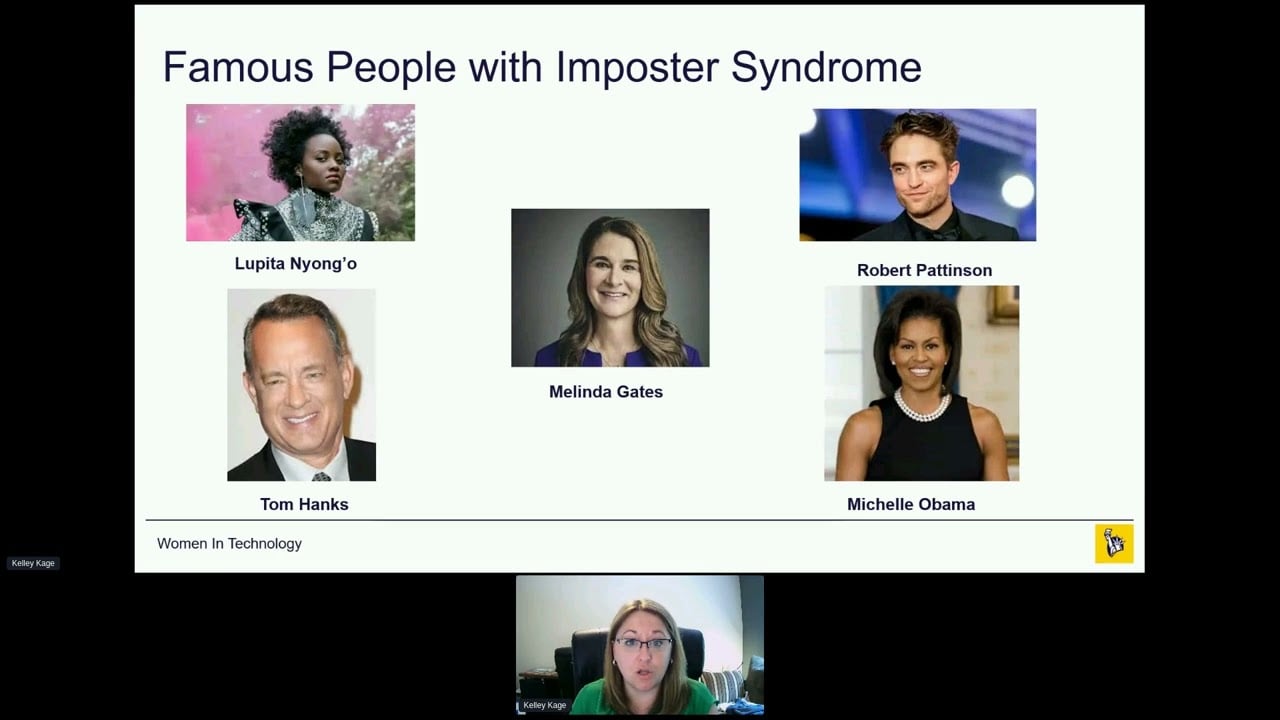
I'm going to start us off just by defining some terms. And if at any point I lose you, I'm monitoring the chat and I'd love to take questions at the end. So it took me some time in my career to turn my belief from thinking I'm a glitch to knowing I'm a zero day. What in the world does that mean? A glitch is a technical malfunction, an irregularity, something that isn't working right. And in our life, that can be our fears and our doubts, our insecurities. I know there have been a lot of sessions today about imposter syndrome that can make you feel like a glitch. But a zero day exploit in cybersecurity takes advantage of a vulnerability that doesn't yet have a fix. It's a pretty risky kind of attack. There's a gap, there's no fix for it yet. And an
adversary takes advantage of that. For us, that can be our career growth opportunity that can be a gap in our organization that we're the first one to fill like a zero day. So I hope that makes sense. Let me know. If I lose you at any point, again, I'm here for you. But everything in cyber has been so resonated in some career development for me. And I hope that it's something that will relate to you. So really quickly, just some background on myself. I haven't always been a cyber person, but I have always been a security one. I started in the criminology side. And really, I just I love security in any way, shape or form. I just wanted to help people and make them feel safe. And as I was
starting my career, cyber was becoming more and more prevalent. And so I saw an opportunity, and I jumped on it. And through a role in incident response, that became my zero day. In all fairness, it isn't as simple as I just made it sound, join, jump and grow. It has had its share of challenges through work and through life.
It hasn't always been easy. But really, that's what taught me how to be resilient. And I've applied that to my leadership. And no matter what the challenge, I really have been able to lean on hope through those experiences. Ultimately, I'm an introvert. This petrifies me. So while I'm the people person of security at work, I'm much more comfortable with dogs. So I hope your pets are listening in. This is definitely a pet friendly event, virtually. I know mine is tired of hearing me rehearse this. So let's get into it.
There are three main things I want you to learn from this metaphor today in our career development. The first is to avoid glitch mentality. I'll tell you what I mean by that. Some of the traps of glitch mentality and what to look out for. I'll tell you about some of my glitches, how it's looked in my life, and how to overcome it. Second is I want us to mind the gaps. Just like every zero day exploit, our career development relies on identifying gaps and leveraging our unique abilities to enter into them. And third is to embrace your anomalies. An anomaly is another technical term, but just like it sounds, it's the abnormal. It strays from the norm. And these are the characteristics about you that
make you different, that might position you particularly to fill that gap. And your anomalies are often what might make you feel like the glitch, but really it's the exact codes in you that make you the zero day. So keep going with me. And let's start by avoiding glitch mentality. We really have to set ourselves up for success from the inside out. Glitch mentality is entirely internal.
Again, a glitch is an unintentional error, a malfunction. And sometimes it can feel like we're the glitch. At least I have in my experiences. You know, even still, I feel like a glitch when I question my place and when I fail to recognize how hard I've worked to earn my seed. I feel like a glitch when I self-doubt or when feedback starts to ruminate and I'm over-personalizing. I feel like a glitch when I think my past would discredit or disqualify my place here instead of knowing that it's the very thing that has gotten me here. And I definitely felt like a glitch today as I was preparing to be on the main stage of this amazing conference. And I thought that that must be a glitch, right? But no, not at all. Glitch mentality
is a trap. Because if you think about it, a glitch implies that something is broken, that something needs fixing. And for us, I'm here to tell you that there's nothing fundamentally broken about you. There's nothing that needs fixing. I think we all have to keep growing and learning. And I sure hope that I do. But I have to realize that there's no breakage here in why I got here. I will warn you that glitch mentality can sneak in at any place in our career. I think whether you're in an entry-level role or you're in the C-suite, if you're a student or you're just trying to figure out what to do next, glitch mentality can sneak in there. So there are three things that I do when I start to fall into
the grips of glitch mentality. The first is gratitude. Gratitude is the antidote to any glitch, not just at work, but in life and relationships and hobbies. If you start to fall to a glitch, go to gratitude, gratitude, first and foremost. Second is to give credit. Give credit to yourself for how hard you've worked, that you've kept going, that you showed up here to talk about career development. Give credit to the people who have given you opportunities, who have seen something in you that maybe before you did, probably pretty smart people. And third is to get busy. If at any point my head is moving faster than my feet or in my job, my hands on my keyboard, I need to get productive. I need to get busy and get my head
out of it. And something for me when I want to get busy is I go gap hunting. So gap hunting. A few years ago, I was in an inflection point in my career, I was definitely feeling glitchy. And I was still trying to break into the cyberspace from the more physical side of security and figuring out what that was going to look like for me. And I was sent through work to travel through England. It was my first time there. I was sent alone for a week to go to a few different sites throughout the country. And so I was traveling by tube, had a lot of time to think. And as I was taking taking the tube around England, I was hearing the operator say, mind the gap, mind the gap. I never heard that before. And at some point, you know,
just through so much travel, it just kind of knocked me on my senses. And I thought, Oh, yeah, like, that's, that's what I have to do. Mind the gap. Like, if there's something missing, or needs improving. Maybe I'm standing on the platform with the gap, and maybe I can bring the solution. And that can apply to any career, right? You might be standing on the platform. I think for all of us, the gap is our passport. It can take you from A to B, it's going to travel you. And zero day exploits, take advantage of gaps that don't yet have a fix, right? So so can you? So at this point, I want to ask you, and I'd love to see it in the chat, can you think of any gaps in your work, or life where you might be able to
mind the gap? Maybe it's something technical, and I want to see them start trickling in. But maybe you need more cloud engineering skills in your team. Or maybe it's something interpersonal, like the team is having trouble building cross functional partnerships. What kind of gaps do you have in your workplace? Can you think of any? For me, a few years ago, it was really no one was available, or had the skill sets to track large initiatives, right? So I became a scrum master.
If you have any gaps that you can think of, I'd love for you to share them. And while you're doing that, I do have to acknowledge, you know, not every gap is going to be for you, try not to take on everything. But often, when it is the right gap for you, it's going to be your anomalies that put you on that platform. Our anomalies are often putting us in that intersection between believing we're a glitch, or becoming a zero day. A trap in glitch mentality is believing that our anomalies, right, the parts of us that make us different and unique, are something to hide, rather than something to embrace. These are the thoughts that sound like, but I'm not like them. My background is
different. I don't look like them, or sound like them, or think like them. And oh my god, like that is exactly why you're needed there. So embracing our anomalies is what makes us uniquely qualified to mine the gap. In my experience, I think my anomalies are some of the obvious ones. I'm a young woman in a cybersecurity field. That's an anomaly. Still, I hope it doesn't stay an anomaly, but for now, I'm an anomaly in that way. I also have a non-technical background. That puts me in an anomaly in this technical field. I think another anomaly for me in a cyberspace is my empathy.
That sometimes doesn't feel like it has a place. I bring a different perspective with all of these things combined and others. These are all the things that I think for me can make me most insecure at times about my being here and my role in my company. And when I when I reality check that and I embrace my anomalies, I start to realize that that's actually my exact advantage. It's those qualities in me that filled a gap that we didn't have otherwise. And I think about it, of course, being involved in technology is like innovation depends on this. Like think about the the technologies that we rely on every day.
Like maybe it's attached to you. Those all started with a gap that someone knew well enough to embrace their anomalies to be so crazy enough to find a solution for. So you just thought of a gap a minute ago. I'd love to hear now about some of your anomalies. If you want to add those, what are some of the things that set you apart in your workplace? Maybe you're the only woman on the team or maybe maybe you have, you know, just a different work background, a cultural background. Maybe you come from from somewhere different. What are some of your anomalies? Maybe they feel like glitches to you, but it's time to embrace those. I'd love to see you put them in here. And as you think about those
anomalies, pair them with the gaps that you just thought of too. And together, you might just have your zero day. So to wrap us up, and I know I sped through that. So I hope there's some questions. I just want to remind you of our three things. It's to avoid glitch mentality, to mind the gap, to embrace your anomalies, because you're not a glitch. You are a zero day.
So with that, I'd love to take questions. I'd love to stay connected. If you want to reach me on LinkedIn or Twitter and tell me about your glitch mentality, how you've gotten out of it. I want to hear your zero day stories, anything that you may be able to relate to or need advice on, please stay connected. And again, I'm just incredibly appreciative.
Alexa, thank you so much for being here. What a wonderful presentation. And I think you too, Alexa, are a wonderful anomaly in all of the ways that you described. super anomalous. Exactly. We do have some questions coming through. So let me ask you. Oh my gosh, they're really coming faster. Okay. What's your favorite anomaly? And how has it helped you change your perspective about yourself? About myself? Okay. You know, being in such a technical role or not role, but field, I'm a human role in a technical field as a chief of staff. And I think that that humanness about me has been the scariest anomaly and the most important for me because I'm able to kind of break some of these crazy, scary cyber attack things down into a very simple language that are
helping people make sense of some of the risks and make sense of some of the things they can do to fix them. And I think just having that anomalous empathy that I bring to my team is helping normalize cybersecurity and normalize doing our part in that space because we all have to do something if we want to prevent all these incidents that you're probably seeing on the news.
Yeah. And it's such a good message to normalize things. I think even for ourselves, which was a good point that you made. And a lot of people kind of called out in the chat saying, yeah, sometimes I feel like I don't think like them. I don't look like them. And we have to just, like, if we start to normalize everything around us, we will have less of that feeling coming through, right? Exactly. And I hope that there are more of them, right? I hope I'm not like the, I don't look like them because I'm the only woman. I just want to bring more women.
Yes, exactly. Well, and being here today and sharing your story is such a great way to do that. So thank you so much, Alexa, for being here. We're so happy to have had you. Thank you so much. Really appreciate it. Thank you.
Transcribed automatically; names checked against the speaker record. Select a time to jump there.
Article based on this talk
Why the gaps no one has filled are your best career opportunity
Alexa Reubens borrows the logic of a zero-day exploit to show how self-doubt, unfilled gaps and personal differences can become growth.
In short
Alexa Reubens argues that the parts of a career that feel like malfunctions are often openings. Borrowing the cybersecurity idea of a zero-day exploit, an attack on a vulnerability that has no fix yet, she teaches three moves: avoid glitch mentality, mind the gaps in your organization and embrace the anomalies that make you different. Together they point to where you can grow first.
Key takeaways
Learn how to network, inside and outside the organization.
Do your reconnaissance and find the "gaps".
Take advantage of gaps without fearing the unknown.
Recognize your strengths and know your passions.
From glitch to zero-day
Reubens opens with a promise that viewers do not need any security knowledge to follow her metaphor. She explains that it took her time to move from believing she was a glitch to knowing she was a zero-day. A glitch is a technical malfunction, and in life it shows up as fears, doubts and insecurities. A zero-day is something else entirely: "But a zero day exploit in cybersecurity takes advantage of a vulnerability that doesn't yet have a fix." (0:32) For a career, she says, that unpatched vulnerability is a gap in the organization that you can be the first to fill.
Her own path followed that pattern. She started in criminology because she wanted to help people feel safe, saw cyber becoming more prevalent and moved in through a role in incident response, which she describes as her zero-day. She is candid that it was not simple, that challenges at work and in life taught her resilience, and that as an introvert, speaking on a main stage petrifies her.
Why glitch mentality is a trap
The first lesson is to avoid what Reubens calls glitch mentality, which she describes as entirely internal. She lists the moments it still catches her: questioning her place, failing to recognize how hard she worked, letting feedback ruminate until she over-personalizes it, and fearing her past disqualifies her when it is the very thing that got her there. Her answer is direct: "And for us, I'm here to tell you that there's nothing fundamentally broken about you. There's nothing that needs fixing." (5:17)
She warns that this mindset can appear at any level, from students and entry-level staff to the C-suite, and offers three habits to escape it. The first is gratitude: "Gratitude is the antidote to any glitch, not just at work, but in life and relationships and hobbies." (6:06) The second is giving credit, both to yourself for showing up and to the people who saw something in you before you did. The third is getting busy, because when her head moves faster than her feet, she needs to get productive.
Mind the gap
For Reubens, getting busy means going gap hunting. At an inflection point, while still trying to move from physical security into cyber, she was sent alone to visit sites across England. Riding the Tube, she kept hearing the operator say "mind the gap" and realized it described what she needed to do: notice what is missing or needs improving, and bring the solution. "I think for all of us, the gap is our passport." (7:54)
Gaps can be technical, such as a team that needs more cloud engineering skills, or interpersonal, such as trouble building cross-functional partnerships. Her own example is practical: "For me, a few years ago, it was really no one was available, or had the skill sets to track large initiatives, right? So I became a scrum master." (8:44) She adds a caution: not every gap is for you, so try not to take on everything.
Embrace your anomalies
The third lesson explains which gaps are the right ones. In security, an anomaly is anything that strays from the norm, and Reubens applies that to the traits that set people apart. "A trap in glitch mentality is believing that our anomalies, right, the parts of us that make us different and unique, are something to hide, rather than something to embrace." (9:17) Thoughts like "I don't look like them" or "my background is different" are, in her view, exactly why someone is needed in that room.
Her own anomalies are being a young woman in cybersecurity, having a non-technical background and bringing empathy to a technical field. These were the things that made her most insecure, yet on reflection they filled a gap her team did not otherwise have. She links this to innovation itself, noting that the technologies people rely on every day started with someone who knew a gap well enough to solve it. Her closing exercise is to pair the gaps you notice with your anomalies, because together they may be your zero-day.
Empathy as an advantage
In the Q&A, Reubens names her humanness as both her scariest and most important anomaly. It lets her translate frightening cyber attack topics into simple language so people understand the risks and what they can do. "And I think just having that anomalous empathy that I bring to my team is helping normalize cybersecurity and normalize doing our part in that space because we all have to do something if we want to prevent all these incidents that you're probably seeing on the news." (13:58) She also hopes being the only woman will not last: "I just want to bring more women." (14:23)
Watch the talk
I Am Not a Glitch - I Am a Zero-Day, by Alexa Reubens (15 minutes): https://www.womentech.net/video/alexa-reubens-i-am-not-glitch-i-am-zero-day
About the speaker
Alexa Reubens is Chief of Staff, Information Security at Citrix, where she describes her work as "putting the soul in security" by bridging the human side of infosec to its technical challenges and opportunities. She holds a degree in Criminology from the University of Miami and is pursuing a Masters of Cybersecurity from the University of Dallas.
Questions this talk answers
What is glitch mentality and why is it a trap?
How can you get out of glitch mentality?
How do you find gaps that can grow your career?
Why do the things that make you different matter?
How has empathy helped in a cybersecurity role?
Drafted with AI from the talk transcript. Editor review pending.
Frameworks and ideas mentioned
Glitch to zero-day: avoid glitch mentality, mind the gap, embrace your anomalies
Gratitude, give credit, get busy
Scrum
Cite this talk
Alexa Reubens. "I Am Not a Glitch - I Am a Zero-Day." WomenTech Network, 2021. https://www.womentech.net/video/alexa-reubens-i-am-not-glitch-i-am-zero-day