In short
Emina Sikira argues that getting girls and women into engineering is only half the work; the harder part is helping them stay. She proposes the Internet of Things (IoT) as a hands-on, shared language that can spark curiosity early, support collaboration and build the self-esteem she sees as the foundation of any STEM career.
Key takeaways
- The Internet of Things could be almost anything. Are you willing to explore?
- Understanding the beauty and importance of collaboration: is the Internet of Things truly our chance for a mutual language of understanding?
- Raising a generation full of self-eSTEeM: how can IoT boost the influence?
The gap that education alone has not closed
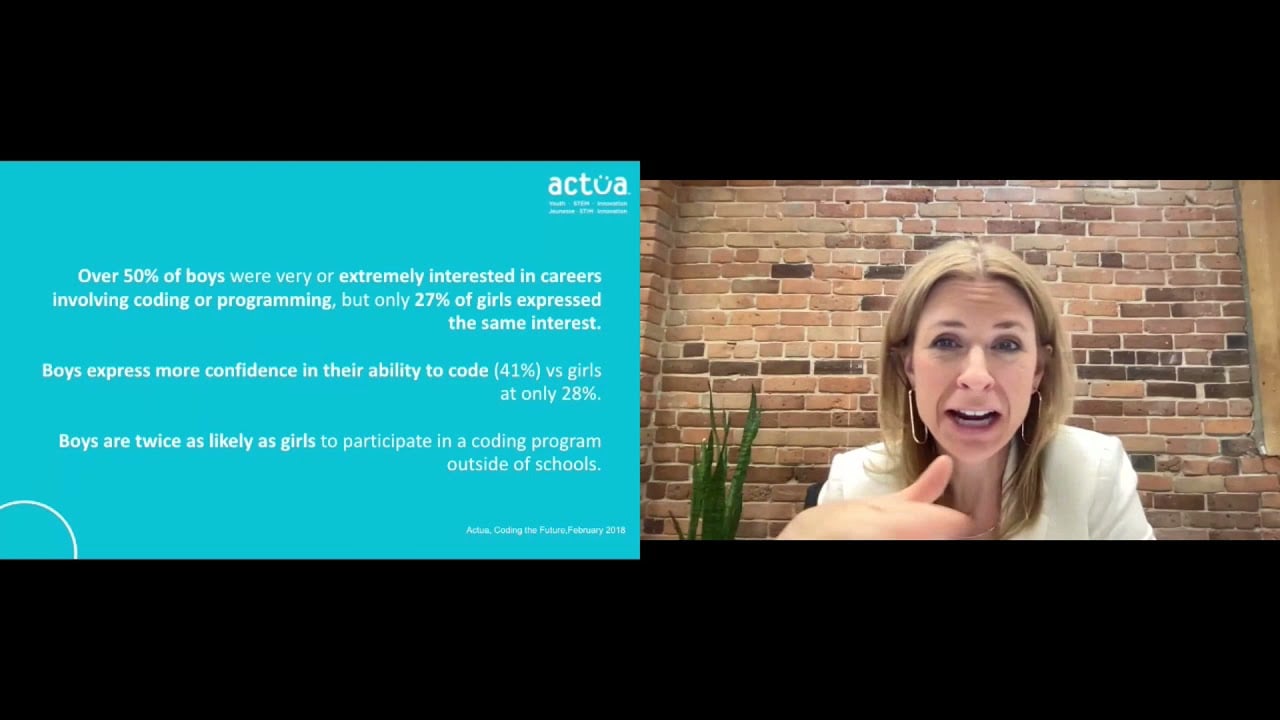
Sikira opens by framing science and gender equality as vital to reaching the Sustainable Development Goals. Much has been done in recent years to inspire girls to study and work in technical fields, she acknowledges, yet women are still excluded from participating fully. Drawing on reports she has read in UN documents, she notes: "So basically less than 30% of the world's researchers are the women." (2:11) She adds that only around 3% of students joining ICT courses across the globe are women, as the speaker cited.
Curriculum reforms that promote interest in maths and science have brought more women into engineering, Sikira says, but they miss the bigger issue: "But the problem is not just to attract them to study it. The problem is to help them stay on that lane." (2:39) Women make up about 20% of engineering graduates, and she cites research estimating that nearly 40% of women who earn an engineering degree either quit or never enter the profession.
What the first group project teaches
To understand why so many women leave, Sikira looks at the culture of engineering itself: its shared values, beliefs and norms. Every profession introduces students to its own skills, language and practices, and in engineering much of that happens through group projects where students learn to think and act like engineers. For many women, she explains, this first encounter with collaboration means being treated in gender-stereotypical ways, mostly by male peers.
"Because while working with male classmates, they often spoke of being relegated to doing some routine secretarial jobs and being excluded from the real engineering work." (6:13)
She sets this against a fast-paced era where the motto is once again stronger, faster, better, and where people feel they have no time to support anyone along the way. Her question is whether technology itself could become a playground for empowerment.
IoT, simplified
Sikira warns against dismissing IoT as a buzzword. Search for a definition and you will find something overcomplicated, she says, but the idea can be stated simply: any device that is connected to the internet and communicates in some way. "So more or less, it's extension of the Internet connectivity into physical devices and everyday objects." (7:53)
What matters most to her is not the definition but the experience. IoT lets people play with small electronic components, build projects and gain a deeper understanding of how things work. "And the most important thing is, these experiments with IoT at a young age can really spark the aspirations in the young minds." (8:37) For young women in particular, she believes that early experience can help them overcome the biases they may later meet in the engineering world.
From maths to code to connected things
Sikira traces how people have found a mutual language across native languages. In an older era it was maths: whatever language you speak, mathematical symbols and tasks can be deciphered together. Later the shared language moved to IT, with programming languages, networking and algorithms seen as a way to overcome different languages and different understandings.
"And since the time is evolving, the world is changing itself constantly, we see now that if we look from the big picture, that in today's world, IoT can be a perfect combination to bridge this gap of the understanding." (10:19) Because IoT combines devices, communication, IT and maths, she argues, it can let people understand each other through shared projects.
Her proposal is to connect young people with IoT early and accompany them: experienced people sharing their expertise, supporting them from small experiments at a young age to major breakouts later on. "And even more important thing, we can enable them to believe that they should if that's what they want to do." (11:33)
There is no STEM without self-esteem
The talk closes on a personal note. Sikira describes herself as a woman in STEM who has worked through the pain points she outlines, and says support would have changed her path. "There is no STEM without self-esteem. Let's be real." (12:00) "And from my perspective, from my experience, it would be much easier if I had the bigger support along the journey." (12:00)
That is why she wants to share her own experience and expertise with young people. By leading by example, showing the way and supporting young minds throughout their journey, she argues, others can help them believe they can do whatever they want to do, including pursuing STEM.
Watch the talk
IoT Narrative: Empowerment Edition, Emina Sikira, 15 minutes: https://www.womentech.net/video/iot-narrative-empowerment-edition
About the speaker
Emina Sikira is an Implementation Consultant at Infobip, with experience in both corporate and non-profit environments providing technical support, product analysis and diagnostics before, during and after the implementation of tech solutions. A voracious reader, occasional meetup speaker, believer in sustainability and soft-skills advocate, she aspires to empower people to achieve more.
Questions this talk answers
- Why is attracting more women to engineering not enough?
- What do many women engineering students experience in group projects?
- What is the Internet of Things in simple terms?
- Why could IoT work as a mutual language?
- What role does self-esteem play in keeping girls in STEM?
Drafted with AI from the talk transcript. Editor review pending.