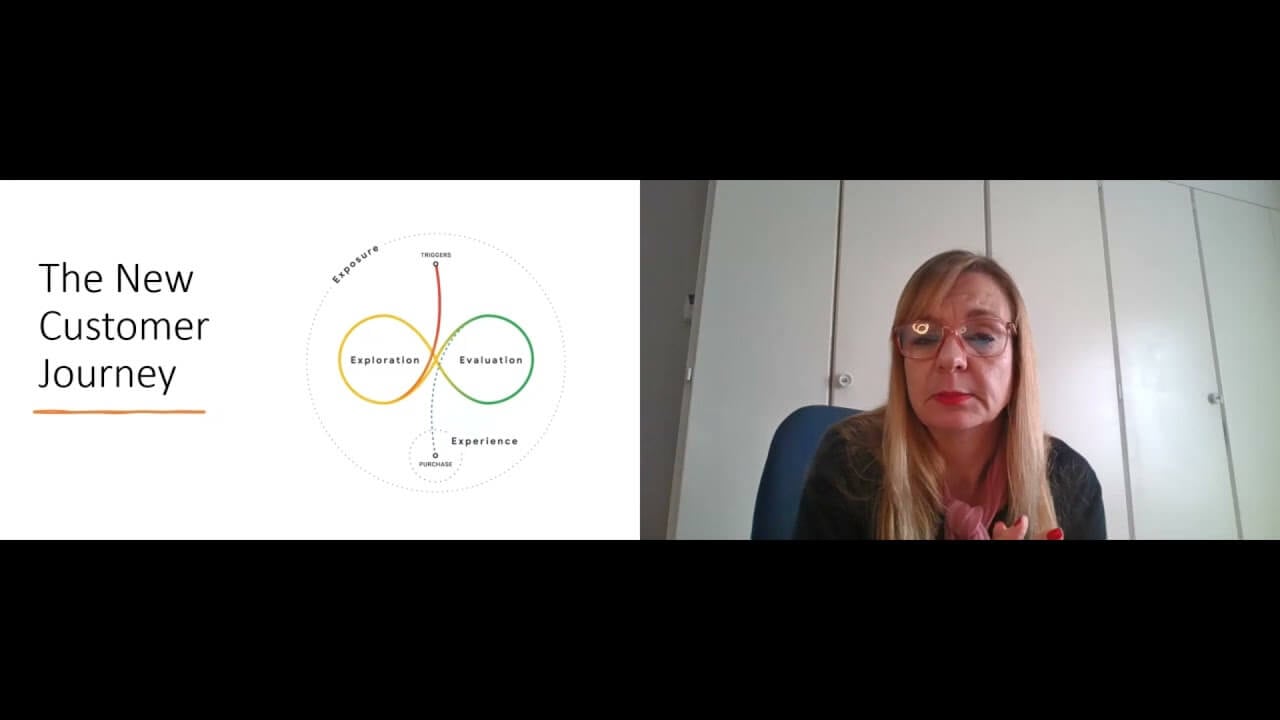
Demographics no longer tell you who your digital customer is
Diners now photograph and post their meal before they pick up the cutlery, and Coke bottles printed with 150 common Australian names went viral worldwide. For anyone selling online, that shift makes appearance and address weak guides to who will buy. Chinwe Uzoho, a payments executive with more than 25 years in banking, consumer behaviour and marketing, asks what businesses should segment by instead.
Learn the digital STP approach, from online behaviour to product, service and pricing strategy
Chinwe Uzoho, Regional Director for West and Central Africa at Network International Payment Services, argues that demographics and geography alone no longer tell businesses who their customers are. She explains digital segmentation, targeting and positioning (STP), built on customers' online behaviour, capability and trust, and shows why product, service and pricing strategy must be designed for each digital segment.
“It is not about if I'm black, white, yellow, tall, dark, or where I live. It is more about segmentation based on where I spend time digitally.”
“Most times, we all forget that social media segmentation must be measured.”
What you will learn
Segment customers by digital behaviour, capability and trust rather than demographics or geography alone.
Apply digital STP with messages that are specific, measurable, attainable, relevant and time-bound, backed by KPIs.
Design engagement that customizes the buyer journey and connects with customers where they read reviews and recommendations.
Align product, online service policies and pricing with each digital segment before launching.
Choose whether segmentation is data driven, budget driven or both, and use it to find cross-sell and upsell opportunities.
Key takeaways from the speaker
Identify gaps that exist and how the use proper segmentation strategies to understand customers behavior and preferences
How to use digital segmentation, targeting and position to create and innovate your business
What is your brand positioning and how to reposition your customer segments to be more profitability ?
Details
Level
Beginner
Format
Talk
Technical depth
Non-technical
For
Early career, Mid-career, Founder
Length
18:17
Published
June 2021
Questions this talk answers
What is digital STP?
Digital segmentation, targeting and positioning segments customers by the social platforms they use and the content they consume online. It relies on cost-effective, targeted messaging that should be specific, measurable, attainable, relevant and time-bound.
Why is demographic segmentation no longer enough?
Customers now live much of their lives online, from posting meals to reading reviews before buying. Uzoho says segments should reflect how digitally knowledgeable customers are, the tools they use, their comfort level and how much data they will share.
Should segmentation be data driven or budget driven?
It can be either or both: data tells you who your customers are and how their buyer journey leads to conversion, while budget determines how far you can cross-sell and upsell to each segment.
How should a business engage a digital segment?
By engaging, customizing, connecting and collaborating: creating content that sparks curiosity, customizing the shopping journey (for example 3D product views) and paying attention to what customers say online.
What do businesses most often forget when segmenting digitally?
The product, service and pricing strategy for each segment. Uzoho's shoe-return story shows how online service policies that are not communicated at purchase damage the customer experience.
About this talk
We might not be everything to everybody, but we can segment, target and position our business to be customer centric and focus on our customers needs and wants. In this digital age it is has become apparent to understand the process and strategy for effective segmentation and positioning. We can then be able to slice and dice our customer population by understanding the certain tier of customers with the highest profitability or the lowest profitability. It is also important to know the products that customers are buying more, this will also help in knowing the amount of resources and budget for product development.
An effective digital marketing involves developing the right platform and strategies that will enable your brand to reach their potential customers. You can then be able to select the right digital strategies to fit your business and help to quicken the buying process of your customers
How Share a Coke turned a local target into a viral hit (90 s)
Why the dinner photo killed demographic segmentation (86 s)
The shoe box return that exposes poor online service (70 s)
Chinwe Uzoho: Good morning. I hope you can hear me and you can see my slides. My name is Chinwe Uzoho and this morning, I'll be speaking on effective digital segmentation and positioning. Before I go into my presentation, a little bit about myself. I have over 25 years experience in product development, retail banking, consumer behavior and marketing, as well as technology and payments. Over the years, I've worked in different reputable global financial institutions.
However, in 2019, I left banking and I decided to join Network International Payment Services as the regional director for West and Central Africa. I'm a chartered banker. I'm also a member of the Chartered Institute of Bankers in Scotland. I'm a member of the Associate Chartered Institute of Bankers in Nigeria. I had my MBA from Bangor Business School in Wales.
And my MSc from University of Liverpool in Global Consumer Marketing. My first degree was in economics. And then I have a postgraduate diploma in Digital Business Management. So right into my presentation. History tells us that market segmentation is an increasingly important part of a strong marketing strategy and it can make all the difference. It's about the demographic, the psychographic, the geography and the behavioral pattern of the customers that enables a company to be able to develop a strong marketing strategy and be able to compete effectively.
When we understand our market segmentation, we can then decide to slide customer base into different components by using the appropriate marketing persona to target the right customers for full optimization of the relationship. It can be data driven or it can be budget driven. It can even go both ways. So when it's data driven, It's the rule of the term by understanding who your customers are and narrowing your customer base.
It is it also helps you to understand the buyer journey, the end to end buyer journey that will eventually lead to a conversion. It helps you to understand the right person. It helps you to understand the right tone and style to communicate with the customers. And it's also important to segment based on your marketing budget. How much do you have to spend?
How relevant will you be able to cross sell, upsell, deep sell opportunities to the segment, you can be able to optimize sales? Customer segmentation and targeting. Customer segmentation is imperative to help a business identify the different customer types and offer value proposition that can drive a customer centric strategy. It also helps to eliminate churn and also ensure retention is improved.
In a rapidly changing environment, the right segmentation and targeting will help to identify nutrients, values in both new and existing markets. The segmentation targeting and positioning processes all evolve into the marketing mix. This is by understanding your USP. What is your unique selling point? How do you want to focus on each market? How do you want to determine the best possible ways to connect with the customers?
How do you want to scale up in the various markets by ensuring that you maximize the four P's of your marketing strategy? Which is the product, the price, the price, and the promotion? In the digital era, we all know that digitalization has taken over our lives, right? It affects the way we wake up, the way we sleep, the way we walk.
Everything we do is about digital. Once we wake up in the morning, the first thing we do is we grab our phone. Either we are checking what is happening online or we are heading straight into the social media to join conversations. So in this digital age, segmentation is quiet. It is about the social media platform available to the target market, the content they consume online.
With digitalization, the market is fragmented because the different segments are reflecting a variant of the buyer and one. Every segment and generation is considered differently based on their preference, social media channels. It is not about if I'm black, white, yellow, tall, dark, or where I live. It is more about segmentation based on where I spend time digitally.
Customer segmentation in the digital era cannot be generalized. You cannot clump together, no. In that way, you're missing out the right customers. Each customer touchpoint is customized based on their unique set of preferences that will accelerate the moment. What is digital STP? Digital segmentation, targeting, and positioning. It is about a million users. Today, statistics tells us that there are about 7.8 billion people in the world.
And 66% of these people all have mobile phones. Over 50% of them are in one social media platform or the other and have internet access. It is about cost-effectiveness. It is about targeted messaging and viral messaging. If we all remember the Share a Coke campaign in 2011, where Coke just wanted to do something in Australia to be able to attract the young adults.
They just wanted to increase their market share in Australia. The target market was actually young adults in Australia. And what did Coke do? They just printed 150 common Australian names on different Coke bottles. And before you could say Jack, it was all over the social media. People all over the world, they were saying, oh, please print my name.
I need my name to be on a Coke bottle. And guess what happened? Within that period of time, Coca-Cola had 18.3 million impressions. Their Facebook content increased by 870%. And in Australia, consumption of Coke in young adults increased by 7%. So it was a targeted message, but it went viral. It is about being specific. What are you saying to the clients that you have segmented?
It is about being measurable. Most times, we all forget that social media segmentation must be measured. There must be the appropriate KPI and metrics to measure what you have put in there. It is about being attainable, relevant, and time-bound. This is just the statistics of what is happening in the world. 7.8 billion people, 5.2 billion people have one mobile phone users.
4.6 million are internet users. And 4.2 billion are active on social media. Segmentation in the digital era is about digital behaviour. It is about digital capability. It is about digital trust of the target audience. This is what will guide us in positioning the right product. The digital environment today of our customers is very important. Where do they go to digitally?
How much time do they spend online? The mobile devices they use? And, of course, which websites do they visit? And key search words. It involves the ability to create accurate forecasts that can help in higher conversion and customer satisfaction. How much time do they use? If you are seeing my screen, you can see the little cartoon. Prior to now, when you go out to dinner with friends, they bring the meal, you taste it, you try it, and you give your comments.
It is delicious, it is yummy, and all that. But what happens today? When we go out for dinner, they bring the meal, you are not looking for the cutlery. The first thing people do is that they pull out their phone, and they are taking a picture of the meal, and they are sending it to friends online. They are posting it.
They are clicking. They are commenting on how good or bad the food is, or the environment where they are. So it is no longer sufficient to segment based on the demographic, or the geography, or other factors. It is more about segmenting based on how knowledgeable your customers are, the digital tools they are using, their comfort level, and how much data they are willing to share.
It is about constantly tracking the customers like, how they buy, their behavior, in order to influence their purchases. The new digital world is bring your own persona. Come the way you are. You don't have to be tall, you don't have to be fair, you don't have to live in Nigeria, you don't have to live in US. Just come the way you are, and they'll be able to segment you.
Every digital user brings their own unique digital profile and set of behavior to every situation. Most importantly, when we digitalize and segment our customers, it is important to understand how the customers behave. Understand how the customers behave online, what they are doing, lose them. It is about engaging, it is about customizing, it is about connecting and collaborating with the customers.
It is about creating content that spark curiosity among the customers. They are able to read, they can listen, they can watch, and ideally share with others. We all know today that mobile devices, mobile computing has made it possible for customers to connect seamlessly. Once people get into a place, they are looking for Wi-Fi to connect. And they are looking for what is trending, to either make one comment or the other.
They are looking for what is trending. It is about effective and impactful digital connection. It is about customizing, defining the customer journey, defining the customer shopping experience, so that you can help the clients make a choice. You know, so when people are online shopping, they are not there, you're not there to tell them, oh, the red color is better, the blue color is better, and other people can, you can customize.
So people, really looks nice. You can take a 3D view of the shoes or the dress and all that so that they can be able to make up their mind and decide what they want to buy. It is about offering products and services that are adaptable to the different customers' needs through customization. It is about connecting and collaborating.
Today, we all know that a lot of conversations are happening online. People rely more on social media recommendation and advice before they make a decision on what they want to buy. I want to buy a pair of shoes. I go online. I'm reading what people are talking about the product I want to buy. I'm looking at the recommendation.
I want to check into a hotel. I'm going on vacation. I go and read the review. I rely more on the review and recommendation of people before I can make a decision. So it's about connecting. What are your customers saying online? How are you digitally connecting and collaborating with them so that you can be able to offer products and services that meet the customers' needs?
And finally, digital segmentation is about the product, the service and the pricing. So in most cases, when you see businesses segments, they forget that the product, the product you're putting online is important. How the customers see the product is important. What are you trying to say about the product? Are you trying to put the product online and say no, it's for a specific kind of people?
Are you putting the product online without defining what the products do? So it's important that when you do your digital segmentation, don't forget, you have to spend time looking at the product strategy. How will this client see the product online? How will the segment market see the product online? How will I be able to connect so that when they see the product, they're able to understand that this is actually what I need?
And the service strategy over the years, we've come to see that most times the service customer service online is very poor because companies are not putting in efforts into ensuring that services online is as good as services that you receive in the shop. So today I go to the physical shop. I want to buy a pair of shoes and they tell me, oh, this sale is final.
If you buy the shoes, if you want to return it, you have to return it with the box. Do you want the box or the shoes? And I say, okay, give me the shoe and the box. So if I want to return it, I can take back the shoes and the box. Different experience online. I go online.
I want to buy a pair of shoes. I select what I want to buy. I pay and it's delivered to me. There's no note to say, oh, these shoes can be returned, but you have to return it with the box. So I open my package. I discard the box. I tried the shoes. It doesn't fit. And I want to return it.
And I go online and I say, oh, I'm returning these shoes because they don't really fit. And I get an automated message to say, you can return it with the box only. Hey, you didn't tell me that when I was buying online. So customer service strategy online for the segmented market, it's very important. Because customers are easy to tell others how they feel, especially when the service is not up to standard.
Pricing strategy. If you segment the product for me, I can easily compare prices online. I don't have to go to 20 physical shops to compare prices. So the price has to be right with the product. What price are you putting there? Is it price to edge out your competitor? Is it pricing to show that your product is more durable or valuable than the others?
So the pricing strategy must be right. So it's important that once we decide to segment digitally, we have to understand how our customers behave by engaging, customizing and connecting with them. It is also important to understand the product strategy, the service strategy and the pricing strategy that we can use to, you know, connect with our customers online.
So finally, we might not be everything to everybody, but we can use the right digital tools and platforms to segment, target and position our business to be more customer centric. Thank you very much. I guess I still have some time for question and answers. Thank you. I have my LinkedIn address. You can always hook up with me, send me a message, connect with me, and I'll be available to discuss more on this topic and also to share knowledge.
So you can always connect with me. Address below. We can share knowledge, agree on things, disagree if possible, learn from each other and connect. I will go into the comment section and I'll be able to respond to the questions and answers. Thank you very much. I hope you enjoyed this session and I hope it was impactful as well.
Thank you.
Transcribed automatically; names checked against the speaker record. Select a time to jump there.
Article based on this talk
What should businesses segment customers by when demographics stop working?
Chinwe Uzoho makes the case for segmenting by digital behaviour, then building product, service and pricing around each segment.
In short
Chinwe Uzoho, Regional Director for West and Central Africa at Network International Payment Services, argues that in the digital era customers should be segmented by how they behave online, not only by who they are or where they live. Her approach, digital segmentation, targeting and positioning (STP), looks at customers' digital behaviour, capability and trust, and then asks businesses to align product, service and pricing with each segment so they become more customer centric.
Key takeaways
Identify the gaps that exist and use proper segmentation strategies to understand customers' behaviour and preferences.
Use digital segmentation, targeting and positioning to create and innovate in your business.
Define your brand positioning and reposition your customer segments to be more profitable.
Why segmentation still drives the marketing strategy
Uzoho opens with the classic foundations: demographic, psychographic, geographic and behavioural segmentation are what allow a company to build a strong marketing strategy and compete. Segmentation lets a business slice its customer base, use the right persona, and understand the full buyer journey that leads to conversion, including the right tone and style for each group.
She stresses that there is more than one way to start. "It can be data driven or it can be budget driven. It can even go both ways." (1:59) Data tells you who your customers are; budget tells you how much you can realistically spend to cross-sell and upsell to each segment.
The payoff, in her view, is a sharper value proposition and better retention. "Customer segmentation is imperative to help a business identify the different customer types and offer value proposition that can drive a customer centric strategy." (3:00) Segmentation, targeting and positioning then feed directly into the marketing mix: the unique selling point and the four Ps.
Segment by where people spend time digitally
The core of the talk is a shift in what defines a segment. Uzoho points out that most people reach for their phone first thing in the morning, either to check what is happening online or to join social media conversations. That fragments the market by platform, channel and content habit.
"It is not about if I'm black, white, yellow, tall, dark, or where I live. It is more about segmentation based on where I spend time digitally." (5:00)
She illustrates this with a cartoon of friends at dinner: where people once tasted a meal and commented on it, today they photograph it, post it and comment online before they reach for the cutlery. Her conclusion: "So it is no longer sufficient to segment based on the demographic, or the geography, or other factors." (9:48) Instead, businesses should look at how knowledgeable customers are, which digital tools they use, their comfort level, and how much data they are willing to share. She sums this up as digital behaviour, digital capability and digital trust.
Digital STP and the Share a Coke lesson
Uzoho defines digital STP as cost-effective, targeted messaging that can travel virally. As she cited, there are about 7.8 billion people in the world, around 66% have mobile phones and over half are on social media.
Her example is the Share a Coke campaign, which she dates to 2011 in Australia. Coca-Cola wanted to grow market share among young Australian adults, so it printed 150 common Australian names on bottles. According to the figures she cited, the campaign generated 18.3 million impressions, Facebook content grew by 870%, and consumption among young adults in Australia rose by 7%. A tightly targeted message went global.
She then adds discipline to the creativity: digital messaging should be specific, measurable, attainable, relevant and time-bound. "Most times, we all forget that social media segmentation must be measured." (7:42) Without KPIs and metrics, a business cannot know whether its segment-level messaging worked.
Engage, customize, connect and collaborate
Once segments are defined by behaviour, Uzoho argues, the business has to meet customers on those terms. "The new digital world is bring your own persona. Come the way you are." (10:17) Every user brings a unique digital profile, so businesses need to understand what customers are doing online.
"It is about engaging, it is about customizing, it is about connecting and collaborating with the customers." (10:43) In practice that means content that sparks curiosity and can be read, watched and shared; customized shopping journeys, such as 3D views of shoes or clothes, that help customers decide without a salesperson present; and attention to reviews and recommendations. Speaking from her own habits, she notes: "I rely more on the review and recommendation of people before I can make a decision." (13:04)
Product, service and pricing for each digital segment
Uzoho closes with the element she says businesses most often forget: product, service and pricing strategy. How a segment sees a product online, and whether its purpose is clear, decides whether customers recognise it as what they need.
Service is where she sees the biggest gap. She tells the story of buying shoes online, discarding the box, and only learning when she tried to return them that returns required the box, a rule a physical shop would have told her at the till. Online service policies need to be as clear as in-store ones, because unhappy customers share their experience widely.
Pricing matters just as much, because comparison is effortless online. "I don't have to go to 20 physical shops to compare prices. So the price has to be right with the product." (16:11) Businesses must decide whether their price is meant to edge out a competitor or to signal durability and value.
Her closing line restates the abstract's promise: "So finally, we might not be everything to everybody, but we can use the right digital tools and platforms to segment, target and position our business to be more customer centric." (17:11)
Watch the talk
Effective digital segmentation and positioning, by Chinwe Uzoho (18 minutes): https://www.womentech.net/video/effective-digital-segmentation-and-positioning
About the speaker
Chinwe Uzoho is Regional Director West & Central Africa at Network International Payments Services, and a payments expert who helps financial institutions generate sales leads and implement strategies that increase their market share. Over a 30+ year career she has worked for organisations in Nigeria such as Afribank, Chartered Bank, Intercontinental Bank and Access Bank, and she holds an MBA from Bangor Business School and an MSc in Global Consumer Marketing from the University of Liverpool.
Questions this talk answers
What is digital STP?
Why is demographic segmentation no longer enough?
Should segmentation be data driven or budget driven?
How should a business engage a digital segment?
What do businesses most often forget when segmenting digitally?
Drafted with AI from the talk transcript. Editor review pending.
Frameworks and ideas mentioned
STP (segmentation, targeting, positioning)
Digital STP
Marketing mix (four Ps)
SMART goals
Unique selling point (USP)
Demographic, psychographic, geographic and behavioural segmentation
Cite this talk
Chinwe Uzoho. "Effective digital segmentation and positioning." WomenTech Network, 2021. https://www.womentech.net/video/effective-digital-segmentation-and-positioning