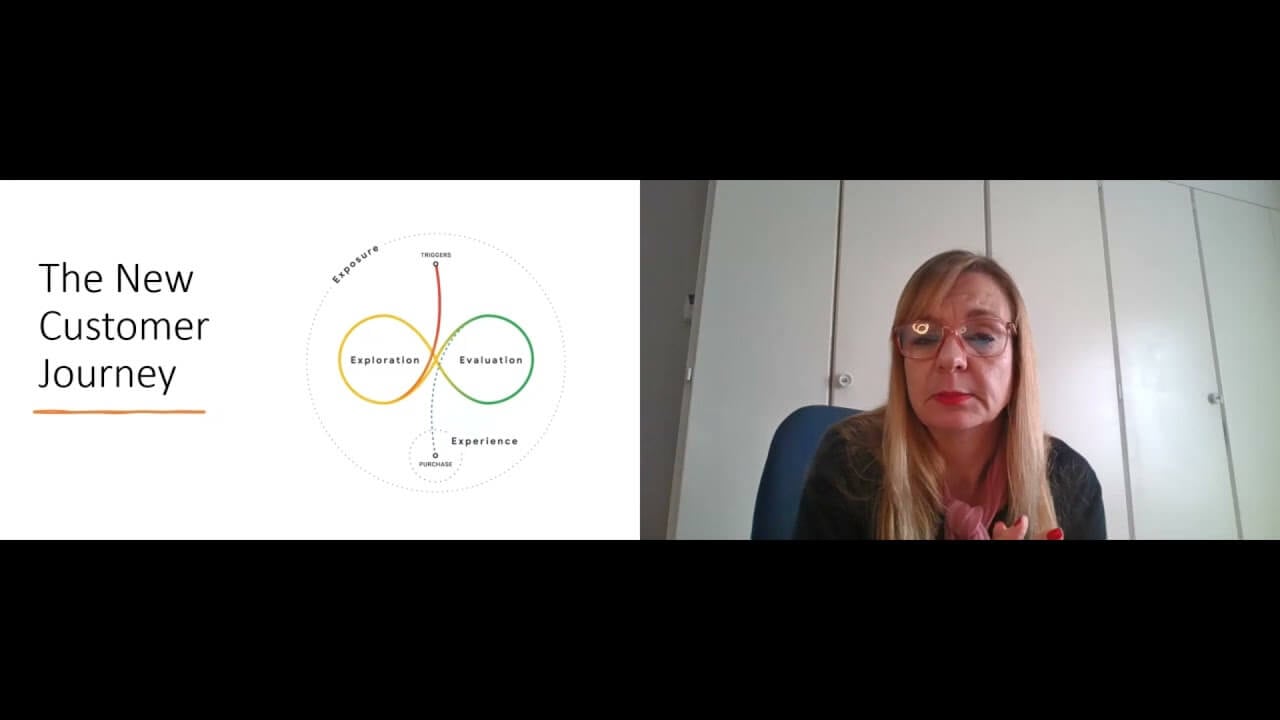
Neuromarketing mind hacks that will make your marketing content more effective and drive more leads
Flavilla Fongang14:422021
Your customers ask for salad while their brain craves the cheeseburger
Customers say they want a crispy salad while craving the cheeseburger, and marketing that takes their words at face value spends money on campaigns that never land. Flavilla Fongang, founder of the award-winning branding and neuromarketing agency 3 Colours Rule, uses a simple color-word game to show how much of our behavior runs on autopilot. So which part of the brain should your content really be speaking to?
Learn six brain-friendly stimuli to make your landing pages, ads and campaigns convert
Flavilla Fongang, founder of the branding and neuromarketing agency 3 Colours Rule, argues that marketing wastes money when it speaks to the rational brain, because decisions are driven by emotion and a 'lazy' primitive brain. She explains a three-part brain model and teaches six stimuli for more effective content: put the customer at the center, use contrast, demonstrate the gain, place key information at the beginning and end, and lead with visuals and emotion.
“Trust needs to come out from the mouth of your audience.”
“You know, you can tell me how good you are, but the best way to tell me is to show it to me.”
What you will learn
Explain neuromarketing as the psychology of consumer behavior and why it saves wasted campaign spend
Distinguish the rational, emotional and primitive parts of the brain and which ones content should target
Apply six stimuli to content: self-centered pain or desire, contrast, tangible gain, beginning and end, visuals and emotion
Restructure a landing page so key information and calls to action appear early and are repeated
Use customer proof and before-and-after contrast instead of self-praise to build trust
Key takeaways from the speaker
Create a following of faithful individuals who buy from you frequently
Digital Marketing activities you can put in place to create the most engagement for your tech company
What happens when you create a brand community instead of clients
What marketing psychology strategies are effective
Details
Level
Beginner
Format
Talk
Technical depth
Non-technical
For
Founder, Early career, Mid-career
Length
14:42
Published
June 2021
Questions this talk answers
What is neuromarketing and why should marketers care?
Fongang defines it as the psychology of consumer behavior. Marketers should care because large sums are wasted on bad campaigns, and customers rarely say what they really want.
Which part of the brain should marketing content speak to?
She says the reptilian brain, which she calls the lazy brain, has the most control because it uses the least energy, so content should speak to it and the emotional limbic system as often as possible.
What are the six stimuli for the reptilian brain?
Address self-centered pain or desire, differentiate your claim with contrast, demonstrate the gain with tangible proof, put the most important information at the beginning and end, use visuals, and use emotion.
Why does a 'buy now' homepage fail with new visitors?
A first-time visitor does not know the brand yet, so asking them to buy immediately feels presumptuous. She points to Dropbox, which serves new and returning visitors different calls to action and repeats them.
Is emotional or rational messaging more effective?
As the speaker cited, emotional messaging was 31% responsive, combined rational and emotional 20%, and purely rational 16%, which is why she recommends showing a family enjoying an Airbnb rather than quoting a nightly discount.
About this talk
What if you had the roadmap to hack to into the mind of your customers and create campaigns that always deliver? The most successful marketers and digital marketers have achieved great success by applying successfully neuromarketing mind hacks to engage and convert prospects more effectively. Flavilla will present what neuromarketing is and its relevance. Through various case studies show how her agency has run the most effective marketing campaigns even with micro-budget generating a large number of leads for her clients and how established brands do it too.
The three brains every marketer should know (70 s)
Make your customer the hero of the story (59 s)
Don't tell me you're good, show me (74 s)
Thank you so much for coming to my talk. It's unfortunate that my face doesn't show up. I really dress up for today, but nevermind. It will be for another time. So today we're going to be talking about new marketing mind hacks. Yes, that will make your marketing content more effective and drive more leads. But I guess before we get started, I need to tell you something about myself.
My name is Flavilla Fongang, and I'm the founder of 3 Colours Rule, an award-winning branding and marketing agency for tech companies. So I work permanently with technology companies, and I have a lot of fun doing that. And that's always why I am here. I'm also the founder of Tech London Advocates for Black Women in Technology with over 1,400 members, grown without advertising, but just for word of mouth. I'm also a podcast host. You can hear me. I have a podcast called Tech Brands Talk, which is available on most popular audio podcast platforms.
And yes, and then through COVID, I decided as well to write a book called 99 strategy to start to get customers. I can't remember the title of my own book, which is very funny. Right. So that's a bit of a brief in terms of who I am and what I'm able to talk about that subject. I'm obsessed with branding. I'm obsessed with marketing and obsessed with good quality and result strategies out there. So I guess the first question we would be asking is, what is new marketing and why should I care? Like this beautiful gentleman's, I mean, what should I care about new marketing and what is it? So new marketing is the psychology of consumer behavior. So it means that, you know, we all think that we have some level of control in terms of what
we do and quickly realize that actually we don't, which I'm going to show you in a minute. But why should you care really? Well, it's a question of money. The reason why you should care so much because loads of money is wasted every single year, every single minute, every single fraction of a second on very bad, you know, marketing campaign or bad content. And people who are filling their pocket right now are Facebook or the Google and all these brands or just say, yeah, keep trying until you get the right thing. Yes. And I thought that, you know, we should be a better way of doing things. If you understand clearly how the brain works. But before we do that, you know, it's also understand that, you know, quite often Aklans don't tell us what they want. You know,
they might say, Hey, I want a cheeseburger, but deep down, you know, I want a crispy salad, but deep down, you know, that they really crave for that cheeseburger, you know? So we don't always say, what we really want. And that's what, what's, what new marketing is so important because you can't really lie to, um, to the brain. And that's where we're going to discuss and share with you today.
I want to kind of guide you through in terms of how brand has evolved in terms of the communication. At the beginning, it was very much focused on the, how, how to use the product. Then people move to the same thing. And then a bit of the kicking that took like as an example, because probably as one of them who are not having a great brand model, so they had to do better. And then from that point, we need to look at in terms of, then it was much more in terms of your purpose. Why are you doing what you do?
And now we're in the era of digital evolution, which is great, where now the narrative is not controlled by the customers and not so much by us, which is great to know. So how does the brain work? So I'm going to show you very quickly. The brain is divided in three parts. You have a neural cortex, the limbic system, the reptilian brain. The first part, the biggest part is called the new brain. The new brain is what you're using right now to really control your very rational overthinking. You know, you control your imagination, your consciousness, abstract. Does God exist? Do neuromarketing is relevant or not? And you can see this is the biggest part. The second part is the middle brain, the limbic system, which is the emotional part of your brain. You know, how you feel about someone. Are you in
love, you know, judgment? Do you believe I'm a great speaker? I'm a terrible technology, whatever it is, behavior. That controls all the elements around those parts of your brain. And the last part is the reptilian brain, which I also like to call, it's called the primitive brain, but I like to call it the lazy brain, which controls our, you know, vital functions, flight or fight responses. When you face, you know, if you're in front of a gorilla, do you stay still? Do you fight it or do you run away? I really recommend to run away and not stay there.
And also, you know, generally, you know, generally, basically your survival instinct. And a part of this brain is really to make sure that you stay alive. So the reason why I call it the lazy brain is because it wants you to do as minimum as possible. Yes. So we're going to do a little game. I can't really hear you right now, but I want you to read out loud the color, not the word, the color, not the word. Are you ready? Let's do this.
So pink. All right. So this one is easy, right? So we're going to do the same thing again, but faster. Again, remember, I want you to read out the color, not the word. So you don't read pink as it is written, but you read the color of the, of the word. You ready? All right. So I've given you a well done A plus. Usually I do when I can see a card, which I can't see right now. So let's do it again one more time.
How was it this time? A bit harder, right? What happened is basically your brain goes into conflict. We quite often, what we don't know is that we are often on autopilot. You know, think about what you do in the morning, when you wake up, you don't think really what you do. You just know you brush your teeth, you do this, drink some coffee, whatever it is.
The one, you know, your brain is not used to what it knows. It creates a conflict. And then it just like, Oh, what is going on? And this is what I've done by just conflicting between the words and the colors. And your brain is like, what the hell are you doing? Flavilla with myself. All right. So the part of the brain was the biggest control is actually the reptilian brain has the biggest control.
Because as you can see on the size of it, the bigger the brain, you think about the brain as an, as an, as a computer. Yes. The reptilian brain is the smallest part that requires the least energy. And your cortex, which is the biggest part of the brain requires the most energy. So when you think about it, you want to, you know, you want to speak as often as you can to reptilian brain or the limbic system. And, you know, so we are not rational. People are not, we are not rational people.
Okay. So I'm going to give you a six stimuli to reptilian brain to help you make sure that when you create content or how you're articulating your brain messaging equates the best engagement. So first of all, I'd be recognized that we have a flight of flight access, flight of flight access, but also withdrawn by self-centered desire. So pain or pain or desire. So then differentiate your claim, demonstrate the gain and deliver it to reptilian brain, beginning and end visual and emotion. I'm going to break it down.
So it makes more sense because I'm going quite fast because I think I'm running out of time. Sorry. So yes. So we are very much about us. We are all very selfish. So selfish in a good way or selfish in a bad way. So when we create content, always put your, try to put your customer as the centerpiece, as the hero of the story. Remember when Uber launched their brand, it really showcased here in terms of, you know, what they're doing and here, you know, very much like this beautiful girl comes out of the car.
She doesn't have to wait outside and, you know, on the rain. So it's very me, me, me, me, me. And you can see as well, what it does is really showcase in terms of what the problem is being trying to fix. So think about, think about like, what problem are you trying to fix or what desire you want to create, one or the other. And you can also see from the heat map, how well and responsive it was, you know, from where obviously putting the hero, the customer as the centerpiece of the page, but also close to the call to action here, really create a great engagement. So very responsive.
Differentiate your claim. Again, something everybody remembers, you know, the I'm a PC, I'm a Mac, that was the old one, but people are very responsive to contrast. So again, something you think about personal trainer, they use that all the time, look at how my clients are losing weight and so forth, which is super important. So the great, you know, the best contrast, when you think about contrast could be around financial incomes, appearance or love or freedom, more time and so forth. So what are the, what are the things that, what are the elements that contrast that you can create in the mind of your process so you can see the before and after.
It's always very useful. So when you come to our website, for example, you can see a before brand and after brand. So you can really see the difference. Differentiate your game. You can, you, you, you, you, what is it, your game? Yes. Oh, I'm going too fast. Differentiate, demonstrate the game, what should I say. So here, I love this example. You can see from this, um, divorce attorney, can you see the plate number? I love this. You know, you can tell me how good you are, but the best way to tell me is to show it to me. And that was super, super effective.
Great campaign by Sanders, Lynn and Ragunetti, associate lawyers. Again, something I love this campaign, actually, when I'm on, when I'm on live, I showed you this campaign where you can see, um, people where they get to taste different cheese and people trust the well-known brands. So it was a campaign done by Lidl and Lidl showcase. It's a discount. It's a discount store.
So showcase how people are very much attached to brands. Oh, because the expensive brand is this. So it's, it's, it's, it'll be better. And then when it demonstrated that actually the cheapest brand was the best, people were very surprised. It's a very effective campaign like that. Trust needs to come out from the mouth of your audience. So yes. So showcasing, you know, getting something, putting your customer at the front piece of your content gives much more engagement always.
What else? The beginning and end. Same thing. We have a very short attention spam. So always think about putting the most important information at the beginning and also repeating it at the end. Again, here's an example. This is a bad example in terms of what is, why this is not going to work as a website. So you imagine coming to this website for the first time and say, buy now, excuse me, I don't know you. I've never heard from you. What would I buy from you? Even $10. No, thank you.
Well, here is another example from Dropbox. Very, very clear in terms of, you know, revisiting visitors or new visitors. If you're new visitors, you'll be joined to try Dropbox business for free or get, you know, if you've already been to the website, get Dropbox basic. And again, something you will see from their website, they have a number of call to action, repeating content.
And again, above the floor, you have a call to action, which is super effective. Visual, you know, an image is worth a thousand words. You know, if you want to express something, try to use visual. We are very receptive to visual. So really use that to your advantage, which is very key. And again, emotion. I keep talking like, you know, I keep mentioning that, you know, the brain, actually, we're not very, we're not rational at all. We always believe in what we, in emotion first, you know, you say, oh, I love this person. I trust them, what they say, but we don't look into the details. So again, you can see in terms of when you combine rational and, and emotion, 20% responsive, 31% responsive on emotion, and it was a rational 16% responsive. Crazy, huh?
And this is a great company from Airbnb really showcasing in terms of how, you know, instead of saying, hey, get a discount when you get this house for $20 or $30 a night, why not showcase like a family having fun in this great environment. This is emotion so much more effective. And this really works really, really well. What feelings, think about what feelings does your brain bring? Really think about that. Is this okay? Again, what's very surprising, people are very much more responsive to negative feeling. Another campaign from Uber in Canada really showcased, you know, around, you know, the importance of, of driving safely. Again, really summary in terms of dying, diagnose the pain. So self-centered member, we are all self-centered. Differentiate your claim, contrast, demonstrate the
gain with tangible elements delivered to the reptilian brain. Most important information at the beginning, at the end, visual and emotion. All right. This is me. Sorry for the time. This is me as well. Like, if you want to know more about what I do, I have my book, 19 hours, which is available on Amazon and everywhere. But also you can access my free brand workshop for free. Visit freecolorsworld.com. I'm very easy to be found, to be honest. I'm really sorry about the technical difficulties. And also, there's a great report available as well on our Free Colors World website. I have loads of goodies.
Please come and visit us. I hope you enjoyed this presentation. Again, very sorry for the technical difficulties. And I've been more than happy to connect with you. This presentation, by the way, this presentation is also available on YouTube. So if I was speaking very fast, you can watch it again on my YouTube channel. And it was, it was it for me. And yeah, that's the end of this session with me.
I hope that you enjoyed it. Because that all back and forth was not easy. Nico, thank you so much. Joanne, thank you so much for coming. Thank you, Michelle, for staying. I hope you enjoyed the session. It was definitely eventful. And yeah, I don't know. I really don't know if I'm supposed to go and leave. Yeah, thank you. Yes. Thank you so much for coming. I really enjoyed. Thank you so much for your patience. Thank you, Kara. Thank you for staying. Again, I think this version is, the longer version is available on YouTube that you can access right now. I'm still sharing my screen.
Stop sharing. There you go. I'm really bad at this. If anybody has any questions, I'm still here, as I don't know how I can end this. Thank you, Vishek. Thank you, Rabia, for staying. Thank you so much. I'm really sorry about this technical difficulty. But we made it. If you have a question, drop me a line, find me on social media, LinkedIn, Instagram, and be crazy on Instagram. Or you have me on Twitter.
But yeah, we made it. Yes. Goodbye, everybody. Can you get here? So if you check out Three Colors Rule or just check me out. I'm very easy to be found. Flavella is only one. That's me. So you can find me. Yeah. So if you type new marketing of Flavella, you can find me easily, Vishek. Very easy to find me.
But I will give you, you know what, let me just type, as I've seen some people here with me, type a link to my page, Three Colors Rule. So you can find over the machine, even typing takes a bit of time. So threecolorswood.com/flavella will take you to my page. And you can find out more, but I don't know why. I can't even, I'm even trying to type, but it's not typing. Okay. Well, there you go. .com/flavella.
You got it. Yes, Vishek. You're good. All right. I'm going to go. Have a good time. I'm surprising the sun in London. So yes. Bye everybody.
Transcribed automatically; names checked against the speaker record. Select a time to jump there.
Article based on this talk
Why your marketing should speak to the lazy brain, not the rational one
Flavilla Fongang shares six neuromarketing stimuli that turn content into engagement and leads.
In short
Flavilla Fongang argues that much marketing money is wasted because campaigns are written for the rational brain, while real decisions are driven by emotion and by a primitive brain that wants to spend as little energy as possible. In a fast-paced talk, the founder of 3 Colours Rule explains a simple three-part model of the brain and offers six stimuli that make content more engaging: make the customer the hero, use contrast, prove the gain, put the key message at the beginning and end, and lead with visuals and emotion.
Key takeaways
Create a following of faithful individuals who buy from you frequently.
Digital marketing activities you can put in place to create the most engagement for your tech company.
What happens when you create a brand community instead of clients.
What marketing psychology strategies are effective.
Neuromarketing is a money question
Fongang defines neuromarketing as the psychology of consumer behavior. Her case for caring about it is blunt: guesswork is expensive, and the platforms selling ads profit when marketers simply keep trying until something works.
"The reason why you should care so much because loads of money is wasted every single year, every single minute, every single fraction of a second on very bad, you know, marketing campaign or bad content." (1:47)
The deeper problem is that customers do not tell you what they want. Someone may order a crispy salad while really craving the cheeseburger. "So we don't always say, what we really want." (2:30) Understanding how the brain works, she says, is a better route than trial and error, because you cannot lie to the brain.
She also places this in context: brand communication moved from explaining how to use a product, to purpose and why a company exists, to today's digital era, in which brands no longer fully control the narrative.
Meet the lazy brain
Fongang describes three parts of the brain. The neocortex, the largest, handles rational thought, imagination and abstract questions. The limbic system is the emotional middle brain that judges whether you trust or like someone. The reptilian or primitive brain controls vital functions and fight-or-flight responses, and she gives it a memorable nickname.
"So the reason why I call it the lazy brain is because it wants you to do as minimum as possible." (4:27)
To show how much of daily behavior runs on autopilot, she leads the audience through a color-word game: read the color of each word, not the word itself. Speeding it up creates a conflict, because the brain is disrupted in what it already knows. Her conclusion is that the smallest, least energy-hungry part of the brain has the most control, which is why marketers should speak to the reptilian and emotional brain as often as they can. In her words, we are not rational people.
Make the customer the hero and show the contrast
The first of her six stimuli starts from the fact that people are self-centered, "selfish in a good way or selfish in a bad way." Content should address either a pain to fix or a desire to create.
"So when we create content, always put your, try to put your customer as the centerpiece, as the hero of the story." (6:51)
She points to Uber's launch messaging, which showed a woman stepping out of a car without waiting in the rain, and to a heat map showing strong engagement where the customer and the call to action sat close together.
The second stimulus is contrast. She recalls the "I'm a PC, I'm a Mac" campaign and personal trainers' before-and-after pictures, and suggests contrasts around income, appearance, love, freedom or time. Her own agency's website shows brands before and after their rebrand.
The third stimulus is demonstrating the gain with tangible proof. Her favorite example is a divorce attorney's advertising that let the result speak for itself.
"You know, you can tell me how good you are, but the best way to tell me is to show it to me." (8:20)
She also describes a Lidl campaign in which people tasted cheeses, trusted the well-known expensive brands, and were surprised when the discount option won. "Trust needs to come out from the mouth of your audience." (9:10)
Lead with the point, show it and make it felt
Because attention is short, the fourth stimulus is to put the most important information at the beginning and repeat it at the end. She critiques a homepage that greets first-time visitors with a purchase button.
"So you imagine coming to this website for the first time and say, buy now, excuse me, I don't know you." (9:34)
By contrast, Dropbox separates new and returning visitors, invites newcomers to try its business product for free, and repeats calls to action, including one above the fold.
The fifth stimulus is visuals, since an image is worth a thousand words. The sixth is emotion. As the speaker cited, emotional messaging was 31% responsive, a mix of rational and emotional 20%, and purely rational 16%. Rather than advertising a cheap nightly rate, Airbnb shows a family having fun in a beautiful setting. She adds that people respond even more strongly to negative feelings, citing an Uber road-safety campaign in Canada.
Her closing recap: diagnose the pain, differentiate your claim with contrast, demonstrate the gain with tangible elements, and deliver to the reptilian brain through the beginning and end, visuals and emotion.
Watch the talk
"Neuromarketing mind hacks that will make your marketing content more effective and drive more leads" by Flavilla Fongang (about 15 minutes): https://www.womentech.net/video/neuromarketing-mind-hacks-will-make-your-marketing-content-more-effective-and-drive-more
About the speaker
Flavilla Fongang is the Founder of 3 Colours Rule, an award-winning branding and neuromarketing agency, a serial entrepreneur and the author of "99 strategies to get customers". Computer Weekly named her among the top 5 most influential women in tech in the UK, and she founded Tech London Advocates for Black Women in Tech and hosts the Tech Brains Talk podcast.
Questions this talk answers
What is neuromarketing and why should marketers care?
Which part of the brain should marketing content speak to?
What are the six stimuli for the reptilian brain?
Why does a "buy now" homepage fail with new visitors?
Is emotional or rational messaging more effective?
Drafted with AI from the talk transcript. Editor review pending.
Frameworks and ideas mentioned
Three-part brain model (neocortex, limbic system, reptilian brain)
Six stimuli for the reptilian brain
Resources mentioned
99 strategies to get customers (book)
Tech Brains Talk (podcast)
Free brand workshop on the 3 Colours Rule website
Report on the 3 Colours Rule website
Longer version of the presentation on the speaker's YouTube channel
Cite this talk
Flavilla Fongang. "Neuromarketing mind hacks that will make your marketing content more effective and drive more leads." WomenTech Network, 2021. https://www.womentech.net/video/neuromarketing-mind-hacks-will-make-your-marketing-content-more-effective-and-drive-more