The customer you knew three months ago is not your customer today
Shoppers who could not find their usual brands during the pandemic settled for white labels, and many may never return to premium. Jessica Hartley, Vice President of Strategy at Instrument with nearly 20 years in digital strategy, argues that marketing which ignores this shift risks losing customers to another label, or the category altogether. So how does a brand still sell a five hundred dollar handbag without sounding tone-deaf?
Learn four action areas for marketing with empathy when customers' needs and values shift
Jessica Hartley, Vice President of Strategy at Instrument, argues that the pandemic permanently changed how consumers shop, spend and judge brands, so marketing must be rebuilt around empathy. She defines empathic marketing and offers four action areas: rediscover your customers, reimagine your brand, reevaluate your marketing ecosystem and reignite your customers' passion.
“So what that means is the customer that you knew that you knew three months ago is not the same customer today.”
“Ultimately, we want to sell a five hundred dollar handbag. But let's make sure we know we care about you.”
What you will learn
Rediscover your customers by comparing pre-crisis and current data and asking them directly through surveys, calls or focus groups.
Place both your customer and your brand on the needs-versus-desires and basic-versus-premium spectrum before choosing a message.
Reimagine your brand's offering and tone, from product pivots to showing care, while staying authentic.
Audit your whole marketing ecosystem, including customer service scripts and policies, not just websites and campaigns.
Balance empathy with the bottom line by building ongoing conversations with customers instead of one-off campaigns.
Details
Level
Beginner
Format
Talk
Technical depth
Non-technical
For
Mid-career, People manager, Founder
Length
20:13
Published
July 2020
Questions this talk answers
What is empathic marketing?
It combines empathy, seeing things from another person's perspective, with understanding your audience and engaging them in relevant ways. It also accounts for outside pressures such as the pandemic, the economy and safety that shape customers' needs and buying behavior.
How have consumers changed during the pandemic?
They are open to alternative and white-label brands, more digital than ever, conservative about spending, focused on safe entertainment at home and more attentive to companies' morals and values.
How should a premium brand market when customers are focused on necessities?
It cannot talk about its products as before; it should first show care for customers, employees and the environment, for example through supportive return policies, and then get to the sale.
How can a company understand what its customers need now?
Compare earlier data with current data, use third-party research, and ask existing customers through surveys, one-on-one calls or focus groups, compensating them for their time.
Why did some brands handle the crisis well?
Brands such as Patagonia, Dove, Nike and Ben & Jerry's had built values-led, empathic marketing over a long time, so they were ready to adjust how they spoke to consumers when global events happened.
About this talk
Walking the line between selling your products and services and recognizing the delicate state of the economy is truly a balancing act. Even companies that have experienced a boon for what they have to offer have also struggled with finding the right tone and words to target existing and new customers. What does it mean to truly understand your customers during a time of prolonged crisis? How do you navigate the murky waters of needs for safety, security and shelter versus the creature comforts and impulse buys that drove the economy of yesterday? This session will provide advice and strategies for small to mid-size corporations on centering your marketing in empathy in the age of a pandemic.
Why values-led brands were ready for the crisis (69 s)
Your customer from three months ago is gone (74 s)
Selling a $500 handbag in a crisis (62 s)
So welcome. Welcome. Good morning. Good afternoon. Good evening. Good night. Wherever you are in the world. Thank you for joining me for this session. I'm so honored and excited to be here to share some knowledge and hopefully some helpful information with you and just be a part of this amazing movement, right? That is women tech. And so thank you again for joining us today.
And for women tech for the opportunity and Anna for your amazing work and dedication with the whole team. And thank you all for joining us and those that are coming in. Thank you for joining. So my session today is about empathic marketing in the age of a pandemic and excited to share a little bit more about myself. My name is Jessica Hartley. I'm a digital strategy executive. I'm also a diversity, equity and inclusion advocate.
I'm based in the United States in Portland, Oregon, and I am vice president of strategy for a digital and innovation company called Instrument based here in Portland. We also have an office in New York. And I've been doing digital strategy, business strategy, consulting strategy for almost 20 years now. And I've worked at startups and worked at advertising agencies and also at consulting companies. So I'm always excited about how do we put it on.
It's in Portland, Oregon. It's in Portland, Oregon. It's in Portland, Oregon. It's in Portland, Oregon. And I am vice president of strategy for a digital and innovation company called Instrument based here in Portland. We also have an office in New York. And I've been doing digital strategy, business strategy, consulting strategy for almost 20 years now. And I've worked at startups and worked at advertising agencies and also at consulting companies.
So I'm always excited about how do we put consumers and people at the center of everything that we do and always excited to share the experiences and the knowledge that I've gained with others. And so thank you for having me and joining me today. So here's what we'll cover and really sort of rapid fire. I might put a little bit of that New York moxie to make sure that we move along pretty quickly and are able to get through all the content.
So we'll cover, we'll talk a little bit about the state of consumers. We will then define what empathic marketing means. So we're all clear and aligned on what that means. And then finally, we'll talk about what it means to put empathy to work, particularly in your marketing and promotions for your companies. And what I will say is, you'll hear me say customers and consumers a lot throughout this. I'm sort of using them a little bit interchangeably. Typically, I'm saying consumers, that means sort of broader thinking about industry Terms and then customers thinking about your customers in particular. And also, you'll hear ideas and suggestions and advice here that can apply if you're, for example, in HR or operations and thinking about ways in which to support your employees, right, often called employee experience.
So this can apply to any number of folks, even within your team. So hopefully, this will appeal and be helpful to many of you coming from different backgrounds. So let's start with the state of consumers, right? So the title is Empathic Marketing in the Age of a Pandemic. That is definitely a salacious title, right? Hopefully, hooking folks in. But we are in a bit of a crisis globally now, right? And so recognizing that we're in this, what is right now feels like a very long and hard moment in time, there's going to happen. There's going to be ripple effects on what this sort of significant moment is going to have on business, on industry, and particularly on our consumers. Here's a quick quote from Mintel, which is a marketing and research company.
Businesses will need to do that. And so what this quote is really meant to do is just ground us that this is not a moment in time that even in when, you know, potentially vaccines come out and things get better and we are back to some sort of getting back to work, back to traveling, there will be lasting impacts and effects on how consumers operate. So what we're focused on today is understanding what it really means to anticipate and meet your customers' needs and really think about how you evolve, how you market right now and beyond.
And ultimately that goal is to bring us together and think about how we can get closer to more loyalty from our customers. So let's take a quick snapshot of where consumers right now, right? They're open to new alternatives, right? So we have no toilet tissue and people are fighting over Lysol and wipes, right? In grocery stores, right? So customers and consumers have become used to alternatives.
They couldn't find their brand names. They couldn't find their brand names, so they found an off-brand or a white label and we're going to see that continue. So they might not come back to premium and to brand. So that's sort of one of the mindsets of consumers. They're more digital than ever. Everything is on digital, shopping online, contactless payment, right? So there's just going to be an even sort of exponential leap for what we expect digital experience is to be and how digital transactions will go.
And all that is about ultimately is how easy is it to do business with you and can you make it as frictionless as possible. They're going to continue to be conservative about spending, right? Here in the United States alone, there are millions of people that are unemployed and that kind of is a ripple effect across the world in terms of impacting economies.
But even as things pick up, even as people get work, they're going to be conservative about their money and their spending, which means it's more on necessities and a lot less on luxuries. They're focused on safe and secure entertainment, right? Who would have thought that first run like movies that you would go to a movie theater and be all excited about and watch with a bunch of strangers in a room.
And so there's just going to be increased expectations of things that make them happy, that bring them joy, that bring them entertainment, are going to be able to be done safely and often in the confines of their home. Obviously, as we think about the pandemic, as we think about sustainability and other environmental focus areas, and then also even most recently, as it relates to the Black Lives Matter movement, right?
Which is not just here in the United States. We're seeing a lot of things happen globally. Consumers are a lot more focused on the morals and values and ethics of the companies of where they're spending their brands. So not only are they going to be conservative with the money that they're spending, they're looking and watching these companies and these brands and saying, do I want to spend my money with a company that's trying to make the world a better place?
So let's move quickly into defining what empathic marketing means, especially now that we have a good understanding of what the customers, consumers are doing in the marketplace. And that's really kind of cross industry, cross business, sort of where they are. And here's really two quick quotes, one from the CMO council saying that basically only 20% of marketers know how to predict their next best action for customers.
And a lot of marketers continue to struggle with what it means to employ emotional marketing, right? What's that fine line of being thoughtful and being empathetic and using empathy and also maybe swaying too far and getting too mushy and having customers saying, why are you talking to me about these things? So as we take a look at just sort of defining empathic marketing, right?
The first is just understanding what empathy means. And that's putting yourself in someone else's shoes, thinking about something from another person's perspective as they would see it. And then when you layer that with marketing, it's about understanding your audience and then thinking about relevant ways in which you can engage, right? That deeper understanding plus a more true connection is going to get you more conversion and loyalty, right?
So what does that mean in actuality, right? So you have a consumer at the center and they have their needs and their behaviors and their fears and their desires and their values. But then there's all of these external factors that are now impacting them. And where we are today in society, these are magnified, right? We've got the pandemic and working from home and the economy and then safety and then security and then increased duties and things that we didn't have to worry about before that we all have to worry about now.
And so when we talk about empathic or empathic marketing, it's taking all those things into consideration, right, that we have now, all of these macro effects from industry and economy and the environment, all of these things sort of coming together and also recognizing that it hits consumers in different ways. So if you're traveling hospitality, you're dealing with a much different situation than if you are Unilever or PNG and you're having a different situation as if you were a luxury retail brand, right?
So this is what we're talking about when we're talking about empathetic marketing. It is really not only just understanding the needs and behaviors and desires, but also thinking about what the effects of all these other outside factors are having on them and ultimately on their buying behavior. So what I wanted to just take a quick moment and say, okay, well, where, who's doing this right or doing this?
Well, I think there's no one answer. What we do know is that there are a lot of standout global brands that are really doing an amazing job. And I think the critical thing to know about these brands is they didn't just sort of wake up, you know, a month ago or a week ago and say, you know, we're going to have morals and values.
We're going to really sort of put that into everything that we do. They've been doing this for a long time and doing it for a while. They've built an infrastructure for empathetic and empathic marketing that when larger global events occur, they are already ready to adjust and shift and move how they talk to their consumers and to the world at large.
So you'll see Patagonia here. You'll see Dove. You'll see Nike. Obviously, Ben and Jerry's foundation is really all about changing the world and making it a better place. I'd love to see. I can't see the chat, but I'd love if you all listening right now have some other examples of companies that have been doing an amazing job in empathic marketing.
I'd love to see you pop them into the chat and sort of see. I'll check it out after to sort of see what you guys have thought about it. So that would be great to see what you think of brand standouts. And we won't talk about those brands that have bombed miserably. So let's move into what does it mean to put empathy to work for your brand and your business.
We have a good understanding of what the state of the consumers are. We have a good understanding of what empathic marketing means, right? Those needs, those values and behaviors. So what are some action areas that you can take right now today to put empathy to work for your business? So we'll start with rediscover your customers. Okay. So what that means is the customer that you knew that you knew three months ago is not the same customer today.
Again, right. Remember, there are all these other factors that have come in that are affecting their behavior. And what you do in this moment is really going to determine whether they will continue to be a customer or if they're going to buy a different brand or a different label or if they're just going to abandon the category altogether.
Right now, yes, you have a lot of data from before, but you should be comparing your data from before and your data to now. Where are the differences? What are you seeing? Third party or secondary research is really great. There are a lot of great companies out there that are reporting on what it means to what the pandemic has done for consumers across various industries.
So there's no excuse not to have some real robust industry knowledge on what's happening with your customers. But at the end of the day, the best, best data and information that you have is right within your fingertips, right? It is all of the customers that you have today and that you had before. So if you're not surveying them and asking them how you can be of service to them, what more do they need from you as a brand?
How can you make doing business with your brand much more frictionless and easy? You're behind. So do those things. And that can be a survey. That can be one on one phone calls. That can even be focus groups. Whatever you decide to do. What I will say is, please, again, also thinking about all these things and all of these factors, compensate your customers for giving you their feedback.
I can't tell you how many times I get asked to join a survey or a focus group. And I'm like, well, what is it what's in it for me? Right. And if you think about a gift certificate or a discount code. Think about ways in which you can thank people for their time, show that you value their time and opinion, because ultimately it's going to help you and also help your bottom line.
So after you take a look and really sort of make sure that you understand your customers of today and the future. One of the things I want to make sure you do is be clear again on birth needs versus desires. Basic versus premium. Like where is your customer today and where are they sitting? Right. And we'll talk about how that then relates to your brand in just a moment.
But be very clear on where your customer sits, where it relates to needs and desires. So the second piece is now that we have a good understanding of our customers, how are we going to reimagine our brand? And when we think about reimagining, I'm not saying new colors or a new logo. It could it could be any of those things.
It could be none of those things. It could be rethinking your product line in your portfolio and services. Right. I mean, we're saying we're seeing entire companies turn on. I shouldn't say a dime, which is a very sort of American phrase. But we're seeing companies make a pivot, if you will, and products and services that they weren't doing before they're doing now.
Right. T-shirt companies are now making face masks. So taking a look at what you were offering and what was relevant and exciting and you had lots of customers lining up for three months ago. What does that look like now and how you think about your brand in the context of this of how you understand your consumer today?
And the other thing is really understanding where you play in that basic and premium. If a lot of the world is really in the needs and necessities and basic and you're a premium brand, there is a different way in which you should be talking and marketing to customers. You know, if you sell a five hundred dollar luxury handbag.
Right. You can't just sort of talk about selling handbags like you did before. So we're seeing a lot of companies talking about how they're supporting the environment and how they're supporting their employees, how they're supporting their customers with different return policies and all these sort of things that come together to show that we're putting the user at the center.
Yes. Ultimately, we want to sell a five hundred dollar handbag. But let's make sure we know we care about you. We're thinking about you and then we'll get to the five hundred dollar handbag. Right. So that's something that I think is really important is understand the customer, understand how your brand now relates to that customer. And then we have to take a look at your entire marketing ecosystem.
And this is marketing ecosystem, but it's also about customer service as well. You have customer service representatives. You should understand what they're saying to people. What are the policies? What are those scripts look like? We're talking about websites and email, social media, all of the places and channels that you own. You should be relooking at all your messaging. Right.
And this is not just about showing people pictures of people hugging and kissing in restaurants. It's about tone and it's also about messaging. But it also still has to feel true and authentic to who you are as a brand and then also still connect with your customers. We are so used to this consumer journey where it feels very linear.
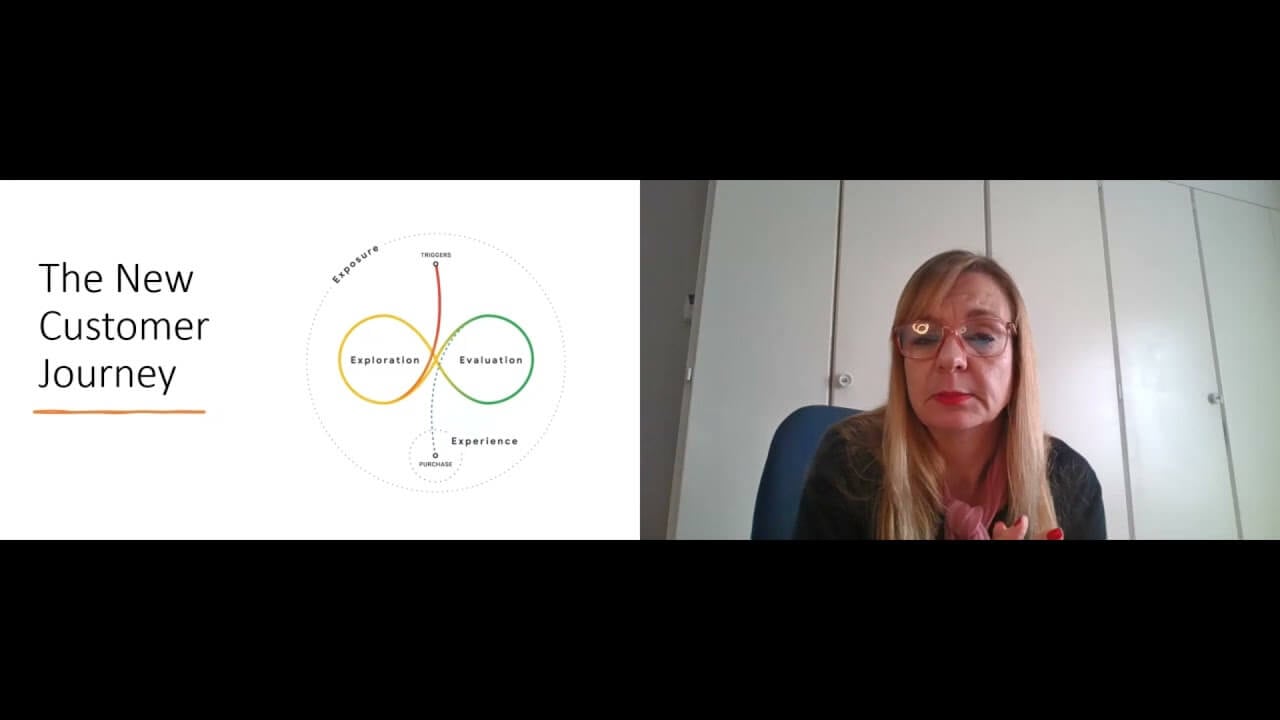
They come in and there's awareness and conversion and, you know, they're going to buy and then we're going to turn them into loyalty and do it all again. And where we really are. And this was really kind of before the pandemic happening. But we're very much seeing this now coming in at any different point in the journey and they're coming in and coming out and they might be loyal and they might not be loyal.
They might refer you and they might not. They might refer you and they might not refer you. So we're seeing that you've got to look at your entire ecosystem because there could be one thing that a customer service rep helps someone navigate in terms of returning a product or service that really sort of hook someone for loyalty.
And that would be different than, for example, having a flashy website. So you've got to look at everything across your marketing ecosystem. And then finally, as we wrap, we want to just ultimately reignite your customers passions. Right. There is a way to balance and bring together empathy and leading with the user at the consumer at the center, while also being very focused on ultimately the bottom line.
So you can eat, we can eat, employees can eat, right. So when you bring that all together, you're going to find that it really should transform how you do business, how you think about business, how you think about your customers and move from this transactional sort of relationship to a true sort of connection and moving beyond. So we're very much focused on moving beyond campaigns, right.
This is about a conversation and an extended ongoing connection and conversation with your consumers. So in closing, rediscover your customers, reimagine your brand, reevaluate your marketing ecosystem and ultimately reignite your customers passion. I know we're out of time. It always goes really quickly. Here's my contact information, please let's stay connected. Let's keep the conversation going. If you have any questions in the chat, please pop them in there and I will try to answer them over the next couple of days through LinkedIn and Twitter.
And, and I'll try to tag you all if I can, but I'm so excited and thankful again for the opportunity to speak to you all today. I want to just say thank you. And I hope you all have a good evening, night, morning, and please share the things that you've learned and good luck with empathic marketing.
Transcribed automatically; names checked against the speaker record. Select a time to jump there.
Article based on this talk
How brands can market with empathy when customers have changed
Jessica Hartley of Instrument explains why the pandemic reset customer behavior and offers four action areas for marketing that still sells.
In short
Jessica Hartley, Vice President of Strategy at Instrument, argues that the pandemic did not just pause consumer behavior: it changed it, and those changes will outlast the crisis. Brands that want loyalty now have to understand the pressures their customers face and adjust products, tone and every channel accordingly. She organizes the work into four action areas: rediscover your customers, reimagine your brand, reevaluate your marketing ecosystem and reignite your customers' passion.
Key takeaways
Rediscover your customers by comparing pre-crisis and current data and asking them directly through surveys, calls or focus groups.
Place both your customer and your brand on the needs-versus-desires and basic-versus-premium spectrum before choosing a message.
Reimagine your brand's offering and tone, from product pivots to showing care, while staying authentic.
Audit your whole marketing ecosystem, including customer service scripts and policies, not just websites and campaigns.
Balance empathy with the bottom line by building ongoing conversations with customers instead of one-off campaigns.
Consumers have already moved on
Hartley opens with a snapshot of how consumers changed during the crisis. Empty shelves pushed shoppers toward alternatives, and she expects many will not go back. "They couldn't find their brand names, so they found an off-brand or a white label and we're going to see that continue." (4:48)
She describes consumers who are more digital than ever, conservative with money even as work returns, focused on entertainment they can enjoy safely at home, and increasingly attentive to the ethics of the companies they buy from. Pointing to sustainability concerns and the Black Lives Matter movement, she notes that customers now ask whether the company they spend with is trying to make the world a better place. Citing a Mintel quote, she stresses that these effects will last even after vaccines arrive and travel resumes.
She also notes that the advice applies beyond marketing: HR and operations teams can use the same thinking to support employees.
What empathic marketing actually means
Hartley defines empathy as putting yourself in someone else's shoes, and marketing as understanding your audience and engaging in relevant ways. Combine them, she says, and a deeper understanding plus a truer connection drives conversion and loyalty. The twist in a crisis is that customers' needs, fears and values are now surrounded by magnified external pressures: the pandemic, working from home, the economy, safety and new duties at home.
Those pressures land differently by industry. A travel and hospitality company faces a very different situation than a consumer goods giant or a luxury retailer. She cites the CMO Council's finding, as she presented it, that only 20% of marketers know how to predict their next best action for customers, and notes that many marketers struggle with the line between being thoughtful and becoming too mushy.
Why some brands were ready
Asked who is getting this right, Hartley points to Patagonia, Dove, Nike and Ben & Jerry's. Their advantage was preparation, not reaction. "They've been doing this for a long time and doing it for a while." (10:21) That long-term investment, she explains, meant that when global events hit, these brands were already able to adjust how they spoke to consumers and to the world.
Rediscover your customers and reimagine your brand
The first action area starts from an uncomfortable truth: "So what that means is the customer that you knew that you knew three months ago is not the same customer today." (11:29) Hartley urges teams to compare their earlier data with current data, use third-party research, and above all ask existing customers what they need and how to make doing business easier, through surveys, one-on-one calls or focus groups. She adds a practical courtesy: "What I will say is, please, again, also thinking about all these things and all of these factors, compensate your customers for giving you their feedback." (13:12) A gift certificate or discount code shows that their time is valued.
Next, teams should be clear on where customers sit between needs and desires, basic and premium. Reimagining the brand may mean a new logo, or none at all: it could mean rethinking the product portfolio, as T-shirt companies did when they started making face masks. For premium brands, the order of the message changes. "Yes. Ultimately, we want to sell a five hundred dollar handbag. But let's make sure we know we care about you." (16:12) She points to companies showing support for the environment, employees and customers through policies such as more generous returns.
Reevaluate the ecosystem and reignite passion
Hartley widens the lens to every owned channel: websites, email, social media and customer service. She asks teams to know what their representatives say, which policies they apply and what their scripts look like. The traditional linear journey from awareness to conversion to loyalty no longer holds, she argues, because customers now enter and leave at any point. A single helpful interaction with a service representative about a return can win loyalty in a way a flashy website cannot.
The final area is reigniting customers' passion while still serving the business. Empathy and the bottom line are not opposites, she says, because employees and the company need to eat too. The goal is to move from transactions to real connection. "This is about a conversation and an extended ongoing connection and conversation with your consumers." (18:57)
Watch the talk
Empathic Marketing in the Age of a Pandemic, Jessica Hartley, 20 minutes: https://www.womentech.net/video/jessica-hartley-empathic-marketing-in-age-pandemic
About the speaker
Jessica Hartley is the Vice President of Strategy for Instrument, a digital product and innovation company headquartered in Portland, Oregon. She is an experienced digital and corporate strategist with more than 19 years of experience helping clients use digital and innovation to transform their businesses by putting people at the center of future experiences.
Questions this talk answers
What is empathic marketing?
How have consumers changed during the pandemic?
How should a premium brand market when customers are focused on necessities?
How can a company understand what its customers need now?
Why did some brands handle the crisis well?
Drafted with AI from the talk transcript. Editor review pending.
Linear consumer journey (awareness, conversion, loyalty)
Cite this talk
Jessica Hartley. "Empathic Marketing in the Age of a Pandemic." WomenTech Network, 2020. https://www.womentech.net/video/jessica-hartley-empathic-marketing-in-age-pandemic