

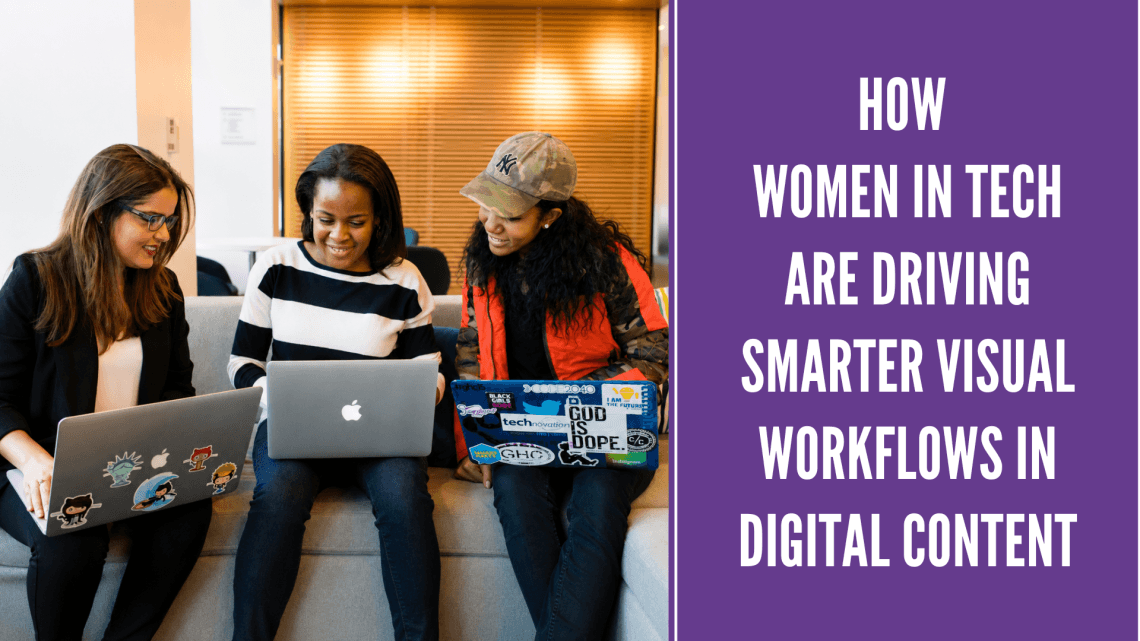
Image credit: Christina @ WOCinTechChat (Unsplash)
Across today's technology landscape, women are helping shape how digital products are designed, built, and scaled. From product management and engineering to UX design and content operations, women leaders are driving improvements that make digital systems more efficient, inclusive, and user-centered.
As organizations increasingly rely on visual content to support customer experiences, internal communications, onboarding journeys, and marketing initiatives, the systems behind those visuals have become a critical part of product success. Managing images at scale requires more than good design—it demands structured workflows, automation, and collaboration across teams.
Communities such as WomenTech Network continue to highlight how women in technology are contributing to these advancements through leadership, innovation, and cross-functional problem-solving. Whether building enterprise platforms, consumer applications, or digital experiences, many women in tech are helping organizations rethink how visual content is managed from creation to delivery.
Why Visual Workflows Matter More Than Ever
Images play a central role in modern digital experiences. Product pages, mobile applications, learning platforms, and social communities all rely on visual content to engage users and communicate information effectively.
However, as organizations scale, managing visual assets becomes increasingly complex. Teams often handle thousands of images originating from different devices, users, and locations. Variations in resolution, lighting, formatting, and quality can create inconsistencies that impact user experience and operational efficiency.
For product managers and UX leaders, image quality is no longer simply a design concern. It directly affects onboarding experiences, customer trust, accessibility, and conversion rates. As a result, visual content management has evolved into a shared responsibility involving designers, engineers, product teams, and content specialists.
The Growing Role of Women in Cross-Functional Product Leadership
One of the most significant trends in modern technology organizations is the rise of cross-functional collaboration. Women working in product leadership roles frequently serve as connectors between technical and business teams, helping align user needs with operational priorities.
Consider a mobile application that relies heavily on user-generated content. If uploaded images vary dramatically in quality, the onboarding experience can feel inconsistent and unprofessional. Rather than treating the issue as a design problem alone, product leaders increasingly collaborate with engineering teams to create automated workflows that address quality issues before images reach end users.
This systems-oriented approach reflects a broader shift occurring across the industry. Instead of solving individual content problems manually, teams are building processes that prevent those problems from occurring at scale.
Automation Is Becoming a Practical Necessity
As digital content volumes continue to grow, manual image review becomes increasingly difficult to maintain. Organizations are turning to automation to improve consistency while reducing repetitive work.
Automated image-processing workflows can handle tasks such as resizing, format conversion, quality optimization, and correction of common image issues. For example, an online red eye removal tool can be incorporated into a broader image-processing workflow to help standardize visual quality and reduce manual editing requirements when handling large numbers of user-submitted images.
The value of automation extends beyond efficiency. By reducing repetitive tasks, teams can devote more time to strategic initiatives such as product innovation, customer research, and accessibility improvements.
Women engineers and technical leaders frequently advocate for these solutions because they improve both user experiences and team productivity. The most effective systems often operate seamlessly in the background, allowing users to focus on their goals rather than technical limitations.

Image credit: AI-generated using OpenAI (ChatGPT / DALL·E)
What Research Reveals About Workflow Optimization
Industry research continues to demonstrate the benefits of structured workflows and automation. According to insights from McKinsey Digital, organizations that successfully integrate technology, process improvements, and cross-functional collaboration are better positioned to improve operational efficiency and accelerate innovation.
These findings align closely with what many technology professionals experience in practice. Teams that establish clear workflows, automate repetitive tasks, and encourage collaboration across disciplines often spend less time resolving operational bottlenecks and more time delivering value to users.
This principle is especially relevant in environments that manage large volumes of visual content, where even minor inefficiencies can compound rapidly as organizations grow.
Inclusive Design Requires Consistent Visual Experiences
Scalability is not only a technical challenge—it is also an accessibility and inclusion challenge.
Women working in UX and accessibility-focused roles frequently emphasize that inconsistent visual experiences can create barriers for users. Poor image quality, inconsistent formatting, and unpredictable presentation can negatively affect usability across devices and audiences.
Standardized visual workflows help create more inclusive digital experiences by ensuring that content is presented consistently regardless of platform or user context. When accessibility considerations are integrated into workflow design from the beginning, organizations are better equipped to serve diverse audiences.
This focus on inclusivity aligns closely with WomenTech Network's mission of creating technology ecosystems that empower diverse communities and support equitable opportunities in the industry.
Professionals seeking guidance on career development, mentorship, and leadership opportunities can also explore the Women in Tech Mentoring Program, which provides valuable resources for individuals looking to grow their impact within the technology sector.
Lessons from High-Performing Teams
Across organizations, several common patterns emerge among teams that successfully manage visual content at scale:
They establish visual standards early in the product lifecycle.
They automate repetitive processes whenever possible.
They encourage collaboration across design, engineering, and product functions.
They prioritize accessibility alongside performance.
They continuously evaluate workflows for opportunities to reduce friction.
Women leaders often play a key role in championing these practices because they recognize that successful products depend on both technical excellence and positive user experiences.
Building More Human-Centered Systems
The future of digital content management is not solely about technology. It is about creating systems that support people more effectively.
Women in tech continue to influence how organizations approach workflow design by promoting collaboration, reducing unnecessary complexity, and focusing on solutions that improve outcomes for both users and teams.
As digital experiences become increasingly visual, the ability to build scalable, efficient, and inclusive workflows will remain a competitive advantage. The professionals driving these improvements are not only advancing technology—they are helping create more human-centered systems that work better for everyone.