

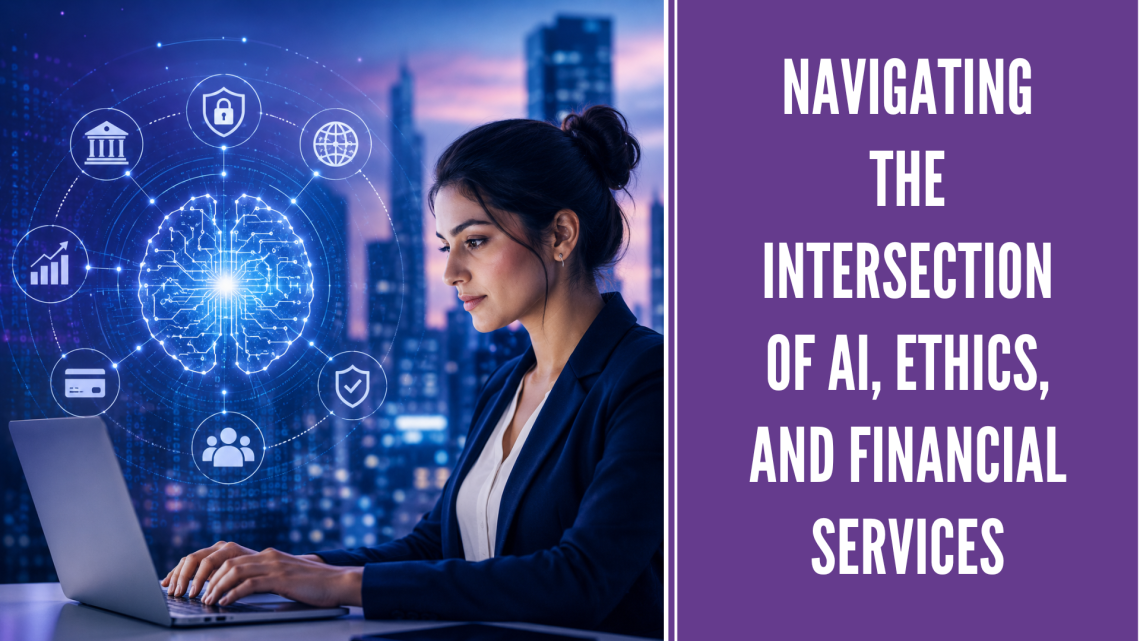
Image credit: AI-generated using OpenAI (ChatGPT / DALL·E)
The Human Side of AI in Financial Services
Artificial intelligence is transforming financial services at an incredible pace. From fraud detection and automated claims processing to personalized customer support, AI has become deeply embedded in how banks and insurance companies operate. Yet the most meaningful innovation is no longer only about faster systems or more advanced algorithms. It is about creating technology that understands people, supports trust, and improves customer experiences during stressful financial moments.
This shift creates an important opportunity for women in tech to lead with both technical expertise and human-centered thinking. In industries where decisions can directly affect someone’s savings, credit access, insurance claims, or financial stability, ethical leadership matters just as much as innovation itself.
One area where this transformation is especially visible is customer communication. Financial institutions are increasingly adopting intelligent conversational systems that provide faster and more personalized support experiences. Solutions like AI Chatbots for Banking and Insurance demonstrate how automation can help organizations improve customer engagement while maintaining service quality in highly regulated environments.
Why Ethical AI Matters More Than Ever
As AI systems become more powerful, concerns around fairness, transparency, and accountability continue to grow. Customers increasingly want to understand how automated systems make decisions that impact their financial lives. Whether approving a loan, detecting fraud, or processing an insurance claim, AI systems must operate responsibly and avoid reinforcing existing biases.
Women leaders in technology are helping drive these conversations forward. Many bring a collaborative leadership style that prioritizes inclusion, communication, and long-term trust. These qualities are becoming essential in fintech and financial AI development.
Ethical AI is not simply about compliance. It is about designing systems that reflect real human needs and experiences. Organizations that prioritize ethical technology practices are also more likely to build stronger customer relationships and maintain public trust over time.
The Expanding Role of Women in Fintech AI
The financial sector has traditionally been viewed as highly technical and male-dominated. However, the rise of AI and digital transformation is creating new opportunities for women to shape the future of financial technology.
Today, women are leading initiatives involving:
AI governance and compliance
Customer experience design
Responsible automation
Fraud detection systems
Data ethics frameworks
Conversational AI development
Predictive analytics strategy
These roles are no longer limited to operational support. Women are increasingly influencing executive-level decisions that define how organizations adopt and scale AI responsibly.
At the same time, representation still matters. Diverse teams are better equipped to identify blind spots, question biased assumptions, and design systems that serve broader communities fairly. Inclusive leadership directly contributes to stronger and more ethical technology outcomes.
Core Skills for the Future of Ethical AI
Professionals working at the intersection of AI and finance are developing a blend of technical, strategic, and communication skills. Several capabilities stand out as especially valuable for women pursuing leadership opportunities in this space.
Natural Language Understanding (NLU)
Modern AI systems are evolving beyond keyword recognition toward understanding context, tone, and customer intent. In financial services, this helps create more empathetic and efficient customer interactions during emotionally sensitive situations.
Ethical Decision-Making
AI systems are only as fair as the data and processes behind them. Leaders must understand how to evaluate bias, improve transparency, and ensure human oversight remains part of high-impact decisions.
Data Literacy
Predictive analytics is becoming central to financial planning, fraud prevention, and customer retention. Understanding how to interpret and communicate data insights is increasingly valuable across leadership roles.

Image credit: AI-generated using OpenAI (ChatGPT / DALL·E)
Cross-Functional Collaboration
Ethical AI development requires strong collaboration between engineers, legal teams, compliance specialists, designers, and executives. Leaders who can bridge technical and business conversations create stronger outcomes for both organizations and customers.
Leadership Through Human-Centered Innovation
One of the most overlooked aspects of AI leadership is emotional intelligence. Technical performance matters, but customers also remember how a system made them feel during critical moments.
I have seen organizations improve customer retention simply by redesigning automated communication to sound more supportive and transparent during stressful financial situations. Small adjustments in language, timing, and escalation processes can significantly improve customer trust.
This is where many women in technology excel. The ability to combine analytical thinking with empathy creates a leadership advantage in industries where customer confidence is essential.
Human-centered innovation also strengthens internal culture. Teams are increasingly looking for leaders who understand both technical goals and the broader social impact of the systems they build.
Predictive Analytics and Responsible Growth
Predictive analytics has become one of the most influential tools in modern finance. AI can now help organizations identify fraud risks earlier, anticipate customer needs, personalize services, and optimize operations with greater accuracy.
However, predictive systems must be built carefully. Poor-quality data or biased historical patterns can lead to unfair outcomes that disproportionately affect vulnerable groups. Responsible leadership requires organizations to continuously evaluate how AI models are trained, tested, and monitored.
This creates another important opportunity for women in tech to influence the future of ethical AI governance and accountability.
Building Confidence in the Age of Automation
Many professionals still worry that automation will reduce human value in the workplace. In reality, AI is often most effective when it supports people rather than replaces them.
By automating repetitive administrative tasks, teams can focus more energy on creativity, relationship-building, strategic thinking, and customer problem-solving. This allows technology professionals to contribute at a higher level while improving operational efficiency.
Women entering fintech and AI leadership roles should not underestimate the value of their perspective. Strong communication skills, adaptability, empathy, and ethical awareness are becoming critical leadership strengths in the AI era.
Communities and mentorship networks also play an important role in career growth. Women exploring leadership opportunities in emerging technologies can benefit from resources available through the WomenTech Network mentorship program, which supports women advancing in technical leadership positions.
Shaping the Future Responsibly
AI will continue reshaping financial services over the next decade, but technology alone will not define success. The organizations that thrive will be the ones that combine innovation with trust, transparency, and inclusive leadership.
Women in tech are uniquely positioned to help shape this future. By bringing ethical thinking, technical expertise, and human-centered leadership into AI development, they are helping create financial systems that are smarter, more accessible, and more responsible.
The future of finance is not only automated. It is collaborative, ethical, and deeply human.