

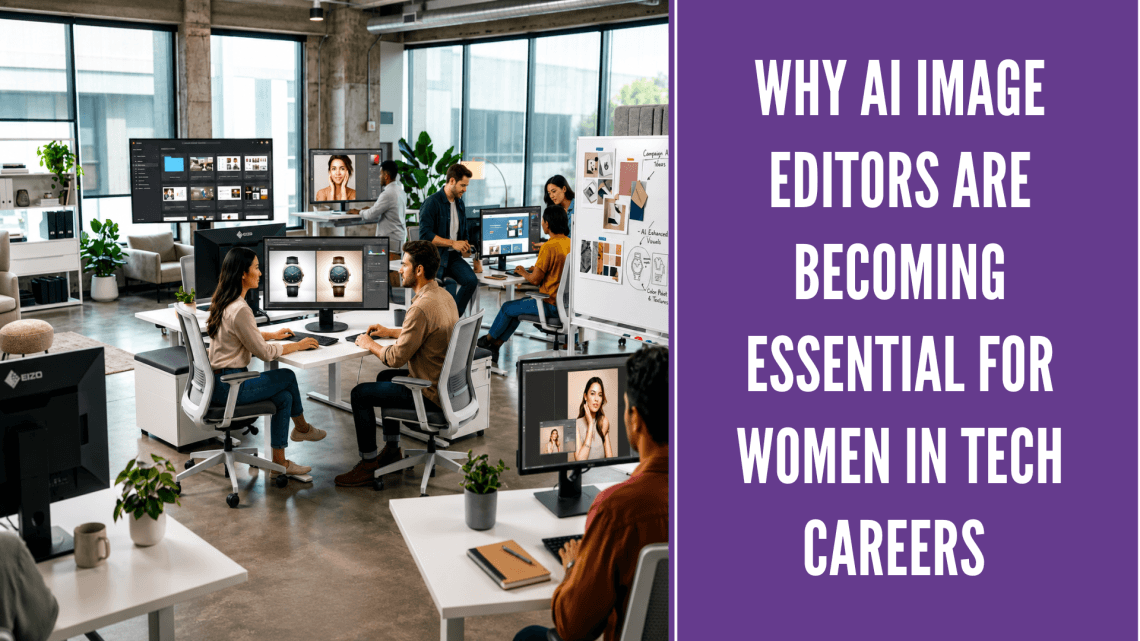
Artificial intelligence is reshaping the way technology professionals work, collaborate, and innovate. From software development and product management to digital marketing and user experience design, AI-powered tools are helping teams automate routine tasks and dedicate more time to creative problem-solving. Among these innovations, AI image editors have emerged as practical resources for professionals who increasingly rely on visual communication to share ideas, present projects, and build products.
For women in technology, this shift creates exciting opportunities. Today's roles often extend beyond technical expertise, requiring professionals to communicate ideas clearly to stakeholders, collaborate across disciplines, and build compelling presentations, reports, and digital content. The ability to create high-quality visuals has become an increasingly valuable professional skill.
AI-powered image editing tools are making these tasks more accessible. Rather than replacing creativity, they help reduce repetitive work, allowing professionals to focus on strategic thinking, innovation, and collaboration. As organizations continue integrating AI into everyday workflows, understanding how to use these technologies responsibly is becoming an important career advantage.
Creative Technology Is Expanding Career Opportunities
Technology careers have become increasingly multidisciplinary. While technical knowledge remains essential, employers are also looking for professionals who can communicate effectively, solve complex problems creatively, and collaborate across diverse teams.
Consider a product manager preparing a new feature launch. In addition to defining product requirements, they may present roadmaps to executives, create visuals for customer announcements, or explain technical concepts to non-technical stakeholders. Similarly, software engineers frequently rely on diagrams, presentations, and documentation to communicate ideas with colleagues from different departments. These responsibilities highlight how visual communication has become an everyday workplace skill rather than one reserved exclusively for designers.
This evolution is opening new opportunities for women across product management, software engineering, UX research, cybersecurity, digital marketing, entrepreneurship, and emerging AI-related fields. Professionals who combine technical expertise with strong communication skills are increasingly positioned to lead projects, influence strategic decisions, and mentor others.
Industry research reflects this trend. The World Economic Forum's Future of Jobs Report 2025 identifies analytical thinking, creativity, technology literacy, and AI-related skills among the fastest-growing capabilities employers seek. Rather than viewing creativity and technology as separate disciplines, organizations increasingly value professionals who can integrate both to solve business challenges.
For women building careers in technology, this presents an opportunity to broaden their impact. Developing AI literacy alongside communication and creative problem-solving skills enables professionals to contribute beyond traditional job descriptions and participate more actively in leadership conversations.
Professional communities also play an important role in this growth. Through mentorship, networking, and continuous learning, women can strengthen both their technical expertise and leadership capabilities. Organizations such as WomenTech Network provide opportunities to connect with peers, learn from experienced leaders, and stay informed about emerging technologies that are shaping the future of work.
AI Image Editing as Part of the Modern Technology Workflow
The demand for digital content has grown dramatically across nearly every industry. Product teams prepare launch materials, marketers create campaigns for multiple platforms, engineers develop technical documentation, and startup founders build investor presentations and brand assets. As visual communication becomes part of everyday work, professionals are increasingly looking for ways to simplify repetitive editing tasks without compromising quality.
An AI Image Editor can support these workflows by automating routine tasks such as removing backgrounds, enhancing image quality, resizing assets for different platforms, and making quick visual adjustments. Instead of spending valuable time on manual edits, professionals can focus on refining ideas, collaborating with colleagues, and delivering meaningful outcomes.
One example is Higgsfield, which offers AI-powered image editing capabilities that can simplify repetitive creative tasks while allowing users to maintain control over the final design. As with any AI platform, the greatest value comes from using it to enhance—not replace—human creativity and judgment.
Whether preparing stakeholder presentations, educational resources, product documentation, or marketing campaigns, AI-assisted editing helps professionals communicate ideas more effectively while maintaining consistent visual quality.
Women Entrepreneurs Are Using AI to Build Stronger Brands
Launching and growing a business requires far more than developing a great product or service. Entrepreneurs are responsible for communicating their vision, building customer trust, maintaining a consistent brand, and adapting quickly to changing market demands. For many women founders, these responsibilities span marketing, sales, operations, customer support, and product development—all while managing limited time and resources.
Visual communication plays a central role in this process. Whether preparing an investor presentation, creating educational content, promoting a new product, or building an online presence, high-quality visuals help businesses establish credibility and connect with their audiences.
AI-powered image editing tools can make these everyday creative tasks more manageable. Rather than spending hours on repetitive adjustments or outsourcing every visual asset, entrepreneurs can quickly prepare polished images for presentations, websites, newsletters, and social media. This efficiency allows founders to dedicate more time to strategic planning, customer engagement, and business growth.
However, technology alone does not build a successful brand. The most memorable brands are rooted in authentic stories, clear values, and a deep understanding of customer needs. AI can support content creation, but it cannot replace the creativity, empathy, and vision that define successful entrepreneurs.
As businesses grow, founders also benefit from establishing brand guidelines that ensure consistency across all communication channels. Colors, typography, imagery, messaging, and accessibility standards help create a recognizable identity regardless of which tools are used to produce content.
Ultimately, AI should be viewed as a productivity partner rather than a creative replacement. Used thoughtfully, it enables entrepreneurs to spend less time on repetitive production work and more time developing innovative products, strengthening customer relationships, and leading their organizations.
Essential Skills for Women in Tech in the Age of AI
As artificial intelligence becomes integrated into more aspects of the workplace, technical expertise alone is no longer enough. The professionals who thrive are those who combine digital skills with creativity, adaptability, and strong communication.
While AI tools continue to evolve, several human-centered capabilities remain essential for long-term career success.
AI Literacy
Understanding how AI works—and where its limitations lie—is becoming a foundational professional skill. AI-generated content requires careful review to ensure it is accurate, ethical, and appropriate for its intended audience. Professionals who can evaluate AI outputs critically will be better equipped to make informed decisions and maintain quality standards.
Visual Communication
Whether explaining technical concepts, presenting project updates, or sharing research findings, the ability to communicate visually has become increasingly valuable. Clear diagrams, engaging presentations, and accessible graphics help teams collaborate more effectively and make complex information easier to understand.
AI image editing tools can support this work, but successful communication still depends on understanding design principles, accessibility, and audience needs.
Creative Problem-Solving
Artificial intelligence can generate ideas quickly, but choosing the right solution requires human judgment. Professionals who approach challenges with curiosity, empathy, and critical thinking continue to create the greatest value for their organizations.
Instead of relying on AI for every decision, successful professionals use it to explore possibilities, test ideas, and improve efficiency while retaining ownership of the final outcome.
Communication and Collaboration
Modern technology projects involve cross-functional teams that include engineers, designers, marketers, researchers, and business leaders. Professionals who communicate clearly and collaborate effectively are often better positioned to lead initiatives and influence decision-making.
AI may automate routine tasks, but it cannot replace meaningful conversations, relationship-building, or collaborative leadership.
Lifelong Learning
Technology continues to evolve at an extraordinary pace. Investing in continuous learning helps professionals remain adaptable as new tools and workflows emerge.
This learning might include exploring new AI applications, strengthening leadership skills, improving public speaking, earning certifications, or participating in professional communities that encourage knowledge sharing.
Organizations such as WomenTech Network offer opportunities to learn from experienced professionals, connect with mentors, and engage with peers who are navigating similar career journeys. These communities support both technical development and professional growth by encouraging collaboration and lifelong learning.
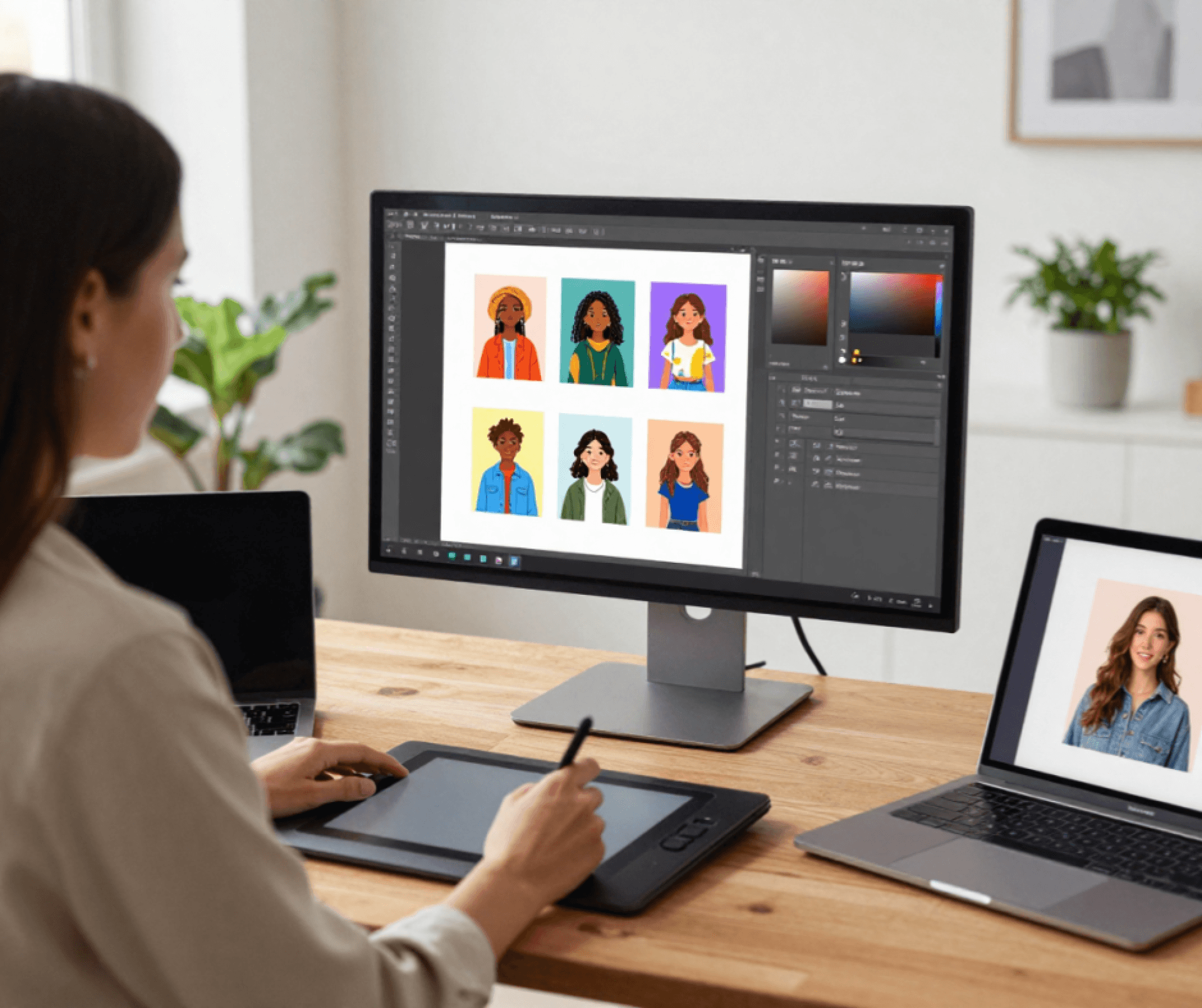
Image credit: Created with Canva AI
Using AI Without Losing Creativity
One of the most common concerns surrounding artificial intelligence is whether it will diminish human creativity. In practice, the opposite is often true. When used intentionally, AI can remove repetitive tasks and create more time for brainstorming, experimentation, and innovation.
The key is to approach AI as a creative assistant rather than a creative director.
Before editing or generating visual content, start by identifying the purpose of the project. Consider the audience, the message, and the desired outcome. Having a clear objective helps ensure that every design decision supports effective communication rather than simply producing visually appealing content.
It is equally important to review every AI-generated output carefully. Images should be checked for accuracy, accessibility, inclusivity, branding consistency, and copyright considerations. Human oversight remains essential for maintaining quality and ensuring that visuals align with organizational values.
Professionals can also strengthen their creative capabilities by continuing to learn fundamental design principles such as typography, color theory, composition, and visual hierarchy. These skills remain valuable regardless of which technologies are used during the creative process.
Practical Tips for Responsible AI Use
Start with a clear communication objective before creating visuals.
Use AI to automate repetitive editing rather than creative decision-making.
Review every output for accuracy, accessibility, and ethical considerations.
Maintain consistent branding across all communication channels.
Continue developing design and storytelling skills alongside technical expertise.
Stay informed about evolving AI regulations, copyright guidance, and responsible AI practices.
By combining AI with thoughtful decision-making and continuous learning, professionals can enhance productivity without sacrificing originality or authenticity.
Real-World Examples of AI Supporting Women's Careers
Artificial intelligence is already influencing how professionals approach creative work across industries. While the specific applications vary by role, the underlying goal remains the same: reducing repetitive tasks so people can focus on strategic thinking, collaboration, and innovation.
Product Management
Product managers often coordinate work across engineering, design, marketing, and leadership teams. Launching a new feature may involve creating presentations, writing customer communications, and preparing visual materials for stakeholders.
AI image editing can simplify routine design tasks, making it easier to prepare polished visuals while allowing product managers to concentrate on product strategy, customer feedback, and roadmap planning.
Software Engineering
Software engineers frequently communicate complex technical concepts to audiences with varying levels of technical expertise. Architecture diagrams, technical documentation, onboarding materials, and conference presentations all benefit from clear, accessible visuals.
AI-assisted editing can help improve the presentation of these materials, while engineers continue to provide the technical accuracy and context that AI cannot replicate.
UX Research and Design
User experience professionals regularly transform research findings into reports that influence business decisions. Well-designed visual summaries help stakeholders quickly understand customer insights and prioritize improvements.
By streamlining repetitive editing tasks, AI enables researchers and designers to spend more time analyzing user behavior, testing ideas, and improving product experiences.
Digital Marketing
Marketing professionals often create content for multiple channels simultaneously, including websites, email campaigns, social media, webinars, and presentations.
AI-powered editing tools can help adapt visual assets for different formats more efficiently, allowing marketers to focus on campaign strategy, audience engagement, and performance analysis rather than repetitive production work.
Entrepreneurship
Women entrepreneurs frequently manage multiple business functions simultaneously, especially during the early stages of growth. AI-supported creative workflows can help founders produce professional marketing materials more efficiently while keeping their focus on innovation, customer relationships, and business development.
Across all these roles, AI serves as a productivity tool—not a replacement for professional expertise. The creativity, judgment, and leadership that individuals bring to their work remain the qualities that drive meaningful impact.
Career Growth Extends Beyond AI Skills
Learning how to use AI effectively is valuable, but long-term success depends on developing a broad set of professional capabilities.
Technology continues to evolve rapidly, and the professionals who adapt successfully are those who combine technical expertise with continuous learning, strong communication, and meaningful professional relationships.
Professional communities also play an important role in long-term career development. Mentorship, networking, and continuous learning help women stay informed about emerging technologies while building meaningful relationships with peers and industry leaders. Communities such as WomenTech Network provide opportunities to exchange knowledge, strengthen leadership skills, and prepare for new opportunities in an increasingly AI-enabled workplace.
Invest in Lifelong Learning
Building a sustainable career means remaining curious and open to new ideas. Whether learning a new programming language, exploring emerging AI applications, strengthening leadership skills, or improving public speaking, continuous development helps professionals remain adaptable as industries evolve.
Small, consistent learning habits often have a greater long-term impact than trying to master every new technology at once.
Build a Professional Network
Career growth rarely happens in isolation.
Networking provides opportunities to exchange ideas, discover emerging trends, find mentors, and learn from professionals with different experiences and perspectives.
Communities such as WomenTech Network create spaces where women in technology can connect with peers, participate in educational events, explore mentorship opportunities, and learn from leaders across industries. Building these relationships supports both professional development and long-term career resilience.
Develop Leadership Skills
Leadership is not limited to management positions. Professionals demonstrate leadership by solving problems collaboratively, sharing knowledge, mentoring colleagues, and creating inclusive environments where diverse perspectives are valued.
As AI becomes more integrated into workplaces, organizations will continue looking for leaders who can balance technological innovation with empathy, ethical decision-making, and effective communication.
Build a Portfolio That Shows Impact
Whether applying for a new role, seeking promotion, or launching a business, a strong portfolio tells a story.
Instead of showcasing only finished deliverables, consider highlighting:
The problem you solved
Your decision-making process
Collaboration with teammates
Measurable outcomes
Lessons learned
This approach demonstrates strategic thinking in addition to technical ability.
Looking Ahead
Artificial intelligence will continue to reshape how professionals create, communicate, and collaborate. New tools will emerge, workflows will evolve, and expectations across many technology roles will continue to change.
What is unlikely to change is the importance of human skills.
Creativity, curiosity, critical thinking, empathy, and ethical judgment remain essential qualities that technology cannot replace. AI can generate content, accelerate repetitive tasks, and support productivity, but people continue to provide the context, perspective, and decision-making that transform ideas into meaningful outcomes.
For women in technology, this represents an opportunity to expand—not redefine—their professional capabilities. By embracing AI as one tool within a broader skill set, professionals can focus more on innovation, leadership, collaboration, and solving real-world challenges.
The future belongs to individuals who understand both technology and the people it serves.
Key Takeaways
AI image editing can reduce repetitive production work, creating more time for creativity, collaboration, and strategic thinking.
Human skills—including communication, critical thinking, empathy, and leadership—remain the foundation of successful technology careers.
Continuous learning and AI literacy help professionals adapt confidently as workplace technologies evolve.
Strong professional networks, mentorship, and community engagement are valuable components of long-term career growth.
The most effective use of AI combines automation with thoughtful human oversight, ensuring that technology enhances rather than replaces creativity.
Conclusion
Artificial intelligence is transforming visual communication across technology, marketing, product development, and entrepreneurship. As these tools become more accessible, professionals have new opportunities to work more efficiently while expanding their creative capabilities.
For women in tech, AI image editing is not simply about producing visuals more quickly—it is about creating more time for innovation, collaboration, and leadership. Used responsibly, AI supports professionals by reducing repetitive tasks while leaving creativity, critical thinking, and strategic decision-making firmly in human hands.
As AI continues to evolve, the most successful professionals will not be those who rely on technology alone, but those who combine technical expertise with creativity, empathy, collaboration, and a commitment to lifelong learning. For women in tech, that combination creates opportunities to lead innovation while helping shape a more inclusive digital future.