

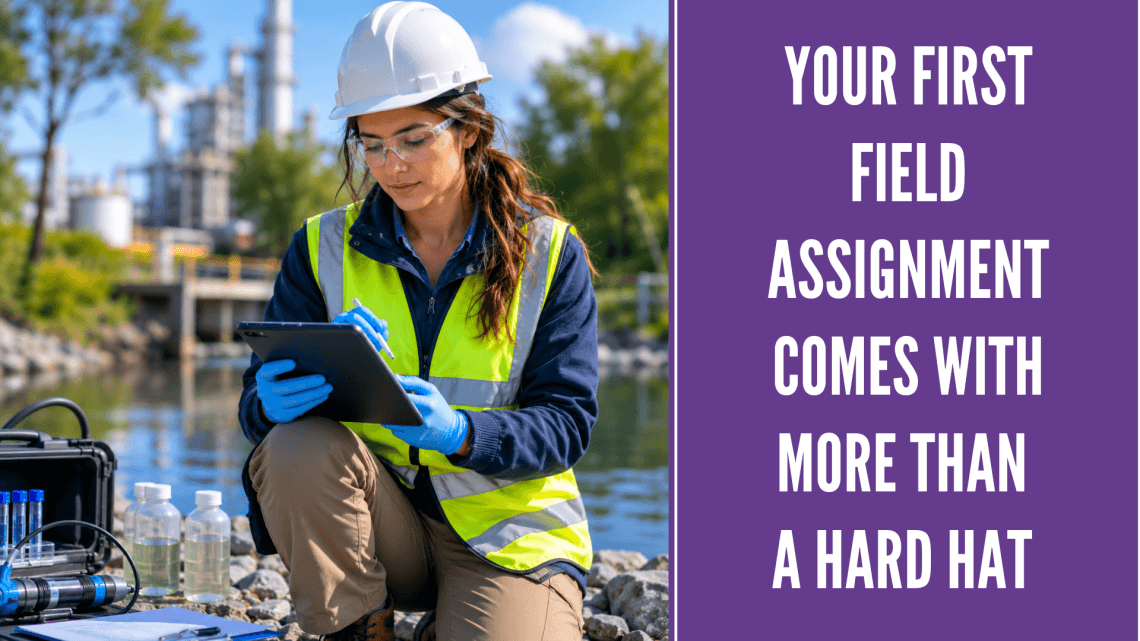
Image credit: AI-generated using OpenAI (ChatGPT / DALL·E)
A first field assignment can sound refreshingly concrete. After months of spreadsheets, maps, sensor feeds, or environmental reports, you finally get to see the place behind the data.
Then the calendar invite lands with a gate address, a 6:30 a.m. arrival, and three unfamiliar acronyms. Someone asks whether you have steel-toe boots. Another person says the site will “sort out the rest.”
That’s the moment to slow down. Fieldwork can be one of the most useful parts of an environmental-tech career, but the quality of the experience depends heavily on what happens before anyone steps through the gate.
The site changes the job
Environmental technology covers a wide range of work. A GIS analyst may spend one week cleaning monitoring data and the next checking sensor coordinates beside a closed landfill. A junior consultant might photograph sampling points while an experienced colleague collects groundwater readings.
Neither person necessarily thinks of herself as a hazardous-waste worker. Her title may say analyst, engineer, technician, or project coordinator. The site, task, exposure potential, and emergency role matter more than the title on her email signature.
For someone assigned to short-term monitoring or surveying at a covered site, a 24-hour HAZWOPER course may form part of the required preparation, along with site-specific instruction and supervised field experience. That doesn’t mean every environmental field visit calls for the same course. “I’m only there to observe” simply isn’t enough information to judge what preparation is required.
OSHA distinguishes between occasional workers performing limited tasks with unlikely exposure above permissible limits and general site workers who may face greater exposure. Its HAZWOPER preparedness guidance also states that employers must train people for the responsibilities they may actually be assigned. Someone staying in a clean support area has a different job from someone entering a controlled zone, handling samples, or responding to a release.
Early-career professionals sometimes get caught by vague answers because they don’t want to look difficult. They assume the senior person has checked everything. Usually, the senior person has checked the project. That isn’t always the same as checking your exact task, access level, clothing, medical clearance, or training record.
The best preparation starts with better questions
Before a first visit, ask for the site name, planned task, safety contact, expected duration, and working conditions. “Outdoor site visit” could mean forty minutes on a paved perimeter road. It could also mean six hours walking uneven ground near heavy equipment in August heat.
Ask where you’ll be allowed to go. Find out whether there are controlled work zones, what hazards are known, and whether you’ll handle equipment that has entered a contaminated area. Confirm what happens if the scope changes. Field assignments often expand when someone realizes an extra photograph or measurement would save another trip.
A useful briefing should leave you able to explain the day in plain language: “I’ll sign in with the site supervisor, attend the safety briefing, stay with my assigned colleague, collect GPS coordinates outside the controlled zone, and stop work if the boundaries or task change.” If you can’t describe the workflow that clearly, you probably need more information.
This preparation belongs within the broader mix of technical judgment, regulatory knowledge, data analysis, and communication involved in an environmental technology career. Knowing how to build a dashboard is valuable. Knowing when field conditions no longer match the assumptions behind it is just as important.
Pay attention to ordinary details, too. Will you drive through an active industrial site? Are phones allowed? Is there a clean place to eat or refill water? These questions feel minor until one goes wrong two hours from the office.
Good teams don’t treat them as evidence that a new employee lacks confidence. They see someone who understands that fieldwork has boundaries. A manager who responds with jokes or “you’ll figure it out when you get there” is giving you useful information, just not the kind you hoped to receive.
PPE has to work on your body
The most visible part of field preparation is usually the gear: hard hat, glasses, gloves, boots, high-visibility vest, hearing protection, coveralls, or a respirator. New workers often focus on whether each item is present. Fit matters just as much.
Oversized gloves reduce dexterity when you’re adjusting a tripod or opening sample containers. A low-hanging vest can catch on equipment. Safety glasses that slide whenever you look at a tablet won’t protect your eyes reliably. The wrong boots can turn a routine inspection into a day of blisters and poor footing.
OSHA’s personal protective equipment guidance says equipment should fit properly and that workers must know how to put it on, adjust it, wear it, remove it, and understand its limitations. “Unisex medium” isn’t a safety assessment. Neither is handing the smallest person whatever remains in the supply cabinet.
Women can feel pressure to make do because they don’t want to delay the crew or draw attention to their size, especially on a first assignment. Quietly rolling up sleeves, tightening a large harness as far as it will go, or wearing loose gloves creates a problem that follows you into the work area.
Try everything before the morning of the visit. Bend, reach, walk, crouch, and use the tools you’ll carry. Wear the boots long enough to notice rubbing. Check whether eye protection interferes with prescription glasses. If a respirator is part of the job, don’t confuse receiving one with being cleared and fit-tested to use it.
The barriers women encounter in environmental tech are often discussed in terms of hiring, advancement, and representation. Those issues matter, but inclusion also appears in ordinary operational decisions. A workplace isn’t fully prepared for women in field roles if its equipment purchasing still assumes one default body.
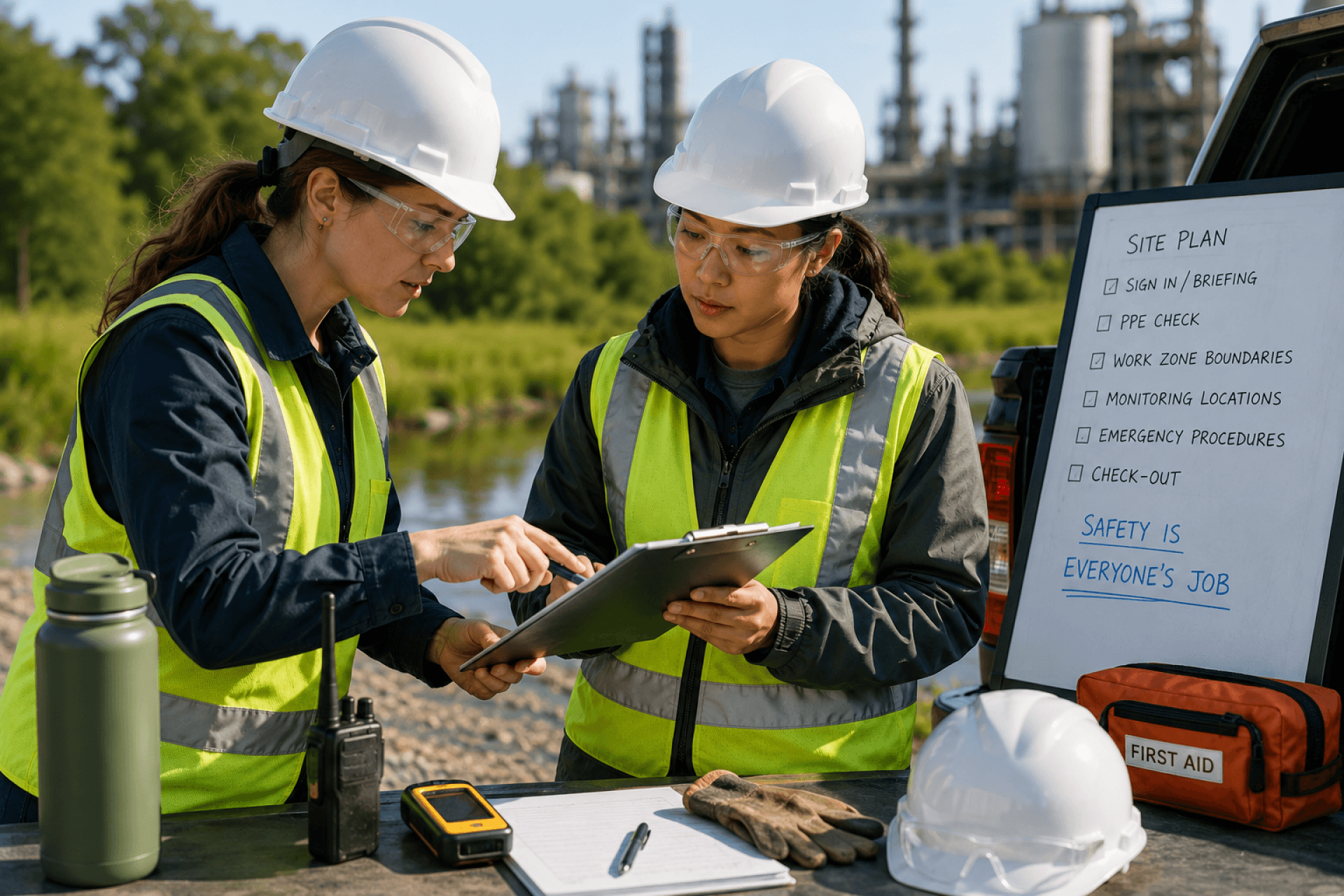
Image credit: AI-generated using OpenAI (ChatGPT / DALL·E)
Your communication matters when the plan changes
The technical work may be the reason you’re on site, but communication often determines whether the day stays safe and useful. You need to know who can change the task, who can stop it, and how concerns are raised without being softened into polite hints.
Imagine that you arrive to map monitoring wells from outside a marked boundary. Midway through the visit, someone asks you to step inside for a clearer reading. The request sounds small and may save twenty minutes. It may also move you beyond the conditions used to plan your training, PPE, supervision, and access.
A clear response doesn’t require a speech: “That’s outside the task I was briefed for. Can we check with the site safety lead before changing it?” The wording is calm, specific, and keeps the discussion on the work rather than on whether you seem comfortable.
Stop-work language is worth practicing before you need it. So is repeating instructions when noise, radios, or protective equipment make conversation harder. “We’re staying north of the cones and meeting at the trailer if the alarm sounds. Correct?” takes seconds and catches misunderstandings early.
Fieldwork also gets easier when you know someone outside your reporting line who understands the setting. A mentor found through a professional network or a women-in-tech mentoring platform can help separate normal first-day uncertainty from weak preparation. She may know the questions you haven’t learned to ask yet, including whether long hair must be secured a certain way or how much spare clothing to keep in the car.
After the visit, write down what should improve next time. Maybe the briefing arrived too late, the maps were outdated, or the smallest safety glasses still slipped. Specific feedback gives a manager something to fix before the next new hire faces the same problem.
Wrap-up takeaway
A field assignment should expand your skills, not test how much uncertainty you’ll absorb without speaking up. The useful questions are practical: What am I doing, where may I go, what could change, who makes that call, and does the equipment fit me? Good preparation often feels uneventful because everyone knows the plan and small problems are handled before they become site problems. That’s the standard to look for. Before your next visit, open the calendar invitation and write down the three details you still need confirmed today.