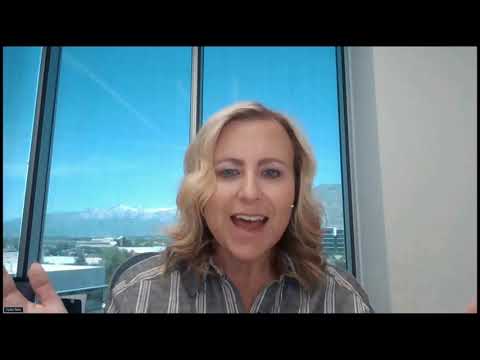
When Impossible Meets Strategy: Soft Skills for The World’s Hardest Problems
Raquel Schreiber24:382024
When Tesla's battery line vendors were fired, 30 people had to build it
In 2017, in a Tesla factory in Sparks, Nevada, the vendors who designed the battery lines for the first mass-market car had just been fired, and about 30 engineers were told there was no one else. Raquel Schreiber, who later led Tesla's mass-market battery validation program, was in that room. For anyone staring at a problem that feels too big, the question is how a small, committed group actually makes change.
Learn the four beliefs she uses to turn impossible problems into focused, collaborative action
Raquel Schreiber, founder of The Gearworks Group and former lead of Tesla's mass-market battery validation program, argues that big, impossible problems get solved by small groups who simply decide to act. Drawing on the Model 3 battery ramp, she sets out four beliefs: in your own gifts, in your team, in systems thinking and cross-disciplinary collaboration, and in finding the right lever of impact.
“But I think the people who decide to do something are the ones who will.”
“It's important to know when we believe in ourselves that skills and knowledge are accumulated and you can start before you have all of the tools that you need.”
What you will learn
Balance self-belief with humility and urgency using the two-pocket practice Raquel learned in her Jewish tradition.
Start before you feel fully ready and set up the feedback and growth mindset that make learning compound.
Design teams that are greater than the sum of their parts by building trust, complementary skills and time to reflect together.
Redraw the envelope around a complex problem to see which levers you control and where the riskiest parts are.
Apply additionality and an 80-20 lens to choose the one change that would move the needle most.
Key takeaways from the speaker
A celebration and re-frame of systems-thinking and lever-optimization as outsized tools for complex, cross-disciplinary impact.
Self-identification as a changemaker: you're beating the odds by showing up and deciding to (and then doing it strategically).
Learning compounds! A systems-engineering approach helps you stay agile for accelerated and de-risked outcomes, while doing bold, risky things.
Details
Level
All levels
Format
Talk
Technical depth
Non-technical
For
All career stages
Length
24:38
Published
May 2024
Questions this talk answers
How does a small group of committed people actually make change?
By deciding to do it and then acting strategically: believing in their own gifts, building strong teams, thinking in systems and finding the right lever of impact.
Do you need to know everything before you start?
No. Raquel says skills and knowledge accumulate, so you can start before you have every tool you need, and learning compounds once you begin.
What makes a team greater than the sum of its parts?
It hinges on trust, plus complementary skills, feedback and time to reflect together, which breed belonging and let the team focus on the problem rather than on each other.
Why is systems thinking so valuable for hard problems?
Viewing the whole mission as a system lets teams see the riskiest parts, test and learn quickly, and keep tactics tied to strategy.
How do you choose where to apply your effort for impact?
Ask what is additional: what would happen without you, where in the value chain you enter, and which single change would fix most of the problem.
About this talk
Building cross-disciplinary solutions to our world's Big Problems is our most urgent, important task. But how does a small group of thoughtful, committed people *actually* make change? Drawing on my experiences launching Tesla's infamous Model 3 program and multiple early stage climate deep-technologies, together we'll look at the patterns. We’ll celebrate systems-thinking and lever-optimization as outsized tools, and we’ll take heart in identifying – in detail – the characteristics of the people and teams who do the impossible.
I'll start with a story and then we'll get into the power of collaboration and system coordination and why I believe it's potentially the most impactful and definitely, I think, the most underrated skill and asset that most teams that make real big change have. Raquel: I'm Raquel. I run The Gearworks Group. It's a boutique advisory for businesses and leaders making outsized impact. I work in particular with deep tech founders, emerging tech founders, and with women who have niche expertise in areas of high potential social impact to think about how to get from here to there, there being really, really big impact dreams, but also the next stage.
Raquel: Step with a product focused mindset. I'm super excited to chat. Okay. A story. Look around. Look at the people sitting around you. The people in this room are the ones who are going to make it happen. Raquel: You are the ones who are going to make it happen. No one else. There is no one else. There are no slides. There is also no one else.
Raquel: That is a quote that was said to me in a room, in a factory, in Sparks, Nevada. J.B. Straubel, the CTO of Tesla, co-founder of Tesla, in 2017, said that to me and the battery engineering team, battery designers, battery manufacturing engineers. Raquel: Our contracted vendors who had designed our manufacturing lines for our first mass market product, the product that was going to make us profitable as a company, had just been fired.
Raquel: The leaders of our teams who had designed the systems had just been fired. Raquel: About 30 of us were left. And Elon had decided we are not going to rely on third party partners. We will believe in the power of each other and of the people in this room to make the right decisions, to hire in the right people and to build this.
Raquel: It had been 10 years at that point of trying to prove to the world that electric vehicles were real, that battery storage could become cheap enough to enable storage, solar and wind energy. Raquel: And it had been two months of trying to manufacture this specific battery, failing to do so. Raquel: And it was up to us to prove that this could work.
Raquel: And so what I want to talk today about is that the people who decide to do something are the ones who will. Raquel: And that sounds maybe bold and it sounds maybe like we have a bunch of stories in our head of people who thought they could do things and flew too close to the sun and were hubristic about it and didn't really know what they were doing.
Raquel: That's a story, I think, as a woman, I've internalized that I'm not ready to do it. Raquel: I don't know how to do it. Raquel: But I think the people who decide to do something are the ones who will. Raquel: Social anthropologist Margaret Mead said, "Never doubt that a small group of thoughtful, committed citizens can change the world.
Raquel: In fact, it's the only thing that ever has." Raquel: And so my question, my question of research academically and my question of research through my life experiences in operating settings is how? Raquel: How does a small group of thoughtful, committed citizens actually make change? Raquel: And today in this session, I'm here to tell you to believe in four things with me, four things.
Raquel: Believe in what you bring to the table, your own individual gifts. Raquel: Believe in what your team brings to the table and not to settle for a team that isn't greater than the sum of its parts. Raquel: Believe that cross-disciplinary collaboration and systems thinking accelerates everything. Raquel: And four, to find the right lever of impact. Raquel: Believe that you can find the right level of impact and then that will make a difference.
Raquel: So believing in what you bring to the table, item number one, I'm Jewish. Raquel: I grew up with a concept in my tradition called "bishvili nivraha ulam" . Raquel: What this means is that there's a story told that when we walk the earth during our time on this planet, Raquel: in one pocket, you're supposed to have a piece of paper that says "bishvili nivraha ulam" .
Raquel: The world was created for me. Raquel: And in the other pocket, we're supposed to have a piece of paper that says "but I am but dashed and ashes." Raquel: And living life with this balance in mind is really important. Raquel: These are like our words of affirmation that you say in the morning to yourself. Raquel: Write them on your bathroom mirror.
Raquel: It's important to have that boost. Raquel: And on the other hand, we all need a dose of humility and a sense of urgency. Raquel: What does the world need from me on my short time here? Raquel: And to me, this story exemplifies this idea of a balance, believing in our own abilities Raquel: and putting our abilities to really good use and truly believing in them.
Raquel: And so, you know, a story from my personal experience is my very first day at Tesla, where I started as an intern and then stayed and eventually went back to college and eventually came back full time and rose there. Raquel: My first day at Tesla, I had never been in an operational factory before. Raquel: I showed up to my internship in manufacturing operations and was assigned as my mentor was a six foot four former Marine.
Raquel: And five foot four me and six foot four Todd would walk around the factory together safety shoes and my safety gear. Raquel: And it was a crash course. Raquel: I learned that summer and for nearly a year before I went back to school that believe in your own abilities doesn't mean you know everything on day one.
Raquel: About a week into the job, Todd came to me and gave me a book called Lee Manufacturing for Dummies and the Toyota Way Handbook. Raquel: These are basically Lee Manufacturing 101 principles and said, I think you should read these, but believe in your own abilities doesn't mean you need to know everything on day one. Raquel: It's important to know when we believe in ourselves that skills and knowledge are accumulated and you can start before you have all of the tools that you need.
Raquel: So I knew that I had curiosity. Raquel: I knew that I had gumption. Raquel: I knew that I had an almost a full engineering degree at that point. Raquel: I knew I was proactive. Raquel: I knew I asked so many questions and learn super quickly and I was able to run responsibly with any directive that Todd gave me.
Raquel: And at the time that was enough and learning compounds. Raquel: And so I'm going to put a question. Raquel: I'm going to pose a question for everyone here to put into the chat. Raquel: First, just like think for yourself. Raquel: What was something you started before you were ready? Raquel: Think of something. Raquel: Don't put it in the chat yet.
Raquel: Think of something you started before you were fully ready or before you felt fully ready. Raquel: Do you have something? Raquel: I want you to ask yourself now. Raquel: Yeah, you can feel free to drop it in the chat. Raquel: I want you to ask yourself, did it compound? Raquel: Once you started, did your learning compound on itself for it to feel successful for you?
Raquel: And to think, if so, why? Raquel: And if not, why not? Raquel: Tell me about, in whatever phrase you want to share, what is a sufficient level of readiness? Raquel: When you think about that example, and did it work for you and did it not work for you? Raquel: What was sufficient level of readiness for you?
Raquel: Help from a great mentor. Raquel: Cindy, when you started riding a lawnmower and you didn't feel ready, was it successful? Raquel: Yeah, figure out ability. Raquel: I think most women have a sense of figure out ability that is not quantifiable. Raquel: There are ways to write that in a resume for sure, but I think it's something we forget as a tangible skill to list amongst ourselves.
Raquel: Brutally honest feedback. Raquel: I love that, right? Raquel: If you start before you're ready, how do you actually get better? Raquel: The tools to actually allow it to compound. Raquel: Not afraid of anything. Raquel: That also jives well with the feedback piece, like truly not being afraid. Raquel: People followed you. Raquel: Wow. Raquel: That's incredible, Paula.
Raquel: Not taking things personally. Raquel: Yes. Raquel: Like the ability to have a learning mindset, a growth mindset. Raquel: If you're going to start before you're ready, have a growth mindset. Raquel: Totally. Raquel: Thank you. Raquel: I'm already, I'm inspired by this. Raquel: Okay. Raquel: I'm going to talk about item number two, which is believe in what your team brings to the table.
Raquel: So number one was what you bring to the table. Raquel: And I love this growth mindset that's coming through. Raquel: But believing in what your team brings to the table. Raquel: So the common thinking is if you want to go fast, go alone. Raquel: If you want to go far, go together. Raquel: I think having a growth mindset, believing in oneself, you know you can get a lot done.
Raquel: That's incredible. Raquel: What does it mean to have a team that is greater than the sum of its parts? Raquel: To me, this comes, you know, I'm a product person. Raquel: By training, I'm an engineer. Raquel: By experience, I'm a product person. Raquel: I think a lot about systems and system level engineering. Raquel: The best way to get things done in this world, in my opinion, is with coordination and cross-disciplinary collaboration.
Raquel: And that 100% hinges on trust Dr. Blankensop. Raquel: Thank you. Raquel: Yes. Raquel: Not settling for a team that is greater than the sum of its parts is the most incredible thing I think that any leader can do. Raquel: And it's not just about hiring and it's not just about firing quickly when it's not working. Raquel: It's designing for a team that on the whole is better than any one person could design together.
Raquel: And my question for you in the chat is first think about a work dynamic that you've been a part of where working together felt like magic. Raquel: Like a little bit of extra cumulative boost by having these people in the room or as a partner to you. Raquel: And tell me about what you think that magic was in one phrase.
Raquel: Like where did that magic come from? Raquel: Trust someone already had put in the chat, which I think is huge. Raquel: Anyone else? Raquel: I think one of the major things, complementary skills, yes. Raquel: Complementary skills is a big piece. Raquel: I think when we think about diversity in hiring, diversity in teams, we sometimes think about what people look like, where they come from.
Raquel: We sometimes think about complementary skills and those are usually put into functional boxes. Raquel: But that can be thought of much more broadly. Raquel: Feedback. Raquel: That's actually really huge. Raquel: Time to reflect together. Raquel: Yeah. Raquel: Yeah, like a sense of that breeds a sense of belonging. Raquel: That breeds a sense of trust. Raquel: That breeds a sense of in it togetherness, which allows for failure.
Raquel: It allows for everyone to focus on the problem at hand, not on treating each other as problems. Raquel: Amazing. Raquel: Okay. Raquel: We're nearing time, so I'm going to keep us going, but I'm already really inspired and excited to connect with each other. Raquel: Number three, as we go through our list of four, collaboration and systems thinking elevates and accelerates.
Raquel: So maybe your skills are your functional area of expertise. Raquel: Maybe your skills are in helping elevate everyone around you or elevating an entire system or in facilitating collaboration or multiple of these things. Raquel: And so I personally believe that the systems engineering, the product level thinking that happens when you believe in a system as a whole is the magic thing that enables innovation and big impossible challenges to happen most quickly.
Raquel: It allows you to test quickly and learn quickly because you're viewing this entire company goal or mission goal as a system. Raquel: So you can see where the riskiest parts in the system and focus attention there. Raquel: You can reorient really quickly and strategically tactics and strategy, lower level tactics, high level strategy can always stay really tied.
Raquel: And it allows you to realize where your toolkits are enough and where you need additional tools. Raquel: So there's something I like to think about called redrawing the envelope. Raquel: In engineering land, you draw an envelope around a closed system. Raquel: In complex systems that have a lot of levers, you ideally want to redraw the envelope around enough pieces of it that you have full control over it.
Raquel: So if you're building a physical product, if you're building a software product, you can control the product development. Raquel: Can you control the customer? Raquel: Maybe you can control the customer selection, but you can't control the customer. Raquel: Can you control policy? Raquel: You can try to influence policy, but that's outside of your scope. Raquel: How do you draw an envelope around a big problem in the world such that all of these pieces speak to each other and you're using them all as potential leverage?
Raquel: If you're trying to solve a big problem that's more of a policy problem than a product problem, how do you design for policy and design for product at the same time? Raquel: So solving cross-functional problems requires diverse skill sets where people can go really deep on really specific tools, but also this level of systems thinking. Raquel: And the most valuable thing that this systems thinking group brings to the table is, I believe, number four, finding your level of impact.
Raquel: So what's cool about being a functional expert, an engineer, a coder, a programmer, in-house counsel, someone with a very specific lens and set of tools, is you look at this problem and you say, Raquel: The response is, how do I build something to accommodate this problem? Raquel: How do I build something to fix this problem, alleviate, design around it, make it solve the root cause?
Raquel: And in my work in climate-focused technologies, I think about it via a lens of additionality. Raquel: Meaning, if not for what I am bringing to the table, if not what our solution is bringing to the table, what would happen otherwise? Raquel: Like, would this get solved? Raquel: Would someone else solve it? Raquel: Or am I the one that's going to solve it by bringing something new to the table?
Raquel: What is additional that I can bring? Raquel: And we use that approach to also add in cost as a mechanism for shifting markets. Raquel: How do I create a financially preferable alternative, put it on market? Raquel: How do we drive down the cost of batteries so that electric vehicles and the storage cost of batteries are lower than the alternatives on market?
Raquel: And so being really mindful about where in the value chain you are entering when it's time to pick a problem area you want to work on, a solution area you want to work on, a specific approach at a company you want to work on. Raquel: Being really mindful of where in that value chain of change of potential change you're entering in is really important.
Raquel: There are a lot of things in the world called sustainability, which technically are, but you're not changing something that wouldn't have existed without you. Raquel: You are building another snack product that is technically sustainable, but what type of impact are you having? Raquel: Are you moving the needle broadly? Raquel: And I believe that the women who are showing up to this talk are ones who aren't capable of moving needles.
Raquel: And I don't believe in scarcity mindset. Raquel: So there are many things each of us here can do to take steps towards something that will actually move the needle. Raquel: And my last question for everyone here is what is the current problem we are facing in your work or your life? Raquel: Something that is not going smoothly in the moment?
Raquel: Your kid's teacher isn't communicating well? Raquel: The dishwasher broke right after you got it repaired? Raquel: Your company doesn't seem to be hitting its revenue goals? Raquel: You're not organized? Raquel: Having too many priorities? Raquel: My question now to think about is think about where is the most high value thing you could change to work on that problem?
Raquel: If you could only do one thing to try to shift and fix the majority of that problem, where would it be? Raquel: This is sort of like an 80-20 analysis, but things I want you to be able to think about are like maybe it's about solving root cause. Raquel: Maybe it's thinking about why am I doing this?
Raquel: Why, why, why, five whys? Raquel: Is this about root cause? Raquel: Is this about an overall shift in priority, an overall shift in focus? Raquel: Is this just about making a decision? Raquel: Is there a decision you need to make to say, these are things I'm taking off my plate? Raquel: Is there a decision to say, I'm hiring someone to help?
Raquel: Is there a root cause thing? Raquel: Is there a decision thing? Raquel: Is there a focus thing? Raquel: Focus on health and habits first. Raquel: That could be one thing that helps build foundation, but it could also feel very overwhelming. Raquel: And it might push off the thing you're hoping those things will help you do. Raquel: So it might not be direct, but it might be about focusing on health and habits first.
Raquel: And my last question here is, what is a big problem you feel motivated to try to help solve in the world? Raquel: You don't need to have a perfect understanding of this problem, but you might. Raquel: It might be something you understand very well because it is a big part of your life. Raquel: In grief, I encourage you to share it so that others who might be interested in working on similar things can connect with you.
Raquel: Any items? Raquel: Okay, well, my main message here today, nature positive. Raquel: Ooh, value visualizations and video editing. Raquel: Anything else? Raquel: My main message here is, you know, JB told me on that day to look around, look at the other 30 people in the room so that we can build something that was incredible. Raquel: We ended up hitting our cost.
Raquel: Our targets are ramp targets. Raquel: It all went slower than expected, but the company did incredibly well. Raquel: Now it's a sort of different story, but I encourage you to virtually look around the people in this room. Raquel: There are 17 people still on this call right now, the people in this room are the ones who are going to make things happen.
Raquel: There is literally nobody else, the people who are showing up to this conference, the people who are choosing to show up to support other women. Raquel: In the big picture, it's like literally these people, people who are self-selecting in. Raquel: So there, like any changes going to come from people who have confidence in their abilities, who have confidence in the power of collaboration with other smart women, who say, I want to look at this from a system level perspective and we're going to try to move the needle.
Raquel: And who simply decide to say, we are doing it. Raquel: It is us here. Raquel: And by virtue of being here at this conference and here in this room, statistically, it's you. Raquel: And I'm very grateful for your time. Raquel: I'm excited for what you'll build. Raquel: Congrats and kudos for joining the conference and taking the time to learn from other women.
Raquel: I hope it's a week that boosts you and I'll see you on LinkedIn if you want to continue or in the chat if you want to continue. Raquel: Truly. Raquel: Thank you. Raquel: I'm really inspired by some of the things you were saying, especially in response to the questions about starting before you were ready. Raquel: I think.
Raquel: I think it's really powerful to hear. Raquel: We hear a lot about when people are nervous to start. Raquel: I don't think we share enough about the wins for when we have done. Raquel: And I would love to hear more about it. Raquel: I talk to women every day who here. Raquel: Here's my contact. Raquel: If you want to continue, I believe it's in my profile as well.
Raquel: But I talked to women every day who have niche expertise in things that they never thought they would build into a business. Raquel: I believe they can have high impact. Raquel: And I'm incredibly energized and by hearing what they're capable of doing. Raquel: But I will say one of the things we usually work through is this idea that they are not ready or they are not all ready where they think they need to be in order for people to want to use their expertise or to trust their credibility.
Raquel: And it's just really common and these women are niche experts in the things that they know about in the world and the things they've accomplished in the world. Raquel: And I certainly imagine that many of you here today are in a similar boat where there's life experiences that you've had who where you might be one of the most unique people in the world to have exposure to it.
Raquel: I do support startups. I work specifically with usually early stage companies usually that are trying to build out deep tech products or hardware products because that's someplace I have a lot of product experience and a lot of really good gut feel around early stage conviction. Raquel: I also help work with women one on one who are who I think are working on something or have ideas about or have niche expertise and things that I think can be scaled for something high impact.
Raquel: I do. I can definitely help to validate early product ideas correct or work with leaders one on one to help them think through how to have really good conviction about that. Raquel: Either I can work with you on it personally or help bring in a team or refer you to someone who can do it or we can work together one on one as.
Raquel: If you're the leader of the project or the leader of the company to help shape the way you're thinking about it if an outside person would be helpful. Raquel: Yeah, we can. I would love if you're if you're curious. I'd love to talk more. So certainly reach out to me. Raquel: Connect with me on LinkedIn and maybe we'll have a chat to hear a little bit more about it.
Raquel: Amazing. Thank you. Excited to connect. Raquel: Thank you. Thank you. Raquel: Sometimes these chats feel feel real. And sometimes they Raquel: Sometimes they feel like a little Raquel: They feel a little like there's not always a three dimensional person behind them. So I'm really appreciative of this. Yeah. Raquel: Thank you.
Transcribed automatically; names checked against the speaker record. Select a time to jump there.
Article based on this talk
How a small, committed team does the impossible
Raquel Schreiber draws on Tesla's battery ramp to show why self-belief, trust, systems thinking and the right lever matter more than readiness.
In short
Raquel Schreiber argues that the people who decide to do something are the ones who will. Drawing on her years at Tesla and in climate deep tech, she sets out four beliefs that help small groups solve hard, cross-disciplinary problems: believe in what you bring, believe in your team, use systems thinking and collaboration to accelerate, and find the right lever of impact.
Key takeaways
A celebration and reframe of systems thinking and lever optimization as outsized tools for complex, cross-disciplinary impact.
Self-identification as a changemaker: you are beating the odds by showing up and deciding to act (and then doing it strategically).
Learning compounds. A systems-engineering approach helps you stay agile for accelerated and de-risked outcomes while doing bold, risky things.
The room in Sparks, Nevada
Schreiber opens with a scene from 2017. In a Tesla factory in Sparks, Nevada, the contracted vendors who had designed the manufacturing lines for the company's first mass-market product had just been fired, along with the leaders who designed the systems. About 30 people were left. J.B. Straubel, Tesla's CTO and co-founder, told the battery engineering team to look around: "You are the ones who are going to make it happen."
She frames the talk around a question from both her academic research and her operating experience: how does a small group of thoughtful, committed people actually make change? She admits that, as a woman, she had internalized the story that she was not ready. Her answer is direct: "But I think the people who decide to do something are the ones who will." (3:29)
Believe in what you bring
The first belief comes from her Jewish tradition. One pocket holds a note reading that the world was created for me; the other says that I am but dust and ashes. Schreiber treats these as a balance between affirmation and humility, with a sense of urgency about what the world needs from each of us in our short time.
She illustrates it with her first day at Tesla as a manufacturing operations intern, walking the factory floor with her mentor Todd, a former Marine, who handed her primers on lean manufacturing and the Toyota Way. The lesson was that self-belief does not require knowing everything on day one. "It's important to know when we believe in ourselves that skills and knowledge are accumulated and you can start before you have all of the tools that you need." (6:36)
She then asks the audience to recall something they started before they felt ready and whether their learning compounded. Responses in the chat included help from a mentor, brutally honest feedback and not taking things personally, which she connects to a growth mindset. She adds: "I think most women have a sense of figure out ability that is not quantifiable." (8:27)
Believe in what your team brings
The second belief is about refusing to settle for a team that is not greater than the sum of its parts. Trained as an engineer and experienced as a product person, Schreiber sees coordination and cross-disciplinary collaboration as the best way to get things done, and says it hinges on trust. For her, this goes beyond hiring well and firing quickly: "It's designing for a team that on the whole is better than any one person could design together." (10:37)
When she asks where team "magic" came from, the audience names trust, complementary skills, feedback and time to reflect together. She urges viewers to think of complementary skills more broadly than functional boxes, and notes that this sense of being in it together allows for failure: "It allows for everyone to focus on the problem at hand, not on treating each other as problems." (12:20)
Systems thinking accelerates everything
The third belief is that systems engineering and product-level thinking let teams tackle impossible challenges faster. Viewing a company or mission goal as a system lets you test and learn quickly, focus on the riskiest parts and keep high-level strategy tied to day-to-day tactics.
She introduces the idea of redrawing the envelope. Engineers draw an envelope around a closed system, but real problems involve levers you cannot fully control, such as customers or policy. "In complex systems that have a lot of levers, you ideally want to redraw the envelope around enough pieces of it that you have full control over it." (13:45) Solving cross-functional problems, she says, needs people who go deep on specific tools as well as people who think at the system level.
Finding your lever of impact
The fourth belief is about choosing where to act. In climate technology, Schreiber uses the lens of additionality: "Meaning, if not for what I am bringing to the table, if not what our solution is bringing to the table, what would happen otherwise?" (15:29) Cost is one such lever: driving down battery costs so that electric vehicles and storage become cheaper than the alternatives. She warns that some products labelled sustainable change little, so it matters where in the value chain you enter.
She invites viewers to take a current problem, at work or at home, and ask what single change would fix most of it, using ideas like an 80-20 analysis and the five whys to separate root causes, decisions and questions of focus.
She closes by returning to the Tesla room. The team hit its targets, slower than expected, and she tells the audience that the people who show up to support other women, with confidence in their abilities and in collaboration, are the ones who will make change happen.
Watch the talk
When Impossible Meets Strategy: Soft Skills for The World's Hardest Problems, Raquel Schreiber, 25 minutes: https://www.womentech.net/video/when-impossible-meets-strategy-soft-skills-worlds-hardest-problems
About the speaker
Raquel Schreiber is Founder & Principal of The Gearworks Group, a boutique advisory for businesses making outsized impact. She previously led Tesla's mass-market battery validation program and commercialized hard climate technologies with startups, including as Head of GTM at C16 Biosciences.
Questions this talk answers
How does a small group of committed people actually make change?
Do you need to know everything before you start?
What makes a team greater than the sum of its parts?
Why is systems thinking so valuable for hard problems?
How do you choose where to apply your effort for impact?
Drafted with AI from the talk transcript. Editor review pending.
Frameworks and ideas mentioned
Systems thinking
Redrawing the envelope
Additionality
80-20 analysis
Five whys
Growth mindset
Lean manufacturing
The Toyota Way
Resources mentioned
Lean Manufacturing for Dummies
The Toyota Way Handbook
Cite this talk
Raquel Schreiber. "When Impossible Meets Strategy: Soft Skills for The World’s Hardest Problems." WomenTech Network, 2024. https://www.womentech.net/en-bg/video/when-impossible-meets-strategy-soft-skills-worlds-hardest-problems