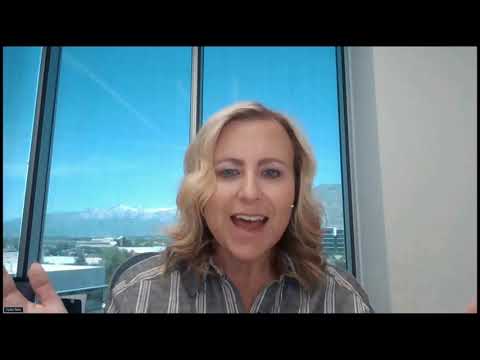
When Impossible Meets Strategy: Soft Skills for The World’s Hardest Problems
Raquel Schreiber24:382024
Cuando Tesla despidió a los proveedores de su línea de baterías, 30 personas tuvieron que construirla
En 2017, en una fábrica de Tesla en Sparks, Nevada, acababan de despedir a los proveedores que habían diseñado las líneas de baterías del primer coche para el mercado masivo, y a unos 30 ingenieros les dijeron que no había nadie más. Raquel Schreiber, que más tarde dirigió el programa de validación de baterías para el mercado masivo de Tesla, estaba en esa sala. Para quien se enfrenta a un problema que parece demasiado grande, la pregunta es cómo logra realmente el cambio un grupo pequeño y comprometido.
Descubre las cuatro convicciones que usa para convertir problemas imposibles en acción enfocada y colaborativa
Raquel Schreiber, fundadora de The Gearworks Group y exresponsable del programa de validación de baterías para el mercado masivo de Tesla, sostiene que los problemas grandes e imposibles los resuelven grupos pequeños que simplemente deciden actuar. A partir de la aceleración de la producción de baterías del Model 3, plantea cuatro convicciones: creer en tus propios talentos, en tu equipo, en el pensamiento sistémico y la colaboración interdisciplinaria, y en encontrar la palanca de impacto adecuada.
“Pero creo que las personas que deciden hacer algo son las que lo harán.”
“Es importante saber, cuando creemos en nosotras mismas, que las habilidades y el conocimiento se acumulan y que puedes empezar antes de tener todas las herramientas que necesitas.”
What you will learn
Equilibrar la confianza en ti misma con la humildad y el sentido de urgencia mediante la práctica de los dos bolsillos que Raquel aprendió en su tradición judía.
Empezar antes de sentirte completamente preparada y crear el feedback y la mentalidad de crecimiento que hacen que el aprendizaje se acumule.
Diseñar equipos que sean más que la suma de sus partes, construyendo confianza, habilidades complementarias y tiempo para reflexionar juntos.
Redibujar el perímetro alrededor de un problema complejo para ver qué palancas controlas y dónde están las partes más arriesgadas.
Aplicar la adicionalidad y un enfoque 80-20 para elegir el cambio que más impacto tendría.
Details
Level
All levels
Format
Talk
Technical depth
Non-technical
For
All career stages
Length
24:38
Published
May 2024
Questions this talk answers
¿Cómo logra realmente el cambio un pequeño grupo de personas comprometidas?
Decidiendo hacerlo y luego actuando de forma estratégica: creyendo en sus propios talentos, formando equipos sólidos, pensando en sistemas y encontrando la palanca de impacto adecuada.
¿Hace falta saberlo todo antes de empezar?
No. Raquel afirma que las habilidades y el conocimiento se acumulan, así que puedes empezar antes de tener todas las herramientas necesarias, y el aprendizaje se multiplica una vez que empiezas.
¿Qué hace que un equipo sea más que la suma de sus partes?
Depende de la confianza, además de habilidades complementarias, feedback y tiempo para reflexionar juntos, que generan sentido de pertenencia y permiten al equipo centrarse en el problema y no en los demás.
¿Por qué el pensamiento sistémico es tan valioso para los problemas difíciles?
Ver toda la misión como un sistema permite a los equipos identificar las partes más arriesgadas, probar y aprender rápido, y mantener la táctica alineada con la estrategia.
¿Cómo eliges dónde aplicar tu esfuerzo para generar impacto?
Pregúntate qué es adicional: qué pasaría sin ti, en qué punto de la cadena de valor entras y qué cambio concreto resolvería la mayor parte del problema.
Redibujar el perímetro de los grandes problemas (78 s)
I'll start with a story and then we'll get into the power of collaboration and system coordination and why I believe it's potentially the most impactful and definitely, I think, the most underrated skill and asset that most teams that make real big change have. Raquel: I'm Raquel. I run The Gearworks Group. It's a boutique advisory for businesses and leaders making outsized impact. I work in particular with deep tech founders, emerging tech founders, and with women who have niche expertise in areas of high potential social impact to think about how to get from here to there, there being really, really big impact dreams, but also the next stage.
Raquel: Step with a product focused mindset. I'm super excited to chat. Okay. A story. Look around. Look at the people sitting around you. The people in this room are the ones who are going to make it happen. Raquel: You are the ones who are going to make it happen. No one else. There is no one else. There are no slides. There is also no one else.
Raquel: That is a quote that was said to me in a room, in a factory, in Sparks, Nevada. J.B. Straubel, the CTO of Tesla, co-founder of Tesla, in 2017, said that to me and the battery engineering team, battery designers, battery manufacturing engineers. Raquel: Our contracted vendors who had designed our manufacturing lines for our first mass market product, the product that was going to make us profitable as a company, had just been fired.
Raquel: The leaders of our teams who had designed the systems had just been fired. Raquel: About 30 of us were left. And Elon had decided we are not going to rely on third party partners. We will believe in the power of each other and of the people in this room to make the right decisions, to hire in the right people and to build this.
Raquel: It had been 10 years at that point of trying to prove to the world that electric vehicles were real, that battery storage could become cheap enough to enable storage, solar and wind energy. Raquel: And it had been two months of trying to manufacture this specific battery, failing to do so. Raquel: And it was up to us to prove that this could work.
Raquel: And so what I want to talk today about is that the people who decide to do something are the ones who will. Raquel: And that sounds maybe bold and it sounds maybe like we have a bunch of stories in our head of people who thought they could do things and flew too close to the sun and were hubristic about it and didn't really know what they were doing.
Raquel: That's a story, I think, as a woman, I've internalized that I'm not ready to do it. Raquel: I don't know how to do it. Raquel: But I think the people who decide to do something are the ones who will. Raquel: Social anthropologist Margaret Mead said, "Never doubt that a small group of thoughtful, committed citizens can change the world.
Raquel: In fact, it's the only thing that ever has." Raquel: And so my question, my question of research academically and my question of research through my life experiences in operating settings is how? Raquel: How does a small group of thoughtful, committed citizens actually make change? Raquel: And today in this session, I'm here to tell you to believe in four things with me, four things.
Raquel: Believe in what you bring to the table, your own individual gifts. Raquel: Believe in what your team brings to the table and not to settle for a team that isn't greater than the sum of its parts. Raquel: Believe that cross-disciplinary collaboration and systems thinking accelerates everything. Raquel: And four, to find the right lever of impact. Raquel: Believe that you can find the right level of impact and then that will make a difference.
Raquel: So believing in what you bring to the table, item number one, I'm Jewish. Raquel: I grew up with a concept in my tradition called "bishvili nivraha ulam" . Raquel: What this means is that there's a story told that when we walk the earth during our time on this planet, Raquel: in one pocket, you're supposed to have a piece of paper that says "bishvili nivraha ulam" .
Raquel: The world was created for me. Raquel: And in the other pocket, we're supposed to have a piece of paper that says "but I am but dashed and ashes." Raquel: And living life with this balance in mind is really important. Raquel: These are like our words of affirmation that you say in the morning to yourself. Raquel: Write them on your bathroom mirror.
Raquel: It's important to have that boost. Raquel: And on the other hand, we all need a dose of humility and a sense of urgency. Raquel: What does the world need from me on my short time here? Raquel: And to me, this story exemplifies this idea of a balance, believing in our own abilities Raquel: and putting our abilities to really good use and truly believing in them.
Raquel: And so, you know, a story from my personal experience is my very first day at Tesla, where I started as an intern and then stayed and eventually went back to college and eventually came back full time and rose there. Raquel: My first day at Tesla, I had never been in an operational factory before. Raquel: I showed up to my internship in manufacturing operations and was assigned as my mentor was a six foot four former Marine.
Raquel: And five foot four me and six foot four Todd would walk around the factory together safety shoes and my safety gear. Raquel: And it was a crash course. Raquel: I learned that summer and for nearly a year before I went back to school that believe in your own abilities doesn't mean you know everything on day one.
Raquel: About a week into the job, Todd came to me and gave me a book called Lee Manufacturing for Dummies and the Toyota Way Handbook. Raquel: These are basically Lee Manufacturing 101 principles and said, I think you should read these, but believe in your own abilities doesn't mean you need to know everything on day one. Raquel: It's important to know when we believe in ourselves that skills and knowledge are accumulated and you can start before you have all of the tools that you need.
Raquel: So I knew that I had curiosity. Raquel: I knew that I had gumption. Raquel: I knew that I had an almost a full engineering degree at that point. Raquel: I knew I was proactive. Raquel: I knew I asked so many questions and learn super quickly and I was able to run responsibly with any directive that Todd gave me.
Raquel: And at the time that was enough and learning compounds. Raquel: And so I'm going to put a question. Raquel: I'm going to pose a question for everyone here to put into the chat. Raquel: First, just like think for yourself. Raquel: What was something you started before you were ready? Raquel: Think of something. Raquel: Don't put it in the chat yet.
Raquel: Think of something you started before you were fully ready or before you felt fully ready. Raquel: Do you have something? Raquel: I want you to ask yourself now. Raquel: Yeah, you can feel free to drop it in the chat. Raquel: I want you to ask yourself, did it compound? Raquel: Once you started, did your learning compound on itself for it to feel successful for you?
Raquel: And to think, if so, why? Raquel: And if not, why not? Raquel: Tell me about, in whatever phrase you want to share, what is a sufficient level of readiness? Raquel: When you think about that example, and did it work for you and did it not work for you? Raquel: What was sufficient level of readiness for you?
Raquel: Help from a great mentor. Raquel: Cindy, when you started riding a lawnmower and you didn't feel ready, was it successful? Raquel: Yeah, figure out ability. Raquel: I think most women have a sense of figure out ability that is not quantifiable. Raquel: There are ways to write that in a resume for sure, but I think it's something we forget as a tangible skill to list amongst ourselves.
Raquel: Brutally honest feedback. Raquel: I love that, right? Raquel: If you start before you're ready, how do you actually get better? Raquel: The tools to actually allow it to compound. Raquel: Not afraid of anything. Raquel: That also jives well with the feedback piece, like truly not being afraid. Raquel: People followed you. Raquel: Wow. Raquel: That's incredible, Paula.
Raquel: Not taking things personally. Raquel: Yes. Raquel: Like the ability to have a learning mindset, a growth mindset. Raquel: If you're going to start before you're ready, have a growth mindset. Raquel: Totally. Raquel: Thank you. Raquel: I'm already, I'm inspired by this. Raquel: Okay. Raquel: I'm going to talk about item number two, which is believe in what your team brings to the table.
Raquel: So number one was what you bring to the table. Raquel: And I love this growth mindset that's coming through. Raquel: But believing in what your team brings to the table. Raquel: So the common thinking is if you want to go fast, go alone. Raquel: If you want to go far, go together. Raquel: I think having a growth mindset, believing in oneself, you know you can get a lot done.
Raquel: That's incredible. Raquel: What does it mean to have a team that is greater than the sum of its parts? Raquel: To me, this comes, you know, I'm a product person. Raquel: By training, I'm an engineer. Raquel: By experience, I'm a product person. Raquel: I think a lot about systems and system level engineering. Raquel: The best way to get things done in this world, in my opinion, is with coordination and cross-disciplinary collaboration.
Raquel: And that 100% hinges on trust Dr. Blankensop. Raquel: Thank you. Raquel: Yes. Raquel: Not settling for a team that is greater than the sum of its parts is the most incredible thing I think that any leader can do. Raquel: And it's not just about hiring and it's not just about firing quickly when it's not working. Raquel: It's designing for a team that on the whole is better than any one person could design together.
Raquel: And my question for you in the chat is first think about a work dynamic that you've been a part of where working together felt like magic. Raquel: Like a little bit of extra cumulative boost by having these people in the room or as a partner to you. Raquel: And tell me about what you think that magic was in one phrase.
Raquel: Like where did that magic come from? Raquel: Trust someone already had put in the chat, which I think is huge. Raquel: Anyone else? Raquel: I think one of the major things, complementary skills, yes. Raquel: Complementary skills is a big piece. Raquel: I think when we think about diversity in hiring, diversity in teams, we sometimes think about what people look like, where they come from.
Raquel: We sometimes think about complementary skills and those are usually put into functional boxes. Raquel: But that can be thought of much more broadly. Raquel: Feedback. Raquel: That's actually really huge. Raquel: Time to reflect together. Raquel: Yeah. Raquel: Yeah, like a sense of that breeds a sense of belonging. Raquel: That breeds a sense of trust. Raquel: That breeds a sense of in it togetherness, which allows for failure.
Raquel: It allows for everyone to focus on the problem at hand, not on treating each other as problems. Raquel: Amazing. Raquel: Okay. Raquel: We're nearing time, so I'm going to keep us going, but I'm already really inspired and excited to connect with each other. Raquel: Number three, as we go through our list of four, collaboration and systems thinking elevates and accelerates.
Raquel: So maybe your skills are your functional area of expertise. Raquel: Maybe your skills are in helping elevate everyone around you or elevating an entire system or in facilitating collaboration or multiple of these things. Raquel: And so I personally believe that the systems engineering, the product level thinking that happens when you believe in a system as a whole is the magic thing that enables innovation and big impossible challenges to happen most quickly.
Raquel: It allows you to test quickly and learn quickly because you're viewing this entire company goal or mission goal as a system. Raquel: So you can see where the riskiest parts in the system and focus attention there. Raquel: You can reorient really quickly and strategically tactics and strategy, lower level tactics, high level strategy can always stay really tied.
Raquel: And it allows you to realize where your toolkits are enough and where you need additional tools. Raquel: So there's something I like to think about called redrawing the envelope. Raquel: In engineering land, you draw an envelope around a closed system. Raquel: In complex systems that have a lot of levers, you ideally want to redraw the envelope around enough pieces of it that you have full control over it.
Raquel: So if you're building a physical product, if you're building a software product, you can control the product development. Raquel: Can you control the customer? Raquel: Maybe you can control the customer selection, but you can't control the customer. Raquel: Can you control policy? Raquel: You can try to influence policy, but that's outside of your scope. Raquel: How do you draw an envelope around a big problem in the world such that all of these pieces speak to each other and you're using them all as potential leverage?
Raquel: If you're trying to solve a big problem that's more of a policy problem than a product problem, how do you design for policy and design for product at the same time? Raquel: So solving cross-functional problems requires diverse skill sets where people can go really deep on really specific tools, but also this level of systems thinking. Raquel: And the most valuable thing that this systems thinking group brings to the table is, I believe, number four, finding your level of impact.
Raquel: So what's cool about being a functional expert, an engineer, a coder, a programmer, in-house counsel, someone with a very specific lens and set of tools, is you look at this problem and you say, Raquel: The response is, how do I build something to accommodate this problem? Raquel: How do I build something to fix this problem, alleviate, design around it, make it solve the root cause?
Raquel: And in my work in climate-focused technologies, I think about it via a lens of additionality. Raquel: Meaning, if not for what I am bringing to the table, if not what our solution is bringing to the table, what would happen otherwise? Raquel: Like, would this get solved? Raquel: Would someone else solve it? Raquel: Or am I the one that's going to solve it by bringing something new to the table?
Raquel: What is additional that I can bring? Raquel: And we use that approach to also add in cost as a mechanism for shifting markets. Raquel: How do I create a financially preferable alternative, put it on market? Raquel: How do we drive down the cost of batteries so that electric vehicles and the storage cost of batteries are lower than the alternatives on market?
Raquel: And so being really mindful about where in the value chain you are entering when it's time to pick a problem area you want to work on, a solution area you want to work on, a specific approach at a company you want to work on. Raquel: Being really mindful of where in that value chain of change of potential change you're entering in is really important.
Raquel: There are a lot of things in the world called sustainability, which technically are, but you're not changing something that wouldn't have existed without you. Raquel: You are building another snack product that is technically sustainable, but what type of impact are you having? Raquel: Are you moving the needle broadly? Raquel: And I believe that the women who are showing up to this talk are ones who aren't capable of moving needles.
Raquel: And I don't believe in scarcity mindset. Raquel: So there are many things each of us here can do to take steps towards something that will actually move the needle. Raquel: And my last question for everyone here is what is the current problem we are facing in your work or your life? Raquel: Something that is not going smoothly in the moment?
Raquel: Your kid's teacher isn't communicating well? Raquel: The dishwasher broke right after you got it repaired? Raquel: Your company doesn't seem to be hitting its revenue goals? Raquel: You're not organized? Raquel: Having too many priorities? Raquel: My question now to think about is think about where is the most high value thing you could change to work on that problem?
Raquel: If you could only do one thing to try to shift and fix the majority of that problem, where would it be? Raquel: This is sort of like an 80-20 analysis, but things I want you to be able to think about are like maybe it's about solving root cause. Raquel: Maybe it's thinking about why am I doing this?
Raquel: Why, why, why, five whys? Raquel: Is this about root cause? Raquel: Is this about an overall shift in priority, an overall shift in focus? Raquel: Is this just about making a decision? Raquel: Is there a decision you need to make to say, these are things I'm taking off my plate? Raquel: Is there a decision to say, I'm hiring someone to help?
Raquel: Is there a root cause thing? Raquel: Is there a decision thing? Raquel: Is there a focus thing? Raquel: Focus on health and habits first. Raquel: That could be one thing that helps build foundation, but it could also feel very overwhelming. Raquel: And it might push off the thing you're hoping those things will help you do. Raquel: So it might not be direct, but it might be about focusing on health and habits first.
Raquel: And my last question here is, what is a big problem you feel motivated to try to help solve in the world? Raquel: You don't need to have a perfect understanding of this problem, but you might. Raquel: It might be something you understand very well because it is a big part of your life. Raquel: In grief, I encourage you to share it so that others who might be interested in working on similar things can connect with you.
Raquel: Any items? Raquel: Okay, well, my main message here today, nature positive. Raquel: Ooh, value visualizations and video editing. Raquel: Anything else? Raquel: My main message here is, you know, JB told me on that day to look around, look at the other 30 people in the room so that we can build something that was incredible. Raquel: We ended up hitting our cost.
Raquel: Our targets are ramp targets. Raquel: It all went slower than expected, but the company did incredibly well. Raquel: Now it's a sort of different story, but I encourage you to virtually look around the people in this room. Raquel: There are 17 people still on this call right now, the people in this room are the ones who are going to make things happen.
Raquel: There is literally nobody else, the people who are showing up to this conference, the people who are choosing to show up to support other women. Raquel: In the big picture, it's like literally these people, people who are self-selecting in. Raquel: So there, like any changes going to come from people who have confidence in their abilities, who have confidence in the power of collaboration with other smart women, who say, I want to look at this from a system level perspective and we're going to try to move the needle.
Raquel: And who simply decide to say, we are doing it. Raquel: It is us here. Raquel: And by virtue of being here at this conference and here in this room, statistically, it's you. Raquel: And I'm very grateful for your time. Raquel: I'm excited for what you'll build. Raquel: Congrats and kudos for joining the conference and taking the time to learn from other women.
Raquel: I hope it's a week that boosts you and I'll see you on LinkedIn if you want to continue or in the chat if you want to continue. Raquel: Truly. Raquel: Thank you. Raquel: I'm really inspired by some of the things you were saying, especially in response to the questions about starting before you were ready. Raquel: I think.
Raquel: I think it's really powerful to hear. Raquel: We hear a lot about when people are nervous to start. Raquel: I don't think we share enough about the wins for when we have done. Raquel: And I would love to hear more about it. Raquel: I talk to women every day who here. Raquel: Here's my contact. Raquel: If you want to continue, I believe it's in my profile as well.
Raquel: But I talked to women every day who have niche expertise in things that they never thought they would build into a business. Raquel: I believe they can have high impact. Raquel: And I'm incredibly energized and by hearing what they're capable of doing. Raquel: But I will say one of the things we usually work through is this idea that they are not ready or they are not all ready where they think they need to be in order for people to want to use their expertise or to trust their credibility.
Raquel: And it's just really common and these women are niche experts in the things that they know about in the world and the things they've accomplished in the world. Raquel: And I certainly imagine that many of you here today are in a similar boat where there's life experiences that you've had who where you might be one of the most unique people in the world to have exposure to it.
Raquel: I do support startups. I work specifically with usually early stage companies usually that are trying to build out deep tech products or hardware products because that's someplace I have a lot of product experience and a lot of really good gut feel around early stage conviction. Raquel: I also help work with women one on one who are who I think are working on something or have ideas about or have niche expertise and things that I think can be scaled for something high impact.
Raquel: I do. I can definitely help to validate early product ideas correct or work with leaders one on one to help them think through how to have really good conviction about that. Raquel: Either I can work with you on it personally or help bring in a team or refer you to someone who can do it or we can work together one on one as.
Raquel: If you're the leader of the project or the leader of the company to help shape the way you're thinking about it if an outside person would be helpful. Raquel: Yeah, we can. I would love if you're if you're curious. I'd love to talk more. So certainly reach out to me. Raquel: Connect with me on LinkedIn and maybe we'll have a chat to hear a little bit more about it.
Raquel: Amazing. Thank you. Excited to connect. Raquel: Thank you. Thank you. Raquel: Sometimes these chats feel feel real. And sometimes they Raquel: Sometimes they feel like a little Raquel: They feel a little like there's not always a three dimensional person behind them. So I'm really appreciative of this. Yeah. Raquel: Thank you.
Transcribed automatically; names checked against the speaker record. Select a time to jump there.
Article based on this talk
Cómo un equipo pequeño y comprometido logra lo imposible
Raquel Schreiber se basa en la producción de baterías de Tesla para mostrar por qué la confianza en una misma, la confianza en el equipo, el pensamiento sistémico y la palanca adecuada importan más que estar preparada.
En resumen
Raquel Schreiber sostiene que las personas que deciden hacer algo son las que lo harán. A partir de sus años en Tesla y en el deep tech climático, plantea cuatro convicciones que ayudan a los grupos pequeños a resolver problemas difíciles e interdisciplinarios: cree en lo que aportas, cree en tu equipo, usa el pensamiento sistémico y la colaboración para acelerar, y encuentra la palanca de impacto adecuada.
Ideas clave
Una reivindicación y un nuevo enfoque del pensamiento sistémico y la optimización de palancas como herramientas de enorme alcance para lograr un impacto complejo e interdisciplinario.
Reconocerte como agente de cambio: estás desafiando las probabilidades al presentarte y decidir actuar (y luego hacerlo de forma estratégica).
El aprendizaje se acumula. Un enfoque de ingeniería de sistemas te ayuda a mantener la agilidad para obtener resultados más rápidos y con menos riesgo mientras haces cosas audaces y arriesgadas.
La sala de Sparks, Nevada
Schreiber abre con una escena de 2017. En una fábrica de Tesla en Sparks, Nevada, acababan de despedir a los proveedores contratados que habían diseñado las líneas de fabricación del primer producto de la empresa para el mercado masivo, junto con los líderes que diseñaron los sistemas. Quedaban unas 30 personas. J.B. Straubel, CTO y cofundador de Tesla, le dijo al equipo de ingeniería de baterías que mirara a su alrededor: "Ustedes son quienes van a hacer que esto suceda".
Estructura la charla en torno a una pregunta que surge tanto de su investigación académica como de su experiencia operativa: ¿cómo logra realmente el cambio un pequeño grupo de personas reflexivas y comprometidas? Admite que, como mujer, había interiorizado la idea de que no estaba preparada. Su respuesta es directa: "Pero creo que las personas que deciden hacer algo son las que lo harán". (3:29)
Cree en lo que aportas
La primera convicción proviene de su tradición judía. En un bolsillo se guarda una nota que dice que el mundo fue creado para mí; en el otro, que no soy más que polvo y ceniza. Schreiber lo entiende como un equilibrio entre afirmación y humildad, con un sentido de urgencia sobre lo que el mundo necesita de cada uno de nosotros en nuestro breve tiempo.
Lo ilustra con su primer día en Tesla como becaria de operaciones de fabricación, recorriendo la planta con su mentor Todd, un exmarine, que le entregó manuales básicos sobre lean manufacturing y el Toyota Way. La lección fue que creer en una misma no exige saberlo todo desde el primer día. "Es importante saber, cuando creemos en nosotras mismas, que las habilidades y el conocimiento se acumulan y que puedes empezar antes de tener todas las herramientas que necesitas". (6:36)
Después pide al público que recuerde algo que empezó antes de sentirse preparado y si su aprendizaje se multiplicó. Las respuestas en el chat mencionaron la ayuda de un mentor, un feedback brutalmente honesto y no tomarse las cosas como algo personal, lo que ella relaciona con la mentalidad de crecimiento. Y añade: "Creo que la mayoría de las mujeres tiene una capacidad de resolver sobre la marcha que no se puede cuantificar". (8:27)
Cree en lo que aporta tu equipo
La segunda convicción consiste en no conformarse con un equipo que no sea más que la suma de sus partes. Formada como ingeniera y con experiencia en producto, Schreiber considera que la coordinación y la colaboración interdisciplinaria son la mejor manera de sacar las cosas adelante, y afirma que todo depende de la confianza. Para ella, esto va más allá de contratar bien y despedir rápido: "Se trata de diseñar un equipo que, en conjunto, sea mejor que lo que cualquier persona podría diseñar por sí sola". (10:37)
Cuando pregunta de dónde surgió la "magia" de un equipo, el público menciona la confianza, las habilidades complementarias, el feedback y el tiempo para reflexionar juntos. Anima a pensar en las habilidades complementarias de forma más amplia que las categorías funcionales, y señala que esa sensación de estar juntos en esto permite equivocarse: "Permite que todos se centren en el problema que tienen delante, y no en tratarse unos a otros como problemas". (12:20)
El pensamiento sistémico lo acelera todo
La tercera convicción es que la ingeniería de sistemas y el pensamiento a nivel de producto permiten a los equipos afrontar retos imposibles con mayor rapidez. Ver el objetivo de una empresa o una misión como un sistema permite probar y aprender rápido, centrarse en las partes más arriesgadas y mantener la estrategia de alto nivel conectada con la táctica del día a día.
Introduce la idea de redibujar el perímetro. Los ingenieros trazan un perímetro alrededor de un sistema cerrado, pero los problemas reales implican palancas que no se pueden controlar del todo, como los clientes o las políticas públicas. "En sistemas complejos con muchas palancas, lo ideal es redibujar el perímetro alrededor de suficientes piezas como para tener control total sobre ellas". (13:45) Según ella, resolver problemas transversales requiere personas que profundicen en herramientas específicas y también personas que piensen a nivel de sistema.
Encontrar tu palanca de impacto
La cuarta convicción trata de elegir dónde actuar. En tecnología climática, Schreiber aplica el criterio de la adicionalidad: "Es decir, si no fuera por lo que yo aporto, si no fuera por lo que aporta nuestra solución, ¿qué pasaría de otro modo?" (15:29) El coste es una de esas palancas: reducir el coste de las baterías para que los vehículos eléctricos y el almacenamiento resulten más baratos que las alternativas. Advierte que algunos productos etiquetados como sostenibles cambian poco, por lo que importa en qué punto de la cadena de valor se entra.
Invita a tomar un problema actual, en el trabajo o en casa, y preguntarse qué cambio concreto resolvería la mayor parte, usando herramientas como el análisis 80-20 y los cinco porqués para distinguir causas raíz, decisiones y cuestiones de enfoque.
Cierra volviendo a la sala de Tesla. El equipo alcanzó sus objetivos, más despacio de lo previsto, y le dice al público que las personas que se presentan para apoyar a otras mujeres, con confianza en sus capacidades y en la colaboración, son las que harán que el cambio suceda.
Mira la charla
When Impossible Meets Strategy: Soft Skills for The World's Hardest Problems, Raquel Schreiber, 25 minutos: https://www.womentech.net/video/when-impossible-meets-strategy-soft-skills-worlds-hardest-problems
Sobre la ponente
Raquel Schreiber es Founder & Principal de The Gearworks Group, una consultora boutique para empresas que generan un impacto extraordinario. Anteriormente dirigió el programa de validación de baterías para el mercado masivo de Tesla y comercializó tecnologías climáticas complejas con startups, entre otros cargos como Head of GTM en C16 Biosciences.
Preguntas que responde esta charla
¿Cómo logra realmente el cambio un pequeño grupo de personas comprometidas?
¿Hace falta saberlo todo antes de empezar?
¿Qué hace que un equipo sea más que la suma de sus partes?
¿Por qué el pensamiento sistémico es tan valioso para los problemas difíciles?
¿Cómo eliges dónde aplicar tu esfuerzo para generar impacto?
Redactado con IA a partir de la transcripción de la charla. Pendiente de revisión editorial.
Frameworks and ideas mentioned
Systems thinking
Redrawing the envelope
Additionality
80-20 analysis
Five whys
Growth mindset
Lean manufacturing
The Toyota Way
Resources mentioned
Lean Manufacturing for Dummies
The Toyota Way Handbook
Cite this talk
Raquel Schreiber. "When Impossible Meets Strategy: Soft Skills for The World’s Hardest Problems." WomenTech Network, 2024. https://www.womentech.net/video/when-impossible-meets-strategy-soft-skills-worlds-hardest-problems