
Making it in STEM and thriving at Sage by Daisy Shonubi

Daisy Shonubi
Principal Solution Designer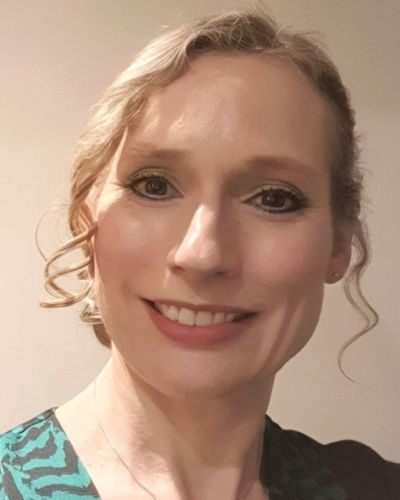
Anna Fleetwood
Global Employer Brand ManagerReviews
Empowering Women in STEM: Insights from Sage
Welcome to our blog where we delve into the exciting world of Sage and the importance of empowering women in STEM careers. In a recent session led by Anne Fleetwood, the Global Employer Brand Manager at Sage, and Daisy Shenuve, the Principal Solution Designer, key topics around inclusivity, innovation, and the challenges faced by women in technology were discussed. Below, we summarize the insights from their compelling presentations.
Who is Sage?
Sage is a global leader in cloud business management, founded in 1981 in Newcastle, England. With over 11,000 employees across more than 40 offices worldwide, Sage has dedicated itself to supporting small and medium-sized businesses for over 40 years. Here are some highlights about Sage:
- Global Reach: Sage has recently expanded its footprint with a new headquarters in Atlanta, USA.
- Innovation: The company has invested heavily in creating neuroinclusive workplaces designed for collaboration and innovation.
- AI Leadership: Recently launched Sage Copilot, an AI-powered tool developed over six years, showcasing their commitment to technological advancement.
- Community Focus: The Sage Foundation, established over a decade ago, supports numerous organizations and allows employees to volunteer on company time.
A Culture of Inclusivity
According to Anna Fleetwood, Sage's culture is built on core values that emphasize doing the right thing, being human, and fostering trust among colleagues. With awards such as Forbes’ World's Best Employers and The Times World's Most Sustainable Companies, Sage demonstrates a commitment to diversity and inclusion. Notably, women represent a significant portion of the workforce, with many leaders in technical roles.
Daisy's Journey in STEM
Daisy Shenuve shared her personal experiences in STEM, illustrating the journey many women face in this field. Here are some insights from her story:
- Early Interest: Daisy’s curiosity about technology sparked at a young age, leading her to study electrical and electronics engineering.
- Diverse Experience: Her career spans various sectors, including fintech, broadcast media, and now software development.
- Challenges in STEM: Despite advancements, women face challenges such as gender bias, imposter syndrome, and work-life balance issues.
The Importance of Allies in STEM
Daisy emphasized the vital role of allies in supporting women in technology. Whether you’re a male leader or a female advocate, here’s what to keep in mind:
- Listen and Learn: Understanding the unique challenges faced by women in the tech industry is essential for effective advocacy.
- Promote Inclusivity: Create policies that foster an inclusive work environment and design programs that recognize the contributions of all team members.
- Mentorship Matters: Aspiring professionals should seek mentorship from leaders who can guide them through their career journeys.
Overcoming Barriers in STEM
Gender bias and stereotypes can create significant hurdles for women in STEM. However, as Daisy pointed out, breaking the norm and challenging the status quo is essential. Here are some strategies:
- Build Confidence: Women should be encouraged to pursue their ideas confidently, regardless of societal expectations.
- Network Effectively: Building connections with peers and mentors can provide support and open new opportunities.
- Embrace Challenges: Stay resilient and adapt to obstacles, knowing they can be transformed into strengths.
Closing Thoughts
Both Anna and Daisy's presentations highlight the significance of nurturing a supportive environment for women in STEM. At Sage, the commitment to diversity, innovation, and community creates a unique space where all individuals can thrive. As we continue to explore ways to overcome challenges in the tech industry, the support of allies and the efforts to promote representation will be crucial in shaping a brighter future.
If you’re interested in being part of an organization that values inclusivity and innovation, explore career opportunities at Sage today!
Stay tuned for more insights and stories about empowering women in technology and the broader STEM field!
Video Transcription
So welcome. Thanks very much for joining us today for our session. So I'm Anna Fleetwood. I'm the global employer brand manager here at Sage.And we've got, we're gonna have a bit of space at the end of this for a q and a. So if you've got any questions, please feel free to pop them into the chat. And we will just run you through a little bit of information today around, Sage and, who we are. And also then I'm gonna hand over to Daisy who's gonna talk about, succeeding in a STEM career and the importance of allyship, and then, we'll also just let you know about some of the sessions we've got going on as well. Sorry. I'm just I can't see the slides at the moment, Daisy.
So
Oh, I haven't shared my screen. Okay.
If you could share those, that'd be great.
I'll share it now. Can you see that now? Yep.
You can just make it full screen for us. That'd be great. Yeah. Yep. Great. If you could just jump onto slide four for me, please. On to the next one for me, so mhmm. Taking a bit of time. So just to, give you a little bit of information about Sage in terms of who who we are. So we've been going for over forty years, supporting small to medium sized businesses. We were founded in 1981 in Newcastle in England. That is still where our global headquarters are based. But we have got over 11,000 colleagues now working from over of 40 offices across the world. We've been making a lot of investment into our workplaces, and we've been opening new, new offices too.
So our most recent was our, North American global headquarters, which is in Atlanta and The US. We're designing our offices very much with innovation and inclusivity at its heart. So they're very neuroinclusive, for example, by design, and there's lots of breakout spaces and things so that people can also collaborate a lot through their working day. So we've got 20, million of our customers are actually, paying their employees via our products already globally. Sorry. 20,000,000 employees are paid our products globally. And we're a 5,100 company. We're a global global market leader in cloud business management, but we're continuing to very much grow. So, we will continue to innovate. And one of the biggest innovations that we've recently launched was Sage Copilot, which came out in the back end of last year, where this is our AI led product. And we're gonna show you a really brief video of that in a second just to give you an idea of the sorts of, innovative projects that a lot of our tech teams are regularly working on.
So it took us over six years to create Copilot, but it's very much a market leader in its field at this time. Sorry. My phone just went off. So our purpose as an organization is about much more than just serving those customers. So we've also got, our Sage Foundation, which was set up over ten years ago. So it's actually its anniversary this year. And through that, we have donated $2,400,000, to a whole range of different organizations that we support, as well as all of our colleagues who get five days a year to volunteer on work time as well. So nearly half a million colleague hours have also been donated. So as an organization, our purpose is very much to knock down barriers so everyone can thrive, and that's where the Sage Foundation piece comes into our operation.
So ensuring we're helping multiple organizations globally to really, thrive and be set up for success through, through that extra support. So volunteering is one of the many reasons that people like working for us, but also I just want to show you a couple of the different awards that we've most recently been given. So the world's best employers from Forbes, top companies for women, and also the Times World's Most Sustainable Companies. So we're really proud to have those as well. We believe that, actually, a large part of the reason that we've won things like the, or been in the list for the most the top women is because we do have a large female population, within the organization. And Daisy's gonna talk a little bit about the makeup of that shortly. But we've got lots of female SVPs, VPs throughout our technical functions as well, and we're really committed to helping our female and non binary, talent to really grow and progress within the organisation.
And lastly, on I just want to also mention in terms of our culture, it's very much built around our values, which is doing the right thing, being human, bold, simplifying things, and working with a real, feeling of trust between our colleagues as well. And you can see how that kind of plays through in the recent survey data we've, have from our biannual, colleague survey that goes out as well. So I just wanna quickly show you a video, that just summarizes a lot of what it's like to work at Sage and some of the kind of key perks, I guess, of working with us. Just move that on for me, Daisy. Please let us know if you can hear it. I can't hear that, Daisy. Daisy, was there an option when you shared it to change whether the audio was coming through? Because nobody can hear the
There was no option as such. Did you not hear the audio then?
No.
Yeah. Okay.
There
was no option for that. We want to Can you hear it now?
The number you're saying.
Software just
to take
because my mic was mute muted.
We put people at the heart of everything today. About full screen. We create software that helps our customers and their businesses flow. And to do that, we need the best people, the most ambitious people that share our dream and want to make an impact by doing the best work of their careers for a global leader in tech that's been around for decades. We'll empower you to continuously innovate and knock down barriers for our customers. At Sage, we'll support you in achieving your ambitions while being part of a team that appreciates you for being you because extraordinary teams deliver extraordinary outcomes. Enjoy hybrid working as well as working abroad for up to ten weeks a year in over forty countries around the world. And with Sage Foundation, you get five days paid volunteering leave to give back to whatever you're passionate about. Join us and see what you're capable of.
Explore our available roles today. Sage, unleash your potential.
Thank you. Could you put the, deck back to full screen for us, Daisy? Sorry. I didn't wanna touch
it there in case any No.
No. Yeah. Don't risk it. Okay. So, hopefully, that just gave you a little bit of an insight in terms of some of the reasons that people join Sage and stay with us. We have many, many colleagues who've been with us for, well, some of them actually getting on for the forty odd years that we've been in existence. I also just wanted to give you a bit of insight around
some of
the innovative products that, you could potentially work on if you were to join Sage. So as mentioned before, we have Copilot, which is our AI product, which our team spent six years, producing. We're continuing to very much, work on it, expand it, and, give our customers even further functionality through it as well. Daisy, do you mind just popping onto the Copilot video?
Sure.
Thank you. So that's intro to Copilot. If you want to learn more about it, there's lots more on our website and things as well. So I will pass you over to Daisy now, who's going to talk to you a little bit about, her career in STEM and how she, helps support other people and how we can help other women get into into STEM careers.
It's Daisy. Okay then. I can't see everyone right now because of the way I'm sharing. I hope you can see me clearly and hear me. If there's any questions or you want to stop me for anything. Sure. Okay. So, hi, everyone. I'll just, give you a little bit of an intro about myself. My name is Daisy. We'll talk about my career at Sage as well. My name is Daisy Shenuve, and I am, the principal solution designer here at, Sage. My career kind of started very early on when I was, quite young. I don't know, must have been about six years old or something. And I was always very curious. I I remember watching TV and wondering where all these people were from and things like that, and I used to, like, go behind it behind the television and thinking, oh, are they there and and things.
So from then on, it it kinda, like, sparked that, curiosity in me to try and figure out a bit more what what this was all about. And that's that really as far back as as I can remember is remember is where my interest started. And over the years, you know, going through the different stages in life, I've, gravitated towards it. I ended up studying electrical and electronics, as my first degree. I actually did pre that, did the diploma course in it, and then went to university and studied there, and then specialized in, electronics and and security and systems, and then went on to work in that for a while. And from then on, went on to different different different industries. I've worked in the real startups, a lot of fintech industries, broadcast media, financial services, now working with software development, and so on.
So it's been such an incredible journey, which I'm quite happy to share with you, today. And also with Sage joining Sage, initially as a UX, manager and then moving on to doing really cool innovative things in Sage, like like the co pilot you've seen now, which is something that I'm working on as well, walking through, the development, working now in actual solution design, and bringing all these designs to from concepts to to, to build and to reality, and and this is what I do.
So it's it's very, very interesting. And and as I go through the slides, you'd see that there's so many aspects to working in tech, and I have been through quite a few of them. And if if you're here wondering what to do or if you're doing something now, you wanna do something else, I'm just gonna spark a lot of ideas, today. But just to move on to the next slide. One thing that's important though is this is all coming from STEM. Right? And I'm sure we all know what that is. That's science, technology, engineering, and maths. And what it is what is STEM really doing? What is the real power of STEM? And and STEM is is what I've said there is addressing the world's global challenges.
The needs of the world is creating innovators, creating scientists for the future. It's it's everything you can think of today has some elements of STEM behind it, running, powering that thing or that idea that you're thinking of. And then what I'm saying here is you put yourself in the mix as a woman, in the mix. And if you're a man here, yes, apologies, women in tech. Put yourself in the mix as a woman. Right? What do we bring into it? We bring in so much diversity when we fall into the mix of this. We bring economic growth, we gender diversity, we bring different diverse perspectives into this as well, and and that creates better solutions. Right? And, again, we bring representation into this big STEM world. And this is something that I'm I'm very passionate about as you can see probably.
And I'm gonna talk to you more about it today. But I think a good place to start today is just to look at this STEM journey. Right? What is a typical STEM journey? And and this is a reflection of my journey, which I've quickly just talked about briefly when I was talking about my career. So you have a woman and then all other genders as well, but focusing now on the woman. Right? Very early on when you're young, you have that early spark like I did. You have that dream and conviction, and then you drive that forward into studying education. You go on and then you you you start to realize that there are a lot of positives which are the wise, but then there are a lot of things that are I wouldn't call them negatives because you can use your weaknesses and bring them up as strengths. Right? But these are things that you begin to notice as you go along. Right?
And then you move on from studying, you go into working, and then you start to see, oh, those things are shaky, are getting a bit more now, right, as I advance in my career. And then you think, okay. That's fine. I'm gonna push through. Right? I'm gonna move on to the next thing. And then you move on to the next thing, and then you'd be a walking woman. And then family comes in, and then it begins to grow bigger. You begin to see so many things. Oh, that imposter syndrome is creeping in now. Right? The low confidence is creeping in. Gender bias is creeping in. Work life balance is a big thing, and that's creeping in as well. And then this is you haven't noticed initially. Oh, it's mostly men dominated. Right? It's, diversity is there. Stereotypes are there, and then you add family to the mix, and then it can be really overwhelming.
When I was preparing this presentation, I thought, okay. Actually, why is this the case? And what is the trend? What is happening? What does the stat say so I can back this up with some stats? Right? So I went on to have a look, did some research, and and and saw that, actually, there's about 31% of, in the in studying, 31% are females, female students. Out of that, about 28% of those go into the workforce. And out of the 28 working in tech, about 24% of those leave STEM fields. I was recently looking at some data, and another data that I haven't verified before coming here today says that that figure has risen. I need to double check that. Well, it's it is very interesting when you look at the stats and look at us in tech and look at the the kind of drive that we had at the very beginning and what's happening when you go into the workforce.
Why that change? Why that shift? And one of the things I wanted to share today, like Anna was saying initially, for Sage, it's it's it's one of those topics that we're really passionate about. Diversity, we're really passionate about that in Sage. And you can see that across all the different areas as well. And I'm sure a lot of other companies are doing that as well. But you can see that with all our colleagues, the 43.9% of them are women, in our executive leadership as well, on our boards as well, at least putting that representation there and putting women in the wolf in the forefront of what we do at Sage and in our tech functions as well.
And you might be wondering why is this also important. It really is very, very important. Representation is very important because that's what helps to, next slide, push through the norm. We need to bring that representation to the forefront so that we can push through push through all those barriers I said earlier on. It doesn't matter what stage you are in your career. We need to push through the norm. It's it's it's not the usual, oh, men are doing this, or, oh, oh, the women are doing this. No. We we need to push through that barrier, whatever it is that seemed to be holding us back, those reds that I showed earlier on on that slide.
And that's exactly what I've done because I've faced my own own challenges as well. But I've pushed through the norm, pushing through from junior to mean to to senior level now and to principal. I've had to push through all that norm as well, be confident, push through, be myself. And that's one of the things that Anna mentioned as well at Sage, for example. We we are bold, and that's one thing you need to do as a as a woman in in in tech as well. So I remember, someone said a very interesting quote to me before. They said, when not assertive, I think it was, it says, ask the question.
If I was a man, will society feel this way about me? You know, that's one question that we should ask, and that question urges us to push through. Any questions, Anna, before I continue in the chat?
Sorry. There's, yeah. There's just one, question around what's been your most significant, moment in the last six months, and could you share that experience as a female leader?
Okay. The most I'm sorry. I didn't hear that last bit. And and experience about what?
What could you share your experience as a female leader in terms of that most significant moment in the last six months?
Okay. Let me see. My moments. I've had a I've had a few moments, really. But so I think it's around challenges and overcoming those challenges. Right? So there were I think there was, in the last two months or so, I was I'm working on it. So I'm working on Copilot at the moment, and there was a moment where, it was quite overwhelming because I was working on this project and there were just things coming here and there. And there was, sort of like a a a comment said to me, I think I had to go and pick up my child or something. I had to go away at that certain time, but it was quite a very busy period. I had to do something. And then there was a comment like, oh, that you do you really need to do that now or something something? It felt like, oh, that you know?
But it's about, like I said before, it's about pushing through, and it's I'm gonna show it. Maybe I should have shown my other slides before talking about that actually because it's unconscious bias, which is something that I'm gonna talk about shortly. And it's where that's coming through seemingly like, oh, you're gonna do something which which is pick up your child, which is and I'm like, no. It's nothing to do with that. All the work is gonna get done, and that was overcome. Let me push to the other slides, and I might touch on that one again. Okay. So, the first thing here I'm saying here is don't give up. Right? Find your passion. Ask for help. Seek out internships and experiences, whatever level you are in that STEM journey or career that I mentioned.
And then also I'm saying here, embrace challenge. Build a strong foundation. You need contributions as well. You're part of the team. Bring out that unique contribution in that team. You're, you've got this brilliant idea. Don't think, oh, this idea is not gonna work. No. Bring out that idea. Do it. You know, it's it's very interesting. There was some stats I was listening to the other day, and it says, something around, if you ask a man about a question about something, they are so confident. How you know, maybe not an an an, appraisal. Ask them how confident are you about certain thing. Oh, they're gonna go on super confident of this and that. They it they always turn it up high. But then when you ask a woman about that, they're like, oh, I think I can do it. I think you know, it's not that super confidence doesn't shine out through sometimes. Right?
We tend to sort of play it down, but the men sort of tend to hype it up. So that's what I'm saying. Build be super confident. Be free to say it. Whatever idea comes to your mind, whatever spark it is, be free to say it. Right? Networking. Connect. It's super important. Break that barrier. It's super important. And then also role model. This, again, is super important. One of the best things you can do is to have a a role model, someone that you can look up to, someone who can, who is who is like you. You know, you might have a female leader in your organization. It's super important. Get close to them. I would recommend as well it's probably someone that's two or three steps ahead of you so you can learn and then set set yourself targets, set yourself goals.
If you want to if you have a long term goal, then, yeah, you'd be looking at the CEO who's a female leader. If you have a short term goal, look at someone who's two or three steps ahead of you. Talk to them. Shadow them. Learn from them because that helps you to move on, real quick. Okay? They have similar struggles as you, so they will be able to, to mentor you through those struggles as well. And then my next slide I'm just gonna do this. So the next one here is talking about, a tech leader. So you might be here and you might be a tech leader. You might not be medium level. You might already be well established as a leader. What do we need you for? We need you to be an ally.
We need you to be an ally for the women in the women in tech in your organization or other women in tech in the industry. Four key areas that I've highlighted here is, first of all, to be that leader, that is gonna be the ally for the other women, then you need to know the challenges. You may not even be a woman. Say there's someone on this call, perhaps. You're not a woman. You're on this call. You, as whatever gender you are, you can help as well be an ally for the women in this industry. And you have to know the challenges to be able to do that. And how do you know it? You have to listen. You have to read. You have to ask. You have to learn. When you understand that and understand the impacts of these challenges, then you can be an advocate.
You can support and amplify the women in tech in your industry. And then I've highlighted here again, walk the talk. What do I mean? I'm saying don't walk the walk only, walk the talk. So do, don't talk the talk only. Walk that talk that you talk. So as a as a tech leader, you're inspiring, you're supporting, you're doing all these things. And then you're walking in that as well because don't forget, you are that mentor or you are that role model that someone else is looking up to. Right? Then the next thing is to challenge the buyers of there's something here I've called glue work. Now what is glue work? Glue work is, glue work I refer to glue work as the kind of work that is done, in a team that's is done because they say, oh, you have soft skills.
So say, for example, in the team, we want to we wanna have, someone's birthday, someone's leaving due. It's all typical typically the woman in the team that, like, organizes things and events and stuff. And these little things, though time consuming, may not be recognized. So what we're saying effectively effectively here is that glue work should be for role. Let it be something that's recognized as well. Let let let them feel appreciated for for this work that they do. Again, breach the gap. We know without without it goes without saying what that means. Right? And then there's the mentorship that I mentioned earlier on. Be the one to promote and recommend and and recognize, you know, what what women in tech are doing. Also, key things to do. Yeah. You're a tech leader, and then you have influence in the organization as well.
Key things that you should be looking at is develop inclusive policies, unconscious bias training, gathering feedback. This is absolutely crucial because you need to know what's happening. Where is where are your, reports at? What are they thinking? What are they feeling? How can you change this and influence different things, within within your organization? So I'm gonna
go You've just got two minutes left. Two minutes. Customer time.
Some notable women scientists and innovators. If if you can take a screenshot, maybe just have a look at them later on. There's so many people out there that have done wonderful things, and we should look at these as role models as well that we can emulate. And then there's you. I've talked about showed you those four people, and then there's you. Where do you fit into this? This just talks about different diverse different roles. If there's something you're doing, maybe you don't even enjoy it, maybe you can move within to another role. And then I'm gonna just leave you with this one. It says, you can be anything you want to be if only you believe with sufficient conviction and act in accordance with your fate. For whatever the mind can conceive and believe, the mind can achieve. This is by Napoleon Hill, a very famous American author. Yeah. And that's it from me.
Anna, do you wanna take the last one?
No comments so far – be the first to share your thoughts!