

Image source: Pexels (Photo by Michelangelo Buonarroti)
The future of femtech will be decided outside the delivery room. For ten years the sector let period trackers and fertility apps define it, and that framing has curdled into its biggest liability. Women's health isn't a life stage.
It's a fifty-year arc: cardiovascular risk, hormonal upheaval, autoimmune disease, bone density, sleep, the brain. Any company still pitching itself as reproductive tech with a few features bolted on is building for a market that has already started to move on.
A Category Defined by Its Narrowest Segment
The numbers make the case bluntly. Heart disease kills more women than every cancer combined, yet the money to understand why has never matched the stakes; closing the cardiovascular gap in the US alone could add an estimated $28 billion a year to the economy by 2040, plus 1.6 million quality years of life. Investment has lagged the opportunity for years: women's health startups still pull in less than 2% of global venture capital, despite serving half the population. That isn't a niche. That's the largest underserved patient group on earth, parked behind an industry label that starts with "fem" and ends, in most investors' heads, somewhere near fertility.
Watch where demand actually goes. The fastest-growing consumer behaviour in women's health right now isn't cycle logging. It's women in their late thirties and forties booking into a preventative health clinic for full-body imaging, biomarker panels and cardiovascular risk scoring while they still feel fine. The shift matters more than the scan: pricing risk decades ahead instead of reacting to symptoms rewrites what a femtech product even is. A cycle app knows about this month. Preventive diagnostics reach for the next thirty years.
Follow the Money Out of the Fertility Window
Menopause makes the same argument from the other end, with a payroll attached. Mayo Clinic researchers surveyed 4,440 working women and found that menopause symptoms cost the United States an estimated $1.8 billion a year in lost work time, a figure that swells to $26.6 billion once medical expenses come in. The affected population is not small and not shrinking: more than a billion women worldwide will be perimenopausal or postmenopausal by 2030. Most are mid-career. Senior. Expensive to replace. Employers noticed before most founders did, which is how menopause benefits went from curiosity to retention line item in about three years. That surge had nothing to do with conception. It should have been a warning shot. Some heard it. Many didn't.
Here's the part that gets uncomfortable. Femtech's original sin wasn't the fixation on reproduction; that fixation filled a genuine void, and it deserves credit for hauling menstruation and fertility out of the taboo drawer. The sin was treating reproduction as the category's ceiling. When roughly 80% of autoimmune patients are women, that's a women's health problem. When a woman's lifetime risk of Alzheimer's runs close to double a man's, same answer. When women having heart attacks get misdiagnosed because their symptoms don't match a male reference model, that's no cardiology footnote; it's the core business.
And the list keeps going. Endometriosis, which affects around one in ten women of reproductive age, still takes years to pin down, with average diagnostic delays running from roughly four years to more than a decade depending on the country. Chronic pain in women still gets refiled as anxiety. Osteoporosis screening still shows up, for most women, after the first fracture. None of this fits a fertility funnel. All of it is enormous.
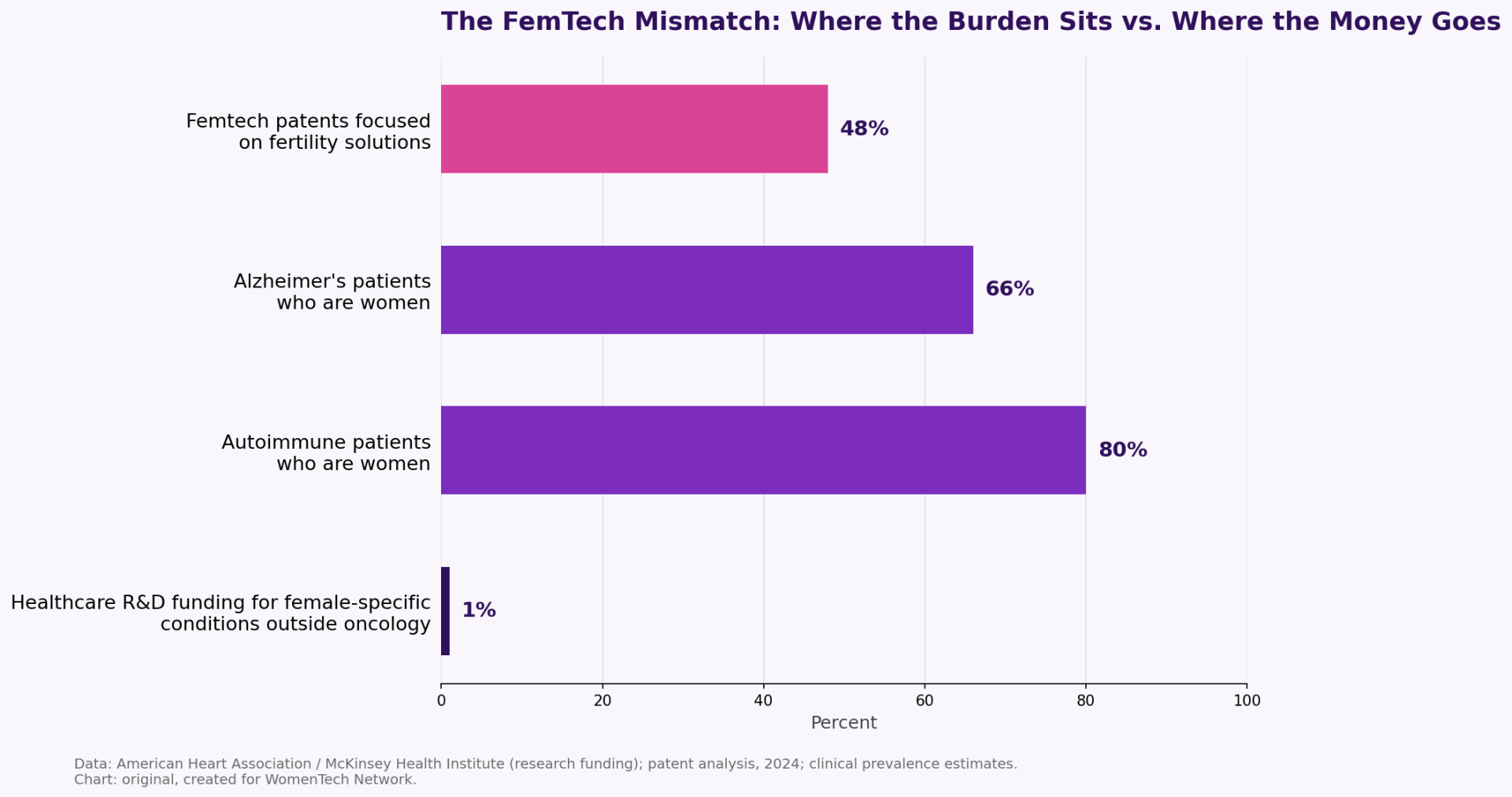
Figure 1. Women’s health research and investment imbalance
Chart created by the author.
Sources: Angum et al. (2020); Digital Science (2025); Industry analysis (2025).
From Symptom Diaries to Diagnostic Infrastructure
The technology has caught up with that wider brief, which removes the last easy excuse. First-wave femtech was, in essence, a diary: you logged symptoms, the app drew a chart, and the interpretive work stayed with you. The second wave leans toward diagnosis. Models trained on continuous wearable data (resting heart rate, heart rate variability, temperature) are starting to surface patterns tied to early pregnancy loss, thyroid dysfunction and cardiac irregularities before a woman feels anything is off. A 2024 study in npj Digital Medicine, tracking 120 pregnancies through a smart ring, mapped clear physiological trajectories across gestation in data the wearer was already generating every night, asleep. For the signals that appear in the body before they surface as symptoms, passive monitoring can outperform diligent journaling.
The Cuff Outranks the Ring
Clinicians tend to distrust consumer devices, sometimes for good reason. But dismissing a continuous, longitudinal, real-world dataset simply because it came from a ring rather than a hospital cuff looks less defensible by the year.
You can feel the strain in the running debate over whether femtech startups are the answer to women's health issues at all, or a well-designed layer over a system that still runs on male-default data. Both can be true at once. A beautiful app sitting on biased clinical evidence is a beautiful mistake. The next generation of companies has to go deeper than the interface: into diagnostics, longitudinal data, the research pipeline itself, into how disease behaves differently in female bodies. Slower work. More regulated, more capital-hungry than shipping a tracker. Also where the defensible value lives.
The Label Is Starting to Look Like a Fence
There's a naming problem tangled up in all of this, worth a short detour. The term "femtech" was coined around 2016, largely so that rooms full of male investors could discuss menstrual products without flinching. Useful, then. But labels set scope. Nobody calls a cardiac stent maletech, even though the trial data behind it skews male. Say that sentence out loud in a pitch meeting and watch the room shift. The word did its job of creating a category; the open question is whether the category has hardened into a fence. Maybe the endgame is that femtech succeeds so thoroughly it stops needing a name, because sex-specific medicine becomes, simply, medicine done properly.
The economics say that point sits nowhere close. Women outlive men yet spend a greater share of their lives in poor health, disproportionately during their most productive years. Read that twice. The longevity advantage is financed with decades of unmanaged chronic conditions, delayed diagnoses and dismissed pain. Every one of those decades is an addressable market. Fertility, by contrast, is a window of a few years, fought over ferociously, and nearly half of the sector's patents crowd into it. The imbalance borders on comic: femtech's most contested territory is also its narrowest.
The Version of This Future Nobody Should Want
None of this guarantees the broadening goes well. There's a plausible bad version, and honesty demands naming it: "beyond reproductive health" becomes a marketing wrapper for longevity products sold to wealthy women in three cities, while the misdiagnosis rates that actually kill women sit exactly where they are. Whole-body diagnostics can widen health gaps as easily as close them if pricing and geography never move. Technology tends to land first where the margins are, not where the mortality is. Anyone claiming otherwise is selling something, possibly a membership.
The instructive cases are usually the cheap ones, and they cut both ways. Consider the CRADLE Vital Signs Alert, a sub-£20 blood pressure and pulse monitor with a traffic-light warning system. When researchers scaled it across half of Sierra Leone in 2022 and 2023, it sharply improved how often and how accurately complications like pre-eclampsia and haemorrhage were caught. It did not, on its own, reduce maternal deaths, because a red light means little without the drugs, blood and trained staff to act on it. Detection is not treatment. The lesson isn't that cheap tools don't matter; it's that "beyond reproductive health" has to mean beyond the customer profile the industry finds easiest to bill, and beyond the parts of the problem software can actually reach, or the whole expansion is a rebrand with better fonts.
Where the Careers Actually Are Now
And yet the direction of travel looks set, because too many forces now push the same way. AI models trained on wearable data increasingly flag pregnancy complications and cardiac irregularities before symptoms surface. Employers buy midlife health benefits at scale. Regulators, slowly, push for sex-disaggregated trial data. Capital follows: the femtech market, valued at roughly $39 billion in 2024 and projected toward $97 billion by 2030, is pulling money toward women's cardiac, neurological and hormonal-ageing care at a pace fertility apps no longer set on their own.
That reshuffle changes what a career in the field looks like, and it's worth getting practical about it. For anyone plotting a path here, the emerging opportunities across the expanding femtech market increasingly sit in clinical-grade territory, and the day-to-day work is different from the first wave. Hiring has tilted away from pure consumer-app roles toward regulatory affairs, clinical research, health economics and data science trained on female-specific datasets. A product manager who understands the regulatory pathway for software as a medical device is now worth more than one who can ship another cycle tracker. Evidence generation has quietly become a job description rather than an afterthought.
Pick a Lane, Then Get Specific
A few concrete moves follow from that. If you're technical, the premium is on people who can work with messy, real-world physiological data and defend it to a regulator, not just plot it on a dashboard; fluency with sex-disaggregated analysis is close to a superpower right now. If you're not technical, the growth roles cluster around market access and partnerships, because the fastest-moving buyer in this space is the employer benefits channel, not the individual consumer. Domain knowledge pays either way: understanding how cardiology, endocrinology or neurology present differently in female bodies is now a hireable skill, distinct from design. And the softer route still works. Communities like the WomenTech Network exist partly to shorten that path, through mentorship, job listings and the peer network that tells you which companies are doing real clinical work and which are doing marketing. The gold rush jobs aren't in another tracking app. They're wherever the evidence is being built.
Whoever Holds the Data Holds the Verdict
Which brings us to data, the subject everyone in this industry would rather discuss last. A sector that expands from tracking cycles to tracking hearts, hormones, brains and genomes is a sector holding the most intimate longitudinal dataset ever assembled about half the population. That dataset feeds every promised breakthrough in women's health, from earlier cancer detection to personalised cardiac risk models.
The Asset That Doubles as a Hazard
It's also, in the wrong jurisdiction or the wrong acquisition, a liability of historic proportions. Reproductive-health apps already lived through one trust crisis over how their data was shared once those logs started interesting third parties and regulators; nobody in the sector needs the reminder. The same record that predicts your perimenopause could inform your insurance premium. Trust built over a decade around period data won't transfer automatically to whole-body data. It gets earned again, under harsher scrutiny, with higher stakes.
So the sector arrives at its real test, and it isn't a technical one. Femtech has proven it can build products women want. It hasn't yet proven it can carry the weight of what comes next: full-spectrum, lifelong, clinically serious care, delivered without turning women's bodies into the most monetisable dataset in medicine. That outcome won't be settled by the founders alone. It will be settled by which products get funded, which get bought, and which get held to a clinical standard by the people using and building them.
Your Move
So push for it. Ask the apps on your phone where your data goes and what evidence stands behind their claims. Back the companies doing the slow, regulated, unglamorous work over the ones selling another beautifully designed tracker.
The tools that expand beyond reproductive health are being built right now, carrying both the breakthrough and the liability at once, and the deciding vote belongs to whoever refuses to look away.