

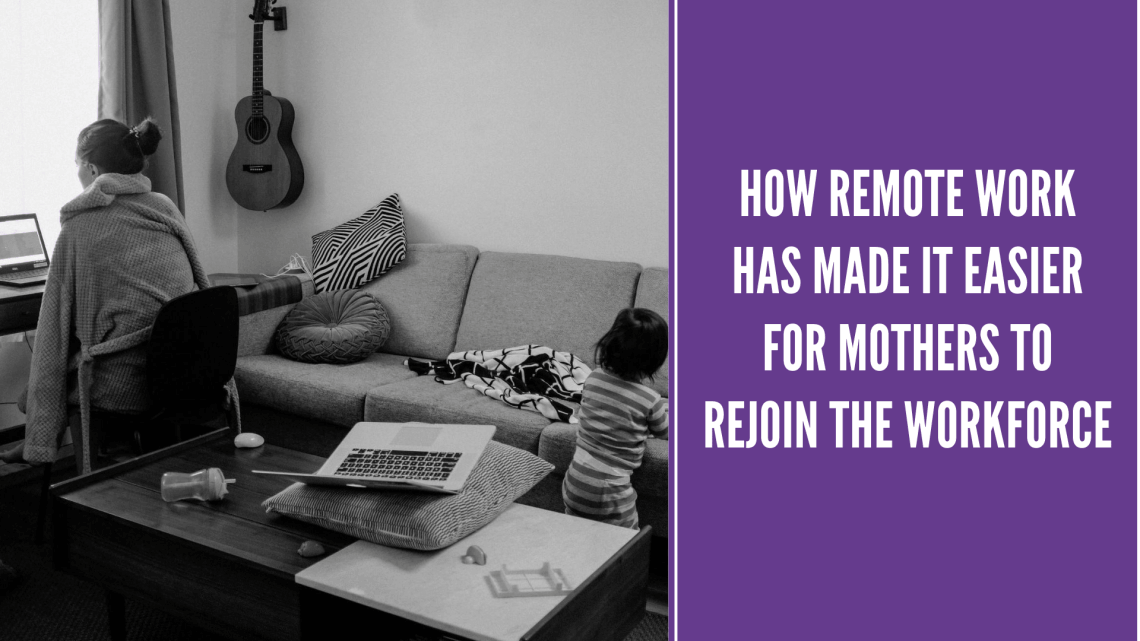
Photo by charlesdeluvio on Unsplash
It’s well known that parenting creates career barriers. Many mothers, in particular, find it difficult to balance their careers and motherhood, resulting in reduced work hours and career breaks. Research shows that 24% of women exit the labor market after one year of motherhood, and a significant portion remain absent from the workforce years later.
While remote work hasn’t eliminated the challenges mothers face when returning to work, it has made the transition significantly more achievable. Flexible work arrangements and distributed teams have opened new pathways for women to reenter professional careers while balancing family responsibilities.
Flexible Schedules
One of the most prominent shifts in the modern workforce is the move toward skills-based hiring and flexible work arrangements. Instead of focusing solely on who can work traditional office hours, many companies now prioritize talent, expertise, and results.
Organizations adopting remote hiring best practices for 2026 are increasingly building distributed teams and offering flexible schedules. This allows professionals—including mothers returning to the workforce—to contribute their skills regardless of location.
For parents, flexible work hours can make a major difference. Remote access allows mothers to organize their schedules around family routines, school hours, and caregiving responsibilities while still maintaining productivity and career growth.
Eliminating Long Commutes
Many working parents experience commuter stress when they must drive long distances between work, schools, daycare facilities, and other daily responsibilities. Long commutes consume valuable time and can make balancing work and family life significantly more difficult.
Remote work helps eliminate these barriers. Instead of coordinating multiple daily commutes, parents can work from home while managing school drop-offs, pick-ups, and after-school activities more efficiently.
Studies on hybrid and remote work have also shown that employees working outside the office remain just as productive as their in-office peers. This shift in perspective has encouraged many organizations to adopt flexible work policies that benefit both employees and employers.

Photo by Markus Spiske on Unsplash
Lower Childcare Costs
Millions of parents have made career sacrifices due to childcare challenges. Access to reliable and affordable childcare continues to be a significant factor preventing many mothers from returning to the workforce.
Remote work doesn’t eliminate the need for childcare entirely, but it often reduces the number of hours parents need external care. Parents may no longer require before-school or after-school programs, and they may be able to share caregiving responsibilities more easily with partners or family members.
This flexibility can reduce financial pressure and make returning to work more economically viable for many families.
Easier Reentry After Career Breaks
Many women take extended breaks after having children in order to establish routines and focus on early childcare. However, traditional workplaces often make it difficult to return after a long absence.
Remote work has created new pathways for mothers to rebuild their careers gradually. Many professionals now return through freelance projects, contract work, or part-time remote positions before transitioning into full-time roles.
Professional networks and mentorship programs can also play a critical role in supporting women during this transition. For example, initiatives such as the WomenTech Network mentoring program help connect women with mentors, career resources, and global professional communities that support career growth in technology and related fields.
Access to More Job Opportunities
Finding a role that aligns with both professional skills and family schedules can be challenging, particularly when opportunities are limited by geographic location.
Remote work removes these barriers by opening access to global job markets. Professionals can apply for remote positions anywhere in the world, allowing them to pursue opportunities that match their expertise and career goals without relocating.
For many women returning to work after motherhood, this global access significantly expands their employment options.
Inclusive Workplace Cultures
One unexpected outcome of the COVID-19 pandemic was that organizations discovered their operations could function effectively with remote teams. Businesses began recognizing the advantages of flexible work environments, including improved work-life balance and greater employee satisfaction.
Research also suggests that remote work can deliver measurable productivity benefits, helping organizations maintain performance while offering employees greater flexibility.
As companies continue to evolve their workplace models, many are prioritizing family-friendly policies, results-based performance evaluations, and inclusive workplace cultures.
These changes are particularly important for mothers, who often carry a larger share of caregiving responsibilities.
Moving Toward a More Inclusive Workforce
There are still many barriers for women navigating careers while balancing caregiving responsibilities. However, remote work and flexible employment models are helping reduce some of those obstacles.
By embracing distributed teams, skills-based hiring, and flexible schedules, organizations can retain talented professionals who might otherwise leave the workforce. At the same time, these changes provide mothers with new opportunities to rebuild their careers and remain active contributors to the global workforce.