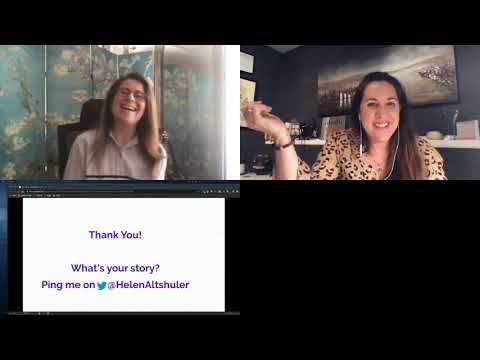
Lead Like an Improviser: Flexibility, Influence and Change
Karen Hough38:392023
La mayoría decimos primero que no a las ideas nuevas, y los improvisadores no pueden permitírselo
En una llamada en vivo, una voluntaria entrega una sandía imaginaria y le responden secamente que no es una sandía. La escena muere y el público califica a su compañera de obstruccionista. Karen Hough, exintegrante de The Second City y fundadora de ImprovEdge, recrea ese momento para mostrar cómo la negatividad refleja paraliza a los equipos bajo presión. ¿Qué hacen los improvisadores en su lugar y cómo puede cambiar tu forma de liderar el cambio?
Descubre cuatro principios de improvisación, un cambio hacia el lenguaje positivo y una pausa de respiración de un minuto
Karen Hough, fundadora de ImprovEdge y exintegrante de The Second City, sostiene que los hábitos de los improvisadores (aceptar ideas, construir sobre ellas y convertir los errores en descubrimientos) son los hábitos de los líderes y equipos de alto rendimiento. En un taller interactivo demuestra el "sí, y" mediante una escena en vivo, muestra cómo el lenguaje positivo evita que los colegas se pongan a la defensiva y enseña la técnica de respiración 4-7-8 para gestionar el estrés durante el cambio.
“Nunca ha habido un momento más crucial para improvisar.”
“Así que tenemos que esforzarnos de verdad para acceder a un lenguaje positivo. Tenemos que hacerlo de forma intencionada.”
What you will learn
Aplicar el "sí, y" para aceptar las ideas de los colegas y construir sobre ellas en lugar de reaccionar con un no automático.
Reformular las peticiones urgentes con un lenguaje positivo y colaborativo para que los colegas no entren en modo de lucha, huida o bloqueo.
Practicar la técnica de respiración 4-7-8 para recuperar la calma antes de reuniones o negociaciones estresantes.
Replantear errores y sorpresas con la curiosidad de un científico mediante el principio de "del ups al eureka".
Reconocer los cuatro principios de la improvisación (espacio del sí, bloques de construcción, equidad del equipo, del ups al eureka) en el trabajo en equipo diario.
Details
Level
All levels
Format
Workshop
Technical depth
Non-technical
For
All career stages
Length
38:39
Published
May 2023
Questions this talk answers
¿Cuáles son los cuatro principios de la improvisación que enseña ImprovEdge?
Espacio del sí, bloques de construcción, equidad del equipo y del ups al eureka. Abarcan decir que sí primero, aportar a las ideas de los demás, combinar fortalezas distintas y convertir lo inesperado en algo excelente.
¿Decir que sí en el trabajo significa aceptarlo todo?
No. Hough explica que en los negocios el sí significa transmitir que la persona es escuchada y valorada y que quieres saber más, lo que aumenta el compromiso y la contribución.
¿Por qué importa tanto la forma de expresar una petición?
El lenguaje negativo lleva al cerebro a un modo defensivo de lucha, huida o bloqueo, que anula el razonamiento. Al reformular en positivo la misma petición urgente, los asistentes se sintieron valorados, colaborativos y dispuestos a ayudar.
¿Cómo funciona la técnica de respiración 4-7-8?
Siéntate con los pies bien apoyados, inhala por la nariz contando hasta cuatro, retén el aire siete tiempos y exhala despacio durante ocho, repitiéndolo varias veces. Lleva un minuto y puede hacerse entre reuniones.
¿Por qué un taller sobre liderazgo empieza con un juego de conexión?
Hough cita investigaciones que relacionan una fuerte conexión social con mejor salud y resiliencia, y sostiene que la conexión importa aún más tras años de aislamiento.
Misma petición, dos formulaciones, reacciones opuestas (86 s)
Aprende la respiración 4-7-8 (61 s)
Good morning everyone. So glad to see you. Abby, Eliza, thank you for joining us today. Great to see you. We also have Sana and Karina with us. Colleen, so nice to see you. Thank you for joining us. Diane, really glad you could join us today. We're going to have a great session starting in just a moment. Great to see all of you here. We'll be getting going in just a moment.
Sumitra, nice to see you. Nikki, great, great that you could join us today. We will be doing a lot of interaction. So looking forward to having you use the chat and potentially coming off of mute a few times. Thanks so much for being here today, everybody. All right, we've got more folks coming in. Rachel, so nice to see you. Thanks for joining us today.
Sarah, glad that you could make it. We're going to be starting here in just a moment. We'll give just one more second for folks to join us. All right, excellent. We've got a great group here. So good morning, everyone. There has never been a more critical time to improvise. Being an improviser is literally the key skill that we need in this incredibly difficult and changing and exciting world that we live in today.
Now, here's the thing. Improvisers are people who are highly creative. We are adaptable, flexible, very positive, very inclusive. We work with a team every single day. Those also happen to be the same skills and the same abilities that we see in the highest performing corporate team. That we work with. Now, I'm really excited that we're going to be looking at some of the immediately usable tips that we use from the stage that over the last 20 years, we have found also have incredible outcomes in the corporate workplace.
You see, improv edge is business training with an improv twist. We have combined the art of improvisation with almost 20 years of research in neuroscience, human behavior and psychology. So we're going to be looking at how do we apply these ideas so that we, too, can manage critical moments, scary moments, even. How can we be positive and difficult situations?
You're going to walk out with ideas that you can use today. Now, you are also the experts in what you do. I actually was also a woman in tech for many years in my early career. So I know that there are so many things, so many complexities that we deal with as women in this industry. And you're going to be applying these ideas, how they work for you.
So I'm really excited to get started today. And I also want you to meet my co producer, who is a senior facilitator at improv edge as well. Alex, please give them a quick introduction to yourself. Absolutely. Good morning, good afternoon, good evening, wherever you're joining us from. My name is Alex Laifeld. I'm a senior facilitator and producer behind the scenes here supporting everything and anything that you all might need throughout this workshop.
I'd love for everyone to first go to the chat and just say hello. Make sure you're typing to everyone so we know that that chat is working and get ready to improvise a little bit today. Get ready to jump out of your comfort zone a little bit as well. We will be providing opportunities to elevate you to panelists and bring you on stage with us, per se, because we know as improvisers.
And there's research that shows from Yale's Dr. Lee in neuroscience and psychology that challenges and experiences that are outside of one's normal comfort zone are shown shown to accelerate adult learning. So we have some exercises and challenges today that are very intentional to put you in a state of comfortable discomfort, we like to say, for very targeted, meaningful reasons.
So get ready to improvise, get ready to learn, get ready to push those comfort zones. And I think we'll start that off, since people are in chat joining from all over the world, we'll start with an exercise called connection. Absolutely. So everyone, my name is Karen Huff. I'm the founder and CEO of ImprovEdge. And I am proud to say that ImprovEdge is the first company in the world to combine improvisation with research.
Now, I did this after I had been a professional improviser and actor. I worked with the Second City in Chicago. I did movies, TV and film. And then I had a very strange opportunity to go into technology. I went into a network engineering startup. Now, I was taking classes every night and cramming, but I was improvising during the day, you better believe.
That experience made me realize that these skills I had made me really able to deal with corporate situations. And so Wharton the Business School at the University of Pennsylvania was my first research partner. I have now written three books, two of which are Amazon bestsellers. I have a wonderful ensemble in five cities and we work on four continents.
I'm a Yale grad and we have also won the C.V. Stilver International Award for most innovative company of the year. We work on four continents and it's been an incredible ride. I'm also on a number of boards in my area and I have three kids, a husband and I live in Ohio in the United States. So this exercise is incredibly special to me because it helps us understand who we are. I just gave you an introduction.
You know a lot about me now. I want to know a little bit more about all of you. It's a simple, simple exercise. And what we're going to do is I'm going to make some statements. And if that statement happens to also be true for you, you are going to go into the chat and tell me something about it.
So, for example, if I say I love coffee, OK, then let's go in and I like my coffee black and very hot. OK, so I like I like my coffee to be just out of the machine, just brewed. Let us know how you like coffee. If you happen to like coffee, go to the chat and give us a little bit of information.
Alex, you like yours with a little bit of sugar and cream. That's really good. So if you connect with that idea, I like coffee. Let's see what you've got to make. Oh, and Rebecca loves that convenience out of an automatic coffee maker. I hear you where it's just one cup at a time. I absolutely love that. All right. Let's go on to some other statements. My next statement is I have a pet.
So I'm going to run to the chat and I'm going to put in that I have I have pets, two Labradors. All right. Two Labradors. Ah, and so my hosts also say that they have dog. Oh, five pugs and a cat. A tripod. Wow, Colleen, thank you for sharing that. That's so cool. A dog named Sunny. Oh, and one lovely cat. A toothless cat named Cricket. Wow, these are fantastic.
And somebody has got, well, a husky lab, two cats, a betta fish. All right. So and Amy has a lot of pets. Fantastic. We learned a lot about each other there. Thank you for sharing that. Next one is I can play a musical instrument. OK, now you don't have to play it well, but I'm going to put in a few.
Now, if you've called on me to play any of these except my voice, it might be a little scratchy and screechy, but I could maybe play chopsticks. The recorder. Harmonica voice. Excellent. That totally counts. Absolutely counts. All right. So Rachel is a singer and she plays piano. Fantastic. I wish you were here. Voice, especially in the kitchen. All right. Yes. I like to sing in the shower.
I wake up my family sometimes in the morning, but that's what happens. And drumming on your knees. Excellent. Thank you for that. All right. And finally, this is our last question. I am having an amazing time at the Women in Tech conference. So if you connect with that, all you have to put into the chat is connection.
All right. Say that you connect with that and that you're also having a really good time being able to access this wonderful information. Connection, connection. All right. Thank you, Diane, Nikki, Eliza, Sumitra. Everybody's connecting with that awesome experience. Fantastic. I'm so glad to hear that. Now, I would so appreciate if one of you might come off mute and just tell me a little bit about why you think we started our time together with a game called Connection.
Right. We're going to be looking at improv. Why would connection help us? And Sumitra, you were so kind to say that. Would you be able to unmute and just share with me why you think I started this way? Can you help me? Yes. Yeah. So, yes. So basically, humans are supposed to be connected. Then all of us love connections, right? So it's a good experience because it's people from varied backgrounds that come and there's a lot of sharing of real life experiences as well.
So, yeah, learning from each other. I love it. Yes. Thank you, because you talked about that sharing of real life experiences and you're getting to connect with people from all over the world. Yes. Awesome. Sumitra, thank you so much. Yeah, this is the American Sign Language sign for applause. And as we've been in this virtual world, we use it a lot at ImprovEdge. Thank you so much for sharing that. That is absolutely correct.
And I think at the beginning, you also said human beings need to connect. Thank you for saying that. Now, there's a reason that I chose this and Sumitra really hit the nail on my head. She's absolutely true. There are some other key things that we want you to understand about human connection. Dr. Barbara Fredrickson at the University of Chapel Hill found that people who are more socially connected get over the common cold almost 50% faster than people who are more socially isolated.
So we really wanted to dig into this research. We looked a lot more deeply and found a really amazing meta analysis of 148 different research projects. And what they found was astonishing and sobering. They found that people who have very strong and very connected networks, and we've all met those people. We are some of those right, maybe you have great connections with your family, with your colleagues, maybe with your place of worship.
Those people happen to be 45% less likely to die early in their lives. And that is because we are literally wired and need that connection. I wanted to read something verbatim from the study to you. And it said that while stress and loneliness can cause negative changes in our biological systems, taking time to connect with others, like we're doing today, can help activate more beneficial processes, such as the release of oxytocin.
Now, oxytocin is an incredible natural hormone that appears in everyone. Oxytocin has been found to lower cortisol, reduce pain, change the way our brain responds to potential stressors, and even promote the growth of new brain cells. So what we have found is that human connection is incredibly important. And after going through the last few three years that we have with so much isolation, it is even more important.
Now, improvisers connect every day. And as you think about your work, we ask that you consider how can I walk out of this, this experience today and think about different ways to connect with my family, my colleagues, people outside. How do I make that time for that connection for my own health and for the health of people around me?
Alex, I'd love for you to comment a bit on how this relates to human resiliency, which, by the way, resiliency is our ability to keep coming back. And it really relates to how strong our network is. Alex? Absolutely. We've seen this prevalent, especially over the last few years, as Karen said. And this is a quote that Karen had quoted in an article posted in Mashable.com around resiliency years ago.
And it still rings true today. Resiliency makes people less afraid of mistakes. Resilient people continue to try, fall down, stand up, and try again. So by simply creating these wonderful connections with your colleagues, with new people that you make, you create trust amongst them. You build that resiliency up, and that gives you all the ability to stand up after you've fallen down and give that a try once again.
So you are already building resiliency amongst this small group here. We're building resiliency amongst our teams by building further connections. I want to give you a little bit of an overview of what we're going to cover very quickly today. We'll learn and apply the four principles of improvisation that we here have with the Wharton Business School trademarked.
We're going to explore different ways that you can apply the behaviors of improv to be more flexible, to be adaptable and influential in your role as a leader, whether you're leading from where you are or you're a leader of a team. And you're going to learn and practice these techniques for effective management of yourself, because we need to certainly take care of ourselves and our teams during times of stress.
So let's continue this conversation around improv and talk more about what is improvisation. All right. So why improv? Why are we so obsessed? Why has it changed my life? Improv is a very different art form. It originated in the United States, and it is an art form where about five or six actors come on stage. And guess what?
We don't have a script. Seriously. We don't have costumes. We don't have props. We have none of the normal tools of theater, but we do have an entire audience and about two hours to fill. Sounds a little scary to some people. To me, it was some of the best theater I ever did. We make up a show literally on our feet and we work together and we take ideas from the audience.
It was a way to collaborate on a very, very high level. And here's the thing. All of you are actually already improvisers. Because, you know, I would love it if you just put an X or say me in the chat. If some of you, you know, really like to have a schedule. You know, if you like to sort of know what your day is going to look like.
However, I bet that as soon as you wake up, that schedule starts to go a little crazy. And Rachel's saying, yeah, trust, not me. Okay. So you like to improvise, don't you, Rachel? That's fantastic. It's perfect. And when things go wrong, you pull on your expertise. You pull on your ability to be adaptable and you change in the moment.
So what we're going to do today is look at four ideas that come from improv that we can apply immediately to be better professionals in tech. Now, these ideas are yes space, building blocks, team equity, and oops to Eureka. We're going to focus on yes space and oops to Eureka today, most specifically. But in order to really understand how this works, I would so appreciate a volunteer to come on stage with me, come off mute, turn on the camera if you can.
And we are going to do an improv scene. I promise it will be super easy, super fun. Sumitra was really helpful the first time. Alex, do you see some folks that have been active that might be willing to come out and help me out? I see some great people that have been active in chat. I also gave one last check there and Rachel's going to volunteer.
I said raise your hand if you'd like to volunteer. So, Rachel, I'm about to elevate you to a panelist as well. So you should have the ability to jump on camera here shortly. And come off mute if you can. Sure. Rachel, hi. And there she is, Rachel. Oh, and there's your pets. Fantastic. Oh, she's going to fix.
She's going to fix the sound. There we go. Oh, even better. We can't hear you now. I can't hear you right now, Rachel. Sorry. The other one was working better, I think. Nope. Can't hear you. Zoom may be pulling a different microphone device. Yeah. It might be Zoom. She is looking. Oh, aren't those pets cute? Aren't those pets cute?
That's the extra tech support in tech. All of our pets. Yeah, exactly. That's her producers. We still can't hear you, Rachel. Now, Alex, we're going to be talking about these four concepts. While Rachel is working on her sound, could you get some things from the audience? Absolutely. And Lashana is saying she's demonstrating the importance of flexibility already.
So what's going to happen in just a moment is Karen and Rachel will be just performing a short improv scene. It's improvised because you haven't had this conversation before. Now, as improvisers, we need some foundation to work off of to make our jobs easier. So what I need everyone to go to the chat. I want you to type in a non-romantic relationship for these two people to portray in this scene.
Anything in the world that you want that's a non-romantic relationship. And the more specific you are, the better. I see sisters, sisterhood, friends, a boss and an intern, buyer and a seller, teacher and a student. We can hear Rachel now, so that's good. Neighbors. Let's go to neighbors. Amy has neighbors. I think we all can connect with neighbors in some way.
I want to add some physicalization to this as well. I need an object that Rachel can hold in one hand. She does not have to have it in her room. Don't make it one of her pets either. So she doesn't have to carry this pet around. This is something that she will pretend to hold in one hand.
So what is an object? Anything specific in the world that she can have. I see a hairbrush. I see a broom. Ooh, a watermelon. It's starting to turn to be summertime here in America. So I'm going to say watermelon and your neighbors. Okay, Rachel? Sounds good. Again, this is going to be a fully improvised scene. What makes it improvisational is you don't have a script and we've never done this before.
All you need to do to start this scene, we'll figure everything out. All you need to do is say, hey, Karen, here is a watermelon. Okay? Got it. Do you have any questions before we start? Nope. I'm just going to spotlight both of you to put you on stage and begin whenever you're ready, Rachel. Hey, Karen, here's a watermelon.
That's not a watermelon. It's not? No. What is it? I don't know, but it's not a watermelon. Well, it's green. What color is it? I don't know. It's Annie. I was going to say Annie. Great pause there, Rachel. Everyone do that at the American Sign Language again. Well, we can't see you, but give applause in the chat.
Say yes in chat for Rachel for a great job. Well done. Karen, I think we're missing the mark there. What's going on? Totally missing the mark. Rachel, first of all, I have to apologize to you. I was not being a good scene member. I want to ask you, how did it feel to be stuck in that scene with me?
And I promise it was for a good reason. Of course. I, of course, was nervous. I wasn't sure what to say next. I felt that I felt that you were being purposely difficult. And so I was trying to, at the same time, think of things that I could ask that would elicit a response. Right. I mean, you were even in the midst of all that difficulty.
You were so creative. You were trying so hard, right? You were describing it. You were asking me what to do. How did all of you feel about me, huh? Go to the chat. How did I seem to you? Not very nice, right? Someone said you're non-interactive and you were actually obstructive with the way you're communicating. And the word we kept hearing was no.
Now, Rachel, the reason that I did this is because there is a research paper that shows that people tend to respond to new ideas negatively first, unfortunately. It's unconscious. We don't even realize we're doing it sometimes. And that is anathema to improv. We're in a really risky situation like you are, and we have to say yes and.
So this time, I'm going to promise to be a good scene partner. We're going to use yes and where we accept each other's contributions. And let's try it one more time. Sound good? Yes. All right, Rachel. Same line. Just say, Karen, here's your watermelon. And we'll see what happens now using yes and. Karen, here's your watermelon. Oh, I'm just in time.
The barbecue is about to start. And everybody's arriving. I know. And I know that those two are hungry. I have saved several of the bones for them. And they're going to enjoy them immensely. I am sure. Now, we've got to cut this up. All right. It's got to be enough for all 40 people. Thank goodness. It's huge.
Hang on. Let me sit over here. Wow. Where did you find that watermelon, Rachel? I grew it in my backyard. What? Amazing. The woman with the green thumb. It's gorgeous. Thank you. And it's delicious. All right. What's your secret? I'm sure it will be. Why is it so big? How'd you get it to grow so well? The secret is lots of fertilizer.
And love. And do you hug them? I try to every day. Amazing. And scene. All right. Another. Give yourself a round of applause. Yes. So, Rachel, how was it to be in the scene that time? It definitely felt less nervous. I was able to add on to things you were saying a lot easier. I wasn't worried about you being obstructive, as I said before.
And it felt like I could be creative. Wow. Thank you so much. All that from you, Sam. Now, I'm going to ask you to extrapolate a little bit, right? We had a first scene that felt very negative. We had a second scene where your partner was positive with you. Can you relate that to situations at work where this maybe could make a difference for you or your colleagues?
I can. I can absolutely relate to that. I think that one of the things I try to do is say things like, I wonder, to try to get people to communicate a little bit more. But I'm wondering how yes and will also work. Yeah. There's a whole chapter in my first book around just saying yes and to people.
It's the foundational principle of improv. Have you heard of it before? You seem familiar. Yeah. Yeah, exactly. A lot of people had never heard about it when I first started this work. And now, so many people have written about improv that's really understood, which is exciting. Rachel, thank you so much for playing with me today for offering your feedback and your help.
So let's give her another round of applause. Well done. Thank you so much. And let's talk a little bit about that idea of yes and that Rachel so beautifully just talked about how it applies to work into our lives. Right? So, yes and is the concept on the improv stage that we have to say yes first. So, as you saw in the first scene, if I said that's not a watermelon, well, all of you as an audience, you got bored.
You got confused. Nothing was working. It wasn't working for me and Rachel either. So, the first thing we have to say is not only yes, it's a watermelon, but then we have to give something to our partners. We have to say and and build on it. That's the building blocks piece. And so, it's a beautiful combination of how this all works.
Now, team equity is the idea on the improv stage that everybody brings a different strength. You know, I had people in my improv group that were great singers. Some could dance. Some were great at one-liners. And we brought all of our different talents together to make a great show. And then finally, oops to Eureka was the concept that stuff goes wrong or the unexpected happens.
Things we didn't see coming show up. And then how do we deal with that in the moment? How do we make that oops, that unexpected, scary moment of the of the uncertain into something great? These are the concepts that drive improv and they also drive great business. Now, the yes idea is what I want to delve into a little bit with you.
Now, yes space is again, as I said, the idea that we say yes first. It's actually revolutionary for many of the CEOs that I have coached. We've worked with executives on four continents, as I mentioned. Now, my improv team is in five different cities. And simply the idea of being positive in the moment. Now, you don't have to say yes.
Like we'll do whatever you say. Can't do that in business. You can't say yes, you're heard. Yes, you're valued. I'd like to hear more about your idea and maybe consider it. That goes so far in increasing engagement and contribution. Let's also talk about the effect of our words. This is an intentional choice that we can make as leaders or leaders where we are.
So the Journal of Multilingual and Multicultural Development did a wonderful research project. And what they found is that across nations, across countries and languages, we have access to about 50% emotion words that are negative. So take English, for example, we have many more negative emotion words than positive. 50% are words like mad or angry or upset. About 30% of the emotion words that we have access to are very positive, like excited and happy.
And then about 20% of those are neutral, like fine. And it depends on how you say it, if it's fine or fine. So we have to actually work hard to access language that is positive. We have to be intentional about it. So what I'm going to do now is I'm going to say something as if I'm your colleague.
Let's say I just popped up on the screen if you work mostly virtual. Or let's say I walked over to your desk if you're in person. And I'm going to say something. I want all of you to go to the chat immediately and tell me how that made you feel. Okay, you ready? So remember, go to the chat as soon as I say this and tell us how you feel.
Here we go. All right, don't get mad. We got a big problem and you better fix it by the end of the day. Alex, what are you seeing in the chat? I see people saying they're intimidated, nervous, attacked, even stressed. Some are instantly annoyed. And I'm seeing a lot of anxiety. People are responding in more of a frantic way.
Yeah. Wow. And that's all because those words, when they are used, actually make the brain go into defensive mode. Believe it or not, it starts to protect. And when that happens, it enters a fight, flight or freeze mode, which starts to shut down its ability to reason. Now, in order to keep the brains of ourselves and our colleagues functioning, we have to keep it out of defensive mode.
And that is done by using more positive language. So I'm going to do this again. I'm going to be that colleague who pops up on screen and walks to your desk. And I'm going to say the same thing, choosing different language and tone. And I want you to tell me how you feel this time. Ready? Oh, something has come up and I really need your help.
I have to figure this out by the end of the day. And I know you always have good solutions. Can you help me? Alex, what are you seeing this time? Oh, a big change. I see it now. I'm being enabled. I'm feeling collaborative. And there's urgency. And even with that urgency, there's willingness now rather than just urgency for the sake of urgency.
People are feeling valued as well as willing to help and step in. Thank you. It's amazing just to see that difference in how we reacted to those situations. So as we consider this small idea, we want you to take away from this moment, how can you create more collaborative environments? It's actually around choosing your words and choosing a place where ideas are heard by simply saying yes.
Alex, tell us a little bit about that so we can head into the next section. Certainly. So as you think about how you can apply these different tenets to your work, we can think about using these positive words, creating environments where ideas are heard, using questions. And this goes back to what Rachel said with, oh, I wonder, being inquisitive, asking some great questions to dig deeper into what they're looking for.
And more specifically, some open ended questions to create a conversation. And in improv, we always focus on making the other person look good. So please have some great focus on the other person. How can I give them the gift with a yes and to continue a conversation and create a space where we can truly have collaboration like an improviser.
Excellent. So we've covered yes space. And I love this picture of a woman who is relaxed. She's in a place that looks like it must be beautiful. She has her eyes closed and is envisioning something. And this is the moment, believe it or not, where we want to talk about oops to Eureka. It's that fourth concept that we introduced.
And oops to Eureka is always interesting because I feel like it has defined my entire life. I learned all of my lessons the hard way. I made a mistake. Something went wrong. I had to learn from it. It also is how I stumbled upon the idea for my business, how I came up with the idea for some of my books.
It's the idea of coming across something that you didn't expect. And often we become defensive or scared or worried. And if we enter the mindset of a scientist, if we say, wow, this isn't what I expected. So interesting. You start to have a different hormonal and physical response. Now, this is really tough. We are in a really, really difficult time now in our professional lives.
We've come through COVID. There are global changes happening everywhere. And we are constantly under siege by cortisol, which is the stress hormone. We have stress from our family, stress from our work. And being able to take care of your own body is more critical than it has ever been before. Oxygen is the great leveler when it comes to stress.
And what we have learned, this began years ago in my initial research, we found that people don't breathe. Now, actors are taught to breathe from the time we first start to study. If you've seen really funny scenes in movies where actors are going, oh, you know, they're doing all these silly things. I mean, it looks ridiculous, right?
But what we learned is it allows us to take a ton of oxygen into our body. It relaxes our body so we can walk onto a stage, which is terrifying. It also allows us to sing or to speak with a great amount of resonance or to change our voice, right? We have to have oxygen to do that.
Now, in our workplace, we often wake up. We may think about the first stressful thing that's going to happen to that day. And we start going. And we're breathing from here the whole day long. That increases our cortisol. It does not allow oxygen to relax us. So I'm going to teach you a breathing technique right now. It comes from Dr. Andrew Weil at the Center for Integrative Medicine at the University of Arizona.
It is something that you can do in the tiniest amount of time, and we're going to do it together right now. It's called 478. So wherever you are, I would love you to just square your feet, uncross your legs. Everybody relax. Relax your shoulders. Put your hands on your knees. There you go. Good. You can see Alex.
If you can close your eyes, that would be great. And what we're going to do is we're going to breathe through our nose for four. You're going to hold it for seven, and you're going to breathe out slowly for eight. I'm going to count for you. And we're going to do this a few times. So remember, breathe through your nose for four.
Really big. One, two, four. Hold. Two, three, four, five, six, seven. Out. Five, six, seven, eight. Now open your eyes if they were closed. Go to the chat and let us know how that made you feel. Let me know what that did for your physical and mental state. Alex, do you see any responses? I think we're all waking up still a little bit.
I see a lot of people coming in saying we're relaxed. It was a little bit of a reset. I'm calm or I'm calmer than I was before. I know for me, I get some yawns afterwards, which is natural. Just getting that oxygen in your body. Uh, and, and some people feel more energy. I feel more energized after doing that rather than call because my body's full of oxygen now.
So I see a lot of people saying calm and relaxed. Good. So if you're calm and relaxed or maybe you're sleepy, this is probably the first time that you breathe deeply today. And this little trick, I often do it maybe 10 times. And I want to remind you, please do it seated, or at least where you're near something, holding on to something.
I used to do it in my car before I walked into very difficult negotiations. They hit the reset button, took out the white noise. It gave me control. It gave me relaxation, which are all the things you want when walking into a stressful situation. Now, here's the thing. It took us barely 30 seconds, maybe a minute to do that exercise together.
If you were able to integrate this, maybe in between meetings or a couple of times a day, you will find that you are so much more calm, so much more focused, so much more able to deal with all the surprises that come our way during the day. We wanted today during our short time together to give you just a few tips that would allow you to think differently about how we move through our day.
We do that all the time at ImprovEdge. Even when we're working with leaders for 10 months, we often work with companies for years on end doing both coaching and leadership development. We find that these tips are the ones that get us through the days so that we can focus on the larger ideas that we think about in adapting our enterprises and our teams to the future of our world.
So please do think about how you can integrate this simple breathing exercise, as well as a lot of positivity. And I would love to know what skill or behavior do you think you can apply today. We talked about connecting with others. We talked about using positive language. We also talked about relaxing and using that breathing technique. Go to the chat now and share what can you use today from this time together that could make a better day for you at work.
Let's hear about that. Let us know what you could use and apply today. And we ask that you please take away the fact that you can increase better outcomes. You can feel and be an improviser every single day. Alex, what are some of our responses there? Yeah, I'm seeing some people are already doing some sort of breathing techniques after work, and they might start integrating that between meetings, especially if you have one or two minutes, because that's all that exercise took.
See some other conversations on definitely trying to yes and in conversations and maybe encouraging others to help find a resolution and then building connections between or beginning of retrospectives and adding some of those other breathing techniques, because some people are already using that positive language. So that's great to see. Oh, appreciation for others. Oh, thank you, Sumitra.
Absolutely. Appreciation for others. Telling them that they matter. It's such a positive thing to do for others. So I want to thank all of you for being here with us today, and I have a gift for you. ImprovEdge has just launched the Conservatory. We've always done live in person and also virtual work where you're working with us live as we are right now.
And there was such demand for for eLearning that we have created the Managing Tough Conversations eLearning. I wanted to give it to all of you for 40% off. You are welcome to go and use this code. If you want to use the QR code. Alex is also putting a link into the chat. Use that Women Tech 90 to get 90 days of access to a great, great piece of eLearning.
It is a simple three-step improvisational process to deal with the toughest conversations that you run into. Have you ever had those conversations where you've got to tell somebody that they're not going to get a raise or maybe tell a colleague that their performance is not as good as it needs to be for a project? Oh my gosh, gut wrenching, horrible, you sweat.
This little 70 minute training will give you a process to get through that with confidence, preparation, and also the ability to hear the other person with great outcomes. So please use this for 40% off coupon code share with all of your friends happy to have you use that, and we would love to hear what you think about it in the future.
Just go ahead and snap a picture of that QR code or use the link that Alex is putting into the chat and be sure to put in Women Tech 90 to get your 40% off. We would love to see you more at ImprovEdge. We do everything from keynotes to long-term leadership development programs, and it has been such an honor to be here with Women in Tech.
We are a 100% women-owned business. We have offices in five cities and we work all over the world. And one of the ways that we like to finish is we like to give people a couple of extra minutes. You need to grab a cup of coffee or maybe go use the restroom. So we're going to put our fists in the air all together. I know wherever you are in the world.
And we're going to shout yes and because it gets that blood pumping, it gets that oxygen into the body. You are improvisers, so we're going to shout yes and three times. Ready? One, two, three. Yes, and! Yes, and! Yes, and! Yes, and! Yes, and! Yes, and! You go have a fabulous day. We believe in you and be an improviser. Thank you.
Thanks, everyone. Take care. Have a great rest of your conference. Thanks, Rebecca.
Transcribed automatically; names checked against the speaker record. Select a time to jump there.
Article based on this talk
Por qué decir sí primero ayuda a los líderes a gestionar mejor el cambio
Karen Hough recurre a la improvisación en vivo, la investigación sobre la conexión y una sencilla técnica de respiración para mostrar cómo los hábitos del improvisador ayudan a los equipos a mantenerse flexibles bajo presión.
En resumen
Karen Hough sostiene que los comportamientos en los que los improvisadores se apoyan cada noche en el escenario (aceptar ideas, construir sobre ellas, apoyarse en el equipo y convertir los errores en descubrimientos) son los mismos que se observan en líderes y equipos de alto rendimiento. En este taller interactivo, ella y Alex, facilitador sénior de ImprovEdge, demuestran dos de sus cuatro principios, el espacio del sí y del ups al eureka, y los combinan con investigaciones sobre la conexión, el lenguaje positivo y una técnica rápida de respiración para mantener la calma durante el cambio.
Puntos clave
Aprender y aplicar los cuatro principios de la improvisación.
Explorar aplicaciones prácticas de los comportamientos de la improvisación para ser un líder más flexible, adaptable e influyente.
Practicar habilidades de trabajo con restricciones para mejorar la lluvia de ideas y la colaboración.
Aprender y practicar técnicas para gestionarse a uno mismo y a los equipos de forma eficaz durante el estrés del cambio.
La conexión va antes que el contenido
Hough no empieza con diapositivas, sino con un juego llamado Connection. Hace afirmaciones sencillas ("Me encanta el café", "Tengo una mascota", "Sé tocar un instrumento musical") y los asistentes que se identifican describen su propia versión en el chat. En pocos minutos el grupo ya sabe de café solo, labradores, pugs y una gata sin dientes llamada Cricket.
El juego tiene un propósito. La carrera de Hough comenzó en el escenario con The Second City en Chicago, antes de un giro inesperado hacia una startup de ingeniería de redes, donde tomaba clases por la noche y, según dice, improvisaba durante el día. "De hecho, yo también fui una mujer en tecnología durante muchos años al inicio de mi carrera." (2:21)
Luego pasa a la investigación, según citó la ponente: la Dra. Barbara Fredrickson descubrió que las personas más conectadas socialmente superan el resfriado común casi un 50 % más rápido, y un metaanálisis de 148 estudios halló que las personas con redes sólidas tienen un 45 % menos de probabilidades de morir prematuramente. "Y eso es porque literalmente estamos programados para esa conexión y la necesitamos." (10:02) Alex lo vincula con la resiliencia y cita un artículo en el que Hough escribió: "La resiliencia hace que las personas teman menos a los errores." (11:41)
Cuatro principios del escenario de improvisación
La improvisación, explica Hough, pone a cinco o seis actores en escena sin guion, sin vestuario y sin utilería, con unas dos horas que llenar con ideas aportadas por el público. Suena aterrador, pero ella sostiene que todos ya lo hacemos. Las agendas se desmoronan a media mañana y la gente se adapta usando su experiencia. "Y aquí está la cuestión. Todos ustedes ya son improvisadores." (13:30)
ImprovEdge, que tiene a Wharton como su primer socio de investigación, plantea el comportamiento de improvisación en cuatro principios. El espacio del sí consiste en aceptar primero una idea. Los bloques de construcción consisten en aportar algo propio. La equidad del equipo reconoce que cada persona aporta una fortaleza distinta, como en su compañía, que combinaba cantantes, bailarines y especialistas en frases ingeniosas. Del ups al eureka trata de gestionar lo inesperado y convertirlo en algo excelente. "Estos son los conceptos que impulsan la improvisación y también impulsan los grandes negocios." (23:55)
La prueba de la sandía
Para mostrar el espacio del sí en acción, una voluntaria llamada Rachel se une a Hough ante la cámara. El público propone que sean vecinas y que Rachel sostenga una sandía. Rachel se la ofrece; Hough responde que no es una sandía y sigue diciendo que no a todo. El chat la califica de poco interactiva y obstruccionista, y Rachel admite que se sintió nerviosa y bloqueada.
Hough explica por qué lo interpretó así: un artículo de investigación muestra que las personas tienden a responder primero de forma negativa a las ideas nuevas. "Es inconsciente. A veces ni siquiera nos damos cuenta de que lo hacemos." (19:34)
En la segunda toma, Hough acepta la sandía y construye sobre ella. De pronto hay una barbacoa vecinal para 40 personas, una sandía cultivada en el jardín y una jardinera que abraza a sus plantas. Rachel describe la diferencia con sencillez: "Y sentí que podía ser creativa." (21:28)
Hough aclara que decir sí en el trabajo no significa aceptarlo todo. Significa decirle a alguien que es escuchado y valorado y que quieres saber más, lo que contribuye mucho al compromiso y la participación.
Elegir palabras que mantengan el cerebro abierto
A continuación, Hough comparte un hallazgo, según citó la ponente, del Journal of Multilingual and Multicultural Development: en distintos idiomas, alrededor del 50 % de las palabras emocionales son negativas, cerca del 30 % positivas y alrededor del 20 % neutras. "Así que tenemos que esforzarnos de verdad para acceder a un lenguaje positivo. Tenemos que hacerlo de forma intencionada." (25:20)
Lo pone a prueba en vivo. Interpretando a una colega, dice: no te enfades, tenemos un gran problema y más te vale resolverlo antes de que acabe el día. El chat se llena de intimidado, atacado y ansioso. Explica que esas palabras llevan al cerebro al modo de lucha, huida o bloqueo, que anula el razonamiento. "Ahora bien, para que nuestro cerebro y el de nuestros colegas sigan funcionando, tenemos que mantenerlos fuera del modo defensivo." (26:25) Su segunda versión (ha surgido algo, necesito tu ayuda, siempre tienes buenas soluciones) mantiene el mismo plazo, pero ahora los asistentes dicen sentirse valorados, colaborativos y dispuestos.
Del ups al eureka y una respiración que restablece
El último principio es personal para Hough. "Aprendí todas mis lecciones por las malas." (28:57) Cuenta que la idea de su empresa y varios de sus libros surgieron de sorpresas. Afrontar lo inesperado con la curiosidad de un científico ("qué interesante") en lugar de con miedo, sostiene, cambia la forma en que responde el cuerpo.
Con las hormonas del estrés disparadas tras la COVID y el cambio constante, enseña la técnica 4-7-8 del Dr. Andrew Weil: inhalar por la nariz contando cuatro, retener siete y exhalar despacio durante ocho, sentado. "El oxígeno es el gran nivelador cuando se trata del estrés." (29:43) Ella misma la ha usado: "Solía hacerla en mi coche antes de entrar en negociaciones muy difíciles." (33:42) Los asistentes dicen sentirse más tranquilos, renovados e incluso con más energía, y planean usarla entre reuniones y al inicio de las retrospectivas.
Mira la charla
Lead Like an Improviser: Flexibility, Influence and Change, Karen Hough, 39 minutos: https://www.womentech.net/video/lead-improviser-flexibility-influence-and-change
Sobre la ponente
Karen Hough es Chief Culture and Experience Officer en ImprovEdge, la empresa que fundó como la primera del mundo en combinar la investigación conductual con el arte de la improvisación para la formación empresarial. Autora n.º 1 en ventas de Amazon y Certified Speaking Professional, se formó y actuó con The Second City de Chicago y es graduada de Yale University.
Preguntas que responde esta charla
¿Cuáles son los cuatro principios de la improvisación que enseña ImprovEdge?
¿Decir que sí en el trabajo significa aceptarlo todo?
¿Por qué importa tanto la forma de expresar una petición?
¿Cómo funciona la técnica de respiración 4-7-8?
¿Por qué un taller sobre liderazgo empieza con un juego de conexión?
Redactado con IA a partir de la transcripción de la charla. Pendiente de revisión editorial.
Frameworks and ideas mentioned
Four principles of improvisation (Yes Space, Building Blocks, Team Equity, Oops to Eureka)
Karen Hough. "Lead Like an Improviser: Flexibility, Influence and Change." WomenTech Network, 2023. https://www.womentech.net/video/lead-improviser-flexibility-influence-and-change