A hiring AI that favored men named Gary shows why outcomes, not intent, matter
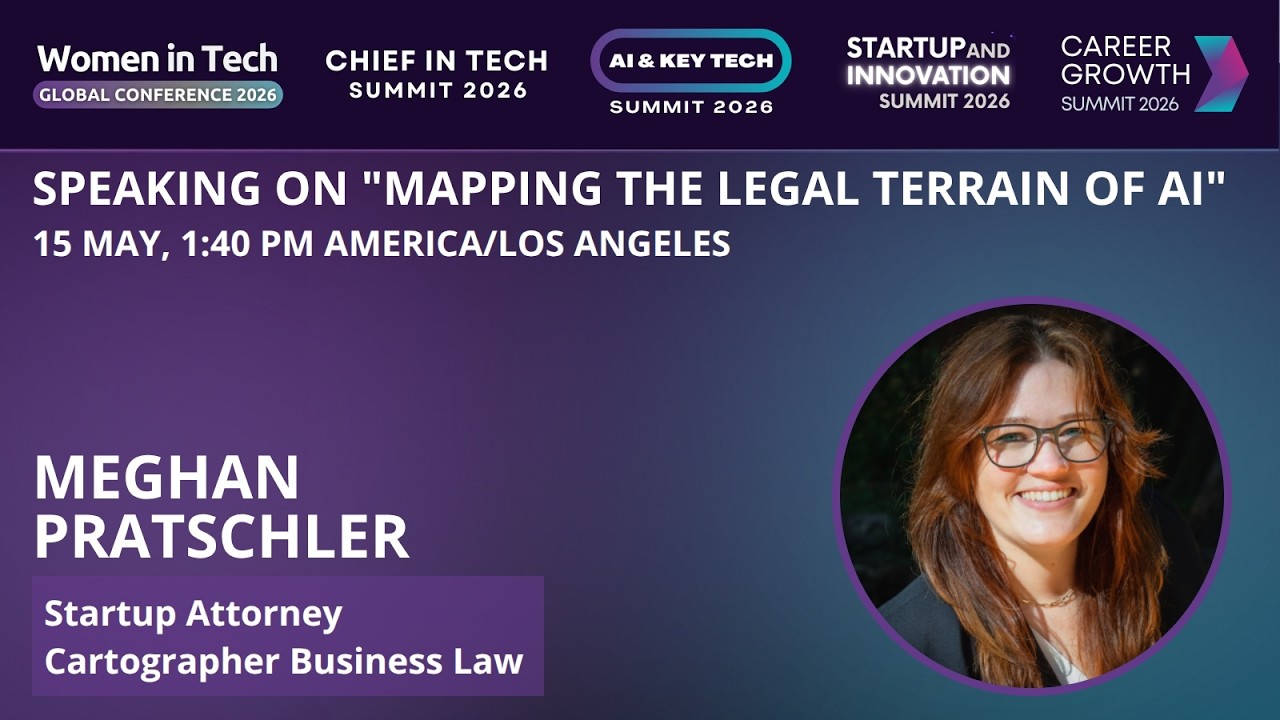
A hiring tool that ranked men named Gary as likely high achievers ended up discriminating against women and minorities, though nobody intended it. With US states, the EU and China writing AI rules at different speeds, any company building, buying or funding AI can inherit liability it never saw coming. Startup attorney Meghan Pratschler, founder of Cartographer Business Law, maps where that risk hides and which contract clauses decide who carries it.
Learn the vendor contract red flags, compliance strategy and diligence items investors check
Startup attorney Meghan Pratschler of Cartographer Business Law gives an overview of AI regulation across US states, the EU and China, the unsettled law on training data, and what investors look for in due diligence. She argues for compliance by design and shows which AI vendor contract clauses decide who carries the risk when things go wrong.
“So not where you are, where your users are.”
“So nobody intended for that to be the outcome, but that was the trend that the AI picked up on led to a discriminatory outcome.”
What you will learn
Map which state, federal and international AI rules apply based on where your users are, not where your company sits.
Distinguish Colorado's outcome-based discrimination standard from Texas's intent-based one and the EU AI Act's risk tiers.
Spot red flags in AI vendor contracts, such as broad data use rights, weak confidentiality, missing audit rights and missing indemnities.
Prepare for investor due diligence with documented data provenance, honest accuracy claims and trade secret protections.
Apply a compliance-by-design approach by meeting the strictest standard first and relaxing only where it is safe.
Key takeaways from the speaker
Get practical guidance: avoid pitfalls, learn about contract terms, and get comparison charts.
Hear from attorneys experienced in AI, corporate law, and tech transactions
Connect with peers navigating the same uncharted territory
Details
Level
Intermediate
Format
Talk
Technical depth
Non-technical
For
Executive, Founder
Length
38:20
Published
August 2026
Questions this talk answers
Which US state AI laws apply to my product?
Potentially the laws of every state where your users can access the tool, because what counts is where your users are, not where you are. Blocking certain states is possible but limits income and reach.
How do the Colorado and Texas AI acts differ?
Colorado looks at discriminatory outcomes, not just intent, while Texas uses an intent-based standard, offers an innovation sandbox and lets only the attorney general enforce it.
How does the EU AI Act decide how tightly an AI system is regulated?
It regulates by the purpose and risk of the AI: minimal-risk general-purpose AI gets voluntary codes of conduct, while high-risk and prohibited systems are heavily regulated.
What should I avoid in an AI vendor contract?
Avoid broad data use rights and broad telemetry use, and make sure the contract covers confidentiality, audit rights, indemnities and, where EU law applies, sub-processor controls.
Can I rely on AI to draft my contracts?
Use AI for help, not as the final drafter: AI-written contracts sound convincing but contain mistakes a non-expert won't notice, so a human, ideally an attorney, should review them.
About this talk
Explore the Uncharted Legal Issues of AI
As AI transforms industries, the law is struggling to keep up. From lawsuits over training data to global regulatory battles, companies face unprecedented risks—and opportunities. Join the attorneys at Cartographer Business Law as we navigate the legal landscape for AI innovators, investors, and adopters.
What You’ll Learn:
Who Owns AI Training Data? – What recent lawsuits mean for your business model.
Regulations: US vs EU vs China – How global rules shape market access and compliance.
The AI Due Diligence Checklist – What investors and acquirers want to see.
Red Flags in AI Vendor Contracts – Problem clauses and how to negotiate better terms.
Preparing for AI Personhood – What happens when algorithms gain legal recognition.
Why Attend?
Get practical guidance: avoid pitfalls, learn about contract terms, and get comparison charts.
Hear from attorneys experienced in AI, corporate law, and tech transactions.
Connect with peers navigating the same uncharted territory.
Why AI-written contracts still need a lawyer (87 s)
I'm Meghan Pratschler. I am the founder and the partner of Cartographer Business Law. Normally, I would have my associate with me to help with his presentation, but he is currently out of town. He's in Columbia. And on top of that, well, it's a women's conference. So that's us. Right now, it's just the two of us attorneys. We're a boutique firm, but we focus mostly on tech issues, a lot of transactions and that kind of thing. So, legal advice, right? We can make mistakes. We're human too, and we don't know the laws of every state and every country.
So you got to check important information and preferably check with somebody local to you. So we're going to talk about kind of an overview of what's going on in terms of legal regulations of AI. There are a lot of sources of law, especially in the US. You know, we have three branches of laws with over three levels, and there's a really complicated kind of overlapping, for lack of a better patchwork of regulations in the US. And all of these affect how AI is enforced or AI laws are enforced in different ways. And, you know, it can be kind of complicated to keep track of where our laws are coming from, right? So we don't just have, you know, laws that are written down by the legislature. We also have how those laws are
selectively enforced by the executive branch and how those laws are interpreted and like laws created from court cases, right? On top of that, because of the nature of technology, like everything's changing so fast. I originally wrote this presentation in October and it's already outdated. It was outdated, like within a couple of days of me writing this presentation, right? So as much as I'm trying to keep up myself, even, you know, trying to keep up as an attorney who works in this space is really complicated, right? So evolving faster than any, any legal source can even keep up with. Um, but a lot of things are across the board as the direction that we're going in terms of legislation and enforcement and that kind of thing. Um, so the best thing to do is to make
sure you're keeping track of what's happening that could affect you directly, um, at the state level, at the federal level, in the U S, um, at the global level, if you're operating globally. So right now we're seeing four major categories of regulation. Um, the biggest one right now is the disclosure number four. That's the newest category though. So, um, just making sure that you're disclosing that AI is being used and that, um, you know, it's not a real person and maybe disclosures about like mental health and wellness and that kind of thing. And that mostly relates to chatbots, but chatbots are everywhere anymore. You like, it's, it's kind of hard to get around. Um, but just making sure that your users are fully informed about what's going on. Um, intellectual property
hits the news a lot, right? Who owns what in terms of what the AI created. Um, that's really important, uh, for businesses, not so much for the end users or the consumers. Okay. Workplace and employment. Um, this has the workplace and employment one, I think is probably the oldest form of AI regulation. Um, because in a lot of individuals don't know this, but a lot of, um, hiring systems use AI to track and make decisions. So anytime you apply for a job, there's might be AI getting their screening or, um, application and, you know, providing, um, the HR team information about you and whether or not you should be hired. Right. So that was one of the first ones that we got regulations over. And then
the other big one is healthcare and decision-making. Um, it's really super important because, you know, you have AI making decisions about your healthcare now, and we want to make sure that, um, that's being done in an ethical way, you know, for the sake of everybody involved. Okay. So for the U S specifically, we have this patchwork of, um, legislation. So at the state level, what that looks like is certain states enacting laws at different times and regulating different things. So if you are a business that only operates in one state, you know, you only have to worry about that one state. Um, if you are operating in multiple states, or even if people can access a tool in multiple states, then you have to worry about all of the states that that tool can
be accessed in each and one of those states, you are potentially subject to the legislation of those states based on where your users are. Right. So not where you are, where your users are. And that's where they're really complicated. Am I compliant comes in? Right. Um, so the easiest way to get around to that is a deal blocking. If you're creating an app, which, you know, is an option, but that kind of limits your ability to generate income and get your word out about your product.
So we run into this issue a lot. Um, right now there are not actual federal laws. There's, um, been some administrative actions, uh, executive actions that affect AI, but nothing that is more than superficial at this level or at this, at this point, but that's only within the U S that doesn't account for any other country, but we'll get on those. Okay.
So the big one right now, um, is California's ADMT regulations. Um, this one in defense here, and it has to do with, uh, uh, big companies, big AI companies, right? Is something that affects everybody. And this is actually, I mean, like with California, a lot of times they're very focused on what's best for the individual, right? Um, not what's best for the business. So when, if you think about it from that perspective, you're the individual that's affected by this, that's a good thing for you. Right. So the ADMT regulations were the big one, the first big one to really come into effect. Um, and the way this affects most companies, unless you're like a really big AI company, um, is the bias testing, record keeping, um, making sure
that third pen or keeping third parties, vendors liable, um, and, you know, detailed disclosures, that kind of stuff. Um, reasonable accommodations is an ADA thing. So like, um, you know, the Americans with Disabilities Act, um, requires that reasonable accommodations be provided to individuals that could do the job if they had those accommodations, as long as they're not like overly burdensome.
Um, so, you know, being able to wear eyeglasses at work or having closed captions on, on a Zoom meeting, that kind of thing. Um, so with ADMT, ADMT regulations specifically, even AI, you have to have reasonable accommodations, um, you know, and then the quote, you know, don't discriminate based on things that people can't control about themselves, obviously, you know.
So Colorado's AI act, um, this one was in the news a lot and it's not nearly as, um, big of a deal that as the government probably made it seem by how much it was talked about. Um, but it's really just don't discriminate using your AI products, right? It's really just, really just kind of that simple. If your AI is discriminating against people, don't do that.
Um, seems pretty like stupid proof, but you know, it happens. Um, the big thing with this one though, is that it's the discriminatory, discriminatory outcomes, not just intent. And there are inferences that can be made by AI that AI will pick up on, um, that lead to discriminatory outcomes. So, um, one of the big examples is, um, Workday realized that with their employment AI, um, it would rank guys named Gary as, um, really high achieving and like more likely to do well at the job, right? So it discriminated against people who are not named Gary just because they were not named Gary. So it kind of like reinforced that stereotype that guys named Gary are going to be the CEO.
Right. So stuff like that, it ended up being discriminatory because it discriminated against women and minorities who are less likely to be named Gary. Right. So nobody intended for that to be the outcome, but that was the trend that the AI picked up on led to a discriminatory outcome. Um, so that kind of thing has to be carefully monitored with AI products. Okay.
Um, the Texas act, um, this is an intent based standard. So it kind of like, it's a little bit more flexible than the Colorado one. Um, you know, you have to know that it was discriminatory and then not do anything about it. Right. So not in, um, in terms of, you know, the outcome is discriminatory, but in terms of you knew it and you didn't fix it is the problem. Um, they also created the innovation sandbox, which is pretty cool. Um, so it allows you to figure things out and test your product without worrying about whether or not you can be subject to like, um, um, Oh, to the act. Um, however, the big thing is the limited enforcement. So a lot of laws allow, um, individuals who are affected by it to sue. Right. Whereas in this case, the, um,
only the attorney, only the attorney general. So only the government can take action. Is the government the power to say whether or not something is bad or good, which I mean, as an individual who might be affected by this, I mean, not personally, I don't live in Texas, but you know, from an individual perspective, that's, that's really not a good thing from business perspective. They like it a lot. Okay.
So the EU AI act, um, totally different. Right. And it is like the, um, GDPR, right. When it came out, it was a lot of like, oh no, this is a big deal. Right. Now we have to be compliant with all of this, but it's a little bit more, a little bit more, uh, it's less scary once you realize who it's like, um, what the intent of it is and how it's enforced. Right. So, um, their, um, act is based on what the purpose of the AI is, and that's how tightly controlled the regulations are. Right. So, um, the minimal risk is general purpose AI with voluntary codes of conduct. They get a lot of like, um, flexibility and leeway, right. Whereas prohibited systems and high risk systems, those are AI being used in situations
that have a huge impact. Right. And they're highly regulated. Right. So depending on what kind of AI product you're providing, um, you might be subject to a lot of regulations or you might not be subject to any at all. Um, and then the big thing with this one that becomes, um, seeing what category you can get fit into, right. Because I mean, as a lawyer, you know, I want to advise that you stay on the, um, you stay on the, uh, you air on the side of caution and assume that you're going to be bumped up into the, one of the higher categories, but as a business owner, you want less liability and you want to try and, um, wiggle your weight down into one of the broader, less regulated categories. Okay. Um,
um, so for, uh, deployers, you want to make sure that, you know, cybersecurity is up and tight and all of that. You want to make sure that you're all above board for providers. Um, it is distracting. Um, you want to make sure that, you know, you want to make sure that all of this is taken care of. Um, and again, a lot of it is, um, doing the right thing, like what you would want done if you were the user, not the business provider or the service provider. Okay.
I don't actually know that much about this is, um, very much my associates area of expertise. He knows more about this than I do, if I'm being honest. Um, but China is, we put this in here as a means of comparison, right? Um, so it's a lot of, um, well, okay. So you have, um, it's kind of like the inverse of the EU AI act, right? They start with the strongest protection and then they lighten it a little bit, but it is very, it's a lot more stringent and it's a lot more centralized than either of the U S or the EU. Right. So you have to be careful when you're deploying. And then, um, the longer you're deployed, the more relaxed you can be as opposed to, um, the EU where you're kind
of like getting tighter as things go on. Okay. For global compliance, you know, you want to try and comply broadly, uh, like as broad as you can. And then, um, you know, figure out where you can relax within that. So kind of like the China approach, right? Work within the strongest confines, right? Be compliant to the highest standard you have to be, and then decide if you really actually need that or not, because it's easier to start off that way than it is to become client and client later.
And that pushes the burden of compliance right at the front of deployment, which can be kind of hard for a lot of people because it's a big expense and a lot of work up front, but it's much better strategy in the longterm because you're, um, making sure you're compliant from the start as opposed to running the risk of like, you know, not being compliant later. Right. And this is true for a lot of things when it comes to compliance, in my opinion, but you know, I'm also an attorney and again, we kind of err on the side of caution. Moving on, um, AI training data. This one is a big thing that we're seeing in the news and in regulations a lot. Um, this one is something.
So the way this works with the U S laws is we don't know how these laws are going to be decided until they work their way through the court system. Right. Um, and what that means is a law could be enacted and we can say one thing or have a dispute, right. And it's not decided for another five to 10 years. So we're not going to have a solid idea of what the legal framework or the legal map looks like for another five to 10 years, even now. Right. Which is kind of crazy when you think all up in the air right now, it could go one way or another. Um, but again, lawyer, err on the side of caution, right. Um, the easiest way with training data or not with training data, uh, easiest way with a lot
of AI and a lot of pretty much everything is to make sure it's in writing and it's very clear. Right. But when it comes to training data, it's a lot of confusion because, you know, um, you have access to all of these materials, all of the internet, you can scrape it. You as an individual can read it.
Right. And then create something, but can AI do that too? Right. So if I read something on the internet, like an article, um, and then I make my own version of that, right. Um, that's fine for the most part. I mean, not going too deeply into copyright laws here. Right. I can rewrite that in my own words, as long as I'm not like obviously infringing it. I'm not obviously copying it. It's like totally above board. But the problem is, is the AI allowed to do that? Right. And that's what we're still trying to figure that out. Right. There are these huge lawsuits about this. Um, the anthropic settlement was like a huge deal. Right. Because we had no idea which way that was going to go. And even within
that one decision, um, there was a lot of nuance, right. So the division was whether or not the book was lawfully purchased versus the pirated version. Right. And they really wanted to avoid, um, creating a standard for a blanket license to anything. Right. So blanket licenses are where, um, you pay like a nominal fee and then you get to use that. And it's really important to copyright for certain things like, um, music licenses. So if you create a cover version of a song, right. So you, you know, you start playing it on your guitar, but it's some band wrote it right. Legally speaking, you were supposed to, um, license that song so you can create your own version. Right. And you own the copyright in the version that you're performing. Right. But you don't own the underlying copyright.
And it's like a whole mess. Right. Um, and it's really complicated and it's actually not even my practice area, but I could probably talk about it for like 10 hours. Um, and again, not my practice area and I could do that. So, you know, imagine what it's like if it's somebody's practice area. Anyway, that kind of license, it's a standard flat fee that you pay to the author of the songs. That way you can perform it, um, however you want. Um, and they were, the reasons is relevant is, um, there were this specific case, they were trying really hard to avoid that kind of outcome.
Everybody involved was because we didn't want a situation where, um, you know, authors were kind of getting the short end of the stick, which is what happens with blanket license generally. Right. So we don't, we're trying to avoid that and still kind of ended up happening because this is going to be a benchmark case for all future disputes of this type. Okay.
So practical navigation tips for, um, licensing data or training data. Right. You want to document everything. Right. Again, compliance heavy upfront. Um, you want to make sure that your, um, governance policies address AI specific risks and requirements. Um, you know, really important. And then contract protection. If you are getting a license from something, somebody, a database, whatever, um, you want to make sure your contracts are covered or are covering you adequately. If you're training AI on whatever this is, um, you should be seeing a lot more, um, AI training clauses in contracts, especially, um, user licenses. So, you know, if you go on, uh, Facebook, we'll say, and you go to their terms of service, they're going to have a section now on AI training and whether or not you can use
Facebook for AI training. And I'm going to guess that the answer is probably no, but I haven't read it recently. Um, but I guarantee that Facebook or subject to a license with Facebook. Okay. So if you have a startup, what investors are asking for from AI companies, um, data providence, right. Um, making sure that everybody owns what they're supposed to do. Right. So you don't end up with like, you know, a 1.5 billion settlement, like, you know, um, that everything is documented properly. Right. And that you're not lying about the accuracy of AI. And that is a huge deal. Right.
It's not really kind of like the topic of this presentation in particular, but, um, making sure sure that you're not bloating your numbers, so to say, right. You want to make sure that you're, well, then you're just being honest. Your AI product isn't working the way it's supposed to, then you got to disclose that. Okay. Um, you can, if you're trying to get investors, um, and your AI is not working the way as opposed to, there are ways to convince investors to invest anyway. Lying about your numbers is not one of them.
Directing trade secrets today. Um, trade secrets are basically information that is not available to the public. That is, it doesn't have to be sensitive, but it does have to be valuable because it's a secret. So, um, when it comes to AI, you know, this is your algorithms and all of that. So you want to make sure that you're protecting all of your trade secrets. Right. And that you have a way of, um, they stay secret and what to do if they don't say secret. Okay. Um, so our first is preventative measures, right? We want to try and make sure those stay secret as much as possible. And then, um, risk management is, you know, what happens if you get hacked, right? What happens if there is somebody
left a password of visible somewhere they shouldn't have, and now they have access to your systems, right? You want to plan for these eventualities, especially as you're growing, because they will eventually happen. So this is one of those like compliance at the front kind of things. Well, it's gonna, it's gonna happen. It happens to everybody at some point in time.
So it's just a matter of, um, mitigating the damages when it does happen. Have a plan in place and stick to the plan. Okay. Um, are building a product. If you're getting investors, you want to make sure, so due diligence is just making sure that everything's hunky dory. Everything is good and how it should be. Um, you want to kind of, uh, follow these steps. You want to make sure that your licenses are up. You're like actually licensing what you have. Um, that everything is compliant the way it should be that your trade secrets are protected. Um, if you are using AI in your business, you want to make sure that your employees are trained properly on it. Like the do's and don'ts, you know, make sure that chat GPT has their sharing turned off that kind of stuff. Um, and what to do if
there is a problem, right? So we're going to move on to AI vendor contracts. Um, if you are going to be using an AI in your business, an AI product, um, you're going to get a contract that says stuff about your new AI product, right? So you want to make sure that, um, your AI contracts do not include this, right? Um, and you, that they're kind of negotiated in a way that the risk falls less on you, right? So broad data use rights. Um, so don't let them train on your data, right? Or if they do, it needs to be only used for your business purposes. Okay. Um, you really want to limit the training on your data. So like, it's okay if your, um, AI product is training on your data to provide you a better
service. It is not okay if they're training on your data to provide a better service generally, right? A little bit of nuance there. So, um, you want to be careful with that. Same with, um, telemetry and usage tracking. Be careful with that. It's okay if it's used for you specifically to provide use specifically a better product. It is not okay if it's used broadly, right? Um, confidentiality is the big one that kind of goes back to trade secrets. Make sure that, um, everything that you put in there is confidential and that's not just training on your data, right? They need to not be able to access what you're using or what you're saying to the AI product. Um, because if you're talking about like sensitive business information, like for me specifically, that'd be like client information,
right? I can't go into chat GPT and say, oh, this client, um, I need to do this, right? That'd be really bad. So you want to make sure that, um, that kind of wiring an AI product to use, um, missing indemnities or auto rates. So, um, the right to audit is to make sure that you're being charged the right amount and that they're doing what they're supposed to be doing with your, um, confidential information and your training data. So you want to have the right to audit the company, right? And it can be kind of limited like once every 12 months or whatever, and that's fine as long as you have the audit right. So if something, if you suspect something is going wrong, you can double check and
you have that right. Um, indemnities are who takes the blame for what, when something goes wrong and you want to make sure that you are indemnified from the company's bad actions. So if you get sued for something the company did, um, and I'll go into this more in a minute, um, then they're going to take the blame and they're going to protect you from that. So this is, goes back to what we talked about at the very beginning, like, you know, non-compliance with a law or a regulation in a state, right? So if you get sued because of an employment discrimination and you were using Workday, um, you want Workday to take the blame. You don't want to be sued for employment discrimination, right? You want to be able to say, no, that wasn't us. That was Workday. Okay. So if that indemnification
though is not in your vendor contract, then you're the one who gets sued and you're the one who has to take the blame. Um, and then big sub process provisions. This is more for EU stuff. Um, they have really tight, uh, sub processor controls, um, and regulations on who can process what data, right? So if you are, um, if the EU is implicated in any way or not the EU specifically, but you know, a European country, an individual who's subject to the EU laws, what have you, if they're implicated in any way, you got to make sure you're compliant with the GDPR. Um, and that includes sub processors.
Okay. So, you know, making sure the data is going in the right place. Negotiating better terms. So if you are negotiating contract with a vendor, um, these are some things that you might want to talk about if you can, if you can't, that's all right. It's not the end of the world. Um, these are just things that you want to make sure that you are attempting to work with. So like, um, if you're getting a white label product, versus if you're just, you know, signing up for chat GPT, chat GPT is not going to let you negotiate, right? They're going to be more in the first, um, page there, the previous slide, where you want to make sure that they don't hit those points that you want to be wary of for your
product. But if you are getting a white label product, like I have a white label product that I use for my clients, um, this is something that we would negotiate, right? So I don't think I need to go through all those. I'm sure you guys know what those mean. Um, but there's a difference if you're the vendor versus the customer. So if you're the one providing the AI product, right, you want to focus on limiting your own liability for their use of your product, right? So if they're using your product in a way you did not intend it, or, um, they're using it the way you intended it, but the outcomes are not entirely what you expected because AI can be a little bit wonky sometimes, you want to make sure that you're limiting your own liability for
those outcomes, right? If it says something like if they're, um, you know, jailbreaking your product, you've got to be careful that you are not responsible for their misuse among other things, right? You also want to protect your own intellectual property. That's kind of a big deal. Um, and you want to make sure that those contracts reflect that it's deal on basically everything, um, including the outputs as much as possible. Whereas if you're the customer, you're kind of in the opposite situation.
You want to own the outputs, um, and that kind of stuff, right? So next is AI written contracts because I get this question a lot. Um, please don't like, you know, it sounds like a really good contract, but it doesn't know what it doesn't know. Um, and unless you have a lot of experience with contracts specifically, um, you also don't know what it doesn't know. Right. So, um, you might think that this is an easy way of making sure that, um, you're getting a contract and it's, it's a real contract. Right. But if you had a, an AI write it, they're just not at that level yet where they really like, it's going to sound really good.
It's going to look really good. Um, and to somebody who doesn't know, it's, it looks like a contract. It looks enforceable. It looks like everything's said, right. But there will be little mistakes, um, that you won't even notice. And don't get me wrong. Humans can make mistakes too. I make typos all the time. Um, but it's a little bit more forgiving when a human makes an obvious error versus when AI says something completely wrong and completely messes something up. Okay.
So if you do have AI written contracts, that's fine. Even I use an AI service sometimes to write contracts really fast. Um, but I also can go through and make sure that it actually says what it's supposed to say. Right. So have a human review it at least for now or probably forever. I hope because that is my job security. Okay. So preparing for AI personhood. This is again, one of the slides that was really meant to be Casey's. Um, I don't know all of that much about it, but we are seeing progress on these fronts, like in Washington where I'm, well, one of the states I'm licensed in Washington and the other one's California. But, um, in Washington specifically, we started giving, um, we have an AI law firm, but it's like a legal service that has been officially
allowed to practice law within the confines of certain types of law that really, um, they're really kind of wrote. Right. So the AI can file stuff on your behalf now, which is really cool actually. Um, but these kinds of things and their decision-making and their legal status right now, there's no official personhood as in the court doesn't recognize the AI as being, um, an entity on its own. Right. And it's still controlled by humans, but we are expecting to see that, you know, in the next 10 to 20 years. Right. Um, it's kind of, you know, uh, an interesting thing that we're going to see in the future, I think, you know, personhood right now. Um, we're not seeing anybody having actually given AI a legal status. It's all the human zone, whatever the AI creates,
that kind of thing. Um, but we want to make sure that we're considering that as a possibility. Um, oh, a good parallel for what I mean by AI personhood is, um, legal entities like businesses, they have legal personhood. Okay. So we're expecting AI itself, the algorithms to have their own personhood, similar to how a legal entity has its own personhood. Okay.
So key takeaways, um, data providence matters. So where data comes from, what training data, um, and, you know, making sure that that's all, um, above board and good and that you have the right to use it. Um, you want to be compliant by design. So upfront compliance at the very beginning to minimize, you know, risk later on. Um, you want to protect trade secrets. That doesn't matter. It might be your train secrets. If you're the AI service provider, it might be, um, your trade secrets. If you are using an AI product and you want to make sure that you're being careful with your contract strategy, right? You want to really review those things and make sure you're thinking of all of the possible issues. And sometimes that actually, honestly, sometimes it means running it through,
you know, Claude or whatever you use to make sure and asking it, Hey, what does this mean? And is it a good contract? Should I sign it? Right. As a lawyer who writes contracts, it's kind of annoying. And I can tell which one of your, um, which, which AI chatbot you read it through, uh, depending on what, like for certain standard contracts, well, based on what feedback it gives me, because they all said the same thing about the same contracts. It's kind of interesting. Um, but for now don't rely on it to draft contracts, just ask for its help. Um, and then still even send those notes to an attorney because a lot of times, like half the time it's hallucinating something that I didn't even put in
there. Okay. And this is my, um, just exit slide. Basically, uh, fun fact, uh, this presentation was also created by AI. So the entire thing, obviously I wrote the notes, but, uh, kind of interesting, uh, product that I found that could, um, do a lot of this. So I don't know if my time is up to it.
I went kind of fast, um, to try and make sure that I was, uh, good since I started really late, apparently. So anyway, I think I have, um, QR codes on the next page or the next slide, but they are updated and they need updated so they don't actually work. I don't think, but if anybody has any questions, you can stick them in the chat. Now there's a handful of you.
So then we can add more navigational puns. Okay. Um, I, at one point when I first started this present, right, when I first wrote this presentation, like six months ago, I actually had chat GPT come up with, um, a list of navigational puns for me to use. And I don't have it pulled up, uh, but I could find it. It was pretty good.
Um, yeah, like, you know, down here, our mission is to help innovators navigate this terrain without running around a regulatory shoal or running a ground on regulatory shoals. I mean, they were so bad. It was great. But, you know, again, I'm trying to go like really fast in this presentation. That's originally an hour long, though. If you have any other or any questions or anything, um, feel free to reach out. Um, I mean, you can, you can Google me. I should pop right up. It's kind of a weird last name.
So, um, but yeah, reach out on LinkedIn, send me an email, what have you, um, more than happy to answer questions. Or if you want, like, I have, uh, my AI white label products that you guys can ask do too. Um, it's actually really cool. Um, because it's a legal AI. So you can ask it legal questions and it's all confidential. It's all, um, covered by attorney client privilege because I am on paper, at least the, um, attorney of record. So, um, so like I'll, I have access to review and review all the questions, make sure it didn't say anything it wasn't supposed to. I haven't actually had any problems with it hallucinating yet.
I think it's actually been pretty cool. Um, and sometimes I just, I have my own account that I like put my own little questions in just out of curiosity for things that I don't know anything about. Um, yeah. And it's a good jumping off point for research, but so yeah, if you want access to that too, you can ask. All right. Well, with that, um, I will let you guys all go.
I'm sure you guys have had a really busy day with, um, all of these sessions today. So you guys have a good rest of your day. Bye.
Transcribed automatically; names checked against the speaker record. Select a time to jump there.
Article based on this talk
What startups must get right about AI law before regulators and investors ask
Startup attorney Meghan Pratschler explains why AI liability follows your users, why compliance belongs at the start, and which contract clauses decide who takes the blame.
In short
AI regulation is a patchwork that changes faster than any lawyer can track, and Meghan Pratschler argues the safest strategy is to comply to the highest standard from day one. In this overview she covers US state laws, the EU AI Act and China's approach, the unsettled law on training data, what investors check in due diligence, and the clauses that decide who pays when an AI vendor gets it wrong.
Key takeaways
Get practical guidance: avoid pitfalls, learn about contract terms and get comparison charts.
Hear from attorneys experienced in AI, corporate law and tech transactions.
Connect with peers navigating the same uncharted territory.
Where your users are decides the rules
Pratschler opens with a candid caveat: she wrote the presentation in October and it was outdated within days. In the US, law comes from legislatures, from how the executive branch chooses to enforce it, and from court decisions, all at several levels of government. She groups current AI rules into four categories: disclosure (the newest and currently the biggest, mostly about chatbots), intellectual property, workplace and employment (probably the oldest, because hiring systems have long used AI to screen applicants), and healthcare decision-making.
Since the US has no substantial federal AI law yet, only executive actions she calls superficial, the states fill the gap. For any company with an app, the catch is jurisdiction: "So not where you are, where your users are." (5:10) Blocking access from certain states is an option, she notes, but it limits income and reach.
Outcomes versus intent: California, Colorado and Texas
California's ADMT regulations were the first major rules to take effect. For most companies their practical impact is bias testing, record keeping, keeping vendors liable, detailed disclosures and reasonable accommodations in the spirit of the Americans with Disabilities Act.
Colorado's AI Act boils down to "don't discriminate", but it judges discriminatory outcomes, not just intent. Her example, as she cited it: Workday found its employment AI ranked men named Gary as more likely to succeed, which disadvantaged women and minorities. "So nobody intended for that to be the outcome, but that was the trend that the AI picked up on led to a discriminatory outcome." (9:20) Texas uses an intent-based standard, offers an innovation sandbox for testing products, and lets only the attorney general enforce it. In her view, businesses like that arrangement more than individuals should.
The EU, China and compliance by design
The EU AI Act, like GDPR before it, looks scarier than it is once you understand its intent. The rules scale with the risk of the use case, from voluntary codes of conduct for minimal-risk general-purpose AI to heavy regulation for high-risk and prohibited systems. She names the tension honestly: as a lawyer she advises assuming you will be bumped into a higher category, while business owners want to argue their way into a lighter one. Her guiding principle for both deployers and providers: "Um, and again, a lot of it is, um, doing the right thing, like what you would want done if you were the user, not the business provider or the service provider." (12:58)
China, included for comparison, starts strict and centralized and relaxes the longer a system has been deployed. Her global advice borrows that direction: comply with the strictest standard you face, then decide where you can relax. It front-loads cost and work, she admits, but it is a better long-term strategy than retrofitting compliance later.
Training data, investors and trade secrets
In the US, she explains, nobody will know how training data disputes settle until cases work through the courts, which could take five to ten years. The core question: if a person may read an article and write their own version, may an AI do the same? She points to the Anthropic settlement, where the distinction turned on lawfully purchased versus pirated books, and notes the parties wanted to avoid a blanket-license standard that tends to leave authors short, yet the case will still serve as a benchmark. Her practical tips are to document everything, make governance policies address AI-specific risks, and check contracts and terms of service for AI training clauses.
Investors, she says, want data provenance, proper documentation and honesty about how well the AI actually works. There are ways to win investors even if the product underperforms, but "Lying about your numbers is not one of them." (21:10) For trade secrets such as algorithms, she pairs prevention with a response plan, because breaches eventually happen to everyone: "Have a plan in place and stick to the plan." (23:05)
Vendor contracts and AI-written agreements
When buying an AI product, she flags broad data use rights, broad telemetry use, weak confidentiality, missing audit rights, missing indemnities and EU sub-processor provisions. Training on your data to improve your own service can be acceptable, but "It is not okay if they're training on your data to provide a better service generally, right?" (25:01) Indemnities matter because if a vendor's hiring tool leads to a discrimination claim, you want the vendor, not you, to take the blame. Vendors should focus on limiting liability for misuse and protecting their IP, including outputs, while customers want to own the outputs. Off-the-shelf tools like ChatGPT will not negotiate, but white-label products often will.
On AI-drafted contracts, her verdict is that they sound and look convincing but contain small mistakes a non-expert will not catch. She uses an AI service to draft quickly herself, then checks the result: "So have a human review it at least for now or probably forever." (30:54)
Preparing for AI personhood
In Washington, one of the states where she is licensed, an AI legal service has been allowed to practice within limited, routine areas of law, though no court yet recognizes AI as an entity of its own. She expects that to change within the next ten to twenty years, by analogy with companies: "So we're expecting AI itself, the algorithms to have their own personhood, similar to how a legal entity has its own personhood." (32:44)
Watch the talk
Mapping the Legal Terrain of AI, by Meghan Pratschler (38 minutes): https://www.womentech.net/video/mapping-legal-terrain-ai
About the speaker
Meghan Pratschler, Startup Attorney at Cartographer Business Law, is a corporate and transactional attorney focused on mergers and acquisitions, venture financing and general corporate counsel services for small businesses, startups, investors and technology companies. She also advises clients on IP and technology transactions, securities law compliance and governance, and previously served as General Counsel for a data and analytics company.
Questions this talk answers
Which US state AI laws apply to my product?
How do the Colorado and Texas AI acts differ?
How does the EU AI Act decide how tightly an AI system is regulated?
What should I avoid in an AI vendor contract?
Can I rely on AI to draft my contracts?
Drafted with AI from the talk transcript. Editor review pending.
Frameworks and ideas mentioned
EU AI Act
GDPR
California ADMT regulations
Colorado AI Act
Texas AI act
Americans with Disabilities Act
Cite this talk
Meghan Pratschler. "Mapping the Legal Terrain of AI." WomenTech Network, 2026. https://www.womentech.net/video/mapping-legal-terrain-ai