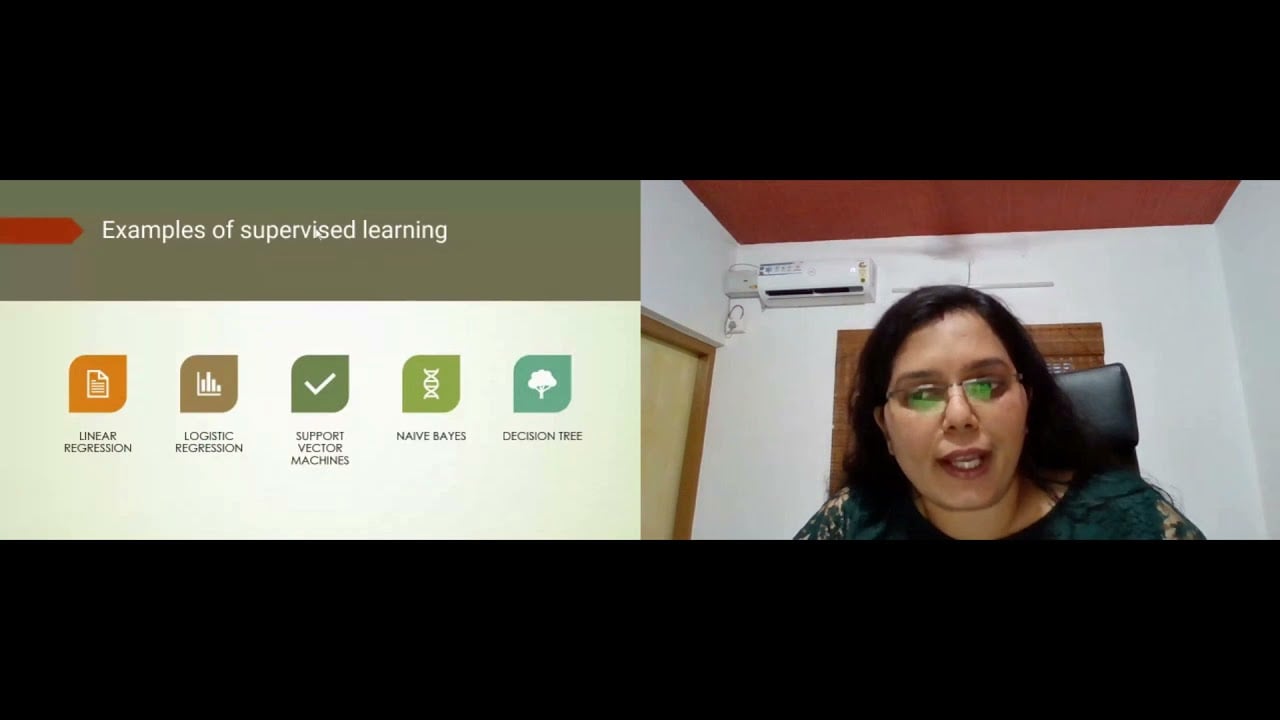
But what is Machine Learning? : A complete starter pack
Mayuri Madhur30:572021
Învățarea profundă nu înlocuiește învățarea automată, ci face parte din ea
Prețul de revânzare al unei mașini se ghicește ușor doar după vechimea ei, până când în tabel apar starea și kilometrajul, iar calculul mental cedează. Acesta este golul pe care îl umple învățarea automată, spune Mayuri Madhur, software development engineer la Flipkart, iar începătorii se pierd adesea în jargonul din jurul ei. Așadar, unde se situează de fapt modelele clasice, ansamblurile, învățarea prin întărire și rețelele neuronale și când câștigă fiecare dintre ele?
Obțineți o hartă pe înțelesul tuturor a tipurilor de învățare automată și a momentelor potrivite pentru fiecare
Mayuri Madhur, Software Development Engineer la Flipkart, le oferă începătorilor o hartă structurată a învățării automate (machine learning): ce este, de ce diferă de programarea tradițională și ce loc ocupă în cadrul AI. Ea prezintă învățarea clasică supervizată și nesupervizată, învățarea prin întărire, ansamblurile și rețelele neuronale și susține că alegerea unui model depinde de problemă, nu de entuziasmul din jurul învățării profunde.
“În prima abordare, noi gândim. În a doua abordare, mașina gândește.”
“Prin urmare, datele sunt cel mai important lucru pentru a face mașinile să învețe. Cu cât datele sunt mai diverse, cu atât rezultatul este mai bun.”
What you will learn
Distingeți programarea tradițională bazată pe reguli de învățarea automată, în care mașina deduce regulile din date și rezultate.
Plasați învățarea automată în cadrul AI, iar rețelele neuronale și învățarea profundă în cadrul învățării automate.
Deosebiți învățarea supervizată de cea nesupervizată și clasificarea de regresie, cu exemple din viața de zi cu zi.
Explicați cum stacking, bagging și boosting combină modele slabe într-un model mai puternic.
Alegeți între un model de ansamblu și o rețea neuronală în funcție de cerințele de timp real și de complexitatea problemei.
Details
Level
Beginner
Format
Tech talk
Technical depth
Introductory technical
For
Student, Early career, Career changer
Length
30:57
Published
July 2021
Questions this talk answers
Prin ce diferă învățarea automată de programarea tradițională?
În programarea tradițională, oamenii scriu regulile, iar mașina produce rezultatele; în învățarea automată, mașina primește date și rezultate și deduce singură regulile. Aceste reguli învățate pot acționa diferit asupra unor tipuri diferite de date.
Sunt rețelele neuronale și învățarea profundă același lucru cu învățarea automată?
Nu. Învățarea automată este o parte a domeniului mai larg al AI, rețelele neuronale sunt un tip de învățare automată, iar învățarea profundă este modul modern de a construi, antrena și folosi rețele neuronale.
Care este diferența dintre clasificare și regresie?
Clasificarea încadrează datele în categorii, de exemplu dacă un student a promovat sau nu, în timp ce regresia prezice un număr, de exemplu procentul obținut de student.
Când ar trebui să folosiți învățarea prin întărire?
Atunci când nu aveți date, dar aveți un mediu de simulare, astfel încât sistemul să învețe din recompensele și penalizările pentru propriile acțiuni, așa cum fac mașinile autonome.
Ar trebui să alegeți mereu o rețea neuronală în locul unui model clasic sau de ansamblu?
Nu. Madhur compară alegerea cu cea dintre o mașină sport și un camion încărcat: ansamblurile precum random forest se potrivesc cerințelor de timp real, iar rețelele neuronale problemelor foarte complexe și imprevizibile.
Programarea tradițională vs. învățarea automată (84 s)
K-means explicat cu chioșcuri de kebab (58 s)
Va înghiți învățarea profundă învățarea automată? (84 s)
Let's get started. Hello and welcome everyone. Thank you so much for joining in today. I am Mayuri Madhur, a software developer from India. Today we are going to go through the very basic, like foundation level information about machine learning. So if you're very new and confused about how to move forward in this domain, you are at the right level.
And even otherwise it would be a good brush up. So let's get started. So the agenda for today is pretty, pretty clear. What is machine learning? Why do we need it? Then some basics around machine learning and its relation with AI. And then we'll dive deeper into the details of the types of machine learning. Speaker: Okay. So what is machine learning? Machine learning is the science and art of programming computers so that they can learn from the data that is provided to them. And its goal is also pretty clear. Predict results based on the incoming data.
Speaker: Okay. So that was what is machine learning. But why do we want machines to learn? In the traditional programming, we input the data to the machines. Machines give us the output based on some rules that we set to it. In machine learning, we input the data and the output of it to the machines. Machines try to find out the relation between the two and figures out the rules.
Speaker: Based on which the machine is going to make predictions based on which the machine is going to make predictions about the upcoming data or incoming data in the later stages. Speaker: So in the first approach, the rules are rigid and same for all kinds of data. In the second approach, the rules are formed out of relationship between the data and the output. So these rules which are formed will be different.
Speaker: Different and act differently on different kinds of data. In the first approach, we do the thinking. In the second approach, machine does the thinking. Speaker: So, okay, you might think that why can't we just feed the rules and let the machine do the input and output part? Why do we need the machines to learn? What is the need here? For that, let's take a step back.
Speaker: You are given this data set with the age of the car and the resale price of the car that you are going to get. So if you resell your brand new car, then you are going to get $20,000. If the age of the car is $19,000. It's one year. Then you're going to get $19,000. If the age of the car is two years, $18,000. Three years, $17,000.
Speaker: Without a second thought, you will be able to tell that at the age of four, the car is going to get you $16,000. But what about this situation? When I add a little more information to this data set? I have added the car. Speaker: The car's condition and the odometer reading as well. Now, how about now? How are we going to be able to predict the cost of the car as conveniently now? So there exists a lot of problem statements where we are not able to do all the cost of the car.
Speaker: As conveniently now. So there exists a lot of problem statements where we are not able to do a lot of thinking and calculation. And that is where machine learning comes into picture. Speaker: So I hope we don't have any doubts until now. Speaker: Okay. So components of machine learning. Speaker: So what is the most important component one can think of from the definition?
Speaker: Data. Whenever we make a prediction, we take into consideration the previous observations which were made, the previous data that we have. Speaker: Hence, data is the most important thing for making our machines learn. The more diverse the data, the better is the result. Speaker: There are two types of data, manual and automatic. Manual is of better quality and expensive and automatic data is of lesser quality and cheap.
Speaker: Google captures data from us all the time. Whenever it asks us to identify images for capture, it is actually fetching data from us. Free labor. Speaker: So the next important component is features. The other factors for a machine to look at. And that is what the machine is learning from. Speaker: And that is what is trying to. That is the point from where the machine is fetching the data or learning to make the predictions. It is very important to choose the right features.
Speaker: Because they are the affect the machine learning the most. Not all details in the data might be important. We need to consider only the ones which will matter the most while predicting the data or for the learning of the machine. Speaker: So not all the details will be necessary. That is something we have to keep in our mind.
Speaker: Sometimes the features might not be explicitly visible in data. Speaker: And then we have to derive those features from our data set. Speaker: The most obvious component is the algorithm. So it's just how you solve a problem. Right. Speaker: Algorithm identifies the relation in the data and uses these relations to predict the results. It affects the precision performance and the size of the model.
Speaker: So as you can see that machine learning is at the heart, is at the intersection of data features and algorithms. Speaker: Okay. This is super important. Look at this picture for once. Speaker: Artificial intelligence is a whole field of study. It's like chemistry or biology or physics. It's a whole field of study. Machine learning is a part of it, but not all of it.
Speaker: AI has other parts as well, like NLP. Neural networks similarly are a type of machine learning. Speaker: They are not the complete machine learning. There are, they are a type of machine learning. Speaker: They are super important, but they are not the only ones there. And deep learning. Deep learning is the modern way of building, training and using neural networks.
Speaker: The study of neural networks has been around for a very long time now, but it gained its present day importance and boom with the advancement of the computational powers and the technology in the recent years. Speaker: So basically deep learning is the new architecture. Speaker: So these are the main types of machine learning, classical machine learning, reinforcement learning, ensembles, neural networks.
Speaker: And we are going to go through the details of each one of them now. Speaker: Classical machine learning comprises mainly of two types, supervised and unsupervised learning. Supervised learning is when the data you have is labeled. Speaker: Unsupervised learning is when you don't supervise the model, you let the model work on its own to discover the information, which is inherited to the data.
Speaker: Supervised learning is like having a teacher to teach you. And the teacher has the data labeled for you. For example, if you point towards a mango and call it as an orange, then the teacher is going to tell you that you're wrong. Speaker: And it's an, it's a mango. It's not an orange. So that is what supervised learning basically means.
Speaker: Supervised learning is of two types, classification and regression. Speaker: Classification in the student, whether they have passed or failed. Speaker: But as for regression models, the result would be the percentage scored by the student. Speaker: Classification as its name suggests is basically categorizing the data based on the features or attributes that we have in hand, like classifying emails as spam or not.
Speaker: Classifying a patient to be cancer, to be having cancer or not. Speaker: Now we are going to go through a few classification models. Speaker: This is a simple spam filter used until 2010. It uses name based classifier name based classifier is among the earliest and simplest machine learning models. Speaker: The earliest models were based on pure statistical formulae application on the data.
Speaker: It is based on Bayes theorem calculating the probability of occurrence of mail being spam. Speaker: Then the number of good letters and spam letters as shown in this in this slide. Speaker: So the class with higher probability is chosen as the label later. Speaker: This was not used for spam filters because basically hackers became smarter and they started adding more good words or more good letters to the email.
Speaker: This was also called Bayesian poisoning decision tree. Speaker: Let's have Daisy here and deciding her weekend plan. Speaker: And oh, by the way, she's fully vaccinated so she can go out. Speaker: So if it is raining, she is going to stay in. Speaker: If not, she's going to go out. Speaker: If she's staying in and there is cable signal, she will watch a movie.
Speaker: If not, she can play board games. Speaker: If she's going out, then if it is too sunny, she could go for movies. Speaker: If not, then she could go for shopping. Speaker: This is how a decision tree is made. Speaker: The machine comes up with such questions to split the data best at each step. Speaker: The higher the branch, the broader the question.
Speaker: Decision trees are widely used in highly responsible places like diagnostics, medicine, finances. Speaker: They might not be used purely, but they're on sample. Speaker: Random forest is extremely popular and is faster than your networks. Speaker: Support vector machines. Speaker: The main objective is to segregate the given data in the best possible way. Speaker: The distance between the either nearest point is known as the margin.
Speaker: And the data points which are present at the farthest distance or on the margin are known as the support vectors. Speaker: The objective is to select a hyper plane that the with the maximum possible margin between the support vectors in the given data set. Speaker: These are fairly accurate and used to be extremely popular until neural networks became so easily accessible to us.
Speaker: And even today support vector machines find great significance at some problem zones. Speaker: But the algorithm inside is basically of the order O of N square in terms of time complexity. Speaker: So it takes a lot of time with a large data set in comparison to the other classical models like decision tree or K and N or NAV base.
Speaker: Regression is basically classification where we forecast a number instead of a category. Speaker: Examples are car price by its mileage traffic by time of the day demand volume by the growth of the company. Speaker: Regression is perfect when something depends upon time. Speaker: And it's super smooth inside. Speaker: The machine simply tries to draw a line that indicates average correlation.
Speaker: When the line is straight, it is linear regression. Speaker: When it is curved, it's polynomial regression. Speaker: Technically speaking, the model is basically trying to bring out these coefficients in the equation, Speaker: which will help us minimize the cost function. Speaker: So simply put, the machine is going to come up with the coefficients during the training.
Speaker: These coefficients are the one it is going to try to find during the training. Speaker: Okay, a special mention to logistic regression. Speaker: If this is your hair moment, you're not alone. Speaker: The first time I came across this fact, I also scratched my head. Speaker: So you can think of logistic regression as a special case of linear regression where the outcome variable is categorical, Speaker: where we are using log of odds as dependent variable.
Speaker: In other words, it predicts the property of occurrence of an event by fitting the data to a log it function, Speaker: or basically by putting a threshold to the probability which the regression model had predicted or calculated. Speaker: Unsupervised learning was invented a bit later in 1990s. Speaker: It is used less often, but sometimes you just don't have any options.
Speaker: You'll usually have different groups of users that can be split across a few criteria. Speaker: These criteria can be as simple as age, gender and or as complex as persona or their purchase procedure. Speaker: Unsupervised learning can help you accomplish this task automatically. Speaker: One of the one of the most popular unsupervised learning types is clustering.
Speaker: Clustering algorithms will run through your data and find these natural clusters if they exist. Speaker: For your customers, that might mean one cluster of 30 something artists and the other one of millennials who own dogs. Speaker: You can typically modify how clusters are being taken in your data. Speaker: Like how many clusters do you want? Speaker: And how many clusters are we looking at?
Speaker: Which lets you adjust the granularity of these groups. Speaker: There are various different types of clustering algorithms which are out there. Speaker: And the most popular one is K means clustering. Speaker: Clustering your data points into a number K of mutually exclusive clusters. Speaker: A lot of complexity surrounds around how you're going to pick that data or the right number for K.
Speaker: Apple Photos and Google Photos use more complex clustering. Speaker: They are looking for faces in the photos to create albums of your friends. Speaker: Now the app doesn't know how many friends you have or how do they look? Speaker: But it's trying to find the common facial features and that is one of the applications of clustering.
Speaker: Another popular issue is image compression. Speaker: When saving the image to PNG, you set the palette to let's say 32 colors. Speaker: It means clustering will help you find all the reddish pixels, calculate the average red and set it for all the red pixels. Speaker: So the fewer the colors, the lower the file size and hence more profit.
Speaker: Here we are trying to illustrate K means clustering with the help of putting kiosks in the best or the optimal way. Speaker: Here the value of K is three. Speaker: So first of all, you put your three centers or the kebab kiosks at random places. Speaker: And then you watch how your buyers choose the nearest one.
Speaker: And then you move the kiosk closer to the center of their popularity. Speaker: And you keep doing this unless you have found the perfect spots for your kebab kiosks. Speaker: These are a few other popular unsupervised learning methods. Speaker: Dimensionality reduction is basically when we try to project our data to a lower dimensional subspace, which captures the gist of the data.
Speaker: Dimensionality reduction has principle component analysis and latent semantic analysis techniques, which are useful for data pre-processing and topic modeling. Speaker: You can also find it useful for recommendation systems and collaborative filtering. Speaker: It's barely possible to fully understand this machine abstraction, but it's possible to see some correlation on closer look. Speaker: Some of these correlate with the user's age.
Speaker: For example, kids play Minecraft and watch cartoons more often and others correlate with the movie journal or user hobbies. Speaker: Association rule learning is no revolution. Speaker: Businesses have been using it for gaining more profit for a very long time now. Speaker: It includes all the methods to analyze shopping carts, automate marketing strategies and other event related tasks.
Speaker: When you have a sequence of something and want to find patterns in it, you can try association rule learning. Speaker: For example, putting diapers next to baby food or peanuts next to beer counter can help the store grow in terms of the profit earned. Speaker: In this picture, we can see a robot. Speaker: It is put in an environment and asked to make a move.
Speaker: When it goes near fire, it is given a penalty. Speaker: Suppose it goes near to the water tap and closes it to stop water wastage. Speaker: And it is rewarded in this way. Speaker: It learns by its own actions. Speaker: What is good? Speaker: And what is that? Speaker: Just like babies in machine learning world. Speaker: This is called reinforcement learning.
Speaker: So then you don't have any data, but you do have a simulation environment. Speaker: That's when reinforcement learning comes into picture. Speaker: Another example of this kind is self driving cars. Speaker: They are put in a simulating environment. Speaker: There they might use two different approaches, model based and model free. Speaker: Model based means that car needs to memorize a map or its part.
Speaker: But it's pretty outdated approach because it's impossible for a self driving car to learn the complete planet. Speaker: So in model free learning, the car doesn't memorize every moment, but tries to generalize situation and act rationally when obtaining a maximum reward. Speaker: Ensemble methods. Speaker: So in this picture, there are a bunch of kids playing touch and tell.
Speaker: They are asked to touch an elephant and describe what it is to them. Speaker: Each of them gives the description of what they touched. Speaker: Now, individually, they might not be able to guess that it's an elephant. Speaker: But when we put all their observations together, we'll get the right answer. Speaker: This is an example of ensemble methods.
Speaker: Ensemble is the art of combining diverse set of learners, individual models together to improvise on the stability and predictive power of models. Speaker: The main principle behind the ensemble model is that a group of weak learners come together to form a strong learner, thus increasing the accuracy of the model. Speaker: Some of the popular ones are random forest and gradient boosting.
Speaker: They are typically used in object detection and search methods. Speaker: So one of the popular ensemble methods is stacking output of several parallel methods. Speaker: Parallel models is passed as the input to the last one, which makes the final decision. Speaker: But use different algorithms because same algorithm on the same data set won't make any sense.
Speaker: But at the final layer, regression is mostly preferred. Speaker: But more popular than stacking is bagging and boosting. Speaker: So bagging is bootstrapping plus aggregating training some classifiers. Speaker: So what we are going to do here is we are going to generate random subsets of the data set that is given to us. Speaker: And we are going to model or we are going to train the same classifier on these different data sets, which were randomly generated out of the original data set.
Speaker: And we are going to take the result as the maximum voted or as the average, as the final answer, as the ensemble answer. Speaker: And the other more popular one is boosting. Speaker: Algorithms are trained one by one sequentially. Speaker: Each subsequent one paying most of us attention to the data points that were mispredicted by the previous one.
Speaker: We use subsets of our data, but this time they are not randomly generated. Speaker: Now in each sub sample, we take a part of the data that the previous algorithm failed to process. Speaker: Thus, we make a new algorithm learn to fix the errors which were made by the previous one. Speaker: Neural networks. Speaker: A neural network is a class of computing system.
Speaker: They are created from a very simple processing nodes formed into a network. Speaker: They are inspired by how our brains work, although it is not as complex as our brains right now. Speaker: So the basic unit of computation in a neural network is a neuron, which is based on the basic computational units of our brains. Speaker: Any neural network is basically a connection collection of neurons and connections between them.
Speaker: Neuron is a function with a bunch of inputs, as you can see, a bunch of inputs and one output. Speaker: It takes simply takes all the inputs, does some computation on top of it and presents the result at the output. Speaker: When the connection is like the channel between these neurons, they have only one parameter, the weight.
Speaker: So during building a neural network, these connections like the weights of the connections and these generator functions of the neurons are the things which are being generated. Speaker: Convolutional neural networks. Speaker: They are used to search for objects on photos and in videos, face recognition, style transfer, generating and enhancing images, Speaker: creating effects like slow motion and improving image quality.
Speaker: Nowadays, CNNs are used in all the cases that involve pictures and videos. Speaker: So if you have to understand how this works, let's do this. Speaker: We will divide the whole image of the cat into eight cross eight pixel blocks and assign to each a type of dominant line. Speaker: It can be horizontal, vertical, or one of the vertical, one of the diagonals.
Speaker: It can also be that several would be highly visible. Speaker: As you can see, several will be highly visible. Speaker: This happens and we are not always absolutely confident. Speaker: Output would be several tables of sticks. Speaker: Um, which, um, uh, in fact, the simplest features representing object edges in the image. Speaker: There are images on their own, but build with sticks.
Speaker: And, uh, we are going to once again, uh, carve out eight cross eight pixels. Speaker: Um, uh, and we are going to do this matching and see if they match together all over again. Speaker: And we are going to do this for, uh, several times. Speaker: So this operation is called new is, is called convolution. Speaker: Convolution.
And, uh, this is what gave the name for the method. Speaker: Convolution can be represented as a layer of neural network because each neuron is, uh, uh, can act as any function. Speaker: The current networks gave us useful things like, uh, neural machine translation, uh, speech recognition, Speaker: and voice synthesis in smart assistance. Speaker: It is basically about learning through a network of neurons, while keeping the information Speaker: learned till now with it, because of this internal memory, RNNs can remember important things Speaker: about the input that they have received, which allows them to be very precise in predicting Speaker: what is coming next, which makes them best for sequential data like voice, text or music.
Speaker: So this is what the world map of machine, uh, machine learning will look like. Speaker: So machine learning basically has a classical learning, which has a supervised and unsupervised learning. Speaker: Uh, and then it has, uh, ensemble methods, which consists of stacking, bagging, boosting. Speaker: Reinforcement learning is when we don't have the data, but we do have a simulating environment.
Speaker: Uh, neural networks, uh, are, uh, are something inspired from how our brain works. Speaker: And, uh, this is what basically, uh, machine learning is all about. Speaker: Uh, but here are a few things I would like to address. Speaker: Uh, like there are some myths, like, uh, we all have must have often heard, uh, stuff like is deep learning Speaker: Going to eat away machine learning or something like that on some of the websites.
Speaker: Uh, so now, since we are clear that neural networks are a part of machine learning Speaker: and data, a deep learning is a new way of, uh, a new architecture for, uh, neural networks. Speaker: So when you're comparing a neural network to any of the classical models or even their ensemble, for example, Speaker: Decision tree is the model and that it's ensemble is called random forest.
Speaker: And, uh, if you're comparing any classical model or the ensemble to a neural network, Speaker: it's like you're comparing a sports car to a loaded truck. Speaker: So each one of them have their own pros and cons, and you have to, uh, pick for yourself Speaker: that, uh, what is it that this is going to do for you?
Speaker: Like how and which one would be the best for your problem statement? Speaker: For example, you, if you want your data to be, uh, you know, if, if your problem Speaker: statement requires the data to come, uh, the, you know, the stuff to be real time, then it Speaker: it would be better to go for, uh, uh, random forest than, uh, going for a neural network.
Speaker: But again, that is, uh, like, for example, when you open your, uh, camera phone's camera, and it Speaker: it is trying to drop boxes around your face. Speaker: Uh, that is something what, uh, random forest is doing. Speaker: That is something what ensemble model is doing. Speaker: But if your problem is extremely very complex and your data is extremely very, um, unpredictable Speaker: and very difficult, and that's just what your problem is demanding, then you can go for a neural network.
Speaker: So that is, uh, something I wanted to give you as a takeaway. Speaker: And, uh, if you're wondering where to get started from, these are some of the good, uh, resources Speaker: with which you can get started. Speaker: And thank you.
Transcribed automatically; names checked against the speaker record. Select a time to jump there.
Article based on this talk
Ce loc ocupă învățarea automată în AI și ce tip se potrivește problemei dumneavoastră?
Mayuri Madhur cartografiază modelele clasice, învățarea prin întărire, ansamblurile și rețelele neuronale pentru cei aflați la început de drum.
Pe scurt
Învățarea automată (machine learning) este partea din AI în care calculatoarele deduc regulile din date în loc să le primească gata făcute și se împarte în patru familii principale: învățarea clasică, învățarea prin întărire, ansamblurile și rețelele neuronale. Mayuri Madhur, Software Development Engineer la Flipkart, îi ghidează pe începători prin fiecare familie cu exemple din viața de zi cu zi și susține că niciun tip nu câștigă peste tot. Învățarea profundă nu este pe cale să înghită învățarea automată; este un mod de a construi rețele neuronale, care sunt la rândul lor o ramură a învățării automate.
Idei principale
O imagine mai clară a învățării automate, ideală pentru cei care caută un punct de pornire.
Lămurește unele dintre concepțiile greșite despre învățarea automată și știința datelor.
O sesiune de bază care explică ce este învățarea automată și ce loc ocupă în AI.
De ce să învățăm o mașină să învețe
Madhur începe cu o definiție: „Învățarea automată este știința și arta de a programa calculatoarele astfel încât să poată învăța din datele care le sunt furnizate.” (0:30). Scopul, spune ea, este de a prezice rezultate pe baza datelor primite.
Ea compară această abordare cu programarea tradițională. Acolo, oamenii furnizează mașinii date și reguli și obțin rezultate. În învățarea automată, oamenii furnizează date și rezultatele corespunzătoare, iar mașina găsește relația și formează regulile. Aceste reguli nu sunt rigide; ele acționează diferit asupra unor tipuri diferite de date. Rezumatul ei este concis: „În prima abordare, noi gândim. În a doua abordare, mașina gândește.” (2:13)
Pentru a arăta de ce contează acest lucru, folosește un tabel cu prețuri de revânzare ale mașinilor. Când prețul depinde doar de vechime, oricine poate prezice următoarea valoare. Adăugați starea mașinii și kilometrajul, iar calculul mental nu mai funcționează. Multe probleme reale arată ca al doilea tabel și exact aici intervine învățarea automată.
Datele, caracteristicile și locul învățării automate în AI
Madhur numește trei componente: datele, caracteristicile și algoritmii. Datele sunt pe primul loc: „Prin urmare, datele sunt cel mai important lucru pentru a face mașinile să învețe. Cu cât datele sunt mai diverse, cu atât rezultatul este mai bun.” (4:12). Ea observă că datele etichetate manual sunt de calitate mai bună, dar costisitoare, în timp ce datele colectate automat sunt mai ieftine, dar de calitate mai slabă, și dă ca exemplu captcha-urile de identificare a imaginilor, prin care Google colectează date etichetate.
Caracteristicile sunt factorii din care învață mașina și nu orice detaliu dintr-un set de date contează; uneori, caracteristicile utile trebuie derivate. Algoritmul găsește relațiile din date și influențează precizia, performanța și dimensiunea modelului.
Apoi lămurește o confuzie frecventă legată de domeniu: „Inteligența artificială este un întreg domeniu de studiu. Este ca chimia, biologia sau fizica.” (6:18). Învățarea automată este o parte a acestuia, rețelele neuronale sunt un tip de învățare automată, iar „Învățarea profundă este modul modern de a construi, antrena și folosi rețele neuronale.” (6:51)
Învățarea clasică: supervizată și nesupervizată
Învățarea automată clasică se împarte în învățare supervizată, în care datele sunt etichetate, și învățare nesupervizată, în care modelul descoperă singur structura. „Învățarea supervizată este ca și cum ai avea un profesor care te învață.” (8:16)
Învățarea supervizată include clasificarea și regresia. Madhur trece prin filtrele de spam naive Bayes (și modul în care spammerii le-au păcălit umplând e-mailurile cu cuvinte „bune”), arborii de decizie (ilustrați prin Daisy care își planifică weekendul) și mașinile cu vectori suport, pe care le descrie ca fiind precise, dar lente pe seturi mari de date. Despre regresie oferă o definiție elegantă: „Regresia este, în esență, o clasificare în care prezicem un număr în loc de o categorie.” (12:35). Regresia logistică, explică ea, aplică un prag probabilităților prezise pentru a obține categorii.
Învățarea nesupervizată este folosită mai rar, dar uneori nu există alternativă. Clustering-ul găsește grupuri naturale de clienți, fețe în aplicațiile foto sau culori într-o imagine care trebuie comprimată. Exemplul ei pentru K-means plasează aleatoriu trei chioșcuri de kebab, urmărește pe care îl aleg cumpărătorii și mută continuu chioșcurile spre centrele cererii. Ea abordează și reducerea dimensionalității pentru recomandări și învățarea regulilor de asociere pentru tiparele din coșul de cumpărături.
Învățarea prin întărire și ansamblurile
Învățarea prin întărire se potrivește unei alte situații: „Atunci nu aveți date, dar aveți un mediu de simulare.” (19:51). Un robot este penalizat lângă foc și recompensat când închide un robinet deschis, învățând din propriile acțiuni. Mașinile autonome, explică ea, preferă învățarea fără model, care generalizează situațiile în loc să memoreze hărți.
Pentru ansambluri, Madhur folosește exemplul copiilor care descriu părți ale unui elefant: separat ghicesc greșit, împreună ajung la răspunsul corect. „Principiul de bază al modelului de ansamblu este că un grup de modele slabe se unesc pentru a forma un model puternic, crescând astfel acuratețea modelului.” (21:16). Ea explică stacking, bagging (antrenarea unui clasificator pe subseturi aleatorii și votul) și boosting (antrenarea modelelor în secvență, fiecare corectând greșelile celui anterior).
Rețelele neuronale și alegerea instrumentului potrivit
Rețelele neuronale sunt rețele de noduri simple de procesare inspirate de creier, în care fiecare neuron primește date de intrare, face un calcul și transmite o singură ieșire, iar fiecare conexiune are o pondere. Rețelele convoluționale domină lucrul cu imagini și video: „În prezent, CNN-urile sunt folosite în toate cazurile care implică imagini și videoclipuri.” (25:19). Rețelele recurente păstrează o memorie internă, potrivită pentru date secvențiale precum vocea, textul și muzica.
Madhur încheie cu harta completă și cu un mit de abandonat: învățarea profundă nu va înghiți învățarea automată. A compara un model clasic sau un ansamblu cu o rețea neuronală, spune ea, este ca și cum ai compara o mașină sport cu un camion încărcat. Când rezultatele trebuie obținute în timp real, un random forest poate fi mai potrivit; când problema și datele sunt foarte complexe și imprevizibile, o rețea neuronală își justifică costul.
Urmăriți prezentarea
„But what is Machine Learning? : A complete starter pack”, de Mayuri Madhur (31 de minute): https://www.womentech.net/video/mayuri-madhur-what-machine-learning-complete-starter-pack
Despre vorbitoare
Mayuri Madhur este Software Development Engineer la Flipkart, în India, după ce a lucrat anterior ca software developer la Sabre și a absolvit Computer Science and Engineering la National Institute of Technology Patna. Este pasionată de cercetare în știința datelor și învățarea automată, lucrează la proiecte colaborative și caută activ oportunități de a aplica învățarea automată.
Întrebări la care răspunde prezentarea
Prin ce diferă învățarea automată de programarea tradițională?
Sunt rețelele neuronale și învățarea profundă același lucru cu învățarea automată?
Care este diferența dintre clasificare și regresie?
Când ar trebui să folosiți învățarea prin întărire?
Ar trebui să alegeți mereu o rețea neuronală în locul unui model clasic sau de ansamblu?
Redactat cu AI pe baza transcrierii prezentării. Revizuirea editorială este în așteptare.
Frameworks and ideas mentioned
Supervised learning
Unsupervised learning
Reinforcement learning
Naive Bayes
Bayes' theorem
Decision trees
Random forest
Support vector machines
Linear regression
Polynomial regression
Logistic regression
K-means clustering
Principal component analysis
Latent semantic analysis
Association rule learning
Stacking
Bagging
Boosting
Gradient boosting
Convolutional neural networks
Recurrent neural networks
Cite this talk
Mayuri Madhur. "But what is Machine Learning? : A complete starter pack." WomenTech Network, 2021. https://www.womentech.net/video/mayuri-madhur-what-machine-learning-complete-starter-pack