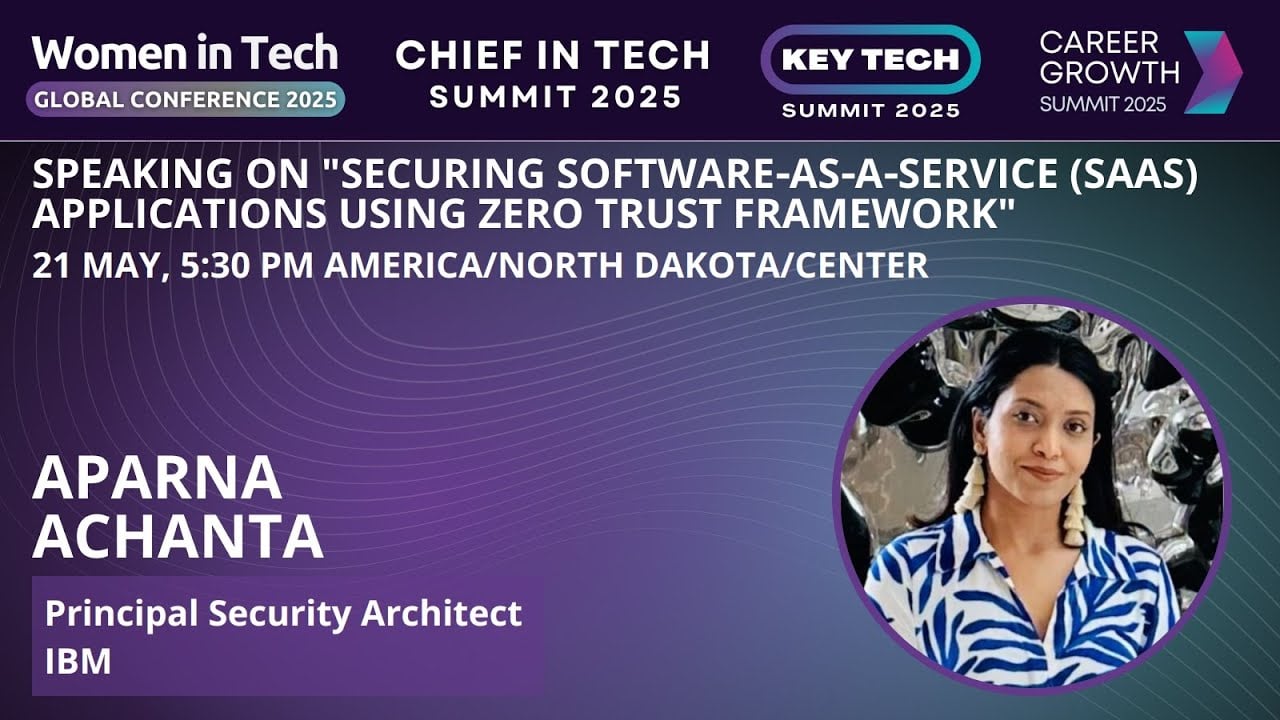
Securing software-as-a-service (SaaS) applications using Zero Trust Framework
Aparna Achanta37:352025
Superare il firewall non dovrebbe aprire ogni altra app della rete
Con la sicurezza perimetrale, un solo login che supera il firewall può raggiungere ogni altra applicazione della rete, ed è così che gli attaccanti si muovono lateralmente in un'organizzazione. Aparna Achanta, Principal Security Architect presso IBM che ha implementato Zero Trust per la FDA e il Department of Veterans Affairs, sostiene che ogni richiesta SaaS vada verificata di nuovo a ogni livello. Come arrivarci senza compromettere i sistemi legacy, frustrare gli utenti o spendere troppo?
Scopra i controlli di accesso, test e monitoraggio AI che usa per applicare Zero Trust alle app SaaS
Aparna Achanta, Principal Security Architect presso IBM, spiega come il principio Zero Trust dell'assenza di fiducia implicita si applica alle applicazioni SaaS e come le organizzazioni possono prepararsi. Illustra gestione delle identità e degli accessi, architettura sicura, test, protezione dei dati e monitoraggio continuo basato sull'AI, poi confronta le sfide dell'adozione con i risultati riportati dalle organizzazioni, sostenendo che la mentalità Zero Trust debba guidare ogni membro del team e ogni deployment.
“Quindi, diciamo che anche se hanno effettuato l'accesso, e anche se hanno accesso a un'applicazione, non significa che abbiano accesso alle altre applicazioni. Questo impedirà il movimento laterale degli attacchi.”
“Quindi, se non aggiornate il vostro strumento o la vostra piattaforma SaaS, gli attaccanti possono sfruttare le vulnerabilità della piattaforma per violare la vostra organizzazione.”
What you will learn
Spiegare i tre paradigmi Zero Trust: verificare ogni richiesta a ogni livello, applicare il privilegio minimo e presumere la violazione.
Pianificare una valutazione di readiness SaaS che copra inventario, utilizzo, livello di rischio, selezione dei fornitori, un elenco di strumenti approvati e l'individuazione di strumenti non autorizzati.
Applicare controlli di identità e accesso come SSO con MFA, accesso basato su ruoli e attributi, accesso just-in-time e revisioni automatiche degli accessi.
Integrare Zero Trust nel ciclo di sviluppo SaaS con revisioni architetturali, scansione del codice in CI/CD, penetration test, aggiornamenti tempestivi, minimizzazione dei dati, DLP ed esercitazioni di risposta agli incidenti.
Usare SIEM, UEBA e monitoraggio delle API basati sull'AI per il rilevamento continuo delle minacce, prevedendo le sfide di integrazione, utenti e costi.
Details
Level
Intermediate
Format
Talk
Technical depth
Practitioner
For
Early career, Mid-career, Senior individual contributor
Length
37:35
Published
July 2025
Questions this talk answers
Che cos'è Zero Trust e quali sono i suoi paradigmi fondamentali?
È un framework di sicurezza basato sul principio dell'assenza di fiducia implicita. Ogni richiesta di accesso è trattata come proveniente da una rete non attendibile e autenticata a ogni livello, si applica il privilegio minimo e i team presumono che una violazione sia già avvenuta.
In cosa Zero Trust differisce dalla sicurezza perimetrale?
In un modello perimetrale, un utente che supera il firewall può raggiungere altre applicazioni della rete. Zero Trust verifica di nuovo l'utente a ogni livello applicativo, impedendo agli attaccanti di muoversi lateralmente.
Come dovrebbe un'organizzazione preparare le proprie applicazioni SaaS per Zero Trust?
Censire le app SaaS esistenti e valutarne utilizzo e rischio, scegliere fornitori con controlli integrati come crittografia e backup, e mantenere un elenco di strumenti approvati con policy chiare. Il monitoraggio di rete e gli strumenti di cloud discovery aiutano a individuare l'uso non autorizzato di SaaS.
Quali pratiche integrano Zero Trust nello sviluppo SaaS?
SSO con MFA, accesso basato su ruoli e attributi con privilegio minimo, accesso just-in-time e revisioni automatiche degli accessi, oltre a revisioni architetturali e di sicurezza, scansione del codice in CI/CD, penetration test, aggiornamenti tempestivi dei fornitori, minimizzazione e mascheramento dei dati, DLP e piani di risposta agli incidenti testati.
Cosa rende difficile l'adozione di Zero Trust, e ne vale la pena?
L'integrazione con i sistemi legacy, la frustrazione degli utenti e i costi sono gli ostacoli principali. Come citato dalla relatrice, le organizzazioni hanno visto la spesa per la sicurezza calare di circa il 31% e costi delle violazioni inferiori di circa il 20,5% con policy più rigorose.
Perché Zero Trust blocca il movimento laterale (70 s)
Piattaforme SaaS non aggiornate attirano gli attaccanti (81 s)
Fare di Zero Trust la mentalità di tutti (81 s)
Today I plan to focus on securing SaaS apps using the Zero Trust framework. My name is Aparna. I am a security leader and I've been working in federal consulting for close to 11 years now. I've worked with US federal agencies and I hope from today's talk you can learn more about Zero Trust, you can learn how to implement Zero Trust in your organization and I will also go through how you can prepare for Zero Trust implementation, how it can be enforced in all phases of the SaaS development life cycle. I will also discuss some challenges and after that I will talk about some of the benefits of Zero Trust and I also have some recommendations for smooth implementation of Zero Trust and then we'll go about seeing some of the results that organizations
have seen as a result of this security framework. In conclusion, I will also talk about some of the takeaways from today's talk. Without further ado, let's get started. Some of you might be familiar with what Zero Trust is, but you know, for those of you who are new to this concept, you know, it is the buzzword that we hear these days. It is a security framework based on the principle of no inherent trust.
So it has basically three paradigms. One being in Zero Trust, all access requests are treated as coming from a non-trusted network and at every application layer, at every stage, all users and devices are authenticated. And the second paradigm is the principle of least privilege. So zero trust enforces the principle of least privilege. And by that, what I mean is only the bare minimum one of the parameters that you want to see the data that you need.
So an example for this would be if you're an account manager for, say, region one, you would only be seeing the data for your region. And the third paradigm is assume breach. So since Zero Trust fundamentally is based on the principle of no inherent trust. It operates under the assumption that breach has occurred. And it also dives into the principles of proactive containment so that the attack is not spread further. So we will further discuss this security framework more in detail so that you have an idea as to how you can translate this framework into your application.
So I'd like to highlight the CSA's Zero Trust model. So as for the CSA's Zero Trust model, there are five pillars, identity devices, networks, applications, and data. And there are three cross-cutting pillars across the five pillars, which are visibility, automation, and also governance. So, you know, when any organization wants to implement the security framework, their maturity level can usually go from being traditional, where they use manual, you know, like manual processes. And it can go all the way to be optimal if you're using AI power tools, for example, for continuous monitoring.
So the fundamental difference between Zero Trust security model and a traditional perimeter-based security model is in the traditional network, let's say a user is able to log in through the firewall, and they have access to the network. They can access other applications within the network. But in Zero Trust framework, even though they are able to pass the network security and they're able to log in, at each application layer, they have to again further verify who the user is. So let's say even though they have logged in, and even though they have access to one application, it doesn't mean that they have access to the other applications. So this will prevent the lateral movement of the attacks.
So, you know, I'd like to start off with how organizations can prepare for Zero Trust. So, you know, many organizations today, they might have thousands of SaaS applications, and, you know, they might not have Zero Trust in their organization. So, to begin with, you know, an organization has to define, you know, like, how many SaaS applications are being used currently, right? So they need to take inventory of all the existing SaaS applications, they need to check the usage of each of the SaaS applications, and they need to assess the risk level for each of the SaaS applications, and assess and see how Zero Trust principles can be applied to them.
For new applications, organizations oftentimes to review the vendors for SaaS platforms. So, when they are doing the assessment, organizations need to ensure that they are selecting vendors who who already have Zero Trust principles within their tools. So, for example, are you selecting a vendor who have robust data backup policies? Are you selecting a vendor who already have the encryption algorithms within them? So they need to assess, you know, the security posture of a SaaS tool? And based on that, decide if they are a right fit. Also, organizations can maintain an inventory of all the approved SaaS tools that aligns that align with the principles of Zero Trust. And this will prevent the employees from installing tools that are not approved.
Also, organizations need to establish clear policies for all the SaaS tools that they approve. They need to, you know, they need to, you know, send clear guidelines regarding the approved SaaS tools and applications, and also notify their employees about using unauthorized SaaS applications. So in today's day and age with AI, we often see that many employees in an organization tend to use use open source AI tools that are not approved within an organization, but this presents a security risk.
Also, organizations can implement network monitoring, cloud discovery tools, which will help them identify which unauthorized SaaS tools are being used. So after organizations take these steps to prepare for Zero Trust, you know, they need to ensure that all the SaaS applications that are being developed in a given organization, they are the teams are also following the principles of Zero Trust.
So in today's talk, I will focus on four tenets: identity management, access management, secure architecture, and monitoring. And this will help you understand how Zero Trust principles can be really baked into when you are working in a software development team, for example. So let's start off with the identity and the endpoint management. So any SaaS application we use today, they usually have an IAM solution. And yes, I see a question. Yes, it will be available. And so let's say organizations need to select IAM provider, let's say, that already has single sign-on baked into the platform in combination with multifactor authentication. This ensures that even though users are signing in using the single sign-on into the network, at any stage, if they are trying to access an application, they are still enforced multifactor authentication.
Also, organizations need to use strong password policies, and they need to remind the users to change passwords that they set for the SaaS applications frequently. And also, you know, some of these SaaS platforms, they also have built-in capabilities where they can decide if access needs to be given to you to the user based on attributes, like the location of the user.
So when the vendor assessment is being done, it's important to make sure that these criteria are being considered. Also, organizations can implement AI-based tools that assist the risk of the SaaS applications and help them respond in real time. If an identity has a warning sign, like, let's say, a user has too many failed attempts for login. And also, endpoint tools need to be implemented to monitor the endpoints for suspicious activity, and to also assess the security posture of the endpoints.
And it can also help detect and respond to threats in real time. So the next, Jeanette, that I want to focus on is access management, which is crucial because role-based access and also attribute-based access can be enforced by organizations in combination with the principle of least privilege to bolster overall security. When I say role-based access, it means only giving access to the data, only giving access to the business units, only giving access to the reports that the person with that given security role needs.
In addition to this, organizations should also monitor privileged accounts. So make sure that you're only assigning system admin privileges to only a select few users who have taken the training and who are also well-versed in the security best practices. Also, organizations can use automation to grant just-in-time access, which is sort of like a temporary access if somebody reads it and revoke it.
And they can also set up some workflows where they can continuously monitor privileged accounts. Also, organizations can set up automated access reviews to remove unnecessary permissions, accounts that are not active, so let's say somebody has transferred to different departments, all their permissions need to be revoked. So all these pointers will help make sure that robust access management is being maintained.
After this, let's take a look at the architecture practices. When applications, SaaS application development teams, when they are implementing SaaS deployment or when they are preparing for a SaaS deployment, all development teams, they should perform architecture reviews and also security reviews at every stage of the development. And during these reviews, make sure that the SaaS development team is identifying all the external integrations to the SaaS application, review any firewall rules, review any firewall rules, make sure the SaaS tool itself has the encryption algorithms to ensure data in-rest and transit are safe.
If you have any websites associated with the SaaS platform, make sure they have valid certificates to ensure more secure coding practices. all the IDE tools these days, they have AI in them, make sure you're following the secure coding practices. And most SaaS development teams have CI/CD pipelines for the deployments. So make sure that code scanning, it can be static code scanning or also dynamic scanning is being set up on the SaaS application that actually scans all the code that is being written for the SaaS application.
And make sure no code vulnerabilities are being introduced. So when we say secure architecture does not only secure coding, we should also focus on testing to ensure, you know, we are shifting the security left. You know, what SaaS application teams can do is they can use automation testing to make sure they are performing thorough testing on the SaaS application.
also penetration testing in which simulation attacks can be simulated, can also be used on SaaS applications to make sure all vulnerabilities are found. And also what happens with most SaaS tools or SaaS applications is SaaS vendors, they typically push updates a few times a year. It is very important to make sure all the SaaS tools, all the SaaS platforms, they are staying current.
staying current because what happens is sometimes if there are code vulnerabilities or security for flaws or bugs, those are being fixed actively by the vendors and those fixes are part of the releases. So if you don't update your SaaS tool or SaaS platform, attackers can take advantage of the platform vulnerabilities to hack into your organization. So it's very important based on the frequency or based on the cycle of updates of your SaaS tool, make sure they are staying up to date.
And also securing data. Securing data in your SaaS application is a very crucial component. So some ways to secure data is to begin with, make sure that the SaaS tool or the SaaS platform has encryption. And also within your SaaS application, make sure you're only collecting information that is absolutely needed. For example, if you don't need to really collect the date of birth of a person, if it is not being used anywhere, if it's not being used in any process, you know, like there's no need to collect it.
Because if you are collecting it, then you have to make sure that all sensitive data is being masked and all sensitive fields are being protected. If you do have any sensitive data, make sure they are being masked. Auditing has to be enabled to make sure if anybody makes changes on sensitive data, you have to make sure that all sensitive data is being captured in the logs.
Also, DLP policies, they are crucial to enforce that all sensitive data in files or in chatbot messages, for example, or in emails is identified. And sensitive data is being prevented from unauthorized sharing. Also, it's important that organizations have robust incident response plans, and they are testing the tabletop exercises. As part of the incident response plan, it's also important to identify the roles and responsibilities as to who will be performing the tabletop exercises, who will be performing the simulation attacks, you know, who are you testing the data backup and the rollback procedures.
So it's really important to have an up-to-date incident response plan. And as we onboard more SaaS applications, the complexity of these tabletop exercises and the simulation attacks also increases. So it's important for whoever is performing these exercises to also be trained to perform these exercises. So the next topic I want to focus on is continuous monitoring and threat detection.
So the next topic I want to focus on is continuous monitoring and the data to be able to do this. So for the next topic I want to focus on is continuous monitoring and data to be able to be able to do this. So we want to focus on is continuous monitoring and data to be able to do this.
So we take the help of our friend, AI Powered Tool, where, you know, implementing AI Powered Solutions, SIEM tools, they can aggregate the logs from all your SaaS applications. And they can provide dashboards, you know, reports, dashboards, alerts, if they find any suspicious behavior, if they have any threat detection and predictive AI can also basically, you know, like analyze all the backup data for your SaaS tool or your SaaS application.
And it can predict suspicious activities across your SaaS applications. So APIs are, you know, a big pillar in today's day and age, especially for SaaS applications. So even for API monitoring, AI Powered Tools can be used where they ensure the API calls, the response times of the APIs, all of them are conforming to the expected patterns. Any anomalies in the API traffic can be flagged and investigated using UEBA tools. Also regular training of AI models. If you're using a SaaS platform that already has AI intelligence in it, or if you have your homegrown AI models that you're integrating with your SaaS applications, regular training of AI models with current threat intelligence. Also helps to enforce fundamental policies.
And it will help your organization to stay strong against the emerging threats. Also, real-time monitoring and logging of user sessions, API activities, session logins, user logins, sessions, session response times, all this is crucial. And really, if you use any AI driven tool, they will be able to, you know, track all this unexpected behavior. And it will help you better enforce our policies of zero trust. So now I would like to, you know, present some of the challenges in adopting zero trust.
One of the main challenges is integration. Many organizations usually have existing SaaS applications and infrastructure and integrating policies of zero trust, oftentimes requires an upgrade or an update in maybe their process, maybe investing in more infrastructure or more tools or in training. And also, sometimes, legacy systems and legacy applications, it may be hard even for them to integrate.
Also, users, right? Like, if there are any existing users, and if you would like to enforce, like, let's say, policy of lease privilege, it can mean maybe taking away permissions that they already have, it can mean change in the user experience, it can mean more, more steps in authentication, and sometimes there is frustration from users. Also, one big challenge for organizations is the cost and the resource constraint. You know, oftentimes, they need to retrain staff, invest in new security tools, new monitoring tools, and also train the developers and users.
But if organizations are able to, you know, cross all those hurdles, cross all those challenges, the benefits that they get in implementing this security platform are huge. First and foremost, zero trust can help in trying to mitigate SaaS specific threats like account takeovers, insider threats, breaches. Also, it can really be a great companion in ensuring an organization is meeting all the compliance standards. Let's say if you're a healthcare organization and you're looking to meet the HIPAA compliance or a federal organization is looking to meet the FISMA compliance. It can really help companies to better observe all these regulations and implement strict access controls and also help with the protection of sensitive data. It can reduce the downtime in case of a breach. It can help with the recovery efforts. And it can also, you know,
reduce the impact of a breach. Another huge benefit is improved oversight. So continuous monitoring helps give more transparency into the SaaS applications in general, into the user behavior, the APIs. It allows companies to detect and respond to threats more effectively. And it also helps build a resilience and trust. And in general, it fortifies the security posture of all of your SaaS applications.
So some of the recommendations for smooth implementation of zero trust in SaaS applications. I think organizations can start with the security gap assessment to analyze your current security posture. And then define clear access control policies and prioritize security goals that really align with your vision. And then select tools that have zero trust inbuilt in their platforms and also make sure, just as an organization or just as a team, you are establishing a security-first culture through continuous training, continuous training, awareness sessions, not only for the end users, but for your security team, for your software developers, for your project managers.
So it has to be a holistic approach. Now let's look at some of the results that organizations have realized as a result of implementing the security framework. Organizations have seen their security spend decrease by about 31%. Organizations with more evolved zero trust laws to lost about one and a half million less than the ones that are still early in their journey.
Organizations that enforce stricter zero trust policies have seen about 20.5% lower cost when the breach happens and they have saved about a million dollars. And at my organization, I have implemented zero trust frameworks for SaaS platforms, particularly within my U.S. federal clients and also for the healthcare industry. And it has really helped us meet security standards like FedRAMP and HIPAA, but also ensure sensitive data is being protected.
In conclusion, I would say that zero trust thinking, zero trust frame of mindset, that needs to be adapted in all decisions you make as a SaaS application team. So every developer, every end user, every product owner or project manager or business analyst, whichever phase of SaaS application development you are in, try to think, try to have zero trust at the back of your mind, Because I think that will really help fortify each phase of the application development.
So it's not just the security team or the developers. I think all team members, everybody in the organization, if they start thinking on, okay, are we building this SaaS application, right? Are we embracing principles of zero trust? I think that just becomes second nature after a while, and that will automatically ensure all your applications are secure. By investing in zero trust, it not only decreases the threat mitigation costs, data breaches, ransomware attacks, But it really builds resilience long term, and especially with the evolving cybersecurity threats with, you know, like GenEI and all of that.
I think it really helps teams to be more prepared, even in case of a breach, and it really helps to safeguard sensitive data. So this is my talk for the day and really my call for action is embed zero trust thinking into every developer, every decision, every SaaS deployment. Thank you all for joining. I hope this was a really useful talk and you're able to take away something.
I see a question from Andrea. which tools would you recommend initially open source to see if it proves viable in highly regulated environments, specifically referring to log ingestion, indexing as an attack surface? So some of the tools I've used, Andrea, I think Microsoft Defender, Sentinel, Azure Monitor, Azure App and Sites, Dynatrace, Splunk, all of these are good with log ingestion.
They also have inbuilt AI, like even predictive AI, which actually sends you, you know, like alerts, it shows on dashboards. So I think all of the all of these are great tools. Any other questions from people? All right, all. Thank you so much for joining today. And I hope you have a great evening and, you know, please connect with me on my social media.
And if you have any questions in any stage of your zero trust journey or, you know, like if you just chat with me, even sometimes casually. So, yeah, I would love to connect. Yeah, thank you all. Have a great evening. Bye.
Transcribed automatically; names checked against the speaker record. Select a time to jump there.
Article based on this talk
Come possono i team SaaS integrare Zero Trust in ogni fase dello sviluppo?
Aparna Achanta, security architect di IBM, applica i principi Zero Trust a preparazione SaaS, identità, accessi, architettura, protezione dei dati e monitoraggio.
In breve
Aparna Achanta sostiene che le applicazioni SaaS sono più sicure quando nulla è considerato attendibile per impostazione predefinita: ogni richiesta viene verificata, ogni utente ottiene solo l'accesso di cui ha bisogno e i team agiscono come se una violazione fosse già avvenuta. La Principal Security Architect di IBM mostra come le organizzazioni possono preparare il proprio patrimonio SaaS a Zero Trust e poi integrarlo in identità, accessi, architettura, test, protezione dei dati e monitoraggio. Il suo messaggio conclusivo è che Zero Trust funziona meglio come mentalità condivisa da tutto il team, non solo dal personale di sicurezza.
Punti chiave
Conoscere i rischi e le sfide delle app SaaS.
Conoscere le strategie per implementare Zero Trust in ogni fase del ciclo di vita dello sviluppo software.
Conoscere i risultati ottenuti dalle organizzazioni che hanno implementato Zero Trust.
Cosa significa davvero Zero Trust
Forte di quasi 11 anni di consulenza federale negli Stati Uniti, Achanta parte da una definizione: "È un framework di sicurezza basato sul principio dell'assenza di fiducia implicita." (1:25) Descrive tre paradigmi: trattare ogni richiesta di accesso come proveniente da una rete non attendibile e autenticare utenti e dispositivi a ogni livello, applicare il privilegio minimo (un account manager regionale vede solo i dati della propria regione) e presumere la violazione, con un contenimento proattivo affinché un attacco non si propaghi.
Illustra il modello Zero Trust della CSA, con cinque pilastri (identità, dispositivi, reti, applicazioni e dati) e tre capacità trasversali (visibilità, automazione e governance). Lo confronta poi con la sicurezza perimetrale, in cui un utente che supera il firewall può raggiungere altre applicazioni della rete. "Quindi, diciamo che anche se hanno effettuato l'accesso, e anche se hanno accesso a un'applicazione, non significa che abbiano accesso alle altre applicazioni. Questo impedirà il movimento laterale degli attacchi." (5:20)
Prima di tutto, preparare l'organizzazione
Poiché molte organizzazioni usano già un gran numero di applicazioni SaaS, Achanta parte dalle basi: censire ogni applicazione esistente, verificarne l'utilizzo, valutarne il rischio e decidere come applicare i principi Zero Trust. Le valutazioni dei fornitori per i nuovi strumenti dovrebbero privilegiare piattaforme con controlli già integrati, come la crittografia e solide policy di backup. Un elenco di strumenti approvati, policy chiare e indicazioni per i dipendenti riducono l'uso di strumenti non approvati, compresi gli strumenti AI open source. "Inoltre, le organizzazioni possono implementare il monitoraggio di rete e strumenti di cloud discovery, che le aiuteranno a identificare quali strumenti SaaS non autorizzati vengono utilizzati." (9:40)
Identità e accessi come prima linea
Sul fronte dell'identità, raccomanda un provider IAM che combini single sign-on e autenticazione a più fattori, supportato da policy rigorose sulle password, controlli basati su attributi come la posizione dell'utente, strumenti basati sull'AI che reagiscono a segnali d'allarme come ripetuti tentativi di accesso falliti e monitoraggio degli endpoint. Per gli accessi, i controlli basati su ruoli e su attributi lavorano insieme al privilegio minimo, così che le persone vedano solo i dati, le business unit e i report necessari al loro ruolo.
Gli account privilegiati meritano un'attenzione particolare: "Quindi assicuratevi di assegnare i privilegi di amministratore di sistema solo a pochi utenti selezionati che abbiano seguito la formazione e che conoscano bene anche le best practice di sicurezza." (14:04) L'automazione può concedere e revocare accessi just-in-time ed eseguire revisioni degli accessi che rimuovono gli account inattivi e i permessi di chi cambia reparto.
Sicurezza in architettura, test e dati
Achanta chiede ai team di sviluppo SaaS di svolgere revisioni architetturali e di sicurezza in ogni fase, che coprano integrazioni esterne, regole del firewall, crittografia dei dati a riposo e in transito e certificati dei siti web. Le pipeline CI/CD dovrebbero includere la scansione statica o dinamica del codice, e i test automatizzati e i penetration test aiutano a spostare la sicurezza a sinistra (shift left). Anche restare aggiornati sulle release dei fornitori è importante, perché contengono correzioni per difetti noti: "Quindi, se non aggiornate il vostro strumento o la vostra piattaforma SaaS, gli attaccanti possono sfruttare le vulnerabilità della piattaforma per violare la vostra organizzazione." (18:42)
Per i dati, la minimizzazione viene prima di tutto: "E inoltre, all'interno della vostra applicazione SaaS, assicuratevi di raccogliere solo le informazioni strettamente necessarie." (19:33) I campi sensibili dovrebbero essere mascherati e sottoposti ad audit, le policy DLP dovrebbero impedire la fuga di dati sensibili tramite file, messaggi di chatbot o email, e i piani di risposta agli incidenti richiedono ruoli chiari, esercitazioni tabletop e procedure di backup e rollback testate.
Monitoraggio, compromessi e risultati
Per il monitoraggio continuo, descrive strumenti SIEM basati sull'AI che aggregano i log di ogni applicazione SaaS in dashboard e alert, AI predittiva che segnala attività sospette e strumenti UEBA che analizzano le anomalie nel traffico API, con modelli AI riaddestrati regolarmente sulla threat intelligence aggiornata.
Indica gli ostacoli senza giri di parole: l'integrazione con i sistemi esistenti e legacy, la frustrazione degli utenti quando i permessi si riducono o i passaggi di autenticazione aumentano, e il costo di nuovi strumenti e della formazione. "Ma se le organizzazioni riescono, sapete, a superare tutti questi ostacoli, tutte queste sfide, i benefici che ottengono implementando questa piattaforma di sicurezza sono enormi." (28:16) Tra i benefici elenca la protezione dalle compromissioni degli account e dalle minacce interne, il supporto a standard di conformità come HIPAA e FISMA, la riduzione dell'impatto delle violazioni e una migliore supervisione. Come citato dalla relatrice, le organizzazioni hanno visto la spesa per la sicurezza calare di circa il 31%, e quelle con policy più rigorose hanno registrato costi inferiori di circa il 20,5% in caso di violazione. Con i suoi clienti federali e del settore sanitario, afferma, Zero Trust ha aiutato a soddisfare standard come FedRAMP e HIPAA.
Le sue raccomandazioni: iniziare con una valutazione delle lacune di sicurezza, definire policy chiare di controllo degli accessi, scegliere strumenti con Zero Trust integrato e costruire una cultura security-first attraverso la formazione di tutti, dagli utenti finali ai project manager. Chiude con un invito all'azione: "Questo è il mio talk di oggi e il mio vero invito all'azione è: integrate la mentalità zero trust in ogni sviluppatore, ogni decisione, ogni deployment SaaS." (35:04) Nella sessione di domande e risposte cita Microsoft Defender, Sentinel, Azure Monitor, Azure Application Insights, Dynatrace e Splunk come strumenti che ha usato per l'acquisizione dei log.
Guarda il talk
Securing software-as-a-service (SaaS) applications using Zero Trust Framework, di Aparna Achanta (38 minuti): https://www.womentech.net/video/securing-software-service-saas-applications-using-zero-trust-framework-aparna-achanta
La relatrice
Aparna Achanta è Principal Security Architect presso IBM, dove in IBM Consulting ha implementato framework come Zero Trust e Security by Design per agenzie federali statunitensi, tra cui il Department of Veterans Affairs, la Food and Drug Administration e il Department of Transportation. È membro del Forbes Technology Council, membro dell'advisory board del Center for Excellence in Government Cybersecurity Risk Management and Resilience della George Mason University, membro fondatore e speaker di WomenTech Network e membro dell'executive board del Women in Cybersecurity (WiCyS) Austin Chapter.
Domande a cui risponde il talk
Che cos'è Zero Trust e quali sono i suoi paradigmi fondamentali?
In cosa Zero Trust differisce dalla sicurezza perimetrale?
Come dovrebbe un'organizzazione preparare le proprie applicazioni SaaS per Zero Trust?
Quali pratiche integrano Zero Trust nello sviluppo SaaS?
Cosa rende difficile l'adozione di Zero Trust, e ne vale la pena?
Bozza redatta con l'AI a partire dalla trascrizione del talk. In attesa di revisione editoriale.
Frameworks and ideas mentioned
Zero Trust
CSA Zero Trust model
Principle of least privilege
Assume breach
Role-based access control
Attribute-based access control
Just-in-time access
Shift left
HIPAA
FISMA
FedRAMP
Resources mentioned
Microsoft Defender
Microsoft Sentinel
Azure Monitor
Azure Application Insights
Dynatrace
Splunk
Cite this talk
Aparna Achanta. "Securing software-as-a-service (SaaS) applications using Zero Trust Framework." WomenTech Network, 2025. https://www.womentech.net/video/securing-software-service-saas-applications-using-zero-trust-framework-aparna-achanta