
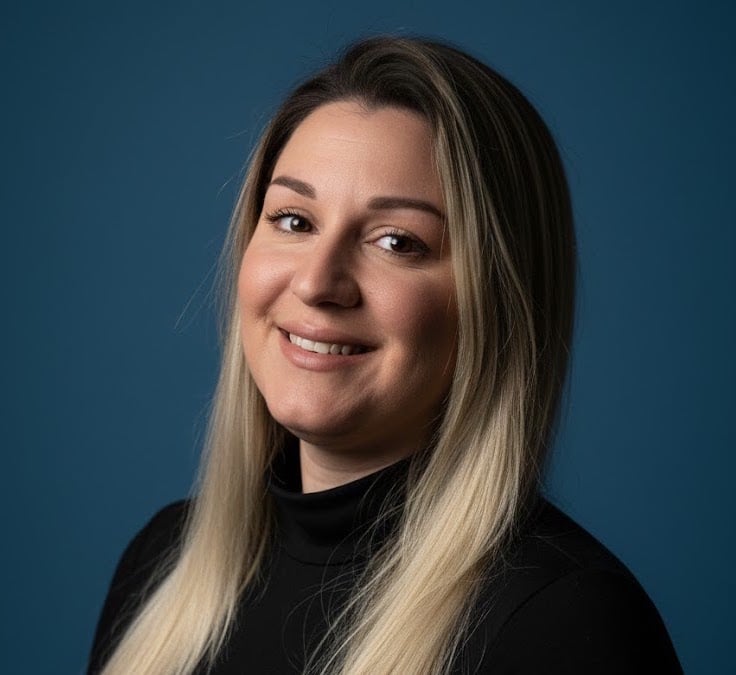

💫 We're happy to announce the finalists for the AI & Machine Learning Leader of the Year Award for 2026!
This award recognizes women’s contributions to AI and machine learning through technical innovation, leadership and industry engagement. The subcategories distinguish the settings and forms of that work, including applied research, engineering foundations, enterprise architecture and the use of AI within specialist industries.
⚡️ Recognized contributions: Innovation in AI & Machine Learning, leading successful projects, mentoring, community engagement, published research or articles, speaking at industry events.
Below are the 7 subcategories and their finalists. Finalists are listed in alphabetical order within each subcategory.
1. Healthcare & Life Sciences AI Leadership
Focus: Leaders applying AI in healthcare delivery, clinical informatics, life sciences and drug or protein discovery.
This subcategory recognizes AI leadership within healthcare and life sciences, from care-related systems and clinical information to scientific discovery. It considers how technical innovation is connected to the needs of practitioners, researchers and the people they serve. The focus is on thoughtful application, appropriate oversight and collaboration across disciplines, reflecting the distinct responsibilities involved in developing and introducing AI in health-related settings.
⭐ Bhargavi Kalicheti, Lead AI/ML Engineer at Optum Services Inc.
⭐ Eva Smorodina, Computational Biologist, AI for Protein Design, Investment Fellow at Yogutide AS
⭐ Jennifer Ngure, Director of Clinical Informatics and Division Director at GNAA | Founder, Imara Health AI Consulting
⭐ Maya Kalyan, Staff Engineer- Algorithms and AI at Thermo Fisher Scientific
⭐ Piyushi Sharma, Manager, Analytics Center of Excellence at IQVIA
2. Financial Services & Regulated Industries AI Leadership
Focus: Leaders applying AI in banking, insurance, financial crime compliance and finance operations.
This subcategory recognizes the application of AI within financial services and other regulated organizational environments. Its scope includes the systems and processes that support decisions, operational work and the management of risk. It considers how leaders connect innovation with governance and domain requirements, bringing technical and organizational expertise together to develop AI approaches that can be used responsibly in demanding business settings.
⭐ Arzoo Mittal, AI Product Advisor at Transunion
⭐ Dr. Janet Bastiman, Chief Data Scientist at Napier AI
⭐ Khyati Sharma, Associate Director of Technology at CURE Auto Insurance
⭐ Pradnya Desai, Senior Technical Architect at Salesforce
⭐ Varsha Vidit Shah, Technical Architect at Tata Consultancy Services
3. AI Infrastructure & Platform Engineering
Focus: Builders of the AI platforms, inference, evaluation and search infrastructure that other AI systems run on.
This subcategory recognizes the engineering foundations that make AI systems possible to develop, evaluate and operate. It covers platform capabilities, inference, search and the technical infrastructure supporting AI-enabled applications. The emphasis is on translating complex engineering work into dependable foundations for other teams, while considering how architecture, integration and operational choices shape the reliability, accessibility and responsible use of AI at scale.
⭐ Amulya Boyapati, Software Engineer at Google
⭐ Anna Patterson, CEO/Founder at Ceramic.ai
⭐ Saloni Garg, Senior Machine Learning Engineer at Adobe
⭐ Vijayalakshmi Narasimhan, Lead Product Manager – AI Infrastructure at eBay
⭐ Yifan Mei, Principal Member of Technical Staff at Oracle
4. Enterprise Generative & Agentic AI Architecture
Focus: Architects and solution leaders designing and delivering generative and agentic AI solutions for enterprise clients.
This subcategory recognizes the architecture of generative and agentic AI solutions for enterprise use. It covers the connections between data, models, applications and organizational workflows, including the choices needed to move from an idea towards practical implementation. The focus is on technical leadership that combines system design with governance, collaboration and an understanding of how organizations will use and maintain the resulting capabilities.
⭐ Ananya Ghosh Chowdhury, Senior Cloud Solution Architect at Microsoft
⭐ Disha Rajendrabhai Jayswal, Solutions Architect at Amazon Web Services
⭐ Jothsna Pendyala, Senior Data Scientist / AI Platform Architect at Infosys (for AT&T)
⭐ Sasi Kiranmayi Pasupuleti, AI LLM Technology Architecture Manager at Accenture UK & Ireland
⭐ Toshi Goel, Senior Software Engineer - Full Stack & AI at Satin Solutions
5. Industrial, Energy & Mobility AI Innovation
Focus: Leaders applying AI to energy, critical infrastructure, automotive and industrial operations.
This subcategory recognizes AI innovation connected to industrial activity, energy, mobility and the systems supporting essential operations. It considers how emerging technologies are applied within environments shaped by physical assets, operational constraints and specialist knowledge. The scope connects technical development with practical implementation, recognizing leadership that brings disciplines together and considers reliability, appropriate oversight and the wider effects of change on organizations and users.
⭐ Ancilia Anthony Dmello, Software Technical Anchor at Ford Motor Company
⭐ Charly Minlang-Bekale ep Dyel, Senior Petrophysicist at Assala Energy
⭐ Romina Masiero, CEO & Co-Founder at Lemonjuice Solutions S.r.l.
⭐ Shivani Kharra, Risk Management Data Scientist at Stantec
⭐ Toshi Goel, Senior Software Engineer - Full Stack & AI at Satin Solutions
6. Applied Science, Research & Trustworthy AI
Focus: Scientists and researchers advancing applied ML, AI safety, model evaluation and research-to-production work.
This subcategory recognizes work that connects AI research and applied science with the development of trustworthy systems. Its scope includes model evaluation, safety-related methods and the translation of research into practical approaches. It considers both technical contribution and the leadership needed to share knowledge, collaborate across disciplines and address the questions that arise when AI methods move into real organizational and societal settings.
⭐ Ipsita Mohanty, Applied Science Manager, Vice Chair, Women In Engineering, at Amazon & IEEE
⭐ Priyanka Kuvalekar, Senior UX Researcher (Teams Calling + Agentic AI) at Microsoft
⭐ Priyanka Mudgal, Principal Machine Learning Engineer at Workday Inc.
⭐ Sumeesha Chandran, Assistant Vice President - Application Development at Santander US
7. Enterprise AI Transformation & Customer Experience
Focus: Leaders driving organization-wide AI adoption, AI labs and AI-powered customer and employee experiences.
This subcategory recognizes leadership connecting enterprise AI adoption with the experiences of customers and employees. It includes the organizational structures, specialist teams and practical initiatives that help emerging capabilities become part of everyday operations. The focus is on connecting strategy with delivery and collaboration, recognizing that useful transformation involves people, processes and governance alongside the introduction of new technologies and digital services.
⭐ Archana Sundar, Lead Conversational AI Specialist at HCLTech
⭐ Jordina Torrents Barrena, Senior AI Manager and Principal AI Architect at HP Inc.
⭐ Purva Bangad, Senior Data Scientist at Meijer
⭐ Sayali Kamat, Senior Principal Machine Learning Engineer at Palo Alto Networks
⭐ Shirley Gao, Chief Digital and Information Officer at Pacsun
🥁 The winners will be announced on December 3 during the Women in Tech & AI Global Awards 2026 virtual ceremony.
🎫 Get your ticket to join the ceremony, get actionable insights from the keynotes, and celebrate the achievements of the outstanding women in tech and AI.