Funding Your Future: How Employers Use Public Dollars to Build Tech Apprenticeship Pipelines
A 12-week trial turned 37% of San Francisco pre-apprentices into hires
What happens to careers, teams and hiring when AI absorbs routine tasks and the office stops being the default place to show up? Speakers map which roles AI is reshaping, how organizations reskill people and adopt AI starting from real problems, and why remote and hybrid setups can quietly widen gaps in visibility and pay. Leaders, managers and anyone planning a tech career will find practical models, from job sharing and apprenticeships to on-demand talent and team rituals.
91 talks 79 speakers 35 hours 2020 to 2026
Search the whole libraryA 12-week trial turned 37% of San Francisco pre-apprentices into hires
Polished AI drafts are quietly editing professionals out of their own work
Hybrid work lifts performance but leaves the people out of sight passed over
Tech workers say remote work boosts output, yet 42% feel less engaged
AI won't replace your job, but your job is already evolving
The biggest barrier to AI adoption is skills; the next is leaders' vision
A hybrid earn and learn model combining 144 hours of occupation-linked classroom instruction with at least 2,000 hours a year of on-the-job training, with apprentices earning about 60% of the permanent salary.
Funding Your Future: How Employers Use Public Dollars to Build Tech Apprenticeship Pipelines, Nadeja AdamsYour presence, perspective and people instincts. AI has your output covered, so the advantage is who you are when AI is in the room.
Distinctively Human: Winning in the Age of AI, Julie VelozIt opens access to opportunities regardless of geography and allows a blend of in-person and online work. Lubisi also finds it raises performance by removing commuting and office interruptions.
Hybrid Work in Practice: What Works, What Breaks, and How Organisations Can Fix It While Protecting Employee Wellbeing, Zethu LubisiAs the speaker cited, 46% of tech jobs are hybrid or remote, and 69% of tech job seekers will not consider a new role without flexibility.
Hopelessly Remoted to You: Achieving Success with Distributed Teams, Randi WeitzmanOwoleso argues that AI will not replace your job but that your job is evolving, citing McKinsey's 2023 estimate that 30% of current jobs could be automated by 2030 as a shift toward roles that collaborate with AI.
Navigating the AI-Scape, The Future of Tech Workforce, Duronke OwolesoAs the speaker cited, the highest-rated barrier is lack of skills, with about 50% of companies saying they lack the right skill set, followed by a lack of vision among managers and leaders.
Empowering Exploration: Building AI Literacy in Your Team for a Future-Ready Organization, Jutta SchönlauPeterson says the status quo was designed for the homogenous post World War II workforce, when one person worked and usually a woman stayed home. Workplaces have changed little even though the workforce has changed a great deal.
The Woman's Workforce: Integrating Flexible Practices for a More Equitable Workplace, Rachel PetersonTwo people who each work less than full time share one role and its goals, covering common and complementary skills. Together they can exceed the requirements of the single full-time job while giving each other continuous cover for holidays and sickness.
Diversity, Part-Time & Job-Sharing Models with Maja Schreiner“Apprenticeship flips this risk equation for employers, workforce development orgs, and government agencies alike.” Nadeja Adams, Funding Your Future: How Employers Use Public Dollars to Build Tech Apprenticeship Pipelines
“And what I realized is that I have been so focused on being efficient that I edited myself out of my own work.” Julie Veloz, Distinctively Human: Winning in the Age of AI
“And the quote that I want to summarize the conversation with is, hybrid work is not just a policy. It is a promise.” Zethu Lubisi, Hybrid Work in Practice: What Works, What Breaks, and How Organisations Can Fix It While Protecting Employee Wellbeing
No set hours can quietly create a nine-to-nine workforce
Two part-time people can exceed one full-time job, argues a job sharing founder
Why cheap and hands-off are the wrong reasons to hire remote freelancers
Remote workers may be paying for flexibility in ways that compound for years
Everyone has the same AI tools, so four skills now set you apart
When data enters the room, the ego often leaves
AI is neither friend nor enemy: it amplifies whatever we feed it
Before you gamify reskilling, ask whether learning needs to be fun at all
AI turns a two-day PRD into minutes, so what is a program manager for?
AI is creating a learning debt your employer will not pay off for you
AI may displace 85 million jobs by 2030 and create up to 97 million new ones
Why waiting on the sidelines of AI is the riskiest career move
Entry-level jobs are shrinking while demand for senior AI orchestrators grows
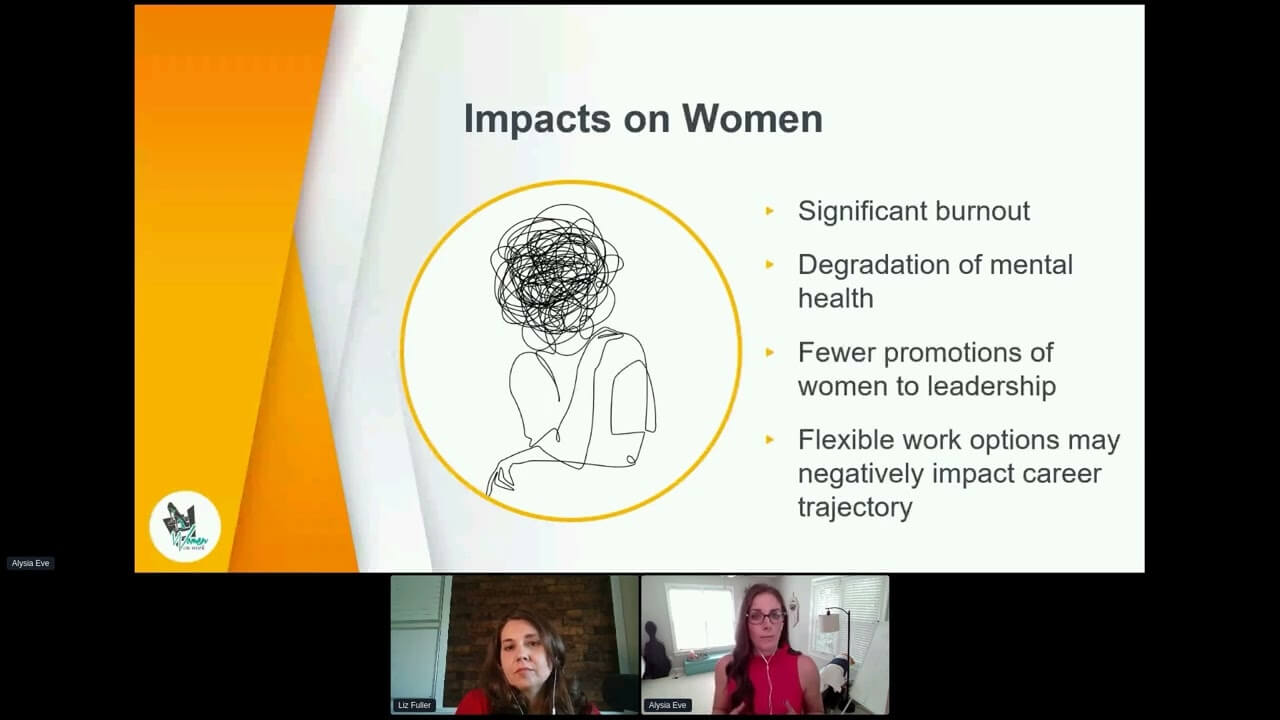
Hybrid work gave women flexibility but may be costing them promotions
Women who stay on the AI sidelines will be left behind, she warns
One woman with AI tools can now do the work that once took ten people
AI lets one woman do the work of ten, yet women are missing from the table
Video calls keep remote teams efficient, and that is exactly the problem
AI use is everywhere, but few teams have rebuilt the work it lands in
Women in tech aren't losing ambition, they're reading a badly designed room
Forcing AI tools on engineers to tick a box is spiking technical debt
Influence across teams starts with how you run your next meeting
The career detours you edit out may be the part AI cannot copy
Working harder won't fix a leadership identity that no longer fits