The Founder bottleneck : Why smart startups struggle to build teams that scale
 Maham Khalid
Founder/CEO, Revohub
A players in a B system still deliver C results, and founders are the system
What would your team accomplish if every decision no longer waited on you? Handing off work well starts with spotting where you have become the bottleneck, then redesigning roles, decision rights and information flow so others own real outcomes. Founders scaling past early traction, engineers stepping into their first leadership role and parents planning a leave will find practical frameworks, diagnostics and handover plans, plus advice on trusting approaches that differ from their own.
44 talks 36 speakers 16 hours 2021 to 2026
Search the whole library
Maham Khalid
Founder/CEO, Revohub
A players in a B system still deliver C results, and founders are the system
 Maryna Burushkina
CEO & Founder, Growth Channel
One partner went bankrupt overnight, then a client worth 80% walked away
 Rashi Raj
Senior Software Development Manager, Oracle
The engineering habit that quietly turns new managers into bottlenecks
 Meghali Brahmbhatt
Principal Program Manager, Oracle
Being the team's most reliable doer can quietly make you its bottleneck
 Nitya Shekar
Executive Coach, Second Wind Group
Once you lead, the people work is the work, not a distraction from it
 Spoorti Hallur
Engineering Manager, Xperi
Becoming an engineering manager isn't a promotion: it's starting fresh
Because the company is built around the founder, not around the work. Maham cites people and team issues, rather than product or market, as the reason behind most startup failures.
The Founder bottleneck : Why smart startups struggle to build teams that scale, Maham KhalidBurushkina joined Y Combinator Startup School, then applied to accelerators and contacted over a hundred investors and syndicates. Persistence led to interviews by June and a first investment from an Austin accelerator in August.
Lessons from Scaling Tech, Teams, and Impact as a Woman in Tech, Maryna BurushkinaYes. Reliable systems and teams both need clarity and feedback loops, and both become fragile when too many dependencies sit in one place.
Leading Beyond Code: Scaling Yourself While Scaling Systems, Rashi RajAs a contributor your value comes from your own output, but as a leader it comes from your team's output. Habits built on competence, like doing the work yourself because it is faster, become detrimental in the long run.
From Contributor to Leader: Redefining Your Next Chapter, Meghali BrahmbhattBecause once you become a leader, the people leadership aspects of the job are not a distraction from the work. They are the work.
The Leader Identity: A Playbook for Mastering Your First Leadership Role, Nitya ShekarMost time goes into people management (one-on-ones, appraisals, promotions), plus project management, technical management and understanding product and engineering priorities.
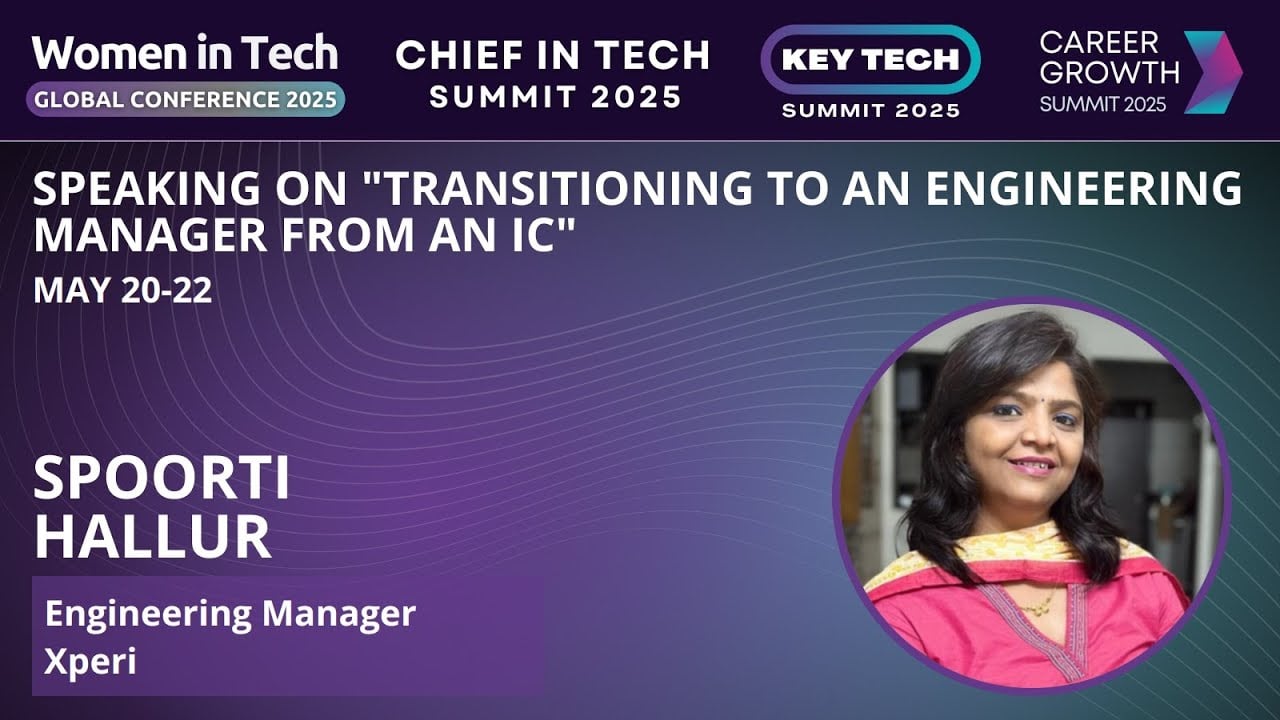
Transitioning to an Engineering Manager from an IC, Spoorti HallurThe focus moves from you to we: building connections and supporting people's growth, thinking big picture, owning both successes and failures, managing time across many demands, and coaching.
My Leadership Leap: Individual Contributor to Technology Leader, Sangame KrishnamaniShe moved from DSP and software engineer to software lead, director, senior director and VP by taking initiative, documenting and organizing work, and championing company-wide processes. She also planted seeds between promotions, such as earning her PMP and P.Eng license.
From Engineer to Leader: Navigating the Path to the Top in Tech, Mai ElfarnawanyMaham KhalidFounder/CEO, Revohub1 talkMaryna BurushkinaCEO & Founder, Growth Channel1 talkRashi RajSenior Software Development Manager, Oracle1 talkMeghali BrahmbhattPrincipal Program Manager, Oracle1 talkNitya ShekarExecutive Coach, Second Wind Group1 talkSpoorti HallurEngineering Manager, Xperi1 talk Sangame KrishnamaniDirector, Software Engineering, Capital One1 talk
 Mai ElfarnawanyVP Engineering, Flosonics Medical1 talk
 Emilie JolyCEO, Zoe Immersive Inc1 talk
 Parna Sarkar-BasuFounder & CEO, B&B Consulting1 talk
 Shalini SunkaraEngineering Project Leader, Lutron Electronics1 talk
 Pranjali JoshiProduct Marketing Manager, NVIDIA1 talk
“You can hire A team players into a B system, but what you end up getting is C results.” Maham Khalid, The Founder bottleneck : Why smart startups struggle to build teams that scale
“Overall, before we dive in, I really want to tell you that scaling isn't just about the products.” Maryna Burushkina, Lessons from Scaling Tech, Teams, and Impact as a Woman in Tech
“When leaders become the dependency, the team stops scaling.” Rashi Raj, Leading Beyond Code: Scaling Yourself While Scaling Systems
Sangame Krishnamani
Director, Software Engineering, Capital One
Her manager gave her six months to try leading, and a way back
Mai Elfarnawany
VP Engineering, Flosonics Medical
Four promotions in five years, from first engineer to VP of engineering
Emilie Joly
CEO, Zoe Immersive Inc
Investors said hide the pregnancy; this CEO says tell your team early
The founder habits that win funding can be the ones that stop a startup scaling
Parna Sarkar-Basu +3
Founder & CEO, B&B Consulting
A founder's grip on the details can stall growth beyond $1M
Shalini Sunkara
Engineering Project Leader, Lutron Electronics
She brought in millions and went 20 years without a promotion
Pranjali Joshi
Product Marketing Manager, NVIDIA
She came back from cancer to a faster AI market, then got promoted
 Tara Lawrence
Founder, Origo Consulting
Overqualified and under-experienced, she started at the bottom and became CEO
 Joanna Pamphilis
CEO of JP Global Consulting
From punch cards to AI, the hard part was never the technology
 Lisa Mazzoni
Leadership Coach, Growth Collaborations LLC
Stalled at associate director, she rebuilt her leadership on five mindsets
 Julie Iskow
CEO, Workiva
Technical excellence alone rarely earns the CEO job
 Sheena Wadhwa
Senior Director of Engineering & Site Lead, Priceline
A perfect 50/50 work-life balance is a myth that feeds early burnout
 Trena Blair
Chief Executive Officer, FD Global Academy
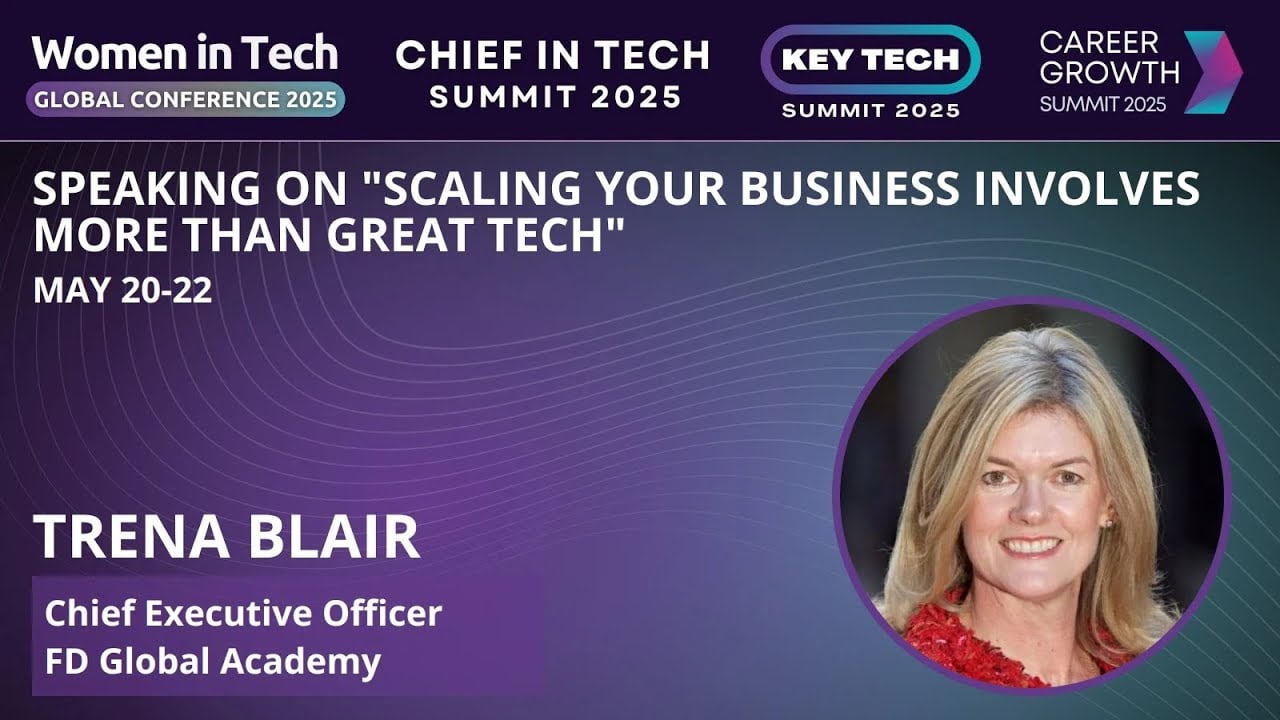
Seventy percent of scale-ups fail, and it is rarely the tech's fault
 Ida Quamina +2
Managing Director, Digital Enabling Capabilities Lead, Huron
She joined a digital team with no women leaders, then became its first MD
 Tara Hernandez
Vice President Developer Productivity, MongoDB
Twenty years of developer research keeps landing on the same answer: culture
 Yashu Kapila
CEO, BugRaptors
The bigger danger in turbulent times is leading with yesterday's logic
 Joy Sybesma
Founder/CEO, ScaleJOY
Every CEO wants a performance culture, but few have what it takes to build it
 Eliska Reznicek Dockalova +1
VP of Customer Experience, Kiwi.com
Burnout comes fast and recovery is slow, says a VP who lived it
 Taraka Satti
Engineering director, Meta
Work will eat all 16 waking hours unless you put a ceiling on it
 Miyu Lee +1
Chief Legal Officer and General Counsel, Mondu
Micromanaging keeps the bad apples working and drives the high performers out
 Sumandeep Singh +1
Global Head of Data Engineering, Ford Motor Company
A demanding executive taught her to stop trying to please everyone
 Madeline Carson
Engineering Director, MetaLab Design
Good output alone says little about whether an engineering team is healthy
 Jenny Zhao
Sr. Director, Head of Product, Digital Services, Asurion
Working harder lost her a promotion to the man who kept saying he wanted it
A toddler she calls the chaos monkey trained her for VUCA leadership