Krytyka ukryta między komplementami może przejść niezauważona
Na jej szkoleniach 12 lub 13 osób na 20 przyznaje, że trudno im przekazywać feedback dotyczący poprawy, a nawyki tylko to pogarszają: obwinianie, niejasne oceny czy ukrywanie krytyki między komplementami, gdzie może zostać przeoczona. Navneetha Lokanathan, trenerka przywództwa i komunikacji, która przez osiem lat pracowała jako programistka i liderka zespołu, analizuje sytuację z członkiem zespołu, który ciągle łamie zobowiązania. Co się zmienia, gdy feedback zaczyna się od własnych uczuć i potrzeb?
Poznaj cztery kroki NVC, dzięki którym trudny feedback zostanie wysłuchany bez postawy obronnej
Navneetha Lokanathan, trenerka przywództwa i komunikacji, uczy, jak przekazywać trudną informację zwrotną z wykorzystaniem Porozumienia bez Przemocy (NVC). Omawia typowe błędy w udzielaniu feedbacku, następnie cztery kroki NVC: obserwację, uczucia, potrzeby i prośby, a na koniec uczestnicy przeredagowują feedback dla członka zespołu, który nie dotrzymuje zobowiązań.
“Zatem wszystko, co sprawia, że druga osoba odczuwa strach, wstyd lub poczucie winy, uznaje się za przemoc, prawda?”
“Zatem potrzeby są czynnikami leżącymi u podstaw uczuć.”
What you will learn
Rozpoznawanie typowych błędów w udzielaniu feedbacku, takich jak obwinianie, niejasne oceny i „kanapka feedbackowa”, która ukrywa przekaz.
Oddzielanie faktycznych obserwacji od ocen przy opisywaniu problemu.
Wyrażanie uczuć w komunikatach „ja” i łączenie ich z niezaspokojonymi potrzebami, które za nimi stoją.
Formułowanie próśb jako jednego jasnego, pozytywnego i konkretnego działania, które druga osoba może podjąć.
Przeredagowanie rzeczywistego trudnego feedbacku przy użyciu czterostopniowego szablonu NVC.
Details
Level
Intermediate
Format
Talk
Technical depth
Non-technical
For
Early career, Mid-career, People manager
Length
18:40
Published
June 2023
Questions this talk answers
Jakie są najczęstsze błędy popełniane przy udzielaniu feedbacku?
Obwinianie, mówienie zbyt wiele, niedopasowanie rodzaju feedbacku do doświadczenia osoby, brak możliwości przełożenia go na działanie, formułowanie go jako oceny, zbytnia ogólnikowość oraz skupianie się na osobie zamiast na zachowaniu. Prelegentka zwraca też uwagę na „problem poduszki”, gdy krytyka wyściełana pozytywami może pozostać niezauważona.
Co w NVC uznaje się za komunikację opartą na przemocy?
Wszystko, co sprawia, że druga osoba odczuwa strach, wstyd lub poczucie winy. NVC zakłada mówienie z perspektywy własnych uczuć i potrzeb, dzięki czemu druga osoba rzadziej przyjmuje postawę obronną.
Jakie są cztery kroki Porozumienia bez Przemocy?
Obserwacja faktów, nazwanie własnych uczuć, określenie związanych z nimi niezaspokojonych potrzeb oraz prośba o konkretne działanie.
Jak obserwować bez oceniania?
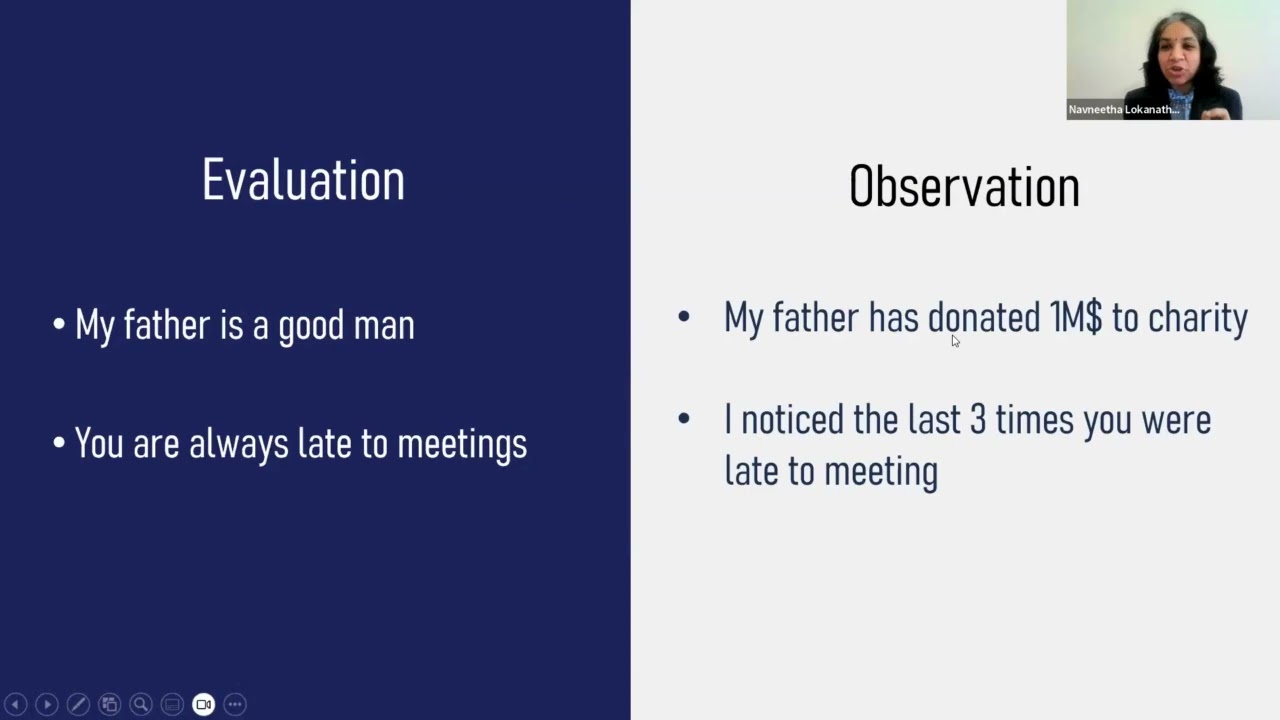
Należy opisać, co faktycznie się wydarzyło, a nie własną opinię. Zamiast mówić, że ktoś zawsze spóźnia się na spotkania, lepiej powiedzieć, że spóźnił się na trzy ostatnie spotkania.
Dlaczego prośby powinny być konkretne i pozytywne?
Ciąg zakazów sprawia, że ludzie nie wiedzą, co mają robić, a niejasne prośby przynoszą odwrotny skutek. W jej przykładzie żona poprosiła męża, by spędzał mniej czasu w pracy, a on zapisał się na golfa, choć ona chciała spędzać z nim czas.
Historia z golfem: niejasne prośby obracają się przeciwko nam (55 s)
So yes, I welcome you all to this session, becoming an expert in giving feedback. Good morning. Good afternoon. Good evening from wherever you are connecting. So tell me how many of you find it difficult to give feedback, especially when it comes to giving feedback that needs some improvement in others performance or some change in their behavior. How many of you find it difficult to give such sort of feedback? Can you see it in the chat? Yeah.
In the trainings that I conduct, you know what, when I ask this question, people say out of like 20 people, almost 12 to 13 people say that I find it difficult to give feedback. And that is almost more than 50 percentage, right? So let's get practical now. And let me give you a situation. And can you write a feedback? Let's see how it turns out. Are you in for that?
Yeah, Elaine, I hear you. Okay, so let me give you a situation. So the situation is, let's assume you are the team lead. You are the team lead and one of your team members doesn't, you know, doesn't hold on to the commitments he had made. Okay. And this is affecting you and the team. Let's see how will you give feedback for this particular person for this particular scenario.
All right. So let's take a couple of minutes to write the feedback. Once you're done, you can put your feedback in the chat box. Let's see. Giving feedback can be worse. Sarah, yes. But with right techniques, it can, it need not be worse. Okay, your time starts now to write the feedback. So if you want to know the situation again, for people who have joined just now, you are the team lead, and one of your team members doesn't stick to the commitments he has made when it comes to group work.
And it is affecting you and it is affecting you and the team. And how will you give the feedback in this scenario? Write down your feedback and paste it in the chat. Uh-huh. I got it, Selena. Come on, keep it going. Could you prioritized? Try to prioritize. Okay. Anybody else? Like, what feedback have you returned? Please put it in the chat box so that all of us can learn together.
Yeah. I hope we have. Yes. Yes, yes, yes. Keep it coming in. And you're all right, you know, when we say it is difficult to give feedback. Why? Because feedback can make or break a relationship with a team member or a colleague, right? When managed effectively, feedback can bring that high talent, bring that high potential into the workplace.
It can lead to high collaboration. So what are some of the mistakes we make when giving feedback? Let me share my screen with you now. What do you think are some of the mistakes we make in giving feedback? Can I see some of your answers in the chat box? Blaming people exactly what? What else? What are the common mistakes we make in giving feedback?
Yes, absolutely, Sarah. And telling people they are responsible for our feelings, right? Not giving enough praise. Yes. If you have any questions, you can put it in the Q&A box available and we will take it up at the end of this session. So I see some hands raised. you can put it in the Q&A box. Being either too bland or too soft.
Yes, yes, yes. You're all there. So these are some of the common mistakes we make. There are plenty, plentiful mistakes. But to cut short, like, you know, if we have to rate the mistakes that we make in feedback, these are some of the things that stand out. Blaming, right? You did this. Because of you, it got worse, right?
And saying too much. Wrong type of feedback. Sometimes, you know, the fresher, for the fresher, you have just joined in. If you gave him continuously improvements, he would go frustrated, right? So you would have to give some praise over there for a fresher. But for an experienced person, they might be looking for points to improve. So if we are giving a wrong type of feedback, then it is not going to serve the purpose of giving feedback.
And failure to give actionable feedback. What does the other person has to do? Right? And pausing it as judgments, lack of specificity, being too generalized. Feedback on someone instead of their behavior, right? And the pillow issue. What is this pillow issue? Sometimes, we know, right? Like, when we give feedback, we give a positive and negative and a positive, Like a sandwich.
And they say it is a pillow issue because it is like cushioned. The negative, whatever area of improvement is cushioned between the positives. And the thing here is sometimes that may, that may not get noticed by the recipient, right? So these are some of the common mistakes in giving feedback. Okay. I have come across many different ways of giving feedback and most of them are like transactional, There is no human involved in it.
So when it is transactional, what happens is we don't consider how the other person feels when we give this feedback, right? And we don't even consider our own feelings, how we feel when something happens, But to eliminate all these mistakes where in giving feedback, there comes this nonviolent communication, which is what we are going to see in this session.
So anything that makes the other person feel fearful, shameful, or guilt is considered as violent, right? It is considered as violent communication. This nonviolent communication was introduced by Dr. Marshall and he says like, we should not make the other person fearful, shameful, or guiltful when we communicate, right? So nonviolent communication is like, do you know, it is inclusive with empathy, inclusive of our feelings as well our needs, along with considering the other person's needs and wants.
Okay. And NVC is about you and not the other person because we have some unmet needs and that, that is what we expect from the other person. So in NVC method of giving feedback, we are not going to say to the other person that you have done this. Yeah. You have made me feel, you have made me feel bad and you have to change your behavior.
We are not going to blame the other person, but rather we are going to come from our side. So it is not at all about the other person. It is about us, our feelings and our emotions. And when we express in that way, what happens is we, the other person will not become defensive, rather he will listen to what we are saying.
All right. So NVC has four particular steps. Observe, identify your feelings, identify associated needs and request. Okay. Observe is, you will state that factual observations that is affecting you. What is the actual factual situation that is happening? That is what is observed. And what are the feelings associated with yourself? What are the needs, unmet needs? And what is the request?
What do you want the other person to do? All right. So four components in NVC, which are observe and feelings, identifying your feelings, identifying the needs and request. So when it comes to observe, often we confuse it with our evaluation and judgment. Okay. So observe without evaluation, right? How can we do that? How can we observe without evaluating?
Say, for example, saying that my father is a good man is evaluating, right? It is your opinion that he is a good man. But what is the actual thing that has happened? My father has donated $1 million to charity. That is the actual thing that has happened. So this is what observation is. Instead of saying you are always late to meeting, that is your opinion.
But that is not the fact, right? The fact is last three times, the person has come late to the meeting. All right. So when you are giving feedback in any situation, observe and factual statements. Okay. And withdrawing from your evaluations and from giving your own opinions. All right. And the next is feelings. Feelings give us a lot of information about ourselves, right?
Why we feel a certain way. And it is very important to have an emotional audit. What we feel at any particular time, correct? Because feeling tells us like what we like, what we don't like, what we like to have, all that we come to know about feelings. And once you have an emotional audit of what you're feeling, what is that that is affecting you?
Yeah. And what feel it is, what, what is that it is making you feel when you say that? Express it. Correct? It is, feeling is one of the most important components of nonviolent communication. Let us see. See, you irritate me when you leave company documents on the conference room floor. Here, it is wrong because you irritate me.
I'm blaming the other person. Correct? But when you say I am irritated when you leave company documents on the conference room floor, the other person don't have anything to take it down in a defensive way. Rather, they will listen to you. Correct? So one tip when you are expressing your feelings is using the I statements. You see, I am irritated instead of telling you irritate me.
And needs. How are these feelings and needs are connected? Because feelings are the mirror, that says that are there any unmet needs? Okay? If your needs are, all of your needs are met, you will be happy. Correct? If your, some of your needs are not met, you will be, you will be angry, frustrated. Correct? So the needs are the underlying factors of feelings.
So identify what are your underlying needs and express it. Because when you express your needs, most often we have a better chance of getting them met. Okay? See, in this example of leaving company documents on the conference room floor, when we add our needs to it, the other person understands why we say so. Right? because I want our documents to be safely stored and accessible.
Okay? So we saw observe without evaluation, feeling and needs. Be clear about your needs. And finally, request. Identify one actionable item that the other person wants to do, that you want the other person to do. Okay? And request it in clear, positive, concrete action language. When you say, don't do this, people will not, that is not a positive language.
Don't spread company documents on the conference room floor. Like, they don't know why this lady is always like, don't, Yeah? But when you say, could you place the company documents in the locker room? It is very specific. Tell them specifically what action item you want the other person to do. Right? So, nonviolent communication is observe, state the factual observations that is affecting you.
Do not evaluate. Again, I'm using here, but that is a wrong. You have to give it a positive statement as we saw in the request space. And identify your feelings. What are the, what are your feelings associated with it? And identifying what are the needs underlying with it? And what is the request? What is that you want the other person to do?
So with this template, now I invite you to go back and change your feedback for the situation we saw early, earlier. How would you change it? Can I see it in the chat box? If you have to say your observation, your feelings, associated needs and requests. When you say it in this template, what happens is the other person is not blamed.
The other person is not judged. Rather, it invites for understanding, which is what we need in today's working environment. Right? So if you have to change it, how would you change your feedback? Exactly, Sarah, needs are often related to your core values. Thank you. So I'm looking for the changed feedback. Meanwhile, we have four more minutes for this session to get over.
If you have any questions, you can type it in the Q&A box. The floor is open for questions. Thank you, Hamida. So when we are making requests, we need to be clear. What is it we really want? Yeah, there was an, you know, there was a story, a husband and wife were there and that his husband was spending too much of time at his workplace.
So the wife went and told him like, don't spend too much work, too much time at your workplace. Yeah. So what happened? This husband, after two, three weeks, he come and told me, see, I have signed up for the golf course, but actually the wife wanted him to spend the time with her. Right? Since she did not mention what is that she wants specifically, this is what will happen.
Yes. I noticed that we are in getting everything done on time as the team. Could you make sure? Your part in the project is done by end of the week. we are getting there. Yes. Well, I feel stressed when the team deadlines are not met. Please share your timelines with your team so that we could address the workload.
Do you have any questions or any thoughts to say about what we have just discussed? You can type it in the chat box as well. So here, the challenges could be two things. Right? When we have our feelings, we may forget to be in touch with our feelings anytime. So that is one challenge. And another challenge is we may not know, clearly know what we need.
So if we can work on this, it would be much, much better when we give our feedback to our colleagues rather than blaming them. Yes. So thank you everyone for the wonderful participation in, through the chat box. And how do you feel where for your first feedback and this feedback when you have changed it? Yeah. Love it.
We all would want to receive such a feedback where nobody blames us, right? But just points what has to be correct. Isn't it? So thank you. Thank you for your participation. And yes, love it. I don't feel defensive at all. That is the beauty of NVC. And thanks a lot for your participation in this session. Thank you.
Maya, wish you good luck in delivering that difficult feedback. The session will be ending now. Thanks a lot for your participation.
Transcribed automatically; names checked against the speaker record. Select a time to jump there.
Article based on this talk
Jak przekazać trudny feedback, nie wywołując postawy obronnej?
Navneetha Lokanathan pokazuje, jak Porozumienie bez Przemocy zamienia obwinianie w jasną, opartą na faktach prośbę, którą współpracownicy naprawdę usłyszą.
W skrócie
Trudny feedback zawodzi, gdy obwinia, ocenia lub ukrywa rzeczywisty przekaz, przekonuje trenerka przywództwa i komunikacji Navneetha Lokanathan. Jej odpowiedzią jest Porozumienie bez Przemocy (NVC): opisać faktyczną obserwację, nazwać własne uczucie, powiązać je z niezaspokojoną potrzebą i sformułować jedną jasną, pozytywną prośbę. Tak ujęty feedback zaprasza do zrozumienia zamiast do obrony.
Najważniejsze wnioski
Typowe błędy w udzielaniu feedbacku, gdy działamy pod wpływem emocji
Zrozumienie zasad NVC
Praktyczne i skuteczne sposoby formułowania feedbacku
Dlaczego feedback tak często chybia celu
Lokanathan zaczyna od prostego pytania: komu trudno jest przekazać feedback, który wymaga lepszych wyników lub zmiany zachowania? Na jej szkoleniach, jak mówi, przyznaje się do tego mniej więcej 12 lub 13 osób na 20. Następnie proponuje praktyczne ćwiczenie. Uczestnicy wyobrażają sobie, że są liderami zespołu, którego członek nie dotrzymuje zobowiązań dotyczących pracy grupowej, i zapisują feedback, jaki by mu przekazali.
Stawka, jak wyjaśnia, jest wysoka: „Bo feedback może zbudować albo zniszczyć relację z członkiem zespołu lub współpracownikiem, prawda?” (3:15). Dobrze przekazany feedback może wydobyć duży potencjał i prowadzić do silnej współpracy.
Razem z publicznością tworzy listę typowych błędów: obwinianie („przez ciebie jest gorzej”), mówienie zbyt wiele, niewłaściwy rodzaj feedbacku (nowa osoba potrzebuje pochwały, a doświadczona może chcieć wskazówek do poprawy), brak możliwości przełożenia feedbacku na działanie, formułowanie go jako oceny, zbytnia ogólnikowość oraz komentowanie osoby zamiast zachowania. Wymienia też „problem poduszki”, lepiej znany jako kanapka feedbackowa, w której obszar do poprawy jest wyściełany dwoma pozytywami i odbiorca może go w ogóle nie zauważyć. U podstaw wielu z tych błędów, jak twierdzi, leży feedback czysto transakcyjny, bez uwagi poświęconej temu, co czuje każda ze stron.
Co sprawia, że komunikacja jest „przemocowa”
Aby wyeliminować te błędy, Lokanathan sięga po Porozumienie bez Przemocy, którego autorstwo, jak podała prelegentka, przypisuje Dr. Marshall. Jej definicja jest bezpośrednia: „Zatem wszystko, co sprawia, że druga osoba odczuwa strach, wstyd lub poczucie winy, uznaje się za przemoc, prawda?” (7:15).
NVC, jak wyjaśnia, uwzględnia empatię, nasze własne uczucia i potrzeby oraz potrzeby i pragnienia drugiej osoby. Co kluczowe, wychodzi od strony mówiącego. Zamiast mówić komuś, co zrobił źle i jak się przez niego czujemy, opisujemy własne doświadczenie. Gdy feedback jest wyrażony w ten sposób, druga osoba nie przyjmuje postawy obronnej i chętniej słucha.
Obserwuj fakty, a potem weź odpowiedzialność za swoje uczucia
Cztery kroki to: obserwacja, nazwanie własnych uczuć, określenie związanych z nimi potrzeb oraz prośba. Pierwszy krok jest trudniejszy, niż się wydaje, bo ludzie mylą obserwację z oceną. Powiedzenie „mój ojciec jest dobrym człowiekiem” to opinia; powiedzenie, że przekazał pieniądze na cele charytatywne, to obserwacja. Wersja z miejsca pracy: „Ale to nie jest fakt, prawda? Fakt jest taki, że trzy ostatnie razy ta osoba spóźniła się na spotkanie.” (10:19).
Następnie uczucia. Lokanathan zaleca „audyt emocjonalny”, by zauważyć, co czujemy i co to wywołuje, ponieważ uczucia pokazują, co lubimy, a czego nie. Zestawia zdanie „irytujesz mnie, kiedy zostawiasz dokumenty firmowe na podłodze w sali konferencyjnej” ze zdaniem „jestem zirytowana, kiedy zostawiasz dokumenty firmowe na podłodze w sali konferencyjnej”. Jej wskazówka: „Zatem jedna wskazówka przy wyrażaniu uczuć to używanie komunikatów »ja«. Widzicie: jestem zirytowana, zamiast mówić: irytujesz mnie.” (11:38).
Nazwij potrzebę, a potem sformułuj jasną prośbę
Uczucia, jak mówi, są lustrem potrzeb. Gdy potrzeby są zaspokojone, czujemy zadowolenie; gdy nie są, czujemy złość lub frustrację. „Zatem potrzeby są czynnikami leżącymi u podstaw uczuć.” (12:03). Wyrażenie potrzeby pomaga drugiej osobie zrozumieć, dlaczego poruszamy dany temat, na przykład chęć, by dokumenty firmowe były bezpiecznie przechowywane i dostępne.
Ostatni krok to prośba o jedno konkretne działanie, wyrażona jasnym, pozytywnym i konkretnym językiem. Seria „nie rób tego” sprawia, że ludzie nie wiedzą, czego się od nich oczekuje. „Czy mógłbyś umieszczać dokumenty firmowe w szafce?” działa lepiej, bo jest konkretne. Jak to ujmuje: „Powiedzcie konkretnie, jakie działanie ma podjąć druga osoba.” (13:28). Koszt niejasnych próśb ilustruje historią żony, która poprosiła męża, by nie spędzał tyle czasu w pracy; kilka tygodni później oznajmił, że zapisał się na golfa, podczas gdy ona chciała spędzać z nim czas.
Przeredagowanie feedbacku według szablonu
Następnie Lokanathan prosi uczestników o przeredagowanie pierwotnego feedbacku z zastosowaniem czterech kroków. Jedna z wersji, którą odczytuje z czatu, wyraża stres, gdy terminy zespołu nie są dotrzymywane, i prosi: „Proszę, podziel się swoimi harmonogramami z zespołem, abyśmy mogli zająć się obciążeniem pracą.” (16:13). Sens szablonu, jak mówi, polega na tym, że „Druga osoba nie jest oceniana. Zamiast tego zaprasza to do zrozumienia, a tego właśnie potrzebujemy w dzisiejszym środowisku pracy.” (14:51).
Na zakończenie wskazuje dwa wyzwania, na które warto uważać: utratę kontaktu z własnymi uczuciami w danej chwili oraz brak jasności co do własnych potrzeb. Praca nad obydwoma, przekonuje, sprawia, że feedback jest znacznie skuteczniejszy niż obwinianie. Reakcja jednego z uczestników na przeredagowany feedback dobrze podsumowuje efekt: wcale nie poczuł potrzeby obrony.
Obejrzyj wystąpienie
„Become an expert in giving difficult feedback”, Navneetha Lokanathan, około 19 minut: https://www.womentech.net/video/become-expert-in-giving-difficult-feedback
O prelegentce
Navneetha Lokanathan jest trenerką przywództwa i komunikacji oraz coachem asertywności z siedzibą w Londynie, certyfikowaną life coach i praktyczką NLP, która w ciągu czterech lat przeszkoliła ponad 800 osób. Zanim zajęła się szkoleniami i coachingiem, przez osiem lat pracowała w IT jako programistka i liderka zespołu w międzynarodowych firmach w Indiach, Stanach Zjednoczonych i Dubaju.
Pytania, na które odpowiada to wystąpienie
Jakie są najczęstsze błędy popełniane przy udzielaniu feedbacku?
Co w NVC uznaje się za komunikację opartą na przemocy?
Jakie są cztery kroki Porozumienia bez Przemocy?
Jak obserwować bez oceniania?
Dlaczego prośby powinny być konkretne i pozytywne?
Opracowano z pomocą AI na podstawie transkrypcji wystąpienia. Oczekuje na weryfikację redakcyjną.
Frameworks and ideas mentioned
Nonviolent Communication (NVC)
Feedback sandwich
I statements
Cite this talk
Navneetha Lokanathan. "Become an expert in giving difficult feedback." WomenTech Network, 2023. https://www.womentech.net/video/become-expert-in-giving-difficult-feedback