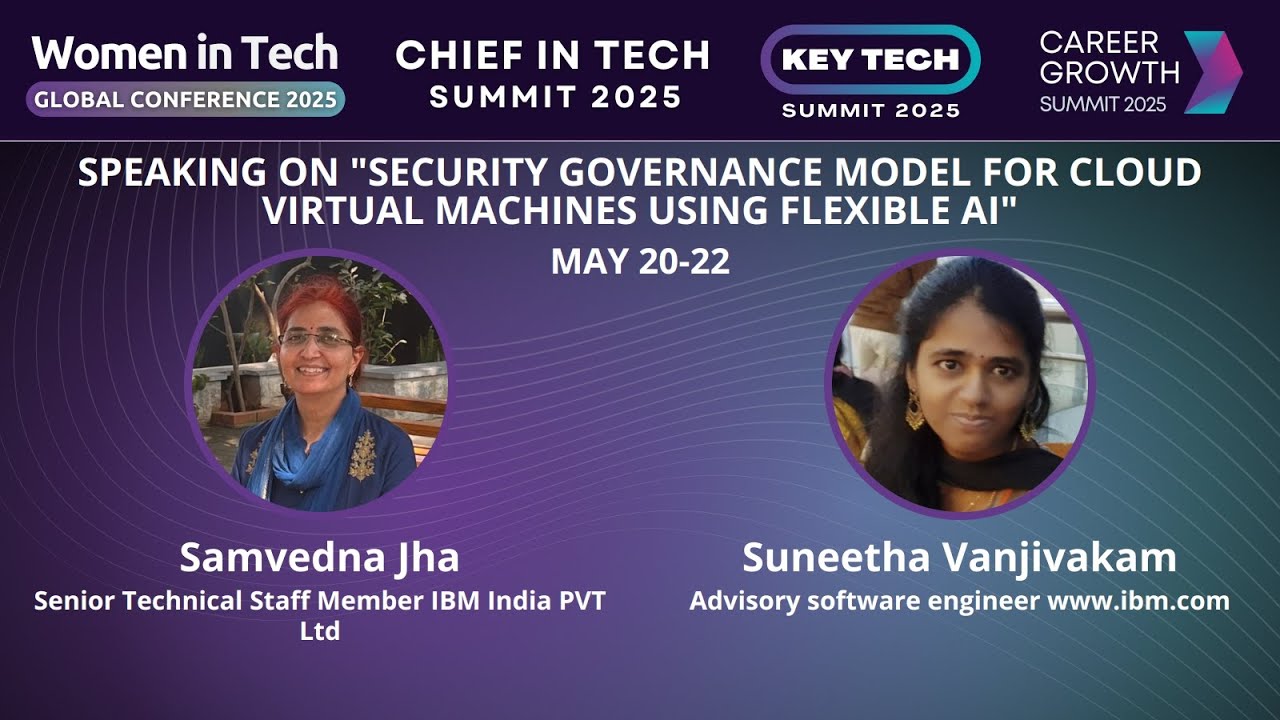
Security Governance model for Cloud virtual machines using flexible AI
Samvedna Jha19:212025
Bezpieczeństwo AI nie jest darmowe, więc nie uruchamiajmy go na każdej VM w chmurze
Funkcje bezpieczeństwa AI nie są darmowe, a włączanie ich na maszynie wirtualnej udostępniającej publiczne samouczki nie uzasadnia zużywanych zasobów. Samvedna Jha, Security Architect dla IBM Power z ponad dwudziestoletnim doświadczeniem, przekonuje, że zespoły chmurowe mogą obniżyć zużycie energii i koszty bez osłabiania izolacji czy zgodności z regulacjami. Otwarte pozostaje pytanie, które VM zasługują na pełną ochronę AI i kto decyduje o jej wyłączeniu.
Poznaj trzypoziomowy model, który określa, ile bezpieczeństwa AI otrzymuje każda VM
Samvedna Jha i współprowadząca Suneetha Vanjivakam z IBM proponują model zarządzania bezpieczeństwem maszyn wirtualnych w chmurze, w którym ochrona oparta na AI jest konfigurowana dla każdej VM osobno i włączana tylko wtedy, gdy jest potrzebna. Przekonują, że podział VM na poziomy według krytyczności obciążeń zachowuje izolację, zapewnia zgodność z regulacjami i obniża koszty energii oraz wydatki związane ze stale działającą AI.
“Zawsze pamiętajcie, że żadna z tych funkcji AI, wszystkie te tak zwane fajne funkcje, nie są darmowe.”
“Powinien istnieć mechanizm, dzięki któremu, gdy jest to potrzebne, włączacie ją. A gdy nie jest potrzebna, wyłączacie ją.”
What you will learn
Zastosowanie czterech filarów: bezpieczeństwa, zgodności, zarządzania ryzykiem i elastycznej AI w zarządzaniu VM w chmurze.
Klasyfikacja VM na obciążenia krytyczne, średnie i proste, aby ustalić, ile bezpieczeństwa AI potrzebuje każda z nich.
Planowanie włączania i wyłączania narzędzi bezpieczeństwa AI na żądanie w celu obniżenia kosztów energii i zasobów.
Powiązanie uznanych ram, takich jak ISO 27001 i NIST framework, z zarządzaniem wspieranym przez AI.
Wyjaśnienie, jak konfiguracja dla każdej VM chroni izolację danych i zapewnia bezpieczne współdzielenie zasobów.
Details
Level
Intermediate
Format
Talk
Technical depth
Introductory technical
For
Mid-career, Senior individual contributor
Length
19:21
Published
July 2025
Questions this talk answers
Co oznacza elastyczna AI dla zarządzania bezpieczeństwem VM w chmurze?
To AI, która uwzględnia typ obciążenia i dane przechowywane na VM, dzięki czemu jest stosowana zgodnie z wymaganiami danej VM, a nie na ślepo. Powinna wykrywać zagrożenia bez udziału człowieka, dostosowywać się do obciążenia oraz wspierać samonaprawę i polityki definiowane dla każdej VM.
Dlaczego narzędzia bezpieczeństwa AI nie powinny stale działać na każdej VM?
Funkcje AI nie są darmowe i zużywają dużo zasobów, więc uruchamianie ich tylko w razie potrzeby oszczędza energię i zasoby w chmurze. Na przykład VM udostępniające informacje publiczne nie uzasadniają tego kosztu.
Jak podzielić VM na poziomy, aby ustalić, ile bezpieczeństwa AI potrzebują?
Obciążenia krytyczne otrzymują kompleksowe bezpieczeństwo AI z natychmiastową mitygacją, obciążenia średnie (najczęstsze) otrzymują podstawową AI, a proste obciążenia, takie jak publiczne samouczki, wymagają ochrony sprzętu bazowego oraz zgodności z regulacjami.
Jak zarządzanie na poziomie pojedynczej VM chroni izolację danych i współdzielenie zasobów?
Konfiguracja modelu dla każdej VM chroni jej dane, ponieważ każda obsługuje własne obciążenia, i zapewnia, że współdzielone zasoby nie są wykorzystywane kosztem bezpieczeństwa. Właściciele VM mogą zdecydować, czy AI jest potrzebna, pomijana czy wyłączona na pewien czas.
Jakie korzyści biznesowe daje elastyczne zarządzanie AI?
Prelegentki wskazują szybsze innowacje i efektywność kosztową, odporność dzięki optymalnemu wykorzystaniu zasobów i wydajności oraz nadzór etyczny, który ułatwia audyty, spełnianie regulacji i raportowanie śladu węglowego.
Bezpieczeństwo AI włączane tylko w razie potrzeby (74 s)
Trzy poziomy obciążeń VM w chmurze (83 s)
Audyty, etyka i redukcja emisji (71 s)
Good morning, good afternoon, everyone. Thank you for joining us today. So, you know, in the era where digital transformation is driving everything, every aspect of organization, our products. So, security is no longer, it's like an IT concern, right? It is, it's not something which is a tick mark anymore. It is a business imperative. And in that, whether you like, whether we like it, whether we like it, whether we like it.
or not, security governance is the framework that ensures that all the requirements we are meeting, we are, we have all these strategies in place. We have a way to handle the risk and things like that. So today we are going to explore the security governance model for the cloud virtual machines and why it is so important to empower it at this stage itself when AI is picking up in every, every area, how we can bring the innovation, how we can build trust.
across these digital subsystems and using which, which are going to use AI. So, with this, let us move to the next slide. So, you know, every presentation of security, we need to start with a kind of motivation, right? Because not only for, to handle the security aspect, but also to ensure that how are we handling the customer's requirement and making sure that everything is in place. So, the importance of security and governance for the VMs has, we have divided into four pillars, basically. The first one is the security, just to ensure that the data is protected, the sensitive data, irrespective of the nature of its nature, client customer data, they are all protected.
We are also meeting the compliance requirement, which is the second pillar. We are reducing the cyber security risk, which is the third pillar as part of risk management. And finally, we are bringing in flexible AI here. And the idea about this flexible AI to bring from cloud security is to have threat detection to ensure without human intervention, to have it like a very clear, fair detection.
So, it also should have to adapt to security based on the VM load it is having, based on the final workload which is running on that VM. And then the third point that we want to bring is that these VMs, when they get into a trouble and shoot mode, how to have them as a self-healing system, so that they not only, you know, go down, they also have ability to come up, come back up.
And then finally, we should have security policies per VM, where based on the type of the workload it is running, how to ensure that the policy actually is flexible enough for them to get into those, you know, to utilize those flexible AI. So, just to give a little overview for what flexible AI we are using here is, it actually is trying to bring the kind of input from the workload type it is running, the type of data it has, and based on that, the various decisions are made to ensure that this AI is not applied blindly, but based on the personalized requirements of that VM.
So, that is the main flexibility which is coming up here. With this, I will move to the next slide. Now, here, you know, we will be talking about the governance model that itself that we are talking about here, right. So, you must be aware of some of the well-known, widely adopted governance models we already have in industry.
For example, ISO 27001. And what is its purpose? Its purpose is to provide a systematic approach to manage sensitive information, to ensure it remains secure at all environments. There are physical controls which it handles. There are, you know, it is logical controls when it is about data center, but it has to enhance to ensure that it handles all the AI requirements also.
And that's, and when we are talking about the flexible AI for that matter. The next one, I would like to cite example is NIST framework itself. So, NIST actually will provide is a very well-known, widely accepted framework, every product, mostly all products meet all the NIST requirements. And their also approach is to manage the cybersecurity risk. And, you know, it has provided various guidelines to handle various type of, you know, the main pillars, for example, integrity.
You have identify, protect, detect, respond, and recover the system. So, based on this example, what we are proposing here in our session today is about this model powered by the flexible AI, specifically targeting the virtualization platform, where in each server itself, each resource itself, you are trying to virtualize it to achieve, to run multiple virtual machines on the same hardware resource, right?
So, what we actually propose here is to have enabled disablement of AI. You need not have AI for all this. You should have a mechanism by which, when it is required, you enable it. And when it is not required, you disable it. So, you know, that type of governance model should be in place. Then, next point is about decide that each VM, basically, you know, when it requires, AI needs a security governance model or not.
For example, in any public data, which is like a very publicly available information, you don't want to spend your resources and tools to basically apply AI there, or basically to apply any governance model. You can actually utilize that resource to do something which is like more critical with respect to the mission or the workload that VM is running.
And then, final point is about, you don't have to use this AI all the time. When it is needed, use it. It also helps you to save energy and resources in the cloud itself. Always remember that none of these AI features, all the so-called cool features, they do not come for free. They actually are very much resource-eating, you know, applications and tools.
And my friend Sunita will actually talk about it more detail in next slides. But these all are very much important and why we need to have it a mechanism to not use it all the time when not needed specifically. So, we have divided, you know, our VMs at a very high level in three categories basically. The VMs which are running the mission critical workload, where we would like to have AI to handle the end-to-end security completely.
Where in case of attack, any security incident, you not only are informed about it, but also there is a mitigation which is applied immediately. And I can cite one example, where in an insider attack, if they are trying to do some malicious activity for your VM to get destroyed or misbehaved, there should be an AI mechanism that triggers and it gives you the complete security so that it stops the harm or the damage at a level which you can recover back.
The next one we would want to highlight is about the medium workload. This is the most commonly, you know, workload which is deployed in our organizations. And then we don't, we have, we need to have basic AI, right? We need not have like a very advanced or complicated, which is like resource exhaustive AI mechanism or things that we need to deploy here.
And then the finally, which is a very simple workflow. Where in you don't, they can be as simple as a tutorials, which do not need any kind of fees or any kind of, you know, membership to access it. If these are like the publicly available information, which any user can get it. Just that you need to protect your underlying hardware and resource.
You need to have a security compliance in place. And for that, we need to have a governance model. So with this, let me move to the next slide. And I will request Sunita to, you know, share some of the insights about it. Yeah. Thank you, Samwedna. So hi, hi all. This is Sunita Advisory Software Engineer working with IBM India Systems Development Labs.
So continuing with what my SDSM Samwedna has conveyed in this session. Let me start with the significance why AI should be flexible for every cloud VM runtime. So when it comes to AI models, I think data is the core heart of the AI models. Only with the data, we can bring out more insights and more, you know, more purposeful decisions we can make with the data.
But when we collect the data, I mean, it should be very conscious and it should be flexible enough for VM rather than it should be configured. I mean, it is configured on a global scope level. So this session is more about what is that, you know, significance we can bring out when the AI is per VM. So the one such principles which can be protected properly or, you know, the core heart of security is the data isolation.
When it comes to VMs, VM data should be protected properly because each VM carries its respective workloads. So the data isolation principle can be properly governed when we keep this security governance model per VM. And another principle is the resource sharing principle. When it comes to cloud VMs, VMs share a lot of resources, but it should not be at the cost of security.
The security governance model, when it is configured per VM, resource sharing will be on purpose and it will be on purpose. And when we bring the VM owner into the picture here, VM owner is given a liberty to decide whether AI is really needed or AI should be on pass or AI can be disabled for a timeframe, depending on the workload that is running on the cloud.
So the, the, the, the overall purpose of this here is we should be made, we should use AI, we should bring out interesting insights from AI. We should you, we should, we should, we should, we should bring out every value. We can give it to our end customers from our applications, but AI should be flexible enough to save our power consumption and energy costs.
So that is a more, uh, uh, significance, uh, that can be brought out when the AI is flexible, when it is configured per VM. So we will see what, what can be the expected outcomes, particularly when it is really flexible. So here, here is a small glimpse of the data. We can see what we can see from international data corporation.
So the report, uh, the report, the report statistics, we can see here with every year by year, how the over consumption and energy costs are rising and the surging demands for electricity. When, when we are, uh, when we are consuming AI, uh, without, without making it flexible or consciously being used for applications. So when it is really, uh, flexible, we can bring down this and make this more sustainable and, you know, uh, for, uh, future generations.
I think already large language models or small, large, small language models, which are already, uh, in the market by all the market leaders in the, uh, you know, AI, they are making their way to save our energy and power consumption. Making it, making them agent AI, uh, which is, uh, making them, you know, small, small agents, which is going to bring down the data center costs.
Because when, when the agents are really working on, uh, working on small, small purposes, there is no, there is no need for more power or more energy you can use at a global level, uh, you know, for the whole product. So when it comes to agents, it is, it, it can be even at a granular level of VM and it, it can be more granular level of, even for that VM also for a particular purpose, the AI can be used.
So, um, uh, that is the more, uh, expected outcome of this, uh, um, of this more flexible AI that can be brought out here. And, um, uh, this is the evidence we can, uh, we can see here from the, uh, power consumption and energy data. Um, somewhere now, can we go to conclusion? Yeah. So, um, here we conclude, um, we know AI is gaining a lot of momentum, but AI should be more flexible enough and more conscious enough, you know, uh, not to, uh, to bring a lot, uh, not to just solve the problems, uh, but it should not break any virtualization boundaries.
We build in our cloud VM products and the security governance model we bring on, uh, our, uh, AI, the, the security governance models, which is powered by AI, which is, uh, you know, uh, which is per VM. It should be more flexible enough to, uh, configure or de-configure at any moment or not to enforce on, uh, overall VMs and the outcome.
We, we will evaluate periodically, uh, so that, you know, it should, it should not be always running, uh, you know, saving our data center costs and energy costs. So the, the, that's, uh, uh, that's the conclusion of this, uh, session. So Samvedna, go to your back. Okay. So thanks. Thanks, Sunita. I think, uh, you know, the, the, the main important thing that, you know, as Sunita highlighted and as a, as a whole, we would like to highlight here is why to bring this flexible, you know, AI solution, uh, in case of this, you know, cloud VM security governance.
And, uh, because the, the well-known facts are, you know, for example, I can consider a few of the items, uh, as a, you know, talking point, it gives you faster innovation. Very, when Sunita highlighted, right. Why you need to have this AI tools run all the time when it is consuming so much of energy and power of your, uh, you know, VMs, you are paying for it, right.
At the end of the day. So, uh, it, it's not so important. You, whenever it is required, whenever deployment requires, enable it. And also there are some work, some VMs are only doing the experimentation or, you know, deployment before moving to market. So for such things also, it, it is so important that, you know, these, these will actually give us a very cost efficient solution.
The next one we can talk about with respect to the resilience. It is like, you know, when you have this type of model, where on need basis, we are having some governance model for these AI to be used. It gives you, it maintains the performance of these environments very, very, uh, you know, at the optimal level, because here you are utilizing the resources at the, at the hundred percent.
It is not that you are, there is a waste or anything which, you know, which, which can be found on. And last, last important thing is about the ethical oversight. So what happens is, uh, many times you must have been involved as a security analyst or security investigator in the forensic of any malicious activity done on the VMs.
Now, when you have such a requirement, these flexible, flexible implementation actually gives you very easy for audit, you know, meet the regulation requirement and also adjust the, you know, the requirements as per your organization's values. So lot of our, you know, not only for the security, but in general, carbon footprint requirement has become one of the important aspect, right?
Lot of, lot of companies are trying to achieve that. Now, this will be one of the small step to take forward, to have it run when needed. And you, you can always calculate it back and show this much carbon footprint has been saved. So, you know, such, for such thing, it can be helpful. Now, let me cite you with couple of examples where actually this flexible AI is showing really good output.
So first one, I would like to cite IBM Watson help. So, these AI is, as it may suggest, right, it is related to some healthcare industry. So, these AI subsystem actually, it adopts to the new medical research and the patient data. So, it's not that, you know, it is, this AI is not just like based on this, any hypothetical theory.
It actually goes with the history data. It adapts to it for the next time. So, it is also learning, like a human doctor. They are also learning, right? They, when we go to any doctor, they ask us for a lot of history and then only they come out, you know, about the present situation, right? So, in the same way, it has to learn.
So, this, this, it is adopting flexible AI in a different way. So, if I go to another cloud platform, for example, you know, Azure ML, which is one of the cloud platform available. So, they are using these deployment of custom models, which is learned from the previous, you know, trained data that you have supplied. So, it's not like a blank foundational model is available to you on which you can run your ML or any algorithm or any tool or, you know, derive anything out of it.
So, people are seeing a lot of advantages for this flexible AI. And just, it is such a high time that instead of reacting, it is so important to have things and all of us here will appreciate because of our, you know, work background that insecurity, why it is so important to bring such principle now itself, so that these governance models are helping us in many, many different, you know, forums.
So, you know, not only to meet security requirements, but also to ensure that we do not bring additional burden because more and more, we are moving to cloud and you know that in cloud, you have a VM, which is like a shared resource. So, how it, it can meet all the underlying principle of virtualization. And at the same time, you, you get, you know, platform which is scalable, which is reusable.
And most importantly, it is secure for, you know, peace of, peace for us and for the, you know, organization. So, I hope you found the, you know, details useful. We will be very happy to, you know, help or, you know, guide or, you know, talk, have continued discussion offline as well. We both are available on LinkedIn platform.
And, you know, thanks to Women in Technology Forum, which gave us this opportunity to come and share our, you know, session today. Thanks a lot. And thank you very much for all of your time and, you know, coming here for this session. Thank you.
Transcribed automatically; names checked against the speaker record. Select a time to jump there.
Article based on this talk
Dlaczego bezpieczeństwo AI dla VM w chmurze powinno włączać się tylko w razie potrzeby
Samvedna Jha i Suneetha Vanjivakam z IBM proponują model zarządzania na poziomie pojedynczej VM, który dzieli obciążenia na poziomy, chroni izolację i obniża koszty energii stale działającej AI.
W skrócie
Samvedna Jha, Senior Technical Staff Member w IBM, przekonuje, że bezpieczeństwo oparte na AI dla maszyn wirtualnych w chmurze nie powinno domyślnie działać wszędzie. Wraz ze współprowadzącą Suneethą Vanjivakam proponuje model zarządzania, w którym AI jest konfigurowana dla każdej VM, dopasowana do krytyczności danego obciążenia i włączana tylko w razie potrzeby. Dzięki temu organizacje zachowują izolację i zgodność z regulacjami, a jednocześnie obniżają zużycie energii i koszty stale działającej AI.
Najważniejsze wnioski
Model zarządzania bezpieczeństwem dla produktów, które planują wykorzystywać AI
Zalety stosowania elastycznej AI
Korzystanie z AI tylko wtedy, gdy jest potrzebna
Dlaczego zarządzanie bezpieczeństwem potrzebuje AI już teraz
Jha zaczyna od umieszczenia zarządzania w centrum transformacji cyfrowej. Bezpieczeństwo nie jest już formalnością do odhaczenia ani wąskim zagadnieniem IT, mówi: „To imperatyw biznesowy.” (0:00) Zarządzanie to ramy, które zapewniają spełnienie wymagań, istnienie strategii i kontrolę ryzyka, a według niej trzeba je wzmocnić teraz, gdy AI wkracza w każdy obszar.
Jej model opiera się na czterech filarach: ochronie danych wrażliwych niezależnie od ich charakteru, spełnianiu wymagań zgodności, ograniczaniu ryzyka cyberbezpieczeństwa i wprowadzeniu elastycznej AI. Elastyczna AI w jej ujęciu wykrywa zagrożenia bez udziału człowieka, dostosowuje bezpieczeństwo do obciążenia działającego na każdej VM, pomaga VM odzyskiwać sprawność jako systemy samonaprawiające się i wspiera polityki bezpieczeństwa definiowane dla każdej VM. Ponieważ uwzględnia typ obciążenia i dane przechowywane na VM, odpowiada na wymagania tej konkretnej VM, zamiast być stosowana na ślepo.
Propozycję opiera na ramach dobrze znanych praktykom. ISO 27001 oferuje systematyczne podejście do zarządzania informacjami wrażliwymi za pomocą kontroli fizycznych i logicznych, a NIST framework porządkuje ryzyko cyberbezpieczeństwa wokół funkcji: identyfikuj, chroń, wykrywaj, reaguj i odtwarzaj. Jej zdaniem obie te ramy muszą teraz objąć również wymagania dotyczące AI.
Włączanie AI tylko wtedy, gdy jest potrzebna
Sednem propozycji jest mechanizm zarządzania włączaniem i wyłączaniem AI: „Powinien istnieć mechanizm, dzięki któremu, gdy jest to potrzebne, włączacie ją. A gdy nie jest potrzebna, wyłączacie ją.” (5:07) Każdą VM należy ocenić pod kątem tego, czy rzeczywiście potrzebuje modelu zarządzania opartego na AI. Na przykład VM udostępniająca publicznie dostępne informacje nie uzasadnia tego kosztu, a zasoby te można przeznaczyć na bardziej krytyczne obciążenia związane z misją organizacji.
Jha mówi wprost, dlaczego to ważne: „Zawsze pamiętajcie, że żadna z tych funkcji AI, wszystkie te tak zwane fajne funkcje, nie są darmowe.” (5:57) Narzędzia AI zużywają znaczne zasoby, więc korzystanie z nich tylko w razie potrzeby oszczędza energię i zasoby w chmurze.
Trzy poziomy obciążeń VM
Aby ułatwić ten wybór w praktyce, prelegentki dzielą VM na trzy ogólne kategorie. Obciążenia krytyczne otrzymują kompleksowe bezpieczeństwo AI, w tym automatyczną reakcję: „Gdy dochodzi do ataku, jakiegokolwiek incydentu bezpieczeństwa, nie tylko otrzymujecie o tym informację, ale też natychmiast stosowana jest mitygacja.” (6:49) Przykładem Jha jest osoba z wewnątrz organizacji, która próbuje zniszczyć lub zakłócić działanie VM; wtedy AI powinna zainterweniować i ograniczyć szkody do poziomu, z którego organizacja może się podnieść.
Obciążenia średnie, które określa jako najczęstsze w organizacjach, wymagają podstawowej AI, a nie zaawansowanych, zasobożernych mechanizmów. Proste obciążenia, takie jak ogólnodostępne samouczki, potrzebują niewiele więcej niż ochrony sprzętu i zasobów bazowych, przy zachowaniu zgodności z wymaganiami bezpieczeństwa i modelu zarządzania.
Izolacja, współdzielone zasoby i energia
Suneetha Vanjivakam prowadzi drugą część wystąpienia, wyjaśniając, dlaczego AI powinna być elastyczna dla każdej VM w chmurze, a nie konfigurowana globalnie. Zarządzanie na poziomie VM, mówi, chroni dwie podstawowe zasady wirtualizacji. Pierwszą jest izolacja danych, ponieważ każda VM obsługuje własne obciążenia. Drugą jest współdzielenie zasobów: „W przypadku VM w chmurze maszyny wirtualne współdzielą wiele zasobów, ale nie powinno się to odbywać kosztem bezpieczeństwa.” (9:20) Właściciel VM zyskuje swobodę decydowania, czy AI jest potrzebna, czy należy ją pominąć, czy można ją wyłączyć na pewien czas.
Następnie przechodzi do kwestii energii, przywołując dane International Data Corporation pokazane na slajdzie. Według prelegentki dane te pokazują rok do roku wzrost zużycia energii, kosztów energii i zapotrzebowania na energię elektryczną, gdy AI jest używana bez nadania jej elastyczności. Mniejsze modele językowe i agentowa AI budowana do wąskich zastosowań, zauważa, to jeden ze sposobów, w jaki liderzy rynku ograniczają zużycie energii w centrach danych, a takie agenty mogłyby działać na poziomie pojedynczej VM, a nawet pojedynczego zadania w jej obrębie. Jej wniosek: zarządzanie oparte na AI powinno być łatwe do skonfigurowania lub usunięcia, nigdy nie może naruszać granic wirtualizacji i powinno być okresowo oceniane, zamiast działać przez cały czas.
Uzasadnienie biznesowe: koszty, odporność i nadzór
Jha kończy omówieniem korzyści. Elastyczna AI wspiera szybsze innowacje i efektywność kosztową, ponieważ organizacje płacą za energię zużywaną przez stale działające narzędzia, a VM używane wyłącznie do eksperymentów lub wdrożeń przedprodukcyjnych rzadko ich potrzebują. Wspiera odporność, utrzymując efektywne wykorzystanie zasobów i optymalną wydajność. Wspiera także nadzór etyczny: dla analityków badających złośliwą aktywność na VM elastyczna implementacja ułatwia audyty i spełnianie wymagań regulacyjnych, a mechanizmy kontrolne mogą odzwierciedlać wartości organizacji.
Uzasadnienie dopełnia zrównoważony rozwój. „To będzie jeden z małych kroków naprzód, żeby uruchamiać ją wtedy, gdy jest potrzebna. A wy zawsze możecie to przeliczyć i pokazać, że zaoszczędzono tyle a tyle śladu węglowego.” (16:02) Jako przykłady działania elastycznej AI podaje IBM Watson Health, który dostosowuje się do nowych badań medycznych i danych pacjentów, oraz wdrażanie w Azure ML niestandardowych modeli trenowanych na dostarczonych danych, i zachęca zespoły bezpieczeństwa, by przyjęły te zasady już teraz, zamiast reagować później.
Obejrzyj wystąpienie
„Security Governance model for Cloud virtual machines using flexible AI”, Samvedna Jha (19 minut): https://www.womentech.net/video/security-governance-model-cloud-virtual-machines-using-flexible-ai
O prelegentce
Samvedna Jha jest Senior Technical Staff Member w IBM India PVT Ltd, gdzie pełni funkcję Security Architect dla IBM Power w Bengaluru, z globalną odpowiedzialnością techniczną za wymagania bezpieczeństwa i zgodności produktów Power. Ma ponad dwadzieścia lat doświadczenia, tytuł magistra w dziedzinie Computer Application oraz jest autorką blogów, publikacji IBM Redbooks i opublikowanych ujawnień technicznych.
Pytania, na które odpowiada to wystąpienie
Co oznacza elastyczna AI dla zarządzania bezpieczeństwem VM w chmurze?
Dlaczego narzędzia bezpieczeństwa AI nie powinny stale działać na każdej VM?
Jak podzielić VM na poziomy, aby ustalić, ile bezpieczeństwa AI potrzebują?
Jak zarządzanie na poziomie pojedynczej VM chroni izolację danych i współdzielenie zasobów?
Jakie korzyści biznesowe daje elastyczne zarządzanie AI?
Przygotowano z pomocą AI na podstawie transkrypcji wystąpienia. Oczekuje na weryfikację redakcyjną.