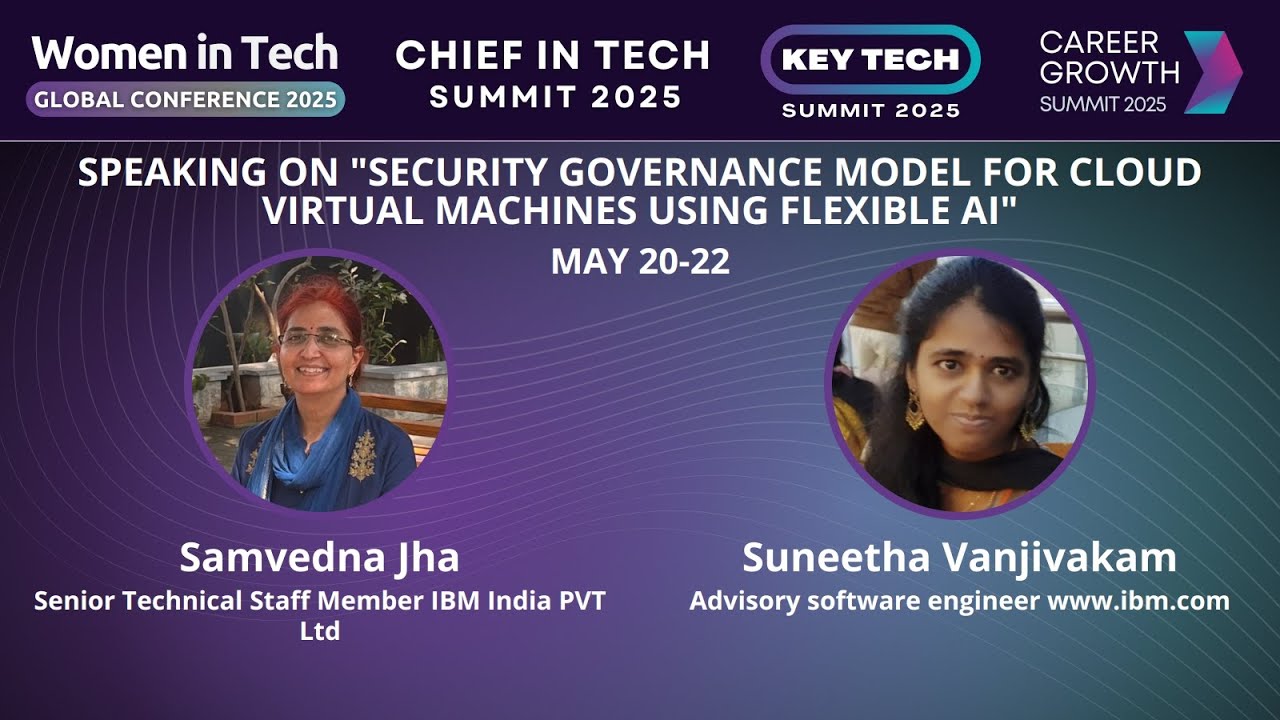
Security Governance model for Cloud virtual machines using flexible AI
Samvedna Jha19:212025
La sicurezza AI non è gratuita: smettete di eseguirla su ogni VM cloud
Le funzionalità di sicurezza basate sull'AI non sono gratuite, e attivarle su una macchina virtuale che offre tutorial pubblici non giustifica ciò che consumano. Samvedna Jha, Security Architect per IBM Power con oltre vent'anni di esperienza, sostiene che i team cloud possono ridurre energia e costi senza indebolire isolamento o conformità. Resta aperta la domanda: quali VM meritano la piena protezione AI e chi decide quando disattivarla?
Scopra il modello a tre livelli che stabilisce quanta sicurezza AI riceve ogni VM
Samvedna Jha e la co-relatrice Suneetha Vanjivakam di IBM propongono un modello di governance della sicurezza per le macchine virtuali cloud in cui la protezione basata sull'AI viene configurata per singola VM e attivata solo quando serve. Sostengono che suddividere le VM in livelli in base alla criticità del carico di lavoro preserva l'isolamento, garantisce la conformità e riduce l'energia e i costi di un'AI sempre attiva.
“Ricordate sempre che nessuna di queste funzionalità AI, tutte le cosiddette funzionalità interessanti, è gratuita.”
“Dovreste avere un meccanismo con cui, quando serve, la attivate. E quando non serve, la disattivate.”
What you will learn
Applicare i quattro pilastri di sicurezza, conformità, gestione del rischio e AI flessibile alla governance delle VM cloud.
Classificare le VM in carichi di lavoro mission-critical, medi e semplici per stabilire quanta sicurezza AI serve a ciascuna.
Pianificare l'attivazione e la disattivazione su richiesta degli strumenti di sicurezza AI per ridurre i costi di energia e risorse.
Collegare framework consolidati come ISO 27001 e il framework NIST alla governance basata sull'AI.
Spiegare come la configurazione per singola VM protegge l'isolamento dei dati e mantiene sicura la condivisione delle risorse.
Details
Level
Intermediate
Format
Talk
Technical depth
Introductory technical
For
Mid-career, Senior individual contributor
Length
19:21
Published
July 2025
Questions this talk answers
Che cosa significa AI flessibile per la governance della sicurezza delle VM cloud?
È un'AI che riceve input dal tipo di carico di lavoro e dai dati contenuti in una VM, e viene quindi applicata secondo i requisiti specifici di quella VM anziché alla cieca. Dovrebbe rilevare le minacce senza intervento umano, adattarsi al carico di lavoro e supportare l'auto-riparazione e policy per singola VM.
Perché gli strumenti di sicurezza AI non dovrebbero essere sempre attivi su ogni VM?
Le funzionalità AI non sono gratuite e consumano molte risorse: eseguirle solo quando servono consente di risparmiare energia e risorse nel cloud. Le VM che offrono informazioni pubbliche, ad esempio, non ne giustificano il costo.
Come suddividere le VM in livelli per stabilire quanta sicurezza AI serve loro?
I carichi di lavoro mission-critical ricevono una sicurezza AI end-to-end con mitigazione immediata, quelli medi (i più comuni) un'AI di base, mentre quelli semplici, come i tutorial pubblici, richiedono la protezione dell'hardware sottostante e la conformità.
In che modo la governance per singola VM protegge l'isolamento dei dati e la condivisione delle risorse?
Configurare il modello per singola VM protegge i dati di ciascuna VM, poiché ognuna ha i propri carichi di lavoro, e garantisce che le risorse condivise non vengano usate a scapito della sicurezza. I proprietari delle VM possono decidere se l'AI è necessaria, va aggirata o disattivata per un certo periodo.
Quali vantaggi di business offre una governance AI flessibile?
Le relatrici citano innovazione più rapida ed efficienza dei costi, resilienza grazie a un uso ottimale delle risorse e delle prestazioni, e una supervisione etica che semplifica audit, adempimenti normativi e rendicontazione dell'impronta di carbonio.
Tre livelli di carichi di lavoro delle VM cloud (83 s)
Audit, etica e risparmio di carbonio (71 s)
Good morning, good afternoon, everyone. Thank you for joining us today. So, you know, in the era where digital transformation is driving everything, every aspect of organization, our products. So, security is no longer, it's like an IT concern, right? It is, it's not something which is a tick mark anymore. It is a business imperative. And in that, whether you like, whether we like it, whether we like it, whether we like it.
or not, security governance is the framework that ensures that all the requirements we are meeting, we are, we have all these strategies in place. We have a way to handle the risk and things like that. So today we are going to explore the security governance model for the cloud virtual machines and why it is so important to empower it at this stage itself when AI is picking up in every, every area, how we can bring the innovation, how we can build trust.
across these digital subsystems and using which, which are going to use AI. So, with this, let us move to the next slide. So, you know, every presentation of security, we need to start with a kind of motivation, right? Because not only for, to handle the security aspect, but also to ensure that how are we handling the customer's requirement and making sure that everything is in place. So, the importance of security and governance for the VMs has, we have divided into four pillars, basically. The first one is the security, just to ensure that the data is protected, the sensitive data, irrespective of the nature of its nature, client customer data, they are all protected.
We are also meeting the compliance requirement, which is the second pillar. We are reducing the cyber security risk, which is the third pillar as part of risk management. And finally, we are bringing in flexible AI here. And the idea about this flexible AI to bring from cloud security is to have threat detection to ensure without human intervention, to have it like a very clear, fair detection.
So, it also should have to adapt to security based on the VM load it is having, based on the final workload which is running on that VM. And then the third point that we want to bring is that these VMs, when they get into a trouble and shoot mode, how to have them as a self-healing system, so that they not only, you know, go down, they also have ability to come up, come back up.
And then finally, we should have security policies per VM, where based on the type of the workload it is running, how to ensure that the policy actually is flexible enough for them to get into those, you know, to utilize those flexible AI. So, just to give a little overview for what flexible AI we are using here is, it actually is trying to bring the kind of input from the workload type it is running, the type of data it has, and based on that, the various decisions are made to ensure that this AI is not applied blindly, but based on the personalized requirements of that VM.
So, that is the main flexibility which is coming up here. With this, I will move to the next slide. Now, here, you know, we will be talking about the governance model that itself that we are talking about here, right. So, you must be aware of some of the well-known, widely adopted governance models we already have in industry.
For example, ISO 27001. And what is its purpose? Its purpose is to provide a systematic approach to manage sensitive information, to ensure it remains secure at all environments. There are physical controls which it handles. There are, you know, it is logical controls when it is about data center, but it has to enhance to ensure that it handles all the AI requirements also.
And that's, and when we are talking about the flexible AI for that matter. The next one, I would like to cite example is NIST framework itself. So, NIST actually will provide is a very well-known, widely accepted framework, every product, mostly all products meet all the NIST requirements. And their also approach is to manage the cybersecurity risk. And, you know, it has provided various guidelines to handle various type of, you know, the main pillars, for example, integrity.
You have identify, protect, detect, respond, and recover the system. So, based on this example, what we are proposing here in our session today is about this model powered by the flexible AI, specifically targeting the virtualization platform, where in each server itself, each resource itself, you are trying to virtualize it to achieve, to run multiple virtual machines on the same hardware resource, right?
So, what we actually propose here is to have enabled disablement of AI. You need not have AI for all this. You should have a mechanism by which, when it is required, you enable it. And when it is not required, you disable it. So, you know, that type of governance model should be in place. Then, next point is about decide that each VM, basically, you know, when it requires, AI needs a security governance model or not.
For example, in any public data, which is like a very publicly available information, you don't want to spend your resources and tools to basically apply AI there, or basically to apply any governance model. You can actually utilize that resource to do something which is like more critical with respect to the mission or the workload that VM is running.
And then, final point is about, you don't have to use this AI all the time. When it is needed, use it. It also helps you to save energy and resources in the cloud itself. Always remember that none of these AI features, all the so-called cool features, they do not come for free. They actually are very much resource-eating, you know, applications and tools.
And my friend Sunita will actually talk about it more detail in next slides. But these all are very much important and why we need to have it a mechanism to not use it all the time when not needed specifically. So, we have divided, you know, our VMs at a very high level in three categories basically. The VMs which are running the mission critical workload, where we would like to have AI to handle the end-to-end security completely.
Where in case of attack, any security incident, you not only are informed about it, but also there is a mitigation which is applied immediately. And I can cite one example, where in an insider attack, if they are trying to do some malicious activity for your VM to get destroyed or misbehaved, there should be an AI mechanism that triggers and it gives you the complete security so that it stops the harm or the damage at a level which you can recover back.
The next one we would want to highlight is about the medium workload. This is the most commonly, you know, workload which is deployed in our organizations. And then we don't, we have, we need to have basic AI, right? We need not have like a very advanced or complicated, which is like resource exhaustive AI mechanism or things that we need to deploy here.
And then the finally, which is a very simple workflow. Where in you don't, they can be as simple as a tutorials, which do not need any kind of fees or any kind of, you know, membership to access it. If these are like the publicly available information, which any user can get it. Just that you need to protect your underlying hardware and resource.
You need to have a security compliance in place. And for that, we need to have a governance model. So with this, let me move to the next slide. And I will request Sunita to, you know, share some of the insights about it. Yeah. Thank you, Samwedna. So hi, hi all. This is Sunita Advisory Software Engineer working with IBM India Systems Development Labs.
So continuing with what my SDSM Samwedna has conveyed in this session. Let me start with the significance why AI should be flexible for every cloud VM runtime. So when it comes to AI models, I think data is the core heart of the AI models. Only with the data, we can bring out more insights and more, you know, more purposeful decisions we can make with the data.
But when we collect the data, I mean, it should be very conscious and it should be flexible enough for VM rather than it should be configured. I mean, it is configured on a global scope level. So this session is more about what is that, you know, significance we can bring out when the AI is per VM. So the one such principles which can be protected properly or, you know, the core heart of security is the data isolation.
When it comes to VMs, VM data should be protected properly because each VM carries its respective workloads. So the data isolation principle can be properly governed when we keep this security governance model per VM. And another principle is the resource sharing principle. When it comes to cloud VMs, VMs share a lot of resources, but it should not be at the cost of security.
The security governance model, when it is configured per VM, resource sharing will be on purpose and it will be on purpose. And when we bring the VM owner into the picture here, VM owner is given a liberty to decide whether AI is really needed or AI should be on pass or AI can be disabled for a timeframe, depending on the workload that is running on the cloud.
So the, the, the, the overall purpose of this here is we should be made, we should use AI, we should bring out interesting insights from AI. We should you, we should, we should, we should, we should bring out every value. We can give it to our end customers from our applications, but AI should be flexible enough to save our power consumption and energy costs.
So that is a more, uh, uh, significance, uh, that can be brought out when the AI is flexible, when it is configured per VM. So we will see what, what can be the expected outcomes, particularly when it is really flexible. So here, here is a small glimpse of the data. We can see what we can see from international data corporation.
So the report, uh, the report, the report statistics, we can see here with every year by year, how the over consumption and energy costs are rising and the surging demands for electricity. When, when we are, uh, when we are consuming AI, uh, without, without making it flexible or consciously being used for applications. So when it is really, uh, flexible, we can bring down this and make this more sustainable and, you know, uh, for, uh, future generations.
I think already large language models or small, large, small language models, which are already, uh, in the market by all the market leaders in the, uh, you know, AI, they are making their way to save our energy and power consumption. Making it, making them agent AI, uh, which is, uh, making them, you know, small, small agents, which is going to bring down the data center costs.
Because when, when the agents are really working on, uh, working on small, small purposes, there is no, there is no need for more power or more energy you can use at a global level, uh, you know, for the whole product. So when it comes to agents, it is, it, it can be even at a granular level of VM and it, it can be more granular level of, even for that VM also for a particular purpose, the AI can be used.
So, um, uh, that is the more, uh, expected outcome of this, uh, um, of this more flexible AI that can be brought out here. And, um, uh, this is the evidence we can, uh, we can see here from the, uh, power consumption and energy data. Um, somewhere now, can we go to conclusion? Yeah. So, um, here we conclude, um, we know AI is gaining a lot of momentum, but AI should be more flexible enough and more conscious enough, you know, uh, not to, uh, to bring a lot, uh, not to just solve the problems, uh, but it should not break any virtualization boundaries.
We build in our cloud VM products and the security governance model we bring on, uh, our, uh, AI, the, the security governance models, which is powered by AI, which is, uh, you know, uh, which is per VM. It should be more flexible enough to, uh, configure or de-configure at any moment or not to enforce on, uh, overall VMs and the outcome.
We, we will evaluate periodically, uh, so that, you know, it should, it should not be always running, uh, you know, saving our data center costs and energy costs. So the, the, that's, uh, uh, that's the conclusion of this, uh, session. So Samvedna, go to your back. Okay. So thanks. Thanks, Sunita. I think, uh, you know, the, the, the main important thing that, you know, as Sunita highlighted and as a, as a whole, we would like to highlight here is why to bring this flexible, you know, AI solution, uh, in case of this, you know, cloud VM security governance.
And, uh, because the, the well-known facts are, you know, for example, I can consider a few of the items, uh, as a, you know, talking point, it gives you faster innovation. Very, when Sunita highlighted, right. Why you need to have this AI tools run all the time when it is consuming so much of energy and power of your, uh, you know, VMs, you are paying for it, right.
At the end of the day. So, uh, it, it's not so important. You, whenever it is required, whenever deployment requires, enable it. And also there are some work, some VMs are only doing the experimentation or, you know, deployment before moving to market. So for such things also, it, it is so important that, you know, these, these will actually give us a very cost efficient solution.
The next one we can talk about with respect to the resilience. It is like, you know, when you have this type of model, where on need basis, we are having some governance model for these AI to be used. It gives you, it maintains the performance of these environments very, very, uh, you know, at the optimal level, because here you are utilizing the resources at the, at the hundred percent.
It is not that you are, there is a waste or anything which, you know, which, which can be found on. And last, last important thing is about the ethical oversight. So what happens is, uh, many times you must have been involved as a security analyst or security investigator in the forensic of any malicious activity done on the VMs.
Now, when you have such a requirement, these flexible, flexible implementation actually gives you very easy for audit, you know, meet the regulation requirement and also adjust the, you know, the requirements as per your organization's values. So lot of our, you know, not only for the security, but in general, carbon footprint requirement has become one of the important aspect, right?
Lot of, lot of companies are trying to achieve that. Now, this will be one of the small step to take forward, to have it run when needed. And you, you can always calculate it back and show this much carbon footprint has been saved. So, you know, such, for such thing, it can be helpful. Now, let me cite you with couple of examples where actually this flexible AI is showing really good output.
So first one, I would like to cite IBM Watson help. So, these AI is, as it may suggest, right, it is related to some healthcare industry. So, these AI subsystem actually, it adopts to the new medical research and the patient data. So, it's not that, you know, it is, this AI is not just like based on this, any hypothetical theory.
It actually goes with the history data. It adapts to it for the next time. So, it is also learning, like a human doctor. They are also learning, right? They, when we go to any doctor, they ask us for a lot of history and then only they come out, you know, about the present situation, right? So, in the same way, it has to learn.
So, this, this, it is adopting flexible AI in a different way. So, if I go to another cloud platform, for example, you know, Azure ML, which is one of the cloud platform available. So, they are using these deployment of custom models, which is learned from the previous, you know, trained data that you have supplied. So, it's not like a blank foundational model is available to you on which you can run your ML or any algorithm or any tool or, you know, derive anything out of it.
So, people are seeing a lot of advantages for this flexible AI. And just, it is such a high time that instead of reacting, it is so important to have things and all of us here will appreciate because of our, you know, work background that insecurity, why it is so important to bring such principle now itself, so that these governance models are helping us in many, many different, you know, forums.
So, you know, not only to meet security requirements, but also to ensure that we do not bring additional burden because more and more, we are moving to cloud and you know that in cloud, you have a VM, which is like a shared resource. So, how it, it can meet all the underlying principle of virtualization. And at the same time, you, you get, you know, platform which is scalable, which is reusable.
And most importantly, it is secure for, you know, peace of, peace for us and for the, you know, organization. So, I hope you found the, you know, details useful. We will be very happy to, you know, help or, you know, guide or, you know, talk, have continued discussion offline as well. We both are available on LinkedIn platform.
And, you know, thanks to Women in Technology Forum, which gave us this opportunity to come and share our, you know, session today. Thanks a lot. And thank you very much for all of your time and, you know, coming here for this session. Thank you.
Transcribed automatically; names checked against the speaker record. Select a time to jump there.
Article based on this talk
Perché la sicurezza AI per le VM cloud dovrebbe attivarsi solo quando serve
Samvedna Jha e Suneetha Vanjivakam di IBM propongono un modello di governance per singola VM che suddivide i carichi di lavoro in livelli, protegge l'isolamento e riduce il costo energetico di un'AI sempre attiva.
In breve
Samvedna Jha, Senior Technical Staff Member di IBM, sostiene che la sicurezza basata sull'AI per le macchine virtuali cloud non dovrebbe essere attiva ovunque per impostazione predefinita. Insieme alla co-relatrice Suneetha Vanjivakam, propone un modello di governance in cui l'AI viene configurata per singola VM, calibrata sulla criticità di ciascun carico di lavoro e attivata solo quando serve, così che le organizzazioni mantengano isolamento e conformità riducendo al contempo l'energia e i costi di un'AI sempre attiva.
Punti chiave
Un modello di governance della sicurezza per i prodotti che intendono usare l'AI
I vantaggi dell'AI flessibile
Usare l'AI solo quando è necessaria
Perché la governance della sicurezza ha bisogno dell'AI adesso
Jha apre ponendo la governance al centro della trasformazione digitale. La sicurezza non è più una semplice casella da spuntare né una questione ristretta all'IT, afferma: "È un imperativo di business." (0:00) La governance è il quadro che assicura che i requisiti siano rispettati, le strategie siano definite e il rischio sia gestito, e secondo lei va rafforzata ora, mentre l'AI si diffonde in ogni ambito.
Il suo modello poggia su quattro pilastri: proteggere i dati sensibili di qualunque natura, rispettare i requisiti di conformità, ridurre il rischio di cybersicurezza e introdurre un'AI flessibile. L'AI flessibile, nella sua descrizione, rileva le minacce senza intervento umano, adatta la sicurezza al carico di lavoro di ciascuna VM, aiuta le VM a ripristinarsi come sistemi di auto-riparazione e supporta policy di sicurezza definite per singola VM. Poiché riceve input dal tipo di carico di lavoro e dai dati contenuti in una VM, segue i requisiti specifici di quella VM anziché essere applicata alla cieca.
La proposta si fonda su framework già noti ai professionisti. ISO 27001 offre un approccio sistematico alla gestione delle informazioni sensibili tramite controlli fisici e logici, mentre il framework NIST organizza il rischio di cybersicurezza attorno a identificare, proteggere, rilevare, rispondere e ripristinare. Entrambi, suggerisce, devono ora estendersi ai requisiti dell'AI.
Attivare l'AI solo quando serve
Il cuore della proposta è un meccanismo di governance per attivare e disattivare l'AI: "Dovreste avere un meccanismo con cui, quando serve, la attivate. E quando non serve, la disattivate." (5:07) Per ogni VM andrebbe valutato se abbia davvero bisogno di un modello di governance basato sull'AI. Una VM che offre informazioni pubblicamente disponibili, ad esempio, non ne giustifica il costo, e quelle risorse possono essere destinate a carichi di lavoro più critici e legati alla missione.
Jha è diretta sul perché sia importante: "Ricordate sempre che nessuna di queste funzionalità AI, tutte le cosiddette funzionalità interessanti, è gratuita." (5:57) Gli strumenti AI consumano risorse significative, quindi usarli solo quando servono fa risparmiare energia e risorse nel cloud.
Tre livelli di carichi di lavoro delle VM
Per rendere la scelta concreta, le relatrici suddividono le VM in tre categorie generali. I carichi di lavoro mission-critical ricevono una sicurezza AI end-to-end, inclusa la risposta automatica: "In caso di attacco, di qualsiasi incidente di sicurezza, non solo si viene informati, ma viene anche applicata immediatamente una mitigazione." (6:49) L'esempio di Jha è quello di un insider che cerca di distruggere o compromettere una VM: in quel caso l'AI dovrebbe intervenire e contenere il danno a un livello da cui l'organizzazione possa riprendersi.
I carichi di lavoro medi, che descrive come i più comuni nelle organizzazioni, richiedono un'AI di base anziché meccanismi avanzati e ad alto consumo di risorse. I carichi di lavoro semplici, come i tutorial liberamente disponibili, richiedono poco più della protezione dell'hardware e delle risorse sottostanti, mantenendo comunque la conformità di sicurezza e un modello di governance.
Isolamento, risorse condivise ed energia
Suneetha Vanjivakam guida la seconda parte dell'intervento, spiegando perché l'AI dovrebbe essere flessibile per ogni VM cloud anziché configurata globalmente. La governance per singola VM, afferma, protegge due principi fondamentali della virtualizzazione. Il primo è l'isolamento dei dati, perché ogni VM ha i propri carichi di lavoro. Il secondo è la condivisione delle risorse: "Nel caso delle VM cloud, le VM condividono molte risorse, ma non deve avvenire a scapito della sicurezza." (9:20) Il proprietario della VM ha la libertà di decidere se l'AI è necessaria, va aggirata o può essere disattivata per un certo periodo.
Passa poi al tema dell'energia, citando dati di International Data Corporation mostrati nella sua slide. Secondo quanto riportato dalla relatrice, i dati mostrano una crescita anno su anno del consumo energetico, dei costi energetici e della domanda di elettricità quando l'AI viene usata senza renderla flessibile. Modelli linguistici più piccoli e AI agentica progettata per scopi specifici, osserva, sono uno dei modi in cui i leader di mercato riducono i consumi dei data center, e tali agenti potrebbero operare a livello di una singola VM o persino di un singolo scopo al suo interno. La sua conclusione: la governance basata sull'AI dovrebbe essere facile da configurare o rimuovere, non deve mai violare i confini della virtualizzazione e dovrebbe essere valutata periodicamente invece di restare sempre attiva.
Il caso di business: costi, resilienza e supervisione
Jha chiude con i vantaggi. L'AI flessibile favorisce un'innovazione più rapida e l'efficienza dei costi, poiché le organizzazioni pagano l'energia consumata dagli strumenti sempre attivi, e le VM usate solo per sperimentazione o per il deployment pre-rilascio raramente ne hanno bisogno. Favorisce la resilienza, mantenendo efficiente l'uso delle risorse e le prestazioni a un livello ottimale. Supporta inoltre la supervisione etica: per gli analisti che indagano attività malevole sulle VM, un'implementazione flessibile rende più semplice soddisfare audit e requisiti normativi e permette ai controlli di riflettere i valori dell'organizzazione.
La sostenibilità completa il quadro. "Ecco, questo sarà uno dei piccoli passi da compiere, farla funzionare quando serve. E potete sempre ricalcolarlo e mostrare quanta impronta di carbonio è stata risparmiata." (16:02) Cita IBM Watson Health, che si adatta alle nuove ricerche mediche e ai dati dei pazienti, e il deployment in Azure ML di modelli personalizzati addestrati sui dati forniti come esempi di AI flessibile in azione, ed esorta i team di sicurezza ad adottare questi principi subito invece di reagire in seguito.
Guarda l'intervento
"Security Governance model for Cloud virtual machines using flexible AI" di Samvedna Jha (19 minuti): https://www.womentech.net/video/security-governance-model-cloud-virtual-machines-using-flexible-ai
Informazioni sulla relatrice
Samvedna Jha è Senior Technical Staff Member presso IBM India PVT Ltd, dove ricopre il ruolo di Security Architect per IBM Power a Bengaluru, con responsabilità tecnica mondiale per i requisiti di sicurezza e conformità dei prodotti Power. Ha oltre vent'anni di esperienza, una laurea magistrale in Computer Application ed è autrice di blog, IBM Redbooks e divulgazioni pubblicate.
Domande a cui risponde questo intervento
Che cosa significa AI flessibile per la governance della sicurezza delle VM cloud?
Perché gli strumenti di sicurezza AI non dovrebbero essere sempre attivi su ogni VM?
Come suddividere le VM in livelli per stabilire quanta sicurezza AI serve loro?
In che modo la governance per singola VM protegge l'isolamento dei dati e la condivisione delle risorse?
Quali vantaggi di business offre una governance AI flessibile?
Bozza redatta con l'AI a partire dalla trascrizione dell'intervento. Revisione editoriale in attesa.