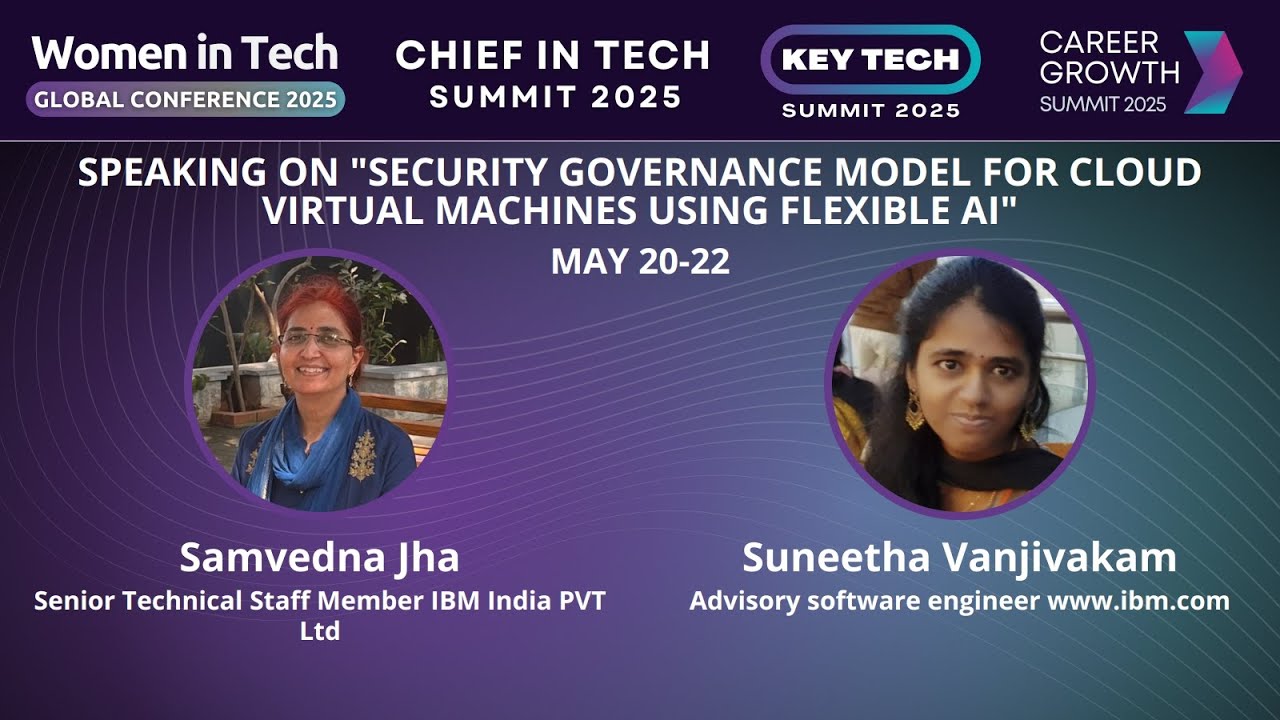
Security Governance model for Cloud virtual machines using flexible AI
Samvedna Jha19:212025
AI сигурността не е безплатна, затова спрете да я пускате на всяка облачна VM
Функциите за AI сигурност не са безплатни и включването им за виртуална машина, която предлага публични уроци, не оправдава ресурсите, които консумират. Samvedna Jha, архитект по сигурността за IBM Power с над двадесет години опит, твърди, че облачните екипи могат да намалят енергията и разходите, без да отслабват изолацията или съответствието с изискванията. Отвореният въпрос е кои VM заслужават пълна AI защита и кой решава кога тя да се изключи.
Вижте модела с три нива, който определя колко AI сигурност получава всяка VM
Samvedna Jha и съводещата Suneetha Vanjivakam от IBM предлагат модел за управление на сигурността на облачни виртуални машини, при който защитата, базирана на AI, се конфигурира за всяка VM поотделно и се включва само при нужда. Според тях разделянето на VM на нива според критичността на натоварването запазва изолацията, осигурява съответствие с изискванията и намалява енергията и разходите за постоянно работещ AI.
“Винаги помнете, че нито една от тези AI функции, всички така наречени готини функции, не идва безплатно.”
“Трябва да имате механизъм, чрез който, когато е необходимо, да го включвате. А когато не е необходимо, да го изключвате.”
What you will learn
Прилагайте четирите стълба: сигурност, съответствие, управление на риска и гъвкав AI, към управлението на облачни VM.
Класифицирайте VM в критични, средни и прости натоварвания, за да решите колко AI сигурност е нужна на всяка.
Планирайте включване и изключване на AI инструменти за сигурност при нужда, за да намалите разходите за енергия и ресурси.
Свържете утвърдени рамки като ISO 27001 и рамката на NIST с управлението, базирано на AI.
Обяснете как конфигурацията за всяка VM защитава изолацията на данните и запазва споделянето на ресурси сигурно.
Details
Level
Intermediate
Format
Talk
Technical depth
Introductory technical
For
Mid-career, Senior individual contributor
Length
19:21
Published
July 2025
Questions this talk answers
Какво означава гъвкав AI за управлението на сигурността на облачни VM?
Това е AI, който получава входни данни от типа натоварване и данните във VM, така че се прилага според собствените изисквания на тази VM, а не сляпо. Той трябва да открива заплахи без човешка намеса, да се адаптира към натоварването и да поддържа самовъзстановяване и политики за всяка VM.
Защо AI инструментите за сигурност не трябва да работят постоянно на всяка VM?
Функциите на AI не са безплатни и изискват много ресурси, затова пускането им само при нужда спестява енергия и ресурси в облака. Например VM, които предоставят публична информация, не оправдават разходите.
Как да се разделят VM на нива, за да се реши колко AI сигурност им е нужна?
Критичните натоварвания получават цялостна AI сигурност с незабавно смекчаване, средните натоварвания (най-често срещаните) получават базов AI, а простите натоварвания, като публични уроци, се нуждаят от защита на основния хардуер плюс съответствие с изискванията.
Как управлението за всяка VM защитава изолацията на данните и споделянето на ресурси?
Конфигурирането на модела за всяка VM защитава данните ѝ, защото всяка носи собствени натоварвания, и гарантира, че споделените ресурси не се използват за сметка на сигурността. Собствениците на VM могат да решат дали AI е нужен, да бъде заобиколен или изключен за определен период.
Какви бизнес ползи носи гъвкавото управление с AI?
Говорителите посочват по-бързи иновации и ефективност на разходите, устойчивост чрез оптимално използване на ресурсите и производителност, както и етичен надзор, който улеснява одитите, регулаторните изисквания и отчитането на въглеродния отпечатък.
Good morning, good afternoon, everyone. Thank you for joining us today. So, you know, in the era where digital transformation is driving everything, every aspect of organization, our products. So, security is no longer, it's like an IT concern, right? It is, it's not something which is a tick mark anymore. It is a business imperative. And in that, whether you like, whether we like it, whether we like it, whether we like it.
or not, security governance is the framework that ensures that all the requirements we are meeting, we are, we have all these strategies in place. We have a way to handle the risk and things like that. So today we are going to explore the security governance model for the cloud virtual machines and why it is so important to empower it at this stage itself when AI is picking up in every, every area, how we can bring the innovation, how we can build trust.
across these digital subsystems and using which, which are going to use AI. So, with this, let us move to the next slide. So, you know, every presentation of security, we need to start with a kind of motivation, right? Because not only for, to handle the security aspect, but also to ensure that how are we handling the customer's requirement and making sure that everything is in place. So, the importance of security and governance for the VMs has, we have divided into four pillars, basically. The first one is the security, just to ensure that the data is protected, the sensitive data, irrespective of the nature of its nature, client customer data, they are all protected.
We are also meeting the compliance requirement, which is the second pillar. We are reducing the cyber security risk, which is the third pillar as part of risk management. And finally, we are bringing in flexible AI here. And the idea about this flexible AI to bring from cloud security is to have threat detection to ensure without human intervention, to have it like a very clear, fair detection.
So, it also should have to adapt to security based on the VM load it is having, based on the final workload which is running on that VM. And then the third point that we want to bring is that these VMs, when they get into a trouble and shoot mode, how to have them as a self-healing system, so that they not only, you know, go down, they also have ability to come up, come back up.
And then finally, we should have security policies per VM, where based on the type of the workload it is running, how to ensure that the policy actually is flexible enough for them to get into those, you know, to utilize those flexible AI. So, just to give a little overview for what flexible AI we are using here is, it actually is trying to bring the kind of input from the workload type it is running, the type of data it has, and based on that, the various decisions are made to ensure that this AI is not applied blindly, but based on the personalized requirements of that VM.
So, that is the main flexibility which is coming up here. With this, I will move to the next slide. Now, here, you know, we will be talking about the governance model that itself that we are talking about here, right. So, you must be aware of some of the well-known, widely adopted governance models we already have in industry.
For example, ISO 27001. And what is its purpose? Its purpose is to provide a systematic approach to manage sensitive information, to ensure it remains secure at all environments. There are physical controls which it handles. There are, you know, it is logical controls when it is about data center, but it has to enhance to ensure that it handles all the AI requirements also.
And that's, and when we are talking about the flexible AI for that matter. The next one, I would like to cite example is NIST framework itself. So, NIST actually will provide is a very well-known, widely accepted framework, every product, mostly all products meet all the NIST requirements. And their also approach is to manage the cybersecurity risk. And, you know, it has provided various guidelines to handle various type of, you know, the main pillars, for example, integrity.
You have identify, protect, detect, respond, and recover the system. So, based on this example, what we are proposing here in our session today is about this model powered by the flexible AI, specifically targeting the virtualization platform, where in each server itself, each resource itself, you are trying to virtualize it to achieve, to run multiple virtual machines on the same hardware resource, right?
So, what we actually propose here is to have enabled disablement of AI. You need not have AI for all this. You should have a mechanism by which, when it is required, you enable it. And when it is not required, you disable it. So, you know, that type of governance model should be in place. Then, next point is about decide that each VM, basically, you know, when it requires, AI needs a security governance model or not.
For example, in any public data, which is like a very publicly available information, you don't want to spend your resources and tools to basically apply AI there, or basically to apply any governance model. You can actually utilize that resource to do something which is like more critical with respect to the mission or the workload that VM is running.
And then, final point is about, you don't have to use this AI all the time. When it is needed, use it. It also helps you to save energy and resources in the cloud itself. Always remember that none of these AI features, all the so-called cool features, they do not come for free. They actually are very much resource-eating, you know, applications and tools.
And my friend Sunita will actually talk about it more detail in next slides. But these all are very much important and why we need to have it a mechanism to not use it all the time when not needed specifically. So, we have divided, you know, our VMs at a very high level in three categories basically. The VMs which are running the mission critical workload, where we would like to have AI to handle the end-to-end security completely.
Where in case of attack, any security incident, you not only are informed about it, but also there is a mitigation which is applied immediately. And I can cite one example, where in an insider attack, if they are trying to do some malicious activity for your VM to get destroyed or misbehaved, there should be an AI mechanism that triggers and it gives you the complete security so that it stops the harm or the damage at a level which you can recover back.
The next one we would want to highlight is about the medium workload. This is the most commonly, you know, workload which is deployed in our organizations. And then we don't, we have, we need to have basic AI, right? We need not have like a very advanced or complicated, which is like resource exhaustive AI mechanism or things that we need to deploy here.
And then the finally, which is a very simple workflow. Where in you don't, they can be as simple as a tutorials, which do not need any kind of fees or any kind of, you know, membership to access it. If these are like the publicly available information, which any user can get it. Just that you need to protect your underlying hardware and resource.
You need to have a security compliance in place. And for that, we need to have a governance model. So with this, let me move to the next slide. And I will request Sunita to, you know, share some of the insights about it. Yeah. Thank you, Samwedna. So hi, hi all. This is Sunita Advisory Software Engineer working with IBM India Systems Development Labs.
So continuing with what my SDSM Samwedna has conveyed in this session. Let me start with the significance why AI should be flexible for every cloud VM runtime. So when it comes to AI models, I think data is the core heart of the AI models. Only with the data, we can bring out more insights and more, you know, more purposeful decisions we can make with the data.
But when we collect the data, I mean, it should be very conscious and it should be flexible enough for VM rather than it should be configured. I mean, it is configured on a global scope level. So this session is more about what is that, you know, significance we can bring out when the AI is per VM. So the one such principles which can be protected properly or, you know, the core heart of security is the data isolation.
When it comes to VMs, VM data should be protected properly because each VM carries its respective workloads. So the data isolation principle can be properly governed when we keep this security governance model per VM. And another principle is the resource sharing principle. When it comes to cloud VMs, VMs share a lot of resources, but it should not be at the cost of security.
The security governance model, when it is configured per VM, resource sharing will be on purpose and it will be on purpose. And when we bring the VM owner into the picture here, VM owner is given a liberty to decide whether AI is really needed or AI should be on pass or AI can be disabled for a timeframe, depending on the workload that is running on the cloud.
So the, the, the, the overall purpose of this here is we should be made, we should use AI, we should bring out interesting insights from AI. We should you, we should, we should, we should, we should bring out every value. We can give it to our end customers from our applications, but AI should be flexible enough to save our power consumption and energy costs.
So that is a more, uh, uh, significance, uh, that can be brought out when the AI is flexible, when it is configured per VM. So we will see what, what can be the expected outcomes, particularly when it is really flexible. So here, here is a small glimpse of the data. We can see what we can see from international data corporation.
So the report, uh, the report, the report statistics, we can see here with every year by year, how the over consumption and energy costs are rising and the surging demands for electricity. When, when we are, uh, when we are consuming AI, uh, without, without making it flexible or consciously being used for applications. So when it is really, uh, flexible, we can bring down this and make this more sustainable and, you know, uh, for, uh, future generations.
I think already large language models or small, large, small language models, which are already, uh, in the market by all the market leaders in the, uh, you know, AI, they are making their way to save our energy and power consumption. Making it, making them agent AI, uh, which is, uh, making them, you know, small, small agents, which is going to bring down the data center costs.
Because when, when the agents are really working on, uh, working on small, small purposes, there is no, there is no need for more power or more energy you can use at a global level, uh, you know, for the whole product. So when it comes to agents, it is, it, it can be even at a granular level of VM and it, it can be more granular level of, even for that VM also for a particular purpose, the AI can be used.
So, um, uh, that is the more, uh, expected outcome of this, uh, um, of this more flexible AI that can be brought out here. And, um, uh, this is the evidence we can, uh, we can see here from the, uh, power consumption and energy data. Um, somewhere now, can we go to conclusion? Yeah. So, um, here we conclude, um, we know AI is gaining a lot of momentum, but AI should be more flexible enough and more conscious enough, you know, uh, not to, uh, to bring a lot, uh, not to just solve the problems, uh, but it should not break any virtualization boundaries.
We build in our cloud VM products and the security governance model we bring on, uh, our, uh, AI, the, the security governance models, which is powered by AI, which is, uh, you know, uh, which is per VM. It should be more flexible enough to, uh, configure or de-configure at any moment or not to enforce on, uh, overall VMs and the outcome.
We, we will evaluate periodically, uh, so that, you know, it should, it should not be always running, uh, you know, saving our data center costs and energy costs. So the, the, that's, uh, uh, that's the conclusion of this, uh, session. So Samvedna, go to your back. Okay. So thanks. Thanks, Sunita. I think, uh, you know, the, the, the main important thing that, you know, as Sunita highlighted and as a, as a whole, we would like to highlight here is why to bring this flexible, you know, AI solution, uh, in case of this, you know, cloud VM security governance.
And, uh, because the, the well-known facts are, you know, for example, I can consider a few of the items, uh, as a, you know, talking point, it gives you faster innovation. Very, when Sunita highlighted, right. Why you need to have this AI tools run all the time when it is consuming so much of energy and power of your, uh, you know, VMs, you are paying for it, right.
At the end of the day. So, uh, it, it's not so important. You, whenever it is required, whenever deployment requires, enable it. And also there are some work, some VMs are only doing the experimentation or, you know, deployment before moving to market. So for such things also, it, it is so important that, you know, these, these will actually give us a very cost efficient solution.
The next one we can talk about with respect to the resilience. It is like, you know, when you have this type of model, where on need basis, we are having some governance model for these AI to be used. It gives you, it maintains the performance of these environments very, very, uh, you know, at the optimal level, because here you are utilizing the resources at the, at the hundred percent.
It is not that you are, there is a waste or anything which, you know, which, which can be found on. And last, last important thing is about the ethical oversight. So what happens is, uh, many times you must have been involved as a security analyst or security investigator in the forensic of any malicious activity done on the VMs.
Now, when you have such a requirement, these flexible, flexible implementation actually gives you very easy for audit, you know, meet the regulation requirement and also adjust the, you know, the requirements as per your organization's values. So lot of our, you know, not only for the security, but in general, carbon footprint requirement has become one of the important aspect, right?
Lot of, lot of companies are trying to achieve that. Now, this will be one of the small step to take forward, to have it run when needed. And you, you can always calculate it back and show this much carbon footprint has been saved. So, you know, such, for such thing, it can be helpful. Now, let me cite you with couple of examples where actually this flexible AI is showing really good output.
So first one, I would like to cite IBM Watson help. So, these AI is, as it may suggest, right, it is related to some healthcare industry. So, these AI subsystem actually, it adopts to the new medical research and the patient data. So, it's not that, you know, it is, this AI is not just like based on this, any hypothetical theory.
It actually goes with the history data. It adapts to it for the next time. So, it is also learning, like a human doctor. They are also learning, right? They, when we go to any doctor, they ask us for a lot of history and then only they come out, you know, about the present situation, right? So, in the same way, it has to learn.
So, this, this, it is adopting flexible AI in a different way. So, if I go to another cloud platform, for example, you know, Azure ML, which is one of the cloud platform available. So, they are using these deployment of custom models, which is learned from the previous, you know, trained data that you have supplied. So, it's not like a blank foundational model is available to you on which you can run your ML or any algorithm or any tool or, you know, derive anything out of it.
So, people are seeing a lot of advantages for this flexible AI. And just, it is such a high time that instead of reacting, it is so important to have things and all of us here will appreciate because of our, you know, work background that insecurity, why it is so important to bring such principle now itself, so that these governance models are helping us in many, many different, you know, forums.
So, you know, not only to meet security requirements, but also to ensure that we do not bring additional burden because more and more, we are moving to cloud and you know that in cloud, you have a VM, which is like a shared resource. So, how it, it can meet all the underlying principle of virtualization. And at the same time, you, you get, you know, platform which is scalable, which is reusable.
And most importantly, it is secure for, you know, peace of, peace for us and for the, you know, organization. So, I hope you found the, you know, details useful. We will be very happy to, you know, help or, you know, guide or, you know, talk, have continued discussion offline as well. We both are available on LinkedIn platform.
And, you know, thanks to Women in Technology Forum, which gave us this opportunity to come and share our, you know, session today. Thanks a lot. And thank you very much for all of your time and, you know, coming here for this session. Thank you.
Transcribed automatically; names checked against the speaker record. Select a time to jump there.
Article based on this talk
Защо AI сигурността за облачни VM трябва да се включва само при нужда
Samvedna Jha и Suneetha Vanjivakam от IBM предлагат модел за управление за всяка VM, който разделя натоварванията на нива, защитава изолацията и намалява енергийните разходи на постоянно работещия AI.
Накратко
Samvedna Jha, Senior Technical Staff Member в IBM, твърди, че сигурността, базирана на AI, за облачни виртуални машини не трябва да работи навсякъде по подразбиране. Заедно със съводещата Suneetha Vanjivakam тя предлага модел за управление, при който AI се конфигурира за всяка VM, съобразява се с критичността на всяко натоварване и се включва само при нужда, така че организациите запазват изолацията и съответствието с изискванията, като същевременно намаляват енергията и разходите за постоянно работещ AI.
Основни изводи
Модел за управление на сигурността за продукти, които планират да използват AI
Предимствата на гъвкавия AI
Използване на AI само когато е необходим
Защо управлението на сигурността се нуждае от AI сега
Jha започва, като поставя управлението в центъра на дигиталната трансформация. Сигурността вече не е просто отметка или тясна ИТ грижа, казва тя: „Тя е бизнес императив.“ (0:00) Управлението е рамката, която гарантира, че изискванията са изпълнени, стратегиите са налице и рискът е овладян, и според нея то трябва да бъде укрепено сега, докато AI навлиза във всяка област.
Моделът ѝ се основава на четири стълба: защита на чувствителните данни, независимо от тяхното естество, изпълнение на изискванията за съответствие, намаляване на риска в киберсигурността и въвеждане на гъвкав AI. Според нейното описание гъвкавият AI открива заплахи без човешка намеса, адаптира сигурността към натоварването на всяка VM, помага на VM да се възстановяват като самовъзстановяващи се системи и поддържа политики за сигурност, зададени за всяка VM. Тъй като получава входни данни от типа натоварване и данните във VM, той следва собствените изисквания на тази VM, вместо да се прилага сляпо.
Тя основава предложението си на рамки, които специалистите вече познават. ISO 27001 предлага систематичен подход към управлението на чувствителна информация чрез физически и логически контроли, а рамката на NIST организира риска в киберсигурността около идентифициране, защита, откриване, реагиране и възстановяване. И двете, според нея, сега трябва да се разширят, за да обхванат изискванията на AI.
Включване на AI само когато е необходим
Сърцевината на предложението е механизъм за управление на включването и изключването на AI: „Трябва да имате механизъм, чрез който, когато е необходимо, да го включвате. А когато не е необходимо, да го изключвате.“ (5:07) Всяка VM трябва да се оценява дали наистина се нуждае от модел за управление, базиран на AI. VM, която предоставя публично достъпна информация например, не оправдава разходите и тези ресурси могат да се насочат към по-критични натоварвания, свързани с основната мисия.
Jha е категорична защо това е важно: „Винаги помнете, че нито една от тези AI функции, всички така наречени готини функции, не идва безплатно.“ (5:57) AI инструментите консумират значителни ресурси, затова използването им само при нужда спестява енергия и ресурси в облака.
Три нива на натоварвания на VM
За да направят избора практичен, говорителите разделят VM на три основни категории. Критичните натоварвания получават цялостна AI сигурност, включително автоматична реакция: „При атака или какъвто и да е инцидент със сигурността не само сте информирани, но и веднага се прилага смекчаваща мярка.“ (6:49) Примерът на Jha е вътрешен служител, който се опитва да унищожи или наруши работата на VM, като тогава AI трябва да се намеси и да ограничи щетите до ниво, от което организацията може да се възстанови.
Средните натоварвания, които тя описва като най-често срещаните в организациите, се нуждаят от базов AI, а не от усъвършенствани, ресурсоемки механизми. Простите натоварвания, като свободно достъпни уроци, изискват малко повече от защита на основния хардуер и ресурси, като съответствието с изискванията за сигурност и моделът за управление остават в сила.
Изолация, споделени ресурси и енергия
Suneetha Vanjivakam води втората част на лекцията и обяснява защо AI трябва да е гъвкав за всяка облачна VM, вместо да се конфигурира глобално. Според нея управлението за всяка VM защитава два основни принципа на виртуализацията. Първият е изолацията на данните, защото всяка VM носи собствени натоварвания. Вторият е споделянето на ресурси: „Когато става дума за облачни VM, те споделят много ресурси, но това не трябва да е за сметка на сигурността.“ (9:20) Собственикът на VM получава свободата да реши дали AI е нужен, трябва да бъде заобиколен или може да бъде изключен за определен период.
След това тя се насочва към енергията, като цитира данни на International Data Corporation, показани на слайда ѝ. По думите на говорителката цифрите показват годишен ръст на потреблението на енергия, разходите за енергия и търсенето на електроенергия, когато AI се използва, без да е направен гъвкав. По-малките езикови модели и агентният AI, създаден за тесни цели, отбелязва тя, са един от начините, по които пазарните лидери намаляват потреблението на енергия в центровете за данни, а такива агенти биха могли да работят на ниво отделна VM или дори отделна цел в нея. Нейното заключение: управлението, базирано на AI, трябва лесно да се конфигурира или премахва, никога не трябва да нарушава границите на виртуализацията и трябва да се оценява периодично, вместо да работи постоянно.
Бизнес аргументите: разходи, устойчивост и надзор
Jha завършва с ползите. Гъвкавият AI подпомага по-бързите иновации и ефективността на разходите, тъй като организациите плащат за енергията, която консумират постоянно работещите инструменти, а VM, използвани само за експерименти или предварителни внедрявания, рядко се нуждаят от тях. Той подпомага устойчивостта, като поддържа ефективно използване на ресурсите и оптимална производителност. Подпомага и етичния надзор: за анализаторите, които разследват злонамерена дейност във VM, гъвкавото внедряване улеснява одитите и изпълнението на регулаторните изисквания и позволява контролите да отразяват ценностите на организацията.
Устойчивостта допълва аргументите. „Това ще бъде една от малките стъпки напред, да го пускаме, когато е нужно. И винаги можете да го изчислите обратно и да покажете, че толкова въглероден отпечатък е спестен.“ (16:02) Тя посочва IBM Watson Health, който се адаптира към нови медицински изследвания и данни за пациенти, и внедряването на персонализирани модели, обучени върху предоставени данни, в Azure ML като примери за гъвкав AI в действие и призовава екипите по сигурността да възприемат тези принципи още сега, вместо да реагират по-късно.
Гледайте лекцията
„Security Governance model for Cloud virtual machines using flexible AI“ от Samvedna Jha (19 минути): https://www.womentech.net/video/security-governance-model-cloud-virtual-machines-using-flexible-ai
За говорителката
Samvedna Jha е Senior Technical Staff Member в IBM India PVT Ltd, където е архитект по сигурността за IBM Power в Бенгалуру с глобална техническа отговорност за изискванията за сигурност и съответствие на продуктите Power. Тя има над двадесет години опит, магистърска степен по компютърни приложения и е автор на блогове, IBM Redbooks и публикувани разкрития.
Въпроси, на които отговаря лекцията
Какво означава гъвкав AI за управлението на сигурността на облачни VM?
Защо AI инструментите за сигурност не трябва да работят постоянно на всяка VM?
Как да се разделят VM на нива, за да се реши колко AI сигурност им е нужна?
Как управлението за всяка VM защитава изолацията на данните и споделянето на ресурси?
Какви бизнес ползи носи гъвкавото управление с AI?
Изготвено с AI от транскрипцията на лекцията. Предстои редакторски преглед.